

Say it's Saturday rehearsal for a mixed adult choir of about 28 voices, ages 22 to 78. Half the old robes arrive creased from the car, two altos overheat under the sanctuary lights, and three newcomers can't find a hem that clears the chancel step. You need a coordinated set, but choosing another color won't solve any of those problems.
The best choir robes for adults are the ones singers can breathe, move, and return to the closet in usable condition. Start with comfort and replacement cost. A formal gown that stays on its hanger during hot services is an expensive purchase, whatever its original price.
Why Adult Choir Robes Need a Plan
An adult choir isn't a fixed collection of identical bodies. Singers join, return after an absence, change clothing sizes, or need a different fit as mobility changes. A robe order needs to accommodate those changes without making every replacement a separate purchasing project.
A 2025 academic scoping review reported Chorus America's estimate that 17% of the U.S. population participated in a choir in 2019, compared with 14% in 2008, and covered formats including church, community, and men's and women's groups. Adult choral participation reaches well beyond professional ensembles. Your purchasing process should work for volunteers with different bodies, schedules, and clothing needs.
Use this buying order:
- Fabric and wear first. Judge heat, movement, opacity, and likely failure points.
- Season and tradition next. Choose a base color that fits the organization.
- Height and plus-size fit. Assign sizes to people, not voice parts.
- Written tally and bulk pricing. Make the treasurer's quantities traceable to the fitting roster.
- Care label last, before approval. Confirm that the ensemble can maintain what it buys.
The finished appearance matters, but it shouldn't conceal a poor fit or an impractical fabric. Use the robe's construction as the starting point when evaluating its silhouette.
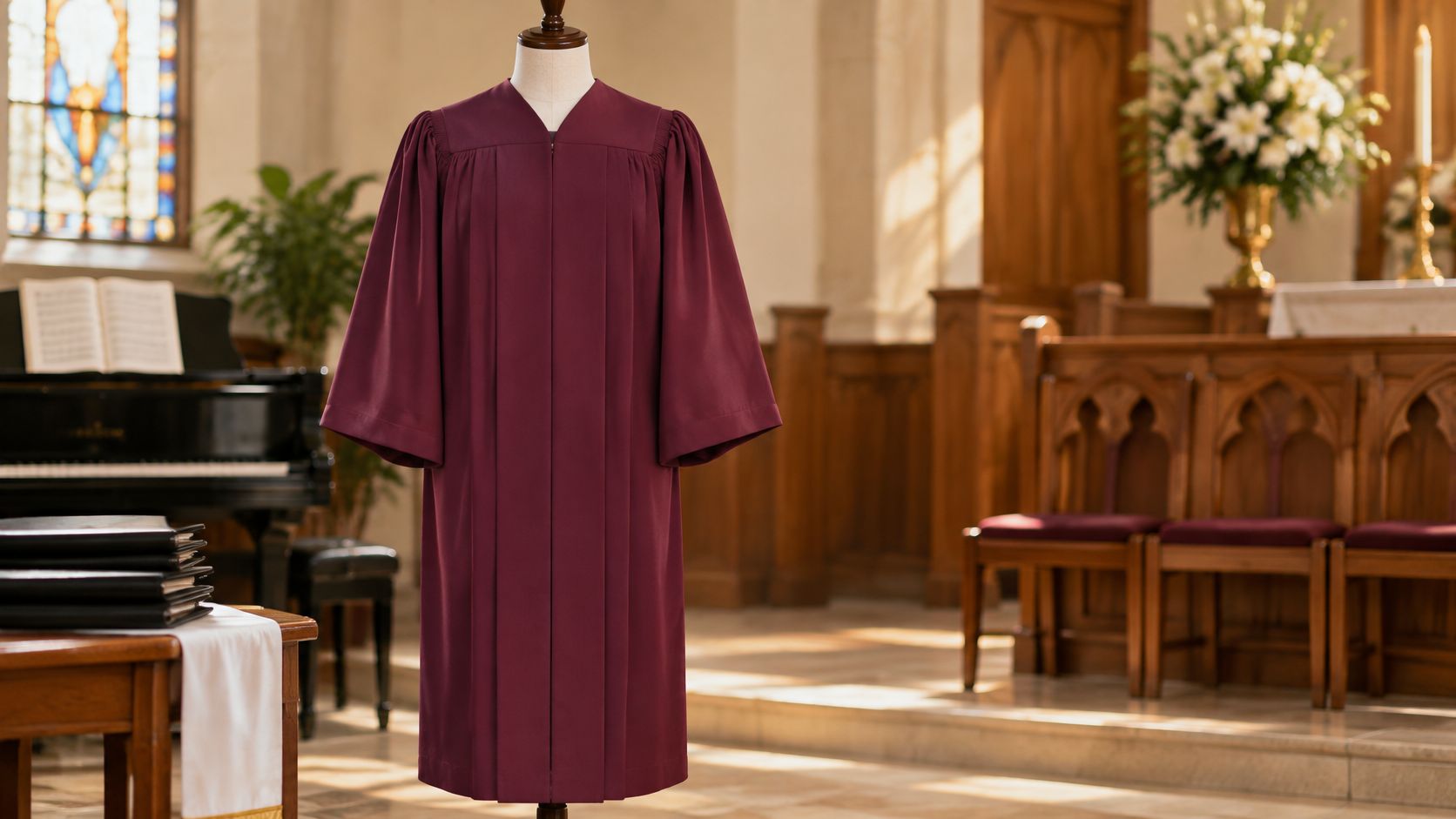
Before comparing fabrics, collect each singer's height, note whether standard cuts feel tight through the chest or hips, and record the dates of your next three services. Those dates tell you whether you're buying for a crowded summer loft, a layered winter procession, or both.
Reorderability belongs in the plan. Keep the approved cut, fabric description, and color together so next season's newcomer doesn't receive something merely similar.
Choose Fabric for Heat Movement and Wear
A robe can look composed at call time and feel punishing by the second hymn. Judge the sample while a singer stands under warm lights, reaches for a folder, sits, and processes; color can wait until the fabric passes those tests.
Adult choir robe fabrics by use and wear
| Fabric choice | Comfort and movement | Best setting | Care reality | When it costs more later |
|---|---|---|---|---|
| Matte polyester blend | A lightweight construction can move easily; test sleeve reach and opacity | Weekly services and travel | Follow the garment label; polyester robes don't all share a wash method | Thin cloth, stressed seams, or damage from unsuitable cleaning |
| Shiny satin | Check warmth and whether slick sleeves interfere with a folder | Concerts and processions | May need gentler handling than a matte gown; the label decides | Snags, loss of surface sheen, and conspicuous storage creases |
| Fluted deluxe gown | Yoke, pleats, and full sleeves provide room and structure; check airflow | Formal sanctuary use and photographs | Hang after use; clean only as the label allows | Crushed pleats, closure damage, or stress where sleeves meet the yoke |
| Lightweight blend | Prioritize air movement while checking coverage over street clothes | Summer, crowded lofts, and standing rehearsals | Use the label's water temperature and drying method | Sheerness under lights, inadequate width, or a hem that needs alteration |
Run these checks before judging appearance. The categories overlap: satin describes a construction or finish, while fluting and pleats describe garment design. Shine and fiber name alone are weak predictors of warmth.
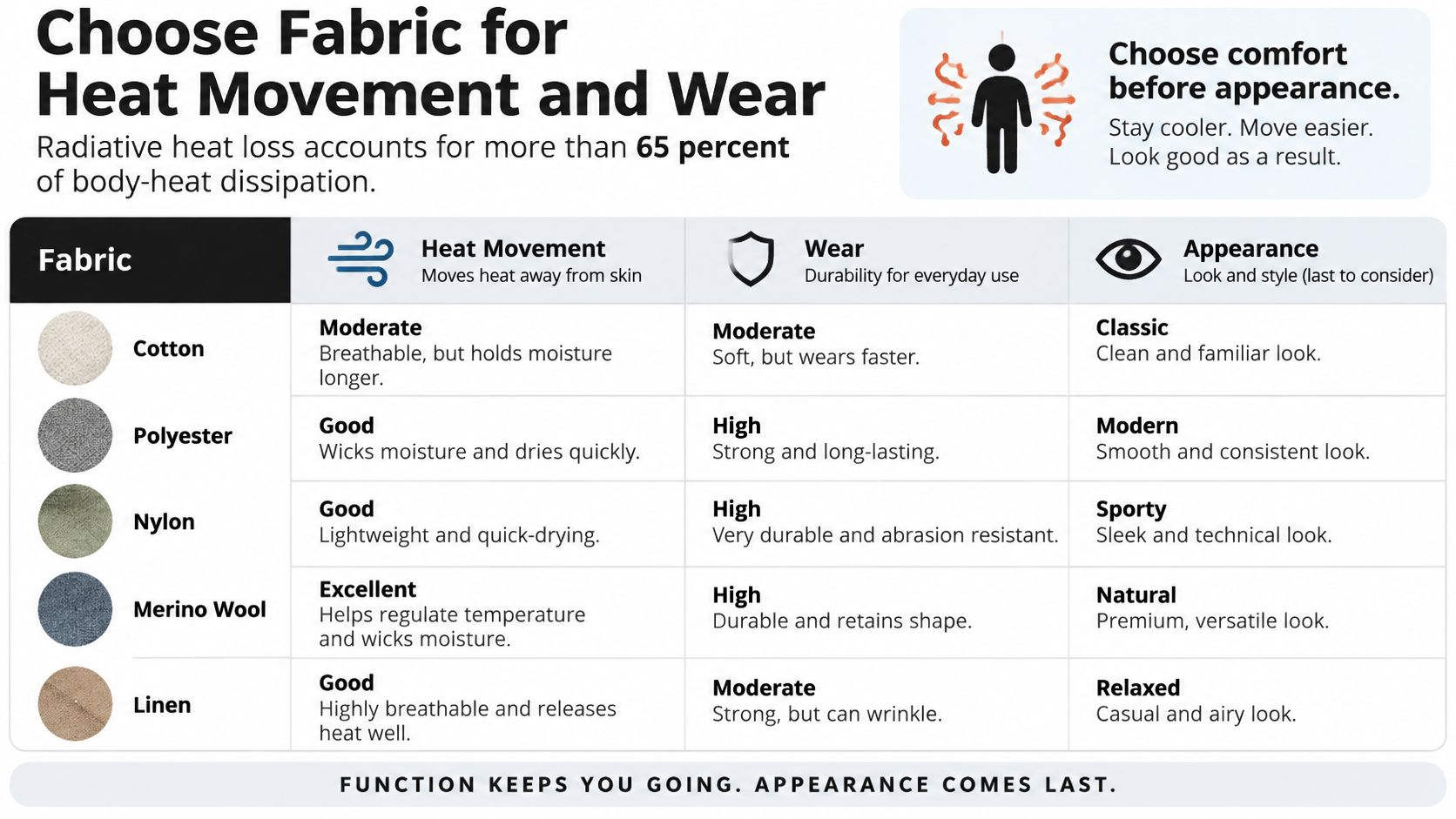
The comparison graphic below sorts fabrics by heat and wear.
Test the Whole Garment
A textile thermal-regulation publication listed by Universitas Brawijaya notes that radiative mechanisms account for more than 65% of human body-heat dissipation. Use that figure as context for body-heat loss; the robe still needs a full-garment test.
A crowded loft, layered street clothes, prolonged standing, and warm lighting make the wearing test decisive. Check whether a singer can raise a folder without dragging the entire gown upward. Full sleeves can provide room, and excess fabric can also brush neighboring singers or catch a folder corner.
For a broader explanation of summer fabric selection, The Fabric Company's guide to choosing cotton for cool summer clothes offers useful context. Cotton still needs the same robe checks: drape, opacity, care, and matching replacement stock.
ChoirBuy's overview of lightweight choir robes is a practical starting point for ensembles whose main constraint is a warm performance space.
Compare Construction With Replacement Cost
Use the listings for the Deluxe Maroon Choir Robe and Deluxe Navy Blue Choir Robe as visual references, then inspect the sample itself in hand. Look at the sleeve seams while the wearer reaches forward. Open and close the zipper without pulling the sides together by force. Hold the cloth over ordinary service clothes under sanctuary lighting, then check the back as well as the front.
This video provides an additional visual reference while you compare robe presentation.
A lower tag price loses its advantage if singers stop wearing the robe on hot Sundays, cleaning damages the finish, or shrinkage forces an early replacement. Before locking the group fabric, put a sample through a full rehearsal, including sitting, standing, processing, and carrying music.
Match Color to Season and Tradition
Color comes after comfort, movement, and replacement cost. A robe in the perfect liturgical shade still fails if the fabric runs hot, the cut restricts a raised folder, or a one-off color leaves the set hard to complete later.
Liturgical colors for adult choir dress
| Season or day | Usual colors | What the choir often changes | Planning note |
|---|---|---|---|
| Advent | Purple or blue | Stole or robe accent | Confirm whether the parish uses blue instead of purple |
| Christmas through Epiphany | White and gold | Stole, or an existing white set | Keep gold in accessories when the gown itself stays neutral |
| Ordinary Time | Green | Stole | Use green as an accent when the base gown already serves year-round |
| Lent | Purple | Stole | Treat funeral black as a local decision handled case by case |
| Pentecost | Red | Stole or trim | A red accessory can avoid a separate full robe purchase |
| Easter | White and gold | Stole or white set | An existing white set can also serve Christmas |
Use this schedule as a starting point and confirm it against your congregation's practice. The Presbyterian Mission Agency's signs and symbols guidance describes these seasonal conventions, places Epiphany on January 6, and notes that Christianity had no standardized liturgical-color system during its first 1,000 years, with a normative Roman Catholic sequence established in 1570.
A Baptist or non-denominational ensemble may keep navy or black robes year-round. A liturgical parish may retain the same base gowns and change stoles. Choose the approach that supports worship practice while limiting extra storage, cleaning, and replacement work.
Separate Choir Dress From Clergy Vestments
Don't order by color vocabulary alone. Establish whether the singers need a gown, or whether local practice calls for a cassock with a surplice over it.
The Diocese of Lincoln's explanation of liturgical vestments and colors distinguishes liturgical garments and notes that choir members sometimes wear cassocks and surplices. That distinction matters when a committee uses the word robe for several different garments.
Take a photograph of the approved ensemble arrangement to the purchasing meeting. Record which elements belong to singers and which belong to clergy, then identify who approves changes.
Color rule: Match the congregation's practice before matching a photograph from another church.
Keep the Base Color Easy to Repeat
For a school or community concert, choose a base color such as maroon or navy that suits the room and the group's usual calendar. Pick that base as if a future replacement will have to blend with it, then keep seasonal white or gold in a removable stole when that suits the program. A special concert should serve the next event too.
Use the choir robe color guide to organize the discussion around the base gown, contrasting accessories, and the performance setting. Compare physical cloth in the room rather than approving a color from different phone screens.
Before embroidery is added, have the pastor or worship chair approve the complete combination. A dove, cross, or flame is harder to undo than a plain yoke.
Size Adult Singers Including Plus Sizes
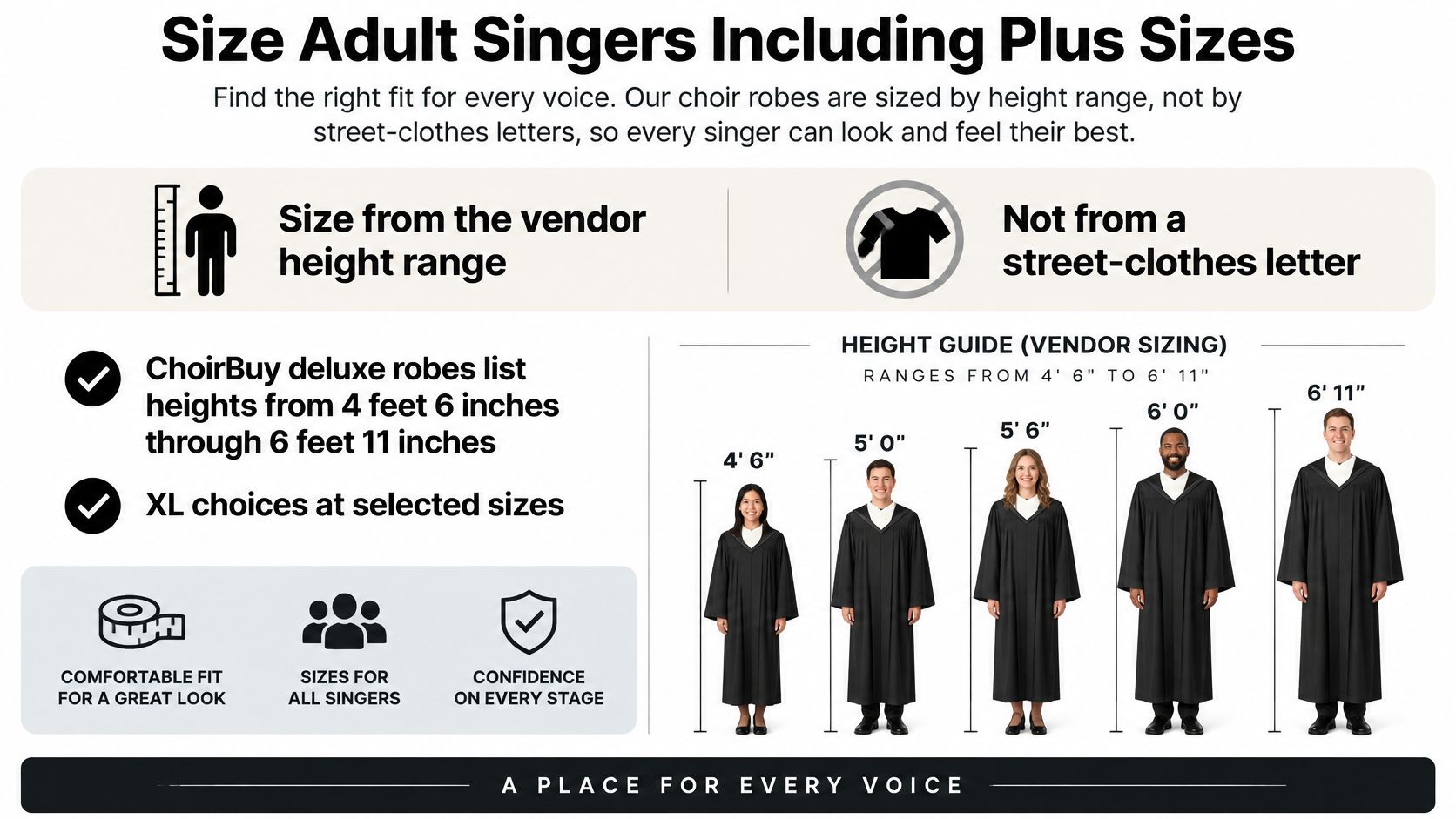
Size from the vendor's measurements, not a street-clothes letter. A robe size starts with height and is confirmed by width, so a singer's usual coat size tells you very little. The robe sizing chart maps height to the available cuts, and ChoirBuy's custom sizing covers adults, youth, and children when a standard option misses.
Have a tape measure, fitting roster, pencil, and the singer's usual performance shoes ready. Keep sensitive fit notes on the working roster rather than calling them across the rehearsal room.
Run fittings in this order.
Run a Fitting Night
- Measure in performance shoes. Have the singer stand naturally on a level floor. Don't use an old membership form if the measurement can be taken directly.
- Match the listed height band. Use the current selector or sizing chart, not a remembered size from another supplier. Height sets the starting point, not the final fit.
- Check width separately. When the chest, hips, or shoulders need more room than the standard cut provides, move up a width or consider custom sizing. Don't solve width by automatically ordering a taller robe, since the extra length creates a hem problem.
- Test movement with music. Ask the singer to sit, stand, and lift both arms while holding a folder. Check that the sleeve doesn't bind and the hem clears the chancel step.
- Record the result. Put height, chosen robe size, and a plus-size flag on the same roster line. Note unresolved fit questions before the singer leaves.
Robe fit checks at a glance
| Sizing item | Listed value | What to check |
|---|---|---|
| Robe height range | Vendor's published bands | Match height measured in performance shoes |
| Plus-size option | Wider cut at the same height | Check chest, hips, and shoulders against the standard cut |
| Hem fit test | Clears the chancel step | Singer sits and raises a folder without sleeve binding |
| Short edge case | A hypothetical 5 ft 2 in singer | Check that an overly tall hem doesn't create a trip hazard |
Fit the Person, Not the Voice Part
Consider a hypothetical 5-foot-2 singer who receives a taller robe because that was the nearest spare. The extra length isn't harmless fullness if the singer catches it while climbing the chancel step. Check the actual hem before approving the assignment.
A hypothetical 6-foot-4 baritone has the opposite problem when a short gown exposes too much street clothing. Adding width won't correct missing length. A plus-size alto can fall squarely within a height band and still need a wider cut for comfortable closure and reach.
Plus-size fit is a measurable requirement, so measure it like any other. Don't average the choir into a common size or assume everyone in the same row needs the same cut.
A robe fits when the singer can perform the job in it, not merely when the zipper closes.
Keep quantity calculations separate from fitting decisions so nobody is pushed toward a size because there are more of those in the closet. Flag anyone who misses fitting night as unmeasured, and arrange a follow-up rather than guessing from last year's photograph.
Read Care Labels Before the First Wash
The expensive mistake is washing every polyester gown on the same hot cycle because they look alike. Similar fabric descriptions don't establish identical cleaning requirements, especially when garments have different finishes, trims, closures, or pleated construction.
Under 16 CFR Part 423, textile apparel generally must carry washing or dry-cleaning instructions; washing instructions identify hand or machine washing and an allowable temperature such as cold, warm, or hot, with an exception when regular hot-water washing up to 145°F (63°C) won't harm the garment. That exception is not permission to choose hot water for an unfamiliar robe.
Turn the Label Into a Closet Routine
Photograph or photocopy each distinct care label into the robe log before the first cleaning. Record the robe identifier beside the image so a volunteer can connect the instruction to the correct garment. Include any separate instructions for removable accessories.
Sort matte and shiny pieces even when both are polyester, then group garments by compatible label instructions. Don't substitute an assumed gentle cycle for a dry-clean-only direction. If a label is missing or illegible, set the robe aside and ask the seller for the garment-specific instructions.
- After the service. Hang fluted gowns instead of balling them inside transport bags. Give pleats room rather than crushing the set onto an overloaded rail.
- Before cleaning. Empty pockets if present, check closures, and identify loose stitching or damage.
- After cleaning. Check the hem, closure, and fit before returning a robe to active use.
Crushed pleats can make an otherwise coordinated set look untidy on camera. Hanging is a practical first step, but any pressing or steaming must still follow the garment's directions.
Give Someone Responsibility
- Assign the log. Put a named volunteer in charge of maintaining the care record.
- Show newcomers. Explain the label before a singer takes a robe home to clean.
- Remove damaged fits. Retire a shrunken robe from its assigned use rather than forcing it onto the next singer.
Customize Robes Without Splitting the Set
Customization starts with the base robe the ensemble has approved. Size first, base color next, add-ons last. ChoirBuy offers custom sizing for adults, youth, and children, with dozens of colors, so begin with the fit requirement rather than decorating an unsuitable standard gown.
A school mark can make sense for a concert ensemble. A singer's name on the outside of a shared robe is less practical if the garment will move between wearers. Decide whether identification serves the audience, the organization, or only the closet inventory before making it permanent.
Keep Decoration Consistent
- Choose a purpose. Use embroidery, a school mark, or a name only where identification belongs in the program or organization.
- Fix the placement. Approve the same position, thread color, and orientation across the order.
- Approve sacred symbols. Have the pastor or worship chair sign off on a dove, cross, or flame before production.
- Separate seasonal elements. Keep stoles and accessories coordinated without changing the underlying gown specification.
- Cost the complete garment. Include each add-on in the per-robe total before authorizing the balance.
For school ensembles considering a separate uniform for informal performances, Zero Sports' example of sublimated apparel for school performing arts offers a useful contrast to traditional gowns. Treat that as a different performance requirement, not a reason to introduce unrelated decoration into the robe set.
Preserve a Reorder Specification
Keep the approved artwork and placement instructions with the robe specification. Identify which elements are essential and which can remain removable.
A personalized gown that can't be matched next season may cost more than a plain gown that can. Don't let a decorative choice create a second incompatible set, and don't approve customization until the people responsible for worship, appearance, and payment agree on the same specification.
Order for a Whole Choir and Save on Bulk
Give the treasurer an order that can be checked against individual singers. A total headcount is not enough. The purchasing record needs to show which sizes are required, which are spares, and which choices still await confirmation.
Start from the construction approved during fitting, adding only the sizes supported by the roster. ChoirBuy offers matte polyester, shiny satin, and lightweight blends, so the fabric description on the order should match the fabric you tested. Locking that description prevents a substitute finish from slipping into a bulk shipment where the wrong sheen gets multiplied across twenty gowns instead of one.
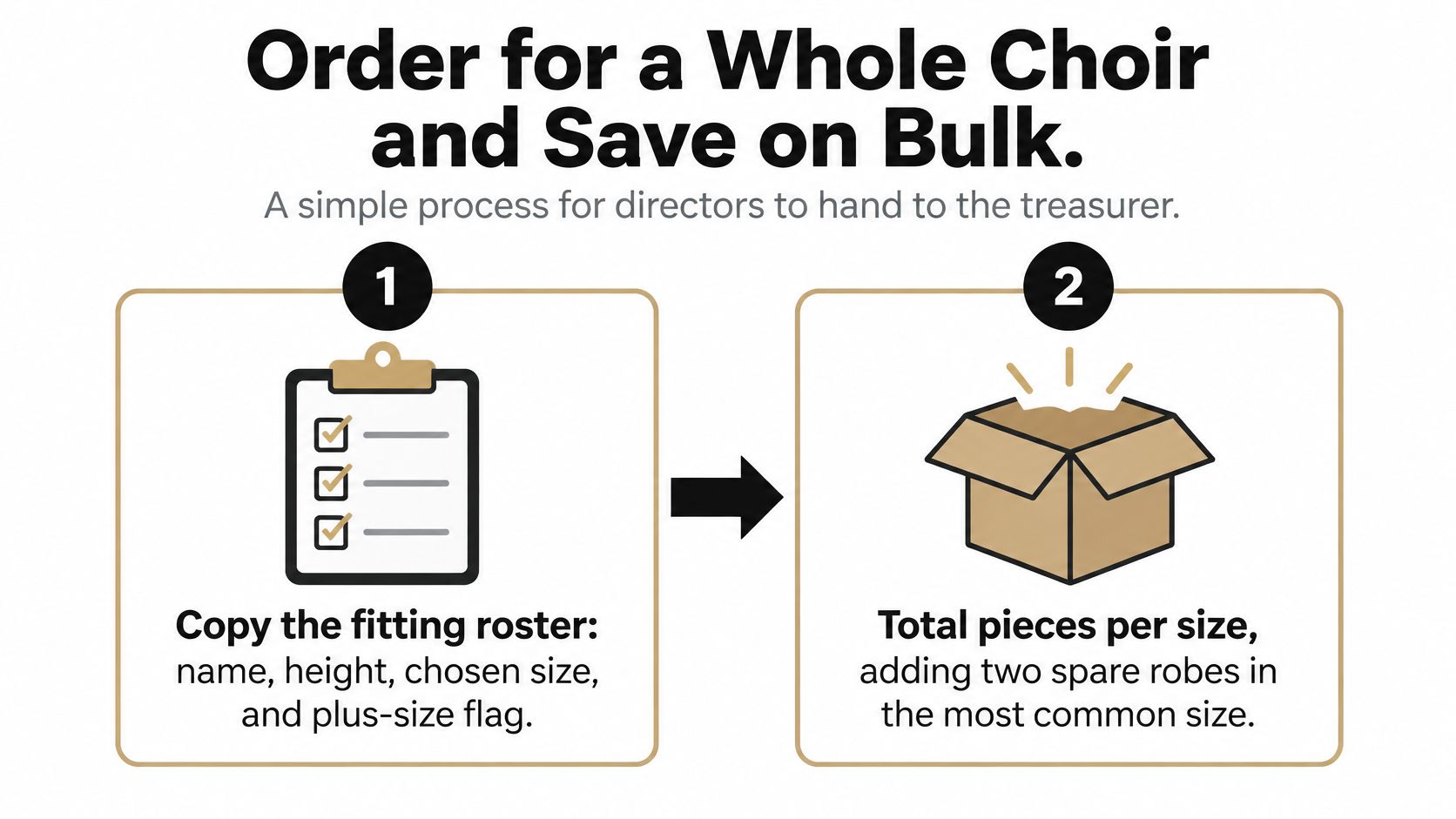
The process graphic below works as the cover sheet for the purchasing packet.
Build a Treasurer-Ready Order
- Copy the fitting roster. Include name, measured height, chosen size, and plus-size flag. Keep unresolved measurements visibly marked so they are not accidentally treated as approved.
- Total pieces by size. Add two spare robes in the most common sizes for mid-season joiners. Mark those as spares rather than attaching them to fictional roster entries.
- Lock the specification. Record the selected fabric, base color, cut, and closure arrangement. Do not accept a different sheen merely because the color name sounds close.
- Add only necessary accessories. Include stoles or trim where the season or concert program needs them. Give accessories their own quantities so the treasurer can distinguish them from gown costs.
- Request the organization's bulk rate. ChoirBuy offers special discounted pricing for churches, schools, and organizations ordering in bulk, including custom packages bundling robes, stoles, and accessories. Use the wholesale choir robes guide to prepare a complete request rather than comparing incomplete totals.
- Separate samples from the balance. Order a sample in the most common size and a plus size, and arrange the rehearsal test before authorizing the remaining purchase.
- Put size totals in the order notes. Keep a copy with the treasurer. For a height between listed ranges, use round-the-clock phone support to resolve the choice rather than asking support to reconstruct the entire roster.
Check the Invoice Against the Roster
Ask for a written total that identifies garments, accessories, customization, and applicable delivery charges. Keep the requested service date separate from the date you need the order in hand. You will need time to check the shipment and assign garments before anyone processes into worship.
Discounts only save money when the colors match the approved specification. Fast shipping only helps when the sizes are right. Compare quotes that meet the same approved specification line by line, and hold an unfinished fitting roster out of the order even when a payment deadline is approaching.
- Check the invoice. Compare every size quantity with the approved tally before paying the balance.
- Check the shipment. Inspect garments against the order before distributing them to the loft.
- Keep the record. Save the final specification and any approved substitutions with the robe log so next season's reorder starts from a known baseline.
Sample approval closes the order. Let singers complete the rehearsal, collect their fit concerns privately, and authorize the balance only when the garments meet the ensemble's actual requirements.
If the sample fails the heat or hem test, stop the bulk order.
ChoirBuy offers adult choir robes, inclusive and custom sizing, and bulk packages that can coordinate gowns, stoles, and accessories. Visit ChoirBuy with your fitting roster and approved fabric requirements to plan a set your singers can wear comfortably and your organization can maintain.