

A choir director stands in a fellowship hall with a tape measure, reviewing orders that did not fit as expected. One singer's sleeves cover their hands, another's hem drags, and a third needs more body room. Familiar size labels did not resolve the differences.
A dependable robe sizing chart starts with the selected product's instructions and the actual wearer. There is no universal rule that every robe must be selected chest-first or height-first. Record the required measurements, follow the chart's method, and confirm fit before the group order where practical.
Why a Robe Sizing Chart Matters Before You Order
A loose silhouette does not mean one size fits everyone. A useful chart explains what its figures represent, which measurements determine selection, and how the garment is intended to fit.
For a group order, unclear instructions can multiply fitting problems. Keep the product name, chart version or date, measuring method, and selected size with each wearer's record.
Look for two distinct kinds of information: the wearer's body measurements and the completed garment's dimensions.
Check whether “chest” means body circumference, garment circumference, or a flat width. Establish the starting point for length measurements rather than assuming shoulder, neck, and total height are interchangeable.
The Measurements That Drive Every Robe Chart
The measurements required vary by style and supplier. A height-based gown chart, a fitted cassock, and a layered outer garment may use different information.
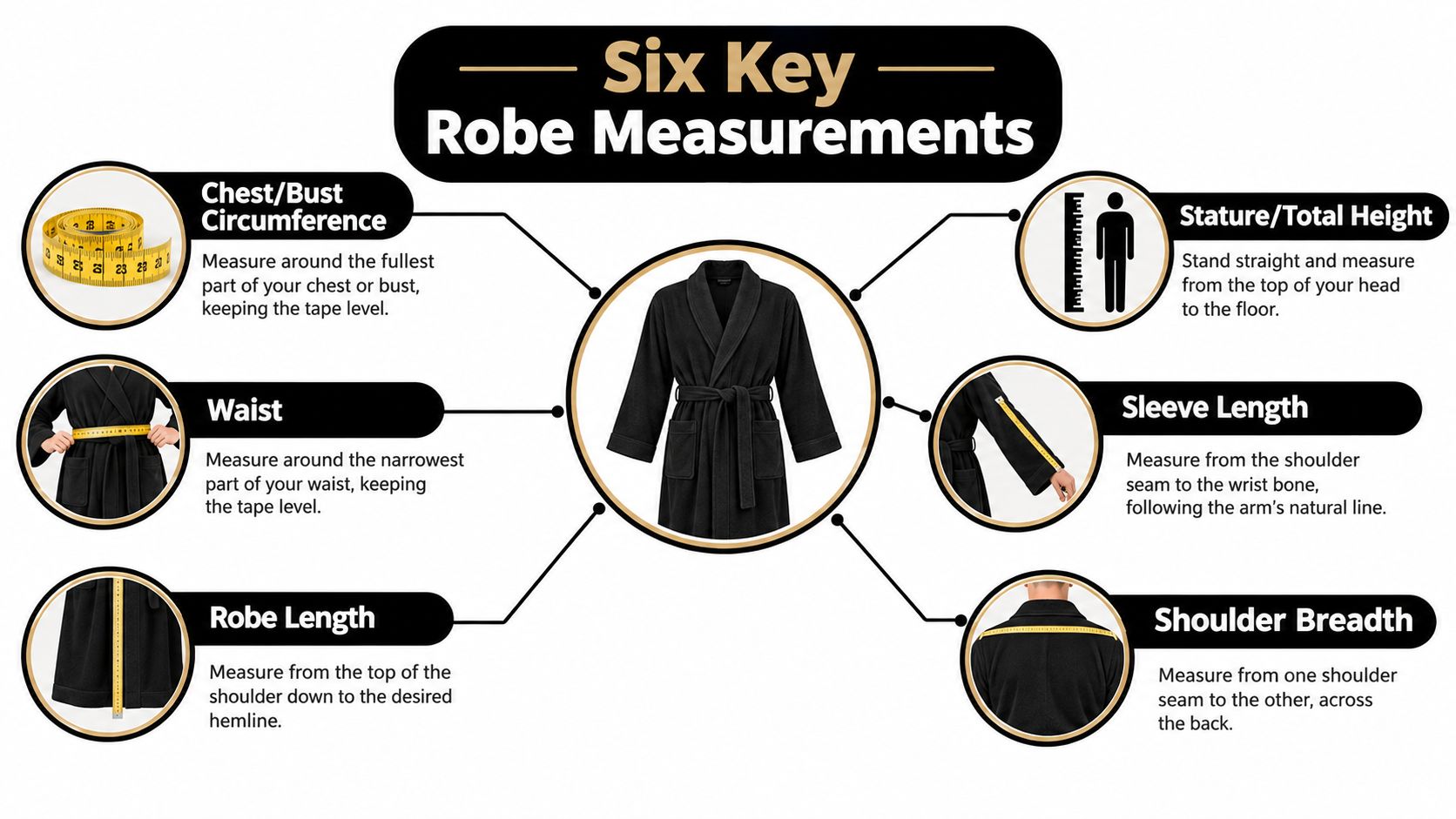
Follow the actual product's instructions for clothing, footwear, posture, and tape placement. The illustration is general context, not an official ChoirBuy measuring diagram.
ASTM apparel measurement terminology provides technical context. It does not establish which measurements or tolerances apply to an individual robe.
- Chest or bust: Take it only using the required method and distinguish body from garment figures.
- Total height: Follow the product's footwear and posture instructions.
- Sleeves: Use the stated start and end points for the actual design.
- Shoulders: Do not transfer a measurement or seam-placement rule between different sleeve constructions.
- Waist or other dimensions: Record them where required and flag relevant fit questions.
- Finished length: Keep its measuring points separate from total wearer height.
At fitting, review the completed garment in performance shoes and intended layers. Walking, sitting, folder use, and steps where relevant provide information a label cannot.
Body Measurements Versus Finished Garment Dimensions
A body measurement describes the wearer. A finished garment measurement describes the robe, taken by a specified method. Do not match them as if they were identical.
Movement room and drape depend on design and construction. Do not add an arbitrary ease allowance to a body measurement or assume a flat garment width is a full circumference.
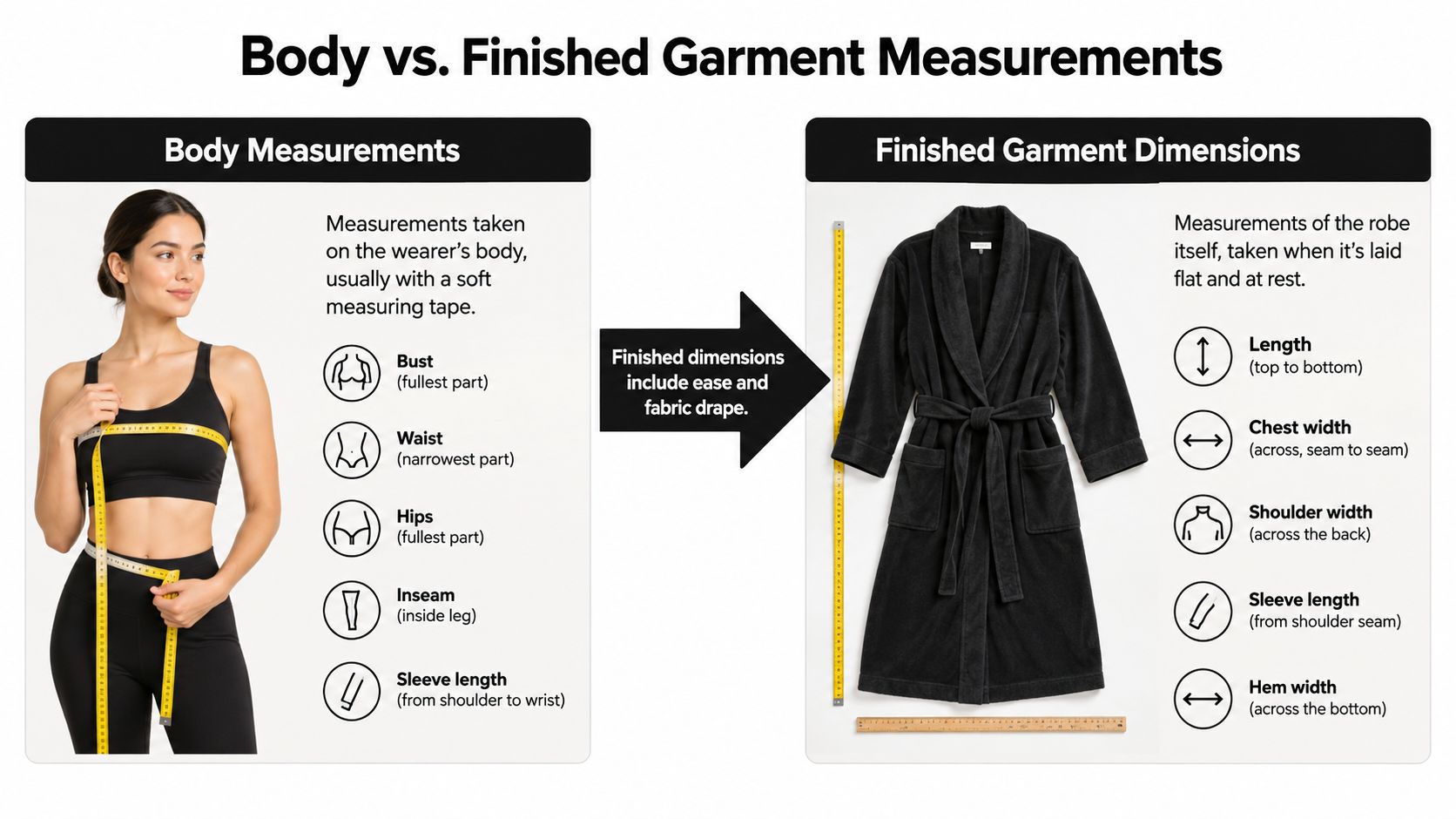
The ISO body-measurement sizing standard provides broader context. It is not a manufacturer chart or evidence that every product uses the same sizing system.
If a figure is unclear, ask the supplier what it represents before ordering.
How to Read the Chart When Measurements Disagree
Do not average conflicting measurements or automatically select the largest label. Follow any stated product guidance, then ask how to resolve the specific combination of proportions.
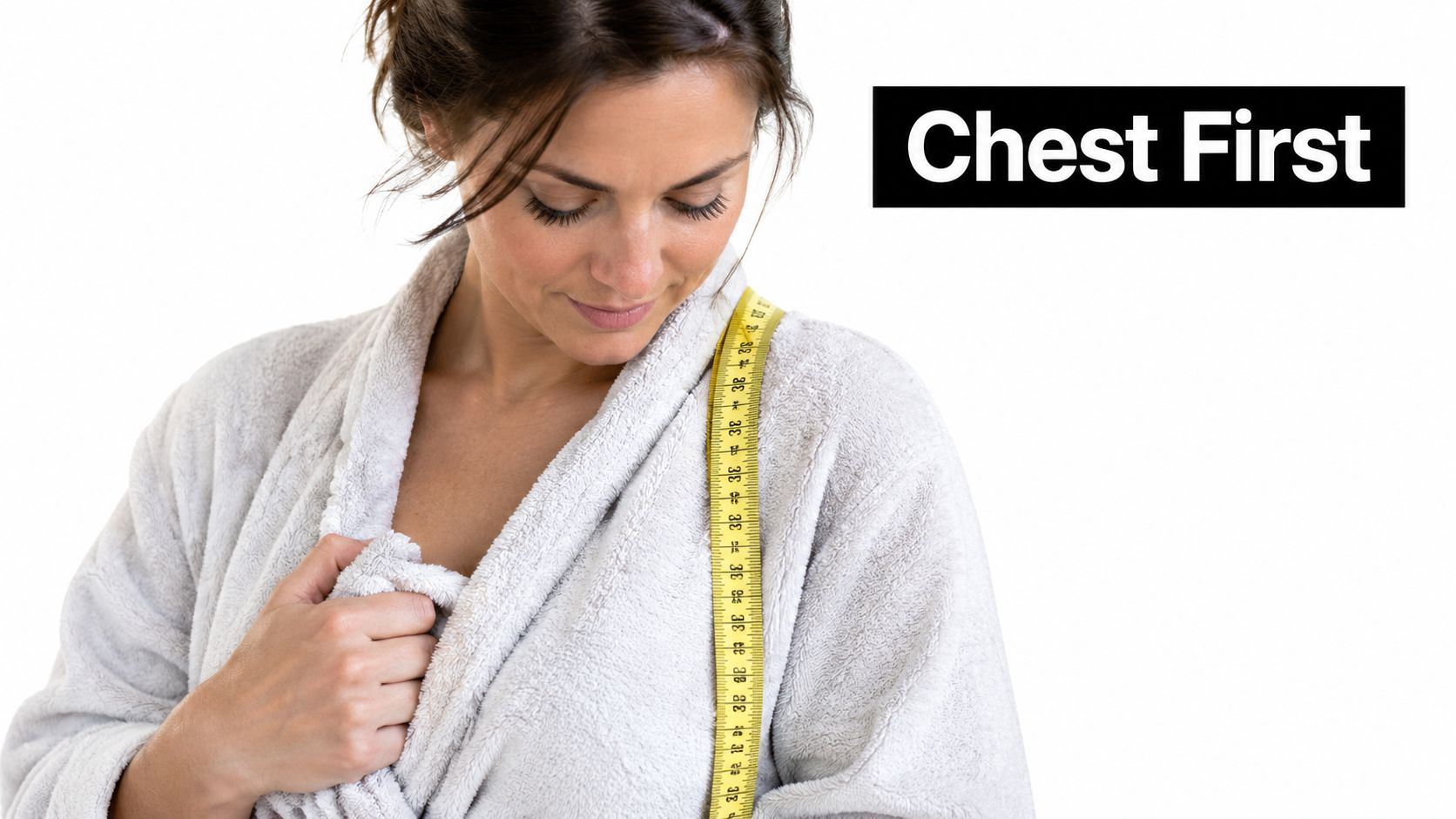
A wearer may need more body room without more length, or additional length without more width. Confirm the actual cuts and dimensions available rather than assuming sizing up or down fixes both.
Ask about alternative sizes or permitted alterations before planning a hem or sleeve adjustment. Construction and order terms can affect what is possible.
For seated performers and people using mobility devices, review the garment in the actual position and setting. Check comfort, dressing needs, fabric placement, and clearance from equipment.
When measurements disagree, resolve actual fit and suitable length with product-specific guidance rather than a universal priority order.
Adult Choir Robe Sizing Chart With Height and Sleeve
Use ChoirBuy's size and color charts alongside the chosen product listing. The worksheet below organizes a fitting; it is not an official size chart and does not introduce generic XS-to-3XL boundaries.
| Record | What to enter |
|---|---|
| Selected product | Exact name and relevant chart |
| Required wearer measurements | Actual values, units, method, and date |
| Proposed size | The exact option listed for that product |
| Available garment dimensions | Supplier-provided figures with their measuring points |
| Fitting result | Comfort, movement, sleeves, length, and unresolved questions |
| Supplier clarification | Written guidance and any confirmed alternative |
The ASTM adult body-measurement standard provides body-data context, not a size conversion for every robe or proof of available petite and tall options.
The adult choir robe guide offers planning context. For specific products, compare the Matte Black Choir Robe and Matte White Choir Robe, then follow their actual sizing information.
Children's Robe Sizing Chart by Height and Chest
Use the actual youth product's chart. Age, generic children's apparel classifications, and adult robe labels are not reliable substitutes.
Do not transfer unrelated height, weight, or chest mappings into a ChoirBuy order. Record only the measurements and size options applicable to the selected garment.
| Youth fitting field | What to record |
|---|---|
| Product and chart | Exact youth style and current instructions |
| Measurements | Required values with units and measuring method |
| Selected option | The product's actual size label |
| Current fit | Movement, comfort, sleeves, and floor clearance |
| Review plan | When to recheck measurements before the next order |
Do not automatically size up for growth. A garment intended for later use still needs to permit appropriate movement today.
Review the Child's Matte White Choir Robe as a specific youth option. The children's choir robe guide provides broader planning context, not a replacement for its product instructions.
Plus Size, Petites, and Inclusive Fit Considerations
Suitable fit depends on proportions and construction, not just a broader label range. Confirm actual body room, length, sleeves, neckline, and available options for the exact style.
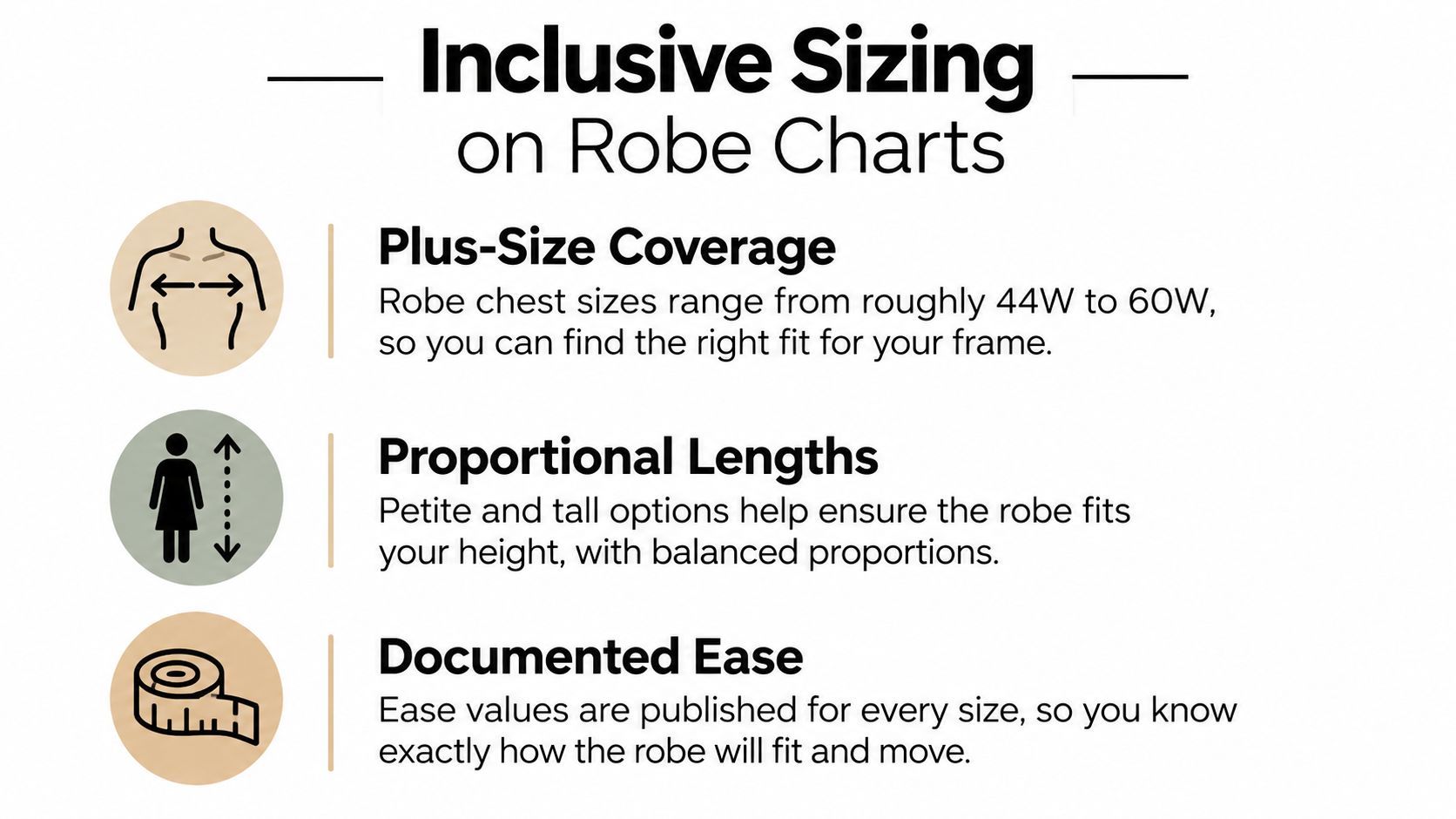
Do not assume short, tall, petite, adjustable, or extended options are offered in every garment. Ask how the actual product can address the wearer's needs before committing to a group size distribution.
Review breathing, seated use, folder movement, dressing access, sensory concerns, and mobility-equipment clearance as relevant. Adapt the fitting to the person rather than requiring a standard movement test that does not suit them.
A size range is useful only when the actual garment works for its wearer.
The church choir robe guide offers purchasing context. Confirm the selected style's real measurements before treating a label as the answer.
Measurement Conversion and Bulk Order Workflow
Converting units is not the same as converting sizes. One inch equals exactly 2.54 centimetres: multiply inches by 2.54 to obtain centimetres, or divide centimetres by 2.54 to obtain inches.
A converted measurement retains its original meaning. Converting a body circumference does not turn it into a garment dimension or establish an S, M, L, or numbered robe size.
| Conversion record | Information to retain |
|---|---|
| Original value | Measurement, unit, and whether it describes body or garment |
| Converted value | Equivalent unit with consistent rounding |
| Method | Original measuring points and relevant product instructions |
| Size decision | Made separately using the selected product chart |
For a group order:
- Measure every wearer. Representative samples help assess fit, but do not replace individual required measurements.
- Flag unresolved questions. Identify conflicting chart readings and individual needs.
- Ask about samples. Confirm availability and terms before testing.
- Assess practical fit. Review movement, intended layers, sleeves, and length as appropriate.
- Confirm the order. Check actual sizes, quantities, current terms, and delivery arrangements.
The wholesale choir robe guide offers order-planning context. Request current quantity pricing and applicable bulk-order terms rather than assuming a fixed discount or minimum.
Common Robe Sizing Mistakes and How to Avoid Them
- Using familiar clothing labels: Select from the actual robe's chart, not another brand's size.
- Changing the measurement method: Follow specified posture, footwear, layers, and measuring points.
- Confusing width and circumference: Establish what each figure describes.
- Sizing children by age alone: Take required measurements and confirm current fit.
- Automatically sizing up: More width may create excessive length without solving the original issue.
- Skipping practical assessment: Check the completed garment where samples and terms permit.
The history of U.S. clothing-size systems provides background on changing labels. It is not a modern robe-size conversion chart.
If chart figures remain unclear, obtain written clarification before submitting the order.
Putting It All Together for Your Next Choir Order
Choose the exact product, follow its required measurement method, record units and dates, and review actual fit. Keep finished length separate from total height and body measurements separate from garment dimensions.
Ask about samples and current terms before a pilot purchase. Do not wash, alter, or heat-treat a sample without permission and suitable instructions.
Confirm actual stock, any production or decoration, complete pricing, and the required arrival date. Keep enough time for inspection and fitting without assuming an exchange or alteration will be available.
A clear record helps the next coordinator make a fresh decision rather than copying an old size label after the wearer or product changes.
Compare ChoirBuy's Matte Black Choir Robe, Matte White Choir Robe, and Child's Matte White Choir Robe. Use their specific sizing information alongside the size and color charts, then confirm fit questions, quantities, current pricing, applicable bulk-order terms, and delivery before purchasing.