

The color of a choir robe does far more than just look nice; it's a visual language packed with history, religious symbolism, and a sense of shared identity. Think of it this way: every shade, from a crisp, pure white choir robe to a deep, solemn purple choir robe, tells a story that enriches the worship experience and brings the group together as one voice.
The Hidden Meaning Woven into Choir Robe Colors
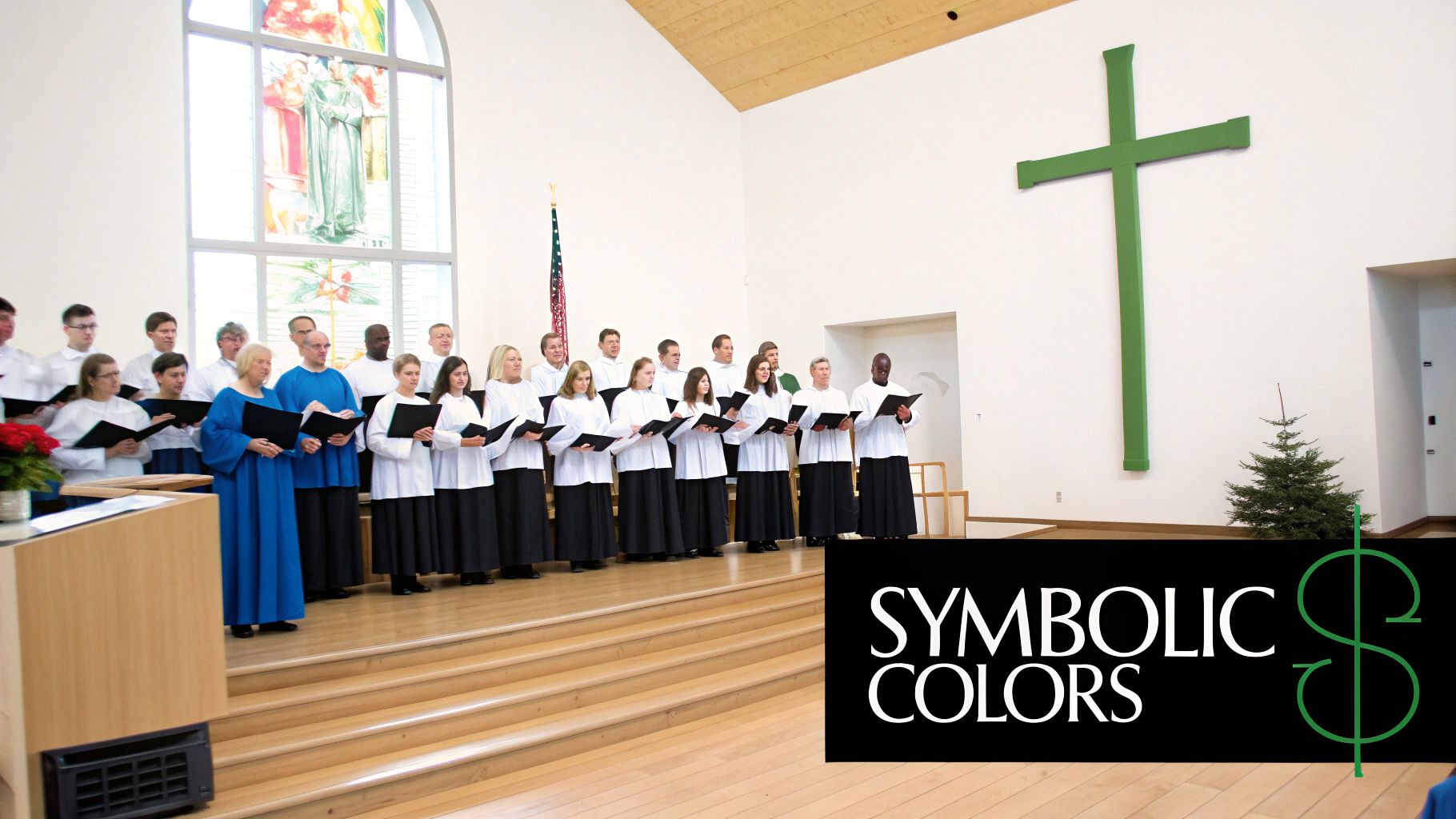
Picking out a robe color is a much bigger decision than it might seem. It’s a deliberate choice that can link a modern choir to centuries of tradition, capture the unique spirit of a service, or forge a powerful sense of community. The colors are like a silent narrator, setting the stage and the mood long before the first note is ever sung. Understanding what is the significance of choir robe colors helps create a more cohesive and meaningful presentation.
This practice has its deepest roots in the liturgical calendar, particularly within Christian denominations. Here, specific colors are assigned to mark the seasons of the church year, creating a visual harmony that connects the choir's appearance with the pastor's message and the congregation's spiritual journey.
The color of a choir's robes visually supports the theological themes of a service, transforming the ensemble from mere performers into integral leaders of worship. It's a subtle but powerful tool for creating a cohesive and immersive spiritual atmosphere.
From Tradition to Modern Expression
While the liturgical color wheel is still a strong foundation, the world of choir apparel has expanded tremendously. The rise of gospel choirs in the mid-20th century, for example, brought a whole new level of expressive freedom into the mix.
Today, choirs can choose from over 100 styles and nearly any color imaginable, including a wide range of choir gowns for church. In fact, sales data reveals a staggering 300-500% increase in the variety of options available since the 1970s. This explosion of choice means the meaning behind a robe’s color has grown to include:
- Liturgical Observance: Sticking to traditional colors for seasons like Advent (purple), Christmas (white/gold), and Ordinary Time (green).
- Thematic Reinforcement: Using specific hues to mirror the emotional heart of the music. For instance, our guide on purple and gold choir robes dives into how these shades project royalty and celebration.
- Group Identity: Building a distinct look for a school, university, or community choir that builds pride and unity among its members.
From Monasteries to Modern Stages: A History of Choir Robes
To really get why choir robe colors matter so much, you have to look back at where they came from. Their story doesn't start on a brightly lit stage, but in the quiet, echoing halls of medieval monasteries. Back then, the goal was all about humility and uniformity—creating a visual that stripped away individual egos and blended everyone into a single voice for worship.
The first choir outfits were simple, practical, and loaded with meaning. Around the 13th century, robes became standard in European churches, usually a black cassock with a white surplice worn over it. The black cassock, a long, fitted garment, symbolized turning away from worldly distractions to embrace a life of service. Over that, the white surplice—a shorter, flowing piece with wide sleeves—stood for purity, baptism, and the joy of serving God. You can dive deeper into this classic pairing in our guide on the history of choir robes.
This timeless black-and-white look created a powerful visual language that has stuck around for hundreds of years. It was never about fashion. It was about faith and function, providing a respectful and practical uniform for services held in drafty, unheated stone cathedrals. You can find more on how these traditional garments evolved on ashington-gowns.com.
The Influence of Religious Reform
Of course, history didn't stand still, and major events started to shake things up in the world of choir apparel. The Protestant Reformation in the 16th century was a huge turning point. Reformation leaders pushed for simplicity and a break from what they saw as overly ornate Catholic traditions, which naturally influenced how clergy and choirs dressed.
This period led to two different paths:
- Ditching the Robes: Some new denominations got rid of robes completely, seeing them as a symbol of the old Catholic ways.
- Keeping it Simple: Others, especially in Anglican and Lutheran churches, kept the robes but stripped them down to more modest styles, cementing the cassock and surplice as Protestant mainstays.
This era solidified the choir robe not just as a uniform, but as a statement of theological identity. The choice to wear, or not wear, a specific style of robe became a clear visual marker of a church’s doctrinal beliefs.
From Solemnity to Celebration
But the evolution was far from over. As new denominations and worship styles cropped up, so did fresh takes on choir attire. The explosion of the American gospel music tradition in the 20th century was another game-changer. This music was vibrant, expressive, and full of life—and it needed a look to match.
Suddenly, choirs began exploring a whole new color palette. They moved past the traditional black and white to embrace deep reds, royal blues, and brilliant purples. This was a huge shift in understanding what is the significance of choir robe colors. They were no longer just for solemn occasions, but for expressing pure joy, celebration, and the unique spirit of a congregation. This journey—from monastic gray to a rainbow of modern expression—sets the stage for the rich symbolism we see today. Many modern gospel choir robes reflect this vibrant history.
Decoding the Liturgical Color Wheel
The true meaning behind choir robe colors really clicks when you see it through the lens of the liturgical calendar. This isn't just about picking nice shades; it’s a living, breathing system of symbols that tells the story of the Christian year visually. Every time the colors in the sanctuary change—from the altar cloths to the choir's robes—it signals a new spiritual season, guiding the congregation through periods of waiting, celebration, reflection, and growth.
When a choir’s robes align with the calendar, they become more than just singers. They become a vital part of the storytelling. This creates a powerful sense of visual harmony, reinforcing the themes and emotions of the day's readings and prayers. A choir that visually reflects the season adds incredible depth to their musical offering.
The Primary Colors of Worship
While you'll find small variations from one denomination to another, the basic liturgical color palette is surprisingly consistent across most of Western Christianity. Getting a handle on these core colors and what they stand for is the first step for any music director who wants to build a worship experience that feels cohesive, both visually and theologically.
Here’s a look at the key colors and the seasons they represent:
- Purple (or Violet): Think preparation, penitence, and royalty. This is the color for Advent, that season of watchful waiting for Christ's arrival, and for Lent, the 40-day journey of reflection leading up to Easter. When a choir wears purple, it immediately sets a tone of solemnity and introspection.
- White and Gold: These colors are all about purity, joy, light, and victory. You'll see them during the biggest celebrations of the church year, especially Christmas and Easter. Wearing white or gold choir robes signifies a triumph over darkness and points to the holiness of the day.
- Green: This is the color you’ll see most often. Green represents hope, new life, and steady spiritual growth. It's the color for Ordinary Time—those long stretches after Epiphany and again after Pentecost. Green choir robes reflect the day-in, day-out walk of faith.
This diagram shows how choir attire grew out of its earliest symbolic forms, starting in monastic life.

This evolution, from simple monastic garments to the foundational cassock and surplice, shows just how deep the roots of symbolism run in choir vestments.
Secondary and Special Occasion Hues
Beyond those main seasonal colors, a few others pop up for specific holy days, adding even more layers of meaning to the visual experience of worship. These colors often mark moments of intense theological significance.
Red, for instance, is a color of fire and blood. It’s a powerful symbol for the Holy Spirit, which is why it's the color for Pentecost Sunday. It also represents the blood of the martyrs, making it the right choice for services that commemorate their sacrifice. Many choirs choose red choir robes to mark this powerful occasion.
Another important color is Rose (or pink). This one only shows up on two specific days of the year: Gaudete Sunday (the third Sunday of Advent) and Laetare Sunday (the fourth Sunday of Lent). This lighter, softer color gives everyone a brief moment of joy amidst the more somber seasons, a little reminder that the big celebration of Christmas or Easter is just around the corner.
By thoughtfully incorporating these colors, a choir director does more than select a uniform. They participate in a centuries-old tradition of visual theology, enriching the worship service by making abstract concepts tangible and beautiful.
Knowing this liturgical language is key. To add another layer of visual symbolism, many choirs use accessories. You can discover more about how to complement your robes by reading our detailed guide on choir stoles, which are often used to introduce liturgical colors over a more neutral base robe.
Colors That Unify School and Community Choirs
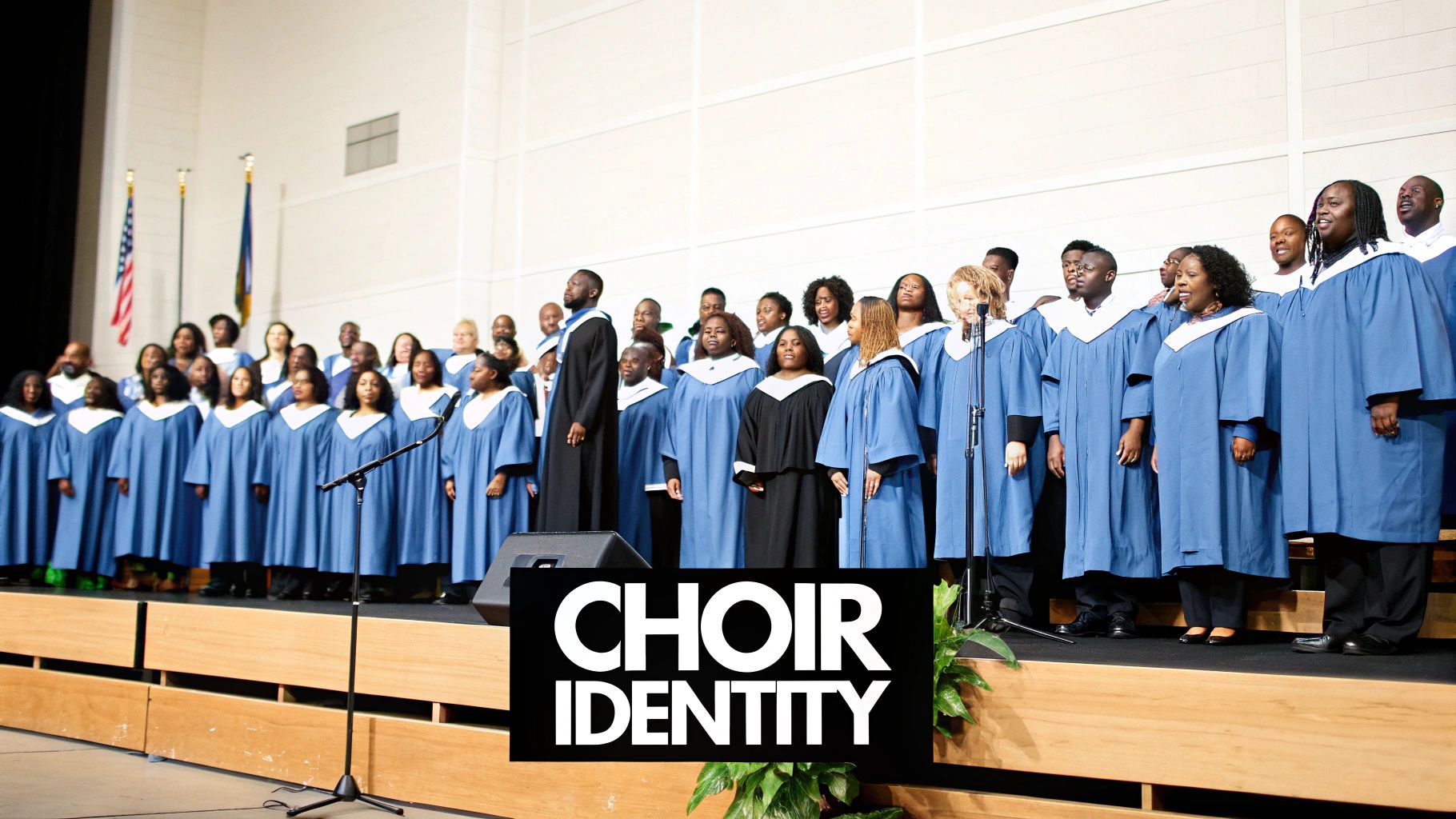
While liturgical tradition is rich with meaning, the story of choir robe colors doesn't end at the church door. For school, university, and community choirs, color is less about sacred seasons and more about a powerful, immediate statement of identity. It’s the visual signature that tells an audience who you are before a single note is sung.
Moving outside the religious context frees a choir to use color in a whole new way. Instead of following an established calendar, these groups can choose colors that tell their unique story. A bright, unexpected shade can instantly telegraph a group's dynamic energy, while a deep, sophisticated hue might signal a more formal or classical repertoire.
For a non-religious choir, the robe color becomes their flag. It’s a symbol of unity that builds a sense of belonging among members and presents a polished, memorable image to the world. The goal is to create a visual identity that is as unforgettable as their sound.
Building Identity with School and Team Colors
For academic choirs, one of the most straightforward and effective strategies is aligning their robes with the official school colors. When a university choir steps out in their classic navy and gold, or a high school ensemble wears their bold crimson and white, they instantly connect themselves to the larger institution. This simple choice cultivates a powerful sense of school pride and solidifies the choir's role as ambassadors at every performance.
This is about more than just matching a logo. It creates a visual shorthand that audiences immediately understand, reinforcing the choir’s place as a vital, visible part of the school community. When members wear their school colors, they aren’t just singers; they are representatives of a shared tradition and spirit.
Creating a Powerful Stage Presence
Choosing the right color is also a critical artistic decision, one that directly impacts how a choir is perceived on stage. The right hue can elevate a performance, creating a stunning visual backdrop that complements the music itself.
When thinking about color for performance, consider these practical points:
- Stage Lighting: How will a particular shade react under bright, warm, or even colored lights? A deep burgundy can look incredibly rich and warm, whereas a brilliant royal blue creates a striking, energetic effect. We offer a wide selection of wholesale choir robes in various colors to suit any stage environment.
- Ensemble Energy: What’s the personality of your choir? Is it bright and modern, or more traditional and classic? An electric blue or a sunny yellow can capture that youthful energy, while a timeless black or a deep forest green conveys grounded sophistication.
- Memorability: You want to leave a lasting impression. A unique color choice helps define your choir's brand, making every performance visually distinct and helping you stand out in the audience’s memory long after the concert ends.
Picking the Perfect Color for Your Choir
So, we've explored the rich history and symbolism behind different colors. Now comes the fun part: picking the right one for your actual choir. This is where art meets practicality. The perfect color isn't just about what looks good on the hanger; it’s about what will enhance your performance, flatter every member, and hold up over time. It’s a balancing act between visual punch and real-world factors like stage lighting and maintenance.
Seeing Your Robes in the Right Light
First things first: think about where you perform most often. Stage lighting can do some wild things to fabric colors. A deep, sophisticated navy that looks incredible in daylight might just read as a flat black under the warm glow of stage lamps. On the flip side, a vibrant red could become so intense under the lights that it’s almost blinding.
The key is to consider your primary performance space. Will the color pop in a dimly lit sanctuary or wash out under bright theatrical spotlights? It’s always a good idea to get a fabric swatch and see how it behaves in your specific environment before you commit.
A choir robe's color is never static; it lives and breathes under the lights. The best choices are made with the final performance in mind, creating a look that’s as dynamic and cohesive as your sound.
It's All in the Fabric
The material of the robe plays a massive role in how a color truly comes across. Think about the difference between matte and shiny finishes.
A matte fabric, for instance, absorbs light. This gives any color a deep, understated quality that's perfect for more formal services or classical concerts. It creates a unified, non-reflective look that keeps the focus squarely on the music.
Now, take that same color and put it on a satin or shiny fabric. Suddenly, it reflects light, creating highlights and a sense of energy and movement. This is a fantastic choice for gospel choirs or any group aiming for a more celebratory, eye-catching presence. The sheen itself becomes part of the performance. If you want to dive deeper into how fabrics work, our guide on the best choir robes is a great place to start.
Finding a Hue That Suits Everyone
You also want a color that makes everyone in the group feel confident. For a children's choir, bright and cheerful colors are almost always a win. Think sky blue, sunny yellow, or a crisp, classic white. These colors project a sense of youthful energy and stand out beautifully from the audience’s perspective.
For adult or multi-generational choirs, it’s often better to go with more universally flattering shades. Rich jewel tones like deep burgundy choir robes, forest green, or royal blue choir robes tend to look great on a wide variety of skin tones. These colors carry a sense of dignity and professionalism, giving your ensemble a polished look that lets the music truly take center stage.
Fabric and Color Selection Guide
Choosing the right fabric is just as important as choosing the right color. This table will help you see how the material itself changes the game, affecting everything from appearance to upkeep.
| Fabric Type | Color Appearance | Best For | Maintenance Level |
|---|---|---|---|
| Matte Polyester | Deep, non-reflective, and uniform. Colors look rich and true. | Traditional liturgical choirs, formal concerts, and televised events. | Low (Wrinkle-resistant) |
| Shiny/Satin Polyester | Reflective and vibrant. Colors catch the light with a dynamic sheen. | Gospel choirs, celebratory performances, and modern ensembles. | Low (Wrinkle-resistant) |
| Cotton Blend | Soft, natural, and less intense. Colors have a gentle, muted look. | Choirs in warm climates seeking breathability and comfort. | Medium (Prone to wrinkles) |
Ultimately, the goal is to find that sweet spot where the fabric enhances the color you’ve chosen, fits your performance style, and doesn’t create a maintenance headache for your volunteers.
Answering Your Questions About Choir Robe Colors
Choosing the right color for your choir's robes is a big decision, and it’s natural to have questions. It's about more than just picking a shade you like; it’s about tradition, identity, and practicality. Let’s walk through some of the most common questions we hear from choir directors.
What's the Most Flexible, Go-To Color for a Choir Robe?
If you're looking for the single most versatile option, you really can't go wrong with black or a deep navy blue. A classic black choir robe is the workhorse of the choir world for a reason. It creates a timeless, unified look that fades into the background, letting the music and any colorful accents—like liturgical stoles—really pop.
This kind of neutrality means it works for any service, any time of year. You can completely change the feel for Christmas, Easter, or Pentecost just by swapping out accessories. It's a smart, flexible choice that gives you a solid foundation to build on for years to come.
How Should We Pick a Color If Our Church Isn't Liturgical?
For non-liturgical churches, you're freed from the church calendar, which opens up a fantastic opportunity to let your community's unique identity shine through. Think about the story you want your choir's appearance to tell. What's the feeling you want to evoke during worship? You can even look at your church’s logo or the colors used in your sanctuary for inspiration.
- Royal blue often speaks of truth and hopefulness.
- Burgundy can create a warm, rich, and inviting atmosphere.
- Forest green might symbolize the growth and vitality of your congregation.
The idea is to pick a color that feels authentic to your church's mission and the energy of your worship, creating a look that is both intentional and cohesive.
When tradition isn't your main guide, your choir's color becomes a powerful part of your brand. It’s a visual shorthand that tells the congregation whether your ensemble is vibrant and modern or grounded and soulful.
Should Our Children's Choir Wear a Different Color?
There's no hard-and-fast rule here, but it's very common to see children's choirs in brighter or lighter colors. Shades like sky blue, sunny yellow, or a crisp white are popular because they just feel youthful and energetic, reflecting the innocence and joy of the singers themselves. Lighter shades also help a children's choir stand out visually.
That said, some churches choose to use the same color for all choirs to foster a sense of unity across the generations. The right answer really depends on what your church wants to emphasize. We find many directors looking through our youth choir robes are trying to strike that perfect balance between durable fabric and a color that truly pops.
Is It Okay to Mix Different Robe Colors in Our Choir?
Absolutely! Mixing colors can look incredible, but the key is to do it with a clear purpose. You see this a lot in gospel choirs, where a mix of several vibrant colors can beautifully reflect the dynamic energy of the music.
Another popular approach is to have the main choir in one color while the director or a featured soloist wears a contrasting one to draw the eye. If you want to dip your toes in, using two-color choir robes or simply adding different colored stoles over a neutral base like black or white is a great way to introduce variety without losing that polished, unified appearance.
At ChoirBuy, we know that every choir has its own story. Whether you're honoring ancient liturgical traditions or creating a bold new look, our wide selection is here to help. Take a look at our full range of high-quality, affordable options at https://www.choirbuy.com and find the perfect fit for your singers.