

Choosing the best choir robes for your group is about finding the perfect blend of visual impact, singer comfort, and long-lasting quality. Whether you direct a church choir, a school ensemble, or a community chorus, the right attire unites your singers, builds confidence, and creates a polished stage presence that allows the music to shine. High-quality, wrinkle-resistant polyester fabrics—in either a matte or satin finish—are an excellent choice for achieving that professional, unified look that lasts for years.
Your Guide to Choosing the Best Choir Robes
So, you're on the hunt for the perfect choir robes. Great! Whether you're directing a traditional church choir, a spirited school glee club, or a professional concert ensemble, the right attire is more than just clothing. It’s what pulls your group together visually, creating a powerful sense of unity that truly elevates a performance. Think of it as an investment in your choir’s identity and confidence.
Here at ChoirBuy, we’ve seen firsthand how the right robes can make singers look and feel their absolute best. To help you get inspired, you can start by browsing our full collection of choir robes to see the incredible range of styles, colors, and customization options we offer. This guide is designed to walk you through everything else—from fabrics and styles to sizing and custom touches—so you can make a decision you’ll be proud of for years to come.
Why the Right Robe Matters
We all know the music is the star of the show, but the visual element of a performance is a close second. When your choir is dressed in coordinated robes, it instantly removes the distraction of street clothes and lets the audience focus on what really matters: the music and the message. It also does wonders for the singers, building a sense of belonging and professionalism that boosts their confidence the moment they step on stage.
Just think about these key benefits:
-
Unity and Professionalism: Matching robes send a clear signal that your choir is a serious, dedicated ensemble. It creates an immediate, cohesive identity.
-
Reduced Distractions: Uniforms get rid of the visual "noise" from everyone's personal clothing choices, keeping the audience's attention locked on the performance.
-
Enhanced Stage Presence: A well-designed robe that fits properly and drapes elegantly can completely transform how your choir looks under the stage lights, making them appear polished and dynamic.
Choosing a choir robe is about more than just clothing; it’s about crafting an identity. The right robe helps transform a group of individual singers into a single, unified voice, both visually and spiritually.
Getting Started with Your Selection
Diving into all the options might feel a little overwhelming at first, but it really just starts with a few simple questions. Where will your choir be performing most often? Is it a traditional church service, a school auditorium, or maybe a competitive event? The answer will point you in the right direction for style, color, and fabric.
For example, a classic church choir might lean towards a traditional, pleated robe in a more subdued color for regular services or holiday events. A high school show choir, on the other hand, might want something brighter with custom stoles to add a pop of energy and color for their competitions. The best first step is to simply close your eyes and picture what your choir's ideal look is.
What Makes a Great Choir Robe? A Look at the Anatomy
Before you start looking at fabric swatches and color charts, it’s worth taking a moment to understand what really makes a choir robe work. A truly great robe isn't just a piece of clothing; it's a carefully engineered garment where design, material, and craftsmanship come together to create a unified, powerful presence.
Think of a robe like a well-built house. Every part has a specific job, from the foundation to the finishing touches. When you know what to look for in the yoke, the body, and the sleeves, you can easily spot the difference between a robe that just looks okay and one that truly elevates your choir's performance.
When all these pieces are thoughtfully put together, you get a robe that not only looks professional but feels comfortable, allowing your singers to focus on what they do best.
The Yoke: The Foundation of Fit and Comfort
The yoke is the part of the robe that sits across the neck and shoulders. Just like the foundation of a house, it supports the weight and determines how the rest of the robe hangs. A poorly designed yoke can slip, bunch up, or feel restrictive, but a great one provides the structure for a polished, dignified look from every angle.
You'll come across a few common yoke styles, and each one sets a different tone:
-
V-Neck Yoke: This is a timeless, popular choice. It creates a clean, classic line that works beautifully with a stole or an inset.
-
Rounded Neckline: For a softer, more contemporary feel, a rounded neckline is incredibly versatile. It's a favorite for many groups, and for liturgical settings, the crisp look of a classic round neckline choir surplice offers a look that is both elegant and understated.
-
Pleated or Fluted Yoke: This style features beautiful, detailed gathering across the shoulders and back. The added texture creates a sense of depth and tradition.
Ultimately, a well-made yoke ensures every singer looks sharp and uniform throughout a long service or concert.
The Body, Sleeves, and Closures: The Details That Matter
The body of the robe creates its overall shape and flow. How the fabric drapes is everything here. You want a material that moves gracefully with the singer, creating a fluid, elegant silhouette instead of a stiff, boxy one. This visual harmony is what makes a choir look cohesive and professional.
Sleeves are another key style element that can dramatically change the robe’s character:
-
Open Sleeves: These give you that traditional, flowing look and are great for keeping singers cool.
-
Cuffed Sleeves: A more tailored and tidy option that keeps sleeves from getting in the way.
-
Bell Sleeves: Wide, dramatic, and perfect for adding a touch of grandeur to the overall design.
Finally, don't overlook the closure system—usually a zipper. It might seem like a small detail, but a high-quality, concealed zipper is essential for maintaining a seamless look down the front. It prevents bunching and is built to last. It’s this attention to quality that has helped the global choir robe market grow to an estimated $212 million in 2024. As more churches and schools seek out durable, professional attire, the demand for well-crafted robes continues to rise.
Comparing Choir Robe Fabrics and Styles
When it comes to outfitting your ensemble, choosing the right fabric and style is where the magic really happens. Think of the material as the foundation of the robe—it dictates how a singer feels after a long performance, how the garment catches the stage lights, and how well it stands up to repeated use. The style, from the cut of the sleeves to the pleating on the front, is what gives your choir its unique visual signature.
Here at ChoirBuy, we've helped countless directors strike that perfect balance between practicality and presentation. You need a robe that’s durable and easy to care for, but you also want a look that's polished, unified, and truly inspiring. Let's walk through the most popular options to find the perfect fit for your choir.
Decoding Choir Robe Fabrics
The fabric of a choir robe is a lot like the key of a song; it sets the entire tone. Each material offers a different feel, weight, and finish, making it a better fit for certain environments and occasions.
Here are the main fabric choices you'll find at ChoirBuy:
-
Matte Polyester: This is the workhorse of choir robe fabrics, and for good reason. Its non-reflective finish creates a sophisticated, modern look that won't cause glare under bright lights. It’s also incredibly durable, wrinkle-resistant, and breathable, making it the go-to choice for choirs that perform often. Our black choir robe is a perennial favorite for its dignified and timeless appeal.
-
Shiny Tricot Polyester: If you're looking for a fabric with a little more pop, shiny tricot is an excellent option. It has a subtle sheen that catches the light beautifully, adding a touch of elegance and energy to your choir's appearance. This material is lightweight and drapes gracefully, making it perfect for special events, holiday services, or any time you want a more celebratory look.
-
Premium Crepe: For choirs that want a truly luxurious feel and a superior drape, premium crepe is the clear winner. This fabric has a finely textured surface and a bit more weight, which allows it to hang perfectly and create a fluid, elegant silhouette. It might require a bit more care, but its rich appearance is unmatched for high-profile performances and liturgical settings where tradition and formality are front and center.
To give you a better idea of how these pieces come together, this chart breaks down a robe's basic anatomy.
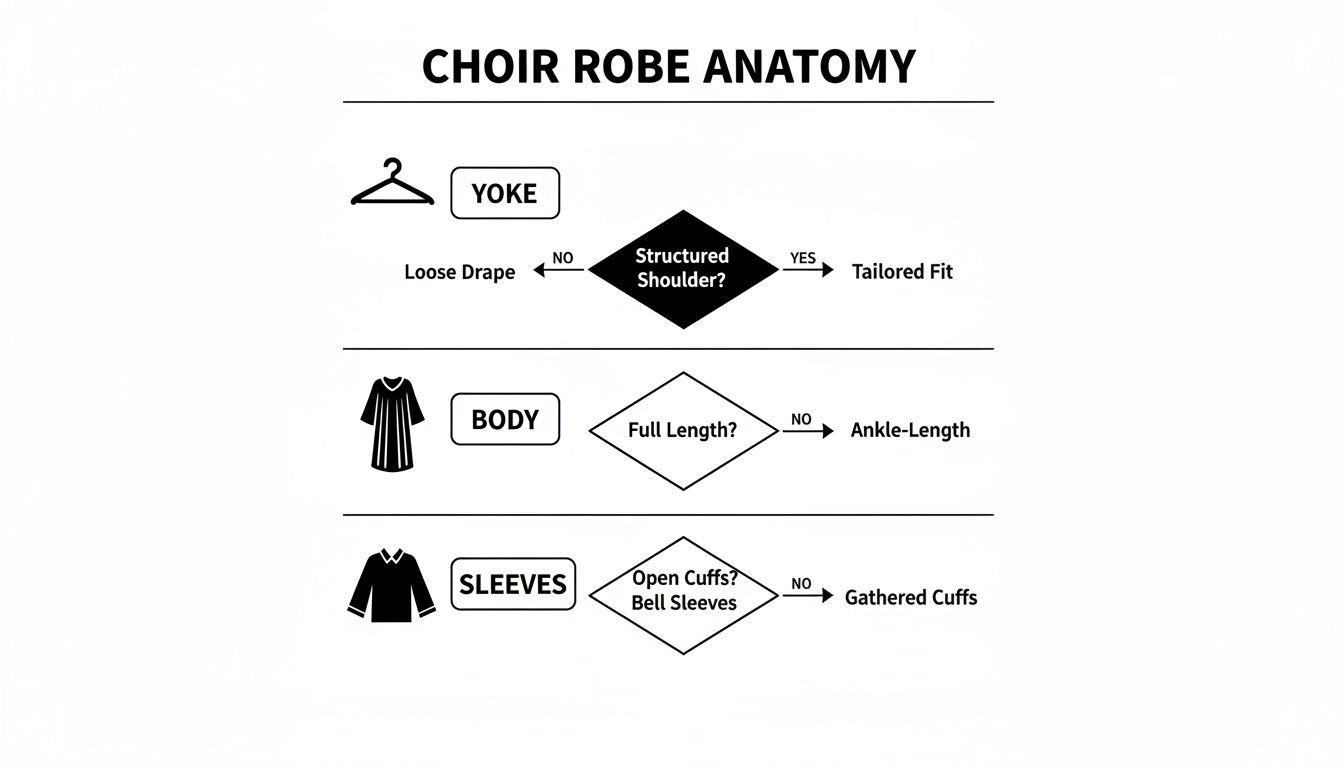
As you can see, the yoke, body, and sleeves all work in harmony to determine the robe's overall fit, comfort, and style.
Exploring Popular Robe Styles
Once you've landed on a fabric, the next step is choosing a style that reflects your choir's personality. The cut of the robe can say so much, from timeless tradition to modern simplicity.
A choir's robe is its uniform, but its style is its signature. The right design choice turns a group of singers into a visually harmonious ensemble, reinforcing the unity in their sound.
Let's look at a couple of common styles:
-
Classic Pleated Front: This is probably the most traditional and widely recognized choir robe style. The vertical pleats, or "fluting," run down the front from the yoke, adding texture and a sense of formality. This design is perfect for creating a classic, dignified look for church choirs and traditional concert settings.
-
Streamlined Front-Zip: For a more contemporary and clean look, many choirs are going for a simple, non-pleated front with a hidden zipper. This minimalist style offers a sharp, uncluttered appearance that works well for youth choirs, school groups, and modern worship teams. It’s also a fantastic blank canvas for custom embroidery or colorful choir stoles.
The combination of fabric and style is what ultimately shapes your choir's presence. By thinking through your performance environment, how often the robes will be used, and the look you want to achieve, you can confidently choose the best choir robes to serve your singers for years to come.
Why a Perfect Fit Is Non-Negotiable
Once you’ve settled on the perfect fabric and style, you’re on to the most critical detail: the fit. This isn't just about looking good—it's about enabling a great performance. A robe that pulls too tight, hangs too loose, or drags on the floor becomes an instant distraction, taking the focus off the music itself.
Think about it. A singer constricted by a tight robe can't breathe properly. One swimming in fabric or worried about tripping on a hem can't give their full attention to the director. We're going to walk through exactly how to nail the sizing for everyone, from your youngest members to your seasoned veterans, so they can feel comfortable and confident.
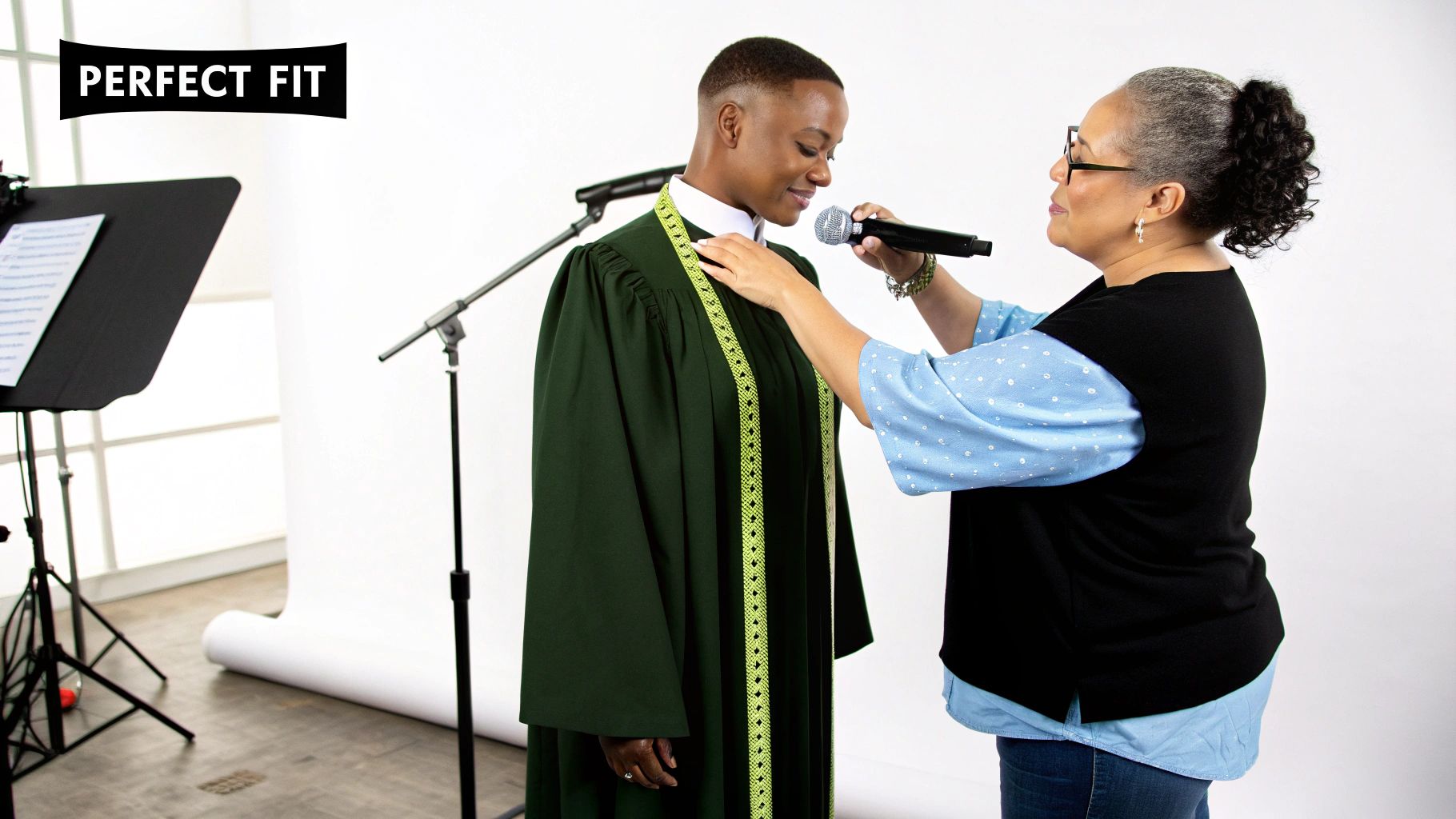
How to Measure for a Flawless Fit
Getting accurate measurements is the key to ordering the right sizes from the start. It’s a straightforward process, and at ChoirBuy, our sizing system is built around one primary measurement: height. This determines the overall length and ensures the robe hangs correctly.
Here’s a simple guide to getting the numbers you need:
-
Height First: Have each singer stand tall and straight against a wall, shoes off. Measure from the floor to the very top of their head. This is your most important number.
-
Chest Measurement: For singers with a broader build, wrap a measuring tape around the fullest part of their chest, just under the arms. Keep the tape level.
-
Sleeve Length: Ask the singer to bend their elbow just a little. Measure from the center of the back of their neck, across the shoulder, and down to their wrist bone.
With these measurements in hand, you can head over to our detailed size and color charts and match them up for a perfect fit.
Tackling Common Sizing Challenges
No two singers are built the same, which is what makes a choir so unique. But it can also present a challenge when trying to achieve a consistent look.
A properly sized robe is an unsung hero of a great performance. It allows singers to focus on their music without fidgeting or discomfort, contributing to a seamless and professional stage presence.
For children’s choirs, you're always battling the next growth spurt. That’s exactly why our Harmony Children’s Choir Robe is designed with a more generous, roomy cut. It gives kids the freedom to move and offers built-in growing room, making it a wise investment that will last.
For adult choirs, styles with generous pleating can work wonders, offering a forgiving and flattering drape on a wide variety of body shapes. By taking careful measurements and choosing a smart style, you can ensure every single member steps out in a robe that helps them look and feel their absolute best.
Taking Your Choir's Look to the Next Level with Customization
A plain robe creates a unified look, which is a great start. But it's the custom touches that really make a set of robes feel like yours. This is where a standard garment transforms into a true symbol of your choir's unique identity and spirit. Adding those personal details is how you create a distinguished look that not only connects with your audience but also gives your singers an extra boost of pride.
Think of it as telling your choir's story without a single word. Elegant embroidery or a pop of color from an accessory communicates a level of professionalism and care that elevates your entire stage presence. It’s the difference between looking good and looking truly unforgettable.
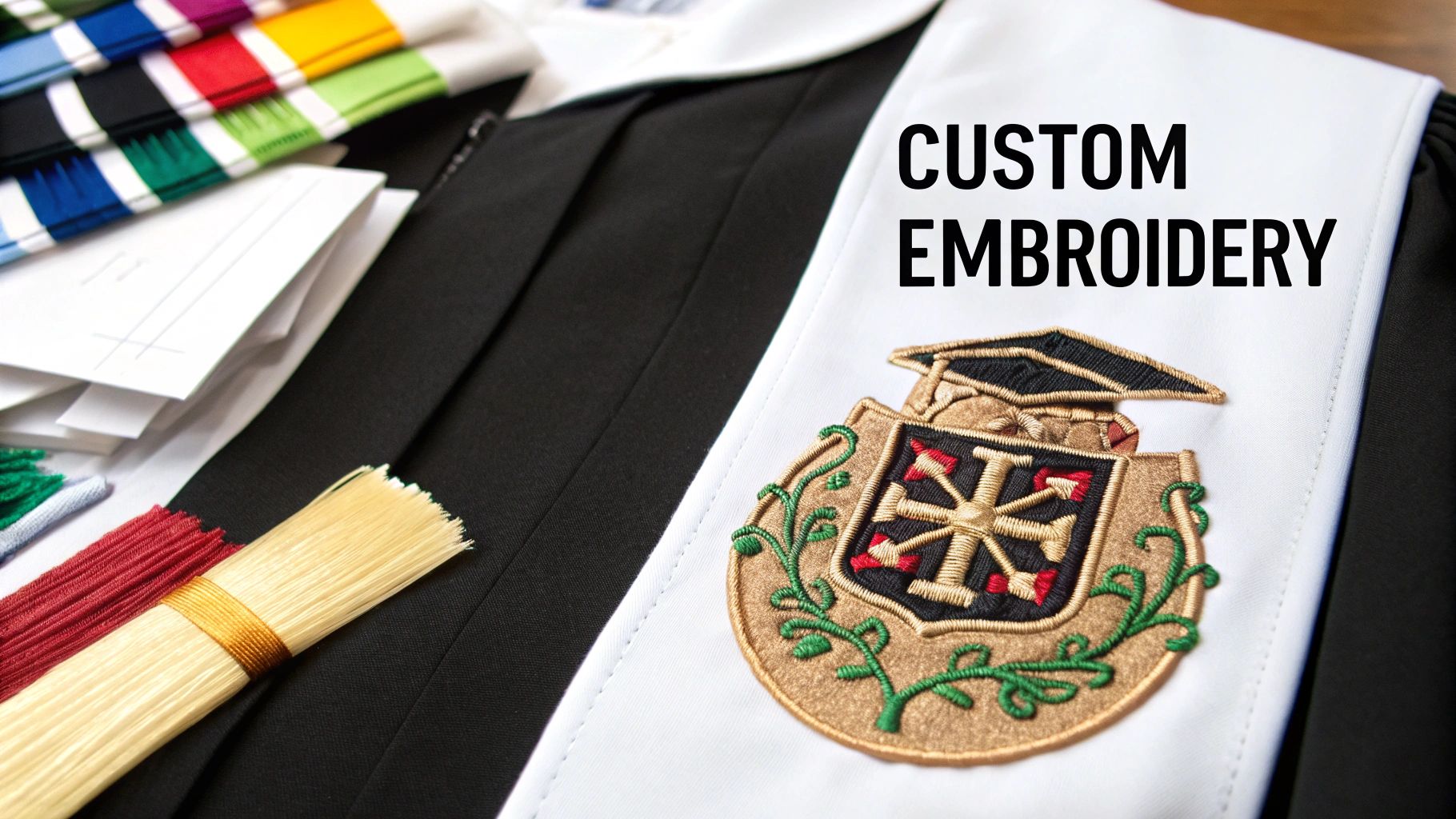
Adding a Personal Touch with Embroidery
Embroidery is the classic choice for a reason. It adds a sophisticated, permanent design to your choir robes that just feels premium. A beautifully stitched church crest, school mascot, or ensemble name offers a touch of class that a simple printed logo can't replicate. It's a timeless detail that immediately signals a commitment to quality.
Getting it right is pretty straightforward, and you have plenty of room to be creative:
-
Logos and Crests: Adding your organization's symbol to the chest or a stole is a powerful way to build a strong visual identity. This is a go-to for school choirs, church ensembles, and community groups.
-
Lettering: You can add your choir's name, initials, or even a meaningful year. We can work with all kinds of fonts, from traditional scripts to clean, modern lettering, to find a style that fits your group perfectly.
-
Placement and Colors: The left chest is the traditional spot, but don't be afraid to consider the sleeve or the back yoke for a more modern look. When it comes to color, think about what will create the most impact. If you need some ideas, you can explore inspiring church color palettes to see how different shades work together and complement your sanctuary's aesthetic.
The Power of Choir Stoles and Accessories
If you want flexibility, accessories are your best friend. A simple stole or overlay can instantly shift the entire visual dynamic of a performance. They add layers of color, meaning, and focus, making them the perfect solution for choirs that want to adapt their look without buying a whole new set of robes.
Just as a crescendo builds musical intensity, a well-chosen accessory builds visual impact. A colorful stole isn't just fabric; it’s a statement that enhances the story your choir tells through its music.
Choir stoles are especially effective. For example, a simple stole can be used in a few brilliant ways:
-
Highlighting Different Sections: Why not give your sopranos, altos, tenors, and basses their own distinct stole color? It looks fantastic from the audience and helps them visually track the different vocal lines.
-
Celebrating the Seasons: Use specific colors to mark the liturgical calendar—purple for Advent, brilliant white for Easter, or a deep red for Pentecost. It’s an easy way to stay visually relevant throughout the year.
-
Honoring Achievements: Award special stoles to your senior members, section leaders, or long-time singers. It's a wonderful way to recognize their dedication and commitment.
Using special garments to unify a group is a tradition that goes way back. You can trace the idea to ancient Greece, where performers wore specific costumes so the audience would see them as a cohesive unit. Over the centuries, that evolved into what we see today, with accessories like colored stoles becoming key identifiers for different roles in church and school ensembles. It's a rich tradition that continues to make performances more meaningful.
Care and Maintenance for Long-Lasting Choir Robes
Think of your choir robes as a long-term investment. Just like a musical instrument, they need proper care to perform their best. A little bit of attention to cleaning and storage will keep your robes looking sharp and professional for countless seasons to come.
Without a solid care routine, fabrics can fade, wrinkles can set in, and your ensemble’s polished look can suffer. Following a few straightforward guidelines will protect your investment and ensure your choir always looks as good as they sound.
Cleaning Your Choir Robes Correctly
The right way to clean your robes really comes down to the fabric. Before you do anything, check the care label—it’s your best guide.
-
Machine Washing: Most of our robes are made from durable polyester fabrics that handle a gentle, cold-water cycle beautifully. Just be sure to use a mild detergent and wash them with similar colors. Pro tip: don't cram the washing machine full, as this is a surefire way to cause deep wrinkles.
-
Dry Cleaning: If your robes feature delicate satin stoles, intricate embroidery, or are made from a more sensitive fabric, dry cleaning is the safest option. A professional cleaner knows exactly how to treat these garments without damaging the color, texture, or details.
Accidents happen. For small spills or makeup smudges, act fast! Gently blot the spot with a damp cloth and a tiny bit of mild soap. Whatever you do, don't rub aggressively, as that can permanently damage the fabric fibers.
Smart Storage to Prevent Wrinkles and Damage
What you do between performances is just as crucial as the cleaning process. Shoving robes into a crowded closet is the quickest way to get stubborn wrinkles and even cause damage. The goal is to keep them clean, dry, and ready to wear at a moment's notice.
Taking care of your robe inventory is a sign of a well-organized program. It’s a trend we’re seeing everywhere—even the choir management software market is expected to hit $4.33 billion by 2030, which shows just how much groups are focusing on protecting their assets. A professional approach to robe care is part of that same mindset. You can learn more about these market trends and their impact here.
A well-cared-for robe is a sign of respect—for the music, for the audience, and for the singers themselves. Proper maintenance ensures that your choir’s visual presentation is always as strong as its vocal performance.
Ready to get your robe closet in order? Here are a few simple steps to keep your inventory in pristine condition:
-
Use Quality Hangers: Cheap wire hangers are a robe’s worst enemy. Use sturdy, broad-shouldered hangers that support the full weight of the garment and maintain the shape of the yoke.
-
Invest in Garment Bags: Simple, breathable garment bags are worth their weight in gold. They protect robes from dust, fading, and accidental snags while they’re hanging in storage.
-
Give Them Space to Breathe: Store robes in a cool, dry place with plenty of space between each one. Good airflow prevents any musty smells from developing over time.
-
Label Everything: If you're managing robes for a whole choir, a simple labeling system with names or numbers will make distribution before a service or concert completely painless.
By putting these simple habits into practice, you’ll dramatically extend the life of your robes and keep your choir looking unified and dignified for years.
Common Questions About Choir Robes
Let's be honest, outfitting an entire choir can feel a little daunting. You're trying to coordinate sizes, styles, and budgets for a whole group of people. Getting the details right is key to making sure everyone looks and feels their best, so you can move forward with confidence.
Over the years, we've helped countless choir directors and church leaders through this process, and a few questions always seem to pop up. Here are the answers to the most common ones we hear.
How Far in Advance Should We Order Robes?
This is probably the most critical question we get, and the answer is simple: plan ahead! If you’re dreaming of custom robes with specific colors, fabrics, or special embroidery, it's best to place your order 6–8 weeks before you need them. That gives us plenty of time for production and shipping, and it gives you a comfortable cushion for any last-minute preparations.
Of course, if you're ordering a standard, in-stock style, things move much faster. Still, it never hurts to build in a little extra time, especially if you're ordering around major holidays like Christmas or Easter when things get incredibly busy.
What Is the Best Way to Size a Large Choir?
Trying to wrangle measurements for a large group can feel like herding cats, but a little organization goes a long way.
-
Pick a Point Person: Have one dedicated person collect everyone's measurements. This keeps everything streamlined.
-
Use a Sizing Form: We have a handy sizing form you can download. It’s a lifesaver for keeping all that information in one organized spot.
-
Always Order Extras: Trust us on this one. Order a few extra robes in the most common sizes. You’ll be so glad you did when new members join mid-season.
-
Sizing for Kids: For youth choirs, you'll want a robe with a more generous fit to accommodate growth spurts. Our white choir robes for children is designed with exactly that in mind, offering a bit more room to grow.
If you're still unsure, just give us a call. We can help you estimate the right size breakdown based on your choir's demographics.
Can I Get a Sample Before Placing My Order?
Absolutely! We completely understand that you need to see and feel the fabric before making a decision for your entire group. Pictures are great, but nothing beats seeing the quality and color in person.
We have a sample program at ChoirBuy that lets you check out the robe’s material, color, and craftsmanship firsthand. It's the best way to make sure what you see is what you get. Just get in touch with our team, and we'll get a sample sent your way.
Ready to create that beautiful, unified look you've been envisioning? We're here to help you find the perfect robes and accessories that will make your choir shine.