

Choir stoles are far more than just another piece of the uniform. They’re a powerful visual statement—a symbol of unity, a nod to tradition, and a reflection of your choir’s musical purpose. These elegant bands of fabric, worn over the shoulders of a choir robe, are what transform a group of individual singers into a polished, cohesive ensemble. For any choir director serious about presentation, a set of high-quality choir stoles is the finishing touch that elevates a performance.
Understanding the Role of Choir Stoles
At its heart, a choir stole is a unifier. Think of it as a team jersey; it instantly creates a sense of belonging and shared mission. This visual harmony does wonders for a performance, focusing the audience's attention squarely on the music and lending an air of professionalism to the entire presentation.
The history of these garments is deeply rooted in church tradition. You can trace stole-like vestments all the way back to European monasteries in the 13th century, where they originally symbolized humility and a rejection of worldly vanity. Here in the United States, the move toward unified choir vestments was a major turning point, with Trinity Church in Boston first adopting them in 1859. This change underscored the choir's sacred role as a single, unified voice leading the congregation in worship. You can find more fascinating details about the history of choir robes on CAGraduation.com.
Why Stoles Are a Key Part of Choir Attire
Deciding to add choir stoles to your group’s wardrobe is about more than just looking good. They serve both practical and symbolic functions that enrich the entire experience for singers and the audience alike.
- Creates Visual Unity: Stoles pull the whole look together. They minimize distractions from varied clothing underneath the robes and present a clean, professional image.
- Symbolizes Membership and Identity: Putting on a stole is a small but meaningful act. It signifies that each singer is a committed member of the group, which helps build a strong sense of community and pride.
- Allows for Liturgical Expression: For church choirs, the ability to switch out stole colors to match the seasons of the liturgical calendar adds a powerful layer of visual storytelling to worship services.
A well-chosen choir stole does more than complete a uniform—it enhances the spiritual and artistic mission of the ensemble. It is a visual representation of voices joined in harmony.
Key Factors for Selecting Choir Stoles
Choosing the right stoles means thinking through a few key details to find the perfect fit for your choir’s specific needs. From the feel of the fabric to the final custom touches, every element contributes to the overall look and how well the stoles hold up over time.
To help you navigate the options, we’ve put together this table highlighting the most important factors to consider.
Key Factors for Selecting Choir Stoles
| Factor | Key Considerations | Why It Matters |
|---|---|---|
| Fabric Choice | Think about the finish you want. Satin offers a classic sheen, matte fabrics give a more modern look, and polyester is a workhorse for durability. | The fabric dictates how the stole hangs, how it looks under stage lights, and what kind of care it will need. |
| Color Symbolism | Are you matching liturgical seasons, school colors, or a specific performance theme? | Color is a powerful communicator. It can instantly set a mood, convey meaning, and reinforce your group’s identity. |
| Sizing & Fit | Most stoles come in standard adult and youth lengths. The key is ensuring the length and width complement the cut of your robes. | A properly sized stole looks intentional and professional. One that's too long or short can look sloppy and distract from the overall effect. |
| Customization | This is your chance to make them unique with embroidered or screen-printed logos, crests, or even musical symbols. | Custom details transform a standard stole into something that is uniquely yours, strengthening your choir's brand and identity. |
A great way to get started is by browsing a wide selection of choir stoles on choirbuy.com. Seeing the different styles, colors, and customization options can give you a much clearer idea of what’s possible and spark some inspiration for your own ensemble.
Choosing the Right Colors and Fabrics
Before your choir sings a single note, their stoles have already begun to speak. The color and fabric you choose work hand-in-hand, conveying deep symbolic meaning while also determining how the stoles will look and feel under the lights. Getting this combination right is one of the most important steps in creating a polished, professional, and powerful look for your ensemble.
It all starts with color. In many settings, especially for church choirs, colors aren't just about what looks nice. They're packed with symbolism tied directly to the liturgical calendar. Every hue tells a part of the story, visually connecting the music to the meaning of the season.
Decoding Liturgical Color Symbolism
When you understand the language of liturgical colors, you can choose stoles that are not only beautiful but theologically right for the occasion. This creates a cohesive worship experience for everyone, reinforcing the themes of the service in a powerful, visual way.
This tradition is widespread. In fact, research shows that 70% of U.S. churches use color-coded vestments to mark the seasons of the church year. You see this directly in choir apparel, with 65% of choirs using white for purity during Easter and 40% adopting red to represent the Holy Spirit at Pentecost. The stoles your choir wears are an active part of this visual storytelling.
"Color in worship is a silent sermon. A purple stole in Lent speaks of reflection and preparation, while a vibrant red one at Pentecost visually shouts the fire of the Holy Spirit. It's a powerful, non-verbal part of the ministry."
Here’s a quick rundown of the primary liturgical colors and what they represent:
- White and Gold: These are the colors of high celebration, representing purity, joy, and triumph. You'll see them on major holidays like Christmas and Easter.
- Red: A powerful color of passion and fire, red is used for Pentecost, ordinations, and services that honor martyrs.
- Purple: Symbolizing penitence, preparation, and royalty, purple is the color for the reflective seasons of Advent and Lent.
- Green: As the color of life, growth, and hope, green is used throughout Ordinary Time—the longest season in the church calendar.
Want to learn more about how these colors work with your robes? Check out our detailed guide on choir robe color meaning.
Selecting the Perfect Fabric Finish
Once you've landed on your colors, the next piece of the puzzle is the fabric. The material and its finish will dictate how the stole hangs, how it plays with light, and how well it holds up over the years. The two most common choices give you very different effects.
Satin Finish
Satin is the classic choice for a reason. If you want a traditional, elegant look, this is it. Its signature high-sheen surface catches the light beautifully, making colors appear rich, deep, and vibrant. That reflective quality really makes satin stoles pop, adding a touch of formality and brilliance to any performance. They drape smoothly and have that unmistakable luxurious feel.
Matte Finish
For a more modern, understated effect, a matte finish is a fantastic option. Matte fabrics absorb light instead of reflecting it, giving you a smooth, non-glare appearance. This is a game-changer for choirs that are often photographed or filmed, as it cuts down on distracting glare and hotspots from stage lighting or camera flashes.
When you're finalizing specific colors, particularly for custom orders, it's helpful to have a basic understanding of color management in printing. This knowledge helps ensure that the brilliant red or deep purple you see in a sample is exactly what you get across your entire bulk order.
Ultimately, the best fabric comes down to your choir's specific needs. You're balancing the look you want with practical things like lighting and budget to find that perfect fit.
A Practical Guide to Sizing and Style
A perfectly fitted choir stole is the secret to a sharp, unified look. Think of it like a well-tailored suit—when a stole hangs just right, it elevates the entire ensemble, making your choir look polished and professional. Getting the size right means no distractions, keeping the focus exactly where it should be: on the music.
Let's walk through how to measure your singers and pick the right style with confidence. We'll cover standard sizing and how different stole cuts drape, so you can sidestep common fitting mistakes and nail that flawless presentation every time.
Demystifying Choir Stole Sizing
First things first: stole sizing isn't as complicated as it sounds. It’s all about proportion. You’re looking for a length that works with both the singer’s height and the cut of their robe. A stole that’s too short looks like an afterthought, while one that’s too long can get in the way.
Most choir stoles are available in standard adult and youth sizes, which makes things much easier. The only measurement you really need is the singer's height.
- Adult Sizing: Standard adult stoles are generally made for singers who are 5'6" and taller. They're cut to a length that hangs gracefully without interfering with their posture or movement.
- Youth Sizing: For younger singers or those with more petite frames, youth stoles are proportionally shorter and sometimes a bit narrower.
For the most accurate fit, have your singers try on their stoles while wearing their choir robes. This shows you exactly how the stole will drape during a performance. You can find detailed measurements by consulting comprehensive choir stole size and color charts that match specific heights to the ideal stole length.
The image below breaks down the simple, three-step thought process for choosing the perfect stoles.
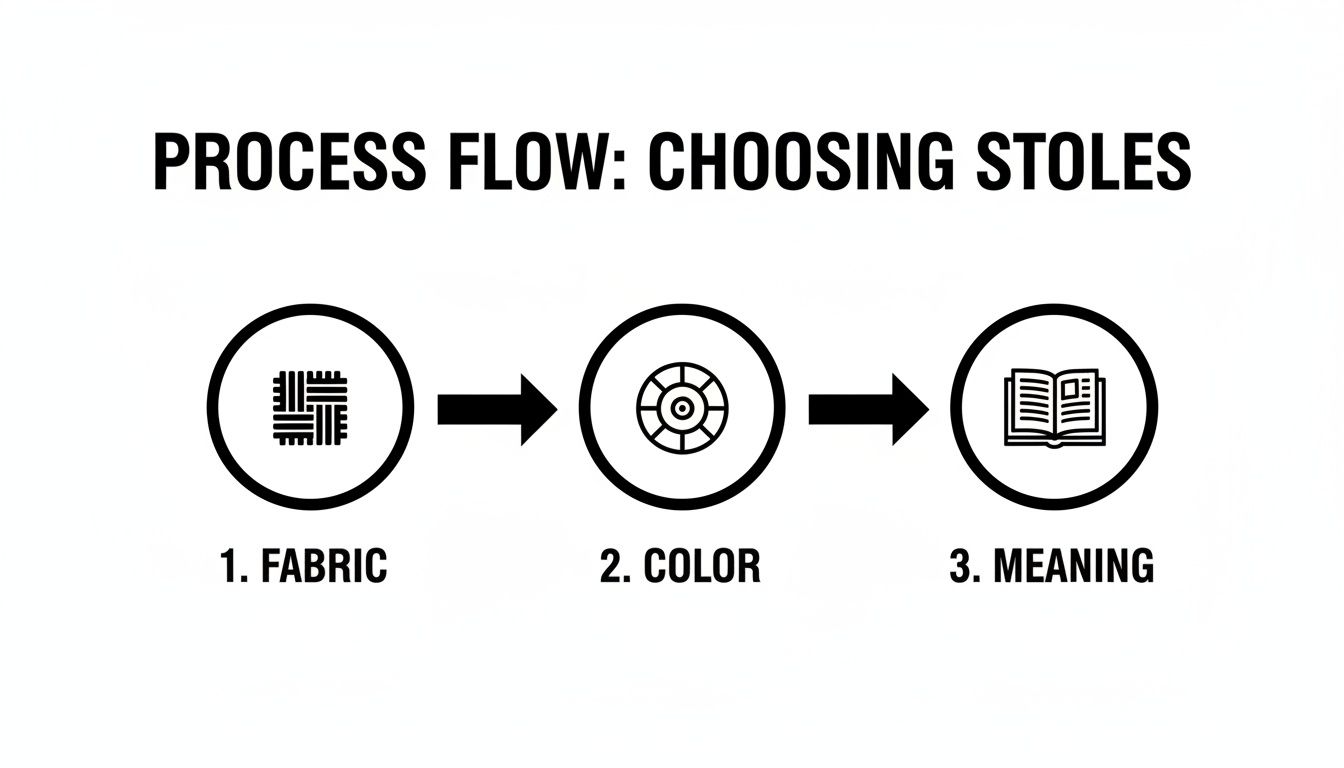
It all comes down to how fabric, color, and symbolic meaning intersect to create the right stole for your choir.
Choosing the Right Stole Style
Beyond length, the cut of the stole itself is a game-changer for your choir's overall appearance. The style determines how it sits on the shoulders and frames the robe—much like how a shirt's neckline can change a whole outfit.
A well-chosen stole style doesn't just add color—it defines the silhouette of your choir. It can create a traditional, seamless look or offer a more contemporary, dynamic line.
Here are a few popular styles you’ll come across:
- Classic V-Neck Stole: This is the go-to traditional option. It has a pointed back that forms a 'V' at the nape of the neck, letting it lie perfectly flat over the robe’s yoke. It’s a timeless choice for a clean, uninterrupted line.
- Tapered Stole: For a more modern feel, the tapered stole narrows slightly as it hangs down. This subtle shaping gives it a sleek, contemporary silhouette that often looks less bulky than a straight-cut stole.
- Reversible Stoles: Where practicality meets style. Reversible stoles are incredibly useful, giving you two colors in a single garment. This makes it easy to switch looks for different liturgical seasons or concert themes, making them a smart, budget-friendly choice for any choir.
Creating a Unique Identity with Customization
Once you've settled on the right fabric and color, the real magic begins. Customization is what transforms a simple stole into a signature piece that tells your choir's story. This is where your group's unique spirit truly shines, creating an identity that your audience will remember long after the performance ends.
Adding custom details to your choir stoles elevates them from a piece of the uniform to a symbol of your choir's mission and pride.
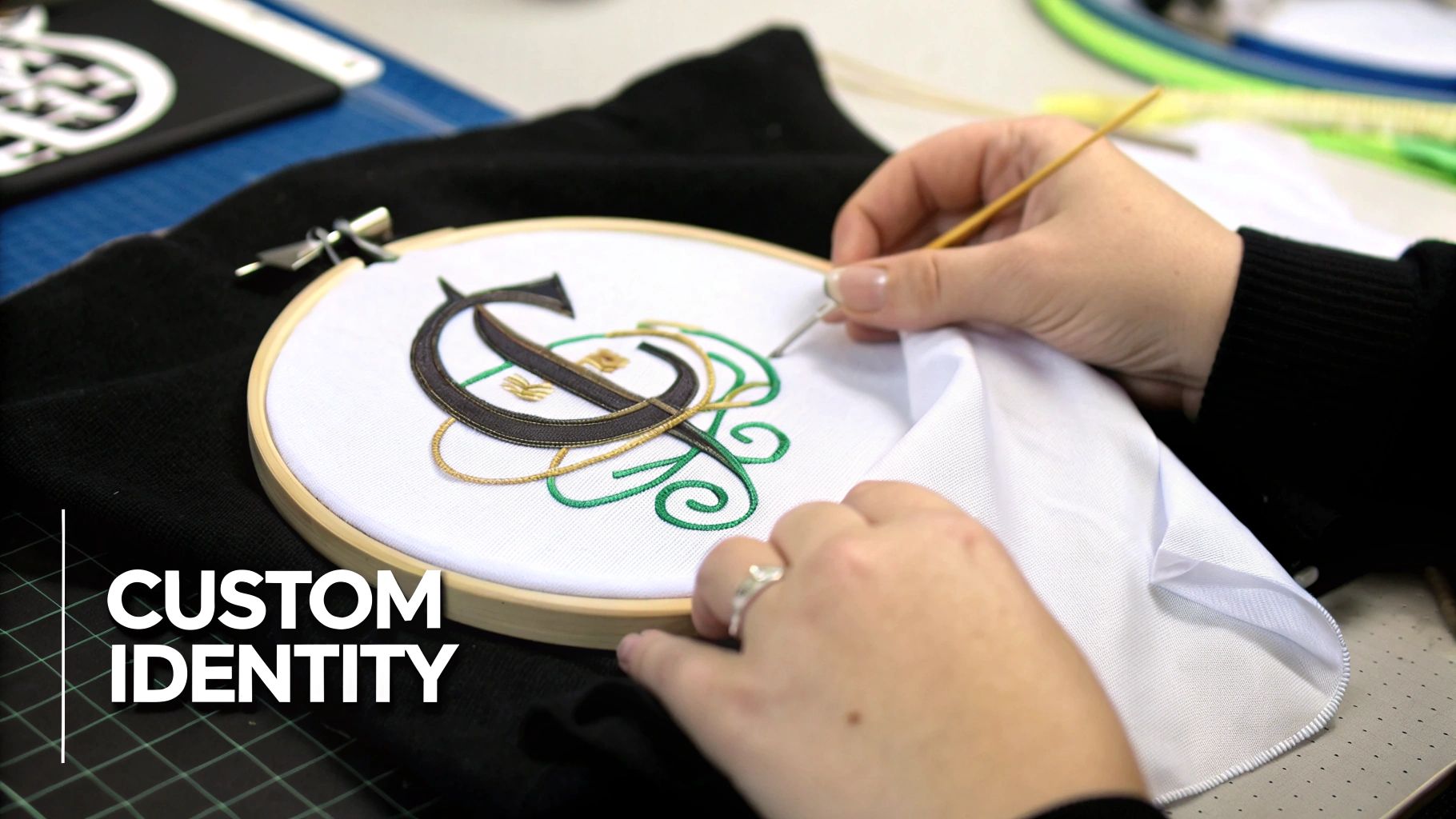
This isn’t just about slapping a logo on something; it’s about storytelling. A thoughtful design—whether it’s a school crest, a church symbol, or a unique musical motif—communicates who you are before a single note is sung. The two best ways to do this are embroidery and screen printing, and each offers a very different feel.
The Classic Elegance of Embroidery
Embroidery is the gold standard for a premium, textured finish. It’s a craft where the design is stitched directly into the stole’s fabric, creating a raised, three-dimensional effect that feels classic and sophisticated. Not only does it look great, but it’s incredibly durable, ensuring your logo or lettering stays vibrant for years to come.
Embroidery is the perfect choice for:
- Logos and Crests: The detailed stitching gives institutional symbols a prestigious, professional look.
- Monograms or Choir Initials: A simple, elegant way to brand your stoles with a timeless feel.
- Small, Intricate Symbols: Think religious icons or musical notes—they’re rendered with beautiful precision.
The secret to stunning embroidery is contrast. You want a thread color that really pops against the fabric. For instance, a brilliant gold thread on a deep purple stole creates a regal, high-impact look that can be seen even from the back of an auditorium. To see how different designs come to life, take a look at the options on our custom choir stoles page.
The Versatility of Screen Printing
If your design is more complex, with large lettering or a rainbow of colors, screen printing is probably your best bet. This technique uses a stencil to apply ink directly onto the fabric. The result is a crisp, flat design with sharp, clean edges—almost like a perfect painting on the stole itself.
Screen printing is an excellent option when you need to:
- Reproduce Detailed Graphics: It’s fantastic at capturing fine lines and intricate details that can get lost in stitching.
- Use Multiple Colors: Screen printing easily handles complex, multi-colored logos without the hassle of changing threads.
- Feature Large Text: It’s ideal for printing choir names or event themes boldly and clearly across the stole.
Customization is not just an add-on; it is the process of embedding your choir’s story into the very fabric of its uniform. The right design choice transforms a stole from an accessory into an emblem of identity.
The desire for a unique look is a growing trend. In fact, projections show a potential 15% growth in the market for customizable stoles by 2030. This is part of a larger movement, supported by a strong 8.32% compound annual growth rate in the apparel industry, as groups seek to create distinct visual identities. We saw this on a massive scale at the 2024 World Choir Games, which brought together 27,000 singers from 50 nations, many in custom apparel. This trend highlights just how important it is for choirs today to present a polished, unified, and memorable image.
How to Manage Bulk Orders Like a Pro
Ordering choir stoles for an entire ensemble isn't like a typical online purchase. It's more like conducting a piece of music—every section needs to be perfectly in sync to create a beautiful, cohesive result. Let's walk through the playbook for getting it right, from locking in your final numbers to coordinating the delivery, ensuring your choir looks sharp for every performance.
The very first thing you need to do is nail down your final headcount. It sounds simple, but getting an exact number is the bedrock of a smooth ordering process. It's what allows you to get an accurate quote and saves you from the last-minute panic of realizing you're a few stoles short. Once you have that magic number, you can start asking about volume discounts that can really make a difference for your budget.
Your Bulk Ordering Checklist
When you're juggling the needs of a whole group, a simple plan keeps everything on track. A checklist is your best friend, especially when you’re prepping for big performances during busy seasons like Christmas and Easter.
Here’s a step-by-step guide to keep things moving:
- Finalize Headcount: Get a firm number of singers who need a stole. Don't forget to account for any new members who might be joining.
- Confirm Sizing: Collect height measurements for everyone. This is the only way to guarantee you order the right adult or youth sizes for a truly uniform appearance.
- Approve Designs: If you're going custom, make sure the leadership team gives the final sign-off on all logos, text, and thread colors. No surprises later!
- Request a Quote: With your final numbers and design details in hand, ask for an official quote that reflects any volume pricing.
- Place the Order: Use that quote to place your order, but give every single detail one last look-over for accuracy before you hit submit.
Think of placing a bulk order as setting the stage for a major performance. Careful planning and clear communication with your supplier are the keys to ensuring every detail is perfect when the curtain rises.
Navigating Production and Shipping Timelines
Understanding a supplier's production calendar is absolutely critical. For bulk orders, especially custom ones, you can expect lead times to be anywhere from four to six weeks. Keep in mind, those timelines can stretch even longer during the busiest liturgical seasons, so planning well in advance is always your smartest move.
When you reach out to a supplier, be direct. Ask about their current production schedule, their shipping options, and any potential delays on the horizon that could affect your delivery date. A little foresight here can prevent a lot of stress later and ensures your stoles arrive with plenty of time to spare. To make this part easier, you can find helpful resources and submit your group's details using our dedicated bulk order forms for choirs. It keeps everything in one place and simplifies the entire process. For a deeper dive into logistics, looking into powerful order fulfillment strategies can offer some great insights.
One final pro-tip: always ask about sample policies. Before you commit to an order for dozens of stoles, get a single sample in your hands. There's no substitute for seeing the fabric, color, and craftsmanship up close. This small investment of time confirms you've made the right choice and gives you total confidence in your big order.
6. Keeping Your Stoles Looking Their Best: Care and Maintenance
You’ve invested in quality stoles for your choir, and with a little care, they can look fantastic for years. Think of it like maintaining any other part of your choir's uniform—proper cleaning and storage are the secrets to keeping them vibrant and performance-ready. It's much easier than you might think and makes a huge difference in the long run.
The first and most important rule? Know your fabric. Just like you wouldn't throw a wool sweater in a hot dryer, you can't treat all stoles the same. The material dictates everything, and guessing is the fastest way to end up with faded colors, shrunken fabric, or ruined custom details.
Cleaning Your Stoles: A Fabric-by-Fabric Guide
The type of fabric your stole is made from is your roadmap for cleaning. A shiny satin needs a completely different approach than a sturdy matte polyester. Using the wrong method can permanently damage the texture and color, so it's worth getting it right.
Here’s a quick guide to handling the most common materials:
- Satin and Other Delicate Fabrics: These need a gentle touch. To keep that beautiful sheen and avoid snags, hand washing in cold water with a mild soap is always the safest route. Never twist or wring them out. Instead, gently press the excess water out and lay them flat on a clean, dry towel to air dry.
- Polyester and Blends: Good news! Most modern choir stoles are made from polyester, which is remarkably durable and usually machine washable. Just be sure to use a gentle cycle with cold water and a color-safe detergent. To give them an extra layer of protection, I always recommend tossing them in a mesh laundry bag to keep them from getting snagged or tangled with other items.
- Stoles with Embroidery or Printing: If you have custom stoles, they need special attention. Hand washing is ideal to protect the stitching or ink. If you absolutely have to use a machine, turn the stoles inside out, place them in a mesh bag, and run it on the most delicate cycle you have. Our own custom choir stoles at Choirbuy.com are designed for easy care, but it never hurts to be cautious.
Pro Tip: Always look for a care tag first. If there isn't one, default to the most careful method: hand washing in cold water. It’s the best way to prevent any unfortunate surprises.
Ironing, Stain Removal, and Smart Storage
Getting your stoles clean is only half the battle. Making sure they are wrinkle-free and stored correctly is what keeps them ready to go at a moment's notice.
When it's time to iron, always use a low heat setting. High temperatures can easily scorch polyester or even melt satin. A great trick is to place a thin piece of cotton fabric, like a press cloth or even a clean handkerchief, between the iron and the stole. This acts as a protective shield, which is especially critical for stoles with embroidery or screen-printing.
For those inevitable little spills, act fast. Gently blot the stain with a clean, damp cloth—don't rub! For more stubborn spots, a tiny bit of mild soap or a stain remover pen can work wonders, but always test it on a hidden spot first to make sure it doesn't affect the color.
Finally, how you store your stoles makes a huge difference. Folding creates sharp creases that can be a real pain to get out later. The best methods are much simpler:
- Hang Them Up: The best way to store stoles is on hangers. Use hangers that are wide and preferably padded to help the stole keep its natural shape without leaving marks.
- Lay Them Flat: If you're short on hanging space, your next best option is to lay them flat. Place them in a shallow drawer or an archival box with a sheet of acid-free tissue paper between each one to prevent color transfer.
- Keep Them Cool and Dry: Store them in a closet or room away from direct sunlight, which can cause fading over time. You'll also want to avoid damp basements, as humidity can lead to mildew.
Answering Your Top Questions About Choir Stoles
When you're outfitting an entire choir, a few practical questions always pop up. It's completely normal to want to get the details just right. We've heard them all from choir directors and church leaders over the years, so we’ve put together some straightforward answers to help you navigate the process.
Let's clear up the common hurdles so you can order with confidence.
Planning and Ordering Timelines
The number one question we get is almost always about timing. Getting your stoles on time, especially for a special performance, is all about planning ahead.
How far in advance should we order custom stoles?
Here's a good rule of thumb: for anything with custom embroidery or screen printing, place your order at least 8 weeks before you absolutely need them. Think of major holidays like Christmas and Easter—our production schedules get packed, and you'll want to be at the front of the line. This 8-week window comfortably covers the typical 4-6 week production time and builds in a cushion for shipping.
Distinguishing Stole Types
At a glance, a stole might just look like a stole. But in a church setting, the distinction between what the choir wears and what the clergy wears is incredibly important.
What is the difference between a choir stole and a clergy stole?
The difference is all about purpose and symbolism. A clergy stole is a sacred liturgical vestment, worn only by ordained ministers as a symbol of their office and authority to lead worship and perform sacraments. A choir stole, on the other hand, is part of a uniform. Its job is to create a look of unity and shared purpose for the musical group. It doesn't carry any sacramental weight.
Think of it this way: a clergy stole represents an individual’s sacred office, while a choir stole represents a collective’s unified voice. One is a symbol of authority; the other is a symbol of harmony.
Ensuring Quality and Satisfaction
Ordering for a whole ensemble is a big commitment. You need to be sure the fabric, color, and craftsmanship are exactly what you expect before you place that large order.
Can we see a sample before placing a large order?
Yes, and we highly recommend it! We encourage you to order a single sample stole before buying for the whole group. There’s no better way to judge the quality. You can feel the fabric for yourself, see how the color looks in your own sanctuary's lighting, and check the quality of the stitching up close. It’s a simple step that guarantees you'll be 100% satisfied with the final result.
At ChoirBuy, our goal is to make outfitting your choir a simple and successful experience. We're here to help you find the perfect stoles and robes for your group.
Browse the complete collection of choir stoles at ChoirBuy.com