

A music minister can start with a simple plan: choose a color, count the singers, and order matching gowns. Then the complications appear. Children need room to grow, adults need different proportions, plus-size singers need genuine full-fit options, and a last-minute replacement may have to match a robe purchased years earlier. The cheapest robe on a product page can become the most expensive choice once laundering, alterations, storage, and replacement work enter the picture.
The right approach to church choir robes for sale is operational, not purely visual. Choose the silhouette your tradition requires, specify fabric for the way your choir performs, measure every singer rather than relying on street sizes, and protect the delivery date with a documented ordering process.
Navigating the Modern Choir Apparel Market
The pressure usually lands on one person. A new music minister inherits a choir with adults, teenagers, children, and singers whose bodies don't fit neatly into standard clothing labels. The Easter service is approaching, the budget is fixed, and the existing robes have different shades of black because several were replaced at different times.
A strategic purchase begins by treating choir apparel as a shared system. The goal isn't merely to make everyone look similar on one Sunday. It's to establish a dependable visual identity that remains manageable through regular worship, seasonal concerts, youth programs, and member turnover.
Why the first order sets the pattern
A robe program creates standards that later purchases must follow. Record the chosen fabric, color, style, trim, supplier size system, and care instructions. Keep a measurement file for each singer, but review it before every new order because bodies change and children grow.
Modern collections give directors more choices than the traditional shapeless gown. Sleeker silhouettes, contrasting yokes, stoles, piping, and custom embroidery can reflect a church's identity without abandoning the dignity of choral dress. A useful overview of contemporary options is this guide to contemporary choir robes, especially when a choir wants a current appearance without losing its formal character.
What the market is telling buyers
The category remains commercially significant. Independent market research estimates the choir robe market at about USD 180.0 million in 2020, USD 220.74 million in 2024, and a projected roughly USD 249.34 million by 2029. The same source places the broader Christian liturgical market at USD 1.8 billion in 2025, with liturgical vestments and clergy apparel accounting for USD 324 million in 2025 and projected to reach USD 513 million by 2035. Those figures point to an established, globally distributed purchasing category, not a niche limited to occasional ceremonial orders. Market estimates for choir robes and liturgical apparel
Procurement rule: Buy the robe system your choir can maintain, measure, replace, and expand. A dramatic first order that can't be matched later is a poor investment.
Choosing the Right Robe Styles and Vestments
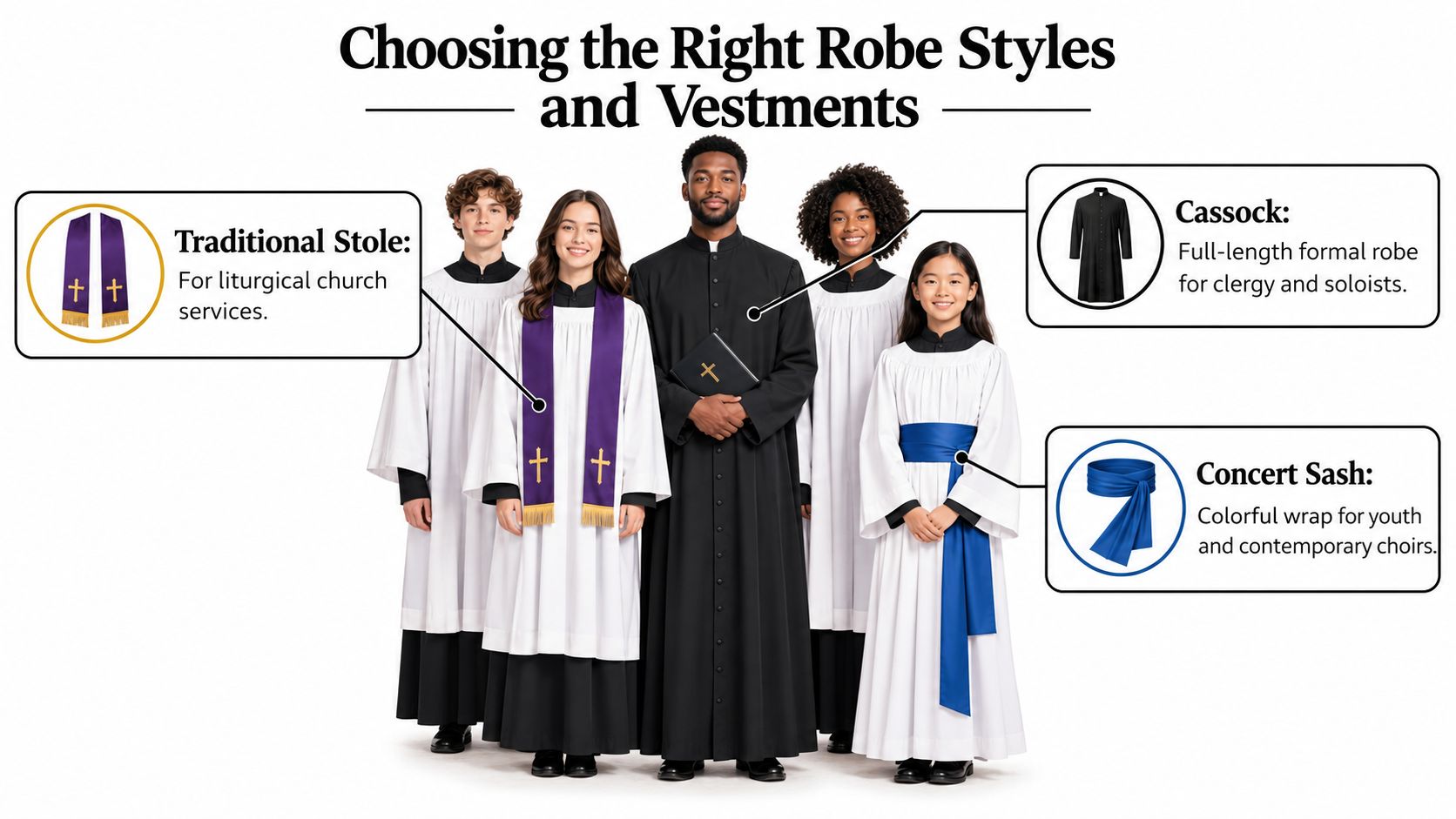
Start with the garment's role. A church choir robe, a clergy cassock, and a concert sash may all appear in the same service, but they don't serve the same liturgical or visual purpose.
A standard choral gown is the most practical choice for a unified adult or youth ensemble. Its flowing shape accommodates different body types and creates a continuous visual line across risers. Choose a clean silhouette for contemporary worship or a more structured, pleated design for traditional services and formal concerts. The gown should allow singers to move their arms freely and should not create unnecessary bulk around the neck or shoulders.
A cassock and surplice create a more layered, traditional appearance. The cassock is a full-length garment, while the surplice is worn over it as a lighter outer layer. This combination has deep liturgical roots. Scholars trace the cassock-and-surplice form to the medieval period, and Britannica notes that by the 14th century the surplice had an established role as a choral or processional garment. Basic choir vestiture also spread beyond clergy to people assisting in liturgical celebrations, helping standardize choir apparel across Christian worship in Europe. Historical background on choir vestiture
Match each garment to the assignment
| Garment | Best use | Procurement consideration |
|---|---|---|
| Choir gown | Unified church choir or concert ensemble | Prioritize consistent length, sleeve movement, and easy care |
| Cassock | Formal clergy, soloists, or traditional liturgical roles | Confirm layering needs and the required body length |
| Surplice | Traditional outer layer over a cassock | Check fullness and sleeve proportions over the undergarment |
| Stole | Liturgical color, role distinction, or seasonal detail | Confirm width, length, and whether embroidery adds care restrictions |
| Cotta or cap | Specific traditional or ceremonial settings | Purchase only when the church's practice calls for it |
A choir stole can add seasonal color or distinguish a liturgical role without replacing the core gown. A cotta offers a shorter, traditional layer in settings where that convention is already established. Choir caps are more specialized and should be selected only when they fit the church's established appearance.
For directors comparing garments beyond worship, a practical casual to formal outfit guide can help frame the broader question of dress formality. The key decision remains local: follow the denomination, clergy guidance, and visual expectations of the congregation rather than choosing a garment only because it looks attractive online.
Evaluating Fabrics for Durability and Maintenance
Fabric determines whether volunteers spend their time preparing music or fighting wrinkles. For a choir that performs regularly, the initial garment price is only one part of the purchase. Laundering effort, stain treatment, color consistency, storage, and replacement frequency all affect the total cost.
Polyester and polyester-gabardine fabrics are the practical default for many institutional choir programs. They resist wrinkles, retain color, and tolerate repeated wear. A technical specification for VISA® polyester gabardine highlights stain release, strong drape, minimal shrinkage over the product life, and color retention reported to last four times longer than cotton or blends. Technical comparison of choir robe fabrics
Compare the maintenance burden
Cotton-rich fabrics can feel familiar and comfortable, but repeated laundering may create more work through shrinkage, wrinkling, and color loss. That problem becomes visible when one section of the choir looks crisp and another appears faded or uneven after repeated use.
Polyester-based robes are usually the safer specification for weekly services, seasonal concerts, and children's programs. A cold, gentle machine-washing routine and low-heat drying can preserve shape and finish better than aggressive cleaning. The fabric still needs a care label, but the baseline workload is generally easier to control.
| Procurement priority | More practical choice | Why it matters |
|---|---|---|
| Low volunteer labor | Wrinkle-resistant polyester | Reduces pressing and pre-service preparation |
| Color consistency | Colorfast synthetic fabric | Helps replacement robes blend with the existing set |
| Frequent laundering | Machine-washable construction | Makes routine cleaning more predictable |
| Formal drape | Polyester gabardine or a comparable structured weave | Holds a polished line without excessive stiffness |
| Decorative finish | Confirm trim-specific care before ordering | Mixed materials can change the cleaning method |
Separate the robe body from the decoration
A plain polyester gown is not the same maintenance proposition as a robe with metallic accents, ribbon trim, piping, or embroidery. Decorative elements can require dry cleaning or more restrictive handling even when the base fabric itself is washable. Ask for the complete care instruction, not just the fiber name.
Build a care decision into the purchase approval. If volunteers will wash the garments, choose a plain, machine-washable construction. If the ministry wants elaborate trim, assign a realistic cleaning budget and designate storage procedures before the order is placed.
Director's standard: Never approve a fabric because it looks good under showroom lighting. Approve it only after you know who will clean it, how often, and under what instructions.
A fabric resource focused on religious fabric by the yard can also help a procurement team compare material behavior before committing to a large order. The strongest choice is the one that keeps the ensemble visually consistent without turning every service into a laundry project.
Mastering Inclusive Sizing and Accurate Fitting
A choir robe should look loose, but it can't be sized casually. The wrong hem exposes dress clothes, the wrong sleeve length catches on music folders, and an overly narrow chest restricts movement. Group orders magnify each mistake because one bad assumption can affect many singers.
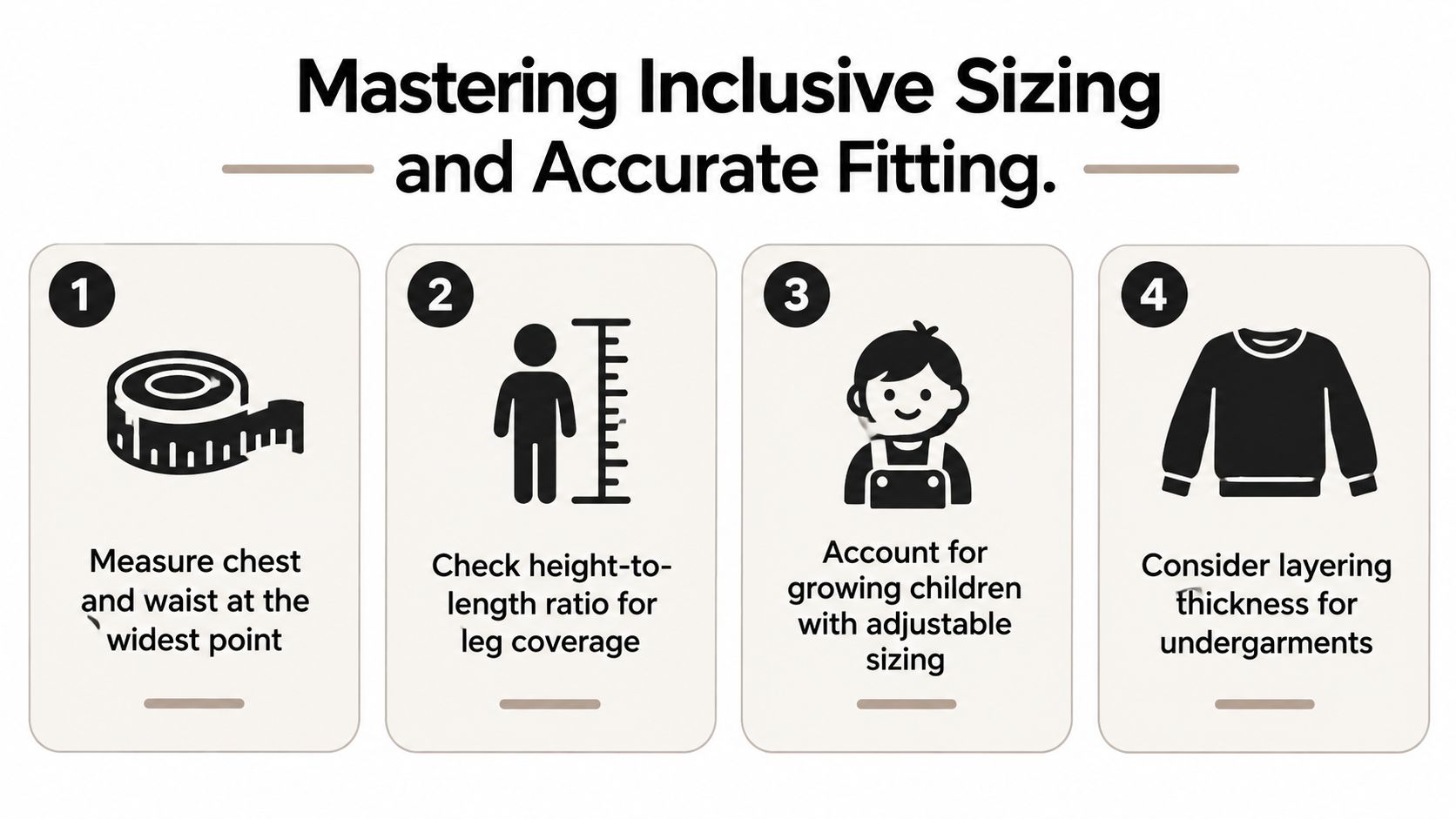
Use the supplier's measurement system, not a singer's usual shirt or dress size. Robe guides typically call for back length, chest, waist, sleeve length, and neck length, because a loose outer garment still needs controlled proportions at the neckline and sleeve line. Choir robe measurement guidance
Use a repeatable measurement session
- Prepare one measurement form per singer. Record the singer's name, age group, height, chest, waist, sleeve, and back length. Note whether the singer normally wears substantial clothing beneath the robe.
- Measure standing upright. Keep the tape level and take fresh measurements. Don't copy an old order or estimate from a standard clothing label.
- Measure the widest relevant areas. Take chest and waist measurements without pulling the tape tight. A robe needs enough ease for breathing, movement, and seasonal layers.
- Check the length against the floor. Use the supplier's height and length chart, then confirm that the hem provides appropriate leg coverage without becoming a tripping hazard.
- Resolve borderline measurements deliberately. One published choir robe chart uses height bands of 4'10"–5'2", 5'2"–5'6", 5'6"–5'10", and 5'10"–6'2", and notes that its pricing applies to orders of 25 or more robes. Use the actual chart for the selected garment, and follow the supplier's instruction when a measurement falls between sizes. Published choir robe size bands and order information
Treat youth and full-fit sizing as separate needs
Children's robes need room for growth, but “size up” shouldn't mean ordering a garment so long that it creates a hazard. Use adjustable features where available, record the child's current measurements, and plan how a replacement will be handled if the child outgrows the garment.
Adults need the same attention to proportion. Public listings commonly distinguish regular and full-fit options, including plus sizes matched to height and weight bands. Don't place a full choir order from a single regular-size chart and hope the fabric's looseness solves the problem. A unified appearance comes from consistent proportions, not from forcing every body into the same cut.
Fit check: Have a representative singer move both arms, sit, walk, and hold a music folder before approving the complete order. A robe that looks fine while standing still may fail during a processional.
Keep a small reserve plan for late replacements. Document the selected size, measurements, fabric, trim, and color so a new singer can be fitted to the existing system rather than starting from guesswork.
Customization Options and Bulk Pricing Strategies
Customization can strengthen a choir's identity, but every added detail creates another procurement decision. Contrasting piping, embroidered logos, custom stoles, and two-tone panels can make a standard gown feel specific to the congregation. They can also increase production complexity and limit the cleaning options available later.
Start with the elements that the audience sees most clearly. A consistent base color and silhouette matter more than a small logo placed where it disappears under a microphone or stole. If the budget is tight, invest first in correct fit and durable fabric, then add visual details that can be introduced without replacing the core gowns.
Spend the customization budget in the right order
- Choose the foundation first: Lock the robe silhouette, body fabric, color, and size range before discussing embroidery.
- Use trim strategically: Piping on a yoke or cuff can connect the robe to church colors without covering the garment in expensive details.
- Make stoles flexible: Seasonal or role-specific stoles can refresh a stable robe program without requiring a new gown for every occasion.
- Approve artwork early: Embroidered logos need a usable file, a defined placement, and a proof before production begins.
- Protect the care plan: Ask whether metallic thread, ribbon, or layered trim changes the cleaning instructions.
A bulk order can make custom work more manageable, but the quote should separate robe cost, accessories, decoration, shipping, and any setup charges. Ask whether package pricing applies to complete ensembles or only to the gowns. A low unit price may not represent a low total if the order requires separate accessories later.
The most useful strategy for a growing ministry is phased purchasing. Outfit the active core choir with a consistent base, reserve funds for replacements, and add specialty pieces when the budget permits. A choir should not end up with a visually fragmented collection because the first order spent too much on decoration.
For design ideas and production considerations, review this guide to custom choir robes with a logo. Custom production commonly takes about six to eight weeks, because the process includes style selection, fabric and trim decisions, measurement confirmation, pricing approval, and order submission. Custom choir robe production timeline
Budget principle: Buy the repeatable system first. Add bespoke details only when they won't compromise fit, care, or replacement compatibility.
Streamlining the Ordering and Fulfillment Process
A reliable choir robe order has a paper trail. The music minister shouldn't be the only person who knows which singer needs a full-fit garment, which trim requires special cleaning, or when the robes must arrive.
Build the order in controlled stages
First, define the need-by date. Work backward from the first rehearsal in full attire, not from the service date. The choir needs time to inspect garments, resolve defects, label pieces, and distribute them before performance pressure begins.
Next, request samples or swatches. Check the actual color, drape, opacity, surface finish, and trim. A screen can't show how a fabric hangs from a shoulder or how a dark shade compares with existing robes.
Then, create a master order sheet. Include each singer's name, measurements, size, robe style, accessories, and notes about alterations or layering. One consolidated document reduces transcription errors between the ministry and the supplier.
After that, approve every proof. For custom work, check logo placement, thread colors, piping, stole design, and spelling. Written approval should identify the final version so nobody relies on an outdated attachment.
Finally, inspect before distribution. Count every garment, compare sizes with the order sheet, examine seams and closures, and check decoration. Photograph defects and contact the supplier immediately rather than waiting until the next rehearsal.

Confirm the protections before payment
Read the return policy for incorrect sizes, manufacturing defects, customized goods, and opened packages. Ask which issues qualify for replacement and who pays return shipping. If the supplier offers overnight shipping or expedited fulfillment, confirm that the option applies to the exact sizes and colors you need, not only to selected in-stock items.
Keep the packaging and paperwork until the inspection is complete. Label each robe with the singer's name or an internal inventory code, but use a method that won't damage the fabric. A shared storage record prevents the next coordinator from repeating the same measurements and order research.
Visual records can also help with internal approvals. If the team needs clean product visuals for a presentation or fundraising page, a tool that helps cut costs with AI photography may reduce the need for a separate photo session. Use those visuals for communication, but make purchasing decisions from physical samples and written specifications.
For broader purchasing guidance, consult this resource on the best place to buy choir robes, then compare shipping terms, measurement support, customization limits, and after-sale policies rather than judging vendors by headline price alone.
Answers to Common Choir Robe Purchasing Questions
Do all choir robes need dry cleaning?
No. The fabric and decoration determine the care method. Plain, single-color polyester robes are often suitable for cold, gentle machine washing, while garments with multiple colors, ribbon trim, piping, embroidery, or metallic accents may require dry cleaning or stricter handling.
Read the care label before the first wash. Don't assume that a washable base fabric makes the complete garment washable. If a ministry wants elaborate trim, assign responsibility for professional cleaning and store the care instructions with the inventory records.
Can we order one generic size for everyone?
That approach usually creates the exact problems a choir uniform is meant to solve. Robes are often sized by height rather than standard clothing labels, and singers also differ in chest, waist, sleeve, and back measurements.
A uniform appearance requires a consistent sizing method, not a single size. Keep regular, youth, and full-fit options in the purchasing plan. For replacements, match the new singer to the existing robe's fabric, color, silhouette, and measurement system.
Is a long robe automatically more formal?
No. Excess length can expose the choir to tripping, snagging, and awkward movement. Formality comes from the complete design, including silhouette, fabric, color, layering, and accessories.
Check the hem while the singer wears the shoes and clothing intended for performance. Have the singer walk, sit, use a music folder, and step onto the riser. That practical test matters more than a product photograph.
Should a choir buy custom robes for its first order?
Usually, the first order should establish a dependable base. Custom embroidery and trim make sense when the church has settled its colors, logo, style, and measurement process. If those decisions are still changing, customization can make future replacements harder to match.
A phased plan is safer. Purchase the core gowns with a durable, manageable fabric, then add stoles or approved decoration when the choir has confirmed its long-term identity.
How should robes be stored between seasons?
Clean garments according to their care instructions before storage. Hang them where air can circulate, avoid compressing heavy trim, and keep dark and light accessories organized separately when color transfer is a concern.
Don't leave robes in a damp rehearsal room, sealed while still moist, or piled beneath equipment. Use labeled sections for adult, youth, full-fit, and specialty garments. An inventory check before Christmas, Easter, or a special concert will reveal missing or damaged pieces while there's still time to respond.
Are rush orders a safe substitute for planning?
No. Expedited shipping can help with a genuine replacement, but it doesn't remove the risk of unavailable colors, incorrect measurements, or custom production limits. A rush order should be a contingency, not the ministry's normal procurement schedule.
Build the need-by date into the original quote, request written confirmation, and leave time for inspection. The most budget-conscious choir is the one that avoids paying for emergency corrections.
Choose a robe program by documenting your fabric, style, measurements, care requirements, and delivery date before ordering. ChoirBuy offers wholesale, custom, and inclusive-size choir apparel, including gowns, stoles, cassocks, surplices, cottas, and caps, with package and bulk-order options for churches, youth groups, and liturgical teams. Visit the site to compare robe styles and start a measured order built around your choir's actual operating needs.