

The moment your choir walks out, before a single note is sung, their appearance speaks volumes. It’s the first impression, a silent promise of the harmony to come. The right adult choir robes are about so much more than just fabric; they’re a powerful symbol of unity, professionalism, and a shared musical mission. Choosing the right apparel is key to creating a visual harmony that lets your group’s talent truly take center stage.
This guide is here to make that process straightforward and enjoyable. Whether you’re a church choir director preparing for weekly services or a concert ensemble manager gearing up for a big holiday performance, we'll walk you through every decision. From robe styles and fabrics to sizing and custom touches, our goal is to help you feel completely confident in your final choice. To see the quality and variety we offer, you can explore our full collection of adult choir robes at any time.
Here at ChoirBuy.com, we believe outfitting your choir should be an inspiring experience, not a stressful one. We're here to help you find robes that not only look fantastic but also give every member that special feeling of pride and belonging.
Why a Cohesive Appearance Matters
Think about it: a unified look is about more than just looking professional. It has a real, tangible effect on both the choir and the audience. When everyone is dressed cohesively, it sends a clear message of shared purpose and dedication. This visual unity can elevate a performance in several key ways:
- Forges a Team Identity: Just like a sports uniform, matching robes instantly build a sense of camaraderie and belonging. It turns a group of individual singers into a true team.
- Eliminates Distractions: A uniform look allows the audience to focus on what really matters—the music. The visual "noise" of street clothes disappears, creating a more focused and often more spiritual atmosphere.
- Boosts Stage Presence: There’s no denying it. Well-fitted, elegant robes add a layer of formality and reverence that elevates any performance, whether it's in a grand concert hall or a humble chapel.
Navigating Your Choir Robe Options
Choosing the perfect robes is a bit like putting together a puzzle—each piece has to fit just right to create the final picture. You'll need to think about where your choir performs, the comfort of your members, and the overall aesthetic you want to project.
A choir's visual presentation is the first note they offer to the audience. A unified appearance prepares the listener for a unified sound, creating an immediate sense of professionalism and purpose before a single note is sung.
Throughout this guide, we’ll share practical advice and clear explanations to help you navigate these choices. We’ll cover everything from the history behind different robe styles to the modern-day realities of fabric care and placing a bulk order. Our mission is simple: to give you the knowledge you need to select robes that your members will be proud to wear for years to come.
Exploring Different Choir Robe Styles and Traditions
Choir robes are so much more than just a uniform. They carry a deep sense of history, and every style sends a unique message about your ensemble's identity and the music you create. Getting to know the differences is the first step in finding the perfect fit for your group, whether you're aiming for timeless reverence or a crisp, modern look. The right robe sets the tone before a single note is ever sung.
This decision connects your choir to a long heritage. For centuries, robes were central to Christian liturgical services. It wasn't until the 20th and 21st centuries that they became common in community and concert choirs. Once manufacturers started producing standardized robes in the late 1900s, costs came down, and even smaller choirs could afford to look unified. Now, we have an incredible variety of styles, custom embroidery, and specialized fabrics that honor tradition while meeting today’s needs. You can discover more insights about the evolution of choir gowns on accio.com.
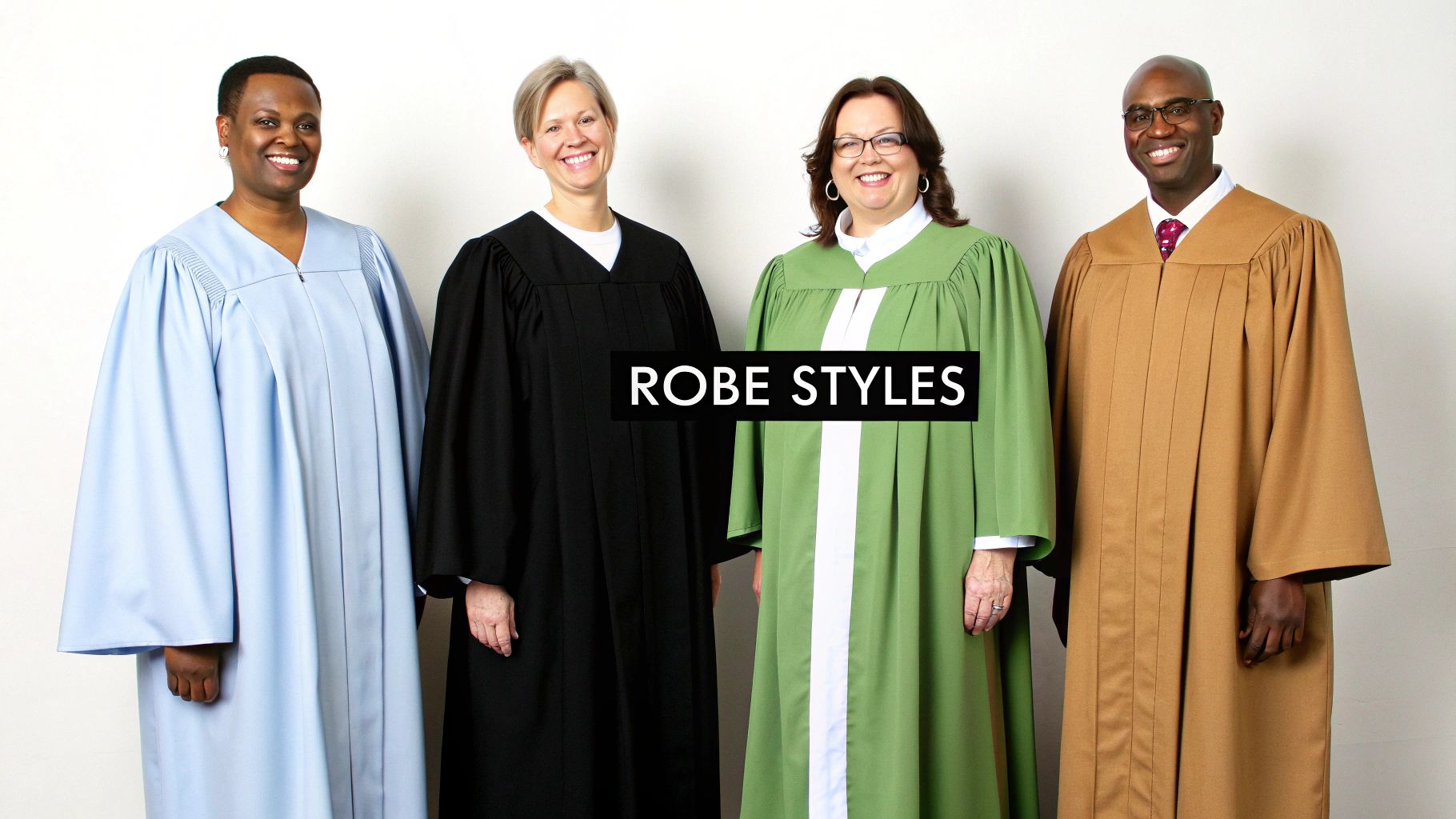
Classic and Traditional Gowns
When you picture a classic church or concert choir, you’re probably thinking of a traditional gown. These robes are all about creating a powerful feeling of unity and reverence with their flowing fabric and formal appearance, making them a natural choice for liturgical services and classical performances.
The hallmarks of this style are the generous pleats that fall from the yoke (the part around the shoulders) and the wide, open sleeves that give singers plenty of room to move. A perfect example is this classic adult choir robe with pleated front, which really captures that traditional spirit. Its elegant drape gives the choir a polished, professional look that audiences instantly recognize and respect.
These robes are the dependable workhorses of the choir world. Their timeless design means they'll be a treasured part of your choir's wardrobe for many years to come.
Contemporary and Modern Styles
If your choir is looking for something more current, a contemporary style might be the perfect fit. These designs usually have cleaner lines and simpler silhouettes, with subtle details that make a big impact—think V-necklines, more fitted sleeves, or even two-tone color blocking for added visual flair.
Modern robes are an excellent choice for contemporary worship teams, gospel choirs, and school groups that want to look fresh and approachable. They provide that same unifying effect but with a look that reflects a more modern musical identity.
Take the unisex V-neck choir robe, for instance. It creates a crisp, distinguished appearance that's less about deep-rooted tradition and more about a sharp, cohesive presence on stage.
By selecting a robe style that aligns with your music and mission, you create a visual language that speaks to your audience. Whether traditional or modern, the goal is to present a unified front that lets your choir’s spirit shine through.
The Role of Stoles and Overlays
The robe itself is just the beginning. Accessories like stoles and overlays are a fantastic way to customize your look and add another layer of visual detail. You can use them to signify different roles in the choir, mark liturgical seasons, or just add a pop of color.
Stoles are the long, decorative bands of fabric worn over the shoulders, often featuring embroidery or contrasting colors. They’re a really effective and budget-friendly way to refresh your choir’s appearance without buying all new robes. Feel free to explore our collection of customizable choir stoles that pop on stage.
In more formal church settings, you'll often see overlays like cottas or surplices worn over a full-length cassock. This layered combination creates a deeply traditional liturgical look, adding a sense of historical continuity and reverence. These additions give you great flexibility, allowing one set of basic robes to be adapted for different events all year long.
Choosing the Right Fabric and Color
When it comes to choir robes, the fabric and color you choose are two of the biggest decisions you'll make. These elements aren't just about looks—they directly affect your choir's comfort, the robe's lifespan, and the entire visual story you tell from the chancel. Let’s get into the nitty-gritty of materials and the powerful language of color.
Think of fabric as the very foundation of the robe. It determines how the garment hangs, how it plays with the light, and most importantly, how your singers feel while wearing it. A great fabric choice means your choir looks sharp and feels comfortable, freeing them up to focus on what really matters: the music.
Getting a Feel for Choir Robe Fabrics
There are a handful of go-to textiles for church choir robes, each with its own personality and perks. You'll find that polyester is the undisputed champion in this arena, mostly because it's tough as nails and incredibly easy to care for. But even within the world of polyester, different finishes create very different effects.
- Matte Polyester: This is the workhorse fabric for a reason. Its flat, non-reflective surface gives off a classic, dignified vibe that won't create distracting glare under stage lights. Even better, it’s highly wrinkle-resistant, which is a lifesaver for any busy choir director. Our versatile and durable matte finish choir robe is a perfect example of this timeless style.
- Shiny Tricot or Satin Finishes: If your choir is looking to make a splash, a fabric with some sheen is a fantastic choice. It catches the light beautifully, making colors pop and giving the whole group a more dynamic, energetic presence. Gospel choirs and ensembles performing in big, bright venues often lean this way.
- Velvet Accents: For a touch of real elegance, you can't beat velvet. Used for accents on the yoke, sleeve chevrons, or down the front panels, it adds a rich textural contrast. This little detail can elevate a robe, signaling a sense of formality and occasion—perfect for Christmas concerts or special services.
Don't forget to consider the fabric's weight. Lighter materials are a blessing in warmer climates or for choirs that get a little animated during performances. On the flip side, heavier fabrics provide a more commanding drape and a bit of extra warmth, which can be a real plus in older, drafty sanctuaries.
Choosing a fabric isn't just a practical decision—it's an artistic one. The right material enhances your choir’s professionalism and supports their performance, ensuring they look as unified as they sound.
Below is a quick comparison to help you weigh your options and find the perfect match for your choir's specific needs.
Comparing Choir Robe Fabrics
A comparison of common choir robe fabrics to help you choose the best option based on appearance, durability, and care requirements.
| Fabric Type | Key Characteristics | Best For | Care Instructions |
|---|---|---|---|
| Matte Polyester | Non-reflective, classic look. Wrinkle-resistant and highly durable. | Traditional church choirs, academic settings, and groups wanting a dignified, understated appearance. | Machine washable (cold), tumble dry low. Resists shrinking and fading. |
| Shiny Tricot/Satin | High-sheen, vibrant appearance. Reflects light, making colors appear richer. | Gospel choirs, show choirs, and performances in large venues where a dynamic look is desired. | Often requires gentle cycle or hand washing. Check label; some may be dry clean only. |
| Velvet (Accents) | Plush, rich texture. Adds a touch of luxury and formality. | Trims, panels, and chevrons on robes for special occasions like holidays or formal services. | Typically dry clean only. Spot clean with care to avoid crushing the pile. |
Ultimately, the fabric sets the stage for the entire garment, impacting everything from its longevity to the choir's comfort during a long service.
Selecting Colors with Purpose
Color speaks volumes before a single note is sung. The shades you pick for your adult choir robes can set a mood, connect to centuries of liturgical tradition, or even tie into your church's identity.
For most church choirs, the liturgical calendar is the ultimate guide. Specific colors mark the seasons of the church year—purple or blue for Advent, white and gold for Christmas and Easter, and deep purple for Lent. Having robes or even just stoles in these key colors allows your choir's appearance to visually harmonize with the spiritual journey of the congregation. Our classic adult choir robe with pleated front, for instance, is available in a wide spectrum of colors perfect for matching the liturgical season.
School, community, and concert choirs often play by a different set of rules. Here, you might choose colors that align with your organization's logo or school colors. Or, you might pick a hue that captures the emotional heart of your music—a deep navy for a serious classical program, or a brilliant red to convey the fire and passion of a contemporary piece. Your robe color is a key part of your choir's story.
A Practical Guide to Sizing and Measuring
Let's talk about getting the fit right. Nothing throws off a choir's unified look faster than robes that are too short, too long, or pulling at the seams. A poor fit is not just a visual distraction; it can make a singer feel self-conscious and uncomfortable. Nailing that perfect, uniform drape across your entire ensemble is what creates a truly professional appearance, and it all comes down to good measurements.
Getting a great fit is absolutely essential. It ensures every member looks their best and feels confident enough to focus on the music. This guide will walk you through a simple, no-fuss process for measuring your choir members to guarantee you choose the right size every time. At ChoirBuy, we're all about inclusive sizing, so everyone can find a robe that feels custom-made.
The Only Two Measurements You Need
You don’t need to be a professional tailor for this—far from it. To find the perfect robe size, you just need two simple measurements from each singer.
- Full Height: Have the person stand tall and straight against a wall, looking forward. It's crucial they wear the same shoes they’ll perform in. Measure from the very top of their head straight down to the floor. This number is the key to getting the robe length just right.
- Chest Circumference: Take a soft, flexible measuring tape and wrap it around the fullest part of the person's chest. Make sure the tape is level all the way around their back. This measurement ensures the robe closes properly without any awkward pulling or gaping.
That’s it! With these two numbers, you can easily find the right size on our charts. For a closer look at the process, check out our complete size and color charts for adult choir robes.
How to Host a "Sizing Day"
Trying to collect measurements from everyone individually can be a real headache. The best way to get it all done quickly and accurately is to hold a dedicated "sizing day."
Here's how to make it a breeze:
- Pick a Time: Block out 30 minutes before or after a regular rehearsal when everyone is already there.
- Pair Up: Ask members to work in pairs. It's much faster and more accurate than trying to measure yourself.
- Get Your Tools Ready: All you need are a few flexible measuring tapes, pens, and a master sheet to jot down names and their corresponding measurements.
- Give a Quick Demo: Take a minute to show everyone how to correctly take the height and chest measurements to ensure consistency.
This simple, organized approach turns a potentially chaotic task into a smooth and easy part of the ordering process.
Making the Right Choice
This handy visual breaks down the selection process into three straightforward steps: fabric, color, and comfort.
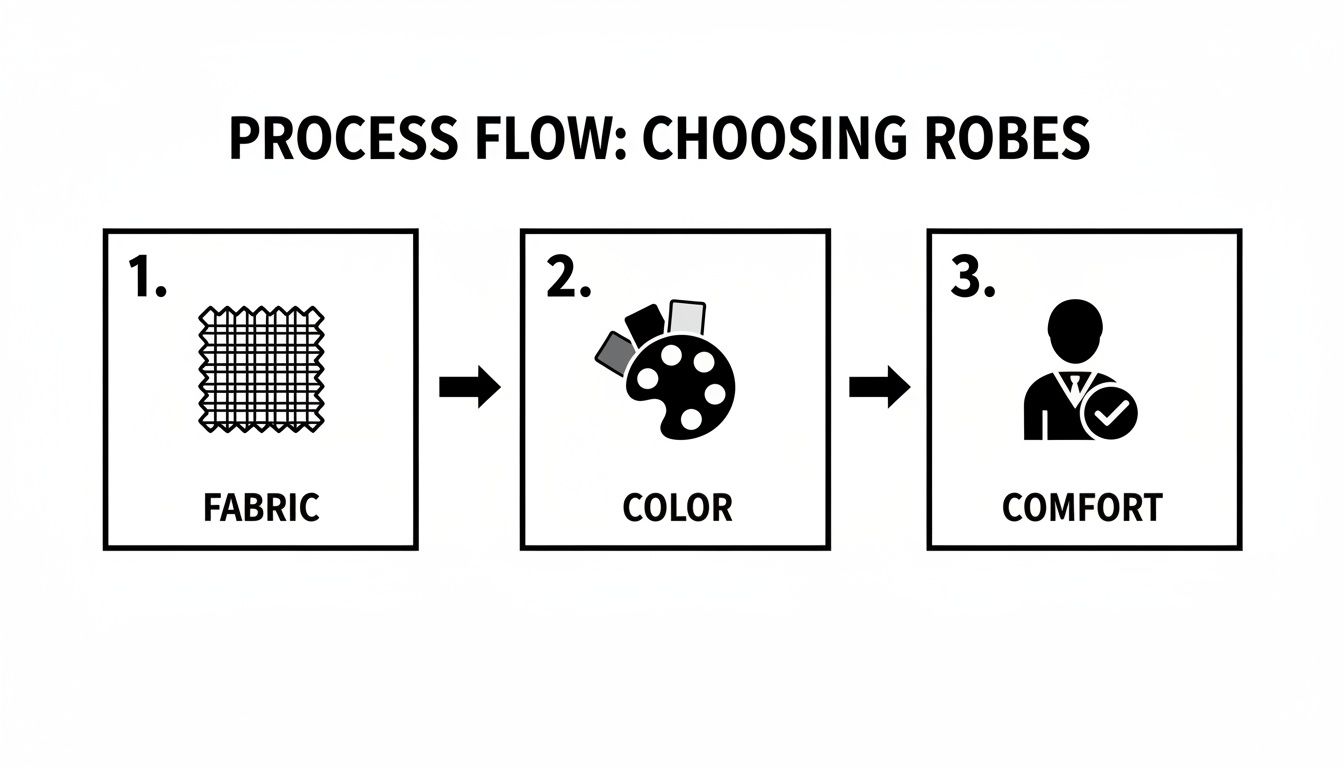
Once you've settled on the perfect fabric and color, confirming the fit is the final piece of the puzzle.
A Quick Tip: If a singer falls between two sizes, always size up. A robe that’s a little too long or full will hang much more elegantly than one that’s too tight. A bit of extra room is always better than not enough.
Taking a little time to measure correctly pays off in a big way. When every choir member steps out in a robe that fits beautifully, it elevates your group's entire presentation from good to truly outstanding.
Personalizing Your Robes with Custom Details
This is where the magic really happens. Customization is what takes a set of standard choir robes and turns them into something that truly represents your group. It’s your opportunity to weave in the details that tell your choir's story, transforming a simple garment into a cherished uniform.
Think about it—a beautifully embroidered church crest over the heart, or a vibrant, contrasting stole that ties into your school's colors. These are the touches that create a polished, bespoke look and give your members a real sense of pride. At ChoirBuy, we love helping choirs bring these ideas to life. You can see all the possibilities in our collection dedicated to custom choir robes.

Adding Logos and Symbols with Embroidery
Embroidery is, without a doubt, the most classic and elegant way to personalize a robe. A crisp, professionally stitched logo or symbol adds a level of distinction that screen printing just can't touch. It signals quality and permanence.
Here are a few popular ways choirs use embroidery:
- Left Chest: This is the go-to spot for a subtle church cross, a school crest, or a classic musical symbol like a treble clef. It's clean and timeless.
- Yoke: The shoulder area gives you a bigger canvas, making it perfect for spelling out the full name of your church or choir.
- Stoles: Stoles are fantastic accessories for customization. They can handle more intricate designs and can even be swapped out for different liturgical seasons or special events.
These details do more than just look good; they build a powerful sense of belonging.
Using Color and Trim for Impact
Beyond embroidery, you can dramatically change a robe's appearance with the strategic use of color and trim. It's a fantastic way to introduce a secondary color or add a formal touch without the cost of a fully bespoke design. Incorporating designer ribbons and trim can also add a unique flair that sets your robes apart.
A few ideas to get you started:
- Contrasting Yokes and Cuffs: Imagine a classic black or navy robe instantly brightened with a yoke and sleeve cuffs in a bold gold or crisp white. The effect is stunning.
- Piping and Borders: A thin line of colored piping along the front zipper or sleeve edges is a subtle detail that makes a huge difference. It cleanly defines the robe's silhouette.
- Reversible Stoles: This is a smart, budget-friendly choice. Get a stole with a different color on each side—maybe purple for Advent and white for Easter—and you've just doubled your wardrobe options.
Customization is the final, defining touch that aligns your choir's appearance with its unique voice. It's an investment in your group's identity that resonates with both your members and your audience.
Maintaining Your Choir Robes for Lasting Quality
You've invested in a beautiful set of choir robes, and with the right care, they should serve your ensemble for years to come. Think of proper maintenance as protecting that investment. It’s the secret to keeping your robes looking crisp, vibrant, and uniform, service after service.
A little bit of care goes a long way. It not only preserves the look and feel of the fabric but also saves your organization a lot of money over time by helping the robes last longer. Let's walk through the best ways to wash, store, and maintain your robes so they always look their best.
Washing and Drying Best Practices
Before you do anything else, always check the care tag. That little label is your roadmap from the manufacturer, and learning to decipher care labels is the single best thing you can do for your robes. The good news is that most modern robes, especially those made from matte polyester, are built for easy care.
For any machine-washable robes, here’s a simple routine that works wonders:
- Go with cold water: Always wash on a gentle cycle. Cold water is kinder to the fabric and seams.
- Choose a mild detergent: Skip the harsh stuff. A gentle detergent will clean effectively without causing the colors to fade.
- Keep colors separate: Just like with your regular laundry, wash whites with whites and darks with darks to prevent any color bleeding.
- Dry on low heat: High heat is the number one enemy of polyester fabrics. It can set in permanent wrinkles or even damage the material. Pull the robes out of the dryer as soon as they're done to keep them smooth.
If your robes have special touches like delicate embroidery or velvet panels, play it safe. Hand washing or taking them to a professional dry cleaner is your best bet to protect those details. And for any spills or stains, try to spot-treat them right away before they have a chance to set.
Proper Storage and Minor Repairs
How you store your robes between Sundays is just as critical as how you clean them. Tossing them in a pile is a surefire recipe for deep wrinkles, dust, and damage.
A well-organized robe closet is a choir director's best friend. It streamlines pre-service preparation and protects your investment, ensuring every singer looks sharp and ready to perform.
To keep your robes in performance-ready condition, always hang them on sturdy, broad-shouldered hangers. This is crucial for maintaining the shape of the shoulders and yoke. Find a cool, dry place to store them, and consider using breathable garment bags for extra protection from dust. Give them some breathing room—cramming robes too tightly together is a guaranteed way to cause wrinkling.
It's also smart to keep a small sewing kit on hand for quick fixes. Catching a loose hem or a snagged thread early on prevents it from turning into a bigger, more noticeable problem. For keeping track of everything, a simple spreadsheet can be a lifesaver. Note the robe number, size, and who it's assigned to. This makes handing them out and collecting them a much smoother process for everyone.
Following these simple guidelines will ensure your church choir robes remain a beautiful symbol of your group's unity and spirit for many seasons.
Common Questions About Adult Choir Robes
When you’re outfitting a choir, a few questions always come up. It's a big decision, and you want to get it right. To help you feel completely confident, we’ve put together answers to some of the questions we hear most often from choir directors, worship leaders, and church committees.
How Far in Advance Should We Order Our Choir Robes?
We always recommend planning ahead. Place your order at least 4–6 weeks before your big performance or service, especially if you have a large group or want custom embroidery.
That little bit of extra time builds in a comfortable buffer for production, quality checks, and shipping. It means you can hand out the new robes without any last-minute panic. Of course, for standard, in-stock items like our popular unisex V-neck choir robe, the timeline is much shorter. But even then, ordering early is a smart move.
What Is the Best Way to Size a Large Choir?
Sizing an entire choir sounds like a huge task, but it’s simpler than you think. The most accurate way is to measure each person individually. You only need two key measurements to get a great fit.
- Full Height: Have them stand straight with their performance shoes on and measure from the top of their head straight down to the floor.
- Chest Measurement: Take a tape measure and wrap it around the fullest part of their chest.
Once you have those two numbers for everyone, you can just match them to the sizing chart on our product pages. A great trick is to hold a quick "sizing session" right after a rehearsal—it turns a big job into a quick and easy group activity. And if someone falls between two sizes, always go with the larger one. You'll get a more elegant drape and a much more comfortable singer.
Can We Order a Sample Robe Before Committing?
Yes, and you absolutely should! We know how important it is to see and feel the quality of a robe before you invest in a full set for your ensemble.
Ordering a sample lets you check out the fabric's texture, see the color in your own lighting, and inspect the fit and finish up close. It’s the best way to make sure the final robes will live up to your choir's standards and match your artistic vision, giving you total peace of mind before placing the big order.
This way, you can be 100% sure you've made the right choice for your church choir or concert group.
Ready to see your choir stand tall in robes that look as beautiful as they sound? Take a look through our collection to find the perfect style for your group. You can shop for robes, stoles, and all the accessories you need at ChoirBuy.com today. Shop the full Adult Choir Robe collection now.