

The robes are laid out for the concert, and the director spots the problem before the choir does. One front pulls tight across the chest, another robe strains at the hips, and a third hem pools around the singer's shoes. They all came from the same size line. That's the trouble: one label can't account for the different proportions and movement a choir robe has to accommodate.
Plus size robes for choirs are performance garments, not standard robes made larger. Singers need to stand, sit, walk, lift music folders, and raise their arms without a robe gaping, binding, or dragging. A dependable order starts with measurements and movement, then considers body shape, fabric, care, custom details, and a fit test before the full run.
Why Plus Size Robes Fail Choirs
A choir director can have every robe sorted by size and still discover, too late, that the order doesn't fit the people wearing it. The chest may pull when a singer takes a full breath. Hip strain may make the front open during a processional. A hem that looked fine in a fitting room can catch underfoot when the choir walks together.
Those problems aren't solved by moving everyone into the next size. A robe that gives one singer enough room through the bust may hang excessively through the hips on another. Meanwhile, a longer size may add unwanted fabric at the hem without improving sleeve movement or shoulder comfort. When the choir raises its arms to sing, narrow sleeves and tight shoulders become performance problems, not minor inconveniences.
Inclusive sizing is not a new fashion add-on
Plus-size apparel has a long history in American ready-to-wear. Lena Himmelstein Bryant's business began with maternity clothing, then advertised garments for “stout women” with bust measurements from 38 to 56 inches in 1911. The company introduced a “Misses Plus Sizes” line in 1922, and 1927 is identified as an early documented use of the shortened term “plus-size” in advertising, as outlined in this history of plus-size clothing.
That history matters to choir buyers because it shows that larger garments have long required considered pattern choices. Early specialists recognized different proportions, including larger busts with smaller hips and smaller busts with larger hips. They didn't treat every body as a smaller pattern enlarged evenly.
A robe has to work in motion
A static mirror check won't show every problem. Sleeves may bind only when a singer lifts a music folder. A wrap front can shift when someone sits, and an uneven hem becomes more obvious in a processional. If those issues surface just before Easter or a school concert, the choir director is left scrambling for alterations or substitutions.
The better path is clear: record body measurements, account for individual proportions, choose fabric and construction for actual use, decide whether custom details are needed, and test a sample before committing to the full order. Each step helps answer a different fit question.
A size label organizes an order. It doesn't prove that the robe fits.
Measure the ensemble rather than trusting a number on a tag. That's how you reduce wardrobe distractions and give singers room to focus on the music.
Measure Before You Order Plus Size Robes
Start with measurements, not a singer's usual street-clothes size. For plus size robes, the useful question isn't “What size does this person normally wear?” It's “Which garment dimensions must work for this person to sing and move comfortably?”
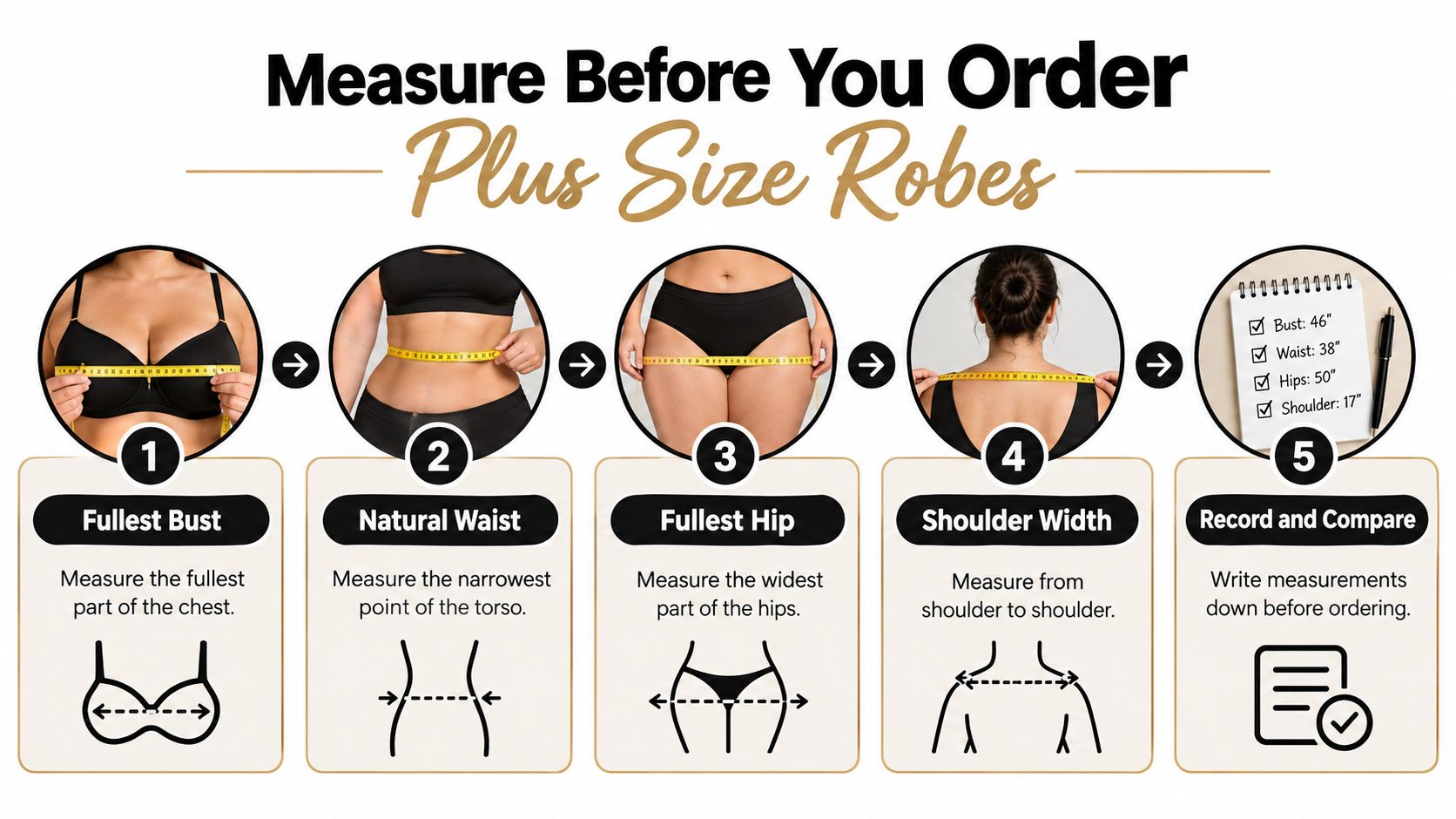
Use a consistent measurement sequence
Record the wearer's fullest bust, natural waist, fullest hip, shoulder width, and standing height. Keep the tape level and comfortable rather than pulling it tight. Use the same approach across the ensemble so your measurements are useful when you compare sizes and review a sample.
Next, compare each measurement with the supplier's body-size chart or finished-garment chart. Those aren't interchangeable. Body measurements describe the wearer; finished-garment measurements describe the robe itself. A garment needs enough extra room, or ease, for its intended use.
Choose the size that accommodates the largest controlling measurement. Then verify robe length separately. Height and preferred hem position determine the length you need, but they don't tell you whether the robe fits through the chest or hips. A singer can need a larger circumference and a shorter length, or the reverse.
ASTM's plus-women measurement tables cover 14W–40W as a baseline for pattern development. Designers still need to account for fabric, movement ease, styling, and fit, so a 30W label isn't a universal finished-garment dimension, as described in the ASTM measurement-table guidance.
Fit the robe to singing, not standing still
For choir use, allow room to sit, walk, and raise the arms. A close body fit can feel restrictive when a singer reaches for a folder or lifts both arms. Test the robe in the fabric you plan to order, because the same pattern can behave differently depending on how the material moves.
Standardized size categories won't answer every functional question. One US study used 3D scans at 37 fit locations and reported unresolved fit problems among participants. That's a good reason to try a representative sample of the ensemble and test movement before approving the full production run.
If you want a reusable way to document construction details and specifications, a free tech pack template can help organize measurements, fabric details, and sample notes. For chart comparisons and robe-specific sizing guidance, consult the ChoirBuy robe sizing chart.
Make a measurement sheet for each singer and keep the file with your order records. The result is a fit decision you can explain and repeat, not a guess based on a familiar label.
Match Plus Size Robe Cuts to Body Shape
Two singers can order the same 3X and need completely different robes. One carries her width at the hips and seat. The other has broad shoulders and a short torso. A size label describes a scale, while a choir robe has to function as a performance garment on a real body with its own proportions.
A 2025 study of 34 plus-size Malaysian women found that over 30% had abandoned online purchases because size information was confusing, with participants describing difficulty finding garments that fit different body areas at the same time. Extended size ranges help, but confusing garment information still loses buyers.
Compare proportion concerns with garment checks
Use the table as a fitting prompt, not a diagnosis. Few singers match one category cleanly, and one person may need to check more than one row.
| Body Shape Checks for Plus Size Choir Robes | Primary fit risk | What to verify |
|---|---|---|
| Pear | The robe fits the bust but pulls or opens at the hips | Hip room, seated coverage, hem movement, and front overlap |
| Apple | The belt or front strains around the midsection | Wrap overlap through the waist and hip, belt reach, and comfortable closure |
| Hourglass | The garment fits one area but pulls at another | Bust and hip ease together, plus belt placement and closure strain |
| Straight | A roomy cut hangs without controlled coverage | Shoulder fit, sleeve movement, belt position, and robe length |
| Broad shoulders | The upper body feels restricted even when the body is roomy | Shoulder width, sleeve circumference, and arm elevation |
Check the finished robe's dimensions, not only the body-size chart. On a wrap style, inspect the amount of overlap at the bust and hips before tying the belt. A belt that closes only by pulling the fronts tight tells you the cut is wrong for that singer. Excessive belt slack creates its own nuisance, since the fronts shift and gap during a processional.
Ask whether the garment suits the singer's movement
Run every singer through a short movement pass before you approve a cut: sit, stand, reach forward for a folder, raise both arms as if conducting or leading a chorus. Confirm bust ease, sleeve circumference, shoulder width, robe length, wrap overlap, and closure comfort over whatever layers they plan to wear underneath. A robe that looks right in a standing mirror check can still fail in the third verse of a hymn.
Extended sizing can support perceived inclusiveness, trust, willingness to pay, and purchase intention, including among shoppers who never wear extended sizes. The question that decides your order stays individual: will this robe accommodate this singer's proportions, movement, and layering needs?
Church communities already know how to carry people whose strengths and limits differ, a theme explored in a pastoral reflection on human weakness. Bring that same patience into the fitting room. Adapt the cut to the singer, because expecting singers to adapt to a bad cut costs you comfort and confidence at every service.
Choose Fabrics That Move and Last
Color creates the choir's look, but fabric determines whether the robe stays comfortable during a service or concert. A singer may stand for a hymn, sit for a reading, walk in a processional, lift a folder, and raise both arms. A fabric that feels pleasant in a hand sample still needs to work through those movements.
Start by checking how the robe behaves, then verify what it's made of. Words like “lightweight” and “premium” don't tell you the fiber content. In the United States, most covered textile apparel sold to consumers must disclose fiber content, country of origin, and the identity of the manufacturer or responsible marketer. Fiber names and percentages by weight appear in descending order of predominance, according to the FTC's clothing and textile guidance.
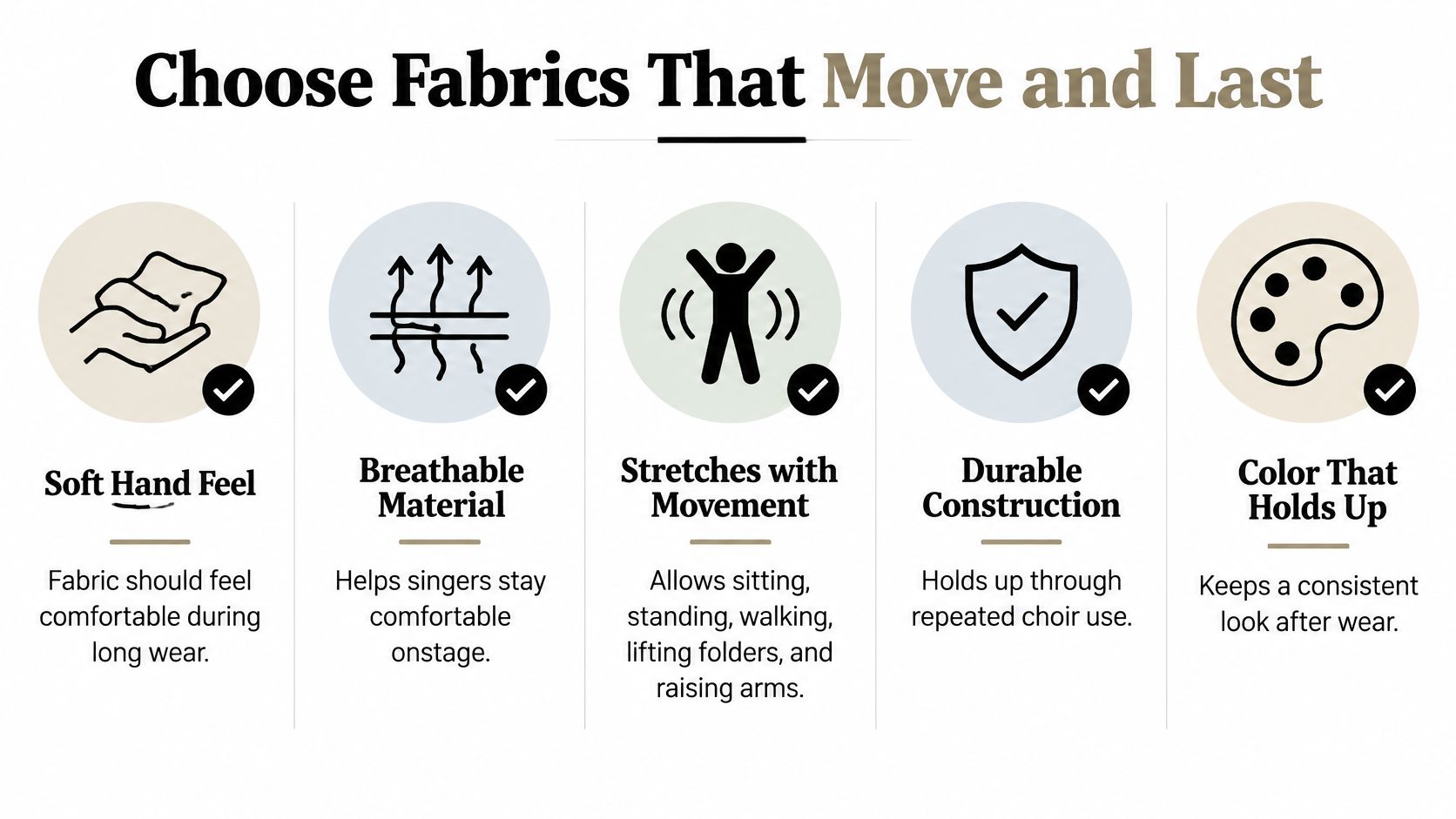
Test the whole garment, not just the fabric swatch
Ask whether the robe stays closed while seated and whether the sleeves allow a singer to raise their arms comfortably. If members use wheelchairs, walkers, medical equipment, or need easier dressing, check hem clearance, sleeve openings, closure security, and belt handling. Long hems can catch on feet or wheels; wide sleeves can interfere with transfers or hand movement; and a belt that dangles can get in the way.
A wrap front that looks polished while standing may open when its wearer sits. Test front coverage in the positions singers will use, and consider whether a shorter or split-hem option would improve movement. The cut matters here, too: anthropometric research identifies different body-shape clusters, including triangle, rectangle, and inverted-triangle forms, rather than one universal plus-size proportion. For robe fabric and movement considerations, see this overview of lightweight choir robes.
Make care part of the purchase decision
Check the garment's care label before approving a fabric. Covered apparel needs regular-care instructions attached where they're visible or easy to find when the garment is for sale. If the package hides the label, care information must also appear on the package exterior or a hangtag. Washing directions must state whether hand or machine washing is appropriate and specify an allowable water temperature; garments may instead require dry cleaning. The FTC Care Labeling Rule sets out those requirements.
Larger robes can take more effort to wash, dry, and store. A fabric that needs care your choir can't manage may be a poor choice even if it looks right on stage. Ask for the fiber disclosure and care instructions before settling on the color, and test the sample through the movements that matter.
Customize Plus Size Choir Robes for the Ensemble
A choir can look uniform without forcing every singer into the same proportions. The useful distinction is between a shared appearance and identical measurements. Consistent color, trim, and styling create a unified group; appropriate size options and careful sample approval help the robes work for the people wearing them.
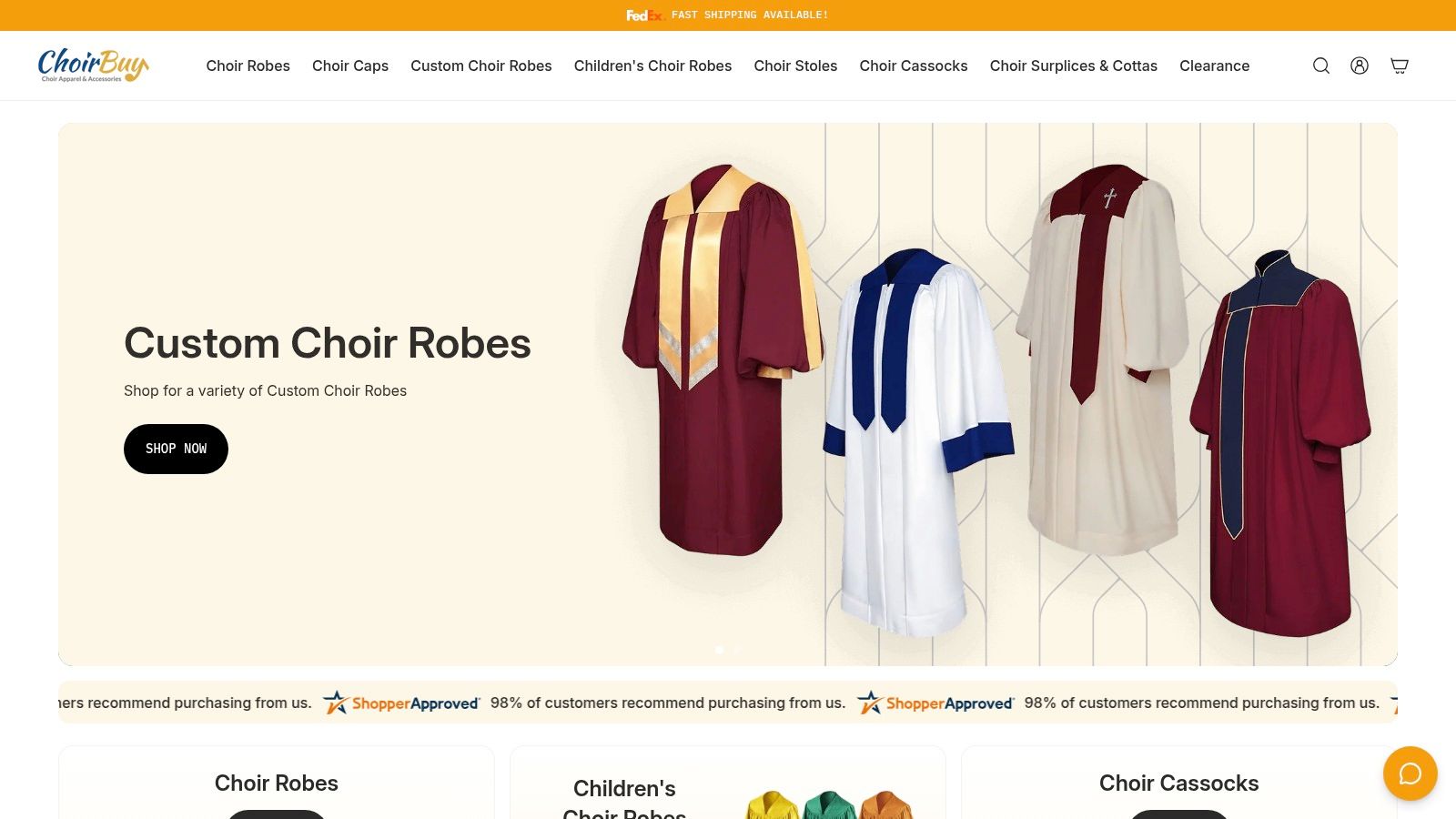
Stock designs are often the practical starting point when the choir wants a familiar look and a simpler selection process. Custom details are more useful when a church, school, or liturgical team needs a particular palette, neckline, length, or coordinated stole. In either case, settle the fabric and the overall style before you finalize the order's size mix.
Keep the group consistent across sizes
Compare each option against the features that define the ensemble's look: robe color, fabric, neckline, sleeve shape, and trim. Then check how those details hold across the size range. If a robe needs a different length or front closure for some singers, make sure those changes don't make the group appear to be wearing unrelated designs.
For a school choir, ease of dressing and dependable care may matter most. A church choir may prioritize a traditional silhouette and coordination with stoles. A liturgical team may need garments that layer well and remain comfortable through repeated movement. Those priorities should shape the specification, not a general assumption that one cut suits every group.
ChoirBuy offers wholesale and custom choir robes, plus sizes, multiple fabrics, a broad color range, bespoke options, size charts, and sampling. Bulk buyers can also review package deals and bulk discounts, along with phone support, money-back guarantees, and free or overnight shipping options for tight performance schedules. Its catalog includes choir stoles, cassocks, surplices, cottas, and caps as well as robes; for logo and customization decisions, see custom choir robes with logo.
Write a clear robe specification
Before you approve a sample, put the essentials in writing. Keep the specification concise and specific:
- Color and fabric: Record the selected shade and fabric option.
- Size range: Note the required options and the chart used to select them.
- Custom details: Confirm the neckline, trim, logo, stole, or other ensemble feature.
- Fit approval: State whether a sample is required before the full run.
That short record reduces confusion when several people are involved in purchasing. It also gives the choir a shared standard for how hems, sleeve ease, and closures should look across different sizes.
Order Plus Size Robes Without Last-Minute Panic
The shipment arrives the week of the concert. Half the ensemble tries on robes that pull across the bust or drag at the hem, and there is no time left to exchange anything. That scenario is common enough to plan against: online apparel returns run roughly 25–40% overall and reach as high as 75% for some categories or brands, with incorrect fit identified as the leading driver in the apparel fit and returns analysis. For a choir ordering plus sizes, the fix is a documented pilot fitting before the full run goes into production.
Run a pilot before approving the full order
Fit 5–10% of the order, and make sure at least one wearer represents each proposed size and each main body shape in the ensemble. A single convenient volunteer tells you almost nothing about how a robe behaves across different proportions.
During the fitting, run every wearer through the same checks:
- Bust and hip closure: The robe fastens without pulling or gaping.
- Sleeve reach: Arms raised and extended forward, the way a singer holds a music folder.
- Neckline comfort: No pulling at the collar when the head tilts up toward the conductor.
- Seated mobility: Sit, stand, and sit again without the closure straining.
- Hem clearance: A full walking lap with no dragging or catching at the front.
Score each check pass or fail, then adjust the size allocation before you release the balance of the order. File the measurement sheet and the approved sample with the order records. When a vestry member or school administrator later asks why a size changed, the answer is already on paper.
Don't rely on a size finder alone
A supplier's size finder helps organize choices. It cannot tell you how a robe moves. The returns research cited above found size-finder tools were used on only a small share of orders, and fit uncertainty still predicted returns even among shoppers who used them. Treat the tool as a starting point, then confirm its output against garment measurements and a live movement test.
Before committing, ask the supplier for measurement instructions, finished-garment dimensions, fabric stretch information, model photos across the size range, and a written exchange policy. For a larger ensemble purchase, the wholesale choir robes guide walks through the buying process step by step.
Start the pilot early enough that a failed sample triggers an exchange, not a crisis. Gather measurements, test the sample robe through a full rehearsal movement sequence, and release the bulk order only when every pilot wearer passes. That is how a fitting problem stays a small correction instead of a concert-week emergency.
ChoirBuy offers inclusive choir robe sizing, custom options, fabric and color choices, and sampling support for ensemble orders. Visit ChoirBuy to compare robe options and request a sample before you place the full order.