

A choir surplice is a loose white outer vestment with full sleeves worn over a cassock in Western Christianity, especially by Anglican, Roman Catholic, and Lutheran choirs. Its full cut makes it a visible layer of choir dress rather than a standalone robe.
A new music director often notices the garments before learning their name. On a busy Sunday morning, singers arrive in dark cassocks, then pull white, flowing over-garments over them before taking their places. The result looks simple, but the system has a clear logic: the cassock is the base layer, and the surplice is the visible white layer.
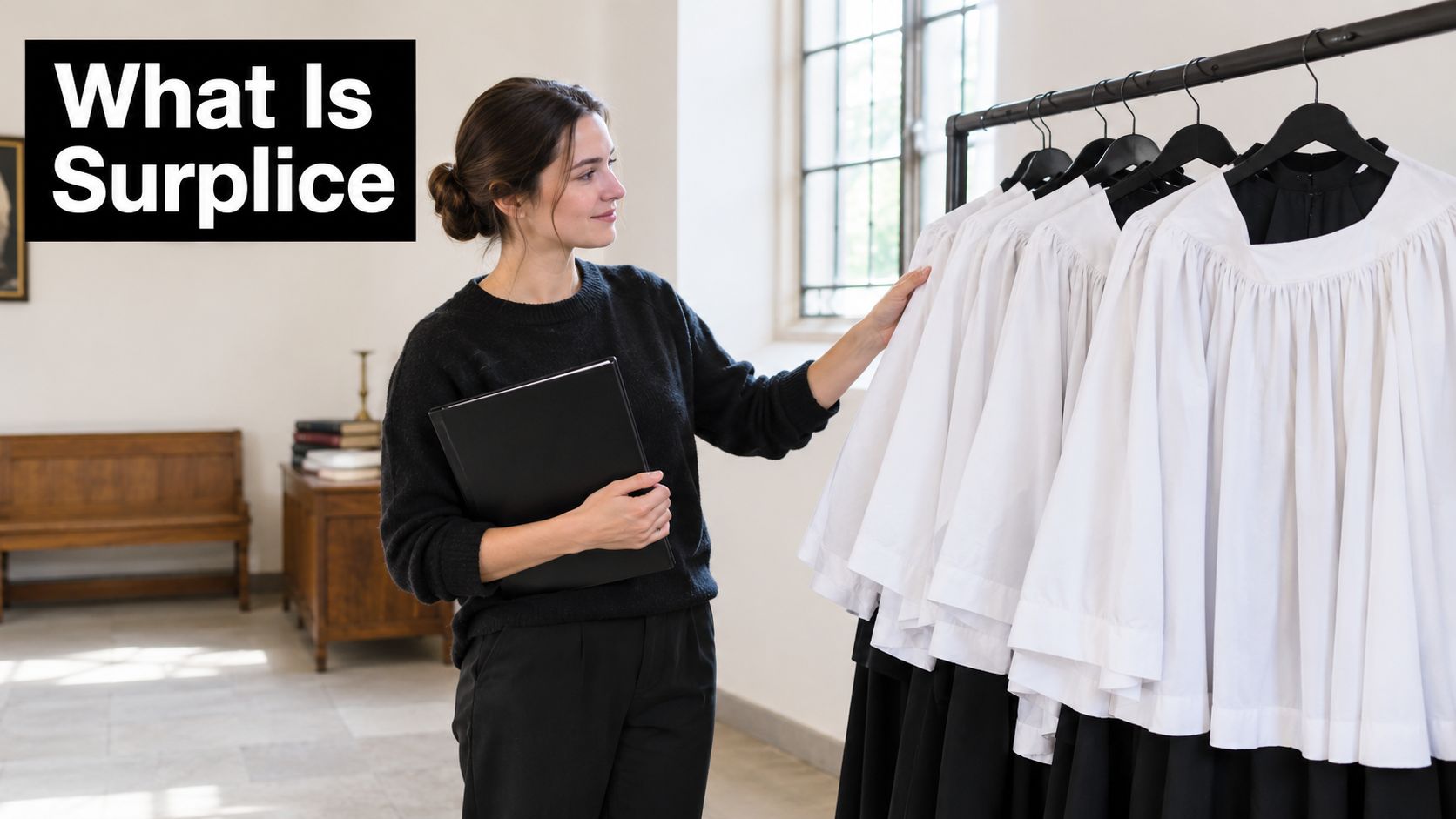
Understanding that relationship helps you choose the right length, neckline, sleeve shape, fabric, and sizing approach. It also prevents a common purchasing mistake, ordering a surplice as though it were an independent choir robe. A thoughtful outfitter looks at the entire uniform, including the cassock underneath, the movement singers need, and the level of formality your church expects.
For a practical overview of how choir garments work together, see this guide to church choir robes and coordinated vestments.
Introduction to the Choir Surplice
The word can sound more complicated than the garment itself. In everyday terms, a choir surplice is a white, loose-fitting outer vestment with full sleeves. The singer wears it over a cassock, allowing the dark base garment to remain visible below and around the opening.
That layered arrangement gives a choir a unified appearance without making every singer look like they're wearing a single heavy robe. The white fabric catches the eye, while the cassock creates a consistent foundation underneath. For a music director outfitting adults, children, or a mixed-age ensemble, this distinction matters because the surplice must fit comfortably over another garment.
Core definition: A surplice is the white outer layer. A cassock is the garment underneath.
The surplice is especially associated with Roman Catholic, Anglican, and Lutheran settings, although local customs can differ. Choirs may wear it for worship services, choral prayer, processions, or other formal church occasions. Some communities prefer a traditional, generous cut, while others choose a shorter style with a more contemporary appearance.
Its history also explains its shape. The garment emerged as a practical vestment in the medieval period, when clergy wore it over warm fur garments in cold, unheated churches. The wide sleeves and full body weren't decorative accidents. They gave the wearer room to move and helped the white outer layer cover clothing beneath it.
A buyer who understands that history can make better practical decisions today. Look for a surplice that hangs freely over the cassock, gives singers space to lift folders and turn pages, and creates a consistent silhouette across the choir. For a new director, that approach is more useful than choosing by appearance alone.
Understanding What a Choir Surplice Is and Why Choirs Wear It
Think of the outfit like a lab coat over scrubs. The scrubs provide the base coverage, while the lab coat creates a shared professional appearance. In choir dress, the cassock provides the underlying structure, and the surplice adds the white outer layer that the congregation sees most clearly.
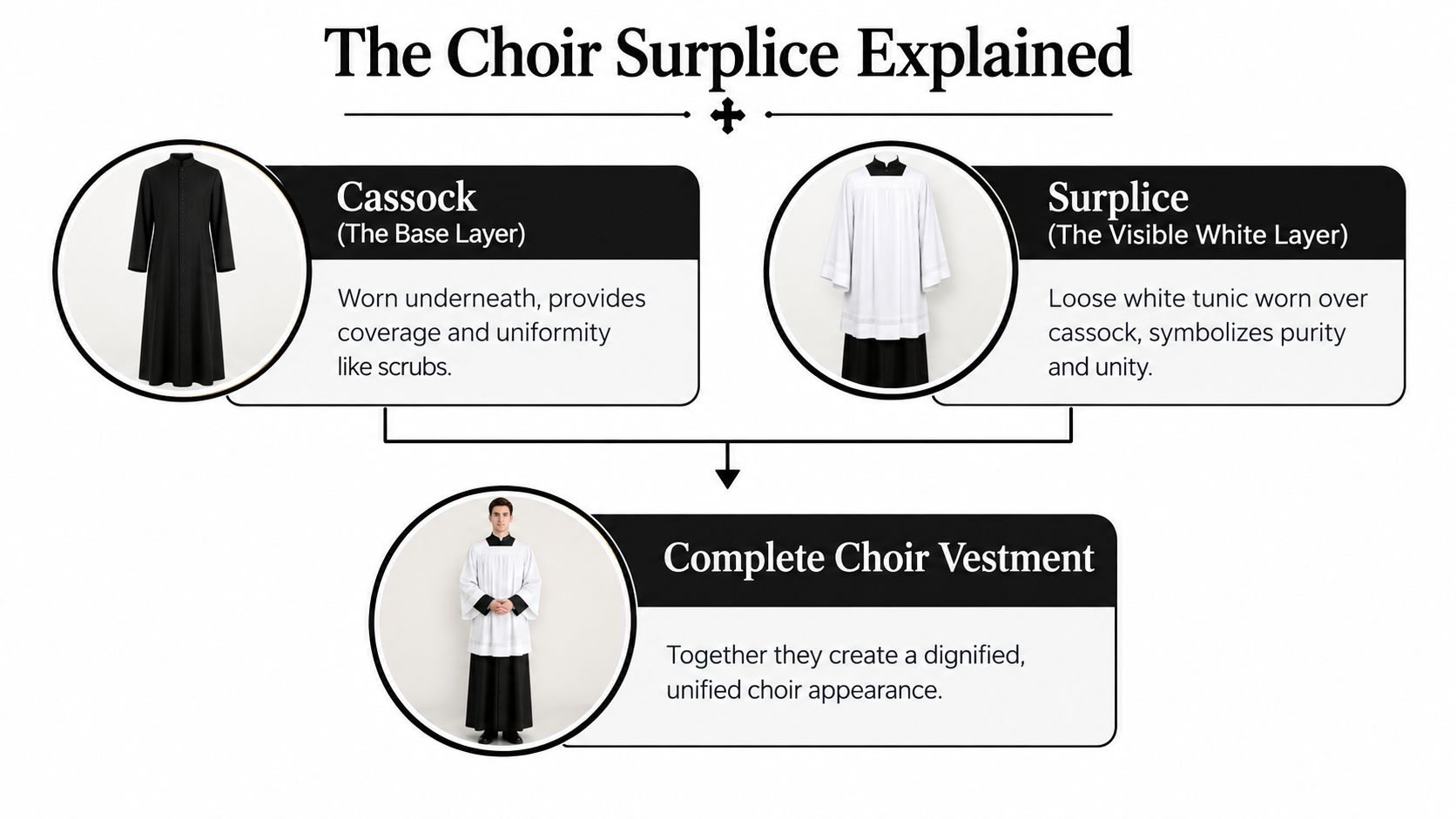
The arrangement serves several purposes:
- It creates visual unity. Individual singers may arrive in different everyday clothing, but the layered vestment gives the group a common appearance.
- It supports modest coverage. Because the surplice is worn over a cassock, the full ensemble covers ordinary clothing and presents a deliberate worship setting.
- It communicates service. The white layer is traditionally associated with purity, reverence, and the sacred character of worship.
- It allows movement. Full sleeves and a loose cut give singers room to hold music, turn pages, and participate without a tight-fitting garment.
The surplice isn't meant to compete with the music. Its uniform appearance helps shift attention away from individual clothing choices and toward the choir's shared role in worship. That makes it useful for both a small parish choir and a larger formal ensemble.
A singer generally puts on the cassock first, then draws the surplice over it. The finished look depends on proportion. If the surplice is too short, it can look disconnected from the cassock. If it's too full or too long for the wearer, it may obscure movement and appear untidy.
For a visual explanation of how these garments appear in practice, this choir surplice video can help new singers recognize the difference between the base layer and the outer vestment.
A Brief History of the Surplice From Medieval Choirs to Today
The surplice has more than 900 years of documented history, beginning as a practical response to uncomfortable church buildings rather than as a modern choir uniform. Authoritative references place its earliest documented appearances in the 11th century, including a canon of the Synod of Coyaca in Spain in 1050 and an ordinance associated with King Edward the Confessor. These early examples connect the garment with northern European churches that were cold and unheated. (Historical overview of the surplice)
The original garment was a full-length linen vestment worn over fur clothing. Its wide sleeves and generous cut allowed clergy to wear it over bulky winter layers. Early surplices could have sleeves extending at least 10 inches beyond the fingertips, a design choice that makes sense when warmth and coverage were practical necessities. (Catholic Encyclopedia discussion of the surplice)
From practical clothing to established vestment
By the 12th century, the surplice was clearly established in Italy. During the 13th century, its use expanded beyond choir duties to broader clerical functions in some places, including blessings and sacramental administration. By the 14th century, one source describes it as the essential choir vestment throughout the relevant Western tradition. (Further history of the surplice)
The garment's shape changed as its role changed. Earlier versions prioritized coverage over the fur, while later versions became shorter and less formal by the end of the 18th century. That shift reflects a movement from winter utility toward a more standardized ceremonial identity.
Anglican revival and modern choir use
In 19th-century Anglican practice, the surpliced choir spread during the Choral Revival. The main growth phases occurred from 1839 to 1872, helping establish the white-over-dark choir appearance that many directors still recognize today. (Development of the surplice in church dress)

That history gives the modern buyer useful context. A full traditional cut connects with the garment's original function, while a shorter, cleaner style reflects its later ceremonial development. For an accessible companion, read this account of the history of choir robes.
Surplice vs Cotta vs Cassock vs Stole Key Differences Explained
These four garments often appear in the same church setting, but they don't serve the same purpose. The easiest way to separate them is to ask three questions: What is the garment's length? Does it form a base layer or an outer layer? Is it worn as choir dress or as a clerical sign?
| Garment | Length and Cut | Sleeves and Yoke | How It Is Worn | Typical Use |
|---|---|---|---|---|
| Surplice | Loose outer garment, traditionally fuller and longer than a cotta | Full sleeves, with round or square yoke styles | Over a cassock | Choir dress and broader liturgical use |
| Cotta | Shorter outer garment, often ending around the waist or hip | May have fuller or more decorative sleeves, with a structured yoke | Over a cassock | A shorter choir or clerical alternative |
| Cassock | Long base garment that covers the body | Close-fitting sleeves and a full-length body | Worn underneath a surplice or cotta | Foundation of traditional choir dress |
| Stole | Long, narrow band rather than a tunic | No sleeves or yoke | Draped around the neck or worn over other vestments | Clerical and sacramental use, according to local tradition |
A surplice over cassock is a complete layered choir arrangement. A cotta can create a similar visual relationship, but its shorter body changes the proportion and usually leaves more of the cassock visible.
A stole is different altogether. It isn't a white outer tunic and can't replace a surplice. Its shape and use belong to a separate category of clerical vestment. For more detail, consult this guide to choir stoles and their place in church attire.
A simple selection rule
Choose a surplice when your tradition calls for a flowing white outer layer and a formal, unified choir appearance. Choose a cotta when your church prefers a shorter silhouette. Choose the cassock as the underlying garment when the outfit requires a consistent base. Treat the stole as a separate clerical piece, not as an alternative to either choir garment.
Styles Fabrics Sizing and How to Wear a Choir Surplice
Once the garment's role is clear, selection becomes a matter of proportion and use. Start with the silhouette your church expects, then choose fabric and sizing around the singers who'll wear it.
Choose the style before the fabric
A full-length traditional surplice gives a more generous, historic drape. A waist-length or hip-length cotta creates a shorter outline, while lace or plain trim changes the level of ornament without changing the garment's basic function.
The neckline also affects the overall look. A round yoke produces softer gathers and a flowing appearance. A square yoke gives the shoulders a more structured outline and can suit a formal choir style. ChoirBuy offers options such as the Classic Round Neckline Choir Surplice and the Classic Square Neckline Choir Surplice, so directors can compare the visual effect before ordering.
Match fabric to the choir's routine
Cotton can feel breathable and natural against the skin. A poly-cotton blend can balance comfort with easier care, while a linen-like weave may provide a lighter visual texture. The right choice depends on the sanctuary, the season, the frequency of washing, and the amount of ironing your volunteers can manage.
Don't judge fabric from a product photograph alone. Request a swatch or sample where available, then check how the material hangs over the cassock, how easily it wrinkles, and whether the white tone works with your base garments.
Measure over the cassock
Take chest and height measurements while the singer wears the cassock, not ordinary street clothing. The surplice should drape loosely, with enough room for raising a music folder, turning, and sitting without pulling across the shoulders.
For children, check sleeve and hem placement carefully as they grow. For adults, avoid choosing a size based only on a familiar shirt or robe size. Use the supplier's chart, compare measurements, and consider minor alterations only after confirming the intended cut.
The religious fabric by the yard collection can also help directors thinking about coordinated fabric choices or custom details. When the garment arrives, put on the cassock first, pull the surplice over the head, settle the yoke across the shoulders, and smooth the fabric so it doesn't bunch at the neckline or under the arms.
Care Instructions and Smart Buying Tips for Choir Surplices
White garments show wrinkles, makeup, dust, and accidental spills quickly, so care should begin before the service. Check the garment label first because fabric blends and finishes can require different treatment.
Keep the white layer service-ready
For washable fabrics, use a gentle cycle, cool water, and mild detergent unless the care label says otherwise. Avoid chlorine bleach unless the manufacturer specifically permits it, since bleach can weaken fibers or alter the appearance of trims. A non-chlorine whitening product may be appropriate for some fabrics, but test carefully and follow the label.
Remove the surplice promptly after washing. Hang it on a broad hanger while damp or nearly dry, smooth the yoke and sleeves by hand, and let gravity reduce creasing. If ironing is permitted, use the fabric's recommended heat setting and place a pressing cloth over delicate lace or decorative trim.
Practical rule: Never store a damp surplice, even if it looks clean. Moisture can leave odors and encourage fabric damage.
Storage is straightforward. Hang each garment with enough space for the sleeves to fall naturally, keep it away from dusty floors, and avoid compressing several white vestments into a crowded closet. For a choir with children, label hangers or garment bags so singers don't pull the wrong size during a hurried change.
Handle last-minute problems calmly
A handheld steamer can relax light wrinkles, provided the fabric and trim are steam-safe. For a small mark before a service, blot rather than scrub, use a clean damp cloth, and avoid spreading the stain across the white fabric. Don't apply a new cleaning chemical immediately before worship unless you've tested it, since a bright spot or ring can become more noticeable than the original mark.
A simple inspection routine helps. Look at the collar and yoke, check sleeve edges for loose threads, and confirm that the hem isn't catching on shoes or kneelers. Directors can make this part of the choir's preparation rather than leaving every repair until the service begins.
Plan bulk purchasing around the whole uniform
For an ensemble, consistency matters as much as individual fit. Order samples or fabric swatches first when possible, compare the surplice with the cassock, and record each singer's measurements in one shared worksheet. That makes replacements easier and reduces confusion when a choir includes adult and youth sizes.
ChoirBuy offers choir surplices and cottas alongside cassocks, stoles, choir robes, and related apparel. Its purchasing options include bulk discounts, package deals, custom colors and fabrics, plus sizing options that include plus sizes, while its ordering support includes size charts, samples, customer service, money-back guarantees, and shipping choices that include free or overnight delivery. Confirm current availability, production timing, and care instructions before placing a large order.
A well-chosen surplice is a practical investment in a choir's shared appearance. It should fit over the cassock without bunching, survive the care routine your volunteers can manage, and support the movement singers need every week.
Visit ChoirBuy to compare choir surplices, cottas, cassocks, and stoles for your ensemble. Request sizing guidance or samples before a bulk order, then build a coordinated vestment set that fits your choir's tradition and schedule.