

Wearing a veil for Mass is a beautiful, personal choice that connects women to a tradition that's centuries old. It's not a hard-and-fast rule, but for many, it's a way to quiet the heart and mind, allowing them to enter more deeply into the sacred mystery of the liturgy. Whether you are looking for a classic Spanish mantilla veil or a simple chapel veil, this guide will help you understand the tradition and find the perfect style for your devotion.
The Deep Meaning Behind Veiling for Mass
The tradition of women wearing veils for Mass is packed with spiritual meaning and history. Far from being an outdated rule, it's a deeply personal and visible way to express one's faith. Think of it as creating your own little chapel, a quiet space under the veil where you can focus solely on the liturgy and your prayer.
For many women, the act of veiling is a gesture of humility and profound reverence. Just as sacred items in the church—like the tabernacle holding the Eucharist or the chalice on the altar—are veiled, a woman veils herself to honor the sacred space she is in and the incredible mystery of Christ's Real Presence. It's a way of saying, "I recognize I am on holy ground." This act of covering is a beautiful sign of devotion, often expressed with a Catholic church veil.
A Tradition of Reverence
This practice has deep roots in Christian history, reflecting a timeless desire to honor God in worship. While the specific styles have certainly changed over the centuries, the heart behind the practice has not. Thinking about the spiritual depth of this tradition can often inspire us to find other ways to express our devotion, like by incorporating faith into your home with art that lifts the soul.
This connection to tradition is just one piece of a much larger picture of liturgical attire. For choirs, this same visual expression of reverence is often seen in their coordinated garments. You can explore the rich history and meaning of choir robes to see how what we wear can truly enhance the worship experience for everyone.
A Modern Revival
The practice of veiling saw a huge shift in the 20th century. While the 1917 Code of Canon Law made head coverings a requirement for women, this was later removed after the Second Vatican Council. The practice saw a steep decline, and by the late 1970s, fewer than 20% of Catholic women in the U.S. wore any kind of head covering to Mass.
But something interesting has been happening. In recent years, veiling has seen a quiet but steady resurgence. Online shops specializing in mantillas and chapel veils have reported double-digit growth in sales each year since the early 2010s, showing a renewed interest in this beautiful and historic devotion. More women are searching for the perfect veil for Catholic Mass to enrich their spiritual lives.
2. How to Choose Your Veil Style
Choosing a veil isn't about following a rigid set of rules; it's a deeply personal decision. Think of it less like a uniform and more like selecting a piece of jewelry that helps you connect with the sacred. The right style will feel like a natural extension of your devotion, allowing you to feel comfortable, prayerful, and truly present.
The most beloved veils for Mass generally fall into a few distinct categories, each with its own history and feel. Your perfect match will likely depend on your personal taste, how formal you want to be, and even practical things like your hairstyle.
Comparing Classic and Modern Veils
When most people picture a Mass veil, the Spanish Mantilla often comes to mind. It's the classic, iconic style, distinguished by its intricate floral lace and a graceful drape. The scalloped edge is designed to beautifully frame the face, giving it a timeless elegance. Mantillas are usually a bit longer, offering more coverage and a decidedly more formal look. They are a wonderful choice for those who feel a strong connection to traditional aesthetics.
For something a little simpler and more versatile, the Chapel Veil is a fantastic option, popular with women just starting this devotion and those who have veiled for years. These are typically shorter, crafted from softer lace or mesh, and come in a variety of shapes—circular, D-shaped, or triangular. A D-shaped chapel veil, for example, gives you a lovely cascade down the back without feeling heavy or cumbersome.
Beyond these two mainstays, you'll find some wonderful modern alternatives that offer even more flexibility. Infinity veils, often made from soft lace or chiffon, can be worn as a scarf around your neck and then simply pulled up over your head as you enter the church. It's incredibly convenient. Likewise, bonnet-style veils give you full, secure coverage that stays put, making them a practical and popular choice for mothers wrangling little ones in the pew.
This diagram helps visualize how the core motivations behind veiling—reverence, humility, tradition, and devotion—all work together.

As the image shows, fostering reverence is really the central point. It's supported by the beautiful pillars of personal humility, a deep love for God, and a tangible connection to the long history of our faith.
Comparing Popular Veil for Mass Styles
To help you decide, here's a quick side-by-side look at the most common veil styles. It can be helpful to see their key features and what situations they suit best.
| Veil Style | Key Characteristics | Common Materials | Best For |
|---|---|---|---|
| Spanish Mantilla | Long, rectangular, with elaborate floral lace and scalloped edges. | Alençon Lace, Chantilly Lace | Formal occasions, traditional Latin Mass, or anyone wanting an elegant, classic look. |
| Chapel Veil | Shorter, softer, and comes in various shapes (circle, D-shape, triangle). | Soft Lace, Tulle, Mesh | Everyday Mass, newcomers, or those seeking a simple, understated, and versatile option. |
| Infinity Veil | A continuous loop of fabric worn as a scarf and pulled up over the head. | Chiffon, Knit Lace, Jersey | Convenience and practicality; great for women who want an easy, multi-use covering. |
| Bonnet Veil | Provides full, secure coverage, often with an attached clip or band. | Lace, Solid Fabrics | Mothers with small children, windy days, or anyone who wants a veil that stays put. |
Ultimately, the goal is to find a veil that helps you, not distracts you. Seeing the options laid out like this can make it much easier to pinpoint the style that aligns with your personal approach to this beautiful practice.
The Impact of Material and Shape
The fabric and cut of your veil are just as crucial as the overall style. The material, in particular, completely changes how the veil feels and hangs.
- Lace: This is the most traditional choice, creating a delicate, classic look. Heavier laces like Alençon give a more structured feel, while Chantilly lace is known for being incredibly soft and lightweight. A white lace veil for church is a timeless and popular option.
- Chiffon: A wonderful option for infinity veils, chiffon offers a light, airy drape that is more opaque than lace, providing a bit more coverage.
- Mesh or Tulle: If you want a very subtle, almost-transparent look, this is the way to go. It's perfect for those who prefer a minimal covering.
Shape also plays a big role in how the veil rests on your head and frames your face. A triangular veil, for example, creates a lovely pointed effect down your back. A circular or D-shaped veil, on the other hand, gives a softer, more rounded silhouette.
The best advice? Don't be afraid to try a few different styles. The one that helps you feel most reverent and authentically yourself is the right one for you.
Understanding Veil Colors and Lengths
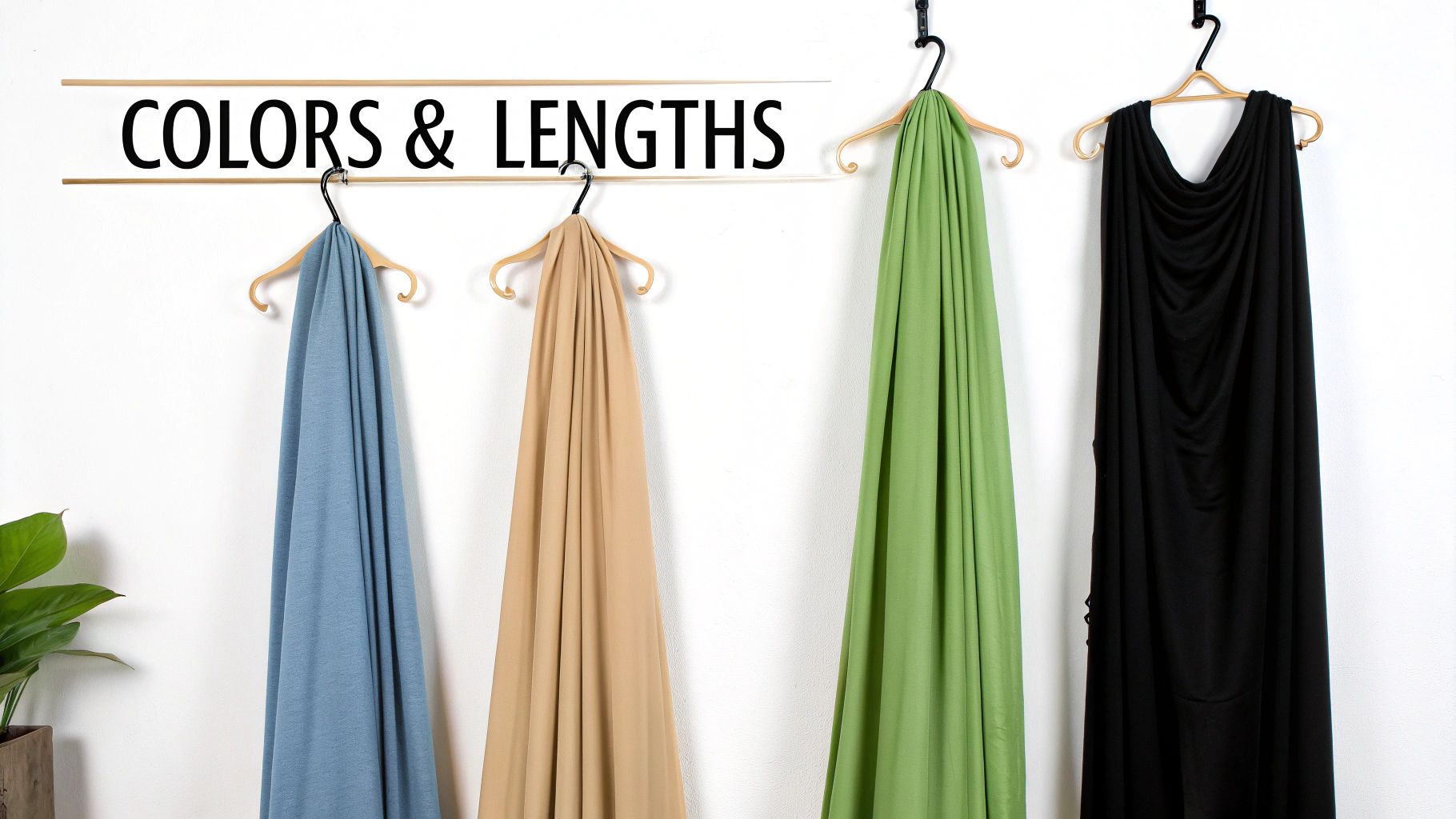
When you choose a veil, its color and length aren't just about aesthetics—they add beautiful layers of meaning to your personal devotion. Think of it less like a set of strict rules and more like a tradition that can deepen your connection to the Mass and the liturgical seasons. Choosing a color and length with intention makes the act of veiling feel even more special.
Choir directors often think about how color reflects the liturgical calendar, and the same idea applies here. If you're familiar with the symbolism behind different choir robe colors, you already have a great starting point for understanding veil colors. The two most common choices, white and black, each carry their own rich history.
Traditional Veil Colors and Their Meanings
Historically, the color of a woman's veil often reflected her state in life. It was a cultural and spiritual shorthand that many women still find beautiful and meaningful today.
- White or Ivory: These colors have long been a symbol of purity. You’ll often see them worn by young girls, especially for their First Holy Communion, and traditionally by unmarried women. A white mantilla veil is a classic choice for these occasions.
- Black: Signifying maturity and humility, black is the traditional color for married or widowed women. A black lace veil for Mass is a common and reverent option.
While many still honor these customs, the "rules" have relaxed considerably. It's now very common for women to simply choose the color that feels right to them. Many also love to match their veil to the liturgical season—a blue one to honor the Blessed Virgin Mary, or perhaps rose or gold for special feasts like Gaudete Sunday or Easter.
The goal is to select a color that helps you focus on the sacredness of the Mass. Your intention is what matters most, whether you follow tradition closely or choose a color that holds personal spiritual significance for you.
Choosing the Right Veil Length
Just like color, veil length comes down to personal comfort and the occasion's formality. The length you choose will affect how the veil drapes, how much coverage it provides, and the overall look.
Shoulder-length veils are a very popular choice because they're subtle and easy to wear. They give a simple, reverent covering without feeling bulky, which makes them perfect for daily Mass or for anyone just starting to veil. If you're making your own, knowing the proper techniques for sewing delicate fabrics is key to getting that polished, beautiful drape without any pulling or distortion.
For more formal occasions, or if you simply prefer more coverage, longer hip-length veils offer a truly graceful and traditional look. These veils drape beautifully and create a more pronounced silhouette, which can really enhance that feeling of being set apart for prayer.
Ultimately, the best length is the one that makes you feel comfortable and focused, not distracted.
How to Properly Fit and Secure Your Veil
Nothing pulls you out of a moment of prayer faster than a veil that keeps slipping. A veil for Mass should feel like a natural part of your worship, not a distraction. The good news is that getting a secure, comfortable fit is simple and makes all the difference, letting you keep your focus where it belongs.
It all starts with picking the right size. Most veils are made as one-size-fits-most, but the way they drape can change how they feel. A veil that fits well will sit lightly on your head and fall gracefully without any pulling or tightness. To get a better feel for how different lengths and styles might look, it's always a good idea to check out some size and color charts.
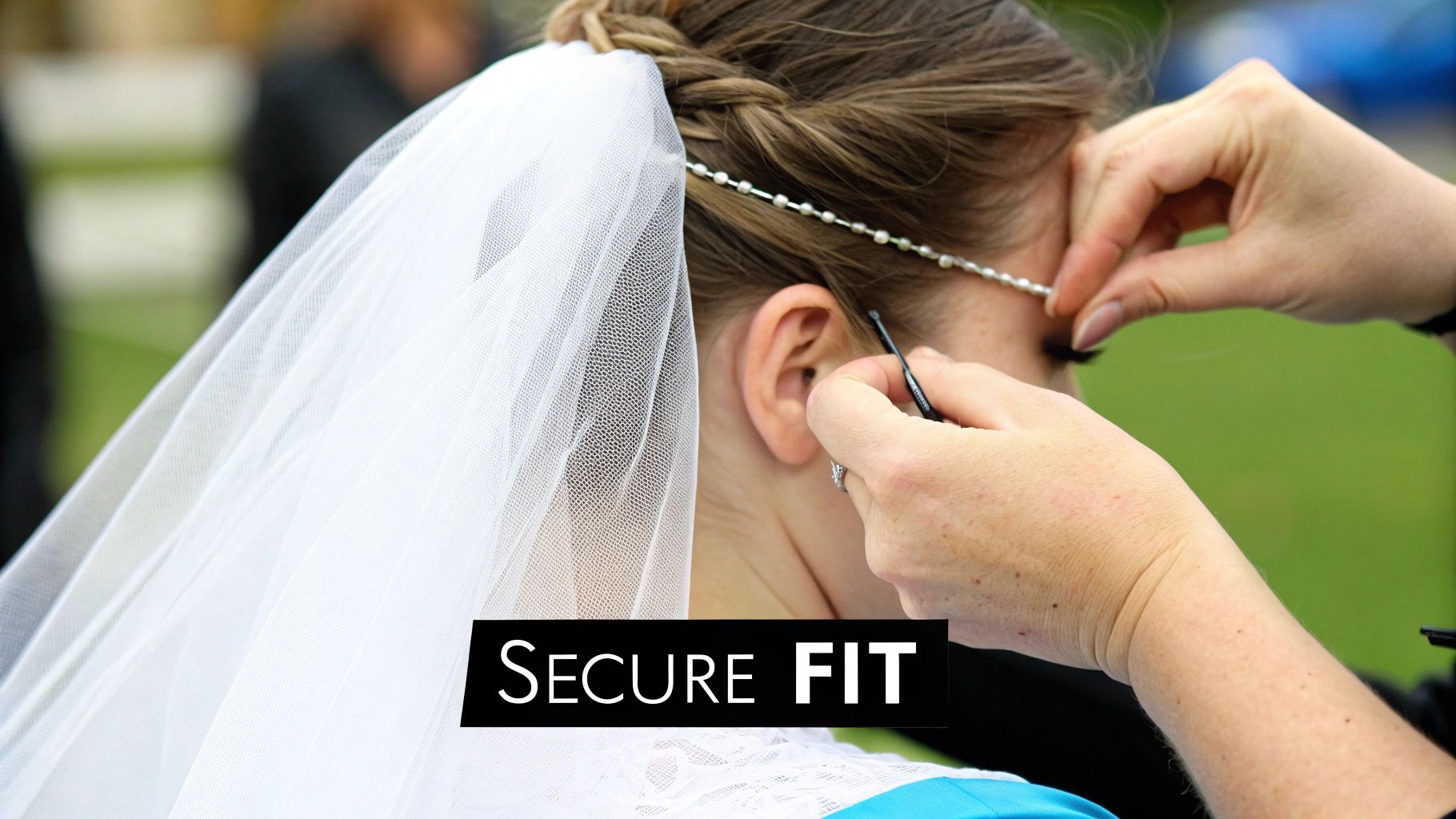
Securing Your Veil on Any Hair Type
Once you have your veil, pinning it down is pretty straightforward. Your best bet will depend on the veil's design and your own hair.
- Veils with Built-In Clips: Many veils today come with a small comb or clip already sewn in. This is by far the easiest method. Just position the veil where you want it and slide the comb into your hair—it’ll stay put through the whole service.
- Using Bobby Pins: If your veil doesn't have a clip, bobby pins are your secret weapon. After placing the veil on your head, use a couple of pins to anchor it. For a really solid hold, try sliding one pin in from each side so they cross over the fabric in an “X” shape.
- For Very Short Hair: Don't worry if your hair is too short to hold a pin or comb. A thin elastic headband (clear or a color that matches your hair) works beautifully. Put the headband on first, then simply tuck the front edge of the veil under it. It holds everything in place discreetly.
When your veil is secure, you forget it's even there. That's the whole point—it becomes a seamless part of your devotion, allowing you to be fully present with our Lord in the Eucharist.
A Simple Guide to Veiling Etiquette
Figuring out the "rules" for wearing veils for Mass can feel a little intimidating at first, but it’s simpler than you might think. It's less about a strict set of regulations and more about shared customs that help us all appreciate the sacredness of the church and our own personal act of worship. The goal is always reverence, not perfection.
Most women find it easiest to put on their veil just before stepping inside the church. This little ritual acts as a beautiful transition, signaling to your heart and mind that you’re leaving the everyday world behind and entering a holy space—God's house. It's a quiet moment to prepare yourself for what's to come.
When and How to Wear Your Veil
Once you're inside, the veil stays on for the entire Mass. That means through the readings, the homily, the Consecration, and right up to Holy Communion. The veil serves as a gentle, constant reminder of Christ's Real Presence in the Eucharist, helping to keep your focus where it belongs: on the altar.
With a little practice, handling your veil becomes second nature. When you genuflect, for instance, just a slight bow of the head is all you need to keep a well-pinned veil from slipping. You want to be able to move with reverence without feeling fussy or distracted by your head covering.
"When we travel, my veil comes with me, and I am happy to report that—even in new-to-me Novus Ordo parishes—I almost always find at least one or two other veiled ladies in the pews. Maybe times are changing? Let us pray!"
This little observation really gets to the heart of it. Veiling is a personal devotion that connects women across all kinds of parishes, and it seems to be finding its way back into the life of the Church.
Veiling Beyond Sunday Mass
This beautiful practice isn't just for Sunday liturgy. In fact, many women find it incredibly meaningful to wear their veils during other times of prayer. It helps build a consistent habit of reverence whenever you're before the Lord.
Here are a few other times you might consider wearing your veil:
- Eucharistic Adoration: What better time to veil than when sitting in quiet prayer before the Blessed Sacrament? The veil can create a sense of intimacy and focus, almost like a tiny, private chapel for your time with Jesus.
- Confession: Wearing a veil in the confessional can be a powerful symbol of humility and sorrow as you come before God to ask for His mercy.
- Daily Mass: If you're lucky enough to attend Mass during the week, veiling can become a cherished part of your daily spiritual rhythm.
- Special Liturgies: Weddings, baptisms, or funerals held within a Mass are also perfectly appropriate times to veil, showing respect for the sacraments being celebrated.
At the end of the day, the etiquette is straightforward because the intention is pure: to honor God. Whether you're genuflecting, kneeling, or just sitting quietly, the veil is a humble sign of your love, helping you focus on what truly matters.
Outfitting Your Choir with Coordinated Veils
As a choir director or church leader, you know how much a choir’s visual presence contributes to the worship experience. It’s all about creating a sense of unity and reverence. While an individual’s choice to veil is personal, when a whole choir adopts a coordinated veil, it elevates their role in the liturgy in a powerful way.
Opting for uniform veils for Mass gently shifts the focus away from individual style and toward a beautiful, collective harmony. It visually reinforces the idea of the choir as a single, unified voice of praise. This polished look works wonderfully with the choir's robes and stoles, creating an appearance that feels intentional and complete. When the choir looks unified, it helps minimize distractions, allowing the congregation to focus entirely on the music and the sacredness of the Mass.
Why Bulk Ordering and Coordination Makes Sense
When you're trying to outfit a whole group, buying in bulk is really the only way to go. It’s the best way to guarantee that every single veil is the exact same color, style, and fabric. Trying to get that level of consistency when everyone buys their own is nearly impossible.
Beyond just looking the same, ordering together often opens up possibilities for customization you wouldn't get with a single purchase. This means you can:
- Match Your Robes: Select a veil color and design that perfectly complements your choir's existing robes and stoles.
- Embrace the Liturgical Calendar: Order sets of veils in different liturgical colors—like violet for Advent or white for Easter—to align with the church seasons.
- Get the Fit Right: Buying from one supplier helps ensure everyone has a veil that fits properly and is the right length.
Tying It All Together: Veils, Robes, and Stoles
A well-chosen veil shouldn't compete with the rest of the choir's attire; it should be the finishing touch. Take a look at the colors and materials of your current robes. A simple, elegant chapel veil in a neutral shade like ivory or soft white is often the perfect companion to more brightly colored robes.
If you're looking for inspiration on how to create a balanced look, understanding how choir stoles add a pop of color and symbolism can be a great starting point for pairing accessories. The right veil enhances the choir’s visual ministry, acting as a quiet symbol of their shared dedication.
This is more than just a niche interest; it's part of a significant and growing market. The global modest apparel market is expected to reach about $96.8 billion by 2025. At the same time, the global choir robe market was valued between $212 million and $410 million in 2024, with North America making up around 38% of that. These numbers show that coordinated apparel for worship is a serious business. You can discover more about the choir apparel market and see just how much this area is growing.
Answering Your Questions About Veiling
Stepping into the beautiful tradition of veiling can feel exciting, but it often comes with a few practical questions. Getting clear, simple answers can help you feel completely at ease as you begin this devotion. Let's walk through some of the most common things people ask about wearing veils for Mass.
Is veiling a requirement in the Catholic Church today? The short answer is no. Wearing a veil is no longer required by Canon Law. Instead, it’s a personal choice, a private devotion meant to express reverence and humility before the Blessed Sacrament. Many women find it’s a powerful way to quiet their hearts and focus on prayer.
Practical Concerns and Care
Can I wear a hat instead of a veil?
Absolutely. The tradition is about covering your head as a sign of reverence, not about a specific type of accessory. A modest hat, a beautiful scarf, or a classic mantilla all fulfill the spirit of the devotion. What truly matters is the intention behind the act.
How should I care for my lace veil?
To keep your veil looking its best, a little gentle care goes a long way. Simply hand wash it in cool water with a mild, delicate-friendly soap. Then, lay it flat on a towel to air dry. Avoid wringing or twisting the delicate fabric, as that can cause damage. Storing it flat in a protective pouch or a drawer will keep it from snagging or wrinkling.
Do the traditional veil colors still matter?
While the color symbolism is a beautiful part of the tradition, these are more like guidelines than hard-and-fast rules today. Many women simply choose a color that feels right for their personal devotion, coordinates with the liturgical season, or even complements their outfit. The focus is always on the interior act of reverence.
At the end of the day, veiling is a personal journey between you and God. The most important thing is to find a practice that draws you deeper into worship and helps you feel more connected to Him during the sacred liturgy.
At ChoirBuy, we know how important it is to create a worshipful and unified look. Whether you're searching for your first veil or outfitting an entire choir, we have a thoughtful selection to meet your needs. You can explore our full collection of high-quality choir robes, stoles, and accessories at https://www.choirbuy.com to find the perfect pieces for your sacred music ministry.