

The right show choir outfit is so much more than just costumes; it’s a living, breathing part of your performance. It’s the visual punch that amplifies your group’s sound, energy, and story. When your choreography, theme, and apparel all click into place, you create a truly unforgettable experience for the audience.
Defining Your Choir's Onstage Identity
Before you start flipping through catalogs or sketching designs, you need to nail down your core concept. This vision will be your north star for every decision you make, from the color palette down to the smallest accessory. It’s what makes your show feel cohesive and intentional.
First, think about your choir’s personality and the music you're performing. Are you a high-energy pop group known for intricate dance moves? Or is your ensemble rooted in a more traditional, elegant style? Your outfits should be a direct reflection of that identity. A competitive high school show choir, for example, will probably lean into bold, modern designs, while a community group might go for something classic and sophisticated.
Choosing a Theme and Color Palette
Your show’s theme is your creative compass. It sets the mood, whether you’re doing a Broadway tribute, a classic rock medley, or a powerful inspirational set. That mood needs to translate directly into your color choices.
You also have to consider the impact of stage lighting. I’ve seen beautiful pastel outfits completely wash out under bright lights. Bold, saturated colors like royal blue, deep red, and emerald green always pop and hold their own. Remember, a strong onstage look isn't just for show; it’s a key part of creating an appealing event experience that keeps your audience hooked.
Here are a few things I always keep in mind when building a palette:
- Contrast is your friend. Using contrasting colors creates visual interest and makes your performers stand out from the stage backdrop.
- Think about group cohesion. Pick a palette that looks great on the diverse range of skin tones in your group so everyone feels confident.
- Lean into emotion. Colors have power. Blues can feel calm and sophisticated, while yellows and oranges scream energy and fun.
A unified color scheme is the quickest way to make an ensemble look professional and polished. It tells the audience you’re a single, cohesive unit before you even sing a single note.
Selecting the Right Silhouette
The silhouette—the overall shape of the outfit—is where form meets function. Your main goal is to find a style that allows for a full range of motion while creating a clean, uniform line across the entire group. If you’ve got high-energy dance numbers, you should be looking at show choir dresses with built-in stretch or pantsuits that offer total flexibility.
For a more formal or traditional show, classic A-line dresses or sharply tailored choir robes can provide timeless elegance. You can also layer in accessories like custom stoles to add a pop of color and dimension that ties the whole look together. We cover a ton of different options in our detailed guide on show choir attire.
Ultimately, a consistent silhouette ensures no single performer distracts from the group's collective power, creating a stunning visual harmony that perfectly matches your vocal one.
Choosing Fabrics That Elevate Performance
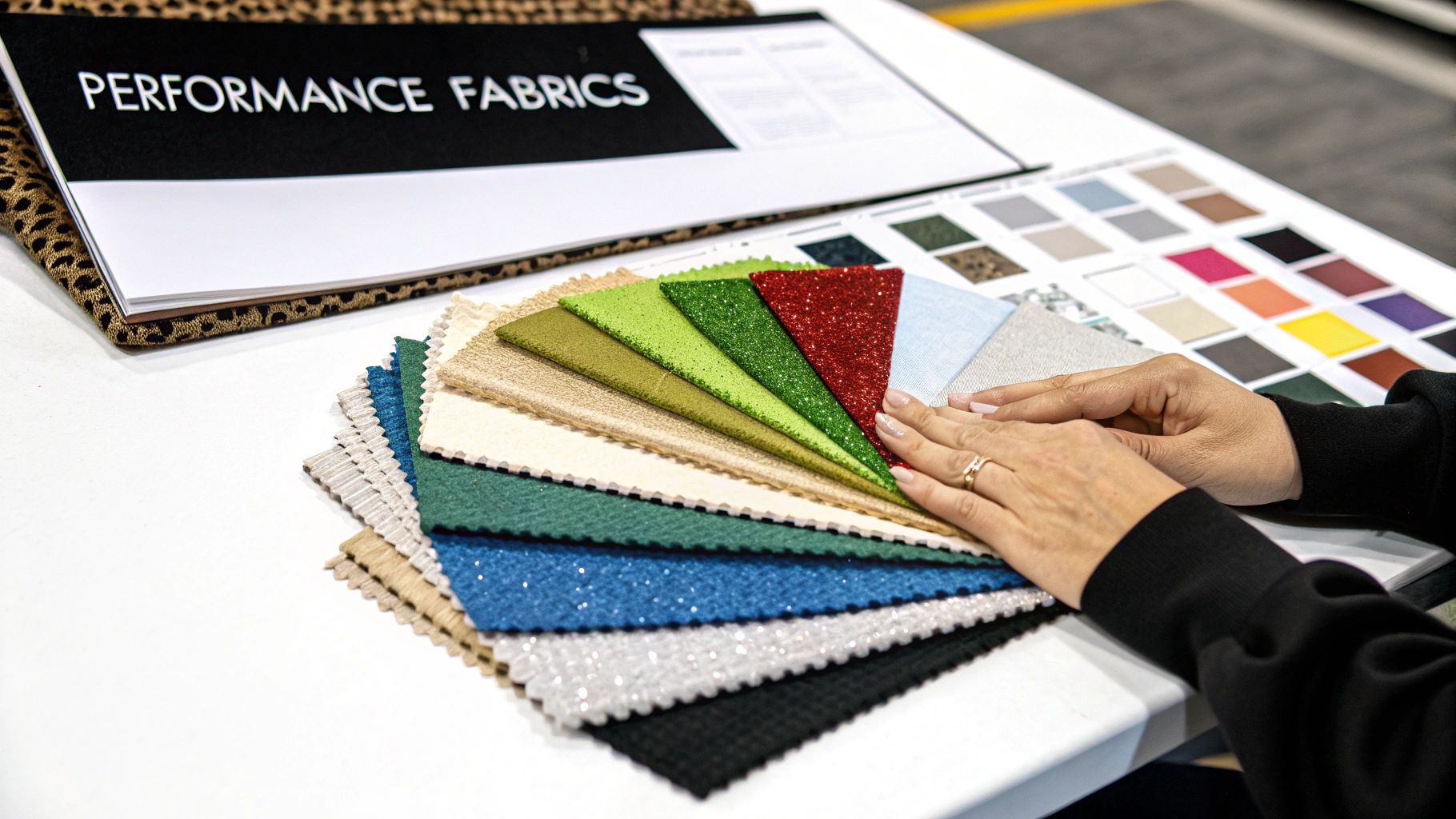
The fabric of a show choir outfit is so much more than just cloth—it’s a silent partner in every single performance. The right choice can make choreography pop and stand up to a grueling show schedule. The wrong one? It can hold your performers back, look flat under the lights, and become a maintenance nightmare. This is where practicality has to meet stage presence head-on.
For any group with high-energy routines, breathability isn't a luxury; it's a necessity. Materials that trap heat will leave your performers sweaty and exhausted, which is a surefire way to kill their energy. This is a big reason why modern polyester blends have become such a go-to. They’re built to last, wick moisture away from the skin, and keep singers feeling cool and focused.
The Workhorses Versus the Showstoppers
When you’re looking at fabric swatches, you’re usually trying to find the sweet spot between everyday durability and on-stage glamour. It's one of the most important decisions you'll make for your group's look.
-
Durable Workhorses: Think of materials like matte jersey or a high-quality stretch polyester. These are the foundation of a reliable choir wardrobe. They fight off wrinkles, keep their color wash after wash, and have the stretch needed for demanding choreography. These fabrics are in it for the long haul.
-
Showstopping Materials: This is where the magic happens. Sequins, metallics, and velvets deliver that jaw-dropping "wow" factor that audiences remember. They play with the stage lights beautifully, adding texture and excitement to your visual package. The trade-off is that they almost always need more careful handling and specialized cleaning.
The journey of show choir costuming has seen a huge shift. We've moved from the polyester suits of the 1980s to the performance-focused, sustainable fabrics of today. In fact, an estimated 40% of suppliers now offer eco-friendly options as awareness grows.
Understanding Drape, Flow, and Maintenance
How a fabric hangs and moves—its drape—is everything. It shapes the silhouette and defines the motion of an outfit. A lightweight chiffon, for example, will float and ripple with every spin, creating a soft, dreamy effect. On the other hand, a structured gabardine will give you crisp, sharp lines perfect for a more formal or powerful look.
And let's not forget about maintenance. Machine-washable fabrics are an absolute godsend for directors, parents, and students. If you opt for more delicate materials with beading or sequins, you’re almost certainly signing up for hand-washing or dry cleaning. This adds to the long-term cost and workload, so it's a factor you have to budget for. For more on how fabric choices influence different looks, check out our guide on modern choir robes.
My best piece of advice: Before you commit to yards and yards of a single fabric, always order samples. There is no substitute for feeling the material, seeing how it stretches with your own hands, and checking how it looks under actual lights. This simple step can save you from a very expensive mistake.
Choosing the right fabric is about helping your performers shine. You need something they feel great in, that wows the audience, and that you can realistically manage. Nailing this choice ensures your choir not only sounds amazing but looks and feels unstoppable.
To make this decision a little easier, I've put together a quick comparison of some of the most common fabrics you'll encounter.
Performance Fabric Comparison Guide
| Fabric Type | Best For | Movement/Flexibility | Durability | Care Instructions |
|---|---|---|---|---|
| Spandex/Lycra Blends | High-energy dance numbers, fitted garments | Excellent four-way stretch | High | Machine wash cold, hang dry |
| Matte Jersey | Dresses, tops, pants; versatile looks | Great drape and fluid movement | Very Good | Machine washable, wrinkle-resistant |
| Sequined/Metallic Fabrics | Showstopping feature pieces, accents | Varies; often has limited stretch | Moderate (can shed sequins) | Spot clean or dry clean only |
| Chiffon/Georgette | Overlays, skirts, flowing elements | Superior flow and drape | Delicate | Hand wash or dry clean |
| Stretch Velvet | Elegant, formal pieces; holiday shows | Good stretch and rich texture | Good | Dry clean recommended |
| Gabardine | Structured blazers, vests, formal wear | Limited stretch; holds shape | Excellent | Typically dry clean only |
This table is just a starting point. Always refer to the specific care instructions for any fabric you purchase, as treatments and blends can vary. The goal is to find that perfect balance of flash, function, and longevity for your group.
Mastering Sizing for a Unified Look
Nothing makes a show choir look more professional than a perfect, uniform fit. When every performer feels comfortable and confident in what they’re wearing, that energy just pours off the stage. Getting the sizing right is the secret to achieving that sharp, polished look that lets your group’s talent take center stage.
The best way to tackle this is to schedule a dedicated group sizing day. Honestly, it's the only way to do it efficiently. Set up a few different stations, have plenty of measuring tapes on hand, and recruit a couple of detail-oriented parent volunteers to help out. A little organization upfront will save you from a major headache later.
Taking Foolproof Measurements
Precision is everything here. A small mistake in measurement can mean a poor fit, so it’s worth taking the time to get it right. For most show choir outfits, you'll need three key measurements. Always use a soft, flexible tailor’s tape, not a metal one from a toolbox!
- Chest: Wrap the tape around the fullest part of the bust. Make sure it stays level all the way around the back and isn't too tight.
- Waist: Have the performer find their natural waistline—it's usually the narrowest part of their torso, right above the belly button. Measure around that point.
- Inseam: This one's for pants. Measure from the crotch straight down the inside of the leg to where you want the hem to fall, which is usually just covering the top of the shoe.
With these numbers in hand, you can head over to our detailed ChoirBuy size and color charts. We’ve designed these charts to match real-body measurements to our garment sizes, taking all the guesswork out of it for you.
I see it all the time: directors guessing sizes or just using the performers' T-shirt sizes. It's the most common mistake and it always leads to problems. Taking five minutes to measure each person individually will save you weeks of hassle with returns and alterations down the road.
Accommodating Every Performer
Every group is different, and that means you'll run into unique sizing needs. If you're working with a youth choir, you have to plan for growth spurts. It's a fact of life! If a student is right between two sizes, I almost always recommend ordering one size up. It's so much easier to hem a pair of pants than it is to let out a seam that has no extra fabric.
Inclusivity is also more important than ever. Making sure you have comfortable and flattering plus-size options available means every single member of your choir feels seen, valued, and fantastic on stage. The demand for this is growing, too; we’re seeing that 60% of show choir orders now include plus-size options and take advantage of bulk discounts for these larger orders.
But if you want my single best piece of advice, it's this: order samples. Before you commit to a huge bulk order, get your hands on a few different sizes of the show choir outfit you’ve chosen. Let a few performers try them on, dance around, and give you honest feedback. This is the only way to be absolutely certain your final order will be perfect.
Budgeting and Ordering Without the Stress
Let’s be honest, managing the budget and coordinating a bulk order for a whole show choir can feel like the hardest part of the job. It’s a huge responsibility that takes a sharp eye for detail and a solid plan.
The good news? With a clear roadmap, you can handle the finances and logistics like a seasoned pro, making sure there are no surprise costs or headaches along the way.
Breaking Down the Costs
First things first: building a realistic budget means accounting for every potential cost. Don't just look at the price tag of the dress or suit. A truly comprehensive financial plan includes a few other key components to prevent any last-minute scrambles.
Think about these factors:
- Base Garment Price: This is your starting point—the cost per dress, robe, or pantsuit.
- Customization Fees: Adding things like embroidery, a custom logo, or special color requests will often come with additional charges.
- Shipping and Handling: This can be a sneaky, significant cost, especially for large, heavy boxes. Always ask for a shipping estimate upfront.
- Alterations: It’s smart to set aside a small contingency fund for minor alterations. It’s rare for every single outfit to fit perfectly right out of the box without a few small tweaks.
Getting a handle on these costs gives you the complete financial picture. To see how different design choices can impact your bottom line, our guide on show choir costume considerations is a great resource.
A detailed, line-item budget is your best defense against unexpected expenses. When you know exactly where every dollar is going, you can fundraise confidently and make purchasing decisions that honor your financial limits.
Making It Affordable
For many programs, fundraising is the key to bringing their performance vision to life. You’ve got lots of proven options, from hosting benefit concerts and launching booster club campaigns to seeking sponsorships from local businesses. These efforts often close the financial gap, especially for groups going after those high-concept looks.
In the competitive show choir world, it's a big deal. Over 1,000 schools participate in events hosted by groups like the Show Choir Nationals each year. For that level of competition, outfits can run $200-$500 per performer, often featuring custom designs with vibrant colors and fringe to really wow the judges.
At ChoirBuy, we believe a stunning stage presence shouldn't break the bank. That’s why we focus on transparent pricing and package deals to make outfitting your group much more affordable. Our show choir outfits for sale offer incredible value without sacrificing quality.
The Bulk Ordering Timeline: Your 4-Month Checklist
Placing a bulk order is all about timing. You need a clear plan to make sure your outfits arrive well before your first performance. Following a timeline keeps everyone on the same page and helps you sidestep those stressful, last-minute rushes.
Here’s a practical checklist to guide you:
12-16 Weeks Out: Initial Inquiry & Sampling
This is your research phase. Contact us with your design ideas, get a quote, and—most importantly—order samples. This is the only way to verify fit, feel the fabric, and see the quality for yourself before committing.
10-12 Weeks Out: Sizing Day & Final Count
Get the whole group together for a dedicated sizing day. This is when you'll finalize the exact number of outfits needed for each size. Measure twice, order once!
8-10 Weeks Out: Place the Official Order
Time to make it official. Submit your final order with all sizing details and customization requests locked in.
4-8 Weeks Out: Production & Shipping
Sit back and relax (well, a little). This is when your outfits are being expertly crafted and prepared for delivery.
2-4 Weeks Out: Delivery & Distribution
Your order has arrived! Now's the time to unpack everything, inspect each piece, and distribute the outfits. This buffer gives you plenty of breathing room for any necessary minor alterations before showtime.
Custom Touches That Make Your Outfit Pop
Once you've nailed down the core outfit, the real creative work begins. This is where you add the final layer of polish and personality—the custom details and thoughtful accessories that turn a uniform into a true performance costume. These are the elements that tell your show's story and make a lasting impression on the judges and the audience.
Little additions can make a huge difference. For instance, custom embroidery is a classic for a reason; it builds group identity and a real sense of pride. Adding your choir’s logo to a stole or the school's initials on a vest lends an exclusive, polished feel. It’s a subtle but powerful way to communicate that you're a unified, professional ensemble before the first note is even sung.
Smart Accessories Complete the Look
Accessories are your secret weapon for transforming a standard outfit into something truly special. They're often the easiest and most budget-friendly way to tie your look into a specific theme or musical number. The trick is to choose pieces that amplify the performance, not distract from it.
Here are a few ideas I've seen work wonders:
- Sequin Belts or Sashes: A simple sequin belt can instantly add a pop of glamour and define the waistline, which helps create a more flattering silhouette for everyone on the risers.
- Custom Ties or Bow Ties: For mixed groups, having the guys wear custom choir ties that pull a specific color from the dresses is a simple trick that makes the whole group look incredibly cohesive.
- The Right Footwear: Never, ever underestimate the power of matching shoes. Whether it's classic character shoes for a Broadway set or sleek black jazz shoes for a high-energy pop number, the right footwear completes the picture from head to toe.
The smartest, most versatile show choir uniforms are built on a simple, high-quality foundation. A classic black dress or a clean two-piece set can be re-imagined for dozens of different shows just by switching up the accessories. It's the best way to get the most out of your budget year after year.
The Ultimate Versatility Tool: Choir Stoles
If there's one accessory that delivers the most bang for your buck, it's the stole. This simple piece of fabric offers incredible versatility. I've seen directors use different colored choir stoles to distinguish between their various choirs or swap them out to match the mood of a performance, moving seamlessly from a festive holiday show to a more formal spring concert.
There's a reason stoles are a constant top-performer in the apparel market. Market analysis shows they are consistent best-sellers, with 70% of sales coming from cross-embroidered designs favored by both liturgical and show groups. Their affordable $20-$50 price point makes them an accessible upgrade for almost any program. You can find more insights on choir uniform best-sellers to see how other groups are using them.
Adding these final touches is where a uniform truly comes to life. The table below breaks down a few popular options and how they can impact your overall stage presence.
Customization Options and Their Impact
| Customization/Accessory | Visual Impact | Best For (Performance Type) | Cost Level |
|---|---|---|---|
| Custom Embroidery | Polished, professional, builds brand identity | All types; foundational branding | Low-Medium |
| Sequin Belts/Sashes | Adds sparkle, defines waist, high-impact | Pop, jazz, high-energy numbers | Low |
| Contrasting Stoles | Adds a block of color, theme-specific, versatile | Themed concerts, formal events, holiday shows | Low |
| Rhinestone Appliqués | Catches stage lights, adds glamour and detail | Ballads, Broadway, competition sets | Medium-High |
| Coordinated Ties/Bows | Creates a cohesive, unified look for co-ed groups | All types, especially for a traditional look | Low |
| Character Shoes | Professional, completes the "performer" look | Broadway, theatrical numbers, traditional sets | Medium |
At ChoirBuy, we live for this stuff. Our team can help you design a signature look with everything from detailed embroidery to a huge selection of accessories. We'll work with you to capture your group's unique spirit and make your show choir outfit unforgettable.
To help you plan, the timeline below maps out the typical ordering process.
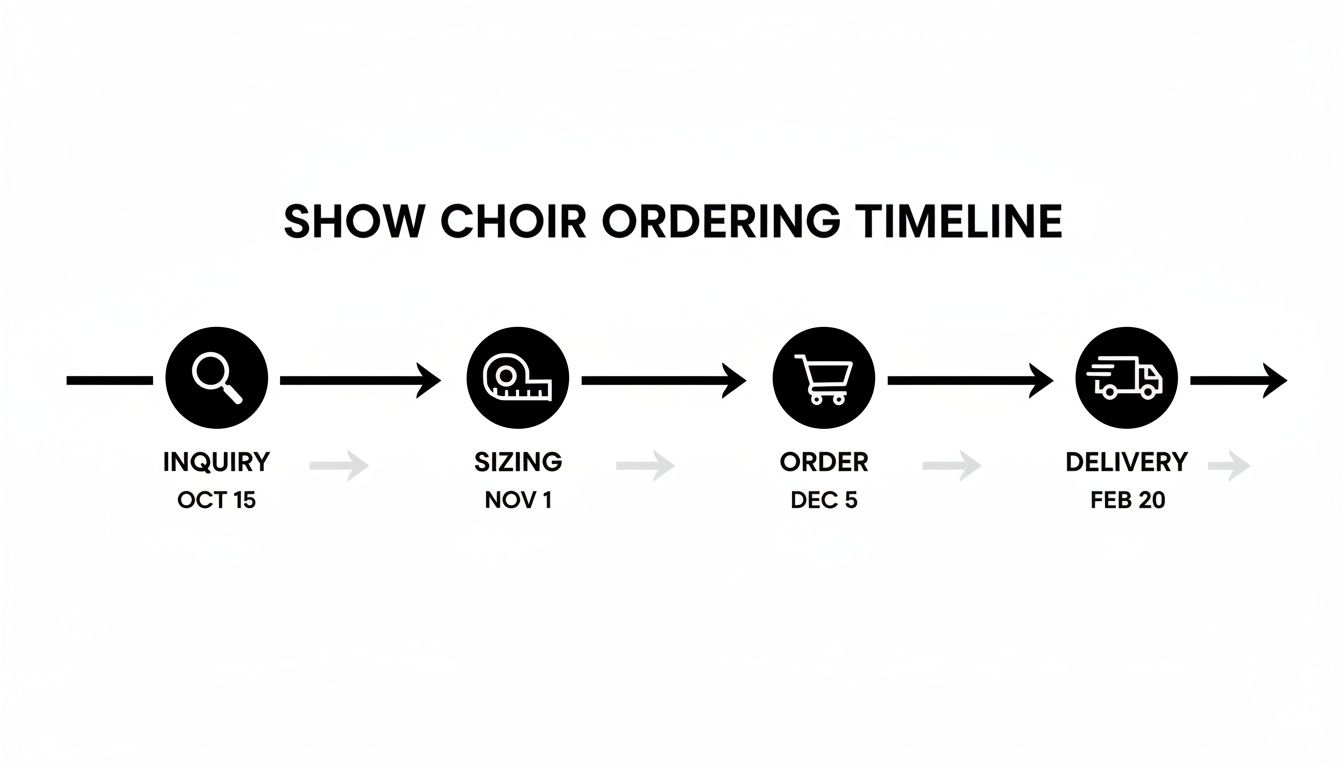
This visual guide breaks down the key stages, from the first inquiry and sizing all the way to delivery. Following a clear timeline is the best way to ensure a smooth, stress-free experience from start to finish.
Your Show Choir Outfit Questions, Answered
Even the most seasoned choir director runs into questions when outfitting their group. It’s part of the process! To help you navigate it all, I’ve pulled together some of the most common questions I hear and shared some practical, real-world advice to make things a little easier.
How Far in Advance Should I Order My Outfits?
My best advice? Give yourself more time than you think you’ll need. To avoid that frantic, last-minute scramble, you should aim to place your final order at least 8-12 weeks before your first performance. That window gives you a comfortable buffer for design, production, and any shipping hiccups.
Now, if you're going the full custom route with unique fabrics or a one-of-a-kind design, you'll want to push that timeline back even further. I'd recommend starting the conversation 16 weeks before you need them. This extra time allows for a much more relaxed sampling and approval process, so every detail is just right without the pressure of a looming show date.
What's the Best Way to Handle Alterations for a Large Group?
The goal is always to minimize alterations from the get-go with accurate measurements, but let's be realistic—minor adjustments are almost always needed.
For simple fixes like hemming, find a local seamstress and ask about a group discount. Many are happy to work with schools or community groups for bulk orders. It's also worth looking for performance wear designed with alterations in mind; features like generous seam allowances or adjustable waistbands can be a lifesaver, making it easy for parent volunteers to handle small tweaks.
A classic mistake is assuming standard sizes will fit everyone perfectly. Always set aside a small portion of your budget for professional alterations. It's what gives your ensemble that polished, tailored look and ensures an ill-fitting costume doesn't become a distraction on stage.
Can We Use the Same Core Outfit for Multiple Shows?
Absolutely! In fact, it’s one of the smartest, most budget-savvy moves you can make. Think of it as investing in a high-quality "uniform" that serves as a blank canvas—a classic black dress, a sleek jumpsuit, or a timeless robe.
From there, you can completely reinvent the look for different themes just by changing the accessories. Swap out stoles for a holiday concert, add sequin belts for a high-energy pop number, or introduce custom ties for a more formal event. It’s the secret to keeping your look fresh without buying a whole new wardrobe every season. This strategy is perfect for a custom show choir outfit that adapts to any theme.
This kind of versatility is becoming a huge trend. The latest show choir outfits are truly reshaping performance fashion, with 2025 trends showing a 30% rise in adaptable designs that work for everyone from school groups to church choirs. You can discover more insights about these fashion trends on accio.com.
How Do I Choose a Style That Flatters All Body Types?
The real key here is to find a look that makes every single performer feel confident and comfortable. The best way to do that is by focusing on classic silhouettes known for flattering a wide variety of shapes and sizes.
- A-line dresses and empire waists are go-to options for a reason—they create a beautiful, graceful line on almost everyone.
- Don’t underestimate the power of fabric. A high-quality material with a bit of stretch offers both comfort and a more forgiving fit.
- Consider offering a couple of coordinated choices within the same theme. For example, giving performers the option of a dress or a matching tunic-and-pants set is a great way to maintain a cohesive look while empowering them to choose what they feel best in.
Ready to find the perfect look for your ensemble? At ChoirBuy, we offer a wide range of high-quality, customizable show choir outfits designed for performance and built to last. Explore our collections and discover affordable options at https://www.choirbuy.com.