

Imagine this: the curtain rises, the stage lights flare, and before a single note is sung, the audience is already captivated. They're looking at a sea of coordinated color and style. That's the power of great show choir attire. It’s the visual magic that transforms a group of individual singers into a polished, unified ensemble and sets the entire mood for the performance.
Crafting the Visual Story of Your Performance

Show choir attire is so much more than just a uniform. It’s a huge part of your group's storytelling. The right visual design can make your music feel bigger, punch up your choreography, and build an instant, powerful connection with your audience. Think of your choir's look as the visual score playing right alongside the musical one.
This guide is designed to help you start thinking like a costume designer. We're moving beyond just picking out clothes and into creating a cohesive, memorable stage presence that feels intentional. We'll get into the nitty-gritty of balancing your artistic vision with the practical stuff—like budgets, durability, and making sure your performers are comfortable in their show choir dresses or suits.
The Foundation of a Great Look
Every single decision you make about your choir’s appearance should circle back to your performance goals. Those visual elements, whether it's the shimmering sequins on a dynamic pop dress or the elegant flow of traditional choir robes, are your very first chance to tell the audience what your show is all about.
To build a look that feels professional and has real impact, you'll want to focus on these key areas:
- Cohesion and Unity: Making sure every single member looks like they belong to one polished, professional group.
- Artistic Expression: Picking out colors, fabrics, and styles that truly capture the mood and message of your music.
- Practicality: Choosing durable, comfortable outfits that can handle energetic movement and the rigors of performance.
- Budget Management: Making smart choices that give you a high-end look without breaking the bank.
Why Visuals Matter So Much
In the competitive world, visual impact can be worth up to 30% of a group's total score. That's huge. But even if you're directing a non-competitive church or community choir, a unified look is just as important. It gets rid of distractions and helps the audience focus completely on the music and the message you're sharing.
A well-thought-out visual presentation signals professionalism and a deep respect for the performance. It tells the audience, "We've considered every detail," building their anticipation and elevating their experience from the moment you walk on stage.
Whether you lead a high school group, a community ensemble, or a church choir, mastering the art of show choir attire is a game-changer. By really understanding how to choose the right styles, fabrics, and custom details, you can make sure your choir not only sounds incredible but looks completely unforgettable every time they perform.
Finding the Perfect Style for Your Ensemble
Choosing the right look for your choir is about so much more than just picking a dress or a suit. You're crafting your group's identity—translating your sound and energy into a visual statement that captivates the audience from the moment you step on stage. The right attire pulls everything together, creating a totally cohesive experience.
Think of it like casting for a role. Is your choir classic and elegant? Or are you all about modern, high-energy performances? Your outfits need to shout that identity from the risers. This single decision will shape every choice that follows, from the cut of a gown to the sharpness of a lapel.
Styles for Women Performers
For women, the possibilities are practically endless, opening up a huge range of expression. Each style has a specific job to do, enhancing both the look and the movement of a performance.
You can never go wrong with a full-length gown. It’s a timeless choice that brings an immediate sense of formality and grace, creating long, beautiful lines that look incredible under the lights. They're perfect for classical repertoires or any concert setting where elegance is the goal.
On the other hand, for shows packed with choreography, you'll want something that moves. That's where dynamic sequin and character dresses come in. These are literally designed to be seen in motion. The sparkle from sequins catches every single stage light, adding a layer of show-biz punch to every step and turn. Character dresses are just as powerful, instantly setting a theme—whether it's a retro 50s swing dress or a sharp, contemporary design.
The goal is to find a style that not only looks fantastic but also empowers every performer to move with confidence and freedom. A restrictive dress can kill the choreography, while a well-chosen one becomes part of the performance itself.
Attire for Men in the Choir
For the men, the classic tuxedo is still a heavyweight contender. It’s hard to beat that sharp, unified look that radiates professionalism and tradition. A well-fitted tuxedo gives your male performers a clean, polished baseline, letting the women’s vibrant costumes or the music itself really shine.
But let's be honest, many modern show choirs are moving beyond the tux. Vests paired with custom shirts are a fantastic alternative, offering a stylish look with far more flexibility for movement. This combo also opens the door for bringing in more color and pattern, which helps tie the men's look directly into the show's overall theme. If you're looking for more ideas, exploring different show choir costume concepts can spark some great inspiration for a look that's both fresh and coordinated.
Options for Children’s Choirs
When you're dressing a children's choir, the priorities get a little different. A unified look is still important, of course, but your top concerns need to be durability, comfort, and vibrancy. Kids need outfits that can survive dress rehearsals, backstage antics, and multiple performances without falling apart.
My advice? Stick with fabrics that are tough but easy to clean, and don’t be afraid of bright, engaging colors that pop on stage and reflect the joy of their performance. Comfort is absolutely non-negotiable. An itchy tag or a tight seam can completely distract a young singer. The best show choir attire for kids, such as durable children's choir robes, lets them forget what they're wearing and just focus on the music and the fun.
How Fabric and Color Create Onstage Magic
Choosing the right fabric and color for your show choir is a lot like a stage director setting the lights. Get it wrong, and you can wash out a performance. But get it right? You create pure magic. The materials you select dictate not just how your choir looks, but how they move and feel under the intense heat of the stage.
Think about the difference between a high-sheen satin and a simple matte jersey. That satin will catch every single beam of light, creating a brilliant, high-energy shimmer that’s perfect for those explosive, upbeat numbers. On the other hand, matte jersey absorbs light, giving you a rich, sophisticated look that adds a real sense of gravity to more serious pieces. Your fabric is an active player in your show's visual story.
This map breaks down how all the pieces of show choir attire come together, from men's and women's styles to options for younger performers.
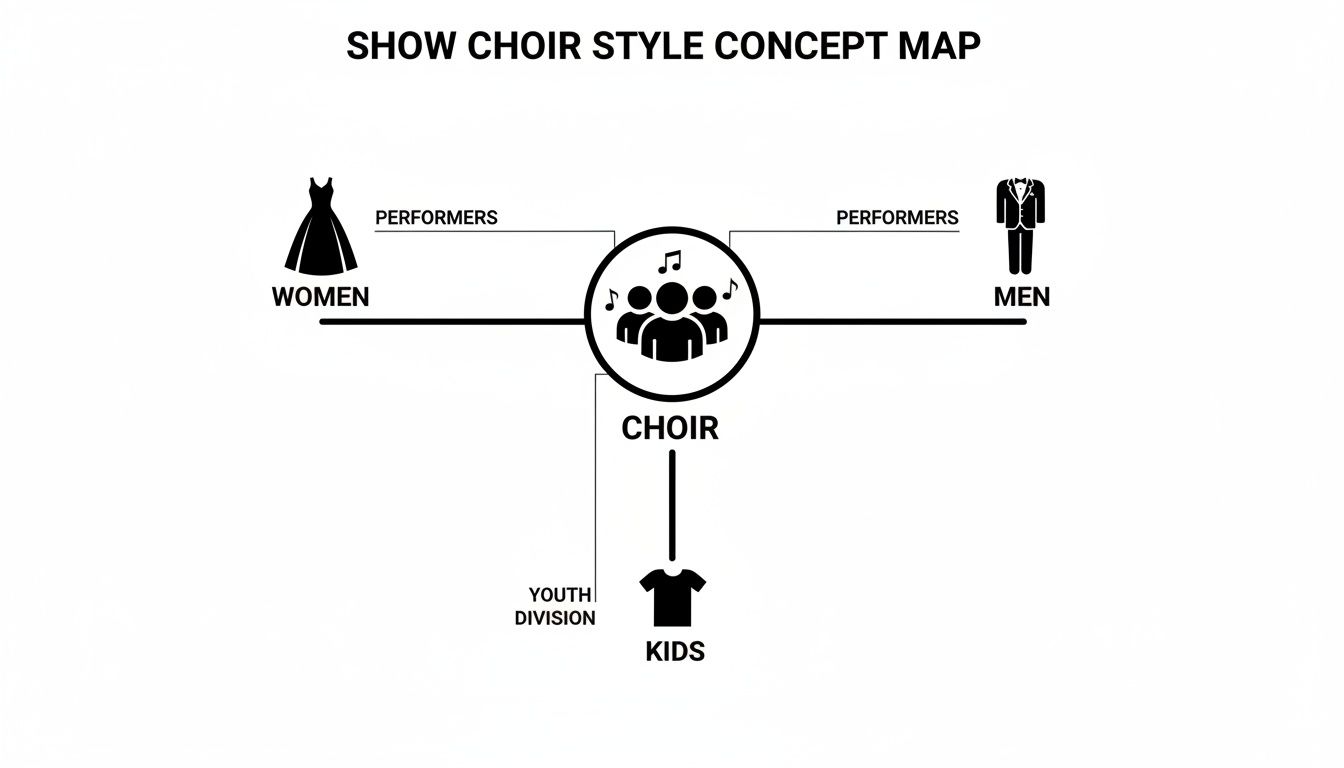
As you can see, a unified look is built from specific components for each section, but they all need to work together to form one cohesive identity on stage.
Choosing Fabrics for Performance
Looks are one thing, but practicality is everything. If you're a touring choir or a group with a packed performance schedule, you need materials that can handle the grind of travel and frequent use. This is where modern fabric technology really becomes a director's best friend.
There's a reason polyester blends are such a popular choice. They offer incredible durability, resist wrinkles like champions, and hold their color exceptionally well. That means your choir looks crisp and vibrant, show after show.
When you're weighing your options, keep these key factors in mind:
- Durability: Can the fabric survive high-energy choreography and repeated cleanings?
- Wrinkle Resistance: Will your group look fresh right out of the suitcase, or are you signing up for hours of backstage steaming?
- Breathability: Performers get hot under stage lights. A breathable fabric is non-negotiable for keeping them comfortable and focused.
- Stretch and Movement: The material absolutely must allow for a full range of motion without restricting your singers and dancers.
To help you visualize how different materials behave, here’s a quick guide to some of the most common fabrics we see in show choir.
Show Choir Fabric Comparison Guide
This table breaks down the pros and cons of different fabrics, focusing on what matters most for a performance group: how it looks on stage, how it holds up, and how it feels to the performers.
| Fabric Type | Stage Appearance | Durability & Care | Comfort & Movement | Cost Level |
|---|---|---|---|---|
| Satin | High-sheen, reflects light brilliantly, creates a dazzling, formal look. | Can snag easily; often requires delicate care (dry clean or gentle wash). | Can be less breathable; limited stretch unless it's a stretch-satin blend. | $$ |
| Matte Jersey | Absorbs light for a deep, rich color; provides a sophisticated, flowing drape. | Very durable, wrinkle-resistant, and machine washable. An excellent travel fabric. | Lightweight, breathable, and offers fantastic stretch for movement. | $$ |
| Sequin/Metallic | Maximum sparkle and visual impact; perfect for high-energy, pop-themed shows. | Sequins can fall off; special care needed. Can be heavy. | Can be scratchy without a proper lining; stretch varies widely. | $$$ |
| Polyester Blends | Versatile; can be matte or have a slight sheen. Holds color exceptionally well. | Extremely durable, wrinkle-resistant, and easy to care for. The workhorse fabric. | Good breathability and stretch, making it a reliable all-around choice. | $ |
| Velvet/Velour | Luxurious, deep texture that absorbs light beautifully, creating a rich, elegant look. | Can be heavy and warm; requires specific care to avoid crushing the pile. | Stretch velour offers great movement, but can be hot under lights. | $$$ |
Ultimately, the best fabric is one that matches your show's theme while also meeting the practical demands of your performance schedule and budget.
The Power of Color on Stage
Color is pure, unadulterated emotion. The palette you choose has a direct psychological impact on your audience, setting the tone before a single note is ever sung.
Bold, warm colors like red and orange are all about energy and excitement—perfect for a high-impact opener or a celebratory finale. They grab your attention and scream passion. On the flip side, cool colors like deep blues and purples evoke a sense of calm, solemnity, or sophistication. They’re a natural fit for ballads or more classical arrangements.
The evolution of show choir attire has been nothing short of dramatic. Since the competitive circuits exploded in the 1970s, visual impact has become absolutely critical, with costumes accounting for up to 20-30% of total scores in many competitions. Pioneers in the industry transformed simple robes into dynamic, theme-driven ensembles, using metallic fabrics and innovative designs to support routines that were more athletic than ever.
Creating a Cohesive Color Palette
A great color scheme feels intentional. It supports the emotional journey of your performance, not just looks pretty. When you start picking shades, it’s crucial to see them in person. Our size and color charts are an excellent place to start visualizing your palette.
Here are a few trusted strategies for building your look:
- Monochromatic Scheme: Using different shades and tints of a single color (like light blue to navy) creates a sleek, unified, and undeniably elegant look.
- Analogous Colors: Choosing colors that sit next to each other on the color wheel (think blue, blue-green, and green) always produces a harmonious and pleasing effect.
- Contrasting Accents: A classic for a reason. Use a neutral base like black, grey, or navy for the main outfits, then add a vibrant pop of color with accessories like stoles or sashes for a dramatic flair.
By carefully thinking through both your fabric and color choices, you can design a look that not only looks stunning but actually enhances the emotional core of your music. That's how you make sure your choir leaves a lasting impression.
Designing a Signature Look with Customization
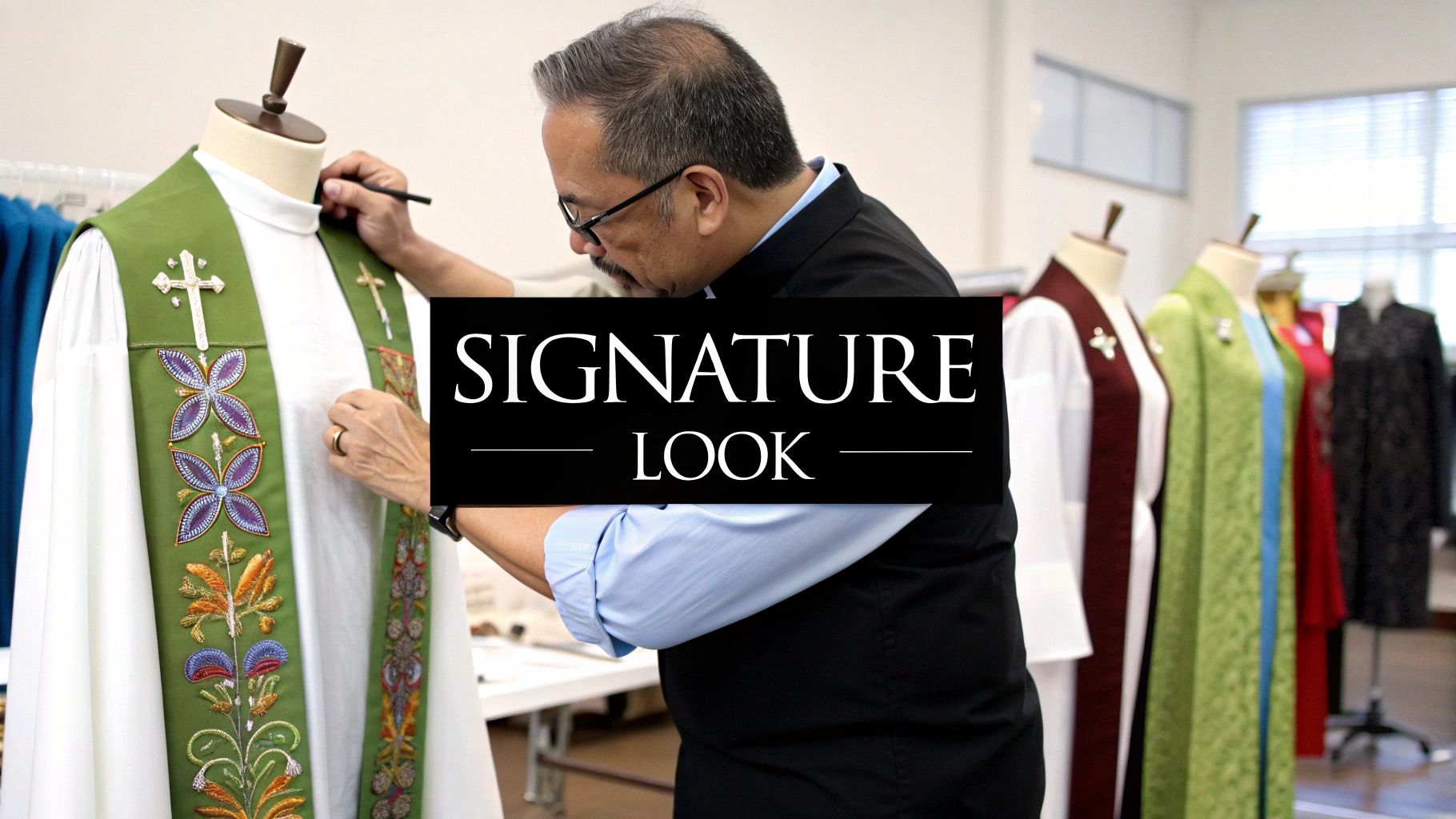
Off-the-rack attire gets the job done, but customization is where your choir’s unique identity really comes to life. This is the step where you stop just dressing your group and start branding it. Think of it as the final polish that elevates a solid performance group into a memorable one with a signature style.
You'd be surprised how much the smallest details can amplify your group's presence on stage. It’s more than just fabric and thread; it’s an investment in your choir’s confidence, turning standard garments into something that feels like it belongs to them and them alone.
The Impact of Small Details
Customization isn't just about looking different—it's about telling your choir's story visually. The right details are what connect with an audience and make your group stick in their minds long after the last note fades.
Here are a few powerful, yet simple, ways to make your look your own:
- Embroidered Logos: Adding a school crest or group logo to a choir stole or the chest of a robe is a classic for a reason. It immediately builds brand recognition and gives performers a real sense of pride.
- Custom Color Combinations: Why settle for stock colors? Pinpointing the exact shades for your choir robes that match your school or organization's colors creates a completely cohesive and professional look.
- Contrasting Trim: This is a simple but incredibly effective trick. A pop of contrasting color on the sleeves, yoke, or hemline of a robe creates a sharp, clean finish that really stands out under stage lights.
When you combine these elements, you’re not just choosing outfits; you’re crafting a visual identity that’s instantly recognizable.
Strategic Customization for Versatility
Smart customization is also one of the best budget-friendly tools a director has. By focusing on accessories you can swap out, you can adapt a core set of robes for different performances, seasons, or special events without blowing your budget on a whole new wardrobe.
Versatility is key. A simple black robe can be a canvas for endless possibilities. By switching out custom-colored stoles, you can instantly change the entire mood and theme of your choir’s look for a fraction of the cost of new attire.
This approach is a lifesaver for groups with a packed and varied performance calendar. A red stole can signal a holiday concert, while a gold one adds a celebratory touch for an anniversary or special service. For directors trying to make every dollar count, learning how to use accessories is a game-changer. You can learn more about how choir stoles can be used to elevate your look in our detailed guide.
The numbers back this up. Customization now drives 40% of show choir attire sales in competitive markets. And in the U.S., where a staggering 81.37% of North American music tourism revenue is generated, choirs often spend $500 to $2,000 per event just on their look. This makes these strategic choices more critical than ever. By focusing on thoughtful custom details, you create a signature ensemble that truly sets your group apart.
Navigating Your Budget and Ordering Logistics
Getting an entire choir outfitted can feel like a Herculean task, but with a solid plan, it's more of a manageable puzzle than an overwhelming nightmare. A smart approach to your budget and the nitty-gritty logistics ensures your show choir attire arrives on time, fits everyone just right, and doesn't break the bank.
Think of ordering your choir's outfits like choreographing a number—every step needs perfect timing for a flawless finale. This means your first, most critical move is mapping out a realistic timeline. A good plan, from the first design sketch to the final delivery day, is your best defense against last-minute panic.
Creating a Realistic Timeline
One of the most common pitfalls is underestimating how long it actually takes to get custom attire made and delivered. The easiest way to sidestep this issue is to work backward from your first performance date. This simple trick forces you to build in a comfortable buffer for every stage.
Here’s a sample timeline you can tweak for your own needs:
- 12-14 Weeks Out: Nail down your design concept and budget. This is when you should be getting quotes and figuring out what’s possible.
- 10-12 Weeks Out: Get your hands on fabric swatches and samples. Seeing and feeling the materials in person is an absolute must—colors on a screen can be wildly different under stage lights.
- 8-10 Weeks Out: Time to measure every single choir member. For consistency, have just one or two designated people handle all the measurements to ensure accuracy.
- 6-8 Weeks Out: Place that final bulk order. Before you hit "submit," triple-check every detail: sizes, colors, quantities, and any special customization notes.
- 2-4 Weeks Out: Your order is here! Get everyone to try on their outfits right away. You need to catch any fit issues that might need small alterations with plenty of time to spare.
Maximizing Your Budget
Every director knows the art of stretching a budget without sacrificing quality. Luckily, there are a few tried-and-true strategies to get the most bang for your buck. The biggest one? Bulk order discounts. Ordering for the whole group at once can dramatically lower the price per person.
Another fantastic way to ease the financial burden is to rally your community through fundraising. A creative campaign not only helps cover costs but also builds a real buzz around your choir's upcoming season. You could try:
- Sponsored Performances: Host a special "preview" concert where all the ticket sales and donations go directly toward the new attire.
- Community Partnerships: Team up with local businesses who might sponsor you in exchange for an ad in your concert programs.
- Online Campaigns: Use a platform like GoFundMe to reach family, friends, and alumni who want to support your vision.
The demand for high-quality, customized performance wear is booming. In fact, the global market for it, which includes show choir attire, was valued at a staggering USD 7.3 billion in 2023. It’s expected to more than double to USD 15.2 billion by 2033. This growth is all about creating those visually stunning moments that make a live show unforgettable. Smart retailers are tapping into this by offering great deals on bulk orders for things like custom choir robes with logos, which helps groups of any size get that polished, professional look without a huge price tag.
A well-managed budget doesn't limit your creative vision; it empowers it. By planning ahead and exploring all your financial options, you can secure stunning attire that elevates your performance without creating financial strain.
Keeping Your Attire Looking Show-Ready
Think of your show choir attire as a crucial piece of equipment. It’s a major investment that directly impacts your group’s professional look and stage presence. Just like you drill your vocals and choreography, your garments need consistent care to stay sharp and vibrant year after year.
A little bit of upkeep goes a long way. It’s the secret to making your investment last, saving you a fortune on replacements down the road. More importantly, it ensures your choir always steps into the spotlight looking polished, unified, and ready to perform. A good maintenance plan stops tiny problems from turning into show-stopping disasters.
Cleaning and Fabric Care
First things first: always read the care label. Every fabric is different. Thankfully, most modern show choir attire is made from tough polyester blends that you can toss right in the washing machine—a huge time-saver for any group. But anything with a little extra flair needs a gentler hand.
For those special, embellished pieces, you’ll want to be more careful:
- Sequins and Beading: Turn these inside out before washing. Pop them in a mesh laundry bag and run them on a cold, gentle cycle to keep them from catching or snagging.
- Delicate Trims: Anything with lace or other fancy trim is best washed by hand. Just use cold water and a mild soap, and be sure not to wring or twist the fabric, which could easily damage the details.
- Drying: Never throw embellished or delicate items into a hot dryer. Hang them up to air dry or lay them flat on a towel. Keep them out of direct sunlight, too, as that can cause the colors to fade over time.
Protecting your attire isn't just about cleaning; it's about preserving the visual story you've worked so hard to create. A well-maintained costume reflects a choir's discipline and respect for their craft, enhancing the overall audience experience.
Smart Storage Solutions
What you do with your attire between shows is just as critical as how you clean it. Shoving costumes into a bin is a surefire way to get wrinkles, stretched-out fabric, and even permanent damage. The goal is to store everything so it’s ready to go with minimal prep.
Your best bet is to use breathable garment bags for each costume. Those plastic bags from the dry cleaner are fine for getting from the car to the venue, but they trap moisture, which can lead to mildew and yellowing. Before packing anything away for the season, make sure it’s completely clean and dry so stains don’t have a chance to set in.
The Essential "Show-Saver" Repair Kit
Wardrobe malfunctions are a fact of life, but a popped seam doesn’t have to ruin a performance. Every director needs a well-stocked, portable repair kit ready to go backstage. This little bag of tricks will let you handle any minor issue with confidence.
Here’s what you should have in your kit:
- Safety Pins: A mix of sizes for emergency hem fixes or broken zippers.
- Needle and Thread: At a minimum, have black, white, and a color that matches your main costumes.
- Fabric Glue: Perfect for reattaching a stray sequin or a piece of trim right before you go on.
- Stain Remover Pen: For tackling small spills before they have a chance to set.
- Double-Sided Tape: A lifesaver for securing gaping necklines or keeping accessories from shifting around.
Answering Your Top Questions About Show Choir Attire
Getting into the specifics of performance wear can bring up a lot of questions. Let's tackle some of the most common things choir directors ask, so you can feel totally confident as you pick out your next set of show choir attire.
How Far in Advance Should I Order Custom Attire?
The golden rule for custom orders? Plan ahead. We always suggest getting the ball rolling at least 8-12 weeks before your first show. This gives us plenty of breathing room for all the important steps: design chats, picking out fabrics and colors, getting samples to you for approval, the actual production, and finally, shipping. A little extra time upfront makes all the difference.
Of course, if you're grabbing standard, in-stock items like our classic choir robes, the timeline shrinks dramatically. We can even handle those last-minute emergencies with options like overnight shipping, making sure your choir looks sharp even when you're in a pinch.
What Is the Best Way to Ensure a Good Fit?
Getting the right fit for a whole group of people really comes down to one thing: consistent measurements. The best way to do this is to have one dedicated person measure everyone (chest, waist, and height). This simple step helps avoid a lot of sizing headaches later on.
Once you have those numbers, always check them against the specific size chart for the exact garment you're ordering.
We make sure everyone has a great fit by offering a wide range of sizes, including plus sizes, so every single performer can feel comfortable and look their best. A good pro-tip: when you're on the fence, it's usually smarter to size up. It's much easier to make small alterations to a slightly larger garment than to fix one that's too snug.
Can I Mix and Match Different Pieces?
Definitely! Mixing and matching is one of the smartest ways to get more mileage out of your choir's wardrobe without breaking the budget. It creates a really dynamic and flexible look. A classic strategy is to start with a solid base, like a simple black choir dress or a standard robe, and then switch things up with different colored choir stoles or sashes.
This approach gives you so much creative freedom. You could use different colors to highlight vocal sections, or you could change the stoles to match a performance theme or even a liturgical season—think red for Christmas or purple for Easter. It's a fantastic way to maximize your investment and keep your look fresh.
Ready to bring a stunning, unified look to your ensemble? ChoirBuy is here to help with high-quality, affordable choir apparel. From elegant robes and customizable stoles to cassocks and surplices, we have everything you need to let your choir shine. Take a look through our collection and see just how easy it is to outfit your group.