

You're standing in the church hallway with a clipboard, a line of singers, and a measuring tape that keeps slipping down someone's back. Rehearsal starts soon, a parent needs to leave, and somebody has helpfully written “usually a large” beside their name. That's when a clear measuring routine becomes more useful than another guess about robe sizes.
Why Chest Measurement Matters When You Order Robes
A fitting-day mistake rarely stays with the person who was measured. The coordinator has to revisit the roster, contact the singer, check replacement options, and work out whether the robe can still arrive before the performance. For a bulk order, a reliable measurement is an ordering tool, not just a tailoring detail.
The important distinction is between body chest circumference and finished garment circumference. The first measures the person. The second measures the room inside the robe. A size label is only an identifier unless the supplier explains what it represents, so don't assume the number printed on it describes either measurement directly.
International clothing-sizing guidance treats chest size as a body-girth measurement and distinguishes chest girth at the axilla from upper-chest, bust, under-bust, and midriff girths. Those measurements aren't interchangeable. That matters when someone submits a bust measurement while another singer measures much higher under the arms.
Keep the person and the robe separate
On the roster, retain the singer's actual body measurement. On the order sheet, record the selected supplier size separately. Don't overwrite the measurement with a preferred size or add extra room to make the number feel safer.
Practical rule: Measure the person honestly, then solve the fit question using the garment's own chart.
When reviewing adult choir robe options and fitting considerations, check what the chart measures before allocating sizes. A body-size chart and a finished-garment chart require different comparisons.
The useful outcome isn't a chest number. It's a measurement taken consistently, attached to the correct singer, and matched to the correct chart. Height, garment length, and performance movement still need attention, but they shouldn't be folded into an improvised chest measurement.
Preparing to Measure for a Reliable Chest Reading
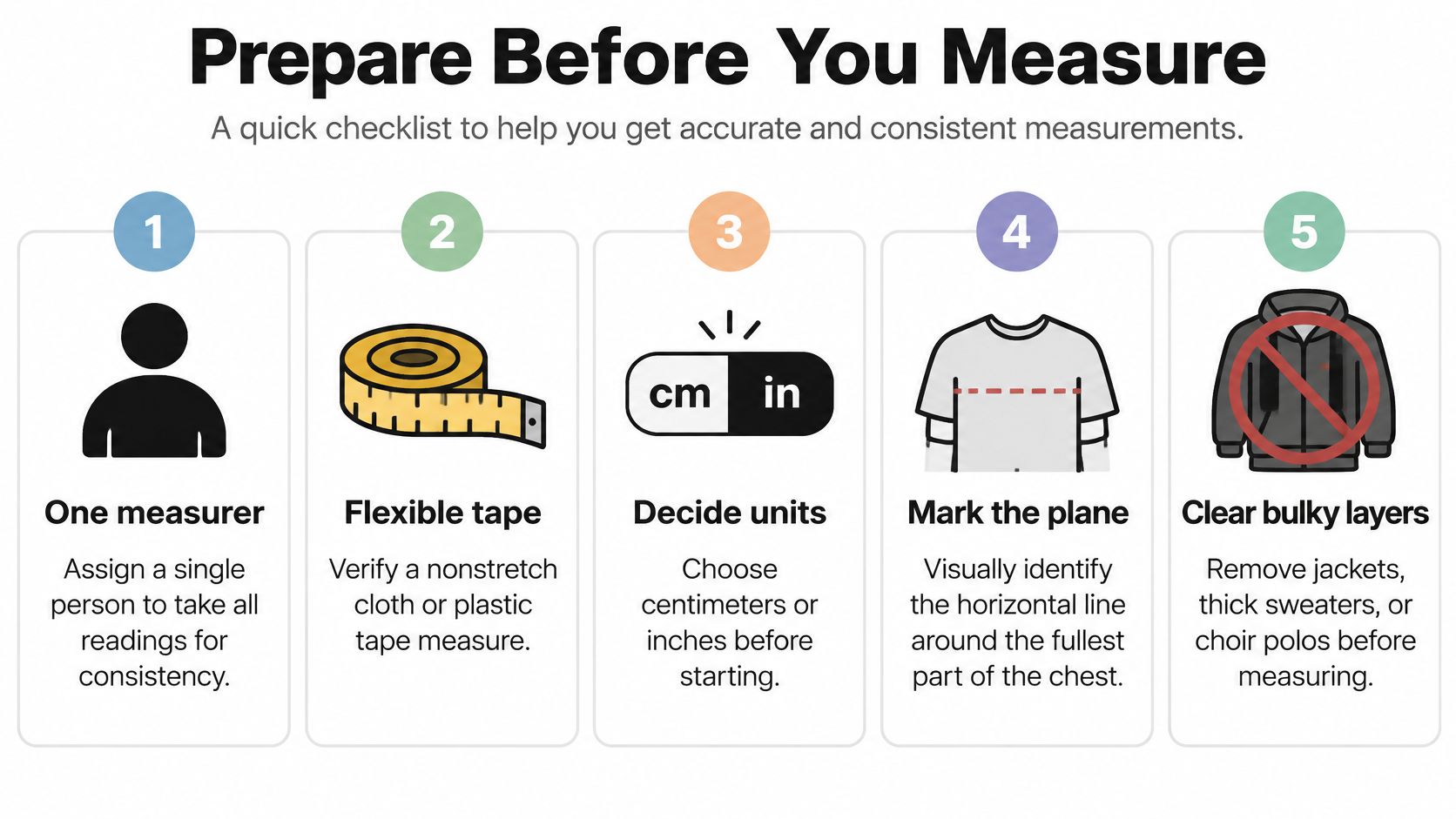
Assign a designated measurer whenever possible. Other helpers can manage names, clothing, and recording, but switching measuring technique halfway through the queue makes borderline readings harder to interpret. If several adults must measure, demonstrate the same routine before anyone starts.
Check a flexible, nonstretch cloth or plastic tape against a trusted ruler. Replace a tape with stretched sections, damaged markings, or an unclear starting point. Choose the working unit before the session, and put it in the spreadsheet column heading rather than relying on everyone to remember.
Keep this preparation checklist beside the measuring station.
Set a neutral starting position
Ask the singer to remove jackets and bulky sweaters, leaving a thin, close-fitting layer. A thick choir polo or folded fabric under the tape introduces clothing into what should be a body measurement. Provide a private option for anyone who isn't comfortable being measured in the hallway.
Have the singer stand upright, look ahead, and let their shoulders settle. Their arms should hang naturally rather than press against the ribs or hold a performance pose. NIOSH's chest-measurement definition specifies erect posture, relaxed upper extremities, and quiet respiration.
Before wrapping the tape, make these checks:
- Clothing: Smooth the measuring area so seams, pockets, and folds aren't trapped underneath.
- Measuring plane: Identify the intended horizontal route around the torso before pulling the tape into place.
- Breathing: Ask for ordinary breathing, without puffing the chest out or pulling the stomach inward.
- Recording: Have the correct singer's row open before calling out the result.
Preparation deserves unhurried attention. A singer trying to help by standing unusually tall or holding their breath can make the reading less representative. Give a calm instruction, allow them to settle, and keep the same routine for everyone.
Taking the Actual Chest Measurement for Adults and Children
To learn how to measure chest size accurately, pay attention to the tape's route around the back, not just the number visible at the front. It should form a horizontal loop, lie close to the body, and leave no indentation.
Use the image as a reminder to check the whole circumference.
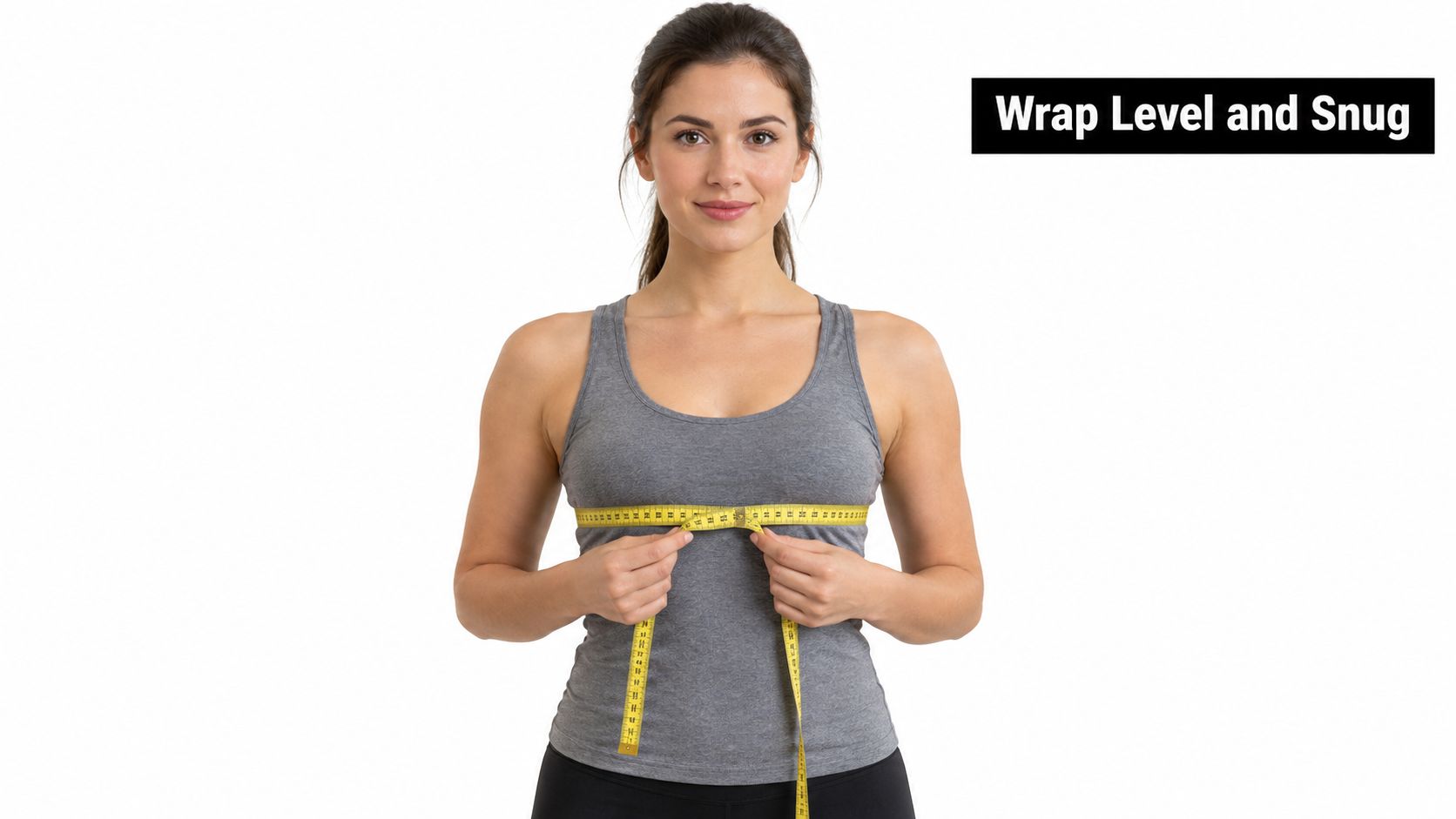
Follow the supplier's stated measurement location. A formal anthropometric protocol uses the fourth costosternal joint, typically just above nipple level, as a reproducible chest landmark. That isn't permission to substitute this location when a garment chart specifically requests full bust or another dimension.
Settle the tape before reading
Ask the wearer to lift their arms slightly while you position the tape, then lower them naturally. A published chest-measurement method uses this sequence and records the circumference at the end of a normal expiration, to the nearest 0.1 cm. Don't ask for a forceful exhale.
Check that the tape hasn't caught loose fabric under an arm. Reposition it for a repeat reading rather than looking at the same placement again.
| Measuring situation | Practical adjustment |
|---|---|
| Adults and teens | Explain the process, ask permission before positioning the tape, and let the wearer settle naturally. |
| Younger children | Ask a parent or helper to reassure the child while the measurer checks the back of the tape. |
| Anyone needing assistance | Agree on a comfortable approach and record any departure from the usual standing method. |
For youth choir robe planning, allow space for patient measuring rather than asking children to remain rigid. If a child twists to watch the tape, pause and restart.
For another apparel-specific comparison, the Mystershirt size recommendations are a useful companion resource when families are also choosing football shirts. Keep the robe supplier's instructions separate.
This video can accompany a hands-on demonstration at the fitting station.
Comparing Body Measurement to Garment Sizing Charts
Read the chart headings before reading the size labels. A column called “chest” isn't clear enough on its own. Look for language identifying the wearer's body circumference, the finished garment circumference, or a garment measured flat.
The difference between body circumference and garment circumference is wearing ease, the additional room available inside the garment. The Carhartt men's size guide is an example of a separate apparel sizing resource, not evidence for a universal choir-robe allowance. A 4–6-inch circumferential ease range can be considered an example fit allowance, but it shouldn't become a blanket rule for robes, cassocks, and shirts.
Reading a Choir Robe Size Chart
The table below is a reading aid, not a supplier's actual size chart.
| Labeled Size | Body Chest (in) | Finished Robe Chest (in) | Built-in Ease (in) |
|---|---|---|---|
| Supplier's size identifier | Wearer range, if provided | Completed robe circumference, if provided | Finished circumference minus body circumference |
| Size under consideration | Compare with the recorded body reading | Check available room for the intended fit | Confirm against the supplier's recommendation |
If the chart lists body chest, compare the singer's recorded measurement directly with that range. Don't add an allowance first unless the manufacturer specifically tells you to. Otherwise, you may add room the designer has already included.
If the chart lists finished garment chest, compare that circumference with the body measurement and evaluate the difference. When the supplier specifies an intended ease allowance, subtracting it from the finished circumference helps identify the intended body size. Without that guidance, ask rather than inventing an allowance.
Don't add comfort room to the person's measurement and then add it again when selecting the robe.
Use the robe sizing chart guidance alongside the selected garment's information. For families comparing other clothing categories, the House of Saint size guide offers another sizing reference, but its garment categories shouldn't be treated as interchangeable with choir robes.
Finally, confirm whether the chart describes a flat width or a full circumference. Those are different measurements, and the supplier should explain how its garment was measured.
Common Chest Measurement Mistakes and How to Avoid Them
Sizing everyone up isn't a measuring strategy. It can hide inconsistent readings while leaving the coordinator with robes that still don't fit correctly at the shoulders or through the middle. Fix the measuring problem before changing the order.
The recurring errors are straightforward enough to catch during the session.
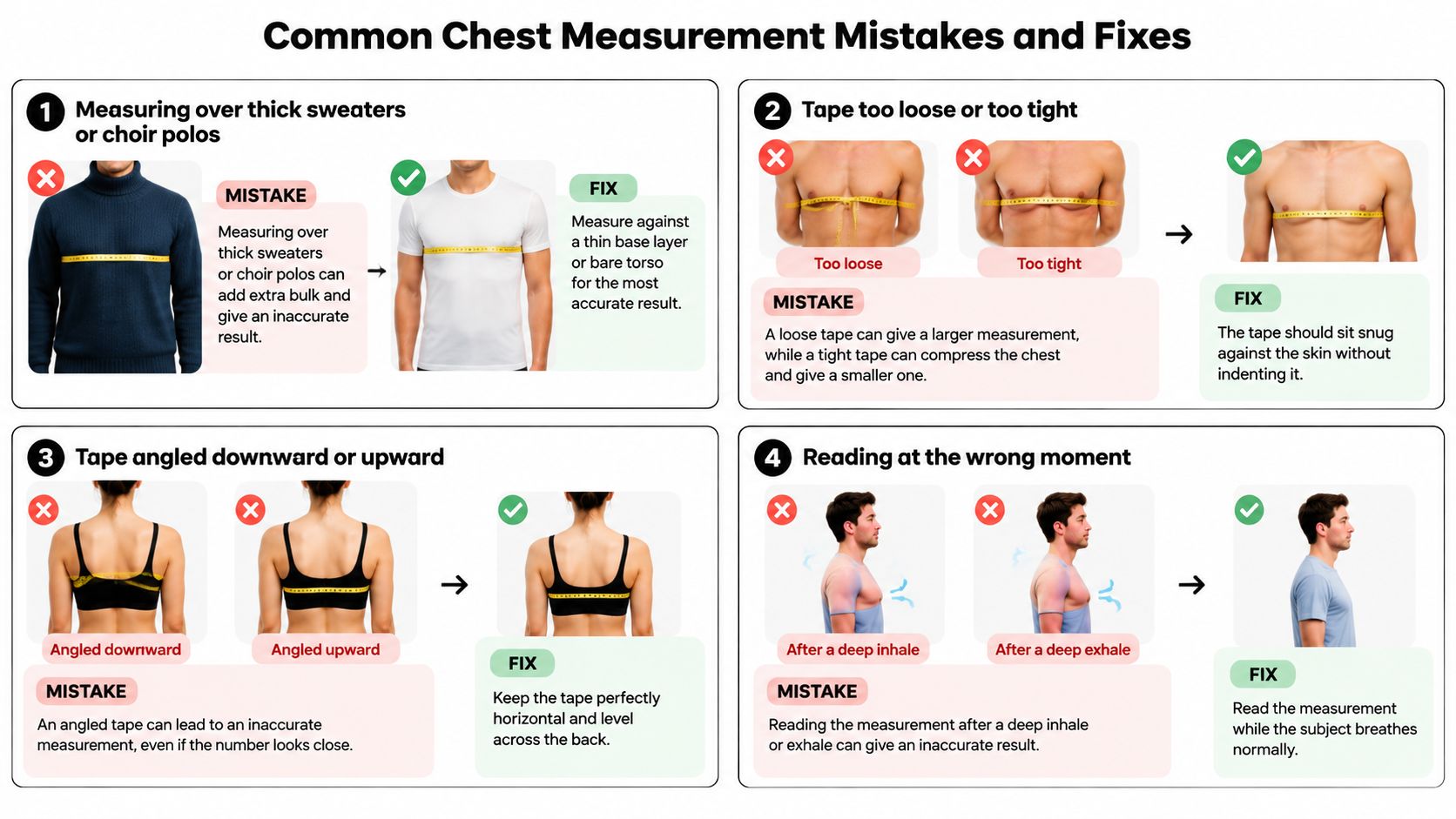
- Bulky clothing: Remove thick outer layers instead of estimating how much fabric to subtract afterward.
- A sloping tape: Check the back in a mirror or ask a helper to inspect it. A level front doesn't guarantee a level back.
- Excessive tension: Release the tape if it leaves a dent. Snug contact isn't compression.
- A staged breath: Let the singer return to normal breathing rather than recording a deliberately expanded chest.
- An unchecked self-measurement: Arrange a second look when the tape placement is uncertain or the resulting size seems inconsistent with other fit needs.
Chest size can be correct and still be insufficient
A 2025 study using body scans of 677 women examined upper-body sizing using dimensions including bust/chest, waist, and hip. Its key-measurement model achieved 89.66% accuracy, compared with 68.97% for a broader principal-component approach. That result concerns the study's sizing models, not a guaranteed accuracy rate for choir orders.
The practical lesson is narrower and useful: don't assume one circumference fully describes someone's shape. A singer may fall within the chest range yet need more consideration at the shoulders, bust, abdomen, or hips.
When that happens, identify the actual restriction. Ask whether the supplier can advise on another cut, a different size, or additional measurements. A sample fitting is preferable to repeatedly increasing the size without knowing what problem you're solving.
Keep the measurement itself unchanged. Put fit concerns in a notes field so the next person reviewing the order can distinguish a reliable body reading from an unresolved garment decision.
Recording Measurements for a Clean Order
A tidy roster lets someone else understand the order without reconstructing the fitting session. Give each singer a permanent row, preserve the original readings, and keep the selected garment size in a separate field.
Use the supplier's garment information beside the roster during the final review.

A practical recording sheet
| Field | What to enter |
|---|---|
| Singer name | The name used on the order roster |
| Garment or fit category | Selected chart category; gender category only where relevant |
| Initial chest reading | Raw value with the unit stated |
| Repeat chest reading | A fresh reading after repositioning |
| Additional reading | Retain when a discrepancy requires another check |
| Final chest in centimeters | Agreed measurement used for chart comparison |
| Final chest in inches | Converted value, clearly labeled |
| Summary method | Average of consistent readings or median when applicable |
| Fit notes | Layering, posture, shoulders, length, or assistance needs |
| Order selection | Garment, size, and review status |
Take repeat measurements and investigate disagreement instead of averaging away a placement mistake. A digital-anthropometry protocol averaged three readings and remeasured replicates differing by more than 0.5 cm. For a choir session, treat that discrepancy as a useful review flag, particularly near a chart boundary.
Anthropometric validation work reports chest-measurement intraclass correlation coefficients of 0.949–0.982 with trained measurers, calibrated equipment, standardized landmarks, and repeated readings. Those are study reliability findings, not promises about an informal fitting.
Before submitting: Resolve the flagged rows, not just the empty cells.
Sort the completed roster by chest circumference and inspect boundary cases. Check garment length and shoulder concerns before approving them. Limit access to personal measurements to the people handling the fitting and purchase.
For custom choir robes with a logo, keep approved sizing and customization details together so the supplier receives a coherent order rather than competing versions.
Quick Answers About Measuring Chest Size for Robes
How much extra chest room does a choir robe need?
Use the garment's intended allowance rather than treating the example ease range above as a universal requirement. A robe worn over clothing needs to accommodate that clothing and the wearer's performance movements, but the appropriate amount depends on its cut and construction.
Ask the supplier whether its chart already includes wearing ease. Where possible, check a sample while the singer sits, stands, and raises their arms. Don't solve a movement problem by altering the recorded body measurement.
What if chest size and other fit needs disagree?
Keep the accurate chest reading and document the disagreement. Tell the supplier where the wearer needs room, whether that's across the shoulders, around the bust, or through the midsection.
“Between sizes” isn't the same as “different proportions.” The first calls for checking adjacent chart ranges; the second may require another garment cut or a sample fitting. Choose based on the area that restricts comfort, while checking that the rest of the robe remains manageable.
Should I measure in inches or centimeters?
Use whichever unit the supplier requests, and label it clearly. The physical circumference stays the same; the numerical value changes with the unit. Don't enter a centimeter reading into an inch column or round before completing the chart comparison.
For a shared roster, retain the original unit and place the converted result in a separate column. That makes it easier to trace a transcription or conversion mistake without measuring the singer again.
Should children stand or sit, and when should they be remeasured?
Use the standing method described earlier when the child can comfortably follow it. If standing isn't practical, document the position and ask the supplier how to handle the measurement rather than assuming it is directly comparable.
As a roster-management practice, schedule a yearly measurement review for youth choirs and check again before ordering when growth or changed fit makes the old record doubtful. A previous size is useful history, not confirmation that the next robe should be identical.
ChoirBuy offers adult and youth choir robes, custom robes, and coordinated choir apparel for group orders. Visit ChoirBuy with your completed measurement roster, review the relevant sizing information, and resolve any borderline fit questions before placing the order.