

Choosing the right altar server cassocks goes far beyond just appearance. It's a genuine investment in the reverence, unity, and sense of purpose you want to instill in your servers. These traditional vestments do a wonderful job of shifting the focus away from distracting street clothes, helping to foster a more prayerful atmosphere and uniting servers in their sacred duty.
Why The Right Cassock Matters For Your Parish
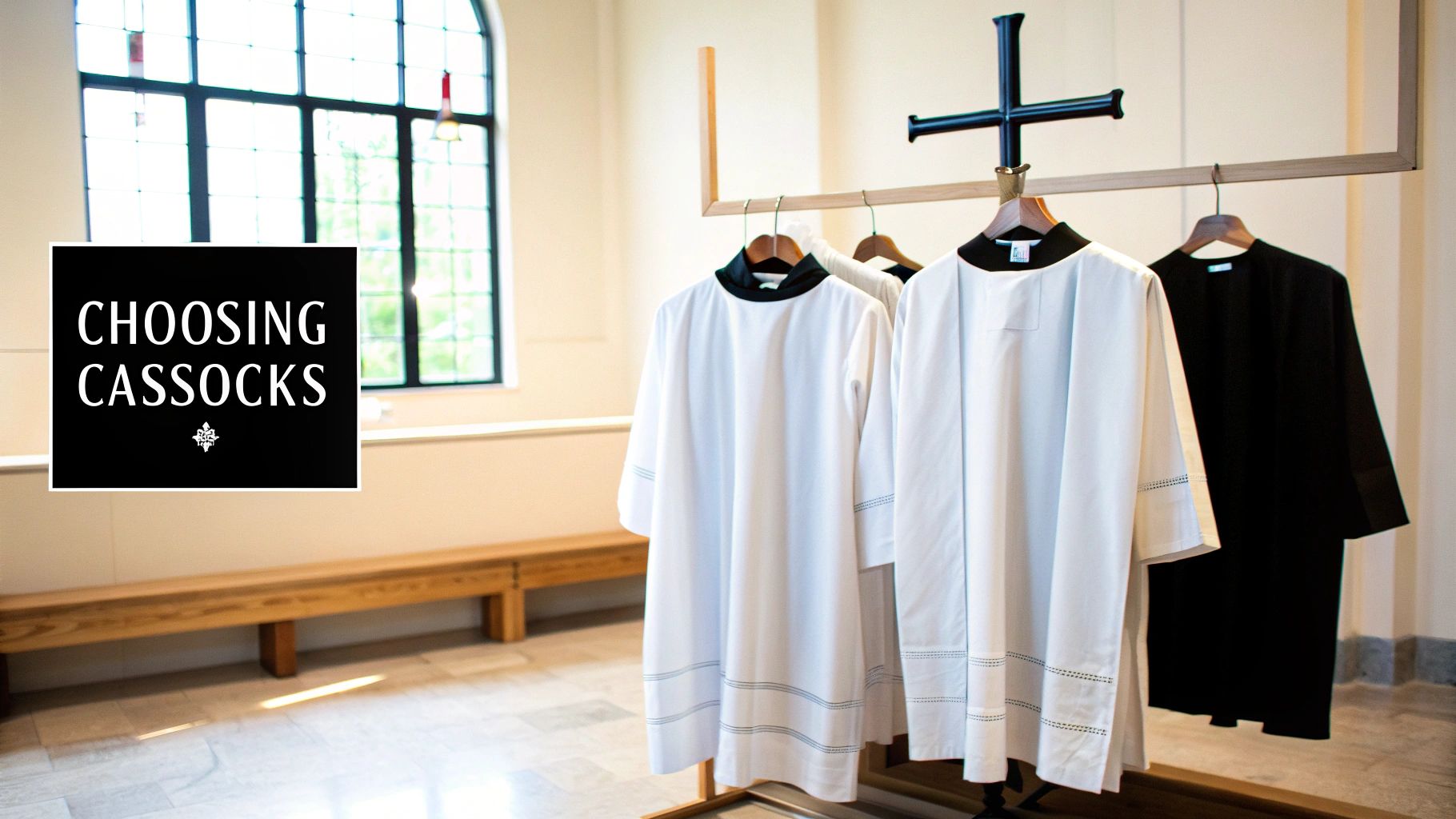
Think of an altar server cassock as a visible link to centuries of church history. When a young person puts one on, they aren’t just getting dressed—they are stepping into a long and honored tradition of service at the altar. This simple garment instantly elevates the solemnity of the Mass, creating a dignified and focused environment for the entire congregation.
For the parish leaders and liturgical directors I speak with, the selection process is a key part of ministry formation. A well-chosen cassock, made from durable fabric and fitted correctly, sends a clear message to the servers: their role is important and valued. It naturally instills a sense of responsibility and pride in their work.
Key Benefits of High-Quality Cassocks
Outfitting your team thoughtfully brings so many advantages beyond just a polished look. It has a real impact on the servers' experience and, frankly, the parish's budget over the long term.
- Promotes Solemnity: The formal, traditional appearance helps maintain a prayerful and respectful atmosphere during services. It just feels more sacred.
- Encourages Discipline: There's something about wearing a special vestment that naturally encourages servers to carry themselves with greater focus and seriousness.
- Creates Visual Unity: Matching cassocks give your servers a cohesive, organized appearance, which adds to the beauty and order of the Mass.
Selecting the right vestments is an act of stewardship. It honors the sacredness of the liturgy while providing your servers with the tools they need to minister effectively and confidently. A quality cassock is designed to withstand frequent use, ensuring a lasting and worthy investment.
Ultimately, choosing the best altar server cassocks is a foundational step in building a strong liturgical ministry. It supports young people in their faith journey and reinforces the sacredness of their service. As you start exploring the different styles, fabrics, and fitting options, just remember that each choice contributes to the spiritual life of your community.
For a broader overview of options available, you might find our guide covering various cassocks for sale helpful in informing your decision. This guide will walk you through every consideration, ensuring you can equip your parish for years to come.
1. Finding the Right Fit: Cassock Styles and Liturgical Traditions
Choosing an altar server cassock isn't just about picking a uniform. It’s a decision steeped in tradition, a nod to the unique liturgical identity of your church. The style of the cassock is a powerful visual cue, connecting your servers to centuries of sacred practice. Getting it right means selecting a garment that aligns with the customs your parish holds dear.
The decision generally boils down to two classic, time-honored designs: the Roman cassock and the Anglican cassock. Each has a distinct look and its own story. Let's break down the differences so you can find the perfect vestment that not only looks right but feels right for your community.
Roman Cassocks: The Classic Single-Breasted Design
When you picture a traditional altar server, you're likely thinking of the Roman cassock. It's the most common style, especially in the Catholic tradition. You can spot it by its clean, single-breasted front—a straight line of buttons running from the collar all the way down to the hem.
This simple, uncluttered design is incredibly practical, which is a big plus for parishes with younger or less experienced servers. The buttons themselves often carry symbolic weight; traditionally, there are 33 of them to represent the years of Christ's life on earth. The overall effect is one of dignified uniformity, helping servers look and feel like focused, humble assistants in the holy liturgy.
Anglican Cassocks: A Stately Double-Breasted Cut
The Anglican cassock, on the other hand, has a more flowing, formal presence. This is a double-breasted design, where one front panel generously overlaps the other and fastens at the shoulder and waist. This creates a beautiful, elegant drape and a slightly roomier fit, which many find more comfortable and less restrictive.
While its roots are in the Anglican tradition, you'll see this style in many denominations that appreciate its stately appearance. It projects a deep sense of solemnity and is a fantastic choice for churches that prefer a more layered, traditional look for their liturgical ministers. To dive deeper into the history of these garments, check out our guide on clergy attire for men.
Cassock Styles At a Glance
Sometimes, seeing the features side-by-side makes the choice much clearer. Here’s a quick comparison to help you pinpoint the best style for your church’s tradition.
| Style Feature | Roman Cassock | Anglican Cassock |
|---|---|---|
| Front Closure | Single-breasted with a central row of buttons | Double-breasted with an overlapping front panel |
| Fastening | Buttons run from neck to hem | Fastens at the shoulder and waist |
| Silhouette | Straight, tailored, and close-fitting | Fuller, more flowing drape |
| Commonly Used By | Catholic parishes and others preferring a classic look | Anglican, Episcopal, and other traditional denominations |
Ultimately, whether you lean toward the disciplined Roman cut or the elegant Anglican drape, you're choosing a garment with deep historical and spiritual roots.
The Language of Liturgical Colors
Style is just one part of the story; color is the other. The color of an altar server cassock is never just a random choice. It’s part of the visual language of the liturgy, connecting the server to the rhythm of the Church calendar and the specific theme of the day's service.
While some parishes use other colors, two are by far the most common:
- Black Cassocks: This is the universal standard. Black symbolizes reverence, sobriety, and the humility of the server's role. It’s meant to fade into the background, removing personal distraction and visually representing a dedication to the sacred duties at the altar.
- Red Cassocks: A powerful and striking color, red is reserved for special occasions. It signifies the fire of the Holy Spirit (used for Pentecost) and the blood of the martyrs, making it the appropriate choice for services like Good Friday and the feast days of apostles.
The selection of a cassock is a direct reflection of a parish's identity. Whether choosing the disciplined line of the Roman style or the stately drape of the Anglican, the garment should serve as a visible sign of the server's sacred role and the timeless traditions they uphold.
Historically, the cassocks we see today evolved from everyday clerical wear in the 16th century. By the 19th century, black was standardized for servers in the Catholic tradition to emphasize their role of humble service. With over 70% of U.S. Catholic parishes relying on altar servers between the ages of 8 and 18, the demand for durable and appropriate vestments is constant. It's not uncommon for a large parish to need 50-100 cassocks to outfit their teams. When you connect the garment’s design directly to your parish’s practices, the entire selection process becomes more intuitive and meaningful.
Choosing The Right Fabric For Durability And Comfort
When you're choosing altar server cassocks, it's easy to get focused on style and color. But the real secret to a good investment lies in the fabric. The material is the heart of the garment—it dictates how long it will last, how comfortable your servers will be, and frankly, how much time you’ll spend ironing.
Think of it this way: a fabric that wrinkles at the slightest touch creates extra work for already busy volunteers. A heavy, stuffy material can make a server uncomfortable and distracted, especially in a warm church. The right choice keeps your servers focused on their important duties and saves the parish from buying replacements year after year.
Polyester: The Resilient Workhorse
For most busy parishes, polyester is the undisputed champion. It’s a synthetic workhorse, known for its incredible resilience and practicality. The fibers are strong, engineered to resist wrinkles, and built to handle the reality of frequent use and washing—a must when dealing with a large group of young servers.
This is where the real value comes in. Polyester cassocks come out of the laundry looking crisp and ready to go, which dramatically cuts down on ironing. Even better, polyester holds its color exceptionally well. That deep black or vibrant red will stay true wash after wash, resisting the fading that can make vestments look tired. It’s a smart, budget-friendly choice that delivers a professional look without the high-maintenance headache.
A thoughtful fabric choice is a form of stewardship for your parish. Selecting a durable material like polyester or a practical blend minimizes long-term replacement costs, allowing resources to be allocated to other vital areas of ministry.
Cotton-Polyester Blends For A Softer Touch
While polyester is tough to beat for durability, it isn't always the most breathable option. For churches in warmer climates, or for anyone who prioritizes a softer feel, a cotton-polyester blend is the perfect middle ground. This hybrid fabric truly gives you the best of both worlds.
You get the strength and easy-care, wrinkle-resistant nature of polyester, but it’s combined with the natural softness and breathability of cotton. A poly-cotton blend cassock just feels better against the skin and allows air to circulate, keeping servers more comfortable during long services. That extra comfort can make a huge difference in helping a server stay focused. You're not sacrificing durability, but you're gaining a significant step up in wearability.
Understanding how different materials perform is key across all liturgical garments. For more on this, our complete guide to the best choir robes digs deeper into textile choices.
Comparing Your Fabric Options
To simplify the decision, let’s break down the most common materials side-by-side. This should help you pinpoint which fabric best fits your parish's climate, budget, and how much time you have for upkeep.
| Fabric Type | Primary Benefits | Ideal For | Care Instructions |
|---|---|---|---|
| 100% Polyester | Highly durable, wrinkle-resistant, colorfast, and the most affordable option. | Large groups of active servers, parishes needing low-maintenance vestments, and budget-conscious buyers. | Machine wash cold or warm, tumble dry on a low setting. |
| Poly-Cotton Blend | Breathable and soft like cotton, yet durable and easy to care for like polyester. | Parishes in warmer climates or those prioritizing server comfort without sacrificing longevity. | Machine wash warm, tumble dry on a medium setting. |
Ultimately, the goal is to choose a fabric that supports the ministry of your altar servers. Whether you opt for the unbeatable practicality of 100% polyester or the balanced comfort of a blend, the right material ensures your altar server cassocks will serve your parish beautifully for years to come.
A Practical Guide to Sizing and Fitting Your Servers
Getting the right fit for a team of growing altar servers can feel like a moving target, but it's much simpler than you might think. A well-fitted cassock isn't just about looking sharp—it's about safety and focus. A hem that's too long is a serious tripping hazard on altar steps, and poorly fitting vestments can be a distraction. The goal is to make sure your servers feel comfortable and confident, so their minds are on their duties, not on their sleeves.
Taking just a few minutes to get three key measurements is the single best thing you can do to ensure your vestments look professional and fit properly.
The Three Essential Measurements
Forget the guesswork. To get it right every time, you only need to capture three numbers for each server. It’s a straightforward way to get a much better result.
- Overall Height: This is your starting point and the most critical measurement. Have the server stand tall and straight against a wall (shoes off, please!). Measure from the floor right to the top of their head. This gives you the baseline for the cassock's length.
- Chest Size: Grab a flexible tape measure and wrap it around the fullest part of the server’s chest, usually just under the arms. You want it to be snug, but not tight—they need to breathe and move easily without the fabric pulling.
- Sleeve Length: This one is a bit different. Ask the server to stand with their arm slightly bent at their side. Start your tape at the center of the back of their neck, run it over the top of the shoulder, and then down the arm to the wrist bone. This method ensures the sleeves have a tailored appearance and provide proper coverage.
Once you have these measurements, you're ready to go. You can easily match them to the perfect size by checking our comprehensive size and color charts.
Best Practices for a Perfect Fit
Beyond the numbers, a few practical tips can help you handle common sizing challenges, especially when you're dealing with kids who seem to grow overnight.
- Plan for Growth Spurts: For younger servers, it's almost always a good idea to order one size up. This builds in some growing room, which means the cassock will last longer and you’ll get more value from your church's budget.
- Find the Ideal Length: The perfect cassock should fall right at the top of the server’s shoes. This creates a clean, uniform line and, most importantly, keeps them from tripping as they move around the sanctuary.
- Offer Inclusive Sizing for All: Every server deserves to feel comfortable and respected. Pay close attention to chest measurements to provide a fuller cut for those who need it, ensuring no one feels restricted or self-conscious.
A well-fitted cassock is a sign of respect for both the server and the sacred liturgy. It communicates that their role is valued and reinforces the dignity of their service at the altar.
The material of the cassock also plays a big role in how it drapes and fits. This simple chart shows how the process works, from fabric choice to long-term wear.

As you can see, whether you start with a polyester or a blend, the goal is always longevity, which comes from a combination of quality material and a great fit.
Finally, don't forget how the cassock works with other garments. The altar server cassock is the foundation, but it’s almost always worn with a white surplice or cotta on top. The surplice sleeves should be full, and its hem should fall somewhere around the mid-thigh. Getting these two pieces to work together harmoniously is the final touch in creating that cohesive, reverent look for your entire team.
Caring For Your Cassocks To Maximize Longevity
An altar server cassock is a real investment for any parish. The secret to protecting that investment—and ensuring your vestments look sharp and dignified for years, not just a few seasons—is proper care. A simple, consistent maintenance routine is all it takes to prevent premature wear, keep the colors true, and ultimately save your church a lot of money on replacements.
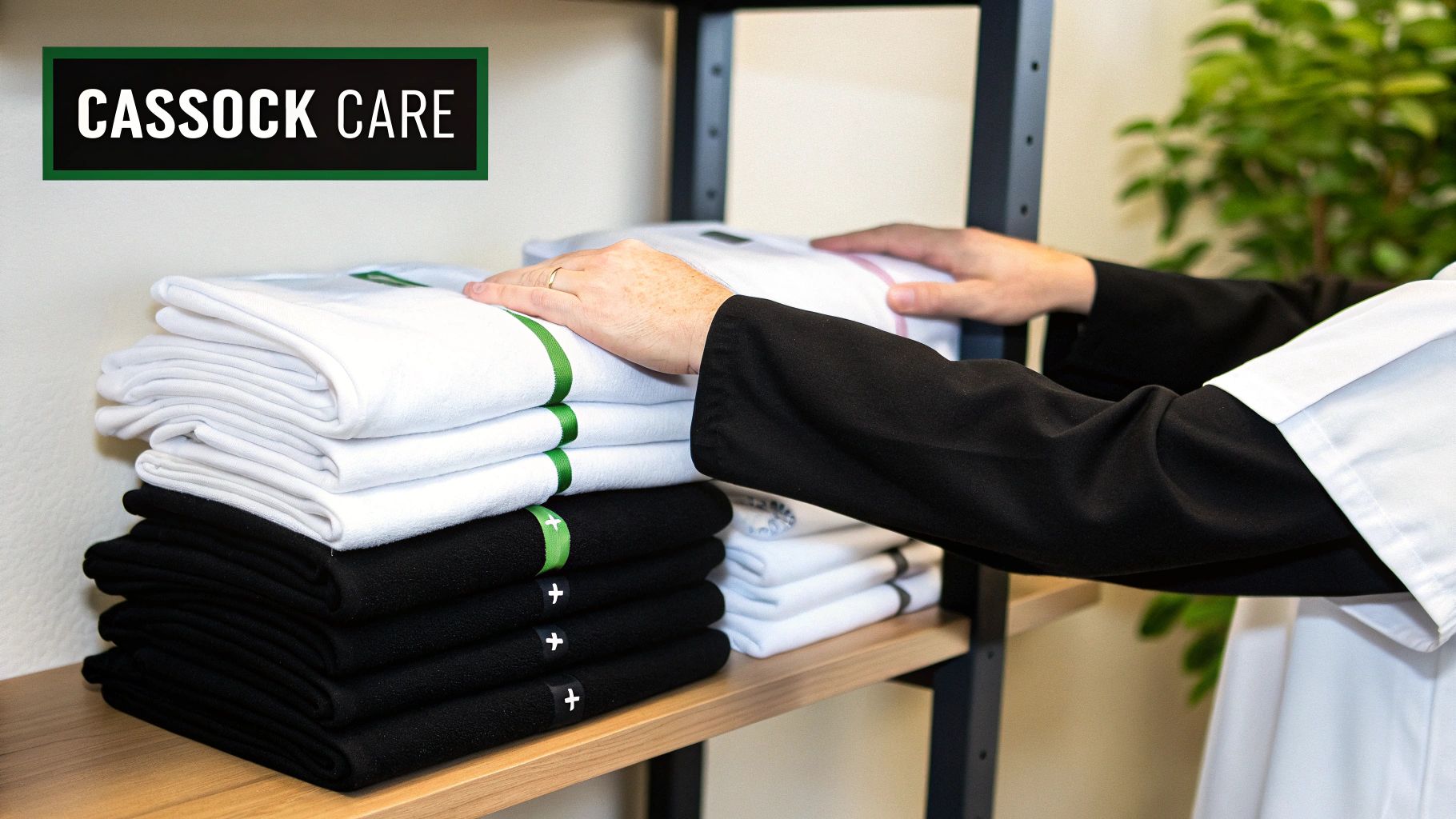
Think of it less as a chore and more as an act of stewardship. By following a few straightforward steps, you honor the resources your community has provided and ensure your servers always look their best.
Effective Washing and Drying Techniques
First things first: always check the care label inside the garment. Different fabrics need different handling, and that little tag is your best source of truth. Thankfully, most modern altar server cassocks are made from durable polyester or poly-cotton blends, which makes life much easier.
For these common fabrics, a few best practices will get you great results:
- Washing: Stick to a gentle machine cycle with cold or lukewarm water and a mild detergent. A great pro-tip is to turn the cassock inside out before washing to protect the buttons and the fabric's finish. It’s also a good idea to wash similar colors together to avoid any pesky dye bleeds.
- Drying: You can tumble dry on a low heat setting, but air drying is always the better option. Just putting the cassock on a sturdy hanger to dry is far gentler, cuts down on the risk of shrinking, and helps prevent deep wrinkles from setting in.
- Ironing: If you need to iron, use a low to medium heat setting that’s right for the fabric. Here’s a trick I’ve learned over the years: iron the cassock while it’s still just a little damp. The steam helps release stubborn wrinkles much more easily, leaving you with a crisp, smooth finish.
"A well-cared-for cassock is always ready for service, free from wrinkles and damage. This small effort reinforces the dignity of the liturgy and shows respect for the server’s important role."
Tackling Common Stains and Scuffs
Even with the best of care, accidents are bound to happen in a busy sacristy. The key to keeping your cassocks looking pristine is to act fast. Whether it's candle wax or scuffs from shoes, most problems are easy to fix if you know what to do.
- Candle Wax: This one comes up a lot. To handle it, place the stained spot between two paper towels and press it with a warm (not hot!) iron. The paper towels will soak up the melted wax, lifting it right out of the fabric fibers.
- Wine or Juice: Blot the spill immediately with a clean cloth. Whatever you do, don't rub—that just pushes the stain deeper into the fabric. Dab a small amount of stain remover on the spot, let it sit for a few minutes, and then wash the cassock as you normally would.
- Scuffs and Dirt: For those minor dirt marks or scuffs you often see near the hem, a quick spot treatment with a mild detergent and a soft brush right before washing can work wonders.
Smart Storage for Lasting Quality
How you store your cassocks between Masses is just as important as how you clean them. Good storage prevents wrinkling, keeps dust off, and protects against damage. Whatever you do, don't fold them up and stuff them in a drawer for long periods; that’s a surefire way to create creases that are nearly impossible to get out.
The best practice is to always hang them on sturdy, wide hangers that can support the garment’s shape. For any long-term storage, like during an off-season, placing them inside breathable garment bags is the way to go. This protects them from dust and moisture, keeping them clean, organized, and ready for the next liturgy.
Outfitting Your Parish: A Guide to Bulk Ordering and Customization
For anyone in charge of a parish's liturgical needs, outfitting a team of altar servers is a big job. You're juggling different sizes, trying to get the style just right, and of course, keeping an eye on the budget. It can feel like a lot to manage, but ordering your altar server cassocks in bulk is hands-down the smartest way to go. It turns a potential headache into a smooth, straightforward process.
Placing one large, well-planned order does more than just save money with quantity discounts. It ensures every server looks polished and uniform, which really adds to the reverence of the Mass. This kind of visual consistency is so important; it strengthens the servers' sense of being part of a team and helps the congregation focus on the beauty of the liturgy, not on distracting variations in attire.
The Smart Case for Ordering in Bulk
Deciding to order in bulk is a strategic move that will benefit your parish for years. It's not just about the initial purchase; it’s about simplifying your life and making a wise investment that equips your ministry for the long haul.
Here's why it just makes sense:
- Real Cost Savings: This is the most obvious win. Suppliers offer significant price breaks on larger orders, which lowers the cost per cassock and makes top-quality vestments much more affordable for the parish budget.
- A Truly Uniform Look: When you order everything at once, you guarantee every cassock is made from the same batch of fabric. This means no slight variations in color or material—just a crisp, cohesive look across the board.
- Less Administrative Hassle: One order, one shipment, one invoice. It's so much easier than placing multiple small orders throughout the year. Think of all the administrative time you'll save, not to mention the reduced shipping fees.
- Be Prepared for the Future: It's always a good idea to order a few extra cassocks in various sizes. This way, you're ready for new servers who join or for that inevitable growth spurt, with no last-minute scrambling.
For churches and schools, these benefits add up quickly. For instance, many wholesale programs offer savings of up to 30% on orders of 50 or more cassocks, with inclusive sizing that fits a diverse group of young people. And when you invest in durable, double-stitched poplin cassocks, they can easily last 7-10 years of regular use. That can cut your replacement frequency by as much as 40% compared to buying cheaper, less sturdy imports. You can see how this long-term thinking really impacts a parish budget when you learn more about the durability of liturgical garments.
Make It Your Own: Customization Options
Placing a bulk order often opens up some fantastic opportunities for customization, allowing you to add meaningful details that reflect your parish's unique character. This is your chance to create a look that feels truly special to your community.
A customized cassock is more than just a uniform; it’s a reflection of your parish’s identity. Simple, thoughtful details like colored trim can create a beautiful visual link between your altar servers and other liturgical ministries.
A touch of color with custom trim is a simple yet powerful way to personalize your vestments. You could use it to:
- Coordinate with the Choir: Matching the trim on the altar server cassocks to the color of your choir robes creates a wonderfully unified and professional appearance for everyone serving at the altar.
- Nod to the Liturgical Season: While the cassock itself remains black or red, a trim in violet, green, or gold can subtly honor Advent, Ordinary Time, or a major feast like Easter.
- Showcase Your Parish Colors: Using your parish's own colors in the trim is a beautiful way to build a sense of community pride and belonging among your servers.
Getting this done is surprisingly easy. We can walk you through selecting the perfect trim color and style to make sure the final result is exactly what you had in mind. This kind of personalization elevates a standard garment into something special—a vestment your servers will be proud to wear because it was made just for them and their church.
Common Questions About Altar Server Cassocks
Choosing the right vestments for your servers can feel like a big decision, and it’s completely normal to have a few questions. To help you feel confident in your choice, we’ve put together some straightforward answers to the questions we hear most often from parish leaders, touching on everything from practical fit to liturgical tradition.
What Is The Difference Between A Cassock And An Alb?
This is easily the number one question we get. The simplest way to think about it is that the altar server cassock is the foundational garment—the tailored, ankle-length piece, usually in black or red.
The alb, however, is a single, long white tunic that symbolizes the purity of baptism. It's often worn by itself or, in some cases, over a cassock. But for the traditional server's uniform, it's the cassock paired with a surplice that creates that classic, two-piece vestment.
How Do I Choose The Right Size For A Growing Child?
This is a classic challenge for any ministry with young servers! When ordering for a child who’s still growing, always start with their current height and check it against our size chart.
As a practical rule of thumb, aim for a size that's 1-2 inches longer than their actual measurement to build in some growing room. The hem should sit right around the top of their shoes, so going one size up is usually a safe bet that balances a good fit now with longevity.
Can We Order Cassocks In Colors Other Than Black Or Red?
Absolutely. While black and red are the most common and traditional liturgical colors for altar server cassocks, we can certainly accommodate custom color requests for bulk orders. This is a great option if you want to coordinate your servers' vestments with your choir robes, match your parish's specific colors, or align with a particular liturgical theme. Just get in touch with our team, and we can walk you through the custom options.
The goal is to equip your servers with vestments that are reverent, well-fitting, and aligned with your parish's traditions. Answering these key questions helps ensure every detail is considered, leading to a confident and successful purchase for your ministry.
What Is A Surplice And Do We Need One With A Cassock?
Think of the surplice as the finishing touch. It's the white, knee-length garment with wide sleeves that is worn over the cassock.
In most Catholic and Anglican traditions, the cassock and surplice aren't separate options—they are two parts of a whole, forming the standard, expected attire for altar servers. The surplice adds an important layer of liturgical symbolism and gives servers that polished, classic appearance. To make things easier, we offer convenient packages that include both garments.
At ChoirBuy, our mission is to make it simple to find high-quality, long-lasting vestments for your entire liturgical team. Explore our full collection of altar server cassocks, surplices, and accessories to find the perfect fit for your parish today at https://www.choirbuy.com.