

When you see a pastor, priest, or minister, their clothing immediately tells you something about their role. Clergy attire for men isn't just about tradition; it's a set of specialized garments that act as a visual symbol of spiritual commitment and leadership within the church. From the basic black clergy cassocks to the colorful stole, every piece has a story and a specific purpose rooted in centuries of history.
Understanding the Fundamentals of Clergy Attire
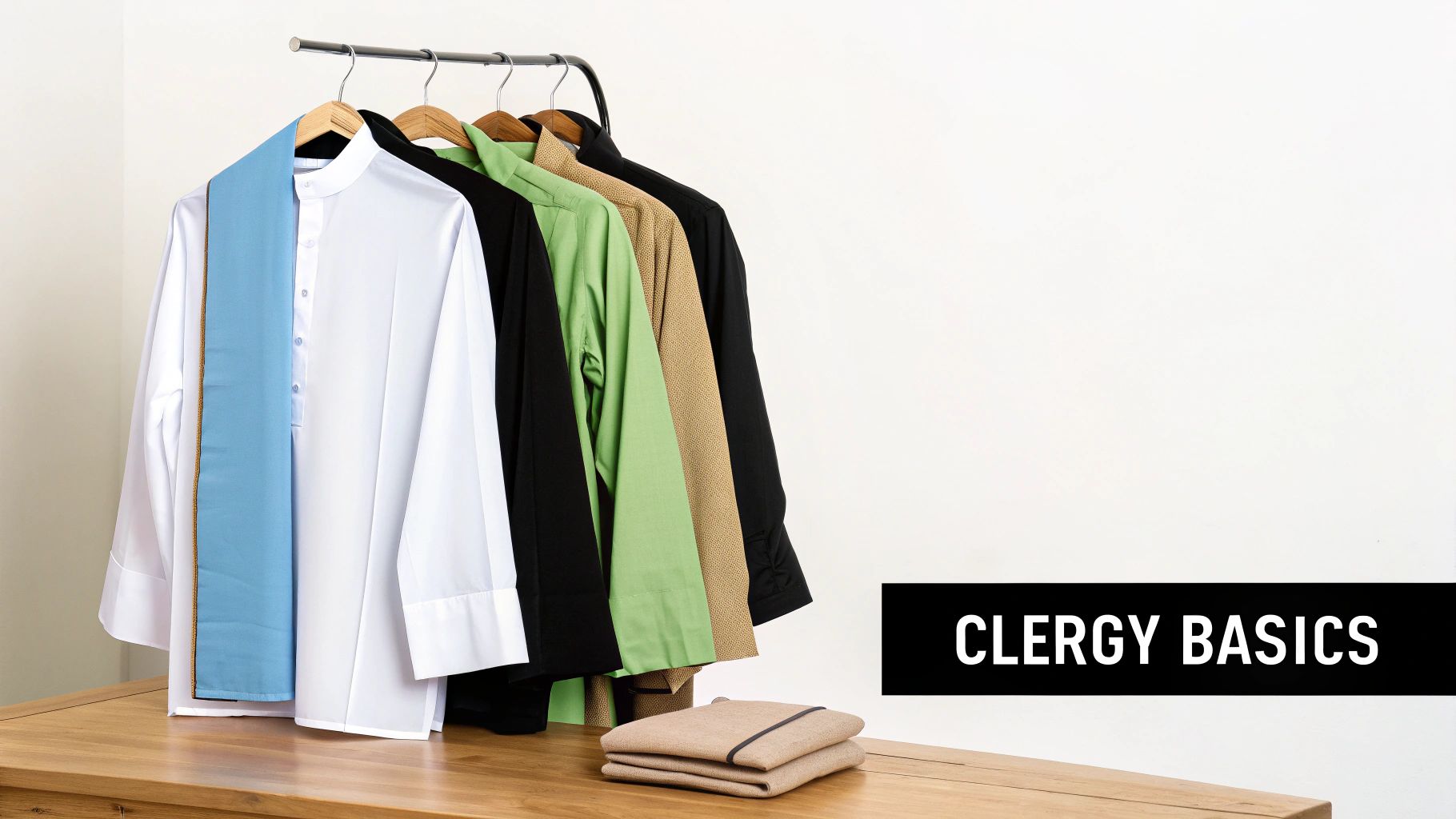
Before you even think about fabrics or sizing, it helps to grasp the "why" behind what a clergyman wears. These vestments are a living language used during worship. Think of them like a uniform that communicates a specific job. A judge's robe conveys authority, a doctor's white coat signals care, and clergy attire sets the wearer apart for a sacred duty.
Understanding this foundation is the key. It moves the conversation from simply buying clothes to thoughtfully selecting garments that honor tradition and prepare the clergy for their role in leading worship.
The Core Components and Their Roles
The foundation of a clergyman's wardrobe is built on a few key pieces that work together. While their styles have deep historical roots, we've seen a real evolution in the fabrics and even colors used. The days of only heavy wool and stark black and white are gone, making way for a broader palette that still shows deep respect for tradition.
The three main garments you’ll almost always see are:
- The Cassock: This is the base layer, a full-length robe that serves as the foundation for everything else. In many traditions, it's worn not just by clergy but by choir members as well. You can dive deeper into the rich background of these garments in our article exploring the history of choir robes.
- The Surplice: Worn over the cassock, the surplice is a white, wide-sleeved garment usually made of linen or cotton. Its white color is intentional, symbolizing the purity and new life that comes from baptism.
- The Stole: Perhaps the most recognizable symbol of ordination, the stole is a long, scarf-like piece of cloth draped over the shoulders. Its color often changes to reflect the specific season of the liturgical calendar, making our collection of clergy stoles a very visible and important vestment.
To make things even clearer, here's a quick breakdown of these common garments and their roles.
Quick Guide to Common Clergy Garments for Men
| Garment | Primary Function | Commonly Worn By | Liturgical Setting |
|---|---|---|---|
| Cassock | A foundational, full-length robe worn under other vestments. | Priests, deacons, bishops, choir members. | Worn during services, Mass, and other formal church functions. |
| Alb | A long, white tunic symbolizing baptismal purity. | Priests, deacons, and other ministers. | The standard base vestment for Mass and other sacraments. |
| Surplice | A shorter, white, wide-sleeved vestment worn over a cassock. | Clergy and acolytes. | Common in services like Morning/Evening Prayer and processions. |
| Stole | A long strip of colored cloth signifying ordination and authority. | Deacons, priests, and bishops. | Worn during sacraments; colors change with the liturgical season. |
| Chasuble | The outermost sleeveless garment worn by a priest during Mass. | Priests and bishops. | Worn specifically for the celebration of the Eucharist. |
| Cope | A long, ornate cape worn during processions and blessings. | Priests and bishops. | Used in non-Eucharistic services, like Benediction or processions. |
This table covers the essentials, giving you a good starting point for understanding how each piece contributes to the overall attire for different services and roles.
Choosing the right clergy attire is about more than just appearance; it's about honoring centuries of symbolism and creating a visual focus for the congregation that points toward the sacred nature of worship. Each piece contributes to a unified and respectful atmosphere.
The Cassock and Surplice: A Timeless Foundation
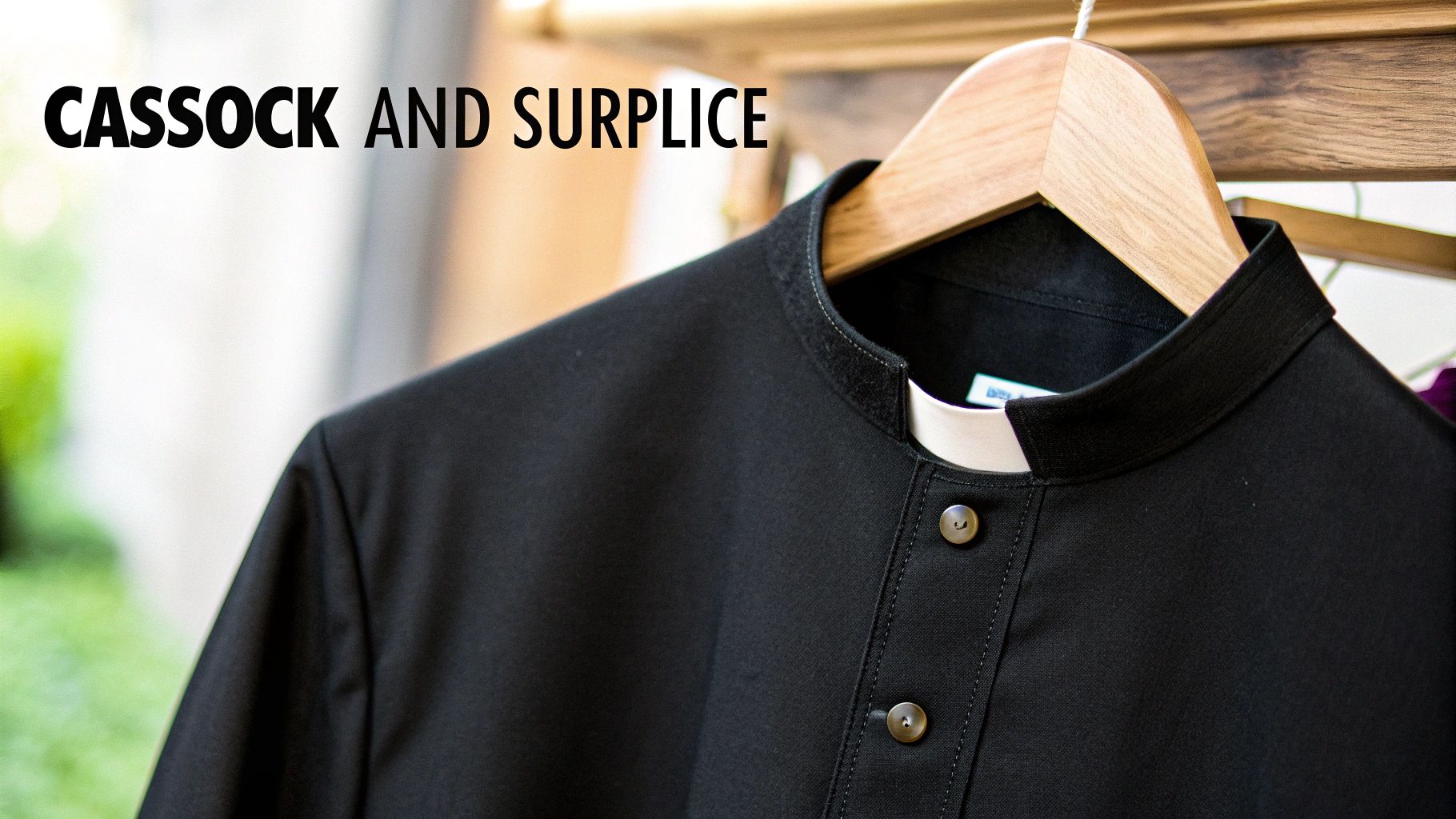
When you think of traditional clergy attire for men, the first thing that probably comes to mind is the classic combination of a cassock and surplice. There's a good reason for that. This pairing is more than just an outfit; it’s a powerful symbol of dedication and purity that forms the bedrock of liturgical wear.
The cassock is the base layer, a full-length garment that immediately sets the clergy apart from the laity and signals their commitment to their role. Think of it as the canvas. Its simple, dignified form sets a reverent tone for everything worn over it.
Over the centuries, even the smallest details have held incredible significance. For example, some traditional cassocks were made with 33 buttons down the front—one for each year of Christ's life.
Choosing the Right Cassock Style
You’ll find that cassocks aren’t one-size-fits-all, and the style you choose often comes down to your church’s specific traditions. The two main styles you'll encounter are Roman and Anglican, and they have some clear differences.
- Roman Cassock: This is a single-breasted style with a line of buttons running straight down the center. It has a cleaner, more fitted look, perfectly exemplified by our timeless black clergy cassocks.
- Anglican Cassock: This version is typically double-breasted, fastening over at the shoulder and waist. The overlapping fabric gives it a fuller, more flowing appearance.
While black is the standard color for daily wear, you'll see bishops in purple or cardinals in red, using color to signify their specific rank within the church hierarchy.
The Surplice and Cotta: Symbols of Purity
If the cassock is the symbol of dedication, the surplice is all about purity. This flowing white garment is always worn over the cassock. Its brilliant white color is meant to evoke the white garment of baptism, a constant visual reminder of grace and spiritual renewal.
There's also a shorter, waist-length version of the surplice called a cotta. It's often favored by choir members and altar servers for its more practical, less cumbersome fit. To learn more about how these garments work together in a choir setting, take a look at our complete guide to choir cassocks and surplices.
When worn together, the dark cassock and the white surplice create a stark, meaningful contrast. This combination visually communicates a powerful theological concept: purity and grace covering the dedicated servant of the church.
This iconic pairing creates a dignified, uniform look for clergy, acolytes, and choir members alike. But knowing the small differences between a surplice and a cotta is key to outfitting everyone correctly.
Surplice vs Cotta Key Differences
To help you decide which is right for your needs, here’s a quick breakdown of how the surplice and cotta differ.
| Feature | Surplice | Cotta |
|---|---|---|
| Length | Longer, typically falling to the knees or below. | Shorter, usually ending at the waist or hips. |
| Sleeves | Often features long, wide, and flowing sleeves. | Sleeves are generally simpler and less voluminous. |
| Typical Usage | Commonly worn by clergy for various services and processions. | Frequently worn by servers, acolytes, and choir members. |
Ultimately, the choice comes down to both tradition and practicality. The surplice offers a more formal, flowing look for clergy, while the cotta provides greater ease of movement for those with more active roles in the service.
Selecting the Right Colors and Fabrics
When it comes to clergy attire for men, the choices of color and fabric are far from trivial. They’re not just about aesthetics. These elements carry real weight, speaking a visual language of deep symbolism while also meeting the practical, day-to-day needs of the person wearing them.
Think of liturgical color as a powerful, silent preacher. Every hue is tied to a specific season in the church calendar, helping to set the tone for worship and walk the congregation through the Christian year. Getting this right is fundamental to selecting the proper vestments, especially when choosing from a wide range of clergy stoles.
The Language of Liturgical Colors
The rotation of colors you see on the altar, the clergy's stoles, and their vestments isn't random. It’s a tradition that connects your local service to the global church, a visual shorthand for the time and season.
- White and Gold: These are the colors of pure joy, celebration, and triumph. You'll see them during the highest points of the church year, like Easter and Christmas.
- Purple or Violet: Signifying preparation, penance, and a bit of solemnity, purple is the color for Advent and Lent.
- Green: Green points to life, hope, and new growth. It's the color for "Ordinary Time," which, despite the name, covers most of the year between the big liturgical seasons.
- Red: This is a power color, representing the fire of the Holy Spirit and the blood of the martyrs. It’s worn on Pentecost, Palm Sunday, and the feast days of saints who were martyred.
For a deeper dive, our guide on choir robe color meanings offers some great context that applies to both clergy and choirs. You can find more details on choir robe color meanings right here on our blog.
Choosing Practical and Durable Fabrics
While color speaks to the soul, the fabric choice is all about practicality. The material used in clergy wear has a huge impact on comfort, how long the garment lasts, and how easy it is to care for—all critical factors for clothes that get a lot of use. A good starting point is understanding different types of shirt materials, which covers everything from natural fibers to modern synthetics.
For garments worn daily, you really need them to be breathable and built to last. Thankfully, modern fabrics have come a long way, offering fantastic solutions that respect tradition while meeting today’s needs.
Key Consideration: The best fabric is one that lets the wearer focus on their ministry, not on feeling uncomfortable. It needs to breathe through a long service and stand up to regular wear and tear.
Some of the most popular and reliable choices include:
- Polyester: This is the workhorse of clergy fabrics. It’s incredibly durable, resists wrinkles like a champ, and holds its color beautifully. It's a go-to for items like cassocks that see frequent use.
- Cotton: Prized for its natural softness and breathability, cotton is a classic for a reason. It’s perfect for surplices and clergy shirts that sit close to the skin.
- Blends (Poly-Cotton): This is often the sweet spot. You get the soft, breathable feel of cotton combined with the durability and easy-care nature of polyester. It’s a wonderfully balanced option for all-around performance.
A Practical Guide to Sizing and Fit
Nothing distracts from a service quite like an ill-fitting robe. When a garment is too tight, too loose, or the wrong length, it looks unprofessional and feels uncomfortable, pulling focus for both the clergy member and the congregation. Taking a few moments to get the sizing right is the single best thing you can do to ensure clergy attire for men looks dignified and allows for effortless movement.
Getting that perfect fit really just boils down to a few key measurements. Think of these numbers as the blueprint for a garment that hangs correctly and functions beautifully.
Taking Key Measurements Accurately
To nail the sizing on your first order, you only need to focus on three core measurements. Grab a soft, flexible measuring tape for the best results.
- Chest Size: Wrap the tape around the broadest part of the chest. Make sure it stays level all the way around, passing under the arms and across the shoulder blades.
- Sleeve Length: This one can be tricky. Have the person bend their arm slightly at the elbow. Start the tape at the center of the back of the neck, run it over the top of the shoulder, and down the arm to the wrist bone.
- Total Garment Length: For full-length robes like cassocks or albs, start at that prominent bone at the base of the neck. Measure straight down to where you want the hem to fall—usually a few inches off the floor to prevent any tripping hazards.
With these numbers in hand, the next step is to match them to a sizing chart. To take all the guesswork out of the process, we've put together our own detailed size and color charts. They are specifically designed to help you find the perfect fit within our extensive range.
A proper fit isn’t about vanity; it’s about respect for the office and the sacredness of the space. A well-fitted robe frees the wearer to focus completely on their ministry, unhindered by their apparel.
Choosing the right attire is a blend of honoring tradition and making practical choices. This visual guide walks you through the key decision points, from liturgical colors and fabrics to long-term care.

This flowchart helps simplify the process, showing how liturgical needs, material choices, and maintenance all connect to help you land on the best possible vestments for your clergy.
Handling Minor Adjustments
Even with the most careful measurements, sometimes a small tweak is needed to get that truly custom-tailored look. Simple alterations, like hemming a cassock that’s just a touch too long, can make a world of difference in both appearance and safety.
For quick length adjustments or repairs, mastering a blind hemming stitch is a fantastic skill to have. It creates an invisible, professional finish that preserves the clean lines of the garment. It's an invaluable technique for keeping your church's entire collection of vestments looking polished and well-maintained for years to come.
Keeping Your Clergy Attire Looking Its Best
Your clergy attire is more than just clothing; it’s a significant investment in your ministry's visual identity. Taking proper care of these garments is the key to making sure they look sharp and dignified for years, protecting that investment and presenting a polished image.
A little bit of upkeep goes a long way. Whether we're talking about a whole closet full of choir robes or a single, beautifully detailed stole, each piece has its own needs. Knowing the basics of fabric care is the first step to building a lasting wardrobe for your clergy.
Washing and Cleaning Different Fabrics
The first rule of thumb is always to check the care label. That little tag is your best friend and provides the manufacturer's specific instructions. The type of fabric is what really determines the right way to clean it.
Many of our most durable pieces, like our popular black clergy cassocks, are made from high-quality polyester, which makes cleaning a breeze.
- Polyester Garments: You can typically machine wash these on a gentle cycle using cold water and a mild soap. While you can tumble dry them on low, I always recommend hanging them to air dry. It’s the safest way to avoid any chance of heat damage and keep them looking new.
- Cotton and Blends: These are usually fine in the washing machine with cool or warm water. The biggest thing to watch out for is shrinkage, so avoid high heat in the dryer. Again, air drying is your best bet.
- Delicate Items: Anything with special embroidery, like our elegant clergy stoles, needs a gentler touch. Hand washing in cold water is the ideal approach. If you're not comfortable with that, trust it to a professional dry cleaner to protect that beautiful, intricate stitching.
Good cleaning isn't just about getting stains out. It's about preserving the fabric's strength and keeping the colors rich and true. A few extra minutes of mindful care can genuinely add years to a garment's life.
Ironing and Proper Storage
A crisp, wrinkle-free appearance is essential. When it's time to iron, match the heat setting to the fabric type. For polyester, stick to a low or medium setting. A great pro-tip is to use a pressing cloth—a simple piece of cotton fabric—between the iron and the garment. This protects the material from direct heat and prevents that dreaded shiny look.
How you store your vestments is just as critical as how you clean them. Always hang robes and cassocks on sturdy, wide hangers that can support the shoulders. This helps maintain their shape and prevents the fabric from stretching out over time.
Find a cool, dry closet with decent air circulation to ward off any chance of mildew. For long-term protection, breathable garment bags are fantastic. They keep the dust off while still letting the fabric breathe, ensuring your clergy attire for men is always ready for service.
A Guide to Smart Purchasing for Your Church or Choir
Getting the right attire for your entire clergy team or choir is a big responsibility. It’s a delicate balance of upholding tradition, ensuring quality, and respecting the church's budget. As a church administrator or purchasing manager, you need a partner who gets that. Finding a reliable source for clergy attire for men that honors your financial stewardship is key, and this is where working with a dedicated supplier like ChoirBuy really helps.
We understand that managing church resources is a serious task. That’s why we offer great wholesale pricing and bulk discounts on everything we carry. Whether you need a single cassock or are outfitting a 50-person choir, our pricing is set up to give you fantastic value without cutting corners on quality.
Making Your Order Simple and Stress-Free
We believe ordering clergy attire should be the easiest part of your day. Our website is designed to be straightforward, letting you browse different styles, pick the right sizes, and place your order in just a few minutes. The goal is to save you precious administrative time.
Need to add a personal touch? We also offer custom embroidery services to make your vestments unique. This is a wonderful way to display a church logo or important liturgical symbols, creating a unified and distinguished look for your clergy.
Choosing a supplier is about more than just the price tag. It's about finding a partner who is genuinely invested in your ministry's mission and presentation.
We’ve built our entire process around reliability. You'll get clear lead times and a variety of shipping options to make sure you hit your deadlines for special services or events. Plus, every purchase is backed by our money-back guarantee, so you can order with complete confidence.
By focusing on affordability, excellent quality, and a support team that's here to help, we aim to be a dependable partner for your church. We’re here to provide high-quality, long-lasting clergy attire for men that serves your ministry well for years to come.
Common Questions About Men's Clergy Attire
We've walked through the essentials, from liturgical colors to getting the right fit, but I know that's when the real-world questions start to pop up. Let's tackle some of the most common ones we hear from church leaders and choir directors just like you.
What’s the Real Difference Between a Cassock and an Alb?
Think of it like this: the cassock is the foundational garment, almost like the main uniform. It's the full-length, often black (but sometimes other colors) robe you see clergy wear.
The alb, on the other hand, is a liturgical vestment worn over the cassock. It's always white, a symbolic nod to baptismal purity, and is specifically for services. We offer a full range of traditional cassocks that serve as the perfect base layer for any denomination.
Can My Choir Wear Cassocks and Surplices Too?
Yes, and it's a fantastic tradition! Outfitting choir members or altar servers in cassocks and surplices creates a beautiful, unified look that sets them apart as ministers in the service. It helps everyone, from the congregation to the choir members themselves, focus on the act of worship.
One of the best reasons for outfitting your choir this way is the sense of reverence it brings. It shifts the focus away from distracting street clothes and creates a visually cohesive atmosphere that enhances the entire worship experience.
We stock an extensive range of sizes for both adults and children, so you can easily find the perfect fit for everyone in your group.
How Do I Know Which Stole to Use for a Service?
The key here is the liturgical calendar. The color of the stole isn't a matter of personal preference but is tied directly to the season or specific celebration. It’s a visual cue for the entire congregation.
Here's a quick guide:
- Purple: Think preparation. This is for the seasons of Advent and Lent.
- White or Gold: Reserved for the biggest celebrations—Christmas, Easter, and other major feast days.
- Red: This color symbolizes the fire of the Holy Spirit, so it's worn for Pentecost.
- Green: This is for Ordinary Time, the stretches of the year between the major church seasons.
We carry a complete selection of clergy stoles in every liturgical color, ensuring you're always ready for whatever the church calendar brings.
Can We Get Custom Embroidery on Our Vestments?
Absolutely. We love helping churches create something truly special. We can add custom embroidery of symbols, crosses, or your church's logo to stoles and other vestments. It’s a wonderful way to personalize your clergy's attire and make it unique to your community.
Just reach out to our customer service team, and we can start discussing your design ideas and help bring your vision to life.
At ChoirBuy, we're here to provide high-quality, traditional, and affordable men's clergy attire to support your ministry's needs. Explore our complete collection today.