

An altar server cassock is the traditional, ankle-length robe worn by those who assist the priest during Mass and other liturgical services. It's much more than just a uniform; it signifies the server's unique role, fostering a sense of reverence and unity among the entire serving team. This guide covers everything you need to know about choosing, sizing, and caring for this important liturgical vestment.
Exploring The Altar Server Cassock
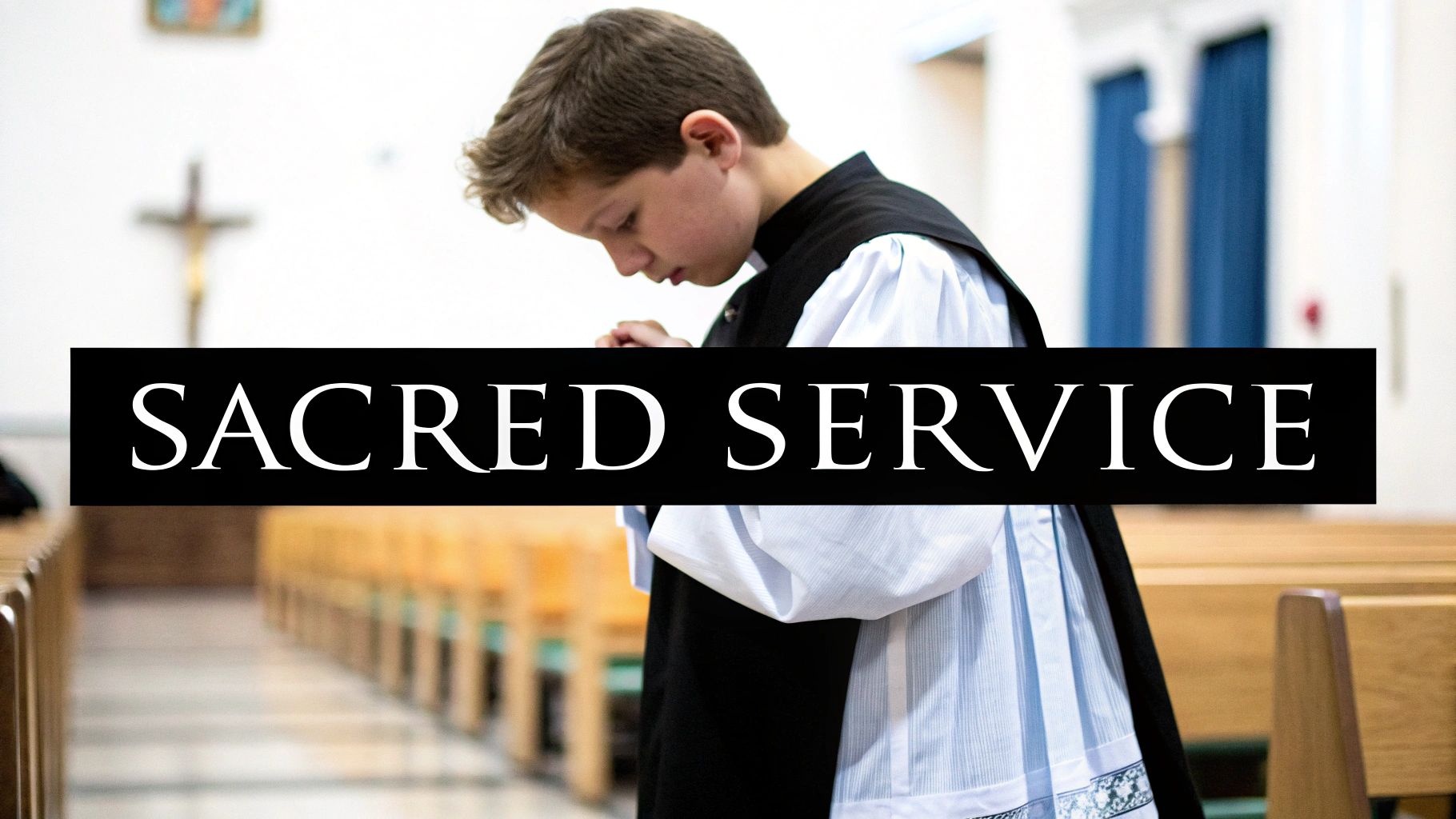
Think of the cassock as a visible link to centuries of Church history. When a server puts one on, they aren't just getting dressed—they're stepping into a long tradition of service at the altar. This simple garment shifts the focus away from distracting street clothes, helping the congregation concentrate on the sacred liturgy. A properly vested server in a dignified altar server cassock and surplice set elevates the entire Mass.
This shared vestment also builds a real sense of camaraderie and shared purpose. It doesn't matter if a server is young or old, new or experienced; the cassock unites them as a team dedicated to serving God and their parish community.
Purpose and Significance
At its core, the altar server cassock sets the server apart for their sacred duties. It's an outward symbol of their commitment and readiness to assist in the most important moments of worship. For anyone overseeing a parish's liturgy, understanding this significance is the key to appreciating the cassock's vital role.
A well-vested team of servers elevates the dignity of the entire service. The cassock helps achieve this in a few important ways:
- Promotes Solemnity: The formal, traditional look of the cassock helps maintain a prayerful and respectful atmosphere.
- Encourages Discipline: Putting on a special vestment naturally encourages servers to carry themselves with more focus and seriousness.
- Creates Visual Unity: When all servers are dressed alike in matching altar server robes, they present a cohesive, organized appearance that adds to the beauty and order of the Mass.
Upholding this beautiful tradition is a way for any parish to honor the past while forming a new generation in dedicated service. The cassock isn't just clothing; it's a tool for spiritual formation and a symbol of faith in action.
Here at ChoirBuy, we make it easy for any church to continue this practice with high-quality, accessible vestments. Our durable and well-made altar server cassocks are designed to stand up to the demands of an active parish, ensuring your servers look and feel their best as they carry out their important ministry.
The History And Symbolism Behind The Cassock
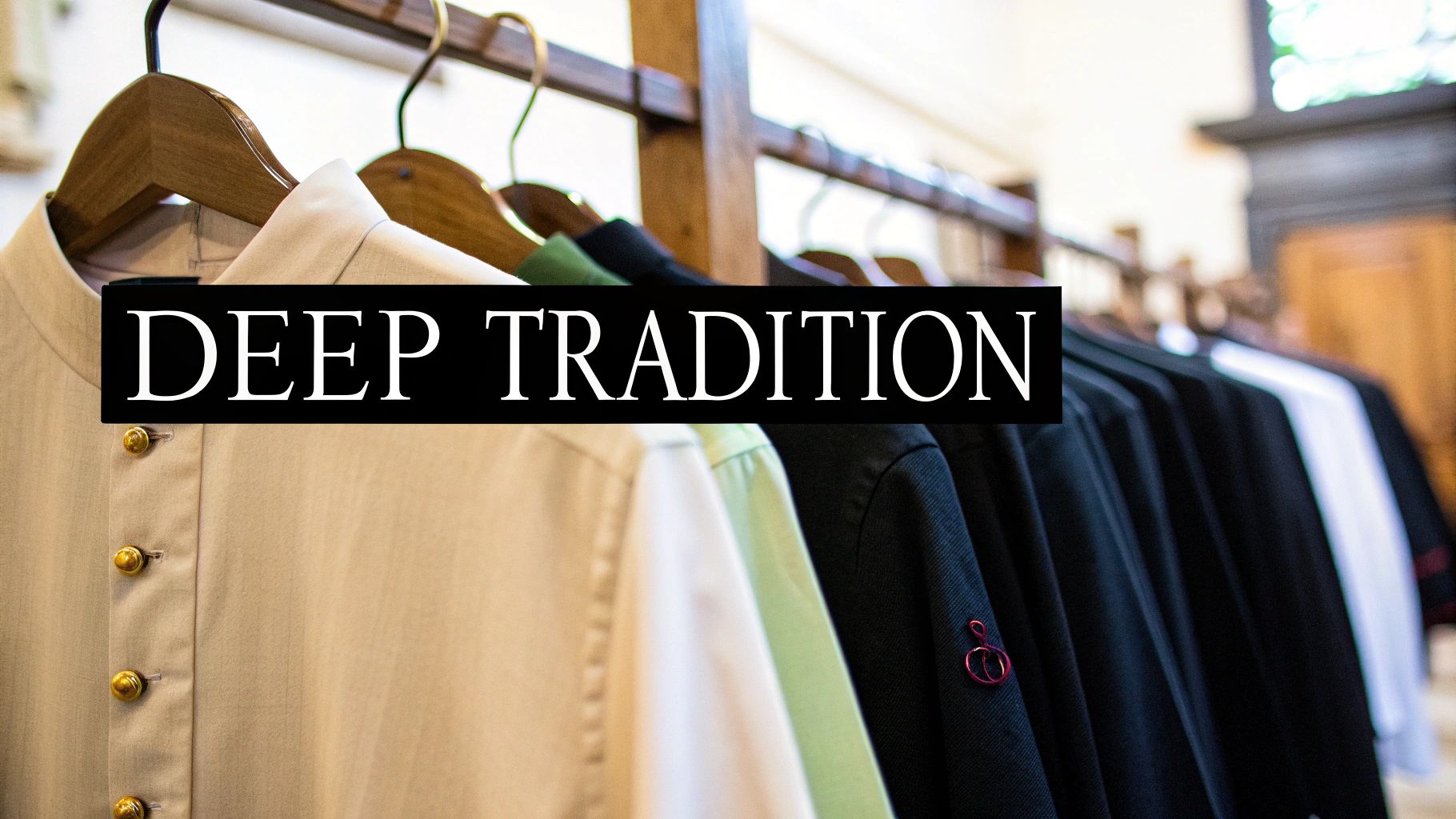
The altar server cassock is so much more than a simple garment; it’s a living thread that connects today’s servers to a rich tapestry of Church history. Its story begins with the simple tunics worn daily in the Roman Empire. Over time, clergy adopted longer, more distinctive robes to set themselves apart from secular life, creating a visible sign of their commitment to sacred duties.
This shift from common street clothes to specific liturgical vestments wasn't an overnight change, but a gradual and meaningful one. The cassock became an immediate symbol of a person’s role within the Church—a clear marker of their dedication. It's a fascinating journey that parallels the development of many Church traditions. If you're curious about how other vestments evolved, the history of choir robes offers a similar glimpse into the past.
From Ancient Decree To Modern Use
Key moments in Church history have shaped the altar server cassock we see today. The first formal rules started appearing as early as the 6th century. In 572 A.D., the Council of Braga decreed that clergy must wear foot-length tunics at the altar, establishing a precedent that would last for centuries. Later, in 1589, Pope Sixtus V standardized the Roman cassock for all clerics.
For a long time, the cassock was everyday wear for priests, but that began to change around the 1960s. As clergy adopted more contemporary dress for daily life, the cassock tradition was preserved primarily in liturgical settings. It was here that altar servers took up the mantle, donning the cassock as a key part of their ministry, often choosing a specific black altar server cassock or red altar server cassock to signify their role.
Unpacking The Symbolism
Beyond its long and storied past, the cassock is brimming with symbolic meaning. It transforms the garment from a simple uniform into a powerful teaching tool, with every detail carrying a message of faith and devotion.
- An Expression of Humility: By covering up everyday clothes, the cassock helps diminish personal vanity. It’s a quiet reminder to the server, and to the whole congregation, that the focus should be on God, not on the individual.
- A Symbol of Consecration: Putting on the cassock is a physical act of setting oneself apart for a holy task. It signals a deliberate step away from the ordinary and into the sacred space of the sanctuary.
- The Yoke of Christ: The garment represents being "clothed in Christ." For servers, it’s a tangible reminder of their call to serve with discipline and faithfulness, following in Jesus's footsteps.
The altar server cassock acts as a powerful, non-verbal catechism. It teaches servers about reverence, identity in Christ, and the dignity of their ministry each time they vest for Mass.
Ultimately, the cassock serves as a beautiful bridge between the past and the present. When a parish outfits its servers in this traditional vestment, it's not just choosing a uniform. It's honoring generations of faithful service while forming a new generation in the timeless virtues of discipline, reverence, and devotion to God.
How To Choose The Right Cassock Style And Fabric
Picking the right altar server cassock is about more than just appearances—it's about finding a garment that blends tradition with practical, everyday use. The right vestment should feel dignified, look sharp, and be comfortable enough for servers to focus on their duties without distraction. It really boils down to two key decisions: the style and the fabric.
When you get these two things right, you’ll have a cassock that serves your parish well for years to come.
Comparing Cassock Styles: Roman vs. Anglican
The first choice you'll face is between the Roman and Anglican styles. Think of it as deciding between a classic, streamlined look and one with a slightly more formal, overlapping design.
-
The Roman Cassock: This is the style most people picture first. A Roman style altar server cassock is a single-breasted garment with a clean line of buttons running straight down the front. Simple, timeless, and deeply rooted in Catholic tradition, its straightforward design makes it incredibly easy for servers of all ages to put on. That’s why it’s often the go-to choice for parishes with younger servers.
-
The Anglican Cassock: In contrast, this style is double-breasted. Two front panels overlap and fasten at the shoulder and waist, creating an elegant drape. This cut often provides a slightly fuller fit, which can be more accommodating and allow for a greater range of motion—a great feature for older or more experienced servers.
The decision between Roman and Anglican styles is less about which is "better" and more about which one fits your parish's unique liturgical character. The right choice is the one that best reflects your community's traditions and serves your altar team's needs.
Selecting The Best Fabric For Your Needs
Just as critical as the cut is the material a cassock is made from. The fabric dictates everything from how it hangs and feels to how much time you’ll spend on upkeep. It impacts comfort during a long Mass, durability after countless washes, and the overall impression the vestment makes. If you want to dive deeper into how different textiles behave, you can explore various fabrics and materials to get a broader sense of their qualities.
Let's break down the most common options for an altar server cassock:
Polyester: This is the workhorse of liturgical fabrics, and for good reason. It’s known for its excellent durability and wrinkle resistance, which is a huge time-saver for busy sacristans. Polyester holds its color beautifully through many washes and is often the most budget-friendly choice, making it perfect for outfitting larger groups of servers.
Poly-Cotton Blends: Offering the best of both worlds, these blends mix the resilience of polyester with the soft, breathable feel of cotton. The result is a garment that’s comfortable to wear, easy to care for, and still looks crisp and polished service after service.
Wool: For parishes that prioritize a traditional, premium feel, wool is the top-tier choice. Nothing drapes quite like wool—it’s naturally breathable and has a rich, dignified appearance that is simply unmatched. It does require more careful handling and cleaning, but its longevity and classic look are well worth the effort.
Choosing the right fabric is a balancing act between budget, climate, and desired appearance. This table should help you quickly compare the most popular options.
Altar Server Cassock Fabric Comparison
| Fabric Type | Key Benefits | Best For | Care Instructions |
|---|---|---|---|
| Polyester | Wrinkle-resistant, durable, colorfast, affordable | Parishes with many servers, frequent use, and tight budgets | Machine washable (cool/warm water), tumble dry low |
| Poly-Cotton Blend | Breathable, soft, durable, easy to care for | A balance of comfort and practicality for regular wear | Machine washable (warm water), tumble dry medium |
| Wool | Superior drape, breathable, traditional, very durable | Parishes seeking a premium, classic look; cooler climates | Dry clean only; spot clean as needed |
Ultimately, the material you select will define the daily experience of wearing and caring for the cassock.
The principles of unity and reverence that guide the selection of vestments aren't just for servers. For a wider perspective, you can read our guide on why church choir robes are important, as many of the same ideas apply.
Understanding Liturgical Colors For Cassocks
Think of liturgical colors like a sacred language spoken without words. Just as a traffic light clearly communicates a specific action, the colors of an altar server cassock tell the story of the Church year. This visual language transforms the entire feel of the sanctuary, setting the spiritual tone and guiding the congregation through the seasons of worship. When you understand this symbolism, you can ensure your servers’ vestments are always in perfect harmony with the liturgy.
While you'll see a few important colors, black remains the timeless and most traditional choice for an altar server cassock. It's a color of solemnity and reverence, a visual cue for the server to humbly set aside their own personality to focus on their sacred duties at the altar. This isn't a new trend; it's a tradition with deep historical roots.
The Standard Colors And Their Meanings
If you go back to the mid-20th century, you'd find that servers almost exclusively wore black cassocks with white surplices, which mirrored the daily attire of priests. After falling out of common use for a time, the cassock saw a major resurgence in the 2000s. The impact was significant; by 2017, some parishes that brought back traditional black or red cassocks reported that server participation jumped by an incredible 450%.
Today, retailers like ChoirBuy are a key resource for liturgical teams, and we see demand for specific colors skyrocket during certain seasons. For example, demand for white cassocks can spike by as much as 300% around major feasts like Easter. You can learn more details about this historical trend and its impact on parishes.
Beyond the foundational black, other colors play specific and powerful roles throughout the liturgical calendar. Each one is carefully chosen to reflect the mood and theological focus of the season.
- Red: A red altar server cassock brings to mind the fire of the Holy Spirit and the blood of martyrdom. You'll see it on Pentecost, Good Friday, and the feast days of apostles and martyrs. A server in a red cassock becomes a powerful visual reminder of ultimate sacrifice and the Church's passionate faith.
- White: A white altar server cassock symbolizes purity, overwhelming joy, and new life. It is reserved for the most celebratory seasons. It’s the color of Christmas and Easter, and also for feasts of Our Lord, the Blessed Virgin Mary, and saints who were not martyrs.
- Purple (or Violet): This color speaks of penance, preparation, and royalty. It marks the reflective, quieter seasons of Advent and Lent, calling the faithful to a period of spiritual readiness and conversion.
This simple decision tree can help you visualize the choice between traditional Roman and Anglican cassock styles.
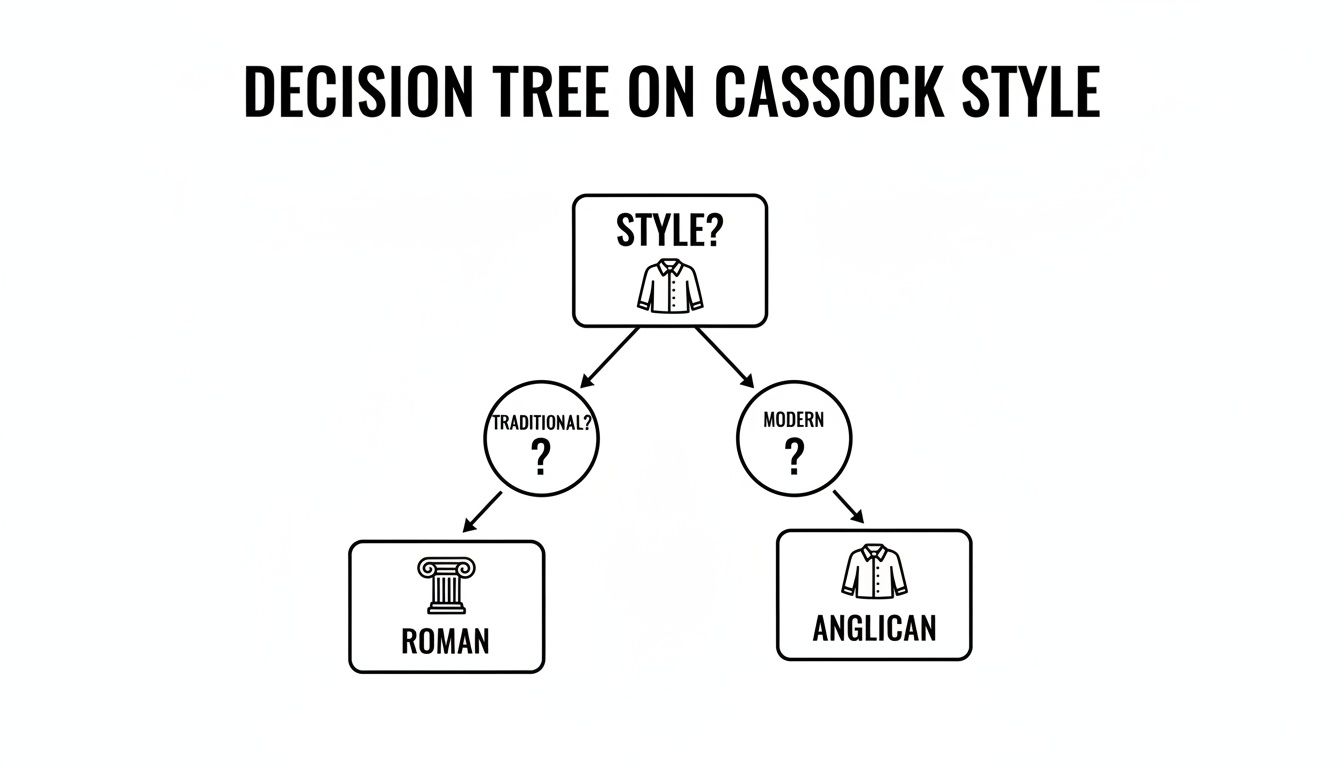
As the graphic shows, the choice often comes down to balancing deeply-rooted traditional aesthetics with more modern interpretations of liturgical wear.
Aligning the color of the altar server cassock with the liturgical season is more than a rule—it's a form of prayer. It visually unites the servers with the priest and the entire celebration, deepening the spiritual atmosphere for everyone.
By understanding this rich symbolism, you can ensure your altar servers are not just dressed appropriately but are active, visual participants in telling the story of faith. Equipping your team with the right colors for each season enhances every single service.
How To Ensure The Perfect Fit For Every Server
An altar server cassock that fits poorly is more than just a minor issue—it's a distraction. A hem that’s too long can become a serious tripping hazard on the altar steps, while sleeves that are too short can make a server look sloppy and untidy. The right fit is key, not just for the server's comfort but for the dignified, reverent appearance of your entire liturgical team.
Getting the size right, especially when you're ordering for a whole group of servers with different builds, can feel like a daunting task. But it doesn't have to be. With a straightforward measuring process, you can get a professional fit for everyone, from your youngest new server to your most experienced adult.
The Three Essential Measurements
You only need three key measurements to get an accurate size for any altar server cassock. Taking a moment to get these right is the single most important step you can take.
-
Overall Height: This is your starting point and the most critical measurement. Have the server stand straight against a wall—no shoes, please! Measure from the floor right to the top of their head.
-
Chest Size: Grab a flexible tape measure and wrap it around the fullest part of the server's chest. You're looking for a snug fit, not a tight one. Make sure the tape is level all the way around to avoid an inaccurate reading. This ensures the cassock allows for easy breathing and movement.
-
Sleeve Length: Ask the server to stand with their arm slightly bent. Start the tape at the center of the back of their neck, run it across the shoulder, and measure down to the wrist bone. This measurement is the secret to avoiding those awkward, too-short sleeves.
Once you've jotted down these numbers, you’re ready to go. We've created a comprehensive guide to make the next step simple. Just compare your measurements with our detailed online size chart and measurement guide to find the perfect cassock size in seconds.
Best Practices For Sizing
Beyond the raw numbers, a few tried-and-true tips can help you navigate common challenges, like ordering for growing kids or finding the right cut for adults.
A well-fitting cassock should always look dignified and allow for easy movement. The goal is for the hem to fall neatly at the top of the server’s shoes, creating a clean, uniform line.
-
Accommodating Growth: We all know how fast young servers grow! It’s often a smart move to order one size up. This gives them a little room to grow into the garment, extending its usable life and saving your parish budget in the long run.
-
Sizing for Adults: An adult altar server cassock typically needs a fuller cut through the body. Pay extra attention to the chest measurement to make sure the cassock fits comfortably without pulling across the shoulders or feeling restrictive.
-
Bulk Ordering Assistance: Feeling overwhelmed by a long list of sizes for a large group? We get it. Our customer service team at ChoirBuy is here to help. We can offer personalized assistance and walk you through the process to make sure every single server is outfitted perfectly.
Proper Care And Maintenance For Your Cassocks
An altar server cassock is more than just a uniform; it's a real investment for the parish. Like any sacred vestment, taking good care of it is essential. A little consistent effort not only keeps your servers looking sharp and dignified but also saves the church money by helping the cassocks last for years.
The most important rule? Always check the tag first. Care instructions can differ quite a bit depending on the fabric, so that little label is your best friend. Most cassocks you'll find today are made from durable polyester or poly-cotton blends, which are thankfully pretty easy to manage. Usually, a gentle machine wash cycle with cold water and a mild soap will do the trick.
Washing and Stain Removal
To keep colors from running, it's a good idea to wash cassocks with other items of a similar color. I also recommend turning them inside out before tossing them in the machine—this simple trick helps protect the buttons and the fabric's finish. And definitely stay away from harsh chemicals like bleach, which can eat away at the fibers and cause unsightly fading over time.
Of course, spills are bound to happen in a busy sacristy. The key to tackling common stains like candle wax or wine is to act fast.
- Candle Wax: Here’s a classic trick. Sandwich the waxy spot between a couple of paper towels and press it with a warm iron. The paper will soak up the melted wax like a sponge.
- Wine or Juice: Blot, don't rub! Rubbing just grinds the stain deeper into the fabric. Gently dab the spot, apply a bit of stain remover, and get it into the wash as soon as you can.
Proper storage is just as crucial as proper cleaning. A well-cared-for altar server cassock is always ready for service, free from wrinkles and damage, reinforcing the dignity of the liturgy.
Drying, Ironing, and Storage
When it's time to dry, you have a couple of options. You can tumble dry on low heat, but hanging the cassock to air dry is even better. It’s gentler on the fabric and naturally helps prevent wrinkles.
If you do need to iron, use a low or medium setting that's right for the material. A great tip is to iron the cassock while it’s still just a little damp—you’ll get a much smoother, crisper finish that way.
Between Masses, don't just fold them up. Always place your cassocks on sturdy hangers to help them keep their shape. For longer-term storage, popping them into quality garment bags is a smart move to protect them from dust and moisture. Storing them properly means they'll always be clean, organized, and ready for the next liturgy.
A Few Common Questions About Altar Server Cassocks
Choosing the right vestments can feel like a big decision, and it’s natural to have questions. We get calls and emails about this all the time, so we’ve gathered a few of the most common ones to help guide you.
What Is The Difference Between A Cassock And An Alb?
This is probably the number one question we hear. Think of it this way: the cassock is a tailored, ankle-length garment—usually black or red—that acts as the base layer. It’s almost always worn with a white, shorter garment over it called a surplice.
An alb, on the other hand, is a single, full-length white robe that’s tied at the waist with a rope belt called a cincture. While the cassock and surplice pairing has a more traditional feel, the alb gained popularity in many parishes after Vatican II. We're happy to offer both, so you can choose what best fits your parish’s customs.
Can We Order Custom Colors Or Add Embroidery?
Yes, and we love helping parishes create a look that’s uniquely theirs! While we keep a deep inventory of all the standard liturgical colors, we can certainly work with you on custom color requests for larger orders.
We also offer professional embroidery. Adding a parish crest or a meaningful sacred symbol can create a truly distinguished look for your servers. Just get in touch with our team, and we can walk you through the options.
Customization is more than just aesthetics; it helps create a visual identity for your liturgical team that reflects the unique spirit of your parish community.
Do You Offer Discounts For Bulk Orders?
We sure do. We know that outfitting an entire team of altar servers is a real investment, and we want to make it as manageable as possible for your budget.
That’s why we offer great bulk discounts and package deals when you order altar server cassock and surplice sets together. The more you order, the greater the savings, which makes it easier to ensure all your servers have a uniform and reverent appearance.
Here at ChoirBuy, our mission is to make it simple to find high-quality, long-lasting vestments for your entire liturgical team. Take a look at our full collection of altar server cassocks, surplices, and accessories to find the perfect fit for your parish.
You can see everything we offer at https://www.choirbuy.com.