

Choosing the right church choir robes is about more than just picking out a uniform. It's an opportunity to create a visual harmony that truly enhances the worship experience. These garments are what turn a group of individual singers into a single, cohesive ministry, quieting the visual noise so the congregation can focus on the music and the message. This guide is here to walk you through every key decision, from fabric choices to getting the fit just right.
Why the Right Choir Robes Matter

Think of choir robes as the visual version of musical harmony. When different voices blend perfectly, you get a beautiful sound. In the same way, matched robes create a serene, focused look. They instantly remove the distraction of street clothes—all the different colors, styles, and logos—and help the congregation see the choir as one body with one purpose.
That sense of unity also works wonders within the choir itself. When everyone is dressed alike, it builds a powerful feeling of belonging and team spirit. It helps minimize personal vanity and keeps the focus where it should be: on the collective act of worship. It's a simple, visual reminder that each singer is part of something much larger than themselves.
More Than Just Appearance
The impact of well-chosen choir robes goes much deeper than surface-level aesthetics. The right attire can have a profound effect on both the choir's confidence and how the congregation experiences the service. A professional, unified appearance sends a clear message of reverence, preparation, and respect for the sacred space.
There are some very practical benefits, too:
- Reduced Distractions: A uniform look helps the congregation focus on the service, not on who's wearing what.
- Enhanced Confidence: When singers feel they look the part, you'll often see them perform with more confidence and poise.
- Symbol of Ministry: Robes are a visible symbol that the choir is actively leading worship, setting them apart in their ministerial role.
The right robes transform a group of singers into a unified ministry. They are not merely garments but tools that support the choir’s role in creating a sacred and focused worship environment.
Ultimately, investing in quality robes is an investment in your entire worship experience. It signals that music is a valued and integral part of the service. By carefully selecting the style, fabric, and color, you are making a deliberate choice to support and elevate your church's musical ministry for years to come.
The Symbolic Journey Of Choir Robes Through History
Ever paused to wonder why singers in a choir drape themselves in those flowing gowns? These robes aren’t just a uniform—they’re living threads woven through centuries of faith, unity, and reverence. By tracing their path, we unlock a deeper appreciation for church choir robes as more than mere attire.
The story begins in the quiet corners of medieval monasteries. In the 13th-century, monks donned simple tunics to symbolize modesty and turn their focus inward. Over time, this humble practice grew into a powerful ritual garment. Learn more about this origin in the detailed choir robe history.
From Monastic Cells To Choir Stalls
As church services evolved, so did the robes. What started as plain garments in cloisters soon marked choir members as a distinct group, highlighting their musical ministry within the service.
During the Reformation, a shift occurred. Many congregations favored a more academic look, rejecting ornate vestments in favor of plain, scholarly gowns.
The “Geneva” robe—a black, fuller-cut gown with wide sleeves—was inspired by university and judicial attire. This style added a note of dignified seriousness to the choir’s presence.
You’ll still spot that academic influence in black robes used by Protestant choirs today.
The Evolution Of Modern Styles
Robes continued to change, reflecting diverse traditions and creative flair. Some churches embraced liturgical hues for different seasons, while advances in textile production introduced fabrics that balanced durability with elegance.
Alongside these technical shifts, communities infused personal touches into their robes—embroidered stoles, colorful piping, or denomination-specific symbols. This variety helps choirs express both unity and unique heritage.
- Color Symbolism: Liturgical seasons come alive through purple, green, red, or white robes.
- Fabric Choices: Modern blends resist wrinkles and stand up to frequent laundering.
- Cultural Expression: Embroidery, stoles, and trims showcase local stories and values.
To see how this evolution fits into a broader context, explore Christian apparel in the UK. From austere monastic tunics to vibrant gospel choir gowns, each robe tells its own chapter in a rich, ongoing tradition.
Choosing the Best Fabrics for Comfort and Durability
The fabric of a choir robe is its heart and soul. It dictates how the robe hangs, how it feels under warm sanctuary lights, and ultimately, how long it will last. Picking the right material isn't just a practical decision; it's about choosing something that performs beautifully and endures for years of service. It’s a delicate balance between appearance, comfort, and good old-fashioned practicality.
Today, the go-to material for most modern choir robes is 100% woven polyester. Now, this isn't the stiff, scratchy polyester you might remember from decades ago. Modern polyester fabrics are engineered for performance. They offer an incredible combination of durability and easy care, which is exactly what a busy choir needs. Plus, they resist wrinkles exceptionally well—a huge plus when you're managing dozens of garments at once.
The journey to today’s high-performance fabrics has been a long one, as you can see from the way styles and materials have changed over the centuries.
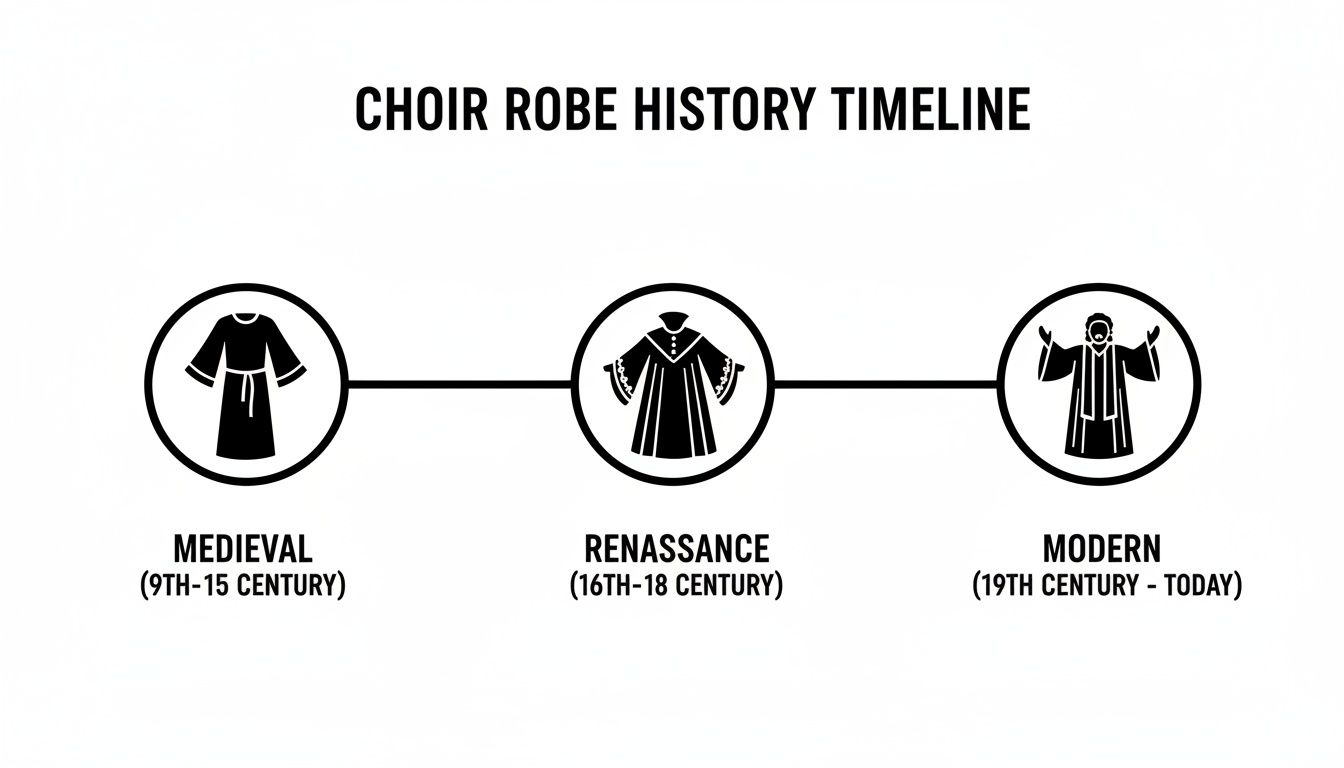
This visual evolution from simple Medieval tunics to the ornate designs of the Renaissance shows a constant search for materials that could bring both dignity and visual flair to worship.
Understanding Fabric Finishes
Beyond the base material itself, the finish is what gives the robe its final look and feel. The two most common choices for polyester choir robes are matte and satin, and they create very different effects.
-
Matte Finish: Think of this as a non-reflective, flat finish. It creates a dignified and understated look that’s fantastic at minimizing glare from stage lighting. This helps keep the focus where it belongs: on the choir members' faces and their collective presence.
-
Satin or "Shiny" Finish: This finish has a subtle sheen that catches the light beautifully, adding a touch of vibrancy and elegance. It’s often used as an accent on stoles, cuffs, or yokes to create a tasteful contrast with a matte robe body.
The Renaissance, a period stretching from the 14th to the 17th centuries, was really a turning point. It introduced more opulent and colorful styles where the play of light on fabric became part of the garment's beauty. You can learn more about this aesthetic shift and its impact on choir robe history to see how these traditions evolved.
A Practical Comparison of Choir Robe Fabrics
Weigh the key attributes of popular robe fabrics to find the perfect match for your choir's needs.
| Fabric Type | Best For | Care Level | Cost |
|---|---|---|---|
| Woven Polyester | Durability, wrinkle resistance, and all-around use. The industry standard. | Low (Machine Washable) | $$ |
| Cotton Blends | Breathability and comfort, especially in warmer climates. | Medium (Prone to wrinkling) | $$ |
| Velvet | Accents, stoles, and director robes for a rich, luxurious look. | High (Dry Clean Only) | $$$$ |
| Satin | Accents, stoles, and creating a vibrant, light-catching effect. | Medium (Handle with care) | $$$ |
Ultimately, woven polyester remains the most popular choice for a reason—it simply delivers the best combination of looks, longevity, and ease of use for the investment.
Weight and Drape: The Two Sides of Comfort
A fabric’s weight, often measured in grams per square meter (GSM), has a huge impact on how a robe "drapes," or flows. Heavier fabrics tend to have a more structured, formal drape. Lighter ones feel more fluid and airy.
A common misconception is that heavier fabric is always more durable. While there's some truth to that, a high-quality, lightweight woven polyester can be just as long-lasting while offering far better comfort, especially in warm sanctuaries or during long services.
Think of it this way: a lightweight fabric breathes, helping keep your choir members from overheating. A mid-weight fabric, on the other hand, offers that classic, full look that moves with grace and presence.
Your choice really comes down to your church's environment and how active your choir is. Most reputable suppliers offer a well-balanced, medium-weight option that gives you the best of both worlds, ensuring your church choir robes look distinguished without making anyone uncomfortable.
Mastering Sizing for a Unified Look
There's nothing quite as distracting as a choir full of ill-fitting robes. A sleeve that swallows a singer's hands or a hem that hits at the wrong spot can break the visual harmony you're trying to create. It's a small detail that can nag at both the singer and the audience.
Getting a consistent, professional fit across an entire group sounds like a huge undertaking, but it's completely doable if you have a solid game plan. The idea isn't to get every single robe custom-tailored, but to make it look like you did. That process starts with one simple, non-negotiable step: taking good measurements.
Taking Accurate Measurements
Most suppliers size their church choir robes using two key numbers: height and chest circumference. Don't fall into the trap of just asking people for their t-shirt size. A "large" from one brand is a "medium" from another, so that's a recipe for disaster.
To get it right, you need a standardized process for everyone in your group.
- Height: Have each person stand straight against a wall with their shoes off. Use a measuring tape and go from the floor right to the top of their head. This number dictates the robe's length, which is crucial for getting all those hems to line up perfectly.
- Chest: Take the tape and wrap it around the fullest part of their chest. Make sure it’s level all the way around—snug, but not so tight that it's digging in. This is the key to making sure the robe closes properly without any awkward pulling or gaping.
Some robe makers might also ask for a sleeve measurement. You typically get this by measuring from the center of the back of the neck, out over the shoulder, and down to the wrist bone. Always, always double-check the specific supplier's sizing guide, as they all have their own little quirks.
How to Read a Size Chart and Find the Wiggle Room
With your list of measurements in hand, you’re ready to tackle the manufacturer’s size chart. They can look a little intimidating at first, but they’re usually just a grid that matches a range of heights and chest sizes to a specific robe size, like a Size 48 or a Size 50.
A common pitfall is ordering based just on height. Think about it: a tall, slender person might need the same length as a shorter, broader person, but they'll need completely different fits through the body.
Luckily, good robes are designed with this in mind. They have built-in features that offer a surprising amount of flexibility, allowing one size to fit a variety of body types beautifully.
- Generous Pleating: Look for deep pleats that fall from the yoke (the shoulder area). These aren't just for show; they allow the fabric to expand, giving plenty of room through the torso without the robe looking like a tent.
- Full-Cut Sleeves: Traditionally cut sleeves are intentionally wide. This prevents any tightness in the shoulders or upper arms, which is absolutely essential for letting singers move and breathe comfortably.
- Adjustable Cuffs: Some designs come with elastic or adjustable cuffs, a fantastic little feature that helps keep sleeves from sliding down over the hands of singers with shorter arms.
These features are your best friends when trying to achieve that polished, uniform look. When a singer feels comfortable and confident in their robe, it shows.
Here’s a final pro-tip: if someone's measurements fall right between two sizes, always round up. A robe that’s a touch too big will drape gracefully, but one that’s too small is pretty much unusable. By starting with careful measurements and choosing a well-designed robe, you can outfit your entire choir with confidence.
4. Bringing Your Vision to Life with Customization
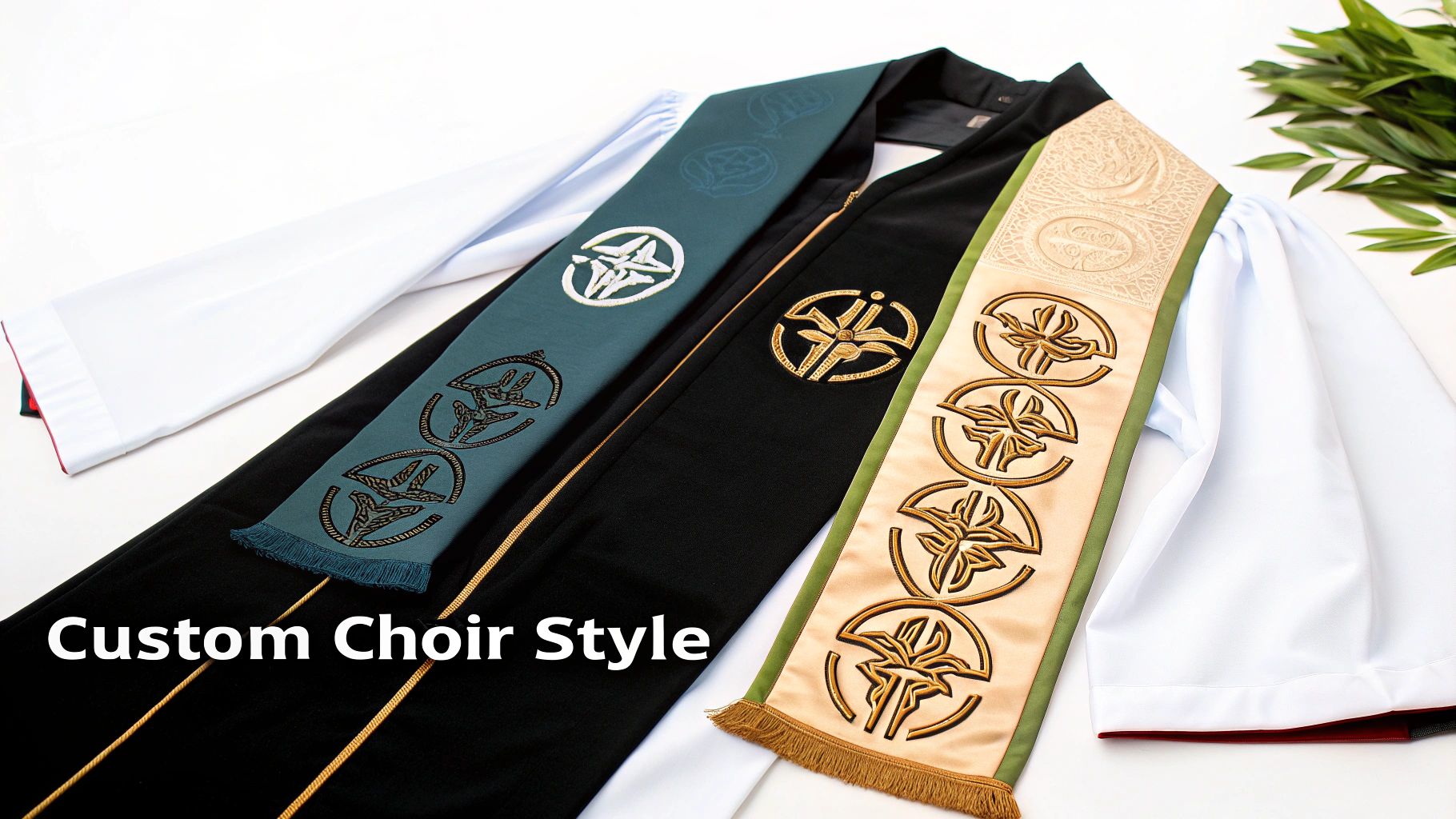
This is where the real magic happens. Customization is how you transform a set of robes from simple garments into a powerful visual statement that tells your choir's story. It's your chance to infuse them with your church's unique spirit and traditions.
This level of choice is a relatively modern advantage. The 20th century saw a huge shift as church choir robes became more accessible. What were once exclusive ecclesiastical items became widely available, and by the end of the century, choirs could pick from over a hundred styles in a huge range of colors. You can learn more about this explosion in choir robe availability.
Today, the possibilities are virtually endless, allowing you to craft a look that is both deeply personal and visually stunning.
The Power of Liturgical Colors
Color is your most immediate and impactful tool. In many denominations, colors aren't just for decoration—they're packed with symbolism and tied directly to the church calendar, telling a story that unfolds throughout the year.
- White: Think purity, joy, and new life. You'll see white robes during major celebrations like Easter and Christmas.
- Red: This color represents the Holy Spirit and the blood of martyrs. It's often used for Pentecost, ordinations, and other special commemorative services.
- Purple: A color of royalty, repentance, and preparation. Purple is the go-to for the reflective seasons of Advent and Lent.
- Green: Symbolizing hope, life, and growth, green is the color for Ordinary Time, which covers most of the church year.
Using these colors connects your choir visually to the themes of the worship service. It’s a simple way to create a more cohesive and immersive experience for the entire congregation.
Adding Meaning with Embroidery and Symbols
Embroidery is an elegant way to add another layer of meaning. A carefully placed symbol on the yoke or stole acts as a constant, beautiful reminder of your choir's mission and faith. It’s a small detail that makes the robes feel truly bespoke and distinctly yours.
Some common, powerful symbols to consider include:
- Crosses: The universal symbol of Christianity, from a simple Latin cross to an ornate Celtic design.
- Doves: A classic representation of the Holy Spirit, peace, and new beginnings.
- Treble Clefs or Musical Notes: A direct and lovely nod to your choir's purpose.
- Flames: Often used to symbolize the fire of the Holy Spirit at Pentecost.
Think of customization as the final layer of storytelling. The robe provides the foundation of unity, but the colors and symbols you choose tell the unique story of your church and its ministry.
Elevating the Look with Stoles and Reversible Options
Stoles and overlays are probably the most versatile tools in your choir's wardrobe. These are separate pieces worn over the main robe, and they offer a simple yet dramatic way to change your choir's look without buying multiple sets of robes.
A reversible stole is an incredibly clever and budget-friendly solution. For instance, a stole that’s white on one side and purple on the other can be flipped to match the liturgical season. Just like that, you have two distinct looks for the price of one accessory. This flexibility ensures your choir is always perfectly attired for the service, from the solemnity of Lent to the joy of Easter morning.
5. Smart Strategies for Bulk Orders and Budgeting
Outfitting an entire choir is a big undertaking, but it doesn't have to be a stressful one. With a bit of smart planning, you can navigate the process smoothly, stick to your budget, and achieve that beautiful, unified look you're picturing for your ministry. It all comes down to understanding how bulk ordering works and using that knowledge to your advantage.
The single biggest perk of ordering your church choir robes all at once is the cost savings. Suppliers almost always have tiered pricing schedules—the more robes you buy, the less you pay for each one. It makes sense when you think about it; manufacturing and shipping one large batch is much more efficient than juggling dozens of small, separate orders.
Planning Your Order Timeline
One of the easiest mistakes to make is not leaving enough time, especially if you're going the custom route. From the day you click "confirm order" to the moment the boxes land on your doorstep, several weeks—or even a couple of months—can go by. A rushed job almost always means fewer choices and extra fees for expedited services.
To sidestep the stress, map out a realistic timeline that covers every stage:
- Measurement & Sizing (1-2 weeks): This is your foundation. Rushing this step is a recipe for expensive errors, so take your time getting accurate measurements for every single member.
- Order Placement & Confirmation (1 week): This is for finalizing all the details, getting your official quote, and giving the supplier the green light.
- Production (4-8 weeks): Here's the longest leg of the journey, particularly if you've added custom colors or embroidery. Good work takes time.
- Shipping & Delivery (1-2 weeks): Don't forget to account for transit time. Standard ground shipping can sometimes take longer than you'd think.
Maximizing Your Budget
Beyond the standard volume discount, there are other clever ways to make your budget work harder. For instance, when you're planning for a large quantity of robes, a key part of the cost is the material. A big piece of efficient budgeting involves calculating fabric yardage accurately. This helps your supplier give you a much tighter, more precise quote right from the start.
Also, don't hesitate to ask about package deals. Many suppliers will offer a bundled discount if you buy robes and matching stoles or other accessories together. Timing can matter, too. Placing your order in the "off-season," like late spring or summer, can sometimes lead to better pricing or faster production since manufacturers aren't swamped with holiday orders.
The table below gives you a general idea of what to expect for lead times and discounts.
Planning Your Bulk Robe Order
Typical lead times and discount tiers to help you plan your choir's purchase effectively.
| Order Size | Estimated Lead Time | Typical Discount |
|---|---|---|
| 10-24 Robes | 4-6 Weeks | 5-10% Off |
| 25-49 Robes | 6-8 Weeks | 10-15% Off |
| 50+ Robes | 8-10 Weeks | 15-20% Off |
As you can see, the price break between ordering 10 robes and 50 can be pretty significant, making it well worth the effort to coordinate one single, large purchase.
Always Order a Sample. Before you commit to a fifty-robe order, invest in a single sample. This is your chance to feel the fabric, see the color in natural light, and check the quality of the stitching firsthand. It’s a small upfront cost that can save you from a very big and expensive mistake.
Think of the sample as your ultimate quality control check. It gives everyone on your leadership team—from the choir director to the church treasurer—the confidence they need to sign off on the full purchase. This simple step ensures that what you saw online is exactly what you get.
Maintaining Your Robes for Years of Service
Proper care is the secret weapon to keeping your choir robes looking sharp, service after service. Think of it this way: a well-maintained robe isn't just a purchase; it's an investment that can maintain the choir's dignified, unified appearance for a decade or more.
Just like any important uniform, a little preventative care makes all the difference. The absolute most important rule is to follow the manufacturer's care label. Different fabrics and dyes have their own unique needs, and ignoring those instructions is the fastest way to invite fading or damage.
Cleaning Your Church Choir Robes
The right way to clean your robe really comes down to the fabric it's made from. Luckily, for the vast majority of modern polyester robes, the news is great—they are typically machine washable, which is a big part of why they're so popular.
If you're machine washing, just follow these simple steps:
- Turn Robes Inside Out: This is a simple trick to protect the outer surface and any special embroidery from wear and tear in the wash.
- Wash in Cold Water: Always use a gentle cycle. This helps prevent unnecessary stress on the seams and fabric fibers.
- Use a Mild Detergent: Harsh chemicals and strong soaps are notorious for causing colors to fade over time.
- Tumble Dry on Low Heat: Pull the robes out as soon as the cycle finishes. This is key to preventing wrinkles from setting in. Remember, high heat is the ultimate enemy of polyester and can cause permanent damage.
Now, if your robes have delicate trim, velvet panels, or detailed embroidery, your safest bet is professional dry cleaning. It might seem like an extra cost, but it’s a small price to pay to protect a significant part of your ministry's budget.
Smart Storage Solutions
How you store your robes is just as crucial as how you clean them. The wrong storage method can quickly lead to stretched-out shoulders, stubborn creases, and even mildew.
The goal of proper storage isn't just to keep robes out of the way; it's to help them retain their shape and be ready for service at a moment's notice, wrinkle-free.
To keep them looking great, always hang robes on wide, sturdy hangers that support the entire shoulder area. Thin wire hangers are a recipe for unsightly stretching and puckering over time. For longer-term storage between seasons, breathable garment bags are a must. They shield the robes from dust and light while still allowing air to circulate, which is what prevents that musty smell you get from storing things in plastic.
Your Choir Robe Questions, Answered
Choosing the right robes for your church choir often comes with a handful of practical questions. We hear them all the time from choir directors and church leaders. Let's walk through some of the most common ones to help you nail down those final details and order with confidence.
What’s the Best Fabric for Robes Worn Every Week?
If your choir is singing every Sunday, you need a fabric that can keep up. Hands down, 100% woven polyester is the workhorse you're looking for. It's engineered specifically for durability, holding its shape and color through constant use and regular cleanings.
The best part? It’s incredibly wrinkle-resistant. That means less time spent steaming and pressing before a service, which is a huge time-saver for any busy music ministry. The tight weave also stands up to snags and pilling, keeping your choir looking sharp for years.
How Early Should We Order Robes for Easter?
This is a big one. For major holidays like Easter, you absolutely have to plan ahead. We always recommend placing your order at least 8 to 12 weeks before you need them.
Peak seasons like Christmas and Easter are the busiest times for robe makers. Ordering early not only avoids rush fees but also gives you peace of mind, knowing your robes will arrive well before Holy Week kicks off.
This 8-12 week window builds in a comfortable buffer for everything:
- Production: Manufacturing, especially for custom or large orders, can take 4-8 weeks.
- Shipping: Allow another 1-2 weeks for standard ground transit.
- Distribution: You’ll want an extra week on your end to unpack, sort, and get the right robe to each singer without scrambling.
Can We Get Different Sizes in One Bulk Order?
Of course! It wouldn’t work any other way. Choirs are made of people of all different shapes and heights, so mixing sizes is completely standard.
When you place your order, you'll simply provide a list of how many robes you need in each size—something like ten in Size 48, fifteen in Size 50, eight in Size 52F, and so on. This ensures every singer gets a comfortable, proper fit, which is the key to achieving that polished, unified look in the choir loft.
What’s the Easiest Way to Keep Robes Fresh Between Cleanings?
Good storage habits make all the difference. Always hang your robes on sturdy, broad-shouldered hangers. This helps maintain the shape of the shoulders and allows air to circulate, which prevents mustiness. Whatever you do, don't cram them into a tiny, overstuffed closet.
If the robes look a little rumpled from storage, a quick pass with a handheld steamer will have them looking crisp in minutes. For a little extra freshness, a light spritz of a gentle, fabric-safe freshening spray will do wonders.
At ChoirBuy, our goal is to make outfitting your choir with beautiful, long-lasting robes as simple as possible. See our full collection of styles, colors, and sizes today. https://www.choirbuy.com