

When you see an altar server assisting during a service, you're seeing more than just a helper in a uniform. The special clothing they wear—the cassocks, albs, and surplices—are garments steeped in meaning and tradition. They signify service, reverence, and play a crucial role in creating a focused, prayerful atmosphere for worship. Choosing the right altar server apparel is about honoring this important ministry.
The Role of Altar Server Apparel in Worship
The vestments an altar server wears do more than simply identify their role; they enhance the entire worship experience for everyone. By putting on these distinct liturgical garments, servers set themselves apart from the congregation, visually marking their specific duties within the sanctuary. This simple act of vesting becomes a powerful tool, helping them shift their mindset and spirit to the solemn tasks at hand.
For the congregation, this uniformity brings a sense of order and calm. It reduces distractions and helps keep the focus where it belongs: on the sacred liturgy. This visual consistency reinforces the beauty and deep history of the service, connecting today’s worship with a tradition that spans centuries.
More Than Just a Uniform
It’s easy to think of these garments as just a uniform, but that misses the point entirely. A better way to see it is as a tool for ministry. When servers are comfortable in well-fitting, appropriate vestments, they can carry out their duties with confidence and without distraction, which contributes to a seamless and reverent service.
This is exactly why selecting the right apparel is such an important decision for any parish. The primary pieces you'll encounter are:
- The Cassock: This is the long, foundational robe. You’ll often see it in black, red, or white, each color carrying its own symbolism of a server's commitment.
- The Alb: A simple white tunic that recalls the baptismal garment worn by all Christians, symbolizing purity.
- The Surplice or Cotta: This is the shorter, white garment worn over the cassock. It signifies a server's readiness to assist in the liturgy.
Together, these pieces create an appearance that is both practical and dignified. This need for specialized clothing is part of a much larger picture. The global apparel market, which includes all kinds of ceremonial and liturgical wear, was valued at USD 1.77 trillion in 2024. Projections show it growing to USD 2.26 trillion by 2030, a clear sign of how important dedicated attire remains. You can explore more insights about this expanding market from Grand View Research.
Understanding the Different Garment Types
When outfitting your altar servers, the first step is getting familiar with the different garments and the role each one plays. Think of the server cassock and the server alb as the foundational pieces—the core uniform that gives your servers a look of reverence and unity. These are the main robes that everything else is built upon.
The alb is a simple, full-length white robe. Its name comes from albus, the Latin word for white, symbolizing the purity of baptism. This connection reminds us that a server's role is a direct extension of their place within the Church. It’s a wonderfully versatile garment that fits well in many different liturgical traditions.
The cassock, on the other hand, is a more formal, tailored robe that reaches the ankles. You’ll typically see it in black or red, and it provides a strong, dignified base for the server's attire. Many parishes lean towards the cassock when they want to cultivate a more traditional and structured appearance for their server ministry. If you want to explore this garment more, our guide on the altar server cassock is a great resource.
Surplice or Cotta: The Top Layer
After the server puts on their foundational robe (the cassock), they wear a shorter white garment over it. This is where you’ll need to decide between a server surplice or a cotta. The real difference comes down to length and styling, and making the right choice helps your apparel align with your parish’s traditions and overall look.
It helps to think of them like different styles of a formal jacket. The surplice is the longer, more flowing option, almost like a stately coat. It usually falls to the knees or even a bit lower and often has fuller sleeves, sometimes with a pointed design. This creates a graceful, traditional silhouette that’s often preferred for more formal liturgical settings.
The cotta is the shorter cousin, more like a waist-length jacket. It typically ends right around the hip and features simpler, often square-cut, sleeves. Its design is clean and practical, making it a popular choice for its simplicity and the freedom of movement it offers—a real plus for younger servers.
Key Takeaway: The foundational choice is between an alb (a single white robe) or a cassock (a colored robe). The secondary choice is the white overgarment—either a longer surplice or a shorter cotta—worn over a cassock.
To help you visualize these options, here's a quick comparison of the most common garments.
Altar Server Garment Comparison
| Garment Type | Description | Typical Length | Sleeve Style | Common Pairing |
|---|---|---|---|---|
| Alb | A single, full-length white tunic symbolizing baptismal purity. | Ankle-length | Varies; often simple and straight. | Typically worn alone with a cincture (rope belt). |
| Cassock | A close-fitting, colored robe providing a formal foundation. | Ankle-length | Long and fitted. | Worn under a surplice or cotta. |
| Surplice | A flowing white overgarment worn over a cassock. | Knee-length or longer | Full, often gathered or pleated; can be pointed. | Worn over a cassock. |
| Cotta | A shorter, square-necked white overgarment. | Waist or hip-length | Simpler and squarer than a surplice. | Worn over a cassock. |
This table makes it easy to see the distinct characteristics of each piece at a glance, helping you decide which combination best suits your church's needs.
The visual below breaks down how these apparel choices reflect the core values of service, reverence, and tradition.
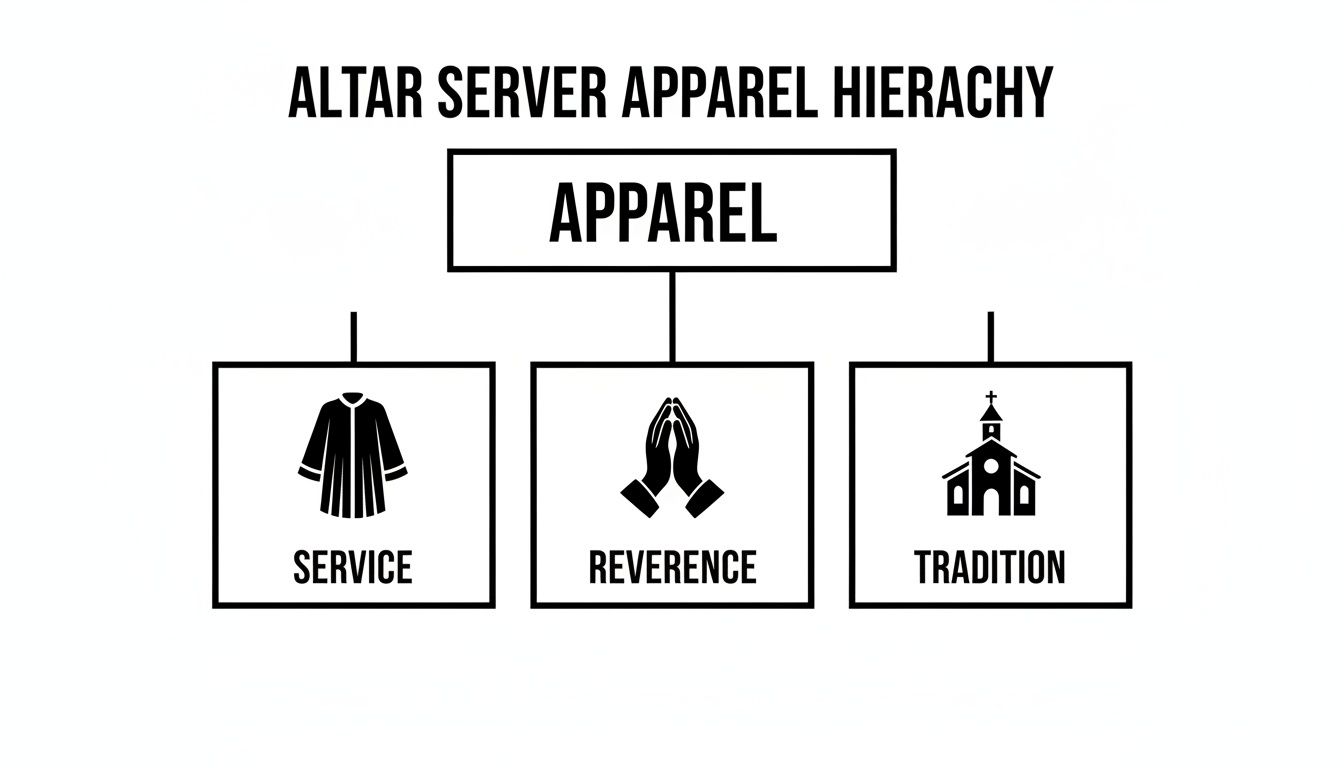
As the diagram shows, every garment choice is a meaningful expression of the server's dedication to their role in the liturgy. Whether you opt for the humble alb or the formal cassock and surplice, each piece helps reinforce the profound dignity of their ministry.
Choosing Fabrics and Liturgical Colors
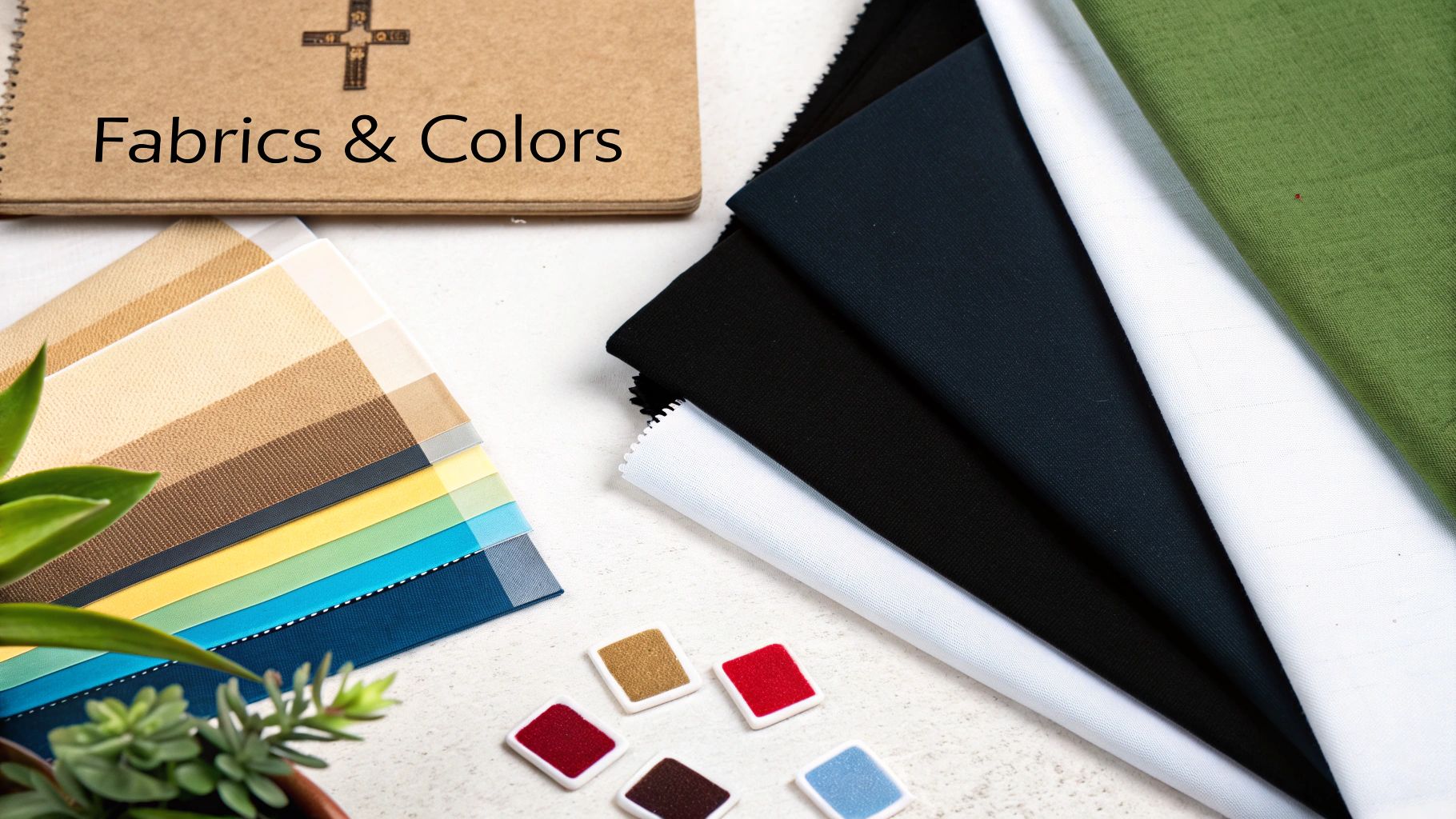
The right fabric and color for altar server apparel do more than just look good—they have to be practical and they carry a ton of symbolic weight. Picking the right material is all about striking a balance between durability, comfort, and how easy it is to care for. This directly affects how the servers feel and perform their duties. At the same time, the colors are deeply woven into the story of the church calendar.
Let's get into the "why" behind the "what," so you can make choices that are both functional for your parish and rich with liturgical meaning.
Practicality in Fabric Selection
For most busy parishes, 100% polyester is the workhorse. Its biggest selling points are durability and wrinkle resistance. These garments can handle frequent use and washing, and they come out looking crisp and dignified with little to no ironing. For any volunteer managing the sacristy, that’s a huge plus.
But in warmer climates, breathability is a real game-changer. That's where cotton-polyester blends come in. They give you the best of both worlds: the strength and low-maintenance perks of polyester combined with the soft feel and better airflow of cotton. This keeps your servers comfortable, even during longer services. Getting a feel for different types of material for shirts can really help you make a smart decision.
Investing in quality from the start is a wise long-term move. The broader premium apparel market, which includes beautifully made liturgical vestments, was valued at USD 438.03 billion in 2024 and is expected to keep growing. This trend shows just how much religious institutions value craftsmanship and quality fabrics that are built to last. You can read the full research about this quality-focused market from Stellar MR.
The Symbolism of Liturgical Colors
Moving beyond the fabric itself, the color of a server's cassock or other vestments visually connects their role to the church season. It deepens the worship experience for the entire congregation. The alb is almost always white, but cassocks often follow a specific color scheme. We dive deeper into this in our guide on altar server albs.
A Note on Color: While some parishes use cassocks that match the liturgical color of the day (like green for Ordinary Time), it’s not a strict requirement. Many stick with standard black or red year-round, as these colors carry their own powerful symbolism.
Here's a quick rundown of the most common colors and what they mean:
- Black: This is the classic choice, representing solemnity, service, and humility. Black altar server cassocks are versatile and appropriate for any season.
- Red: A powerful color symbolizing the blood of martyrs and the fire of the Holy Spirit. You'll see red server cassocks on Palm Sunday, Good Friday, Pentecost, and the feast days of martyred saints.
- White: Represents purity, joy, and the glory of the Resurrection. While the alb is white, some traditions also use white cassocks for major feasts like Easter and Christmas.
- Purple (Violet): This color signifies penance, preparation, and royalty. It's used during the reflective seasons of Advent and Lent.
Getting the Perfect Fit for Every Server
We’ve all seen it: a young server tripping over a hem that’s too long or looking constricted in a cassock that’s too tight. An ill-fitting robe isn't just a distraction; it can make the server feel self-conscious and take away from the solemnity of the service.
Getting the sizing right from the start is the key. It ensures your servers not only look unified and reverent but also feel comfortable and confident in their important role.
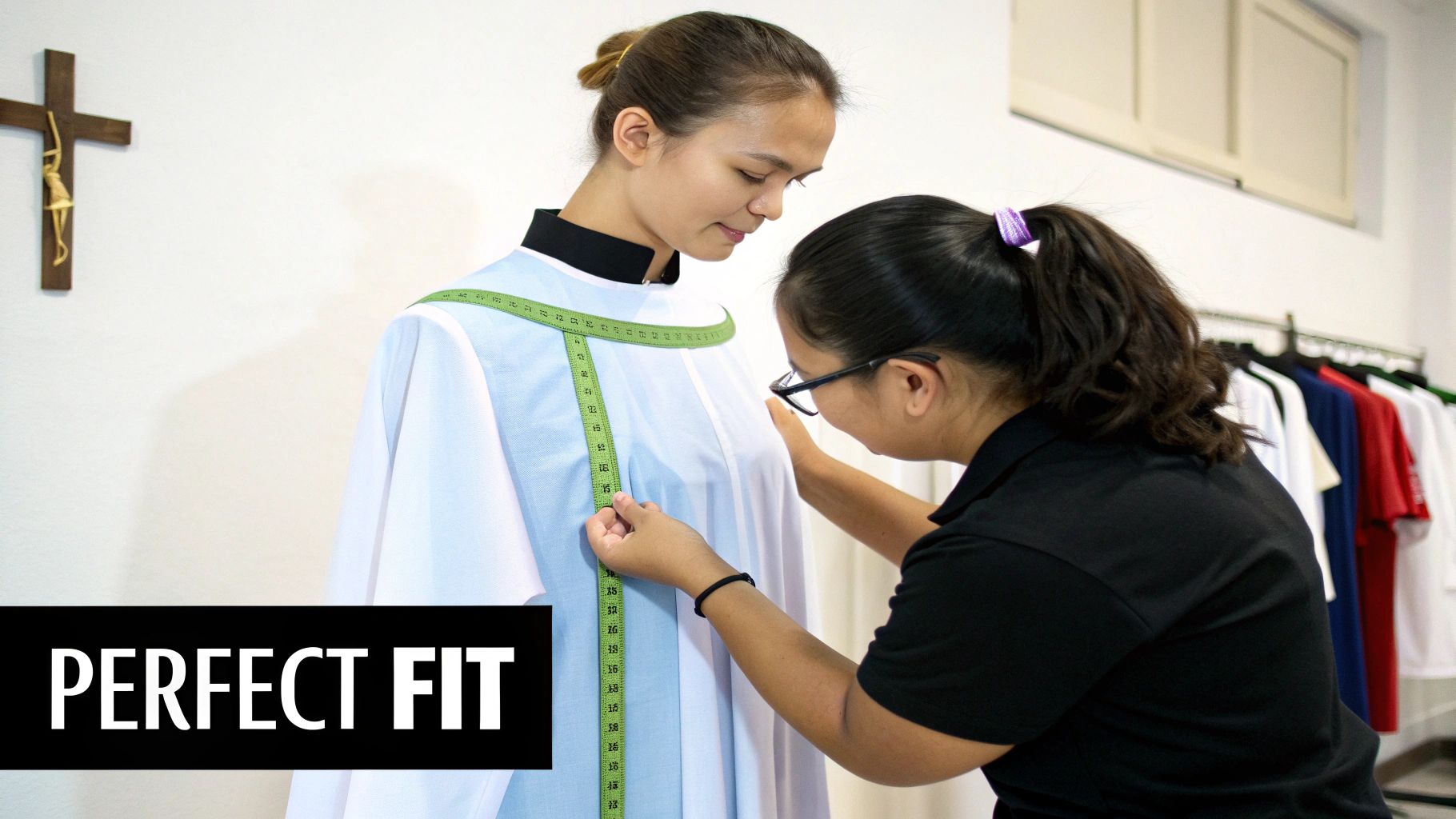
Thankfully, the process is much simpler than you might think. A few careful measurements will take all the guesswork out of the equation, saving you the headache of returns and exchanges.
Taking Key Measurements
To get that just-right fit, you only need to take three essential measurements. For the most accurate results, have the server stand up straight and relaxed while wearing the shoes they’ll typically wear for services.
- Height: This is your starting point. Measure from the very top of their head straight down to the floor. This measurement primarily determines the correct length for an alb or cassock.
- Chest: Take your measuring tape and wrap it around the fullest part of the server's chest. You'll want the tape to be level and snug, but not uncomfortably tight.
- Sleeve Length: This one is a bit different. Ask the server to bend their elbow just a little. Start the tape at the center of the back of their neck, run it across the shoulder, and measure all the way down to their wrist bone.
With these numbers in hand, just head over to our product pages and compare them to the sizing charts. We’ve designed our charts to be straightforward, so you can easily match your measurements to the perfect garment size.
Sizing for Growing Servers
Let's be honest, outfitting kids and teens comes with one big challenge: they grow! Fast. A common and very practical approach is to simply order one size up. This gives them a bit of room to grow into the garment without it looking sloppy or overly baggy.
A great pro-tip is to look for robes with a generous hem. Many of our garments are designed with a deep hem that can easily be let down by a few inches. This simple alteration can often get you another year or more of use out of a single vestment.
This kind of forward-thinking is a smart way to protect your parish budget and make your investment last. If you're looking for more in-depth advice, feel free to explore our guide on selecting an altar server alb for different age groups. We’re here to make finding a dignified fit for every single server as simple as possible.
Bulk Ordering and Customization Options
When you're in charge of outfitting your church's altar servers, you're doing more than just buying clothes—you're making a smart, forward-thinking investment. It’s a constant balancing act between elevating the look of your ministry and being a good steward of the parish budget. This is where customization and bulk altar server robe orders really shine, helping you save money while building a stronger sense of identity.
Adding a custom embroidered church crest or a meaningful liturgical symbol can completely transform a standard set of vestments into something that truly belongs to your parish. It’s a small detail, but it creates a professional, cohesive look that instills a real sense of belonging among the servers. As you explore these options, it's worth getting familiar with different decoration methods, like sublimation vs. heat transfer, to make sure the finish is durable enough for regular use.
Leveraging Bulk Orders for Better Value
While customization builds your church's identity, bulk ordering is all about smart savings. Placing one large order for all your altar server apparel is easily the most effective way to lower the cost of each individual garment. Most suppliers, ChoirBuy included, have package deals and tiered discounts that make this a very attractive option for any budget.
Thinking strategically like this brings a few key advantages to your parish:
- Significant Cost Savings: The biggest win is a lower price per item. That’s money freed up for other vital ministries.
- Guaranteed Consistency: When you order everything at once, you ensure every server's garment is identical in color, fabric, and style. This creates a beautifully unified and polished look.
- Simplified Procurement: Managing one large order is far more efficient than placing several small ones throughout the year. It's a huge time-saver for church staff and volunteers.
- Future-Proofing Your Inventory: Having extra robes on hand means you’re always ready when new servers join the ministry. No more last-minute scrambles to place a rush order.
The B2B Apparel Market Context
This model of purchasing is pretty standard in the world of specialized apparel. The blank apparel market, which includes all the unbranded religious garments ready for customization, was valued at a massive USD 15.23 billion in 2024. What's telling is that Business-to-Business (B2B) sales made up a dominant 96.51% of that market. This just goes to show that institutions like churches almost always procure their vestments through wholesale channels.
Ultimately, a well-planned bulk order is an investment that pays you back in both savings and presentation. If you’re looking for more ideas on creating a unique look for your ministry, our guide on adding a logo to custom choir robes has some great tips that apply just as well to altar server apparel.
Keeping Your Vestments Looking Their Best
Think of your parish’s investment in altar server apparel like any other important tool for ministry—it needs proper care to last. A good care routine does more than just keep vestments looking sharp; it significantly extends their lifespan, saving money and hassle for years to come.
Your first stop should always be the care label sewn into the garment. It’s the manufacturer's direct advice. Thankfully, most modern altar server apparel is made from practical polyester blends that can handle a gentle, cold-water machine wash. But if you have pieces with delicate fabrics or fine embroidery, don't risk it—professional dry cleaning is the safest bet to protect the details.
Tackling Stains and Wrinkles
Let's be honest: liturgical service can get messy. From candle wax to communion wine, stains happen. But don't panic.
- For Wax: The trick is to gently scrape off as much as you can first. Then, sandwich the stained spot between paper towels and press with a warm (not hot!) iron. The paper towels will wick the melted wax right out of the fabric.
- For Wine: Act fast! Blot the spill immediately with a clean cloth—don’t rub it in. A good stain remover applied before washing usually does the trick.
A crisp, wrinkle-free appearance is key to a reverent presentation. While an iron can work, a handheld steamer is your best friend here. It’s much gentler on synthetic fabrics and quickly relaxes wrinkles without the risk of scorching or creating that dreaded shiny finish. If you must use an iron, turn the garment inside out and use the lowest heat setting.
Pro Tip: Never hang your vestments on flimsy wire hangers. Always use broad, sturdy hangers that support the full shoulder area. This simple step prevents the fabric from stretching and distorting over time.
Proper storage is the final, crucial step. When putting vestments away, especially for longer periods between liturgical seasons, use breathable garment bags. They’re fantastic for protecting robes from dust and fading without trapping moisture. A little care goes a long way in making sure your servers always look prepared and dignified, reflecting the importance of their role.
A Few Common Questions About Altar Server Robes
Outfitting your altar servers is a big decision, and it’s natural to have a few questions before you buy. We get calls and emails from church leaders and volunteers every day, and a few topics come up time and time again. Let's walk through some of the most common ones so you can feel completely confident in your choices.
Think of this as a quick chat to clear up any final details and make the whole process smoother.
Should We Choose an Alb or a Cassock and Surplice?
This is probably the most frequent question we hear. Honestly, the choice between an alb versus a cassock and surplice boils down to your parish's tradition, liturgical style, and the look you want to achieve.
- The Alb: Simple, clean, and reverent. The server alb is a single white robe that's easy for servers of any age to manage. It powerfully symbolizes baptismal purity and serves as a complete garment on its own.
- The Cassock and Surplice: This two-piece set offers a more traditional, formal feel. It also gives you the option to use liturgical colors for the cassock, visually tying the servers to the current season of the church year.
There's no "right" answer here. It’s all about what feels authentic to your community’s worship.
What's the Best Way to Measure a Large Group of Kids?
Getting measurements for a whole crew of young, growing servers can feel like herding cats, but a little organization goes a long way. The trick is to do it all at once. Set aside a specific time, maybe after a service or during a server training session, to get everyone measured.
Create a simple spreadsheet or chart with each server's name, then record their height, chest, and sleeve measurements next to it. This becomes your master list for placing a bulk order. And don't forget the golden rule for growing kids: if you're on the fence, order one size up. Choosing a garment with a generous hem is a smart move that will save your budget in the long run.
Do the Cassock Colors Need to Match the Priest's Vestments?
Nope! This is a common misconception, but there’s no hard-and-fast rule that a server's cassock must match the priest's liturgical vestments. While some parishes love to coordinate with red cassocks for Pentecost or other special feasts, it's definitely not a requirement.
Most churches simply stick with traditional black or red cassocks all year. Black often represents solemnity and a posture of service, while red can signify the fire of the Holy Spirit or the blood of the martyrs. As long as the altar server apparel is clean, dignified, and appropriate for worship, you’re good to go.
Ready to find high-quality, durable, and reverent apparel for your servers? At ChoirBuy, we have a wide selection of albs, cassocks, surplices, and all the accessories to meet your parish's needs. Come see why thousands of churches trust us for their liturgical vestments. Explore the collection and find the perfect fit today at https://www.choirbuy.com.