

Outfitting your altar servers is one of those crucial details that brings a sense of order and reverence to worship. The alb, that simple white garment, does so much more than create a uniform look. For young servers, putting on the altar server alb is a tangible act that helps them step into their special role with a sense of purpose.
If you're tasked with selecting albs for your ministry, this guide is for you. We'll walk through everything you need to know to make a great choice.
A Tradition of Service and Purity
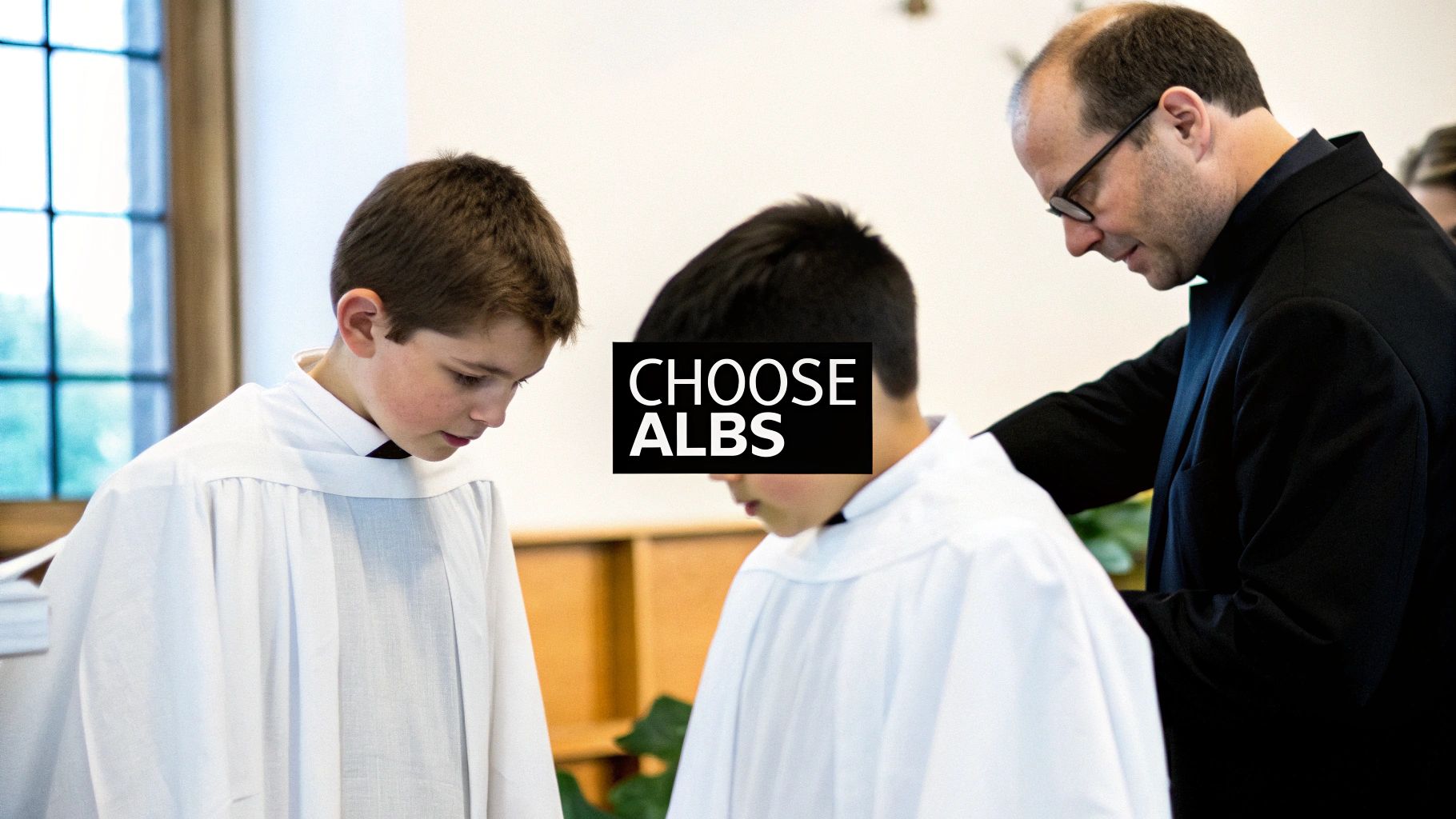
Choosing the right vestments is a decision that truly enhances the solemnity of your services. It helps participants, young and old, connect more deeply with their important role in the liturgy. Let's break down all the key factors so you can feel confident in your decision.
In the Catholic Church, altar servers have been a core part of liturgical celebrations for centuries, and the alb has long been the traditional garment symbolizing purity and baptismal grace. Historical records show the role goes all the way back to the 4th century, when acolytes—the forerunners to today's servers—assisted priests during Mass. The tradition is still going strong; the Vatican estimates there are over 5 million altar servers worldwide, with participation often jumping 40-50% during major feasts like Easter and Christmas.
The Purpose of the Alb
At its heart, the alb is a great equalizer. When servers put on their albs, they set aside their everyday clothes and step into a shared identity of service. This creates a visually unified presence at the altar, which helps minimize distractions and keeps the congregation’s focus where it belongs: on the worship.
The true value of the alb is its symbolism. It's a clean, white garment that reminds both the server and the congregation of baptismal innocence, creating a prayerful and reverent atmosphere for everyone involved.
For many young people, wearing the alb is a powerful, physical link to their faith and their specific duties during the service. While the alb is a foundational garment, some traditions pair it with other vestments. For a deeper look at related liturgical attire, you might be interested in our guide on the altar server cassock.
We'll cover everything you need to know in this guide, including:
- Different styles and their liturgical traditions
- How to choose the best fabrics for comfort and durability
- The right way to measure for a dignified, proper fit
- Practical tips for care, maintenance, and ordering
Navigating Altar Server Alb Styles and Traditions
When it comes to altar servers albs, one size—or style—definitely does not fit all. Each design has its own unique feel and function, and often reflects the specific traditions of a parish. Think of it like choosing a team uniform: it needs to be dignified and consistent, but also practical for the servers who wear it.
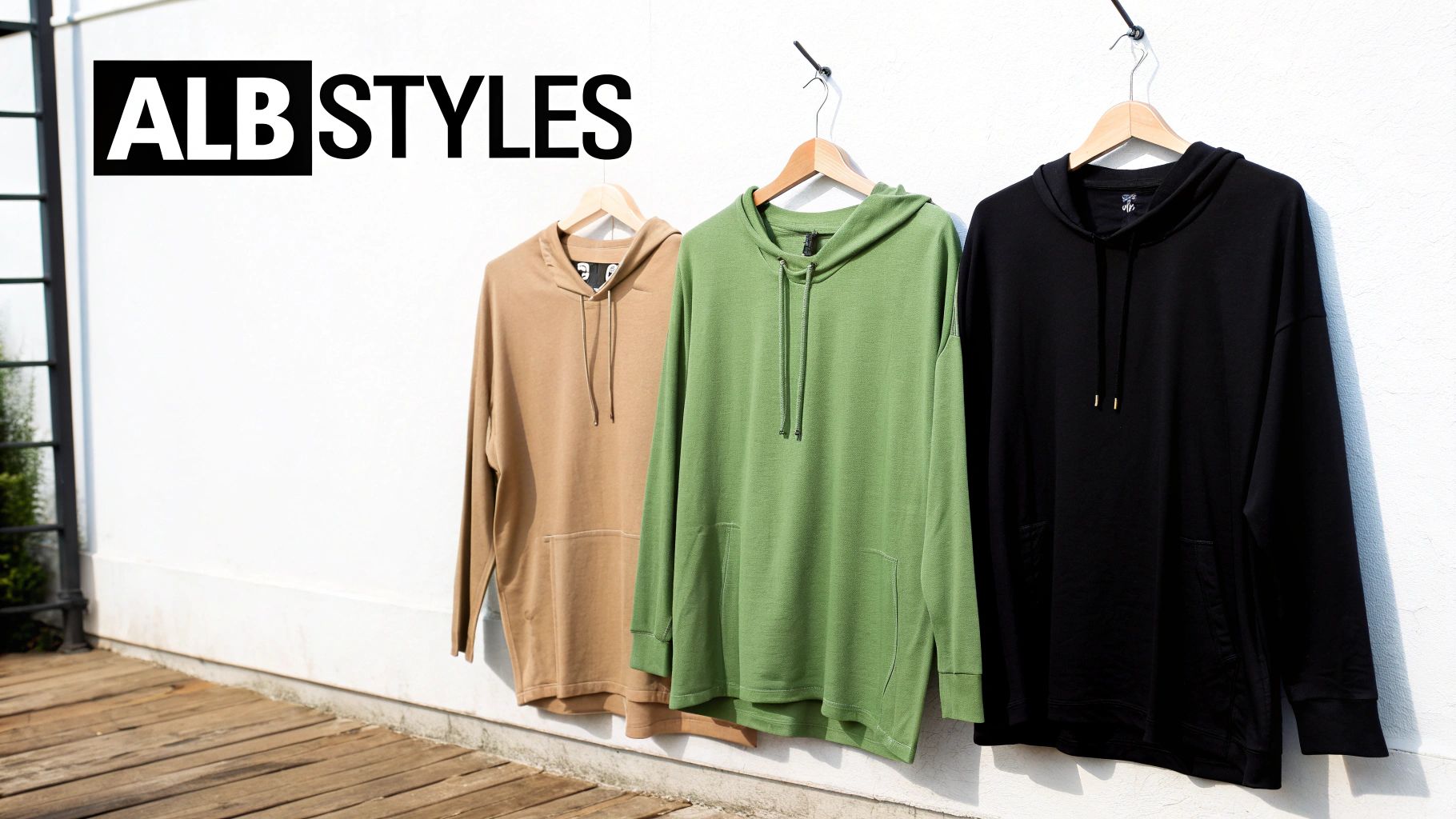
The designs generally fall into a few common categories. Getting to know these differences is the best first step you can take toward outfitting your ministry well.
Common Alb Styles
The most traditional choice you'll find is the monastic alb, easily recognized by its full, flowing cut and hood. This style has deep historical roots and lends a very formal, classic appearance to the servers. For its solemnity, many parishes prefer the timeless look of a hooded alb.
On the other hand, a lot of modern parishes are moving toward simpler designs that are easier for younger servers to put on and manage. These often include:
- Square-Neck Albs: These give a clean, contemporary look. The neckline lies flat and works well on its own, without needing an amice. We offer a popular square neck alb for altar servers perfect for modern parishes.
- Round-Neck Albs: Sometimes called a "cassock alb," this style has a more fitted look around the neck and is incredibly popular for its straightforward simplicity.
The style you choose sends a subtle message about your parish’s liturgical expression. A traditional hooded alb connects servers to centuries of church history, while a modern square-neck design can emphasize simplicity and accessibility.
Functional Features to Consider
Beyond the neckline, it's the small details that really make a difference in how an alb functions. Pleats, for instance, aren't just for show. They add fullness to the garment, which allows for much better freedom of movement while still ensuring the alb drapes gracefully. You can explore a variety of pleated albs that do a great job of blending tradition with practicality.
Closures are another key detail to think about. Zippers, usually on the shoulder or down the front, are incredibly convenient and easy for kids to handle by themselves. Buttons or hook-and-eye closures give a more traditional finish but might be a bit tricky for smaller hands.
Finally, don't forget the cincture—that's the rope belt worn at the waist to help the alb fit properly. Most albs are paired with a simple white or natural rope cincture. However, some parishes get creative and use colored cinctures to match the liturgical season, like violet for Advent or red for Pentecost. It's a small touch that adds a wonderful layer of meaning and visual cohesion to the liturgy. To get a better sense of how these vestments fit into the bigger picture, you can learn more about the distinctions between a cassock and an alb.
2. Selecting The Best Fabric For Comfort And Durability
The material of an alb is one of the most important decisions you’ll make. It directly impacts everything from how the garment looks and feels to how long it will last and how easy it is to care for. Think of it like choosing fabric for any uniform—you're balancing appearance, comfort, and sheer practicality.
Getting this right means your servers will be comfortable and focused during services, and your investment will hold up to the rigors of frequent use.
Common Fabric Choices
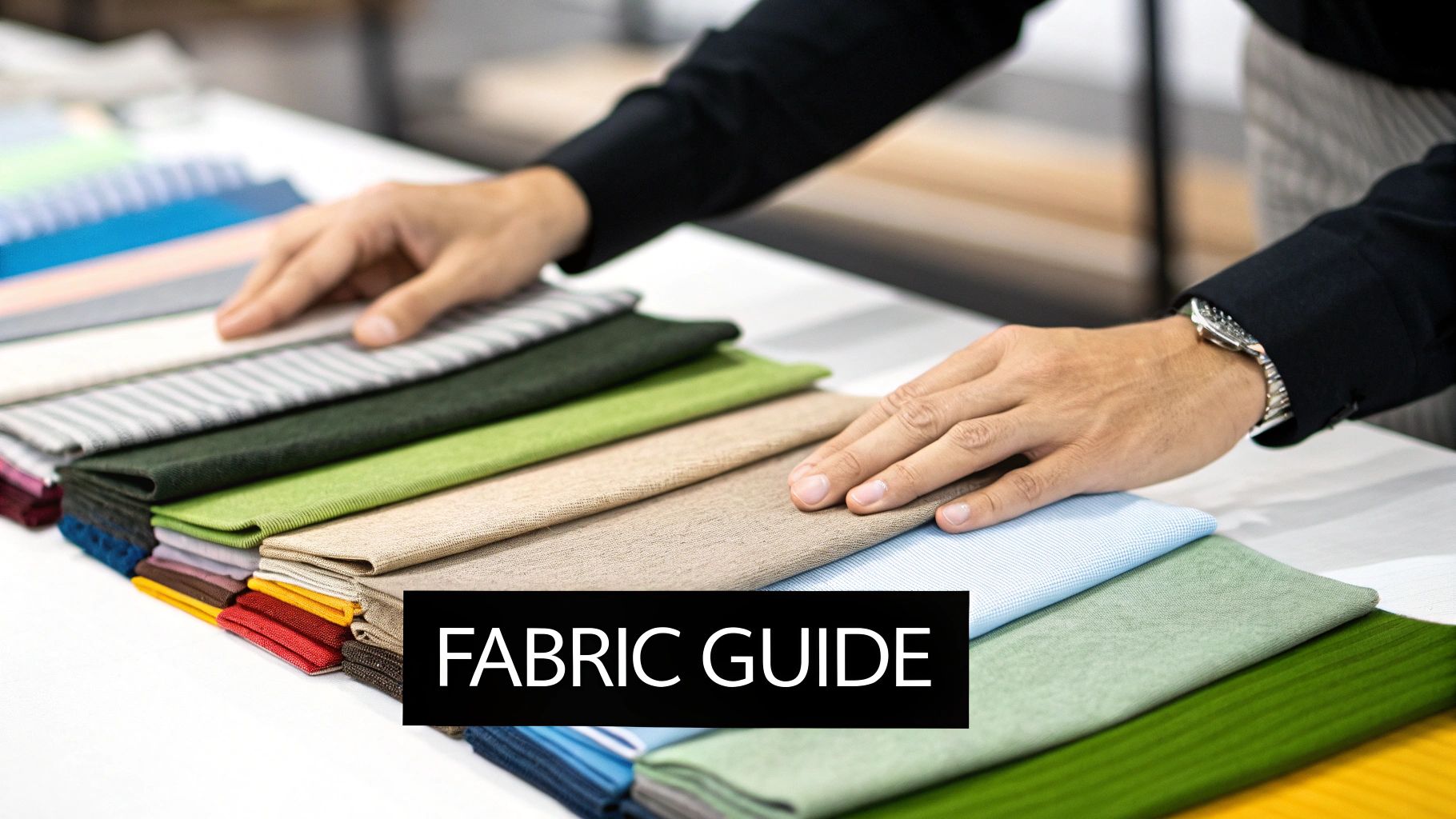
For years, pure linen was the gold standard. It has a beautiful, dignified drape and is exceptionally breathable. The downside? Linen wrinkles if you just look at it wrong and demands careful laundering, which just isn't practical for most busy parishes trying to outfit a team of young servers.
That's why polyester-cotton blends have become the go-to for most churches today. They really do offer the best of both worlds.
The most common and highly recommended blend you'll find is 65% polyester and 35% cotton. This ratio hits the sweet spot: the polyester provides structure and wrinkle resistance, while the cotton keeps it soft and breathable. It's a true workhorse.
Best of all, this blend is almost always machine washable, which is a massive time-saver for volunteers and staff tasked with laundry duty. Our standard albs are made from this durable, easy-care blend.
How Fabric Affects The Final Look And Feel
The specific material is just one part of the equation; the fabric's weight and finish are just as critical. A lighter-weight fabric is a lifesaver in warmer climates or in older, non-air-conditioned sanctuaries. Keeping your servers comfortable is key, so looking for fabrics that keep you cool can make a huge difference in their ability to focus.
The finish affects the drape, which is just a term for how the fabric hangs and moves. A smoother, slightly heavier fabric will have a more formal, solemn drape. A lighter, softer weave gives a more relaxed and modern feel. For instance, a poly-blend with a matte finish is often a great choice because it won't catch the glare from sanctuary lighting and maintains a crisp look through a long Mass.
To make things easier, here's a quick comparison of the most common materials you'll encounter when shopping for altar server albs.
Altar Server Alb Fabric Comparison
This table breaks down the most common fabric choices, giving you a clear picture of their strengths, weaknesses, and where they shine.
| Fabric Type | Pros | Cons | Best For |
|---|---|---|---|
| 100% Linen | Highly breathable, traditional, elegant drape | Wrinkles easily, requires special care (ironing), expensive | Parishes with a dedicated laundry team seeking a very traditional, formal look. |
| 65/35 Poly-Cotton Blend | Wrinkle-resistant, durable, easy care, affordable | Less breathable than pure linen or cotton | The vast majority of parishes; a versatile, practical choice for regular use. |
| 100% Polyester | Extremely durable, stain-resistant, holds color well | Can be less breathable, may feel synthetic or stiff | High-traffic parishes needing maximum durability and minimal maintenance. |
| 100% Cotton | Very soft and breathable, comfortable on skin | Prone to wrinkling and shrinking, can stain easily | Churches in very hot climates where breathability is the absolute top priority. |
Ultimately, choosing the right fabric is foundational. It ensures the altar server albs you purchase are not just reverent in appearance but also practical and comfortable for the young people who wear them.
How to Measure for a Perfect and Dignified Fit
A well-fitting alb is more than just a detail—it’s essential for creating a uniform, dignified atmosphere during the liturgy. If a garment is too long, it's a tripping hazard waiting to happen. If it's too short, it just looks messy. A poorly fitted alb can distract the server and the congregation, subtly chipping away at the reverence of the service.
Taking a few moments to get accurate measurements is a simple step that pays off in a big way. It’s how you avoid baggy sleeves and uneven hemlines, ensuring your servers present a cohesive, respectful presence at the altar.

Key Measurements for Altar Server Albs
To get that perfect fit, you only need to focus on three main measurements. The key is to have your servers stand up straight and relaxed with their arms at their sides.
- Height: This one is the most important. Have the server stand tall against a wall (shoes off!) and measure from the floor to the very top of their head. This single measurement determines the alb's overall length.
- Chest: Wrap your tape measure around the fullest part of the server's chest, right under the armpits. You want the tape to be snug, but not so tight that it's constricting. This ensures they have plenty of room to move comfortably.
- Sleeve Length: Have the server bend their elbow just a little. Start the tape at the center of the back of their neck, run it across the shoulder, and measure all the way down to the wrist bone. This is the secret to sleeves that aren't too short or dangling over their hands.
Sizing Up for Growing Servers
Let's be honest: one of the biggest challenges is outfitting a group of young people who are constantly growing. It's tempting to buy a few sizes up to get more mileage out of the albs, but that often just results in a sloppy, ill-fitting look for the first year or two.
Pro Tip: A good rule of thumb is to order an alb that is one to two inches longer than what the server’s current height calls for. This gives them a little room for a growth spurt without making the garment look comically oversized right away.
This is where a good sizing chart becomes your best friend. Instead of guessing, you can use our detailed size and color charts page to match your measurements directly to the correct alb size.
It's a common issue for a reason. The global market for altar server albs is massive—European factories alone produce over 500,000 of them every year. Here in the U.S., retailers sell more than 100,000 albs annually, largely because thousands of parishes are in a constant cycle of replacing them every two or three years as their servers grow. This just goes to show how critical it is to get your sizing right from the start.
Caring for Your Albs to Ensure Their Longevity
Let's be honest—keeping a whole fleet of albs, especially white ones worn by kids, looking pristine for every service is a real challenge. But with a few practical habits, you can dramatically extend their life and protect your parish's investment. Think of it less as a chore and more as stewardship of these important vestments.
Most modern albs are made from durable, easy-care fabrics like polyester blends, which is a huge help. But "machine washable" doesn't mean you can just toss them in with everything else. A little care goes a long way.
Washing and Stain Removal
For regular cleaning, always stick to a gentle cycle using cold or lukewarm water. You might be tempted to use hot water to get them extra white, but this can actually cause some synthetic fabrics to yellow over time. It's also a good idea to wash them in their own load to avoid any accidental color bleeding from other clothes.
The unholy trinity of alb stains? Candle wax, dirt on the hems, and sacramental wine. The key to dealing with all of them is to act fast.
Here are a few tried-and-true methods for those common culprits:
- Candle Wax: This one is easier than it looks. Just place the waxy spot between two paper towels and press with a warm (not hot!) iron. The wax will melt right into the paper.
- Dirt and Grime: Those gray, scuffed-up hems are inevitable. Before you wash the alb, pre-treat the dirty area with a good stain remover or even just rub in a little liquid laundry detergent.
- Wine Stains: The cardinal rule is to blot, never rub! Rubbing just sets the stain deeper. Gently blot the spill with a clean cloth and treat it with a wine stain remover if you have one. If not, a quick soak in cold water can work wonders.
Ironing and Proper Storage
The secret to wrinkle-free albs without a fight is to iron them while they're still slightly damp. Use a medium heat setting, and you’ll find the wrinkles smooth out much more easily. If you have pleated albs, be sure to follow the existing creases to keep them looking sharp and tailored.
Once they're clean and pressed, how you store them is just as crucial. Get them out of those plastic dry-cleaner bags immediately—they trap moisture and can cause yellowing. The best way to store them is on sturdy hangers in a cool, dry closet where they have room to breathe.
If you're putting them away for a longer period, like after Easter season, breathable garment bags are your best friend. They'll keep the dust off without trapping humidity. A little consistent care ensures your altar server albs will remain a dignified part of your liturgy for years to come.
Getting Your Order Just Right with ChoirBuy
Outfitting a whole team of altar servers doesn't have to be a headache. With a little planning, you can get everyone what they need—on time and on budget—and get back to your ministry. It’s all about having a straightforward process.
Choosing the right albs is more than just picking a style. You need a supplier who gets what a church actually needs: simple ordering, clear pricing, and someone you can count on from the moment you start browsing to the day your order arrives.
A Smart Plan for a Smooth Purchase
Want to make your budget go further? The easiest way is to order for your whole server corps at once. Buying in bulk almost always unlocks better pricing than getting albs one at a time. Not only does it save money, but it also guarantees every server has a perfectly matching vestment, creating a beautiful, unified look.
Timing is everything, especially with the big church seasons on the horizon. Predictably, the rush for albs hits its peak right before Christmas and Easter.
To stay ahead of the curve and avoid any frantic, last-minute scrambles, we always suggest placing your order at least 6-8 weeks before a major holiday. That gives everyone plenty of breathing room for production, any custom touches, and shipping.
A little forethought here goes a long way. It means your servers will be properly vested and ready for the most important liturgies of the year, stress-free.
An Ordering Process That Works for You
We've done our best to make this as simple as possible. You can easily browse our styles, pick out sizes, and place your order online in just a few minutes. But if you have questions or just want to talk it through, our team is here to help. For those bigger, more detailed orders, you might find it easier to use our downloadable order forms to keep all the details straight.
We're confident in the quality of our vestments, and we back that up with a money-back guarantee. We want you to feel completely at ease with your purchase. Our job is to make outfitting your altar servers a simple, positive experience so you can focus on the ministry itself.
Your Top Questions About Altar Server Albs, Answered
Outfitting your servers is a big responsibility, and it's natural to have questions, especially if you're new to the role. Let's walk through some of the most common things people ask when choosing albs for their altar servers.
Alb vs. Cassock and Surplice: What's the Difference?
This is probably the most frequent question we get! The main difference is in their structure and the tradition behind them.
Think of an alb as a single, simple white robe that covers the server from neck to ankle. It’s meant to symbolize the white garment of baptism. A cassock and surplice, on the other hand, is a two-piece set. The cassock is the long, often black or red robe, and the surplice is the shorter, white tunic worn over it.
Ultimately, the choice comes down to your parish’s tradition. Many find the alb to be a more straightforward and modern look for servers, while others prefer the classic two-piece style.
How Often Will I Need to Replace Our Albs?
With good care, a quality alb made from a sturdy fabric should serve your parish well for 3 to 5 years. A good rule of thumb is to pull out your entire inventory once a year to check for any serious stains, frayed hems, or busted zippers.
But let's be realistic—the biggest reason you'll be buying new albs isn't because they've worn out. It's because your servers grow! Kids shoot up so fast, so you'll probably find yourself ordering a few larger sizes every year or two just to keep up and make sure everyone has a proper-fitting vestment.
Can We Get Our Church Logo Embroidered on the Albs?
Absolutely. Adding a custom touch like a parish emblem is a wonderful way to give your servers a unified and distinguished look. Most suppliers, including us here at ChoirBuy, offer embroidery services. You can add a simple cross, your church's logo, or another symbol that’s meaningful to your community.
Just a friendly heads-up: if you're going the custom route, make sure to plan for extra production time. You'll also want to provide a high-resolution version of your logo to guarantee the embroidery looks sharp and professional.
What’s the Best Way to Keep Track of All Our Albs?
An organized closet is a happy closet! The easiest system we've seen is a simple spreadsheet. List every alb you own by size and give each one a unique number.
Take a permanent fabric marker and write that number on the inside tag of the alb. When you assign an alb to a server, just log it on your sheet. This makes it a breeze to track who has what and makes returns so much simpler. We recommend doing a full inventory check before major holidays like Christmas and Easter—it's the perfect time to spot any damage and figure out what new sizes you’ll need for the busy season ahead.
At ChoirBuy, we have a huge selection of high-quality, durable, and affordable altar server albs that are perfect for any parish. Explore our collection and find the ideal vestments to support your ministry today.