

Choosing the right women's clergy dress isn't just about picking out an outfit. It's about finding a garment that helps you embody your sacred role with dignity and authority, balancing deep-rooted liturgical tradition with your own personal comfort. The right dress becomes an extension of your ministry, allowing you to lead with confidence.
Finding the Right Clergy Dress for Your Calling
The options for women's clergy dresses have thankfully come a long way. Gone are the days when the only choice was to wear ill-fitting vestments designed for men. This shift mirrors a much larger, and wonderful, trend within faith communities worldwide.
As more women have answered the call to ordained ministry over the past 50 years, the demand for specialized, well-fitting attire has grown right alongside them. To put it in perspective, women in the United States went from representing under 3% of Protestant clergy in 1977 to about 20.7% by 2016. You can discover more insights about this significant shift and how it has shaped everything from theology to clerical apparel.
This guide is here to help you navigate the important choices you’ll make. We’ll cover everything from liturgical rules to the practical realities of a busy day in ministry, making sure your final decision on the best clergy dress for women feels both meaningful and perfectly functional.
Navigating Your Attire Choices
When you start looking for a clergy dress, the first question to ask yourself is simple: What will I be doing while wearing it? Is it for a formal Sunday service, a special sermon series, or leading the choir? Each role calls for a different type of garment, and each one carries its own unique symbolism and practical features.
Think of your clergy dress not just as a uniform, but as a tool for ministry. A well-chosen garment should free you to focus on your calling, not on what you are wearing. It should enhance your presence without being a distraction, providing comfort and confidence from the pulpit to the parish hall.
This decision tree offers a straightforward visual to help you sort through which style works best for different parts of your ministry.
To make things even clearer, here’s a quick breakdown of the main styles and where they fit in.
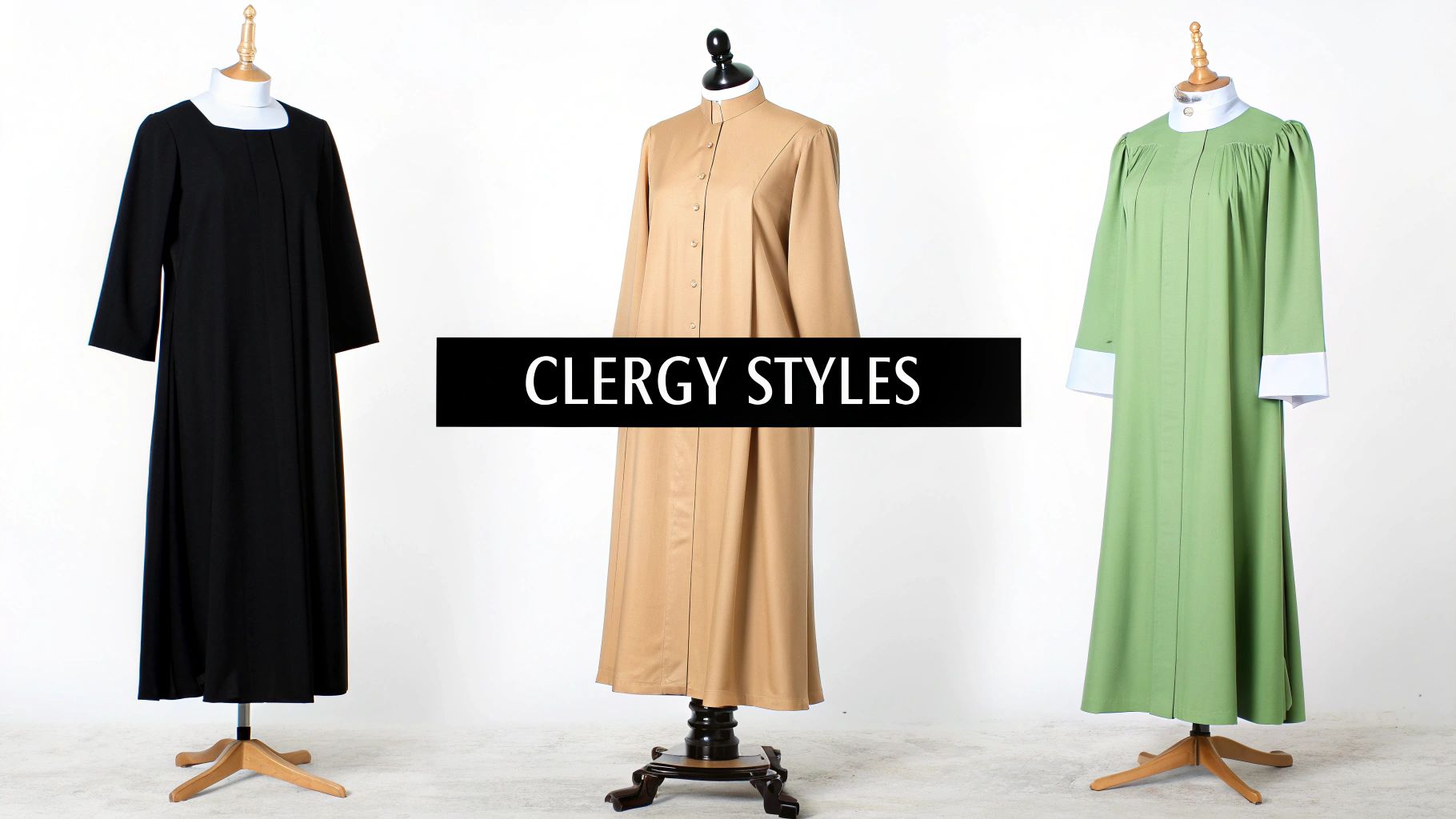
Quick Guide to Women's Clergy Dress Styles
| Dress Style | Primary Use | Key Feature |
|---|---|---|
| Cassock Dress | Formal services, sacraments, processions | A structured, full-length garment often worn under other vestments. |
| Pulpit Robe | Preaching, leading worship, special sermons | A flowing, open-front gown worn over other clothing for a dignified look. |
| Choir Gown | Choir performances, congregational singing | A uniform garment designed for group appearance and comfortable singing. |
As the chart and decision tree show, a more structured Cassock Dress is often the go-to for formal services. Preaching is made easier with a flowing Pulpit Robe, while choir participation requires a specific Choir Gown.
In the end, the goal is to find a piece that feels right for you—one that aligns with your role, your church's traditions, and your own personal expression of faith. A thoughtful choice ensures your attire is a true reflection of your sacred commitment.
A Guide to Different Styles of Clergy Attire
Choosing the right clergy dress isn't just about how it looks; it's about finding a garment that feels right for the moment and speaks to the spiritual context. Each style has its own story, its own symbolism, and a very practical purpose. When you understand these differences, you can choose attire that truly fits your ministry, your denomination, and the occasion at hand.
Think of it like a lawyer who wears a formal suit in the courtroom but something less structured for a client meeting. Clergy members do the same, selecting their attire to match the function and solemnity of their role. Let's walk through the most common styles in women's clergy dresses to see how they differ.
The Clergy Cassock: A Symbol of Tradition
The clergy cassock is a classic, full-length garment that often serves as the base layer for other liturgical vestments. It’s the foundational uniform, really. Its structured, close-fitting design brings a sense of discipline, reverence, and deep-rooted tradition.
You’ll see cassocks worn by clergy in Roman Catholic, Anglican, and some Methodist and Lutheran churches, especially during formal services, sacraments, and processions. The fit is tailored for a clean, dignified silhouette, usually with a distinctive row of buttons running down the front. While classic black is most common, other colors can signify rank or reflect the liturgical season.
- Primary Use: Formal worship, sacraments, and official church duties.
- Key Features: Ankle-length, fitted silhouette, and front-button closure.
- Symbolism: Represents humility, service to God, and a connection to the church's long history.
Because the cassock is so specific and formal, it's worth getting to know its nuances. If you want to dive deeper, you can find a detailed overview of different types of cassocks for sale and learn more about their history and proper use.
The Pulpit Robe: An Emblem of Proclamation
If the cassock is the formal uniform, the pulpit robe (sometimes called a Geneva gown) is more like a ceremonial academic gown. It’s a looser, flowing garment worn over other clothes—whether that's a suit, a preaching dress, or even a cassock. The focus here isn't on a strict, uniform fit, but on adding a layer of dignity and authority to the act of preaching.
The open front and wide, bell-shaped sleeves create a commanding presence in the pulpit without feeling restrictive, allowing for natural, expressive movement. This style is a favorite in Protestant denominations with a powerful preaching tradition, including many Baptist, Presbyterian, and non-denominational churches.
A pulpit robe is designed to draw attention not to the person wearing it, but to the sacredness of their role as a proclaimer of the Word. The flowing fabric helps to obscure personal clothing, creating a unified focus on the message being delivered from the pulpit.
The Preaching Dress and Choir Attire
Beyond the two most traditional robes, a couple of other styles serve very important functions within the church.
- The Preaching Dress: Think of this as a versatile, all-in-one solution. It blends the professionalism of a dress with the modesty required for ministry. Unlike a cassock, which is usually a base layer, a preaching dress is a complete outfit on its own. It's the perfect choice for clergywomen who need something practical yet dignified for daily duties, pastoral visits, or less formal services where a full robe might feel like too much. Many are designed with a convenient attached tab for a clerical collar.
- Choir Attire: For choir robes and gowns, the goal is uniformity. These garments are all about creating a cohesive visual identity for the group, which helps minimize distractions and keeps the congregation's focus where it belongs: on the worship music. Comfort and freedom of movement are absolutely key here, ensuring singers can breathe deeply and perform their best without feeling constrained. Styles can be anything from simple, elegant gowns to more elaborate designs featuring contrasting stoles or custom embroidery.
How to Choose the Right Fabric for Comfort and Presence
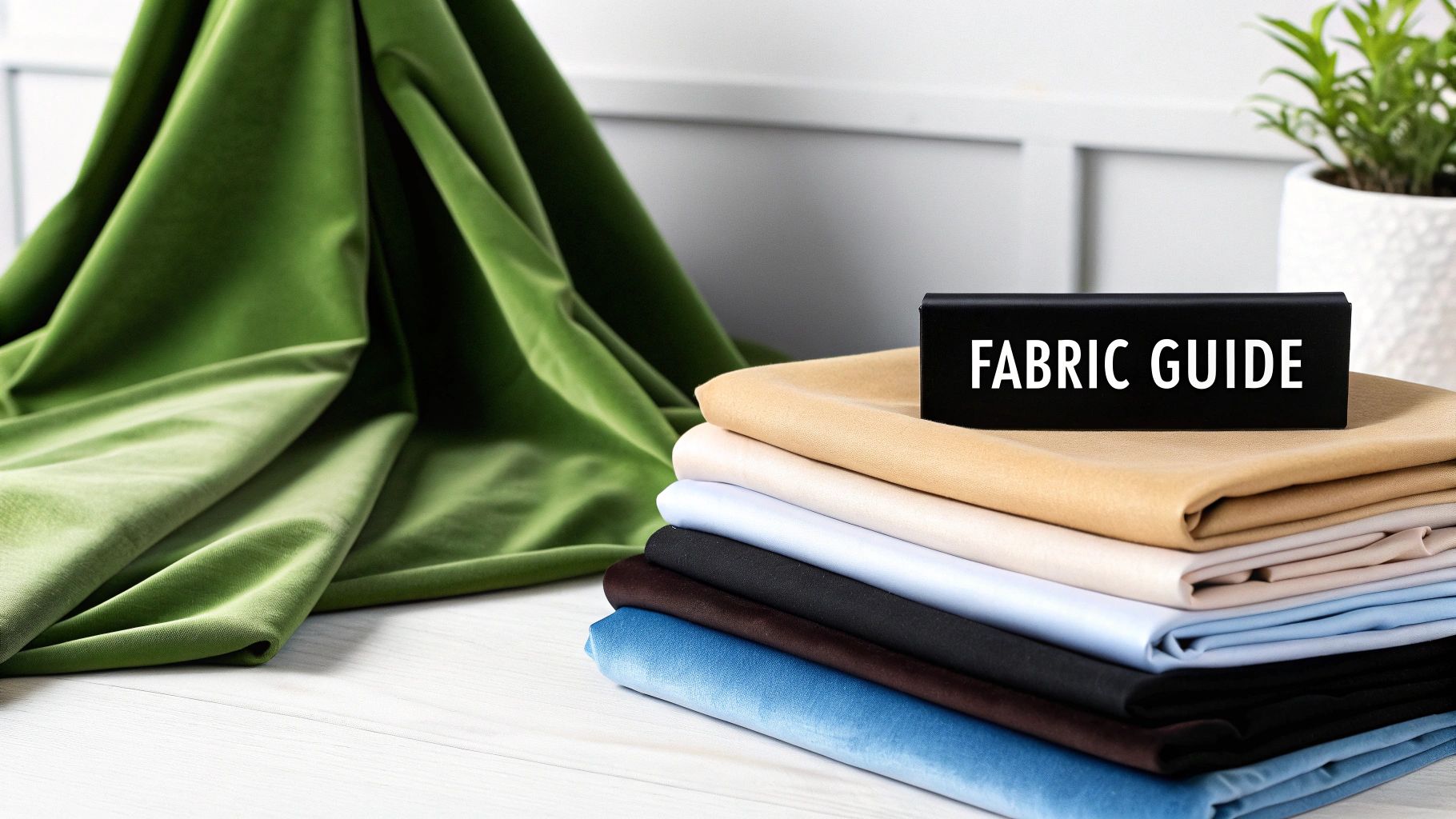
Beyond the cut and color of a clergy dress, the fabric is where comfort and presence truly begin. The way a garment hangs, how it feels during a long service, and whether it holds its shape is just as critical as its appearance. Choosing the right material isn't just a detail—it's foundational to creating a garment that supports your ministry.
Think of it like dressing for the weather. A heavy wool coat doesn’t work in July, and the same common sense applies here. The fabric's weight and breathability will make all the difference, whether you’re leading worship in an air-conditioned modern sanctuary or an older, drafty chapel.
Everyday Reliability vs. Occasional Elegance
For the week-in, week-out demands of ministry, matte polyester is the undisputed workhorse. It’s designed for real life, offering fantastic wrinkle resistance and holding its color beautifully wash after wash. For anyone who needs to look polished with minimal fuss, it's a game-changer. A well-made polyester garment can be pulled from a suitcase and be ready to wear—a true blessing for a packed schedule.
When it comes to high holy days, ordinations, or major liturgical celebrations, you might want a fabric with a more distinguished feel.
- Crepe: This material is all about its graceful, fluid drape. Its subtly textured surface lends a touch of quiet elegance without feeling overly flashy.
- Velvet: Often reserved for decorative trim or stoles, velvet brings a rich, luxurious feel that speaks to solemnity and significance. It's perfect for conveying the importance of services like Christmas or Easter.
These special-occasion fabrics often require more delicate handling, like dry cleaning, but their visual impact is undeniable. It's about striking the right balance. Many clergy I know keep both types of garments in their wardrobe: the reliable daily drivers and the elegant pieces for cornerstone moments.
The construction of a clergy dress is the hidden foundation of its quality. Details you can't always see, like reinforced seams and full lining, are what separate a garment that lasts one year from one that serves your ministry faithfully for a decade.
Looking Beyond the Fabric Surface
The real marker of a quality clergy dress often lies in the details you don't immediately see. These construction features are what give a garment its longevity and polished look, and they’re why a slightly higher price point can offer much greater value over time.
- Reinforced Seams: Just like a strong foundation holds up a house, reinforced stitching at stress points like the shoulders and armholes is crucial. It prevents pulling and fraying, ensuring the dress holds up to constant movement.
- Concealed Zippers: A well-set concealed zipper creates a clean, uninterrupted line down the back or side of the dress. It’s a small touch that provides a far more professional finish than an exposed zipper ever could.
- Full Lining: A full lining is essential. It helps the dress hang properly without clinging, adds a layer of opacity for complete peace of mind, and simply feels more comfortable against the skin.
Knowing what to look for in both fabric and construction helps you make an investment, not just a purchase. While these principles are key for clergy dresses, you can find more great tips in our guide to the best choir robes, as many of the same quality considerations apply. A garment built with care will not only look better but will serve you reliably for years to come.
The Language of Color and the Importance of Modesty
When you step into a leadership role in ministry, what you wear speaks volumes before you even say a word. The color and cut of a clergy dress aren't just fashion choices; they're steeped in tradition and symbolism, communicating the rhythm of the church year and a sense of solemnity. Choosing the right garment means understanding this visual language, ensuring your attire supports and enhances your spiritual leadership.
Think of it like the changing of the seasons in nature. Just as the world outside shifts from the green of spring to the gold of autumn, the church uses a vibrant palette to guide the congregation through its own spiritual journey.
Following the Liturgical Calendar
For many denominations, color is a core part of the worship experience. Each hue carries a deep meaning, setting the spiritual tone for services and marking specific times of the year.
- White and Gold: These are the colors of pure joy, triumph, and celebration. You'll see them shining during the high points of the church year, like Easter and Christmas, symbolizing resurrection and new beginnings.
- Purple or Violet: Signifying preparation, reflection, and repentance, purple is the color of Advent and Lent. It’s a call to look inward before the great celebrations arrive.
- Red: A powerful and evocative color, red represents the fire of the Holy Spirit, the sacrifice of martyrs, and the blood of Christ. It’s worn on Pentecost, for ordinations, and on days honoring those who gave their lives for their faith.
- Green: Green is the color of life, hope, and spiritual growth. It’s the color of "Ordinary Time"—the long stretches between major liturgical seasons—reflecting the ongoing, day-to-day mission of the church.
The use of color in worship is a shared visual prayer. When the clergy and the sanctuary are adorned in the color of the season, it creates a unified, immersive experience that wordlessly communicates the focus of our collective faith journey.
The principles of liturgical symbolism extend beyond just clergy dresses. To dive deeper, you can explore the rich traditions behind choir robe color meaning. And of course, outside of specific seasons, classic, foundational colors like black, navy, and gray always convey a sense of reverence and authority.
Finding the Right Balance: Modesty in Design
Beyond color, modesty is a cornerstone of clergy attire. This isn't about subscribing to outdated, rigid rules. It’s about ensuring your garment serves your role, keeping the focus on worship and the message, not on what you’re wearing. The goal is simple: eliminate distraction for both you and your congregation.
A thoughtfully designed clergy dress achieves this balance with a few key features:
- Necklines: Most feature a higher, modest neckline. Many are specifically designed to neatly accommodate a clerical collar, creating a polished and professional look.
- Sleeve Length: Full-length or three-quarter sleeves are the standard. They provide traditional coverage that’s also practical for leading services in different climates and settings.
- Hemlines: You'll typically find ankle-length or mid-calf hems. This ensures you can move, stand, and sit with complete confidence and ease, without a second thought.
Ultimately, the right clergy dress is one that respects tradition while offering a comfortable, flattering fit. It becomes a tool of your ministry—a garment that empowers you to lead with grace, knowing your appearance reflects the sanctity of your calling.
Getting the Right Fit and Making It Your Own
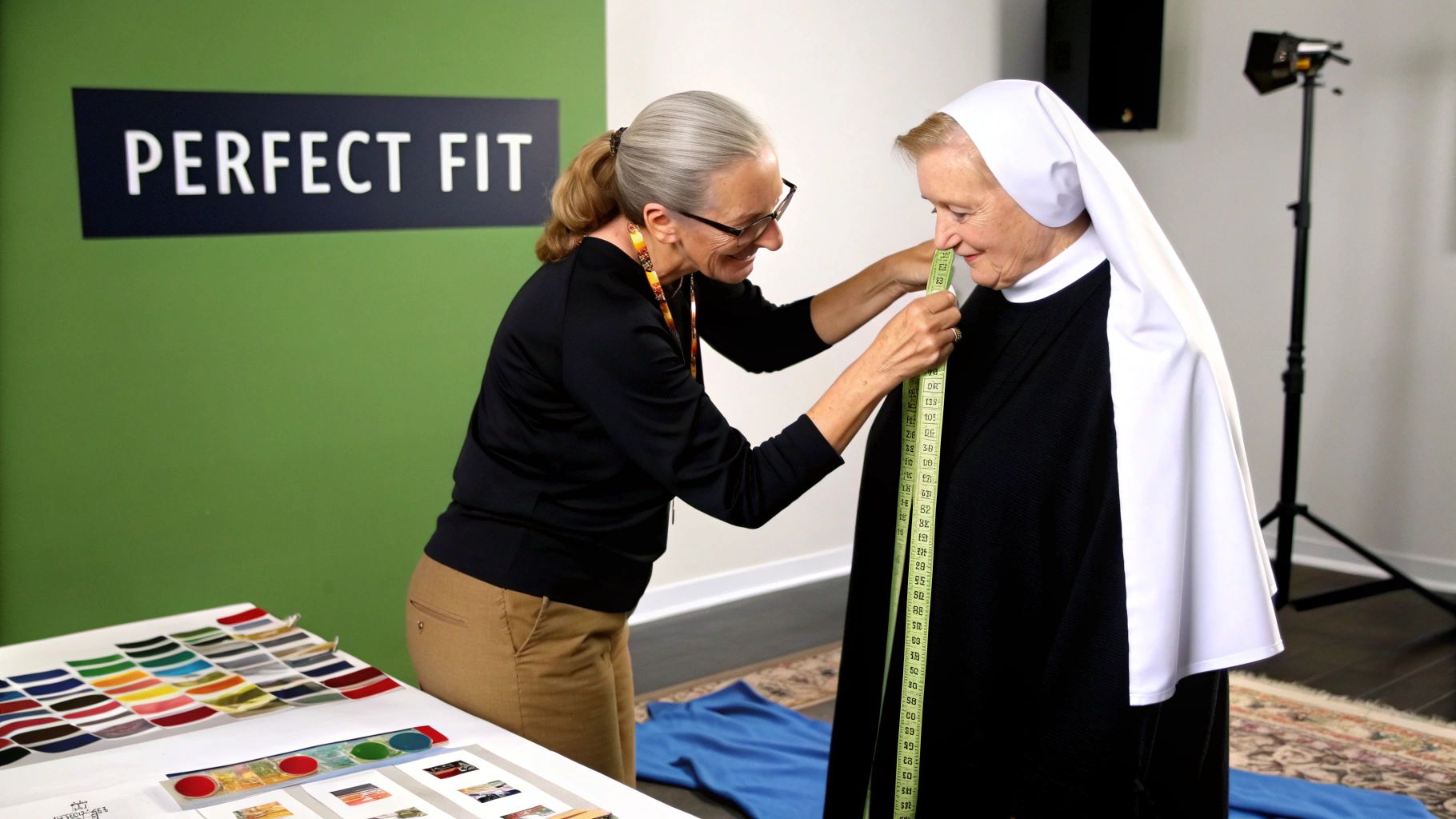
A clergy dress that doesn't fit well is more than just a minor annoyance—it’s a distraction. It pulls at the shoulders, bunches at the waist, or hangs too long, taking focus away from your message and your ministry. The first step to finding a garment that feels like a second skin is getting the fit just right, and that all starts with accurate measurements.
It’s no surprise that the demand for better-fitting women's clergy dresses is on the rise. After all, women in ministry are part of a much larger trend. The global market for women's dresses and skirts hit roughly USD 154.91 billion back in 2021 and is expected to climb to USD 218.50 billion by 2028. You can read the full research about this market growth on Grand View Research for a closer look at the numbers. This massive growth highlights what women everywhere, including those in the clergy, already know: inclusive sizing and personalized choices matter.
Taking Accurate Measurements
Nailing your measurements is the foundation of a garment that looks and feels like it was made just for you. You don't need to be a professional tailor to do this—just a soft measuring tape and a few minutes. If you're looking for a truly exceptional fit that will last a lifetime, it's worth exploring the world of bespoke tailoring for women, where every detail is crafted to your exact form.
To get started at home, grab a friend to help if you can, and focus on these key measurements. Getting them right will make all the difference.
Essential Measurements for Your Clergy Dress
| Measurement | How to Measure | Why It's Important |
|---|---|---|
| Bust | With your bra on, measure around the fullest part of your chest. Keep the tape parallel to the floor. | This ensures the dress isn't too tight or restrictive across the chest, allowing for comfortable movement and breathing. |
| Waist | Find the narrowest part of your torso, usually just above your belly button. Measure around this natural waistline. | A proper waist measurement is crucial for a flattering shape, especially for fitted styles like cassocks. |
| Sleeve Length | Bend your arm slightly at the elbow. Measure from the bone at the back of your neck, across your shoulder, and down to your wrist bone. | This guarantees your sleeves end exactly where they should—not halfway up your forearm or dangling past your hands. |
| Overall Height | Stand straight with your back against a wall (no shoes!). Have someone measure from the floor to the top of your head. | This is the key to getting the hemline perfect, so your dress hangs with the intended grace and elegance. |
Taking a few extra moments to get these right will pay off immensely when your robe arrives.
Our Commitment to Inclusive Sizing
We believe every woman called to serve deserves to feel confident and comfortable in her vestments. That’s why we’re committed to offering a wide range of sizes. Our collections include standard and plus-size clergy dress options, so you never have to settle for "good enough." A great fit isn't a luxury; it's a necessity.
Turning a Dress into a True Statement of Faith
Once the fit is perfect, the real fun begins. Customization is how you take a well-made garment and infuse it with your unique identity and the spirit of your congregation. It's about transforming fabric and thread into a personal statement of faith.
Customization is where a garment gains its soul. An embroidered symbol or a specific color of piping can connect your attire directly to the heritage of your congregation or the core message of your ministry, turning clothing into a visual sermon.
Here are a few of the most popular and meaningful ways to personalize your clergy dress:
- Embroidered Symbols: A beautifully stitched cross, dove, or other significant icon adds a powerful visual touch. Common placements include the chest, cuffs, or a matching stole.
- Contrasting Piping: A clean line of color along the collar, placket, or cuffs can create a sharp, distinguished look. It’s a wonderful way to incorporate liturgical colors or your church’s specific branding.
- Complementary Stoles: A custom stole is the ultimate accessory. You can design one for every season, with unique fabrics, colors, and embroidered details that perfectly complement your dress.
These details aren't just decorative flourishes; they are echoes of your calling. For more ideas on how to express your ministry's identity through apparel, check out our guide on creating custom choir robes with a logo. Many of the same principles apply
Getting Your Order Right and Keeping It Looking Great
You've found the perfect clergy dress—now what? Getting your order placed correctly and knowing how to care for your new garment are just as important as the initial selection. Think of it as an investment in your ministry. A little planning up front ensures a smooth process, while the right care routine will keep your attire looking its best for years.
Let’s walk through some practical tips, from timing your purchase around busy church seasons to simple care instructions that make a world of difference.
Smart Ordering: Timing is Everything
The secret to a stress-free purchase is planning ahead, especially if you need custom details or are outfitting a whole group. Lead times are real, and giving yourself a cushion is always a good idea.
The big liturgical seasons like Easter and Christmas are our busiest times of the year. To make sure your new clergy dress or choir robes arrive with time to spare, we strongly suggest placing your order at least six to eight weeks in advance. That buffer is a lifesaver, covering any customizations, potential shipping hiccups, and final fittings.
Are you a church leader or choir director outfitting your entire team? Planning a group order has some major perks.
- Bulk Discounts: Buying several garments at once usually unlocks significant savings. It’s the most affordable way to create that polished, unified look for your ministry.
- Guaranteed Consistency: When you order together, we can ensure every garment is cut from the same dye lot. This is the only way to guarantee a perfect color match across the entire set.
Think of ordering like preparing for a major sermon—the more thoughtful preparation you do upfront, the more seamless and successful the outcome will be. A well-timed order removes last-minute stress, freeing you to focus on your spiritual preparations for the season.
Of course, we know that needs can pop up unexpectedly. For those moments, we keep a selection of in-stock women's clergy dresses ready for quick shipment. And with our straightforward return policy, you can purchase with confidence, knowing you can make an exchange if the fit isn’t quite right.
Extending the Life of Your Garments
Protecting your investment is simpler than you think. A few good habits can dramatically extend the life of your clergy attire, keeping the fabric vibrant and the seams strong. Your first step should always be to check the care label—different materials need different handling.
Just as there are proven cleaning and restoration methods for cherished items, a proper care regimen is key to maintaining the appearance and longevity of your vestments.
Here are a few tips for the most common fabrics we use:
- Polyester Blends: These durable workhorses are typically machine washable. We recommend a gentle cycle with cold water and a mild detergent. Tumble dry on low, or better yet, hang them to dry. This prevents potential heat damage and keeps wrinkles to a minimum.
- Velvet and Crepe: Anything with delicate fabrics, intricate embroidery, or velvet accents should almost always be dry-cleaned. A professional cleaner knows how to handle sensitive fibers, preserving the rich texture and deep color without causing damage.
- Storage: How you store your robe matters. Use wide, padded hangers to support the shoulders and prevent the fabric from stretching out of shape. A breathable garment bag is perfect for keeping it in a cool, dry closet away from direct sunlight, which can cause fading over time.
By following these simple guidelines, your clergy attire will remain a beautiful and fitting part of your ministry for many services to come.
Frequently Asked Questions
Choosing the right clergy dress can feel like a big decision, especially when you're trying to balance tradition with personal comfort and the needs of your ministry. We get it. Here are some of the most common questions we hear from clergy, choir directors, and church leaders, answered to help you feel confident in your choice.
Style and Sizing Questions
What is the main difference between a cassock and a pulpit robe?
Think of it this way: a cassock is like a tailored clerical suit. It's a more fitted, ankle-length garment that serves as the foundational vestment, often conveying a sense of formal tradition and structure.
A pulpit robe, on the other hand, is a much looser, more academic-style gown designed to be worn over your clothes. Its flowing design is deeply connected to the act of preaching and the proclamation of the Word.
How do I ensure I get the right size for a plus size clergy dress?
The single most important step is taking accurate measurements. Grab a soft measuring tape and note down your bust, waist, and sleeve length. Then, check those numbers against the size chart on the product page.
For our collection of plus-size clergy dresses, paying close attention to the bust and waist measurements will give you the best shot at a comfortable, non-restrictive fit. And if you're ever in doubt, our customer service team is always here to help you sort it out.
Ordering and Care Inquiries
Can I order a sample before buying for my entire choir or church team?
Absolutely. We highly recommend it, in fact. Our sampling program lets you see and feel the quality, fit, and fabric of a garment firsthand before you commit to a large order.
This is a game-changer for choir directors and ministry leaders. A sample ensures the final bulk order will have the unified, professional look you're aiming for, with no surprises.
Just reach out to our team, and we can get a sample order arranged for you.
Which fabric is the most durable and easiest to care for?
For regular wear and tear, our matte polyester fabrics are the clear winner. We specifically choose these materials because they resist wrinkles, hold their color wash after wash, and are incredibly durable.
This makes them a practical, reliable choice for weekly services. Better yet, most of our polyester garments can be machine-washed on a gentle cycle, which makes upkeep a breeze.
At ChoirBuy, our goal is to provide dignified, high-quality, and comfortable attire that supports you in your calling. Take a look at our full collection to find the perfect piece for your ministry.
Shop Our Complete Collection of Women's Clergy Dresses at ChoirBuy.com