

Easter is three weeks away, and the choir robes are suddenly a problem. Several singers have changed size, the hems no longer fall evenly, one robe pulls across the bust, and the plus-size options you expected to order quickly are listed as special exceptions. Replacing women's choir robes under that kind of pressure usually leads to rushed sizing, mismatched colors, and avoidable alterations.
A women-first buying strategy prevents those failures. Bust fit, shoulder movement, hem length in performance shoes, fabric sheen, and inclusive sizing affect how an entire ensemble looks and how comfortably its members sing. This guide gives music directors a practical framework for choosing, measuring, ordering, and maintaining robes for real church and performance conditions.
Why Women's Choir Robes Deserve Their Own Buying Strategy
Generic adult robe advice usually starts and ends with height and chest measurements. That shortcut misses the problems women's ensembles encounter most often. A robe can match a singer's height and still pull across the bust, shift at the shoulders, restrict arm movement, or fall unevenly when the singer wears the shoes used for worship.
The hem issue becomes obvious during a processional. A singer in low shoes may have a clean mid-calf line, while another in heeled performance shoes appears noticeably shorter in the same nominal robe length. The problem isn't the wearer. It's a measurement process that ignores how women stand, sit, breathe, and move while singing.
Practical rule: A choir robe should fit the performance posture, not a clothing rack mannequin.
Plus-size sizing deserves the same planning attention as every other size. Treating extended sizes as add-ons forces directors to place separate orders, accept inconsistent cuts, or ask singers to tolerate robes that restrict movement. Wholesale apparel suppliers already treat ranges such as 3XL, 4XL, and 5XL as concrete commercial categories, as shown in this plus-size apparel range reference. A choir's size plan should reflect that reality from the beginning.
Choir vesture has always served a collective purpose. Historical evidence traces choir robes to about 425 BC, including a Greek pottery fragment depicting a choir in flowing garments. In England, recognizable choir dress formalized during the medieval period, while Reformation-era styles absorbed elements of academic regalia. Modern women's choir robe design belongs to that same continuity, preserving visual unity and liturgical decorum across more than two millennia (historical choir robe summary).
That history makes the buying decision clearer. The robe isn't merely a garment for each individual singer. It creates a shared visual line, reduces distraction, and gives the ensemble a recognizable identity. Directors replacing adult robes should use women-specific fit checks, inclusive size planning, and a fabric decision based on lighting and laundering, not just the lowest listed price. For younger ensembles, the same principles apply, with age-appropriate adjustments outlined in this guide to children's choir robes.
Styles, Silhouettes, and Fabric Options That Perform
A robe can fit each singer individually and still look uneven as a group. Women's silhouettes, bust fullness, shoulder placement, and hem length all affect the choir's visual line. Choose the cut and fabric together, then judge both under sanctuary lighting and during movement.
Match the cut to the ensemble
A traditional pulpit robe provides generous ease and a formal, flowing profile. It suits choirs that alternate between standing and seated positions, particularly when singers wear different layers underneath. The loose construction accommodates varied body proportions, but directors must inspect the shoulder area. Extra fabric cannot correct a shoulder seam that sits too far inward.
Graduation-style gowns create a familiar academic appearance with broad sleeves and a simple front closure. They work well for standing ensembles that want a clean, formal silhouette and straightforward replenishment. The wide sleeves can look dignified under even lighting, but they may restrict singers who use expressive arm gestures or carry folders while processing.
Contemporary fitted choir dresses offer a closer silhouette and a polished concert appearance. They require careful review of bust, waist, shoulder, and hip measurements. A fitted style works poorly when members need different underlayers or regularly change from street clothes into robes. It also leaves less room for sizing variation across a women's ensemble.
Choose the shoulder and bust fit before chasing a sleek outline. A robe that pulls across the chest or shifts at the armhole will interrupt synchronized movement more than a slightly fuller cut.
Fabric determines maintenance and appearance
Matte polyester is the workhorse choice for recurring choir programs. It resists wrinkles, retains color through repeated washing, and tolerates institutional wear. The matte finish is particularly useful for women's robes because fuller draping can reflect more light across the torso and sleeves. Bright sanctuary or stage lighting can make glossy fabric look uneven from the audience.
Polyester blends can improve drape and hand feel while preserving practical durability. Choose them for long services or when singers need a softer fall without moving to a delicate formal fabric. Premium materials can add visual richness, but directors must accept closer care requirements, higher cleaning costs, and more demanding storage.
| Fabric Type | Wrinkle Resistance | Color Retention | Care Ease | Relative Cost | Best For |
|---|---|---|---|---|---|
| Matte polyester | High | High | High | Lower | Weekly worship and recurring rehearsals |
| Polyester blend | High | High | Moderate to high | Moderate | Ensembles wanting softer drape |
| Natural-fiber blend | Moderate | Variable | Moderate | Moderate | Occasional formal use |
| Decorative premium fabric | Variable | Variable | Lower | Higher | Special services and accent pieces |
Before ordering, request the fiber composition, finish, lining details, closure type, and care instructions. Review photographs under bright lighting when available, and order a sample if the fabric's sheen is unclear. A robe that appears luxurious online may produce distracting highlights in the choir loft.
For most women's ensembles, consistent matte finish, reliable bust room, and dependable sizing matter more than a costly fabric with difficult upkeep. ChoirBuy's women's choir robe collection provides one place to compare women-specific cuts, colors, and fabric options before requesting a sample.
How to Measure Women for Choir Robes the Right Way
A reliable measurement session takes place with a soft tape, a helper, and the shoes each singer will wear during performance. Don't ask singers to estimate their size from a street-clothing label. Fashion sizing varies, while choir robe charts depend on garment dimensions and intended length.
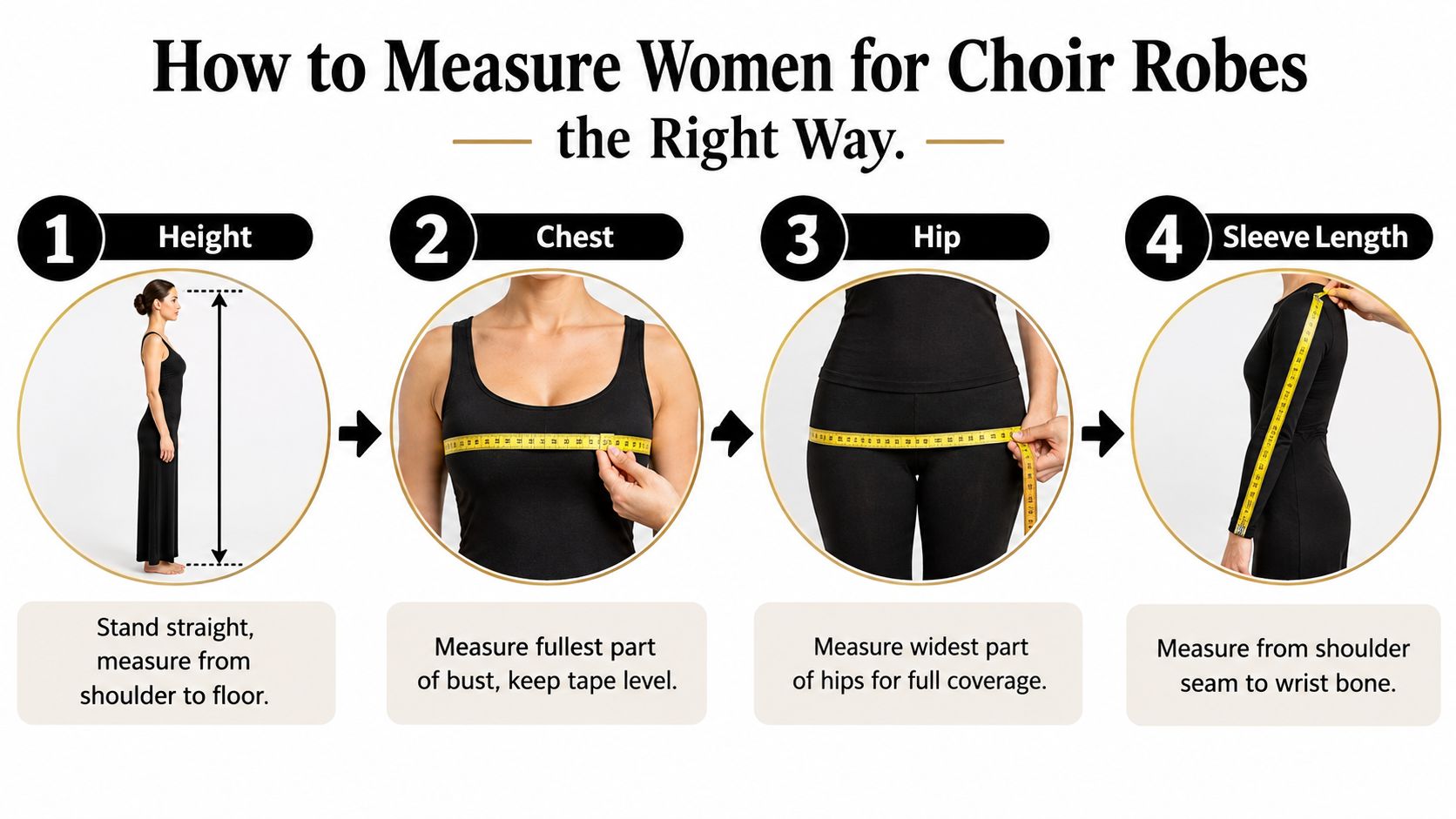
Take the primary measurements
- Measure full standing height. Have the singer stand straight in performance shoes. Measure from the top of the head to the floor, keeping the tape vertical. Published robe charts commonly map height to back length in roughly three-inch increments, with hems intended to fall around mid-calf (robe length and garment measurement guidance).
- Measure the full chest. Wrap the tape around the fullest part of the bust. Keep it level and relaxed, without compressing the chest or leaving excess slack. The adult sizing convention uses full height and chest circumference as the two primary measurements (adult robe sizing guidance).
- Check the shoulders. Measure across the back from shoulder point to shoulder point, or compare the singer's shoulder width with the garment chart when provided. This check is especially useful for women because front-panel pulling often begins when the shoulder area is too narrow.
- Check hip coverage and sleeve reach. The visual guide above includes hip and sleeve checks for good reason. A robe that clears the bust but catches at the hips can ride upward while walking, and sleeves that end awkwardly can interfere with folders or microphones.
The tape should lie flat, not tight. Record measurements in one shared sheet, using the same method for every singer. That consistency matters more than the apparent simplicity of the chart.
Size up when the chart leaves you between options
If a singer falls between two sizes, choose the larger size. A little extra length can be adjusted by a cleaner, but a robe that pulls across the bust or shoulders often needs structural tailoring. Altering a front panel, armhole, or shoulder seam costs more and can still compromise the robe's drape.
Sizing decision: Extra length is manageable. Insufficient chest or shoulder room is a fit failure.
Plus-size planning should happen before the order is quoted. Review the fullest chest, shoulder width, hip coverage, and intended shoe height for every singer who needs an extended size. Don't split those singers into a separate “special” process. Put standard and extended sizes into the same master size run, confirm that the cut remains consistent, and request a sample in the most demanding fit category before approving the full shipment.
Fit testing should include standing, sitting, raising the arms, holding a music folder, and taking a deep singing breath. If the front panel pulls during any of those actions, the robe isn't ready for bulk approval.
For a visual walkthrough of the measurement process, use the following video after the written measurements have been recorded:
Choosing Colors and Meeting Liturgical Requirements
Color decisions work best when three considerations point in the same direction: liturgical tradition, choir identity, and visual performance. Start with the church's expectations, then choose a palette that photographs well and remains consistent across the full ensemble.
Western Christian traditions commonly associate white or gold with Christmas and Easter, purple or violet with Advent and Lent, green with ordinary time, and red with Pentecost and ordination services. A choir can follow those seasonal colors through robes, stoles, or removable accents, or it can maintain one signature robe color and use liturgical accessories for variation. The right choice depends on whether the choir's primary role is ceremonial, musical, or both.
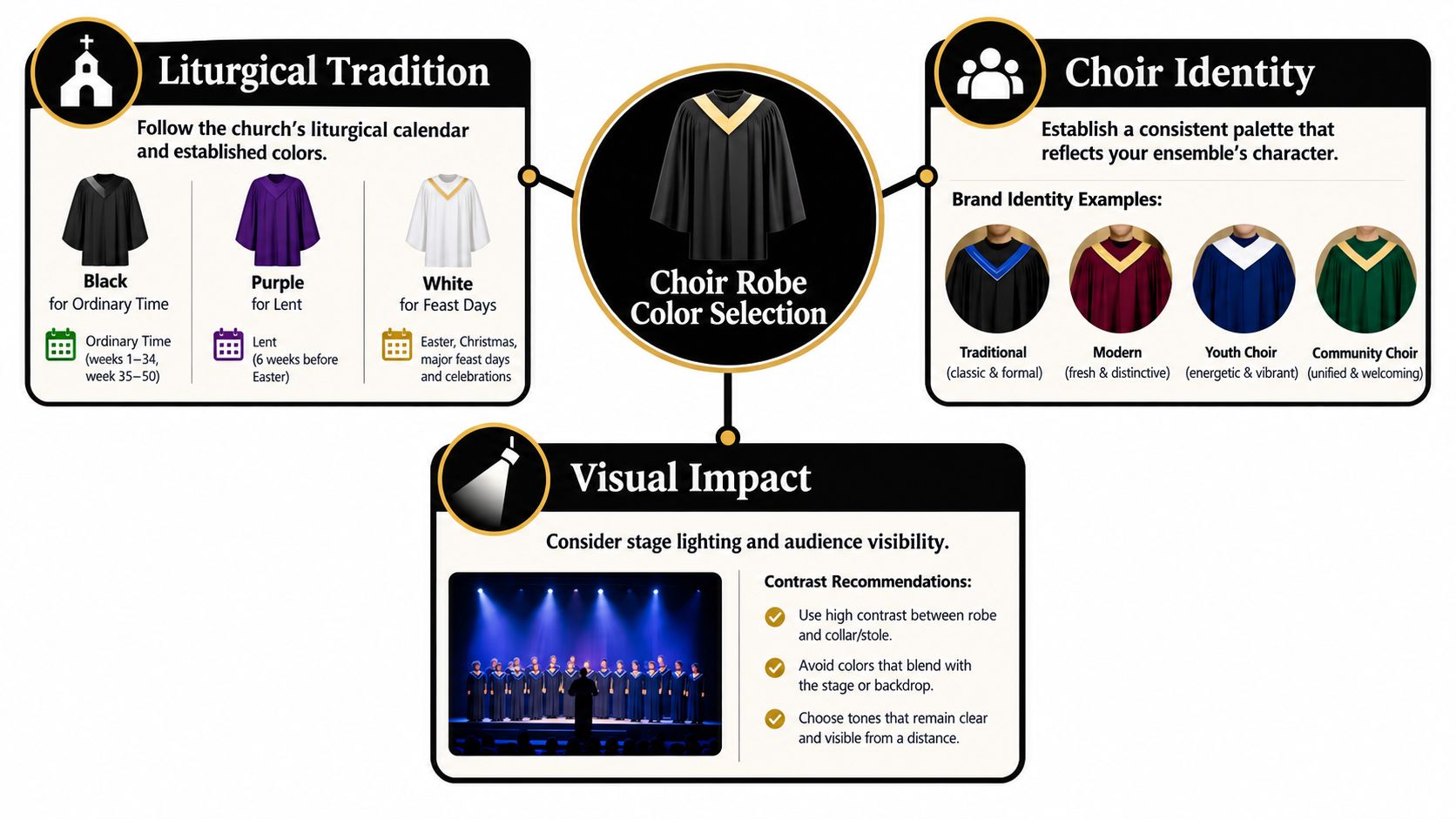
Build a recognizable visual identity
Black and navy communicate formal restraint and work across many services. Jewel tones such as burgundy or royal blue give a choir stronger presence in photographs and can distinguish the ensemble from clergy or congregation. Black can also reveal lint and pet hair under bright lighting, so the maintenance routine must match the color choice.
A fixed palette makes replenishment easier. Select one primary robe color, one trim or piping accent, and a small set of stole colors. Ask the supplier to confirm the same dye lot for a bulk order. Ordering replacement robes individually can create subtle shade differences that become obvious when singers stand shoulder to shoulder.
Use the church's own tradition as the deciding authority. For a detailed explanation of how robe colors communicate meaning, consult choir robe color meaning. If you're also comparing ceremonial white garments for clergy or special worship roles, a resource on luxury white bathrobes can offer useful perspective on white fabric presentation, though choir robes require different construction and movement characteristics.
Color rule: Choose the color that looks consistent from the back row, under the sanctuary's actual lights, and beside the church's existing vesture.
Bulk Ordering, Pricing Tiers, and Customization That Pays Off
A choir that performs weekly needs an institutional purchasing plan. Buying robes one at a time produces mismatched colors, incomplete size records, and uncertain replacement costs. A bulk order gives the music director control over fit, visual consistency, and future replenishment.
Among choirs wearing robes every weekend, 64% have average attendance of 26 to 50 singers, according to this survey-based choir robe usage reference. That pattern makes mid-sized ensembles a useful planning model. Order enough sizes to cover the current roster, likely membership changes, and a small replacement reserve. Include women's bust measurements and performance-shoe hem lengths in the size plan, rather than treating a standard unisex run as sufficient.
Compare the complete order, not just the unit price
A five-robe purchase can make retail pricing seem reasonable. A forty-robe order may qualify for wholesale pricing, reduce repeated shipping and sampling work, and keep the entire set in one production run. Compare the complete delivered order cost, including alterations, embroidery, trim, stoles, garment bags, and replacement inventory.
Request a written quote based on the actual size distribution, approved color, fabric, customization, and delivery destination. Ask the supplier to state setup fees, sample charges, minimum quantities, and the cost of later replacement robes. Volume savings can pay for useful identity details, but only a complete quote shows whether those additions fit the budget.
Customize the details that serve the choir
Choose customization that improves identification or coordinated presentation:
- Embroidered identity: Add the choir name, church logo, or individual names where they remain readable without disrupting synchronized visual lines.
- Contrast piping: Place a restrained accent at the collar, sleeve, or front edge to connect the robes with the church palette.
- Seasonal stoles: Keep the main robe unchanged and rotate stoles for liturgical seasons or special services. Compare accessory options in the ChoirBuy choir stole collection.
- Closures and length: Confirm whether singers need zippers, hooks, or snaps. Set the hem for the shoes worn during performances, especially across plus-size and petite ranges.
Put the finalized size run, approved color, artwork file, embroidery placement, delivery address, and required arrival date in the purchase order. A package may combine robes with matching stoles, caps, and garment bags, simplifying inventory while giving the supplier one coordinated specification. Ask for a women-specific sample before approving the full run. Check bust ease, sleeve movement, front closure placement, and the hem under sanctuary lighting.
Durability should guide the customization budget. Eames choral robes introduced in the 1950s and designed by Charles and Ray Eames remained in use for over 44 years before the original set retired in 2004. That historical note supports choosing construction, fabric, and care practices for sustained institutional use. For ideas about personalized robe details beyond church uniforms, consult this 2026 style guide.
Caring for Women's Choir Robes to Extend Their Lifespan
Weekly services expose women's choir robes to sweat, makeup, friction, and repeated handling. Poor care can distort the bust area, shorten hems, damage closures, and create uneven fading that breaks synchronized visual lines under sanctuary lighting. Polyester-blend instructions differ, so follow the garment label and supplier's written guidance before choosing between washing and dry cleaning. See this polyester-blend care guidance for general handling considerations.
If machine washing is permitted, select a cold or lukewarm gentle cycle with mild detergent and no optical brighteners. Hang the robe to dry when possible, or use only the lowest approved heat. High temperatures can stress seams, affect zippers and hooks, and change the way the fabric falls across different bust and size ranges.
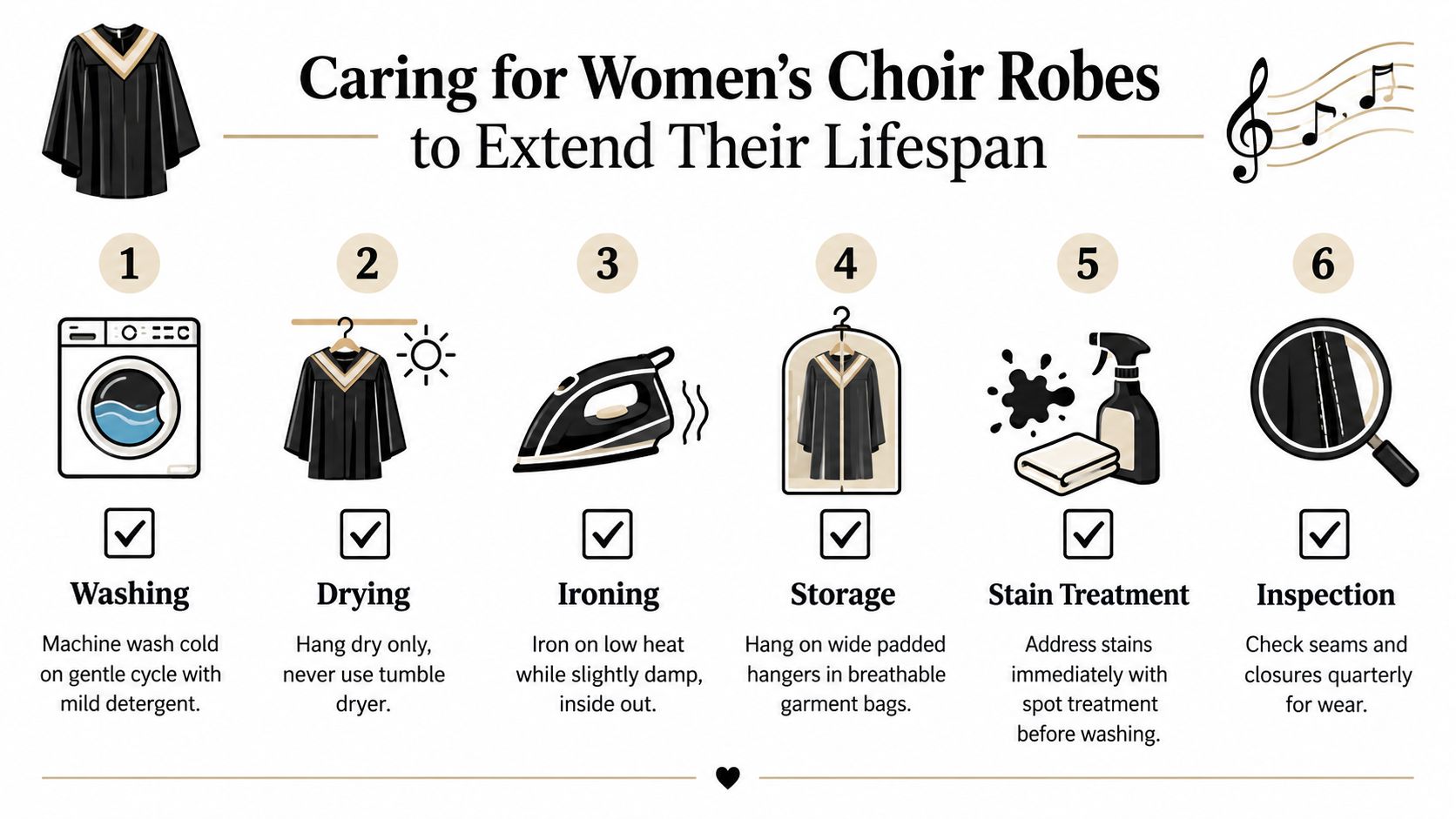
Use a simple maintenance protocol
- Treat stains promptly. Blot instead of scrubbing, then test a mild spot treatment on an inside seam.
- Avoid unnecessary washing. Air a briefly worn, clean robe fully before returning it to storage.
- Steam carefully. Use low heat and keep the steamer moving. Test the finish first, since some synthetic surfaces can mark under direct heat.
- Store vertically. Hang each robe on a supportive hanger inside a breathable garment bag. Keep it away from direct sunlight, damp conditions, and crowded storage that can crush the shoulders.
- Separate accessories. Keep stoles, caps, and detachable trims with the correct robe so each set remains complete.
- Inspect closures and seams. Check shoulders, zippers, hooks, sleeve openings, and other stress points before major services.
Embroidered or lined blends may require professional cleaning. Never override the care label because the robe appears to be ordinary polyester.
Sustainability belongs in the maintenance decision. A low-cost robe that loses its shape after improper cleaning may need replacement sooner than a durable garment cared for correctly. Recycled polyester and organic cotton blends can suit some ensembles, but durability, cleaning requirements, and weekly use should determine the final choice.
Lead Times, Shipping Options, and Sample Policies Explained
Fulfillment should match the event schedule, not the director's optimism. Seasonal worship periods create concentrated demand, and custom embroidery or special sizing adds work beyond shipping time.
Match the order to the deadline
For planned seasonal ordering, start with enough time for measurement, sample approval, production, and delivery. A standard robe order is simpler than one with embroidery, contrast trim, or mixed extended sizes. Put the required arrival date in writing and ask the supplier to confirm the production schedule rather than relying on a generic shipping estimate.
For mid-season replenishment, order plain robes first if the replacement is urgent. Custom details may require additional production time. If only a few singers need replacements, compare the new robe's color, fabric finish, and length against the existing set before placing the order.
Last-minute replacement requires a direct stock and delivery check. Standard shipping may be appropriate for in-stock garments with a comfortable buffer, while expedited or overnight service may be necessary when the performance is imminent. Faster shipping cannot solve a robe that hasn't entered production, so confirm inventory before paying for a faster carrier.
Approve the fit before approving the set
A sample robe lets the director check chest ease, shoulder placement, sleeve movement, hem length, opacity, and lighting response. Hold a fitting session with representative body types, including at least one singer requiring an extended size. Record the approved style and measurements so future reorders don't depend on memory.
Review the supplier's return and exchange terms before committing to a bulk shipment. ChoirBuy provides a dedicated product samples page for buyers who want to evaluate a robe before placing a larger order. Keep the invoice, approved sample notes, size sheet, and delivery documentation together in the choir's wardrobe records.
Frequently Asked Questions About Women's Choir Robes
Can women's and men's robes from one product line be ordered together? Usually, yes, if the fabric, color, trim, and silhouette are aligned. Use the supplier's actual measurements rather than assuming women's and unisex labels translate directly.
What happens when measurements fall outside the standard size run? Include extended sizes in the same master order and confirm the cut, fabric, and color match the standard robes. Ask for a sample or written measurement review before production.
Can a choir mix robe styles? Yes, but reserve the variation for a deliberate role distinction, such as a soloist or director. Keep color, trim, fabric finish, and stole design consistent so the ensemble still reads as one group.
What does a money-back guarantee cover? Check the supplier's current bulk-order policy before payment. Keep order records, measurement details, photographs of any defect, and delivery documents if you need to request a return or exchange.
ChoirBuy offers women's choir robes with multiple colors, fabric options, inclusive sizing, customization, samples, stoles, and bulk-order support. Visit ChoirBuy with your size run, preferred color, performance date, and fit priorities ready, then request a sample before approving the full ensemble order.