

Choosing a uniform for your choir is about so much more than just picking a color. It’s about building a visual identity that brings your members together and adds a layer of professionalism to every performance. The right choir apparel creates a unified presence, allowing the audience to lose themselves in the music, not the wardrobe.
This guide will walk you through everything you need to know to outfit your ensemble perfectly, from selecting a classic choir robe to understanding the nuances of more traditional choir vestments.
Why a Cohesive Choir Uniform Matters
A well-chosen choir uniform does more than just look good; it’s a powerful tool for any performance. It visually represents your group's discipline, spirit, and shared purpose. When every member is dressed in coordinated choir attire, individual distractions fade away, presenting a single, harmonious body to the audience. This reinforces the very essence of choral singing—many voices becoming one.
This visual unity does wonders for group identity and boosts the confidence of each singer. A sharp uniform makes performers feel professional and prepared, and that feeling almost always translates into a more focused, powerful performance. It’s the visual equivalent of singers blending their voices into a single, beautiful chord.
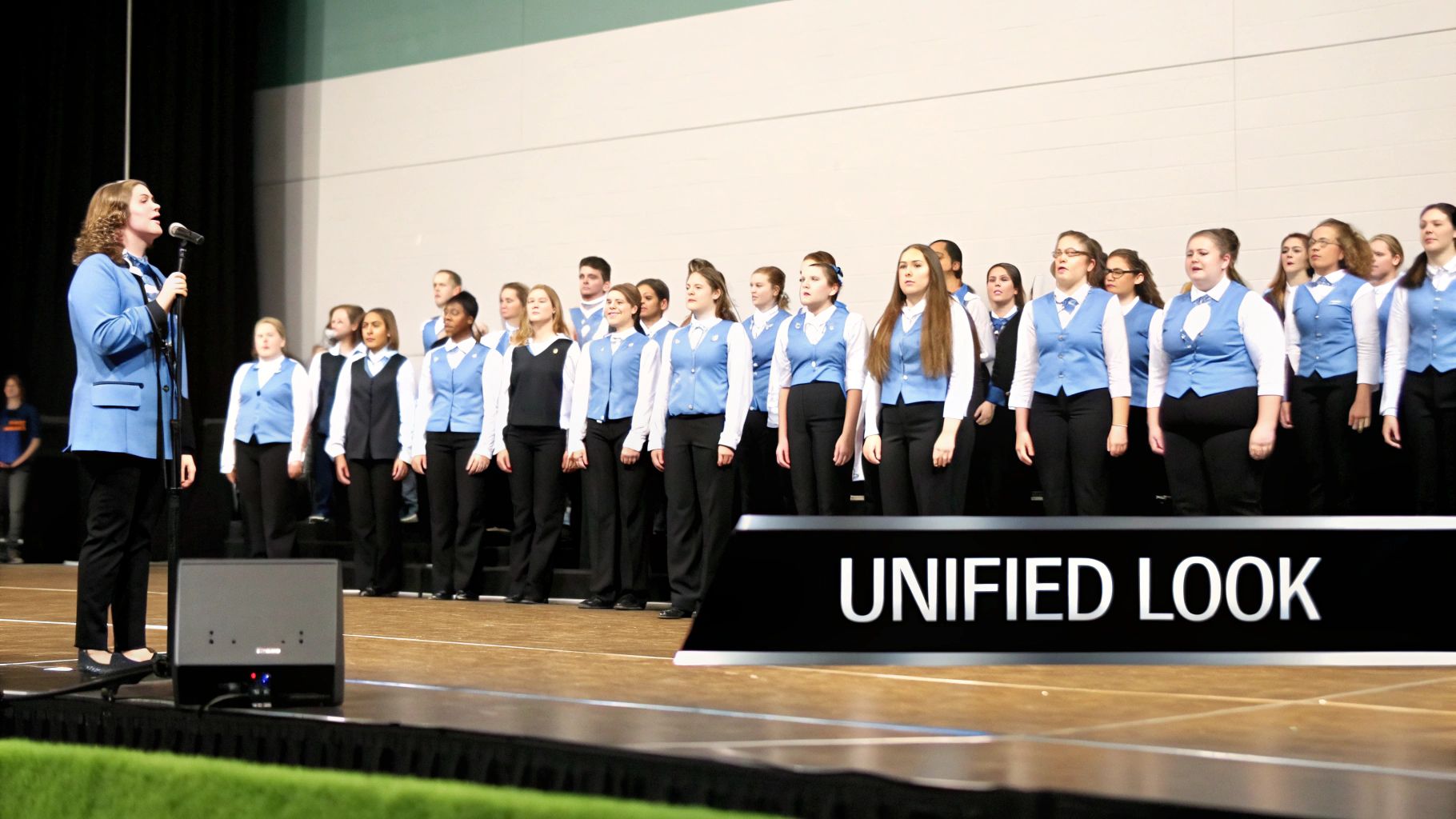
Building Your Choir's Visual Identity
Think of your uniform as your choir's brand. The right uniform for choir performances tells the audience who you are before you even sing a note. Are you a traditional church choir steeped in history? A dynamic school ensemble with a modern flair? Or a formal concert chorale performing classical masterpieces? Each of these identities points toward a different style of dress.
For instance, classic choir robes paired with stoles create that timeless, traditional look perfect for liturgical settings or classical concerts. We actually have a great resource that dives deeper into this classic pairing, and you can learn more by checking out our guide on choir robes with stoles. On the other hand, a more contemporary group might go for tailored vests, blouses, or coordinated separates to project a fresh, modern image.
Before we dive deeper, let's quickly review the fundamental pieces that make up most choir uniforms.
Core Components of a Choir Uniform
Here’s a quick overview of the essential garments that create a cohesive choir uniform and their specific roles.
| Garment Type | Primary Role | Key Feature |
|---|---|---|
| Robe | The foundational garment for a traditional look | Provides a unified, formal appearance and covers street clothes completely. |
| Cassock | A full-length, close-fitting robe | Often worn under a surplice or cotta for a layered, liturgical style. |
| Stole | A decorative sash worn over the robe | Adds a pop of color, can signify seasons, or display choir insignia. |
| Surplice | A white, knee-length vestment with wide sleeves | Worn over a cassock, common in Anglican and Catholic traditions for a formal look. |
| Cotta | A shorter, simpler version of the surplice | Typically waist-length with plainer sleeves, offering a less formal alternative. |
These are the building blocks, and how you combine them—or choose alternatives—will define your choir's unique look.
This focus on specialized apparel is part of a much bigger picture. The global workwear and uniforms market, which includes choir attire, was valued at $67.92 billion in 2025 and is projected to soar to $88.12 billion by 2031. This trend shows just how much groups are prioritizing quality and custom designs from specialized suppliers.
Ultimately, the goal is to choose an outfit that truly reflects your choir's personality and the settings where you perform. When you make these choices with intention, you create a look that isn't just visually appealing, but also deeply meaningful. It’s the first step in crafting an unforgettable experience for your audience, turning a group of singers into a singular, impactful ensemble.
Understanding Your Choir Apparel Options
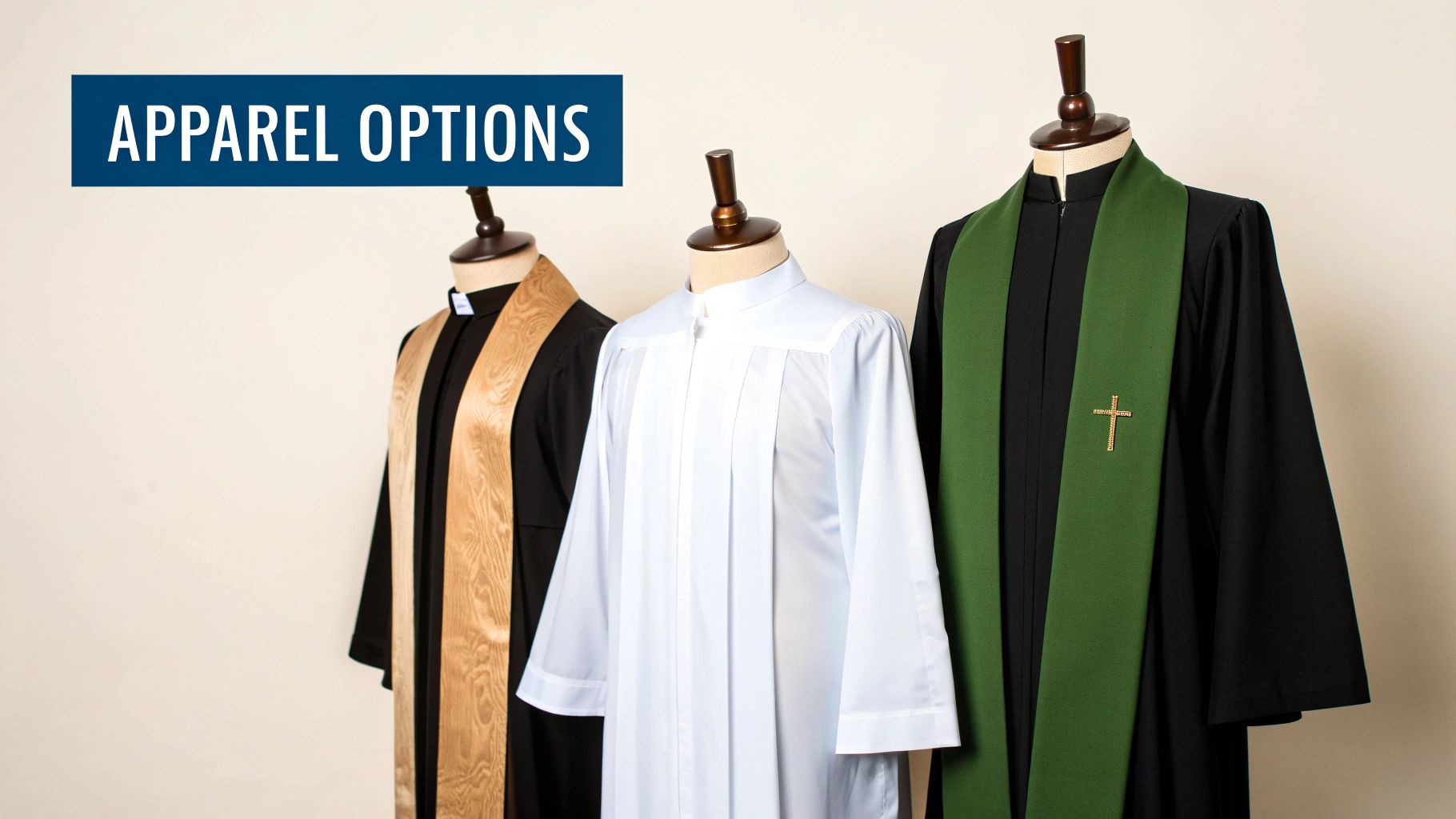
Before you can choose the right uniform for choir, you need to know what your options are. It's about more than just picking a color; it's about understanding what each piece of apparel does and the story it tells. Every garment has its own history and contributes to the overall presence your choir has on stage or in the chancel.
Think of it like building an orchestra. Each instrument has a unique voice, but together they create a powerful, unified sound. The same is true for choir apparel. Let's break down the core components, starting with the most familiar one.
The Classic Choir Robe
The choir robe is the quintessential garment that comes to mind for most people. It’s designed to create a flowing, uniform silhouette that brings singers of all shapes and sizes together. The generous A-line cut drapes over street clothes, instantly removing distractions and putting the focus squarely on the music.
This makes the robe a fantastic choice for school ensembles, concert stages, and a wide variety of church services where you want a look that's formal but still approachable. A simple robe also acts as the perfect canvas. You can easily add choir stoles or other accents to signify different liturgical seasons or special events. If you're exploring styles, our guide to the best choir robes is a great place to see what’s out there.
Cassocks: A More Formal Foundation
Unlike the looser choir robe, the cassock is a much more structured, close-fitting garment that reaches all the way to the ankles. Its roots are in clerical wear, so it immediately signals a higher level of formality and tradition. You’ll typically see cassocks in liturgical settings, especially within Anglican, Catholic, and Orthodox churches.
Because of its tailored fit, it provides a very distinguished and dignified base. A cassock is almost never worn by itself in a choir; it’s designed to be the foundation for another layer.
A lot of people think cassocks and robes are basically the same thing, but they serve different purposes. The cassock's form-fitting cut and clerical history make it a specifically ecclesiastical garment. The robe, on the other hand, is a much more versatile piece designed for broader choral and even academic use.
Surplices and Cottas: The Layered Look
To complete the traditional look, a surplice or a cotta is worn over the cassock. These are both white outer garments that create a beautiful, striking contrast against a darker cassock—a visual tradition that goes back centuries.
- The Surplice: This is the longer of the two, usually hitting around the knee, with big, flowing sleeves. The sheer amount of fabric gives it a sense of ceremony and grandeur, which is why you see it so often in cathedrals and highly formal services.
- The Cotta: Think of the cotta as a shorter, simpler surplice. It's typically waist-length and has less voluminous sleeves. It provides a cleaner, more understated look while still honoring the layered tradition.
Choosing between them really just boils down to your church's specific traditions and how formal you want the choir to appear.
And finally, we have the stole—the ultimate accessory. Choir stoles are the colorful sashes worn over a robe or surplice that can instantly add a pop of personality, denote a leadership role, or reflect the colors of the church year. Once you understand how these key pieces fit together, you can create a uniform for choir that is not only beautiful but also full of meaning.
Choosing the Right Fabric and Color
The fabric and color of your choir's robes do more than just create a uniform look—they set the entire mood. They’re the first thing an audience notices, speaking volumes about your group’s identity and professionalism before a single note is sung. Getting these details right is what elevates your choir’s appearance from simply coordinated to truly intentional.
Think of choosing a fabric like casting a role in a play. It has to look the part, absolutely, but it also needs to perform well under the hot glare of stage lights. The right material will drape beautifully, hold up to a packed performance schedule, and most importantly, keep your singers comfortable from the first rehearsal to the final bow.
Finding the Best Fabric for Your Choir
These days, most choirs gravitate toward matte polyester, and for good reason. It's an absolute workhorse. This fabric is incredibly durable and famously wrinkle-resistant, which is a lifesaver when it comes to care and storage. The matte finish is also a smart choice because it doesn't reflect stage lighting, keeping the focus where it belongs: on your singers' faces and their collective sound.
Now, if you're looking for a little extra sparkle for a holiday concert or special event, a satin or semi-gloss finish can be stunning. The subtle shimmer catches the light beautifully, adding a touch of elegance and visual energy that's perfect for celebratory occasions.
The Bottom Line: Your main choice is usually between matte and satin. Matte polyester is your go-to for a classic, non-reflective look that works for almost any performance. Satin brings a celebratory feel, making it ideal for those special, high-energy events.
Beyond the finish, don't forget the practical side of things. Breathability is huge, especially if your choir performs in a warm church or under hot stage lights for long periods. A lightweight fabric keeps everyone comfortable and focused. The way the material hangs—its drape—also shapes the overall silhouette. A fluid fabric creates soft, graceful lines, while a stiffer one offers a more structured, traditional look.
To make the decision a little easier, let's break down the most common options.
Comparing Popular Choir Robe Fabrics
This table breaks down common choir uniform fabrics by their key performance characteristics to help you make an informed choice.
| Fabric Type | Best For | Wrinkle Resistance | Care Instructions |
|---|---|---|---|
| Matte Polyester | All-purpose use, formal and informal settings | High | Machine washable, low heat dry |
| Satin Polyester | Holiday concerts, special events, celebratory services | Moderate | Gentle wash or dry clean |
| Poplin/Broadcloth | Warm climates, less formal contemporary groups | Low to Moderate | Machine washable, needs ironing |
| Velvet | Highly formal events, traditional or gothic look | Low | Dry clean only |
Ultimately, the best fabric is one that looks great, feels comfortable, and doesn't create a maintenance headache for you or your volunteers.
The Psychology Behind Your Color Choices
Color speaks a language all its own. The palette you select can instantly convey a feeling, connect with your church or school's branding, or even reflect a specific liturgical season. It’s a powerful tool for enhancing the story your music tells.
Deep, rich colors like burgundy, navy, and forest green have a classic, traditional feel. They project a sense of reverence and seriousness, making them perfect for formal concert chorales or groups performing sacred music.
On the other hand, bright colors bring the energy. Think vibrant golds, brilliant whites, and rich royal blues—these shades are all about joy and celebration, making them fantastic choices for uplifting events like Christmas or Easter services. If you're curious about this, you can explore the symbolism behind different choir robe colors in our deeper dive on the topic.
One last tip: always consider your performance space. A color that looks incredible up close might completely wash out against the backdrop of your sanctuary or stage. The goal is visual harmony, where the robes complement both the singers and their environment.
How to Achieve a Perfect Fit for Every Member
You've picked a beautiful fabric and the perfect colors, but all that work can be undone by one simple thing: a bad fit. When a robe is too tight, too loose, or the wrong length, it doesn't just look sloppy—it can make a singer feel self-conscious and distract from their performance. Getting the fit right across a whole group of different people isn't magic; it just takes a clear, organized plan.
The real goal here is to create that stunning, unified silhouette where every single robe hangs perfectly. This isn’t just a logistical task of taking numbers. It’s about making every singer, from the smallest child to the tallest adult, feel confident and truly part of the group.
This simple workflow shows how the big decisions flow, with fitting as the final, critical step.
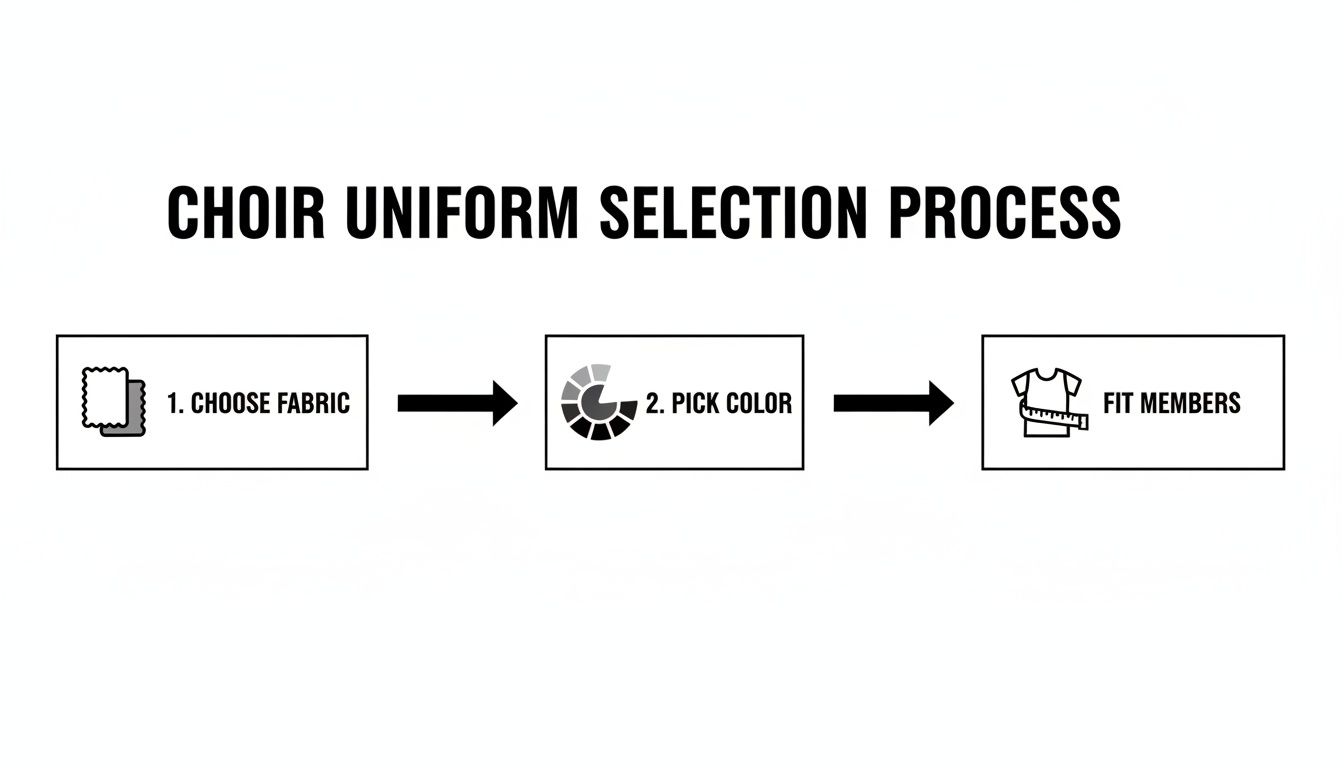
Think of it as a three-part journey: fabric, then color, and finally, the hands-on process of fitting each person for their new uniform.
Taking Accurate Measurements
When it comes to sizing, precision is everything. Nearly every sizing mistake I've ever seen comes down to a bad measurement, and fixing those mistakes costs time and money. The good news? You typically only need two key measurements for a standard choir robe.
- Height: Have each person stand tall and straight against a wall, with their shoes off. Measure from the floor right to the top of their head. This number determines the robe's length, making sure it hits that sweet spot, usually around mid-calf.
- Chest: Wrap a soft measuring tape around the fullest part of their chest. You want it to be snug, but not tight—they need to breathe! This ensures the robe has enough room for movement without being baggy.
A pro tip: always round up to the nearest inch. It gives just a little bit of grace in the fit. It’s a lot easier to make a tiny tweak to a robe that’s a hair too big than to fix one that’s uncomfortably small.
Organizing a Group Fitting Session
If you're outfitting a larger choir, the most efficient path forward is a dedicated fitting session. Trying to collect measurements individually often turns into a logistical nightmare. Just set a date, announce it well ahead of time, and recruit a few volunteers armed with measuring tapes and clipboards to keep the line moving.
I’ve seen this happen time and again: a director lets members measure themselves at home to save time. While the intention is good, it almost always leads to a mess of inconsistent numbers. A group fitting ensures everyone is measured the exact same way, giving you data you can actually rely on.
Set up a simple spreadsheet with columns for each member’s name, height, and chest size. This master list will be your bible when you place the order and will save you a massive headache when the boxes of new robes finally arrive.
Ensuring Inclusive Sizing for All
A unified choir is an inclusive one, and that means every single member needs to feel comfortable and seen. Inclusive sizing isn't just a nice-to-have; it's essential. Reputable suppliers like ChoirBuy understand this and offer a full spectrum of sizes, from children's choir robes to a wide range of plus sizes, to fit every body type. Always double-check their specific size charts, as they can differ from one company to the next.
This isn’t just a local trend, either. A deep dive into the industry reveals that the Asia-Pacific region is the fastest-growing market for institutional uniforms, driven by huge student populations and a cultural emphasis on a professional look. This global demand highlights just how important it is for suppliers to cater to diverse groups with varied sizing needs. You can explore the full research on the global uniform market to see the bigger picture.
By being meticulous and thoughtful about sizing, you ensure your investment pays off with a stunning, cohesive look that makes every singer proud to stand and sing.
Budgeting for Customization and Bulk Orders
Outfitting your choir is more than just a purchase; it's a real investment in your group's identity and professional appearance. To make that investment count, you need a solid financial game plan. This isn't just about the price tag on a single robe—it’s about seeing the bigger picture of long-term value, personalization, and the smarts of buying together. A well-thought-out budget means you can get the perfect uniform for choir members without any last-minute financial stress.
A smart budget starts by seeing all the costs, not just the obvious ones. The base price for a robe or cassock is your starting line, but the features that make your choir's look truly special need to be factored in, too.
Factoring in Customization Costs
Customization is what turns a standard uniform into a true reflection of your choir. Think about adding an embroidered logo, weaving in unique color combinations, or designing custom choir stoles. These are the touches that create a signature look and make your group stand out. Of course, these personal elements come with their own costs, so it's best to plan for them from the get-go.
For instance, adding your church's or school's embroidered crest to each robe adds a powerful touch of distinction. This usually involves a one-time setup fee to get your logo ready for stitching, followed by a per-robe cost for the embroidery work itself. In the same way, requesting stoles in a specific, non-standard color to match your organization's branding might carry a small surcharge.
A good way to think about this is to see customization as an investment in your choir's brand. That unique emblem or color scheme makes your group instantly recognizable and builds a powerful sense of pride among the singers.
To keep these costs in check, always ask your supplier for a detailed, itemized quote. A clear breakdown will show you exactly what you're paying for—the base garment versus each custom add-on—so you can decide which features give you the most bang for your buck.
Leveraging Bulk Discounts for Maximum Value
One of the best ways to stretch your budget is by taking advantage of bulk discounts. Almost every supplier will give you a better price per item when you place a larger order. It’s a simple concept: the more you buy, the less you pay for each one. This is where a little forward-thinking really pays off.
Don't just order the exact number of robes you need right now. Think a year or two down the road.
- Future Growth: Do you expect the choir to grow? Ordering a few extra robes in the most common sizes now is almost always cheaper than placing a small, expensive top-up order later.
- Replacement Stock: Robes get worn, and accidents happen. Having a few spares on hand for quick replacements or for new members who join mid-year is just plain smart.
- Package Deals: Many suppliers, including ChoirBuy, bundle items like robes, stoles, and garment bags into package deals. Buying a complete set is often much more affordable than purchasing everything à la carte.
For more on finding a great partner for your uniform needs, check out our guide on the best place to buy choir robes. By combining what you need today with what you'll likely need tomorrow, you can place a single, larger order that unlocks the best possible pricing. This ensures your investment will serve the choir beautifully for years to come.
Getting Your Order Placed and Keeping Your Uniforms Looking Great
You’ve done the hard work of designing, choosing fabrics, and getting everyone sized. Now, it's time to bring it all home. Placing the order and thinking about long-term care are the final, crucial steps. Getting these logistics right means your new uniforms will not only arrive on time but also stay looking sharp for seasons to come.
Think of it this way: planning ahead here is the difference between a smooth, stress-free debut and a last-minute scramble. It's all about protecting your investment.
Planning for Production and Lead Times
The first thing to understand is that not all orders are created equal. The timeline, or lead time, from when you click "submit" to when the boxes arrive at your door can vary wildly.
If you're buying standard, in-stock items—say, a set of basic black choir robes—they might ship out in just a few days. But a custom uniform for choir members with unique colors, embroidery, or sizing is a different story entirely. Those are made just for you, and that takes time.
As a solid rule of thumb, give yourself at least 6-8 weeks for any custom order. This window isn't just for shipping; it covers everything from sourcing the right fabric and cutting the patterns to sewing, adding embroidery, and doing final quality checks. Ordering well ahead of your "need-by" date is the secret to a relaxed rollout.
One of the most common—and stressful—mistakes a choir director can make is waiting until the last minute. Planning ahead turns the ordering process from a frantic rush into a calm, controlled experience. Your ensemble will thank you when they look their absolute best for that big performance.
Once those beautiful new uniforms arrive, the mission changes from acquisition to preservation. Proper care is what keeps your group looking polished and professional, performance after performance.
Best Practices for Uniform Care and Storage
Your choir's robes are built to last, but they aren't indestructible. A little bit of know-how goes a long way in preventing wrinkles, fading, and unnecessary wear. Simply tossing them in the wash without a thought can shorten their lifespan considerably.
Your first stop should always be the care label on the garment itself. Thankfully, most modern polyester robes are machine washable, which makes life much easier.
Here are a few tips to keep them looking brand new:
- Washing: Stick to a gentle cycle with cold water. This protects the fabric’s integrity and keeps the colors from fading. Steer clear of harsh detergents and never use bleach.
- Drying: Low heat is your friend. Tumble dry on a low setting, or better yet, hang the robes to air dry. High heat can set in permanent wrinkles and damage the fabric's finish.
- Storage: The absolute best way to store a choir robe is on a sturdy hanger inside a breathable garment bag. This keeps dust off and prevents deep creases from forming between uses. Whatever you do, don't cram them into a crowded closet—that's just asking for wrinkles.
By setting up a simple care routine, you guarantee every singer steps out looking sharp and unified. This final step is what ensures your uniform for choir looks just as harmonious as your sound.
Got Questions About Choir Uniforms? We've Got Answers.
Stepping into the world of choir apparel can feel a little overwhelming. What's a cassock? How do you measure 40 people accurately? Don't worry, we've heard it all before. We've put together some quick, straightforward answers to the questions we get asked most often by choir directors just like you.
Think of this as your cheat sheet for timelines, measurements, and budgeting. Getting these details right is the key to a smooth process. And when you're putting together info for your own choir members, remember that clear answers are king; some organizers even use tools like an AI FAQ Generator to help structure their communications.
How Far in Advance Should I Order Our Uniforms?
The single best piece of advice I can give is this: plan ahead. If you're ordering anything custom—think special colors, unique embroidery, or non-standard sizes—you absolutely need to place your order at least 6 to 8 weeks before you need them on stage.
That buffer is your best friend. It gives the manufacturer time for production, quality checks, and shipping. More importantly, it gives you time for any last-minute adjustments once the robes arrive. While ready-to-ship items are much faster, you’ll never regret building in that extra time.
What's the Easiest Way to Measure Everyone?
Getting measurements right doesn't have to be a headache. To get a great fit for standard robes, you really only need two key numbers.
- Height: Have each person stand tall in the shoes they'll be performing in. Measure straight from the top of their head to the floor.
- Chest: Wrap the measuring tape around the fullest part of their chest. It should be snug, but not tight—they need to be able to breathe!
Always, always double-check your supplier's size chart, as one company's "large" might be another's "medium." And if someone lands between two sizes? Go up. A little extra room is always better for comfort and movement.
Pro tip: Don't let members measure themselves at home. The results will be all over the place. The best way to get consistent, reliable numbers is to hold one dedicated fitting session where everyone is measured the same way.
How Can We Save Money on Our Uniforms?
Outfitting a whole choir is a real investment, but there are definitely smart ways to stretch your budget. The most impactful strategy by far is ordering in bulk.
Suppliers almost always offer great discounts for larger orders. If you can anticipate your needs for the next year or two and order a few extra robes, you'll see some serious savings. Sticking with standard styles and colors instead of going for heavy customization will also keep your costs down.
Finally, don't be afraid to ask about package deals. Many suppliers will bundle robes and stoles together for a better price than you’d get buying them one by one.
What’s the Real Difference Between a Choir Robe and a Cassock?
They might look similar from a distance, but a choir robe and a cassock are designed for different roles. A choir robe is what most people picture: a looser, A-line garment meant to be worn over regular clothes. Its job is to create a unified look for the group in any performance setting, from a church service to a school concert.
A cassock, on the other hand, is a much more specific liturgical vestment. It’s a form-fitting, ankle-length garment traditionally worn by clergy. You'll often see it as a base layer under another piece, like a surplice. The cassock signals a formal, ecclesiastical role, whereas the robe is all about creating choral unity.
At ChoirBuy, our goal is to make finding the perfect uniform simple and stress-free. With a huge selection of high-quality, affordable options, we can help you create a polished and professional look for your ensemble. Visit us at https://www.choirbuy.com to see how easy it can be.