

The week before Easter, a music director opens the vestment cupboard and finds robes in slightly different shades, hems at mismatched lengths, and one missing stole. The rector wants the choir to look unified, while the director needs garments that fit real singers and can survive regular use. Those aren't separate problems: good church vestment choices need to work for worship, clergy, choir members, and the people responsible for buying and caring for the garments.
Church vestments aren't costumes. They're functional garments that can signal a wearer's role, the church season, and a community's tradition. The right choice starts with knowing what each piece does, then matching it to how your parish worships and how your ensemble operates.
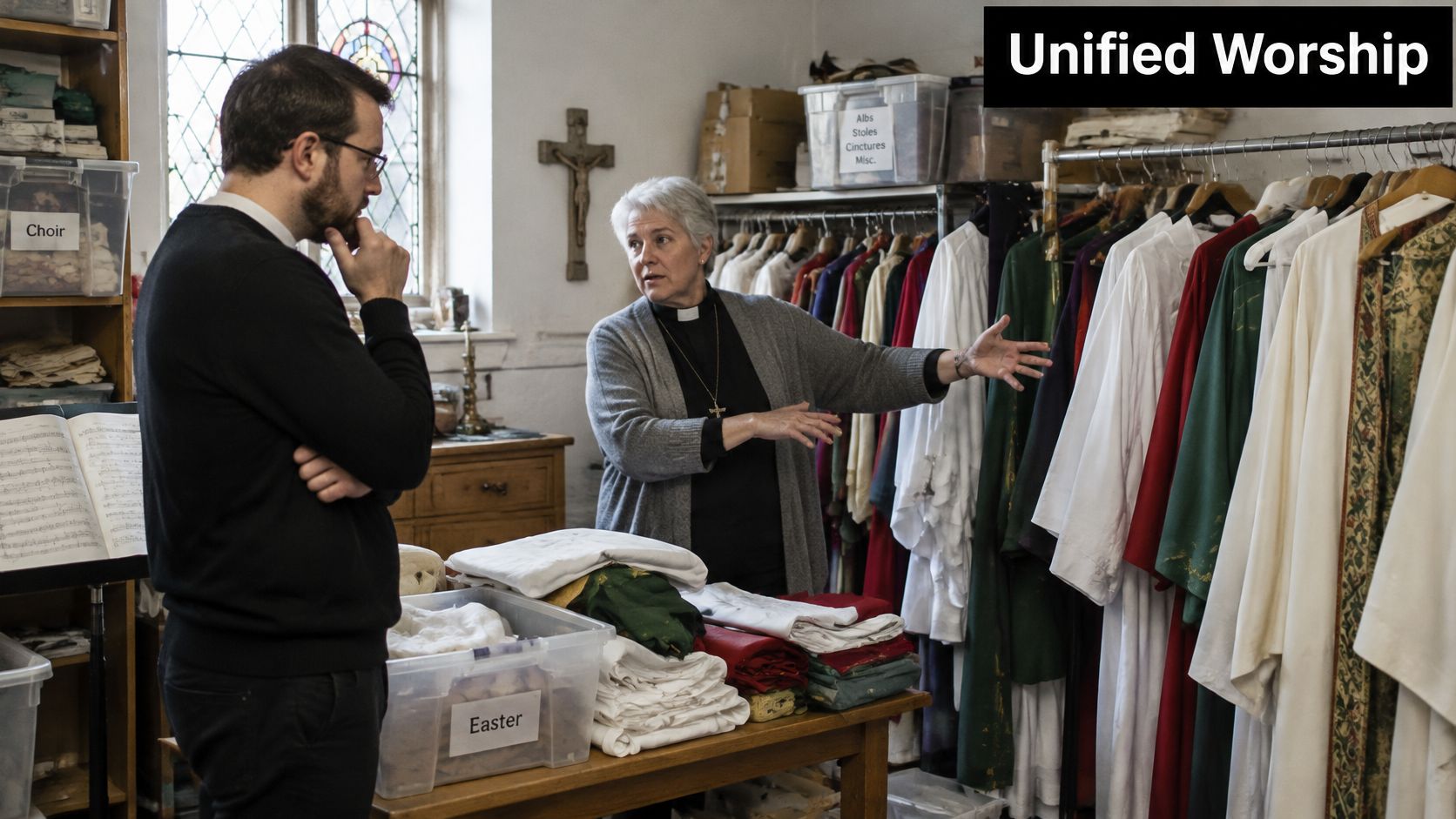
Why Church Vestments Still Matter in Modern Worship
A coordinated choir robe gives singers a shared appearance without making them clergy. A priest's vestments, by contrast, follow a specific liturgical role and tradition. Keep that distinction clear when you plan a wardrobe: garments that look similar can serve different purposes, and a robe that suits a choir may not be appropriate for ordained ministry.
That doesn't mean every ensemble needs elaborate or expensive garments. It means each purchase should solve a real need. A choir robe should fit the singers, allow them to move and sing comfortably, and suit the services or performances where they'll wear it. Clergy vestments should match local practice and the duties of the person wearing them.
Start with the job each garment needs to do
Before comparing colors or fabrics, list who will wear the garments and where. Consider clergy, choir members, altar servers, children, volunteer singers, and visiting ensembles separately. Then note the seasons and services the wardrobe needs to cover, along with practical concerns such as storage space, laundering, backstage changing, and how often garments will be worn.
This approach saves time because it prevents a common buying mistake: choosing a visually attractive robe before checking whether it suits the wearer, the occasion, and the church's practice. Ask the rector or relevant ministry leader to confirm any denominational expectations, especially if you're considering a garment associated with a different tradition.
Aim for a wardrobe people can use
The most useful church vestments are the ones your community can wear, care for, and store properly. This guide brings clergy and choir decisions together, from garment names and seasonal colors to fit, fabric, upkeep, and purchasing. By the time you place an order, you should know what you need and why.
The Five Core Vestments Every Buyer Should Know
The garment name tells you what to ask for, but the wearer and the service tell you whether it's the right choice. Learn the basic roles first, then check local practice before ordering. This vocabulary helps clergy, music directors, and suppliers discuss the same garment without confusing choir apparel with vestments for ordained ministry.
The foundational garments
An alb is a long white robe worn as a base garment in Catholic practice, and it's also used in some Anglican contexts. It provides a simple foundation beneath other liturgical garments. A cassock is a close-fitting clergy garment, often worn as everyday attire or as the base beneath a surplice.
The surplice is a white over-garment with generous sleeves, commonly worn over a cassock for choir and other non-Mass worship settings. Choirs may use surplices or choir robes, but those choices shouldn't imply that singers are clergy. Ask your church leader to confirm how the garment is understood in your local setting.
The outer layers and the order they go on
A stole is a narrow band worn around the neck to mark ordained ministry. A chasuble is the outer garment worn by a priest for Mass. In the Roman Catholic Mass, the usual sequence is alb first, stole over the alb, and chasuble over both. The USCCB describes the stole as typically about four inches wide and eight to nine feet long, with the chasuble worn over the other garments (USCCB guide to the Mass).
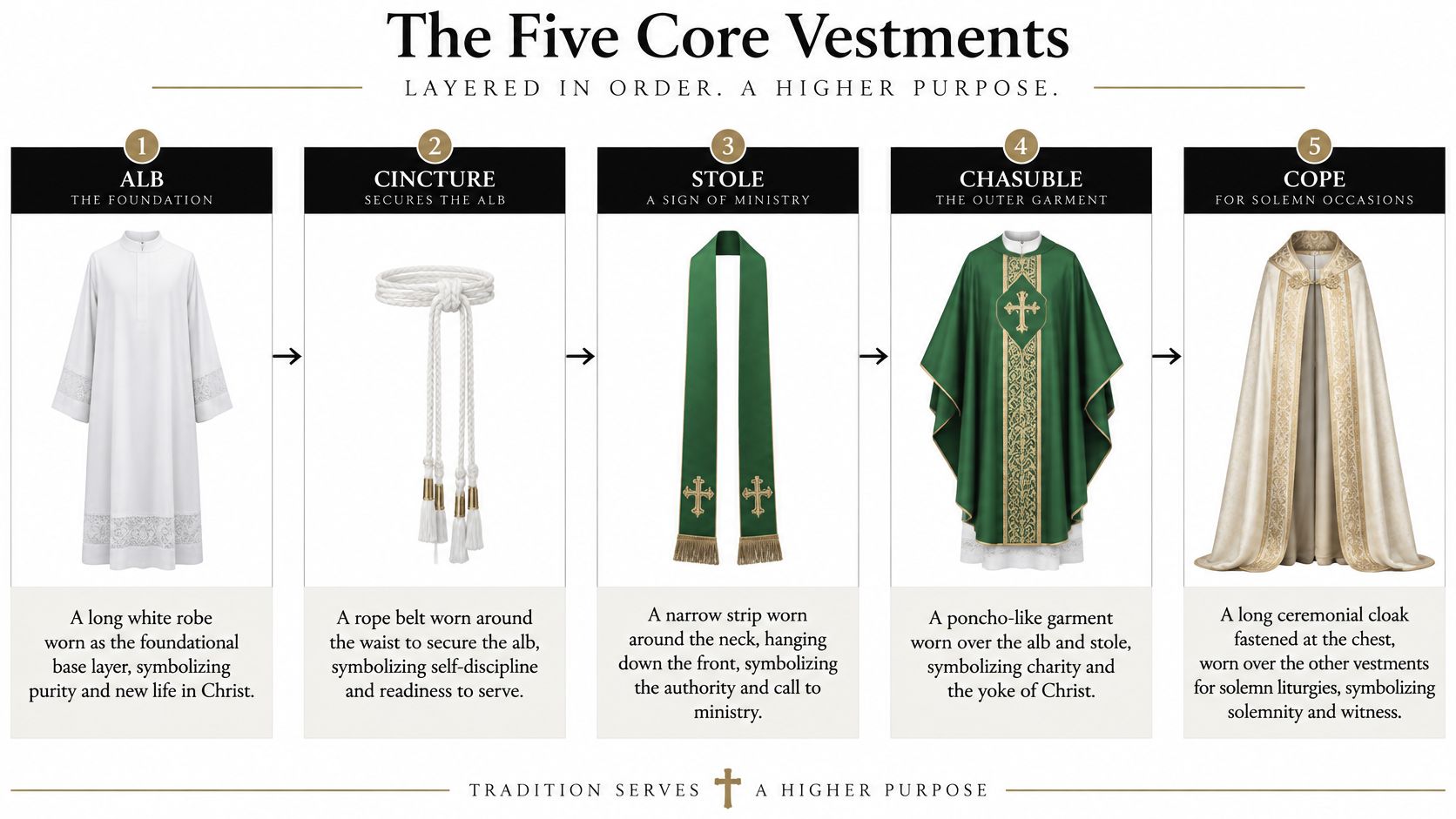
For a closer look at the garment's shape and use, consult this guide to what a chasuble is. When speaking with a supplier, name the garment, identify its wearer, and describe the service. That simple habit helps prevent ordering a choir robe when you need a clergy vestment, or the reverse.
How Vestment Traditions Evolved Into What We Wear Today
Church vestments didn't begin as a separate uniform. The Metropolitan Museum of Art explains that clergy in Christianity's early centuries generally worshipped in everyday Roman street dress. Over time, those familiar garments took on specific liturgical meanings: the Roman tunic developed into the alb, and the cloak-like paenula became the chasuble (Metropolitan Museum of Art on vestment history).
That gradual development helps explain why vestments carry both practical and symbolic weight. A garment can preserve the shape of an older form while serving a distinct role in worship today. The history also clarifies why traditions don't all use identical pieces or silhouettes. Eastern and Western vestment systems developed along different paths, so a difference in appearance isn't automatically a matter of fashion or taste.
One tradition, more than one living style
Byzantine practice added further distinctions over time. The sakkos, for example, emerged as a garment for patriarchs and archbishops on especially important feast days. These historical developments show that church dress grew in stages, shaped by worship, office, and tradition rather than created as a single universal set.
For a buyer, this context makes a decision between garment styles more meaningful. Choosing a fuller or more fitted chasuble is not a styling choice; it can reflect a living tradition with its own history and expectations. A parish that hosts ecumenical services should avoid assuming that one community's customary vestment will suit every visiting clergy member.
Let local practice guide the purchase
History can help explain why vestments look different. It can't replace guidance from the people responsible for your community's worship. Before ordering garments associated with another tradition, ask the appropriate clergy or church authority what's suitable for the service and wearer.
For choir directors, the same principle applies in a different way. A choir robe is meant to create a unified ensemble, not to imitate a clergy vestment. If you're curious about how choir apparel developed alongside these traditions, read this account of the history of choir robes.
Liturgical Colors and the Calendar That Drives Purchasing
Color planning is easier when you begin with the church calendar instead of selecting robes by personal preference. In Roman Catholic practice, white is used during Christmas and Easter time and for celebrations of Christ other than his Passion, the Virgin Mary, angels, and saints who weren't martyrs. Red is used for Palm Sunday, Good Friday, Pentecost, celebrations of the Lord's Passion, Apostles and Evangelists, and martyrs. Green is used during Ordinary Time, while violet or purple is used during Advent and Lent (USCCB guidance on liturgical colors).
Those rules affect purchasing because clergy garments may need to reflect different seasons and feasts. Choir apparel is a separate decision: a choir's robe color may be chosen for unity, tradition, or a particular service. Don't assume that a choir's robe color follows the same rules as a priest's chasuble.
Use a planning table, then confirm local practice
| Color | Seasons and feasts | What to stock |
|---|---|---|
| White | Christmas and Easter time, plus the specified celebrations of Christ and saints | Clergy garments for services requiring white; choir accessories only if they fit local practice |
| Red | Palm Sunday, Good Friday, Pentecost, the Lord's Passion, Apostles and Evangelists, and martyrs | Red clergy garments for the relevant celebrations; confirm choir use locally |
| Green | Ordinary Time | Green clergy garments where the parish needs them |
| Violet or purple | Advent and Lent | Violet or purple clergy garments for the seasons |
Use the table as a Roman Catholic reference, not as a universal calendar. Anglican, Lutheran, and other churches may have their own rules and customs. A director planning choir robes should check with the rector or worship leader rather than assuming that every tradition uses colors in exactly the same way.
Make the wardrobe earn its space
Build the inventory around services the church holds. If clergy vestments must change with the calendar, plan those garments with the relevant church leader. If the choir needs a flexible look for seasonal services, interchangeable stoles over a consistent robe can be a practical option, provided the church approves the design and use.
For a concise explanation of the symbolism commonly associated with robe colors, see this guide to choir robe color meanings. Treat color as a worship decision first and a purchasing decision second.
Fabrics and Construction That Decide How Long a Robe Lasts
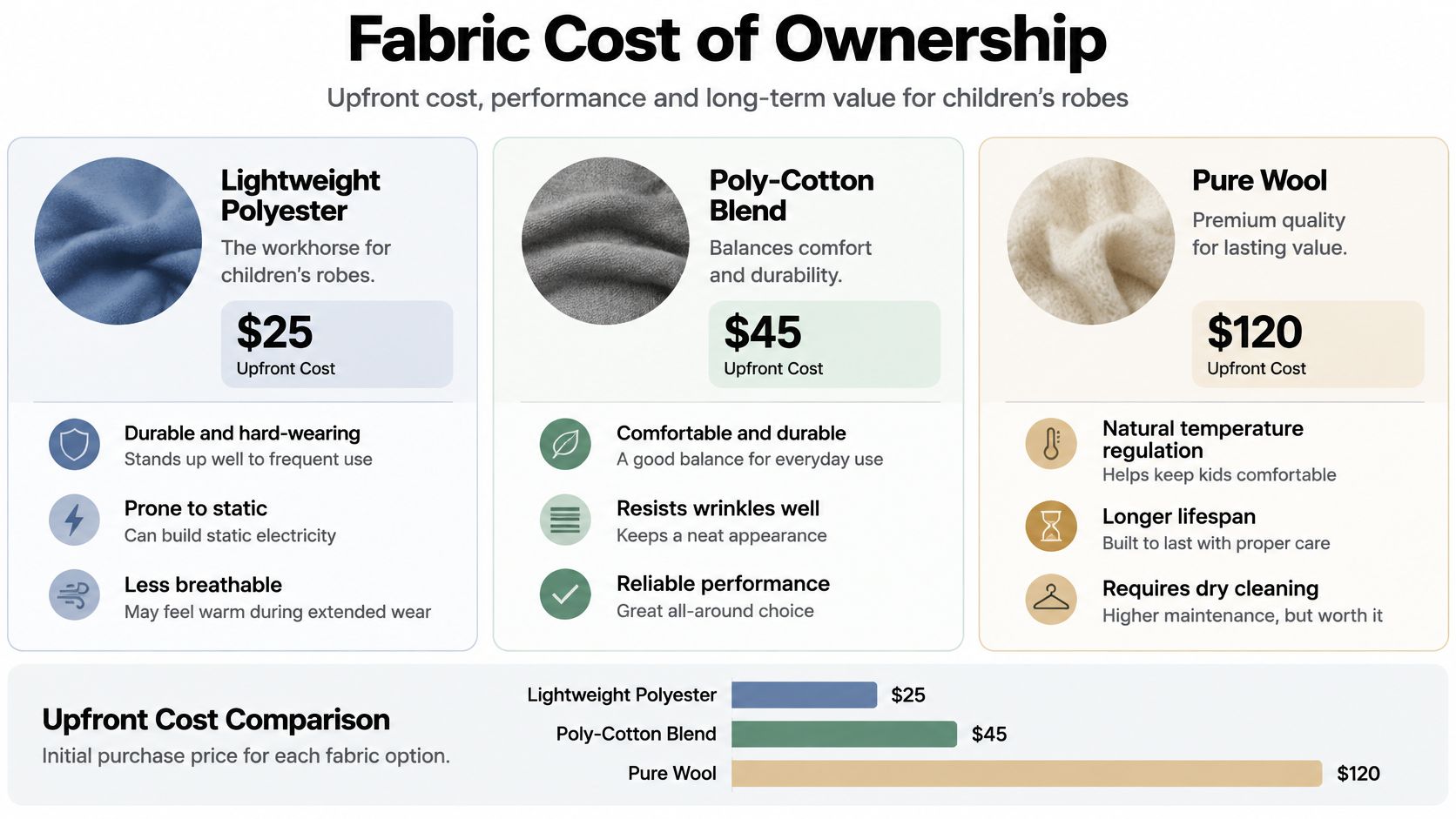
The cheapest garment isn't necessarily the least expensive to own. A robe used regularly needs to tolerate its real care routine and the strain of repeated wear. A delicate garment may suit occasional ceremonial use, while a washable modern fabric may be a better choice for a choir that meets and performs often.
When comparing fabrics, ask the supplier what care the garment requires and whether that care fits your church's capacity. Lightweight synthetics can be a practical option for frequently worn choir robes when the product is designed for routine care. More formal natural or decorative textiles may suit clergy garments reserved for important services, but they need careful handling. Don't assume every fabric in a category behaves identically; follow the garment's care instructions.
Inspect how the garment is made
The fabric label is only part of the decision. Check whether the shoulders and yoke feel secure, whether seams are neatly finished, and whether the garment has a lining where you need one. Look at the closure, the hem, and how decorative trim is attached. Those details affect comfort, fit, maintenance, and how easily a local tailor can make repairs.
A useful comparison asks more than “What does it cost?” Ask how often the garment will be worn, how it will be cleaned, and whether the church can maintain it. Then compare products against that use pattern, not against a single price tag.
Protect delicate garments from avoidable wear
Historic or fragile textiles need particular care. The Cleveland Museum of Art describes limiting light exposure and using dark, climate-controlled storage for textiles; conservation guidance for rarely used ceremonial pieces recommends horizontal storage in a dark drawer when feasible. Folding or hanging a weakened textile can concentrate stress, causing creases or fiber damage (Cleveland Museum of Art exhibition on liturgical textiles).
Practical rule: Buy the strongest construction you can reasonably maintain for the garments worn most often. Reserve delicate, ornate pieces for uses that justify the extra care.
For churches choosing fabric for banners, trim, or new vestment projects, religious fabric by the yard can help frame the material conversation. Confirm suitability, construction, and cleaning requirements with the supplier before committing to a fabric.
Sizing, Alterations, and Inclusive Fit for Real Ensembles
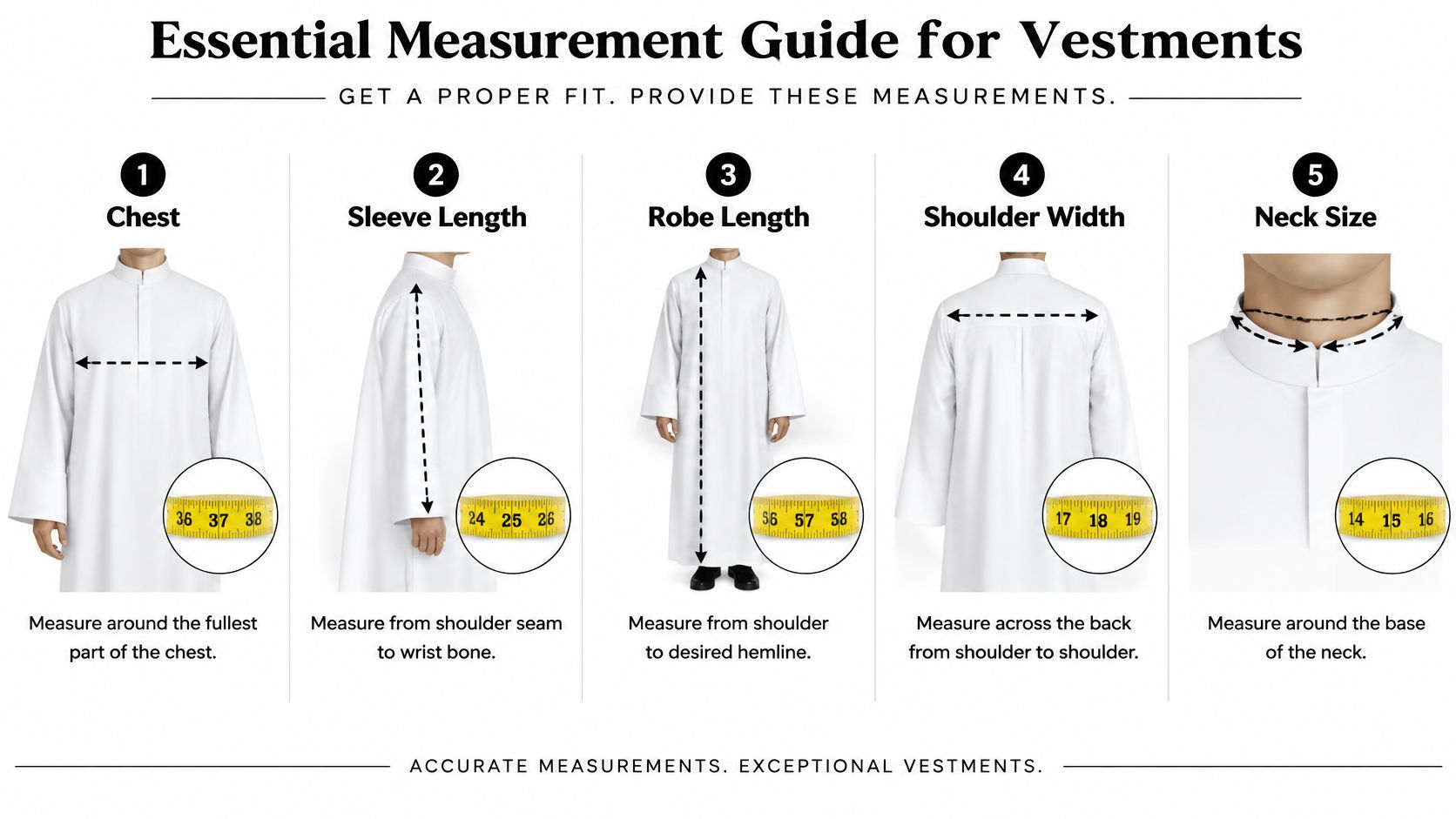
A robe that hangs unevenly or pulls at the shoulders distracts from the ensemble. Fit matters for comfort, movement, and a consistent appearance, especially when adults and children sing together. Start by asking the supplier which measurements their sizing chart requires, then measure each wearer carefully rather than guessing from everyday clothing sizes.
For choir robes, suppliers commonly need measurements such as chest, sleeve length, robe length, and shoulder width. Cassocks may require additional garment-specific measurements. Use the supplier's instructions because measurement points can vary by product. A size chart is a starting point, not a substitute for checking how the finished garment should sit on the wearer.
Fit the people in the room
| Ensemble need | Practical choice |
|---|---|
| Children's choir | Choose garments designed for children rather than relying on adult sizes; confirm movement and hem length before ordering |
| Mixed adult ensemble | Collect individual measurements and compare them with the supplier's chart; don't assume one cut will suit every body |
| Seasonal volunteers | Decide whether reusable stock garments or made-to-measure pieces better fit the group's schedule and storage |
| Visiting singers | Choose a robe style that supports a unified look without suggesting a clergy role or another tradition's vestment |
Size inclusively. Plus-size singers shouldn't have to accept a garment that restricts movement or looks noticeably different from the rest of the choir. Children and youth also need garments that fit their proportions, rather than adult robes shortened only at the hem.
Decide between stock, custom, and alterations
Stock sizes make sense when the supplier's chart fits the ensemble and you need a straightforward order. Custom garments are worth considering when the group needs a particular cut, coordinated details, or a more precise fit across varied body shapes. Alterations can be the sensible choice when a mostly suitable robe needs a hem or sleeve adjustment, but ask whether the fabric and construction can handle the change.
Traditions also affect fit decisions. Catholic, Eastern, Anglican, and Lutheran communities differ in vestment forms and wearing expectations; a standardized choir robe can unify singers, while a tradition-specific garment still calls for local approval (overview of differences in vestment traditions). Discuss the look with your clergy or worship leader before placing a bulk order. A good fit should welcome the people who sing, serve, and worship in the space.
Care, Cleaning, and Storage That Protects Your Investment
Give volunteers simple, written care instructions. After use, inspect each garment for spills, loose trim, and damaged seams. Follow the label or supplier's cleaning guidance; don't assume that a robe can go into a washing machine just because it looks sturdy.
For garments that can be washed, follow their care labels and avoid rough handling that could distort the shape or damage closures. A helpful guide to keeping polyester colors vibrant offers general fabric-care context, but a garment's own instructions should take priority. Send delicate, embellished, or fragile items to a cleaner who understands how to handle the specific textile.
Set up storage for the garment
Hang sturdy choir robes neatly after use, with the closure secured and enough space between garments to prevent crowding. Keep clothing away from direct sunlight and strong heat, and choose a clean, stable storage area. For fragile ceremonial textiles, use conservation-minded storage rather than leaving a weakened garment on a hanger.
Document condition before and after busy seasons. Record loose seams, fading, stains, or missing trim so a small repair can happen before the next service. This also helps a church make informed decisions about mending, retiring, or replacing garments.
Repair before replacing
Church vestments can sometimes be repaired or repurposed rather than discarded. Salvage usable fabric, embroidery, tassels, and fringe for another liturgical purpose where appropriate, and ask church leadership about a reverent retirement process for textiles that can't be reused. Historical examples of repaired garments make a practical point: maintenance is part of caring for a worship wardrobe, not an afterthought.
Choosing Church Vestments With Confidence
Before you order, answer four questions with the rector, music director, or purchasing team. First, which roles and services does the wardrobe need to cover? Second, what construction and care requirements match how often each garment will be worn? Third, which sizes and quantities fit the actual people in the ensemble? Fourth, can your church clean, store, repair, and reorder the garments responsibly?
Use a focused buying checklist
- Confirm the role: Separate choir apparel from garments worn by clergy or other ministers. Get local approval for tradition-specific pieces.
- Map the services: List the seasons, celebrations, concerts, and other events the wardrobe must cover.
- Choose for use: Match fabric and construction to wear frequency and the care routine your church can sustain.
- Measure the ensemble: Use the supplier's current size chart and check fit for children, adults, and plus-size singers.
- Plan upkeep: Decide who will clean, store, inspect, and repair the garments before delivery.
For choir wardrobes, interchangeable stoles over a small set of well-made robes can provide flexibility without requiring a completely separate robe for every occasion, if that approach suits your church's practice. Keep clergy vestments distinct and have the appropriate leader approve their style and use.
ChoirBuy offers wholesale and custom choir robes, choir stoles, cassocks, surplices, cottas, and caps, along with size charts, package deals, and bulk discounts for ensembles. Compare its options with other suitable suppliers, checking product details, fit, care requirements, and delivery timing before you commit.
The right vestments aren't simply the ones that look good in a product photo. They're the ones your community can wear comfortably, care for correctly, store safely, and reorder when the ensemble changes.
ChoirBuy offers choir robes, clergy and choir accessories, custom options, and bulk purchasing choices for church ensembles. Review the product range and size information at ChoirBuy before finalizing your vestment plan.