

When you see a choir, beautifully aligned in their cassocks and surplices, you're looking at more than just a uniform. The choir surplice, that crisp white vestment worn over the darker cassock, is what truly transforms a group of individual singers into a single, unified visual voice. It's a garment steeped in tradition, symbolizing purity and helping to focus the congregation not on the singers, but on the worship they lead. This guide is designed to help you find the perfect choir surplices for sale, whether you need adult choir surplices or youth choir surplices.
Understanding the Choir Surplice
At its heart, a choir surplice is about visual harmony. Think of it like a sports team's jersey; it immediately signals that everyone is on the same team, working toward a common goal. For a choir, this visual unity minimizes distraction and elevates the collective purpose of the music.
Designed specifically to be worn over a cassock, the surplice creates a timeless, respectful look that has been part of church services for centuries. By covering street clothes, it helps singers step out of their everyday roles and into their ministry of music, presenting a cohesive front dedicated to leading the congregation in praise.
To help you get a quick handle on what makes a surplice a surplice, here’s a simple breakdown of its key features.
Surplice at a Glance: Key Features
| Attribute | Description | Significance in Choir Attire |
|---|---|---|
| Garment Type | An unlined, lightweight liturgical vestment. | Worn as an outer layer over a cassock, not as a standalone garment. |
| Color | Traditionally brilliant white. | Symbolizes purity, reverence, and the sacred nature of the act of worship. |
| Sleeves | Characterized by wide, open, and flowing sleeves. | Provides an elegant drape and allows for comfortable, unrestricted movement. |
| Yoke | The shoulder and neck portion of the garment. | Often styled as a Round Yoke (gathered) or Square Yoke (pleated). |
| Length | Typically falls to the knee or slightly below. | Shorter than an alb, ensuring the underlying cassock is visible. |
This table covers the basics, but the real story of the surplice is woven through centuries of church history.
A Glimpse into Its History
The surplice we see today didn't just appear out of nowhere; it has a history stretching back over 900 years. Its ancestor was a practical, roomy white tunic worn over heavy fur-lined robes—the superpelliceum, or "over the fur"—to keep them clean in the cold, drafty churches of medieval Europe.
Over time, it evolved. By the 13th century, the garment had shortened to improve mobility, and its design continued to adapt to shifting fashions and church regulations. You can get a more detailed look at this fascinating journey from practical tunic to liturgical staple over at Divinity Clergy Wear.
This historical context is vital. Choosing a surplice isn't just a practical decision; it's an act of connecting with a tradition that has supported choral worship for nearly a millennium.
Grasping these fundamentals—its purpose, its key features, and its rich heritage—gives you the foundation you need to choose the right choir surplices for your ensemble, ensuring you honor tradition while meeting your choir's unique needs.
Tracing the Roots of the Choir Surplice
To really get a feel for the modern choir surplice, you have to look back through centuries of church tradition. This simple white garment carries a surprisingly heavy history—it's a story of faith, conflict, and sheer endurance. It’s about more than just what a choir wears; it’s about the very heart of worship itself.
The surplice’s journey starts in a very practical place: the cold, stone churches of early medieval Europe. Its name gives us a clue, coming from the Latin superpelliceum, which literally means "over the fur." That’s exactly what it was. Clergy and singers wore heavy, fur-lined robes to stay warm, and the surplice was just a lightweight linen tunic worn on top to keep those expensive furs clean and give everyone a neat, uniform look.
From Practicality to Symbolism
Over time, this functional overgarment started to pick up deeper, symbolic weight. Its crisp white color, first chosen for simplicity, became tied to ideas of purity, baptism, and the joy of the resurrection. By the 12th century, the surplice wasn't just a protective layer anymore; it had become an official liturgical vestment, different from the longer alb worn by priests during Mass.
The design started shifting, too. What was once an ankle-length tunic was shortened to the knee. This gave singers more freedom to move and, just as importantly, made the cassock underneath more visible. This change cemented its role in the classic two-part uniform—the cassock and surplice—that we still see in countless choirs today.
The surplice is a perfect example of how an everyday item can become spiritually significant. What began as a practical solution for staying warm evolved into a deliberate symbol of reverence and duty within the church.
A Flashpoint in Religious Conflict
The most dramatic part of the surplice’s story unfolded during the English Reformation in the 16th century. For the reformers, the surplice was a symbol of the "popish" traditions they wanted to get rid of. But for traditionalists, it was a crucial link to historical Christian worship. Suddenly, this simple white garment was at the center of a bitter theological war.
The Book of Common Prayer made wearing the surplice mandatory, which locked in its place in Anglican worship but also sparked fierce opposition from Puritans, who viewed it as a leftover from Roman Catholicism. Churches were literally torn apart over it. Clergy risked their jobs, either by wearing it in defiance or refusing to put it on out of conscience. This turbulent period shaped the surplice's identity as a distinctly Anglican garment, a symbol of the via media, or "middle way," between Catholicism and radical Protestantism. You can dive deeper into how different vestments evolved in our history of choir robes.
King's College Chapel Choir offers a fantastic real-world example of this struggle. Founded in 1441, the choir's use of surplices was directly challenged during the Tudor era. The Protestant King Edward VI disbanded the choir in 1550, only for the Catholic Queen Mary to bring it back just three years later. It survived suppression again during the Puritan Commonwealth, re-emerging after the restoration as a core part of Anglican choir dress—a true mark of its resilience. You can learn more about the choir's incredible journey on the King's College website.
Later, the 19th-century Oxford Movement, which aimed to revive Catholic traditions within the Church of England, gave the surplice another boost. The movement pushed for a return to ritual and beauty in worship, putting the surpliced choir right at the center of their vision. Today, this rich and often contentious history is woven into every choir surplice, making it far more than just a piece of clothing. It's a symbol of enduring faith and a proud musical heritage.
Navigating Modern Choir Surplice Styles
While the surplice has deep roots stretching back centuries, the modern garment is anything but a one-size-fits-all uniform. Today’s choirs have a fantastic range of styles to choose from, each with a distinct look that can perfectly match a church's liturgical feel, whether that’s highly traditional or more contemporary. Getting to know these design differences is the first step in picking a surplice that not only looks sharp but really elevates your choir's presence.
The biggest style difference comes down to the yoke—that's the part of the surplice that sits around the neck and shoulders. The yoke’s design completely changes how the fabric hangs and drapes, defining the garment's entire silhouette. It’s where you make your first, and most important, style decision.
This quick overview shows how the surplice has evolved from its humble beginnings to the liturgical vestment we know today.

As you can see, the surplice has adapted through different historical eras, which is why we have such a rich variety of styles to choose from now.
The Round Yoke: A Timeless Classic
The Round Yoke is probably the style that comes to mind for most people. It’s easily the most common and recognizable design. The neckline is a soft, circular shape, and the fabric is neatly gathered into it, creating gentle folds that flow gracefully over the cassock.
This classic, less severe look makes it incredibly versatile. It works just as well for a parish adult choir as it does for a youth ensemble. The soft pleating adds a sense of movement and elegance, striking a wonderful balance between reverence and approachability. To see a great example of this style in action, take a look at our Classic Round Neckline Choir Surplice and notice how the gathered fabric creates that timeless silhouette. This is one of the most popular white choir surplices we offer.
The Square Yoke: A Formal and Structured Look
For a more formal and structured appearance, there's the Square Yoke. True to its name, the yoke is cut with square corners at the front, which gives the shoulders a broader, more defined line. Instead of soft gathers, you'll typically find crisp, flat pleats falling straight down from the yoke.
This design really brings a sense of order and solemnity to the choir's appearance. It's a fantastic choice for cathedrals, collegiate choirs, or any group aiming for a more traditional, disciplined look. The clean lines and angular shape create a sharp, dignified profile that looks especially impressive during formal services. You’ll often see this style in traditional Anglican and Catholic choirs, where its historical accuracy and stately feel are highly valued. A pleated choir surplice with a square yoke offers a dignified and historical option for formal liturgical settings.
Choosing between a round or square yoke is about more than just personal taste—it sets the entire visual tone for your choir. The round yoke suggests softness and grace, while the square yoke brings structure and formality.
Sleeve Designs: The Final Flourish
After the yoke, the sleeves are the next major style decision, and they make a huge difference to both the overall look and the wearer's comfort. There are two main styles you'll encounter.
- Bishops Sleeves: This is a very full, voluminous sleeve gathered tightly into a cuff at the wrist. It creates a "balloon" effect that gives singers plenty of room to move while keeping everything neat at the hands. It's a very traditional and elegant choice.
- Bell Sleeves: A much simpler design, the bell sleeve is wide and open, flowing freely from the shoulder all the way down. It drapes beautifully, creating a graceful, bell-like shape during processions or when the choir is singing. This is often seen as a slightly more modern or streamlined option.
In the end, the best choir surplice is the one that feels right for your church's traditions, your choir's role in the service, and the atmosphere you want to create. By understanding what makes each yoke and sleeve style unique, you can choose a garment with confidence, knowing it will serve your choir well for years to come.
How to Choose the Right Fabric and Construction
The way a choir surplice hangs, drapes, and moves all comes down to one thing: the material it’s made from. Picking the right fabric is more than just an aesthetic choice. It’s a practical decision that dictates how durable the garment will be, how comfortable it is to wear, and frankly, how much time you’ll spend ironing it. A good surplice is an investment, and the fabric and construction are what make it a lasting one.
Think of it like buying a coat. You wouldn't buy a thin linen jacket for a Minnesota winter, right? Similarly, the fabric for your surplices needs to fit your choir’s specific situation—from the climate of your sanctuary to the energy level of your youth choir.
Comparing Common Surplice Fabrics
Most choir surplices are made from one of a few tried-and-true materials, each with its own personality and perks. You’ve got the workhorse polyester, the breathable cotton blends, and the classic, crisp poplin.
- Polyester: This is the go-to for a reason. Modern polyester is incredibly durable, resists wrinkles like a champ, and holds up to frequent washing without losing its color or shape. For a busy choir that needs low-maintenance vestments, it’s hard to beat.
- Cotton Blends: Mixing cotton with a synthetic like polyester gives you the best of both worlds. You get the soft, breathable feel of cotton that keeps singers comfortable during long services, plus the strength and easy-care nature of polyester.
- Poplin: Typically a cotton or cotton-blend fabric, poplin is known for its tight, plain weave. This gives it a lightweight feel but surprising strength, along with a smooth surface and a subtle sheen that looks incredibly sharp and polished.
For a deeper dive into the world of textiles, this guide to selecting fabrics for textile projects offers some great foundational knowledge.
To help you decide, here’s a quick breakdown of the most common options.
Choir Surplice Fabric Comparison
Choosing the right fabric is a balance between how you want the surplice to look and the practical realities of care and longevity. This table lays out the key differences to help guide your decision.
| Fabric Type | Key Benefits | Best For | Care Instructions |
|---|---|---|---|
| Polyester | Highly durable, wrinkle-resistant, colorfast | Busy choirs, youth choirs, or anyone needing low-maintenance garments | Machine washable, tumble dry low |
| Cotton Blend | Soft, breathable, comfortable, fairly durable | Choirs in warmer climates or those prioritizing singer comfort | Machine washable, may require light ironing |
| Poplin | Crisp, smooth finish, lightweight, professional look | Choirs wanting a traditional, polished appearance for formal services | Varies by blend; often machine washable |
Ultimately, the best fabric is the one that fits your choir’s specific needs—from budget to laundry duty.
What to Look for in Quality Construction
A beautiful fabric is only half the story. How a surplice is put together is what determines whether it lasts one season or twenty. A well-made garment will keep its shape, stand up to wear and tear, and look just as elegant years down the road.
The first thing to check is the stitching. Look for reinforced stitching at the key stress points—the yoke, shoulders, and where the sleeves join the body. These are the areas that take the most abuse. Double-stitching here is a sign of a garment built to last, preventing the seams from fraying or pulling apart.
The surplice’s design has been refined for centuries. It became the standard choir vestment in Western Christianity during the Middle Ages, with historical sources showing it was worn in 90% of European choirs by the 14th century. That long history has taught manufacturers a thing or two about durable construction. To learn more about their rich past, you can explore the ecclesiastical history of these garments.
Another hallmark of quality is a well-crafted yoke. Whether it's a round or square style, the pleats or gathers should be perfectly even and securely attached. This isn't just for looks; a properly constructed yoke is what allows the fabric to drape correctly from the shoulders, creating that classic, flowing silhouette.
Balancing Aesthetics with Practical Demands
In the end, your decision is a trade-off between the look you want and the real-world needs of your choir. That gorgeous, lustrous poplin might catch the light beautifully, but a tough-as-nails polyester is probably a smarter pick for a choir that travels.
Here are a few final things to weigh:
- Climate: If your sanctuary gets warm, a breathable cotton blend will make a world of difference in keeping your singers comfortable.
- Care: Be realistic about laundry. If you don’t have a dedicated vestment committee, a machine-washable, wrinkle-resistant fabric will be a lifesaver.
- Budget: It can be tempting to go with the lowest price, but a higher-quality fabric often pays for itself over time by lasting longer and needing fewer replacements.
By looking closely at both the fabric and the way the surplice is made, you can choose vestments that not only create a dignified, unified look for your choir but are truly built to serve.
A Practical Guide to Sizing Your Choir
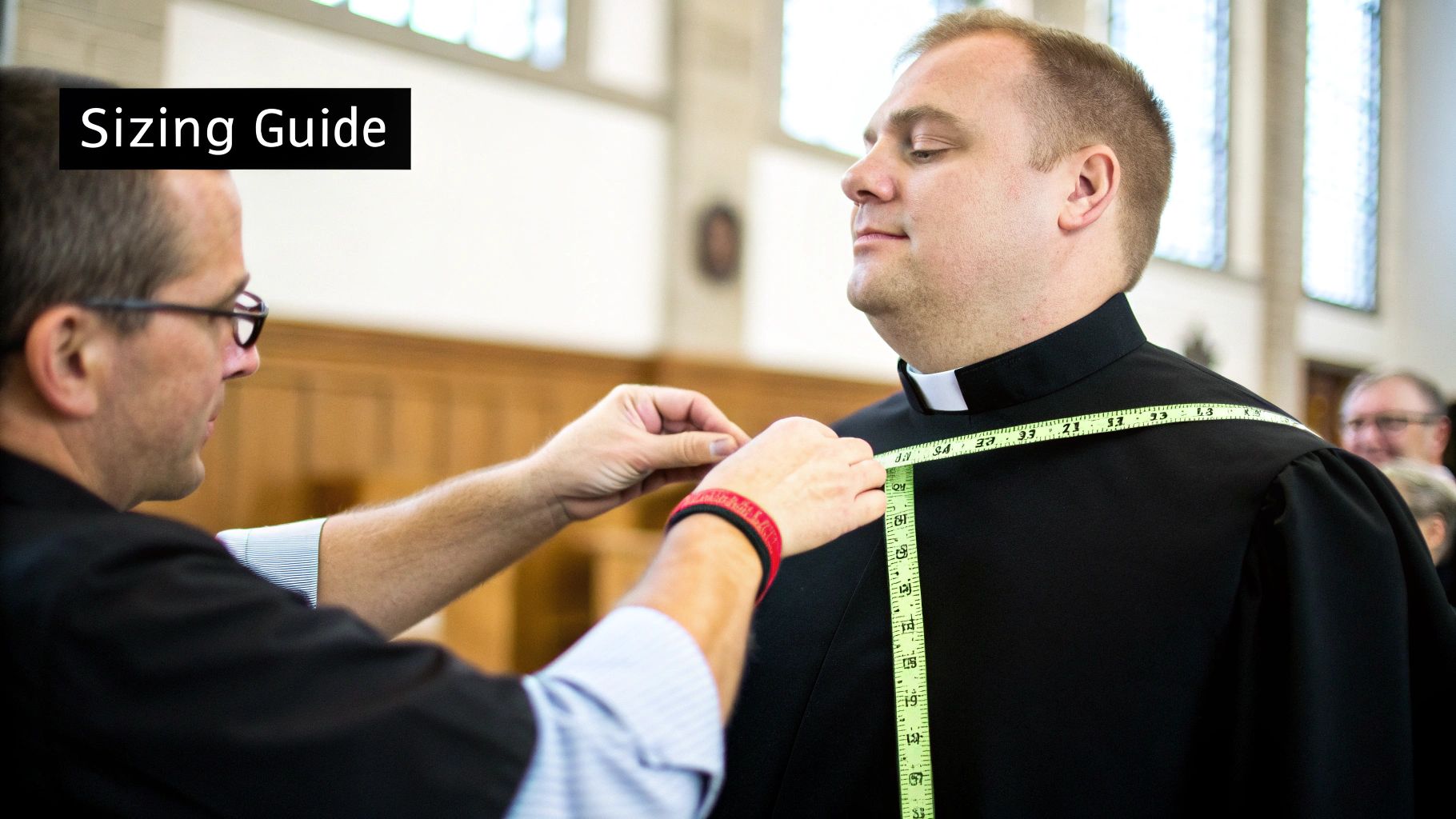
There's something uniquely powerful about a choir that looks completely unified. That polished, seamless appearance all starts with getting the fit right for every single member. A surplice that drapes correctly moves with the singer, adding to the visual grace of your ensemble. On the other hand, ill-fitting garments can be a real distraction, pulling focus away from the sacred atmosphere you've worked so hard to build.
This guide is designed to take the guesswork out of ordering choir surplices. We’ll walk through a straightforward process to make sure every singer not only looks their best but feels comfortable and confident.
Taking Accurate Measurements
The secret to a great fit isn't complicated—it's just a matter of precision. For surplices, you really only need two key measurements for each person: height and chest size. This combination ensures the garment has the right length and enough roominess to flow nicely.
-
Height: Have each singer stand straight against a wall with their shoes off, looking straight ahead. Run a tape measure from the floor to the very top of their head. This number is the key to getting the surplice length just right.
-
Chest: With their arms relaxed at their sides, wrap a flexible tailor’s tape around the fullest part of the chest, right under the armpits. The tape should be level and snug, but not so tight that it pinches.
To make this go a bit faster, have your members work in pairs to measure each other. Keep a master spreadsheet with everyone's names and measurements to keep your order organized and ready to go.
Pro Tip: For the most accurate fit possible, measure singers while they are wearing their cassock. This accounts for the extra layer underneath, ensuring the surplice drapes properly without any pulling or bunching.
Using Sizing Charts Effectively
Once you have your numbers, it's time to consult the sizing chart. This is your most important tool, but remember: sizes can vary wildly between manufacturers. Always, always use the specific chart provided by the company you're ordering from.
You can find our official size and color charts for a detailed breakdown of options for both youth and adult choirs, including plus sizes. These charts will help you cross-reference height and chest measurements to land on the correct size, like "Adult Medium" or "Youth 12."
- When in Doubt, Size Up: If someone’s measurements fall between two sizes, always go with the larger one. Surplices are meant to have a generous, flowing fit, so a little extra room is much better than a garment that's too snug.
- Don't Guess from Street Clothes: It’s tempting to just ask for someone’s T-shirt size, but resist! Liturgical garments are cut completely differently, and trying to guess based on street clothes is one of the most common reasons for ordering mistakes.
Defining the Ideal Length and Fit
So, what does the perfect fit actually look like? You’re aiming for an elegant drape that doesn't overwhelm the singer.
- Length: Traditionally, a surplice should fall to the knee or just a little below. You want the cassock beneath to still be clearly visible.
- Fit: It should feel loose and airy, allowing for total freedom of movement. The sleeves should be full and hang gracefully, never looking tight or restrictive around the arms.
Following these simple steps will make your ordering process so much smoother. You'll avoid costly sizing mistakes and, most importantly, outfit your choir to look as unified and dignified as they sound.
Making Your Bulk Surplice Order Simple
Outfitting a whole choir, whether it's for a small local church or a grand cathedral, shouldn't feel like a massive undertaking. When you order your choir surplices in bulk, you kill two birds with one stone: you get a perfectly uniform look for your ensemble and you make your budget stretch further. The goal is to make the process feel smooth and confident, from picking a style to the final delivery.
By ordering everything at once, you’re not just making a purchase; you're ensuring total consistency. Every single garment will come from the same dye lot and the same bolt of fabric, guaranteeing that the cut, color, and quality are identical across the board. That's the secret to a truly polished, unified appearance.
Why Ordering in Volume Makes Sense
Buying choir surplices in bulk isn’t just about making sure everyone matches. For music directors and administrators, the real win is in the savings. You'll find significant volume discounts that can dramatically reduce the price of each surplice, freeing up funds for other vital parts of your music program.
Beyond the cost savings, we've structured our process to specifically support these larger orders. Here's what you can expect:
- Dedicated Customer Service: You’ll get one-on-one help to navigate sizing, style options, and any special requests you might have.
- Satisfaction Guarantees: You can place your order without worry, knowing the quality and fit are backed by our promise.
- Reliable, Fast Shipping: We know you have deadlines for Easter, Christmas, and other major performances. Our shipping is built to be on time, every time.
Planning the Logistics of Your Order
A little bit of prep work can make the entire ordering process completely stress-free. A great first step is to request fabric swatches or even a sample surplice. There’s nothing like seeing and feeling the material in person to judge its weight, drape, and overall quality before you commit to the full order.
Getting a handle on production and shipping timelines is absolutely critical, especially if you're aiming for a specific date. Building in that lead time is the best way to avoid any last-minute panic.
Once you’ve collected everyone’s measurements and decided on a style, placing the order is easy. Our sizing charts are clear and the checkout process is straightforward. This is also the perfect time to think about adding a distinctive touch. Many of the same ideas for creating a unified look apply here, which you can read about in our guide to custom choir robes with a logo. By planning ahead, you can equip your choir with beautiful, high-quality surplices that will serve them for years to come—all while staying on budget.
Got Questions? We've Got Answers
To make sure you feel completely confident choosing the right vestments for your choir, we've pulled together a few of the questions we hear most often. Let's tackle the practical details that choir directors and church administrators need to know.
How Should We Care for and Store Our Surplices?
Keeping your surplices looking crisp and clean is easier than you might think. Most modern garments, especially those made from polyester or poly-blends, are built for easy maintenance.
- Washing: First things first, always check the care label. Most can be machine washed on a gentle cycle with cold water and a mild detergent. To keep them bright, wash them with other whites.
- Drying: Tumble dry on low and pull them out as soon as the cycle finishes. This is the key to preventing stubborn wrinkles. Hang them up right away for the best results.
- Storage: The best way to store surplices is on hangers in a closet. This helps avoid creasing and allows the fabric to breathe, so they're always fresh and ready for performance. Give them a little space—don't pack them in too tightly.
Can We Get Surplices in Colors Other Than White?
This is a great question. The short answer is almost always no. The choir surplice is traditionally, and almost exclusively, white. This isn't just a style choice; it’s deeply symbolic, representing purity, reverence, and the joy of the resurrection.
While other liturgical garments change colors with the church season, the surplice remains a constant. Its identity is tied to that brilliant white, which creates a sharp, respectful contrast against the cassock worn underneath.
What Is the Difference Between a Surplice and a Cotta?
It's easy to mix these two up, as they look very similar at a glance. The difference really comes down to their length and cut.
Think of it this way: a surplice is the longer of the two, typically falling to the knee or just below. A cotta, however, is much shorter, usually ending around the hip or waist. Cottas also tend to have boxier, more squared-off sleeves and are often more ornate, sometimes with detailed lace.
While both are worn over a cassock, choirs typically wear the surplice. The shorter cotta is often preferred for altar servers, as its length makes it easier to move around the chancel without tripping.
Ready to outfit your choir with beautiful, high-quality vestments? At ChoirBuy, we offer a wide selection of durable and elegant choir surplices to create a polished, unified look for your ensemble. Explore our collection and find the perfect style for your church today at https://www.choirbuy.com.