

Choir budget crunches typically peak at the same time every year. With rehearsals in full swing and a packed sanctuary calendar, you face a stack of names, sizes, and deadlines while aiming to keep the group polished without overspending. This is the core challenge behind cheap choir robes for sale, and the tough truth is that the lowest sticker price rarely stays low once you account for fit mistakes, replacements, and robes that look worn under stage lights.
Choir robes sit in a market that's large enough to support many price tiers, not just premium options. The global choir robe market was estimated at $410 million in 2024 and is projected to reach $615 million by 2033, with a 4.7% CAGR over that period, and churches accounted for 38.9% of end-user demand, which tells you institutions buy in recurring cycles tied to seasons, ceremonies, and replacements (market overview). For a director trying to stretch every dollar, that steady demand matters, because it keeps entry-level and bulk-purchase robe options available across the year.
A practical budget plan often starts before the robe order itself. I've seen choirs solve the funding gap by pairing robe purchases with a simple campaign and a clear ask, and fundraising strategies for churches can help cover part of the bill without forcing a last-minute compromise on quality. If you already have a robe collection page on hand, the ChoirBuy choir robes sale page fits naturally into the buying process as a quick way to compare standard styles and discounted options before you commit.
Outfitting Your Choir Without Breaking the Budget
End-of-season pressure usually shows up in the same blunt way. The choir has grown, the youth group added singers, a few adults need larger sizes, and the old robes no longer look unified enough for Easter or Christmas. At that point, a director has to think like a purchaser as well as a musician, because rushed choices tend to cost more later.
A budget order works best when it follows the rhythm of the church year instead of the panic of the next service. Entry-level stock is replenished all year, and ChoirBuy choir robes sale options can be useful when you want to compare standard styles before commitments harden. That timing matters, because churches often reorder around seasonal services, which is also when fit mistakes and rushed substitutions are easiest to make.
Cheap should mean controlled cost with construction that survives multiple services and seasons. A robe that fades under stage lights, wrinkles fast, or fits awkwardly creates hidden costs through replacements, alterations, and uneven presentation. A low initial price does not help much if half the order needs to be corrected before the choir wears it again.
Practical rule: buy for the next two years, not just the next Sunday.
I've found that directors get the best results when they treat the robe order like a small capital project. Count current singers, likely additions, and the children who will outgrow their first set quickly. Then build in room for a few replacements instead of assuming every garment will stay serviceable forever.
A smart ordering process also pairs well with fundraising strategies for churches. A modest campaign, donor appeal, or seasonal offering gives you more room to choose value over panic buying, and it reduces the temptation to grab the cheapest robe just to close the gap.
Choosing the Right Fabric for Affordability and Durability
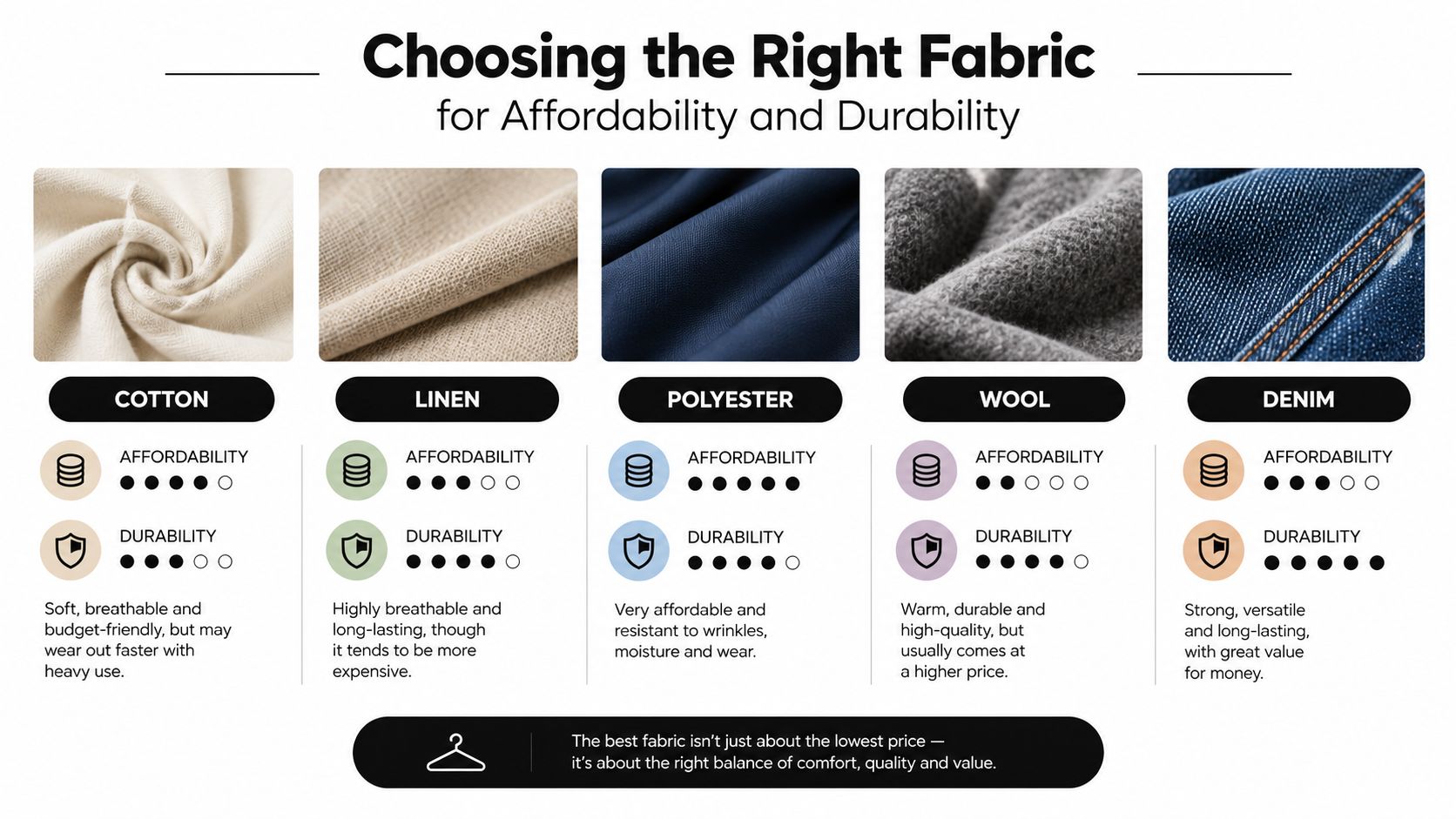
The fabric choice is where many budget robe orders succeed or fail. A robe can look fine in a product photo and still disappoint after a few rehearsals if it traps heat, wrinkles badly, or loses shape. That's why 100% matte polyester keeps coming up as the value standard for cheap choir robes for sale.
Why matte polyester keeps winning
For affordable choir robes, 100% matte polyester is the dominant value fabric because it combines low-cost synthetic production with operational durability. It is wrinkle-resistant, keeps its shape after repeated wear, and typically shrinks less than 2–3% even under adverse washing or drying conditions (polyester fabric guide). In practical choir terms, that means fewer fit surprises, fewer alterations, and less visual drift across a large ensemble.
That last point matters more than many retailers admit. A robe that stays dimensionally stable holds a cleaner line across rows of singers, which helps the choir read as one unified group instead of a collection of slightly different garments. Low-shrink fabric is especially useful when you're ordering mixed sizes for adults and youth and you need the whole order to age consistently.
What budget shoppers should watch for
Recent choir uniform coverage also points to a real trade-off, polyester can trap heat and glossy finishes can glare under stage lights, which is why matte finishes and performance-minded construction matter so much in low-price robes (choir uniform guidance). If your services run long or your stage lights are bright, a shiny fabric can look more expensive online than it does in person.
For more product-side detail on textile choices, the religious fabric by the yard resource is useful when comparing robe materials against trims and accessory needs. And if you're trying to choose materials for a broader uniform order, how to pick uniform material gives a practical comparison mindset that translates well to choir apparel.
Mastering Sizing for Adults, Children, and Plus Sizes
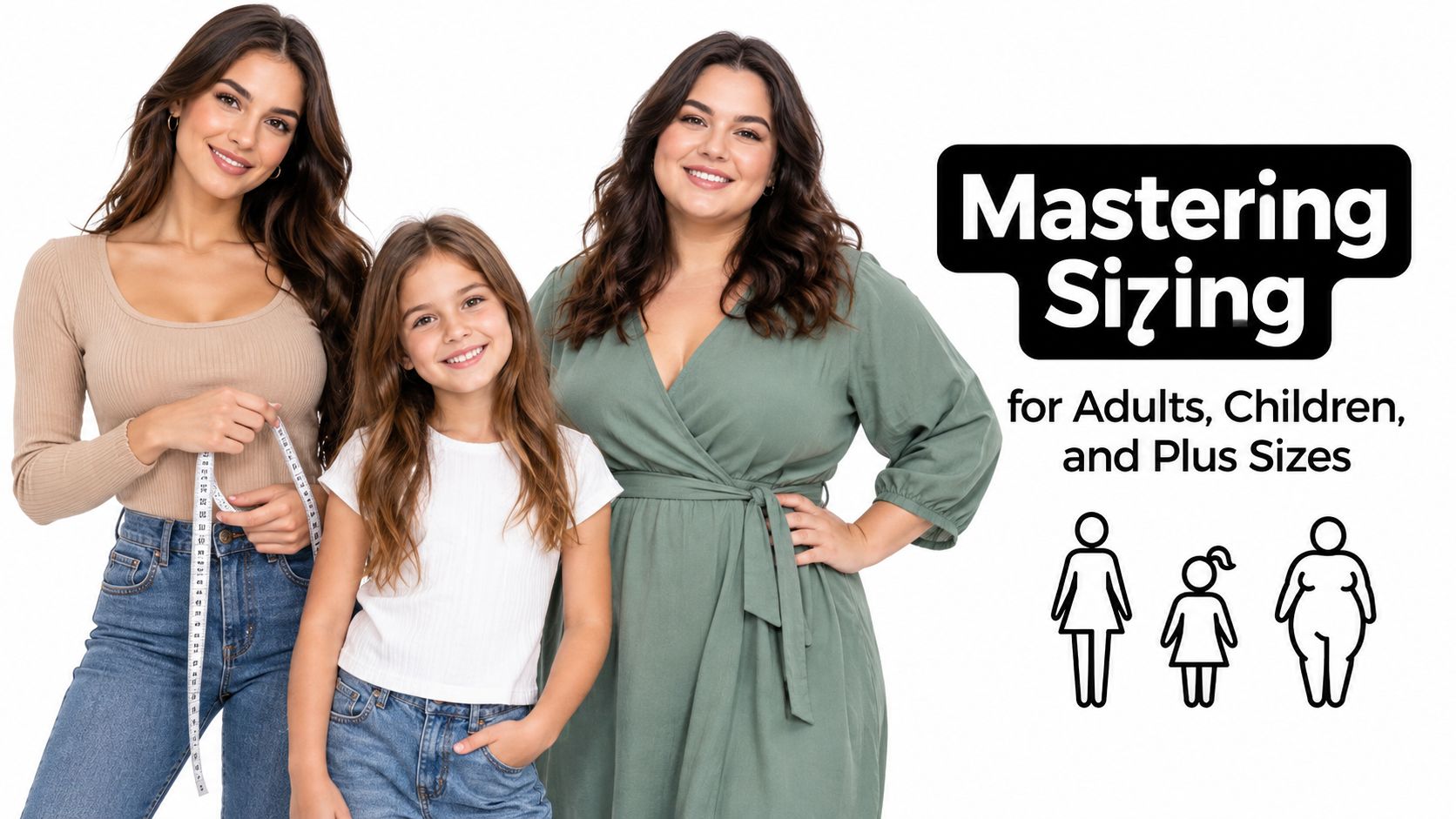
Sizing is where budget robes can become expensive fast. One wrong bulk order turns into a stack of returns, and that's before you account for disappointed singers who can't move comfortably on risers. The best safeguard is to measure like a director who expects every robe to be worn in public, because that's exactly what will happen.
Measure the body choir robes actually cover
Start with height, and measure it with shoes on, because robe length depends on the footwear singers will wear. Then measure the chest at its fullest point and leave enough ease for breathing and arm movement. Choir singers need room for folders, raised hands, and deep breaths, so a snug street-size assumption usually leads to trouble.
Measure for the performance, not the mirror.
For children, the fit question is different. Youth singers grow fast, so some directors choose a slightly longer robe to extend the usable life of the garment without making it look sloppy. For plus sizes, shoulder width and torso length matter as much as chest measurement, because modesty and range of motion are both on the line.
The children's choir robes guide is worth checking when you're comparing growth-friendly options for youth groups. The mistake is relying on street sizes and hoping they'll translate. They don't, and budget orders punish that assumption.
Use manufacturer charts, not guesswork
Recent sizing guidance for budget robes stresses manufacturer charts, careful chest measurement, and swatches or sample orders before a bulk purchase (church supply sizing guidance). That advice is especially important for mixed-age choirs, where one size chart won't solve every body type in the room.
If a vendor offers sample garments or swatches, use them. A small test order costs far less than a full return cycle, and it gives you the chance to check whether the hem, shoulder line, and sleeve length work on your singers.
Adding Customization and Stoles Within Your Budget
A plain robe is not the same thing as a generic robe. The right custom touch can give the choir identity without pushing the order into luxury pricing, but only if you choose add-ons with restraint. That's why stoles, caps, and selective trim usually make more sense than fully bespoke garment changes when money is tight.
Use accessories to do the heavy lifting
Stoles are the easiest place to spend wisely. They create visual distinction for seasons, leadership roles, or school and church identity without forcing you to change the base robe for every use case. A single robe color can work for many services if the stole changes with the occasion, and that flexibility is exactly what a budget choir needs.
The choir stoles resource is a good reminder that one accessory can do a lot of visual work. Pairing a neutral robe with a specific stole gives you a formal look for worship and enough variation for holiday services or special music.
Keep the base robe versatile
I prefer classic base colors because they stretch the wardrobe farther. A robe that works in ordinary services, funerals, seasonal programs, and school concerts saves money over time because it doesn't need replacement every time the choir's visual tone changes. If you want to add color, do it with accessories first.
That's also where bulk purchasing makes a difference. Matching robes and accessories in the same order can simplify pricing and keep the whole ensemble consistent. If your choir needs a special role marker, a leadership stole usually gives you more value than trying to customize every robe individually.
Budget for identity, not ornament
The goal isn't to make a choir look plain. It's to make sure the visual identity is coherent and repeatable. A thoughtful stole, cap, or trim choice can make a modest robe order look intentional rather than cheap, and that distinction matters every time the choir walks in from the side aisle.
Navigating Lead Times, Shipping, and Return Policies
Timing makes or breaks a robe order. If you've ever had garments arrive just before a major service, you know how much pressure that puts on everyone. A budget order only stays budget-friendly when delivery, exchange policies, and deadlines are clear from the start.
Ask before you order
Lead times for standard robes are often manageable, but the exact window depends on stock, sizing, and customization. If your choir is preparing for Easter, Christmas, or another fixed date, build in a buffer before the event so there's room for sorting, steaming, and exchanges. Last-minute shipping can rescue an emergency, but it rarely feels like a savings strategy.
Delivery terms matter just as much as price. A robe that arrives late is not a bargain, and a robe that can't be exchanged for a sizing mistake costs even more once the deadline is looming. I always tell directors to ask how returns work before the card is charged, not after the box is opened.
The cheapest order is the one that reaches the choir in time and fits the first time.
Compare policies, not just prices
A trustworthy vendor should be clear about shipping options, exchange windows, and support for damaged or incorrect items. If the site hides those details, cost usually shows up later in time, stress, and replacement fees.
When you're comparing vendors, don't focus only on the line-item price. Focus on whether the robe can be corrected quickly if something goes wrong, because for a church calendar, timing is part of value.
Evaluating True Cost vs. Initial Price
The cheapest robe on the page is not always the cheapest robe in the budget. A robe that fades, loses shape, or feels uncomfortable after a few washes starts collecting hidden costs the moment singers stop wearing it with confidence. That's why true cost has to include wear life, alterations, and replacement cycles.
Look past the sticker price
A higher-quality robe can outlast a bargain robe by enough to make the upfront difference worthwhile. You don't need a spreadsheet to know that repeated replacement eats a music budget faster than a slightly higher starting price. The choir room feels that difference in real time.
Construction quality also shows up on stage. Heavier, well-made robes tend to drape better and look more unified under sanctuary or auditorium lighting, while flimsy garments can hang awkwardly and wrinkle at the worst times. If you're buying for a choir that performs often, the garment needs to survive use, storage, and laundering without drifting out of shape.
Hidden costs usually come from three places
- Alterations: Ill-fitting robes need hemming, sleeve adjustments, or replacements.
- Replacements: Thin fabric and poor construction shorten the robe's usable life.
- Appearance drift: When robes age unevenly, the choir stops looking unified.
That last one matters more than people think. A choir that looks coordinated sings with more confidence, and that confidence shows up in posture, attention, and presence.

When you buy based only on initial price, you're often paying the rest in maintenance and regret. That's why value matters more than cheapness, especially for robes that have to stand up to repeated services and repeated laundering.
Selecting a Trustworthy Vendor for Your Choir Needs
A reliable vendor saves more money than a low sticker price ever will. In choir purchasing, trust is practical, not sentimental. It shows up in the sizing chart, the responsiveness of customer service, the clarity of the return policy, and the way the robes arrive.
What to verify before you buy
Start with reviews that mention fit, fabric quality, and delivery. Generic praise helps less than comments from churches and schools that ordered mixed sizes or had a deadline to meet. If the vendor answers size questions quickly and gives you clear instructions, that's a strong sign they understand choir orders.
ChoirBuy is one option in this space, offering choir robes, stoles, cassocks, surplices, and related apparel for church and school groups. That matters because a choir order often includes more than just robes, and a vendor that can handle the full set reduces the number of moving parts you have to manage.
Choose the vendor that reduces risk
- Clear sizing tools: Manufacturer charts beat vague size labels.
- Responsive support: Fast answers matter when you're ordering for a group.
- Straight return terms: Exchange rules should be easy to find before checkout.
- Useful product pages: Descriptions, fabrics, and accessory pairings should be easy to compare.
You're not just buying garments, you're buying fewer surprises. A trustworthy vendor should help you avoid ordering mistakes, not make them harder to fix.
Frequently Asked Questions About Buying Choir Robes
The most common robe questions are usually the right ones, because they come from real pressure points. Directors want to know how fast they can get the order, how to care for the robes, whether mixed sizes can be purchased together, and what happens if something doesn't fit. Those are the issues that decide whether a budget purchase stays a budget purchase.
Quick answers directors actually need
What is a practical lead time for bulk orders? Standard robe orders are often manageable within a few weeks, but custom work needs more breathing room. If your choir is preparing for a major service, order early enough to leave time for sorting and exchanges.
How should polyester robes be cared for? Use cold water, a gentle cycle, and low heat or air drying. That keeps shrinkage and fabric wear under control, which is exactly why polyester is so common in choir apparel.
Can adult and children's sizes be ordered together? Yes, mixed-size orders are common. A good vendor should let you combine adult, youth, and plus sizes in one purchase so the whole group stays coordinated.
What if the robes don't fit? Review the return policy before you buy, then contact customer service quickly if anything arrives wrong. Fast communication matters more than hoping the problem will fix itself.
If you're outfitting a church or school choir and want a straightforward way to compare robes, stoles, and sizing options, visit ChoirBuy. Their choir apparel lineup is built for bulk buying, and it gives directors a practical starting point when they need value, consistency, and a uniform look that lasts.