

When you think of traditional clergy wear, the first image that often comes to mind is the cassock. These foundational, ankle-length cassock robes for clergy are much more than a uniform; they are the standard daily and liturgical base layer for priests, pastors, and ministers across many denominations.
A cassock is a powerful symbol. It visually represents a cleric's commitment to their sacred duties and their separation from worldly concerns, instantly identifying their role within the church community.
The Cassock: More Than Just a Robe
Diving into the world of liturgical garments can seem a bit overwhelming at first, but the cassock is the perfect place to start. Don't think of it as just a piece of clothing. Instead, see it as the canvas upon which other important vestments, like the surplice or stole, are layered. It’s the foundational piece that tells a story of tradition and devotion.
The cassock’s roots run deep into church history, tracing back to the sixth century. Roman clergy began setting their formal attire apart from everyday dress by retaining the long tunics of the old Roman style. By 875 CE, official letters were sent out, instructing clergy to wear proper ecclesiastical attire—specifically, the long Roman tunic that reached the feet. This marked a key moment in defining the look of spiritual leadership for centuries to come.
A Symbol of Service and Tradition
The cassock serves a few key purposes that go far beyond aesthetics. It’s a constant, tangible reminder to the wearer of their solemn vows and responsibilities. For the congregation, it’s an unmistakable sign of spiritual guidance and authority.
At its core, the purpose of cassock robes for clergy is to:
- Create a Uniform Look: It fosters a consistent and reverent appearance among clergy, shifting focus away from personal style and onto the sacred rites.
- Symbolize Dedication: By distinguishing the wearer from secular clothing, the cassock signifies a life committed to spiritual service and pastoral care.
- Uphold a Rich Tradition: Wearing a cassock connects today's clergy to a long, unbroken line of church leaders, honoring centuries of faith and practice.
This powerful connection to history is what makes the garment so meaningful. When you're choosing a cassock, you aren't just picking out fabric and buttons; you're taking part in a profound heritage.
To see how the cassock works with other vestments, take a look at our guide on choir cassocks and surplices. Understanding how these garments fit together is essential for creating a complete and dignified liturgical appearance, and it all starts with the cassock.
The Enduring Legacy of the Cassock in Worship
The cassock is so much more than a simple garment. It's a piece of living history, a direct link to the earliest days of the church. It didn't start out as a special ceremonial robe; it was simply the everyday, practical clothing of the clergy, setting them apart from the laity. Over hundreds of years, this humble tunic evolved into a profound symbol of clerical life—a visible sign of a commitment to sacred duties and a separation from worldly concerns.
This change wasn't an accident. It was shaped by key moments in church history, like councils that decided to standardize what priests wore to create a more unified identity for spiritual leaders. What was once common street clothing slowly became reserved for those in holy orders, turning the cassock from a practical item into a powerful statement of faith.
From Daily Wear to Liturgical Symbol
In the early church, the cassock was a straightforward, long, close-fitting robe meant for daily life. But as fashions in the wider world changed, the clergy held onto this traditional style, and it gradually became unique to their office. This simple act of preserving an older style of dress started the cassock's journey toward becoming an emblem of religious identity.
The very shape of the garment speaks to its purpose. The ankle-length cut signifies modesty and a turning away from vanity. Its typically sober color—most often black—represents a spiritual seriousness and a death to the self in service to God. Every element of the classic cassock robes clergy wear is intentional, carrying deep historical and theological meaning.
The cassock serves as a visual anchor, connecting the modern cleric to a long, unbroken line of predecessors. It's a constant reminder that the person wearing it stands not for themselves, but as a representative of a timeless faith and a sacred institution.
Knowing this rich history is why these traditional vestments are still so important today. It helps you choose a cassock that isn't just functional for a service but is also deeply meaningful.
A Shift in Modern Clerical Dress
While its symbolic weight remains, how the cassock is used in daily life has changed dramatically over the last two centuries. The 19th and 20th centuries saw a major shift in how clergy dressed. By the 1960s, the practice of wearing a cassock as everyday attire had sharply declined. In fact, around 90% of clergy in many Western denominations had moved from the daily cassock to more modern clerical suits, which kept the black color and the distinctive clerical collar. This was a significant change, reserving the cassock mostly for formal religious services, for wear at home, or on parish grounds. You can learn more about the historical usage of the cassock and its place in clerical tradition.
The Cassock in Today's Worship
Today, the cassock's role is more focused but no less vital. It acts as the foundational layer for other liturgical vestments, like the surplice or alb, creating a complete and dignified look for worship leaders. When a priest, pastor, or choir member puts on a cassock, they are quite literally stepping into a role defined by centuries of tradition.
Choosing a cassock, then, is a decision rooted in this legacy. It means thinking about:
- Denominational Tradition: Different styles, like the Roman or Anglican cassock, come from specific church customs.
- Liturgical Function: The cassock provides a uniform and reverent base for everything from Sunday worship to special ceremonies.
- Personal Ministry: It visually communicates the wearer's role and commitment to their congregation and community.
By understanding its journey through history, clergy and church leaders can select the cassock robes clergy wear with a much deeper appreciation for the statement they are making—one that honors the past while faithfully serving the present.
Navigating the Different Styles of Cassock Robes
Choosing the right cassock can feel a little overwhelming at first, but it gets much easier once you understand the main styles and the traditions they come from. These garments aren't just interchangeable black robes; each type has a distinct history, cut, and meaning. This guide will walk you through the most common variations you'll encounter, helping you figure out which one is the right fit for your ministry's needs and church customs.
We'll look closely at the Roman Cassock, the Anglican Cassock, and the more versatile Choir Cassock or cassock-alb. Getting to know the little details—from how the buttons are placed to the cut of the sleeves—is the key to making a confident and appropriate choice.
The Roman Cassock: A Double-Breasted Tradition
The Roman Cassock is probably the style most people picture, especially within the Roman Catholic Church. Its defining feature is a distinctive double-breasted front. Instead of buttons running down the middle, the fabric wraps across the body and fastens at the shoulder and waist. This creates a clean, elegant, and seamless look from the front.
This design isn't just about aesthetics; it lends a very formal and dignified silhouette. A traditional Roman Cassock features 33 buttons along its fastening edge, a number chosen to symbolize the years of Jesus Christ's earthly life. While many modern cassocks use a hidden zipper for convenience, often with a few non-functional buttons to maintain the classic look, the symbolism remains powerful.
You'll also notice the sleeves typically end in a deep cuff, which adds to the garment's formal structure. This style is the standard for Roman Catholic clergy but has also been adopted by some Anglo-Catholic and Pentecostal leaders who appreciate its traditional, formal appearance.
The Anglican Cassock: A Single-Breasted Standard
In contrast, the Anglican Cassock is immediately recognizable by its single-breasted design. This version has a single, straight row of buttons running right down the center, from the collar to the hem. It’s a simpler, more direct look that is the standard in the Anglican Communion and is also common in many other Protestant denominations, like Lutheran and Methodist churches.
This style is often worn with a sash or cincture at the waist, which helps gather the fabric for a more tailored fit. The number of buttons can also be symbolic; traditionally, there are 39, representing the Thirty-nine Articles of Religion in Anglicanism. And just like its Roman counterpart, you’ll find many modern Anglican Cassocks use a handy zipper closure hidden under a fabric placket.
At its core, the choice between a Roman and Anglican cassock is about denominational heritage. The double-breasted cut points to Roman Catholic tradition, while the single-breasted design is firmly rooted in Anglican and broader Protestant customs.
The flowchart below provides a great visual of how the simple tunic of the early church slowly evolved into the distinct clergy garments we see today.

This journey from everyday clothing to specialized liturgical wear really highlights how central the cassock became to clerical identity over the centuries.
To make things a bit clearer, here’s a simple table breaking down the key differences between these styles.
At-a-Glance Guide to Cassock Styles
| Feature | Roman Cassock | Anglican Cassock | Choir Cassock or Cassock-Alb |
|---|---|---|---|
| Front Closure | Double-breasted, wraps across the body. | Single-breasted, with a central row of buttons. | Typically single-breasted, like the Anglican style. |
| Buttons | Traditionally 33, symbolizing Christ's life. | Traditionally 39, for the Articles of Religion. | Varies; often fewer buttons or a simpler closure. |
| Overall Look | Formal and seamless from the front. | Classic, straight-line silhouette. | Simple, functional, and practical. |
| Commonly Used By | Roman Catholic, Anglo-Catholic, some Pentecostal clergy. | Anglican, Lutheran, Methodist, and other Protestant clergy. | Choir members, lay ministers, and altar servers. |
Hopefully, this side-by-side comparison helps you quickly see the distinctions and decide which style aligns with your church's practice.
The Choir Cassock and the Cassock-Alb
While Roman and Anglican cassocks are primarily clergy garments, the Choir Cassock is a more adaptable robe. It's often worn by lay people involved in the service, like choir members and acolytes. It usually looks a lot like the Anglican cassock with its single-breasted front but might have fewer buttons or simpler sleeves for better movement and ease of care. For a deeper dive, our guide on the altar server cassock has more specific details.
Then there's the cassock-alb, a clever and modern adaptation. This single garment combines the cassock and the alb (the white tunic traditionally worn over the cassock). The cassock-alb simplifies vesting by creating one full-length robe, usually white or off-white, that can be worn on its own with just a cincture and a stole.
This hybrid garment is incredibly practical, especially for churches looking for a more straightforward vesting process. It offers a dignified appearance without all the layers, making it a very popular choice in many contemporary liturgical settings.
By understanding these key differences, you can confidently select the cassock robes clergy and lay ministers in your church will wear, ensuring the choice perfectly aligns with your traditions and practical needs.
Choosing the Right Fabric and Liturgical Color
Once you've settled on a style, the next big decisions are fabric and color. These choices are about more than just looks; they directly impact comfort, durability, and whether the vestment is appropriate for its liturgical purpose.
Think of it this way: the right fabric makes the difference between a cassock that feels light and comfortable through a long service and one that feels heavy and stifling. Likewise, the color of cassock robes clergy wear isn't just a matter of preference—it's a visual language that speaks volumes, rooted in centuries of church tradition.

Common Fabrics and Their Characteristics
Let’s get practical and look at the materials you’ll most often encounter. Each one brings its own blend of comfort, appearance, and ease of care to the table. Making the right call here means you'll have a garment that serves your ministry well for years.
- Polyester: This is the workhorse of modern clergy wear for a reason. Polyester is incredibly durable, resists wrinkles like a champ, and holds its color beautifully. For busy clergy or a bustling choir, the fact that it's often machine washable is a massive plus.
- Cotton and Cotton Blends: If you’re in a warmer climate or just prioritize a soft, natural feel, cotton is a fantastic choice. It breathes, which is a lifesaver during summer services. Pure cotton can be prone to wrinkling, but a good cotton-poly blend gives you the best of both worlds: the softness of cotton with the resilience of polyester.
- Wool Blends: For a more traditional and distinguished look, nothing beats wool. It has a beautiful, substantial drape that just looks right. It's also naturally breathable and provides warmth in drafty, historic churches. A wool-blend cassock is perfect for high services, but keep in mind it will likely need to be dry-cleaned.
It really comes down to balancing tradition with modern practicality. While a wool cassock connects to a deep history, the easy-care nature of today’s polyester blends makes them a leading choice for active clergy and church choirs.
The Symbolic Language of Liturgical Colors
The color of a cassock is rarely just a style choice. It’s a powerful symbol that communicates rank, role, and even the current season of the church year. Getting this right is crucial for any liturgical buyer or clergy member who wants to honor tradition.
The main colors you'll see are black, purple, scarlet red, and white, and each has a specific meaning within the church hierarchy. If you want to dive deeper, our guide on choir robe color meaning offers even more context on this rich symbolism.
A Guide to Common Cassock Colors
Knowing which color belongs to which office is key. This visual hierarchy helps everyone in the congregation instantly recognize clerical leadership. While a priest’s daily cassock is almost always black, other colors denote higher office or are reserved for special occasions.
Here’s a quick breakdown of what you need to know:
- Black: This is the standard color for cassock robes clergy wear. It's worn by priests, deacons, and seminarians across many denominations, from Roman Catholic and Anglican to some Pentecostal churches. Black symbolizes piety, humility, and a spiritual death to oneself in service to God.
- Purple (Amaranth Red): Reserved for bishops and other prelates. This rich color signifies their authority, spiritual leadership, and role as successors to the apostles. You'll often see it during formal diocesan events.
- Scarlet Red: This vibrant red is worn exclusively by cardinals in the Roman Catholic Church. It’s a powerful symbol of their willingness to shed their blood for their faith, reflecting their unique role as princes of the Church.
- White: Most famously worn by the Pope, white is also used by clergy in tropical climates where black would simply be too hot. It represents purity, light, and the joy of the Resurrection.
By carefully considering both the material and the color, you ensure the cassock robes clergy in your church are not only comfortable and built to last but are also deeply connected to the rich traditions they represent.
Getting the Perfect Cassock Fit: A Step-by-Step Guide
There’s a certain gravity and reverence that comes with a perfectly fitted cassock. When it hangs just right, it feels like a natural extension of your ministry. But an ill-fitting one? That’s just a distraction, both for you and your congregation. Getting the fit right isn't about guesswork; it's about taking a few simple, precise measurements.
Let's walk through how to do it correctly. This way, you can be sure the cassock robes clergy order are comfortable, professional, and ready for service from the moment they arrive.
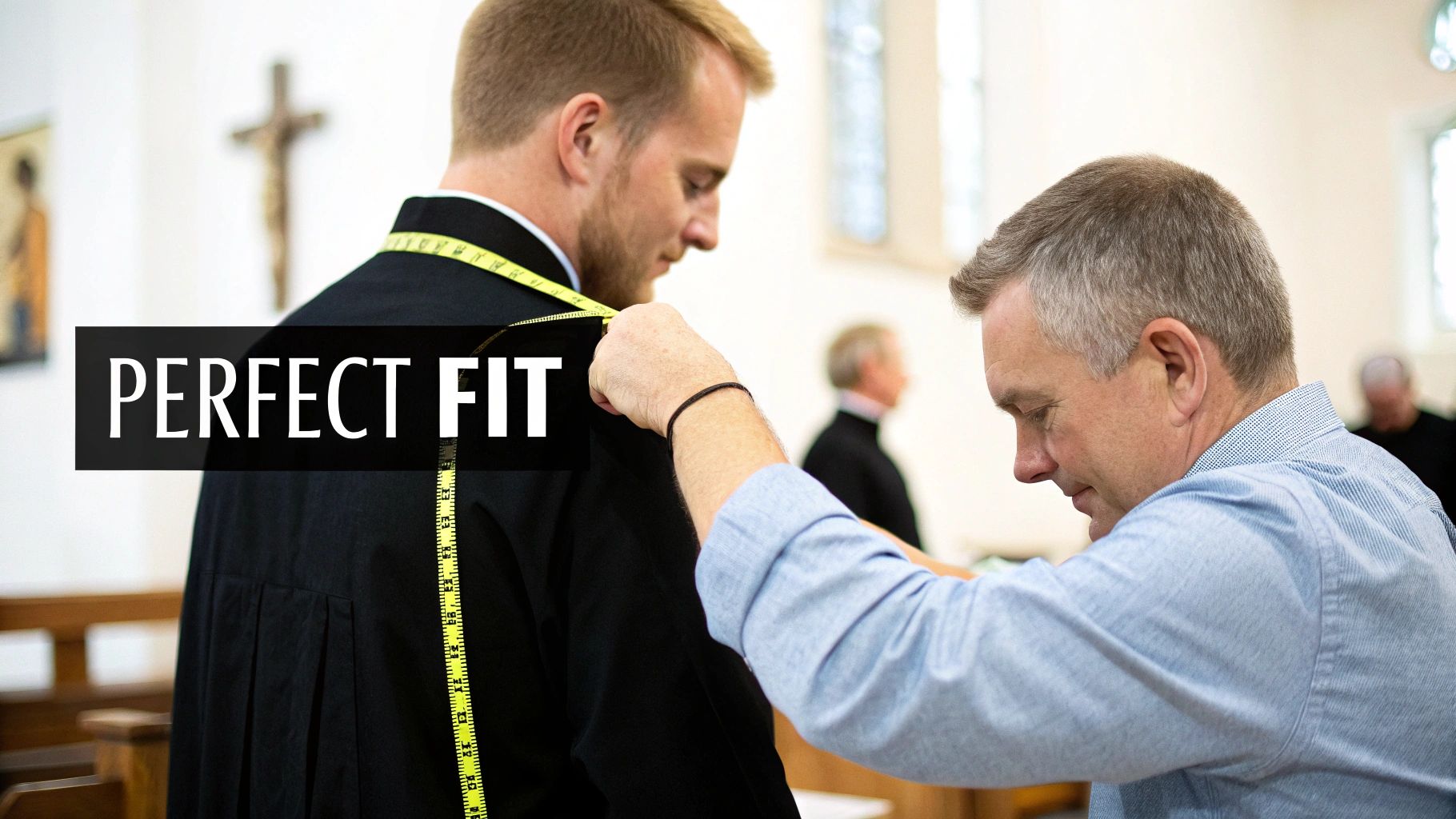
Taking Your Core Measurements
For the best results, grab a flexible measuring tape and ask a friend or colleague to help—it’s much easier to get accurate numbers when someone else is holding the tape. It’s also a good idea to wear whatever you typically have on underneath your cassock to get the most realistic measurements.
Here’s what you need to measure:
- Chest: Stand relaxed and wrap the tape around the fullest part of your chest. Keep the tape level all the way around. It should be snug, but not tight. You should be able to slip a finger underneath without any trouble.
- Sleeve Length: This is a key measurement people often get wrong. Start at the prominent bone at the back of your neck. Run the tape across the top of your shoulder, then down your arm to your wrist bone. This two-part path ensures the sleeve has enough length to drape properly when you move.
- Back Length: From that same bone at the base of your neck, measure straight down your back to where you want the hem to fall. A good rule of thumb for a cassock is about 1 to 2 inches off the floor. This gives you enough length for a formal look without creating a tripping hazard.
With these three numbers in hand, you’re ready to confidently find your size on our charts.
Little Details That Make a Big Difference
Beyond the basic tape-measure numbers, a few other considerations separate a good fit from a great one. These are the details that truly dial in the comfort and appearance of your vestments.
For starters, think about what you wear underneath. If you often wear a suit jacket beneath your cassock, you'll naturally need a bit more room in the chest and shoulders than if you're just wearing a clergy shirt.
A properly fitted cassock should allow you to move freely—raising your arms, sitting, and standing—without ever feeling constricted. It should hang cleanly from the shoulders, creating a silhouette of dignity, not one of restriction.
Your shoes matter, too. The height of your typical dress shoes directly impacts where the hemline will land, so be sure to wear them when measuring your back length. For those who are diving deep into custom tailoring, resources on tools like adjustable dress forms for a perfect fit can be a fantastic way to understand how professional-grade garments are shaped.
Plus Size and Custom Options
We believe every member of the clergy deserves a cassock that fits perfectly, which is why we offer a comprehensive range of plus-size options and custom tailoring services. Finding cassock robes clergy can wear with confidence shouldn't be a challenge.
If you'd like to explore the full range of sizes and custom possibilities, our guide on cassocks for sale is a great place to start. Our aim is to make it simple for everyone to find their perfect fit.
Caring for Your Cassock to Ensure Its Longevity
A cassock is far more than just a garment; it's a real investment in your ministry. With just a little bit of care, you can make sure it looks dignified and serves you well for many years to come. Protecting the fabric, color, and structure of your cassock robes clergy wear is actually much simpler than most people think.
Honestly, the most important thing you can do is check the manufacturer's care label. It’s your single best source of truth. Different fabrics have vastly different needs, and following those specific instructions is the surest way to prevent accidental damage and keep the cassock looking exactly as it should.
Fabric-Specific Cleaning Instructions
How you clean your cassock comes down to one thing: what it's made of. Modern fabrics are designed for convenience, while the more traditional materials need a gentler approach.
- Polyester and Polyester Blends: Most modern cassocks are made from these workhorse fabrics. They can typically be machine washed on a gentle cycle with cold water. You can tumble dry them on a low setting, but I always recommend hanging them to air dry. It avoids any risk of heat damage and helps wrinkles fall out on their own.
- Cotton and Cotton Blends: These are also often machine washable, but keep in mind they’re more likely to shrink and wrinkle than polyester. Stick with cold water and a gentle cycle, and definitely consider air drying to maintain the proper shape and size.
- Wool Blends: If your cassock has wool in it, it almost certainly needs to be professionally dry-cleaned. There’s really no way around it. Wool fibers can easily shrink or get distorted if washed improperly, so it’s best to trust an expert to protect the garment’s integrity and beautiful drape.
Once it's clean, how you store your cassock is just as crucial for its long-term health.
Storing Your Cassock Correctly
Good storage habits are what keep a cassock ready for service, preventing wrinkles, fabric stress, and dust.
The moment you take off your cassock, hang it up on a broad, supportive hanger. This lets the fabric breathe, encourages minor wrinkles to release naturally, and stops the shoulders from getting stretched out or misshapen.
For seasonal or long-term storage, a breathable garment bag is a fantastic idea. It shields your cassock robes clergy from dust and fading without trapping moisture, which could lead to mildew. These garments carry so much history, making their preservation all the more meaningful. The spread of Christianity around the globe created a lasting need for vestments that honor these deep traditions. You can find more about the cassock’s historical journey on ivyrobes.com.
Handling Minor Stains and Pressing
Life happens, and so do spills. Acting quickly can stop a small spot from becoming a permanent stain.
If you spill something, blot it right away with a clean, damp cloth. The key is to blot, not rub—rubbing just pushes the stain deeper into the fabric fibers. When it comes to pressing, always set your iron to the correct heat for the fabric type. I also suggest using a pressing cloth as a buffer to protect the material from direct heat. A simple routine like this will ensure your cassock remains a distinguished part of your ministry for years to come.
Common Questions About Cassock Robes for Clergy
Let's tackle some of the most common questions that come up when people are choosing cassocks. Getting these details right can make all the difference, so I've put together some straightforward answers to help you feel confident in your choices.
What Is the Difference Between a Cassock and an Alb?
It helps to think of them as two distinct layers, each with its own job and meaning. The cassock is the foundational garment, usually black, that a cleric wears. It's the base layer that signifies their role.
The alb, on the other hand, is a white tunic that goes over the cassock during services. That white color is symbolic, meant to represent the purity of baptism. To make things a bit simpler for modern use, the cassock-alb was developed. It’s a handy hybrid that combines both into a single robe, giving you a dignified look without all the layering.
Can Laypeople Like Altar Servers or Choir Members Wear Cassocks?
Absolutely, and it’s a very common and time-honored practice. In many churches, laypeople serving in important roles—like acolytes, altar servers, and choir members—wear cassocks.
The typical look is a black or colored cassock with a crisp white surplice worn over the top. This creates a beautifully uniform and reverent appearance for everyone involved in leading the service. We actually have a full line of choir cassocks designed specifically for this.
How Do I Choose Between Single and Double Breasted Cassocks?
This decision almost always comes down to your church's specific tradition. The style you choose is a direct link to a particular branch of church history.
- The Anglican Cassock: This is the single-breasted style, featuring a single, clean row of buttons down the front. It’s the go-to for Anglican, Lutheran, and Methodist clergy.
- The Roman Cassock: This is the double-breasted style, which wraps across the front for a more layered look. You’ll traditionally see this worn by Roman Catholic clergy.
Are There Special Cassocks for Bishops or Cardinals?
Yes, definitely. The color and trim of a cassock are crucial visual cues for ecclesiastical rank. While priests, deacons, and seminarians wear the black cassock robes clergy typically associate with daily parish life, higher offices are set apart by specific, vibrant colors.
Bishops are distinguished by their purple cassocks (technically amaranth red), while cardinals wear a striking scarlet red. The piping and buttons on these vestments will also match these colors, creating a clear visual hierarchy that’s an important part of church tradition.
This color symbolism is practical, too—it helps the congregation instantly recognize the spiritual leadership in their midst.
At ChoirBuy, we're passionate about providing high-quality cassocks, surplices, and choir robes that serve the needs of your entire congregation. To explore our complete collection and find the perfect vestments for your ministry, please visit us at www.choirbuy.com.