

More than just a uniform, the cassock for an altar server is a deeply symbolic garment—the very foundation of their liturgical role. Think of it as the base layer that signals a shift from the everyday to the sacred, preparing the server for their duties at the altar. Choosing the right cassock for altar server teams ensures they look unified, feel comfortable, and can perform their duties with reverence and focus.
Understanding the Altar Server Cassock
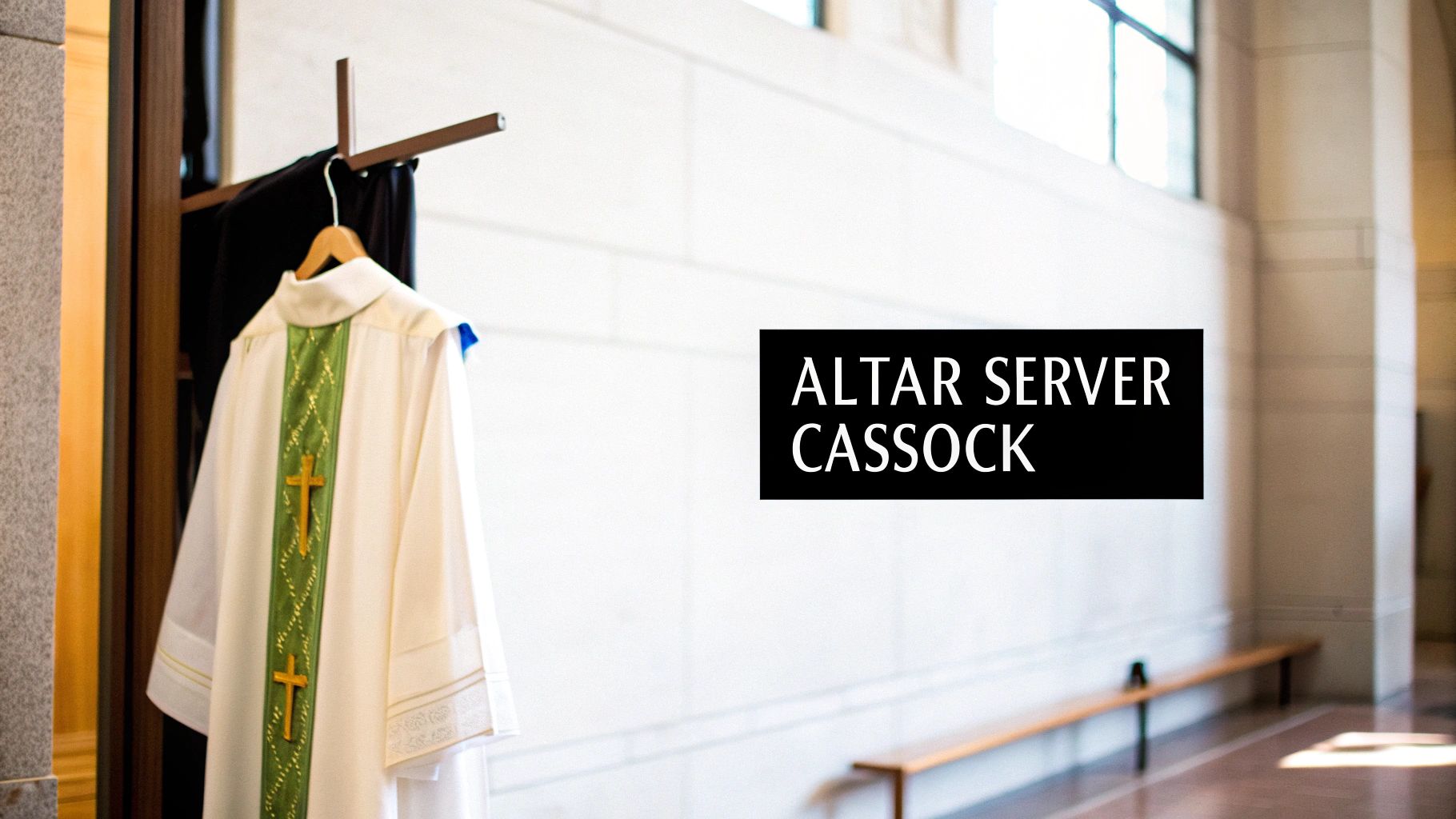
Choosing the right cassock for your servers is one of those behind-the-scenes decisions that has a surprisingly big impact on the reverence and visual harmony of your services. This garment carries a long history, symbolizing a server's commitment and setting them apart for their specific ministry. A proper cassock for an altar server helps create a solemn and prayerful atmosphere.
The use of a standardized cassock really took off in the mid-20th century, especially after the 1917 Code of Canon Law began to formalize roles for lay people assisting in the liturgy. By 1950, it's estimated that over 80% of U.S. parishes had adopted them. This was right around the time church attendance was at its peak, with about 75% of American Catholics attending Mass every week. You can find more of this interesting history over at Choirbuy.com.
Why the Right Cassock Matters
Getting the cassock right is about much more than just looks. A proper garment allows a server to move with grace and focus, without being distracted by something that's too tight, too long, or made from scratchy fabric. It also creates a sense of unity, shifting the focus from individual personalities to their shared, collective service.
A well-chosen altar server cassock fosters:
- A Sense of Solemnity: The formal, traditional appearance immediately elevates the atmosphere, encouraging prayer.
- Unity and Discipline: When servers are dressed alike, they function and appear as a cohesive team, which mirrors the beautiful order of the liturgy itself.
- Comfort and Focus: A good fit and the right fabric mean a server isn't fidgeting. They can concentrate fully on their responsibilities.
- Respect for Tradition: Wearing these vestments connects today’s young servers to the countless generations who served before them.
The cassock is the visible sign of the altar server’s special ministry. It's a constant reminder that they are active assistants in the most sacred rituals of our faith, not just passive observers.
What This Guide Will Cover
My goal with this guide is to give you total confidence in outfitting your servers. We'll walk through every detail you need to consider, from fabric to fit, so you can find vestments that are dignified, comfortable, and built to last. Just like there are specific expectations for clergy attire for men, choosing a server's cassock requires a thoughtful approach.
We’re going to cover everything. You'll learn how to:
- Tell the difference between a cassock, surplice, and cotta.
- Take proper measurements to guarantee a perfect fit for every server.
- Understand the meaning behind different liturgical colors.
- Pick the best fabrics and styles for your church's climate and tradition.
By the time you're done reading, you’ll be ready to select the ideal cassock for altar server teams of any size, ensuring they look and feel prepared for their important work.
Decoding Altar Server Vestments: Cassock, Surplice, and Cotta
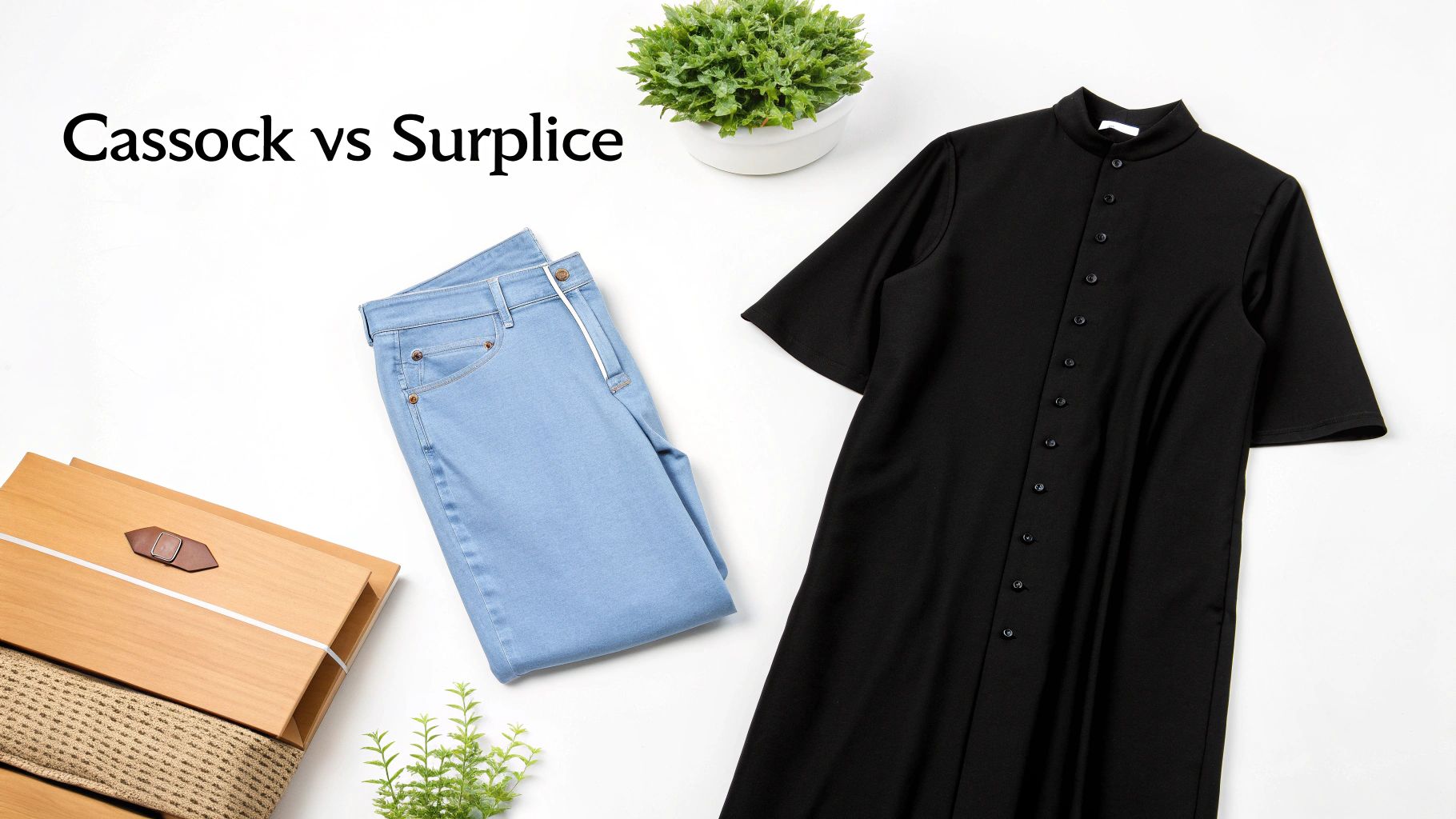
When you're outfitting altar servers, the terminology can get a little confusing. Let's clear it up. The three main garments you'll encounter are the cassock, the surplice, and the cotta. Each has a specific job, and knowing how they work together is the first step toward a dignified, traditional look for your servers.
Think of it like getting dressed in a classic three-piece suit. The cassock for an altar server is the foundation—the suit jacket and trousers. It's the long, ankle-length robe that establishes the primary silhouette and color of the uniform. At Choirbuy, we offer a range of server cassocks designed for this foundational role.
Over the cassock goes a shorter, white garment that completes the ensemble. This top layer is either a surplice or a cotta. These are like the waistcoat of the suit, adding a layer of symbolic contrast and completing the formal look. Which one you choose often comes down to your parish's specific traditions and aesthetic preferences.
The Foundation: The Altar Server Cassock
The cassock is always the first piece you put on. It’s a close-fitting robe designed to completely cover the server's street clothes. This simple act symbolizes leaving the secular world behind to enter into a sacred role. Cassocks come in various liturgical colors, most often black or red, with each color holding its own meaning within the church year. You can explore our collection of black cassocks and red cassocks to see the options.
More than just a uniform, the cassock's purpose is to create a sense of unity among the servers and minimize distractions. By covering personal clothing, it helps the congregation focus entirely on the liturgy, not on what the servers are wearing. Its long, dignified lines add to the solemnity and reverence of the Mass.
The Outer Layer: Surplice vs. Cotta
The white garment worn over the cassock symbolizes the purity required for serving at the altar. While both the surplice and cotta fulfill this role, they have noticeable differences in their cut and length.
- The Surplice: This is the longer of the two options, usually falling to the knees or even a bit lower. It has wide, flowing sleeves and an ample cut, giving it a very traditional and formal appearance.
- The Cotta: This is a much shorter vestment, ending around the waist or just past the hips. Its sleeves are typically simpler and more square-cut, creating a boxier, cleaner look compared to the flowing surplice.
For a deeper dive into this particular garment, you might find our guide on choir surplices and their liturgical importance helpful. It’s details like these that help you make the right choice for your parish.
To see the differences side-by-side, here’s a quick breakdown.
Cassock vs Surplice and Cotta at a Glance
This table offers a simple comparison of the primary vestments for altar servers, highlighting their function, appearance, and how they are worn together.
| Attribute | Cassock | Surplice | Cotta |
|---|---|---|---|
| Function | Primary foundational garment, the uniform. | Outer garment worn over the cassock. | Outer garment worn over the cassock. |
| Color | Liturgical (typically black or red). | Always white, symbolizing purity. | Always white, symbolizing purity. |
| Length | Long, usually to the ankle. | Mid-length, falling to the knees. | Short, ending around the waist or hips. |
| Sleeves | Long and close-fitting. | Wide, full, and often pleated. | Shorter and often square-cut. |
Ultimately, understanding the interplay between these garments is what matters most. A well-fitted cassock for an altar server, paired with the correct surplice or cotta, ensures your server looks prepared and ready to fulfill their sacred duties with reverence.
Getting the Right Style and Fabric
Once you have a handle on how the cassock fits into the broader set of liturgical vestments, it's time to get into the details: style and fabric. These two choices make all the difference, shaping not just how the cassock looks and hangs, but how comfortable and durable it will be for your altar servers. Picking the right combination means you'll have a garment that's both dignified for worship and practical enough for the weekly routine.
Think of it like choosing a team uniform. You want everyone to look sharp and cohesive, but the gear also needs to hold up to constant use, regular washing, and the temperature swings inside your church throughout the year.
Roman vs Anglican Cassock Styles
When you start looking at altar server cassocks, you'll find they generally fall into two classic styles: Roman and Anglican. They both serve the same function, but their design creates a distinct look that often reflects a parish's particular liturgical tradition.
-
The Roman Cassock: This is far and away the most common style, especially within the Catholic Church. Its defining feature is a single-breasted front with a prominent row of buttons—traditionally 33 of them, symbolizing the years of Christ's life—running all the way from the collar to the hem. The Roman cassock creates a clean, straight, and formal silhouette, making it a timeless and widely recognized choice.
-
The Anglican Cassock: The Anglican style, on the other hand, is double-breasted. Instead of buttons down the middle, the front panel wraps over and fastens with buttons on the side of the chest and at the waist, which are often concealed. This design results in a smooth, button-free front, offering an equally formal but slightly different look.
Both the classic Roman front-button cassock and the unique double-breasted Anglican version are excellent options. The right one for your parish usually comes down to your established customs or simply which aesthetic you prefer.
Choosing the Best Fabric for Your Needs
Just as critical as the cut is the fabric. The material of a cassock for an altar server dictates everything from its breathability and durability to how well it resists wrinkles and how easy it is to care for. The two front-runners are polyester and cotton blends, and each brings something different to the table.
For most parishes, a high-quality 100% matte polyester is the standard. You can think of it as the workhorse of liturgical fabrics. It's tough, holds its color beautifully through countless washes, and is fantastic at resisting wrinkles. That makes it a practical, low-maintenance choice for busy parishes where vestments are in constant rotation among servers.
A cotton-polyester blend, however, brings a major advantage: breathability. This makes it a much better option for churches in warmer climates or for older, historic buildings that aren't equipped with modern air conditioning. It might need a touch more ironing to look its best, but the extra comfort it provides your servers is often a worthy trade-off.
The choice of fabric isn't just about looks; it's a practical decision that directly impacts a server's comfort and ability to focus. In a warm church, a breathable fabric can be the difference between a server who is engaged and one who is distracted and uncomfortable.
Never underestimate the powerful symbolism of the cassock, either. A fascinating statistic from U.S. Catholic parishes revealed that when they shifted to all-male server programs that emphasized traditional cassocks, they saw an average 450% increase in the number of servers in just one year. This highlights that the cassock is more than an article of clothing; it's a symbol of serious commitment. You can read more about this trend in this detailed analysis of altar server programs. By carefully choosing the right style and fabric, you honor this tradition and reinforce its importance.
How to Measure for a Perfect Cassock Fit
A cassock that doesn't fit properly is a problem. It’s more than just a uniform that looks a bit off; it’s a constant, nagging distraction for the server. A sleeve that’s too long can easily catch on the credence table, while a hem that's too short just looks undignified. Taking the time to get accurate measurements is truly the most important step in making sure the cassock for an altar server adds to the reverence of the Mass, rather than taking away from it.
Think of it like getting a good suit tailored. Just a few precise measurements can transform a generic, off-the-rack garment into something that looks sharp and feels custom-made. This simple process gives the server the confidence to move gracefully and focus completely on their sacred duties.
This little infographic really simplifies the selection process, walking you through the key decisions from style and fabric to the ultimate goal: a comfortable, well-fitting vestment.
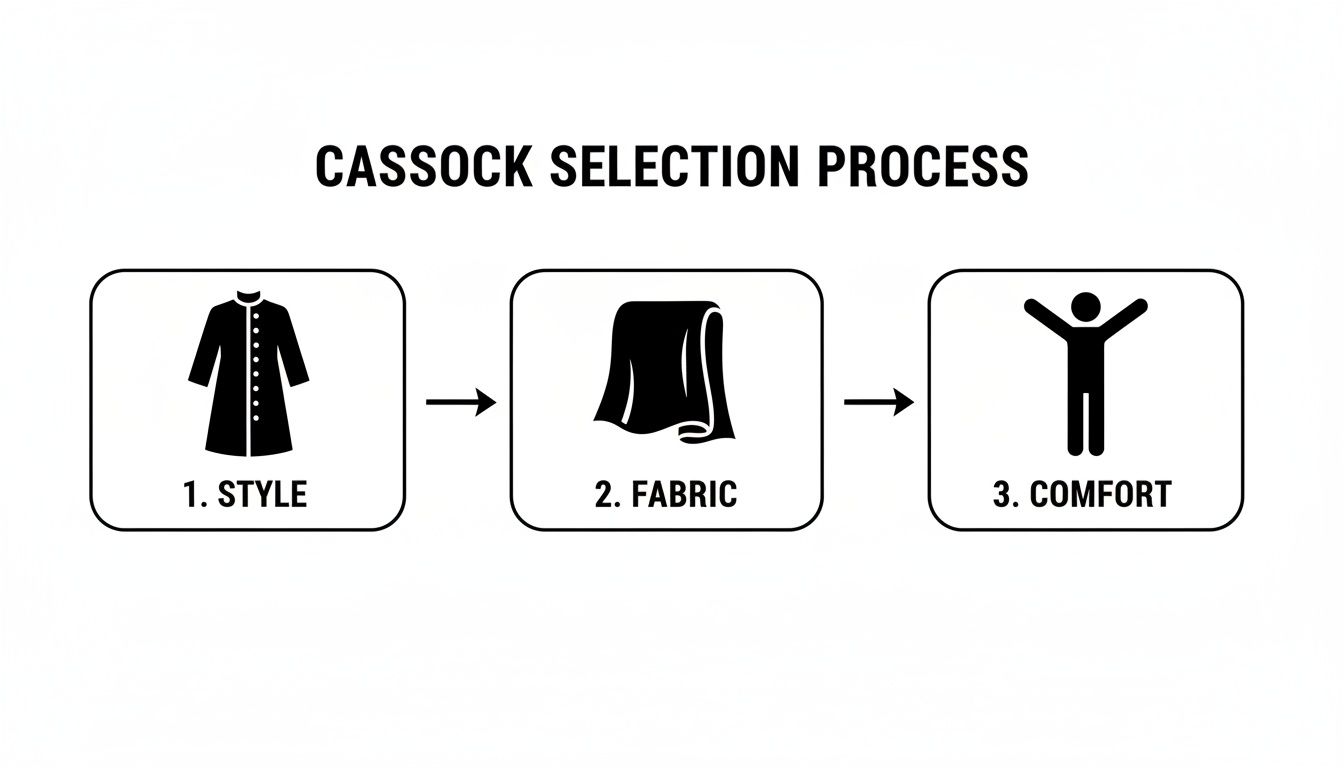
As you can see, choosing the right style and fabric are the building blocks that lead directly to a comfortable and appropriate garment for your servers.
Getting the Measurements Right
To get that perfect fit, you only need to focus on a few key areas. Have the server stand up straight and look forward, and use a flexible tailor’s measuring tape for the most accurate results.
Getting these measurements right is the foundation of a good fit. Here's a quick guide to help you take them accurately.
| Measurement | How to Measure | Pro Tip |
|---|---|---|
| Chest | Wrap the tape around the fullest part of the server’s chest, making sure it goes under their arms and across the shoulder blades. | Keep the tape snug, but not tight. You should be able to slide a finger between the tape and their body. |
| Sleeve Length | With the server's arm slightly bent at the elbow, start at the prominent bone at the center back of the neck. Run the tape over the shoulder and down the arm to the wrist bone. | This method, called a "raglan" sleeve measurement, accounts for shoulder width and ensures sleeves aren't too short when the arm moves. |
| Back Length | Start from the same point at the base of the neck and measure straight down the back to where you want the hem to fall. | For altar servers, the ideal length is about 1 to 2 inches above the top of their dress shoes to prevent tripping. |
By following these simple steps, you'll have the exact numbers needed to find a cassock that looks and feels like it was made just for them.
One of the most common mistakes I see is measuring a server while they're wearing a bulky sweater or hoodie. Always measure over a simple t-shirt or a thin shirt to avoid skewed numbers. A few minutes of careful measuring up front will save you from the hassle of returns and ensure your servers are comfortable from their very first Mass.
Sizing for Youth vs. Adult Servers
Measuring for young, growing servers is a bit different than for adults. The key is to account for those inevitable growth spurts to get the most life out of each vestment.
Tips for Youth Sizes:
- Plan for Growth: When you take the back length measurement, consider adding an extra inch. It’s always easier to hem a cassock that’s a little too long than to fix one that’s suddenly too short.
- Build in Wiggle Room: I recommend adding 2-3 inches to the actual chest measurement. This gives them room to move comfortably and allows for some growth without the cassock feeling restrictive.
- Mind the Sleeves: Pay close attention to sleeve length. Sleeves that are too long can be a genuine safety hazard around candles and other altar items. The wrist bone is the perfect spot for the cuff to land.
For a complete breakdown of how these measurements translate to specific sizes, our size and color charts provide all the specifics. Consulting these guides before you order is the best way to feel completely confident in your purchase.
Choosing Liturgical Colors and Customizations
Once you've nailed down the fit and fabric, it's time to consider the most visually striking feature of a cassock for an altar server: its color. This isn't just about aesthetics. Each hue is steeped in tradition, chosen to reflect the specific mood and meaning of the liturgical season.
Think of it as a kind of visual storytelling. When the server's cassock aligns with the priest's vestments and the church's decor, it creates a powerful, unified message. This visual harmony draws the congregation deeper into the worship experience, reinforcing the solemnity and purpose of the Mass.
The Meaning Behind the Colors
For altar servers, the primary palette is usually black, red, and purple. Each one has a job to do, speaking a silent language tied directly to the church calendar. Getting the color right means your servers are always perfectly attired for the day's celebration.
- Black Cassocks: Black is the workhorse of liturgical colors. It's the standard for Ordinary Time, funerals, and general services, representing sobriety, reverence, and a humble focus on the sacred duties being performed. Our black server cassocks are a popular choice for their versatility.
- Red Cassocks: Evoking fire and blood, red is reserved for the most powerful moments in the church year. You’ll see it on Pentecost, Good Friday, Palm Sunday, and the feast days of martyrs, symbolizing the fire of the Holy Spirit and the ultimate sacrifice of the faithful.
- Purple Cassocks: Purple is the color of preparation and penance. It’s worn during the reflective seasons of Advent and Lent, reminding us to prepare our hearts for the great feasts of Christmas and Easter.
To dig a bit deeper into the rich symbolism of church colors, our guide to choir robe color meanings offers some great insights that are broadly applicable to all liturgical garments.
Adding Unique Customizations
While tradition sets the foundation, there's still plenty of room to add details that make the cassocks unique to your parish. These finishing touches are where you can really elevate the final look.
Customization is not about straying from tradition but about embracing it with care. Small details like button color, trim, and cincture style can elevate a standard cassock into a garment that reflects the specific character and dignity of your parish community.
Here at ChoirBuy, we offer several ways to personalize your altar server cassocks. These small choices can make a big difference in creating a polished, cohesive appearance for your servers.
Key Customization Choices:
- Button Details: You can opt for fabric-covered buttons that blend seamlessly with the cassock or choose a contrasting color to add a pop of visual interest.
- Piping and Trim: Adding a thin line of colored piping along the collar, cuffs, or down the front is a classic touch. A sharp red trim on a black cassock, for instance, looks incredibly distinguished.
- Cincture Styles: The cincture (the belt) can be a simple sash or a more structured band, sometimes with a fringe. Matching its color to the piping or trim is a great way to tie the whole look together.
If you're thinking about adding a parish crest or other specific symbols, looking into custom embroidery services is a great next step. Whether you keep it simple or go for something more ornate, these details ensure your cassock for altar server teams represents your church with reverence and style.
Keeping Your Cassocks Looking Their Best
A well-kept set of cassocks is a real asset to any parish. Think of them as an investment—with just a bit of regular care, these garments can last for years, serving your community beautifully. Keeping them in top shape isn't complicated, but it's essential for maintaining a dignified and reverent atmosphere at the altar.
This is about more than just cleaning. A proper care routine protects the fabric from breaking down, prevents unnecessary wear and tear, and ensures your altar servers always look sharp and ready to serve. When we take care of our vestments, we're also teaching our servers to respect their important role.
Washing Your Cassocks: A Fabric-by-Fabric Guide
How you wash a cassock really comes down to the material it's made from. Before you do anything, always check the care tag inside the garment. But if you're in a pinch, here are some reliable guidelines for the most common fabrics you'll encounter.
Polyester and Poly-Blends
The good news is that most modern vestments, like our workhorse polyester server cassocks, are made to be easy to care for. These materials are tough and hold their color well.
- Go Gentle: Stick with a gentle cycle on your washing machine, and always use cold water. This helps the fabric last and keeps it looking new.
- Mild Soap Only: Use a simple, mild detergent. Anything with bleach or harsh additives can break down the fibers over time.
- Low and Slow Drying: Tumble dry on the lowest heat setting. To really cut down on wrinkles, pull the cassock out as soon as the cycle ends and hang it up right away.
Cotton and Cotton Blends
Cotton is comfortable and breathable, but it needs a little more careful handling to avoid shrinking and stubborn wrinkles.
- Cold Water is Key: Washing in cold water is the single best thing you can do to protect cotton fibers.
- Let it Air Dry: The ideal way to dry a cotton cassock is to hang it up and let it air dry. If you have to use a machine, use the absolute lowest heat or an "air fluff" setting, and take it out while it's still a tiny bit damp.
Ironing Without the Headaches
A crisp, wrinkle-free cassock just looks right. Getting that polished look is easy if you follow a couple of simple rules.
First, keep the iron on a low to medium heat setting. High heat can scorch the fabric or leave behind an unsightly shine, especially on polyester. A great pro-tip is to iron the cassock inside-out. Even better, place a clean, thin cloth (a press cloth or even a tea towel works) between the iron and the garment as a protective shield.
Inevitably, a little spill will happen. The trick is to act fast. For small spots, grab a gentle stain remover or put a drop of mild detergent on a damp cloth. Gently blot the stain—never rub it! Rubbing can drive the stain deeper into the fabric, making it much harder to get out.
Storing Cassocks Between Sundays
Believe it or not, how you store your cassocks is just as crucial as how you wash them. Stuffing them into a crowded closet is a surefire way to get deep wrinkles that are tough to iron out.
Always hang your cassocks on wide, sturdy hangers. Flimsy wire hangers can stretch and distort the shoulder area over time. Give them some breathing room in a cool, dry closet so they aren't crushed against other clothes. This small step ensures they'll hang beautifully and be ready to go for the next service.
Answering Your Final Questions About Altar Server Cassocks
Even after you’ve explored styles, fabrics, and sizing, a few practical questions often come up. We get it. Outfitting an entire team of altar servers is a big responsibility, and you want to get it right.
Think of this as our final chat over coffee, where we clear up those last-minute details. We’ve pulled together the most common questions we hear from parish coordinators just like you, so you can move forward with your order feeling completely confident.
What's the Difference Between a Cassock and an Alb?
This is easily one of the most common points of confusion, so let's clear it up. The cassock is the foundational garment—that long, ankle-length robe you see in colors like black, red, or purple. It’s the base layer of the server’s uniform, and you'll almost always see a white surplice or cotta worn over the top.
An alb, on the other hand, is a simple, long white robe that symbolizes baptismal purity. While priests wear an alb under their chasuble, sometimes servers will wear one as a standalone vestment. For most parishes aiming for a traditional and formal look, the classic cassock for an altar server and surplice combination is the way to go.
How Do I Place a Bulk Order for My Parish?
Placing an order for your whole server team is simple. You can add all the sizes and styles of the cassock for altar server you need directly to your online cart. Most of the time, any volume discounts you qualify for will be applied automatically right at checkout.
That said, if you're placing a very large order or need some customization, we always suggest giving our team a call. A quick conversation can help you navigate sizing for a group with a wide age range and ensure the whole process is smooth and efficient.
"We always encourage parish coordinators to reach out for large orders. Speaking with us directly can solve sizing puzzles, clarify any questions, and often secures the best possible value for your church."
Can I Order a Sample Before Committing to a Large Purchase?
Yes, of course! We completely understand wanting to see and feel the fabric and check the fit before outfitting your entire ministry. We actually encourage you to order a single sample cassock first.
Getting a sample in your hands is the best way to evaluate the material, the richness of the color, and the quality of the stitching. This little bit of due diligence ensures you’ll be thrilled with the final order. Just visit our website or contact our support team to learn about our easy sampling policy.
What Is Your Return Policy on Vestments?
We want you to feel secure when you purchase from us. ChoirBuy offers a money-back guarantee on our vestments because we truly stand behind their quality. If your cassocks aren't what you expected, you can return them for a refund or an exchange within a set timeframe.
For the full details, especially concerning custom or embroidered items which may have different conditions, please take a moment to read the complete return policy on our website. It’s all laid out clearly so you can order with total peace of mind.
At ChoirBuy, we're dedicated to providing dignified, durable, and high-quality cassocks for your altar servers. When you're ready, you can explore our full collection of liturgical vestments and find the perfect fit for your parish at https://www.choirbuy.com.