

Choosing between a cassock and alb can feel like a complicated decision, but it really comes down to understanding their distinct roles in worship. Think of the cassock as the foundational uniform, a tailored robe that creates a formal base layer.Choosing between a cassock and alb for your choir can feel like a tricky decision, but it really comes down to understanding their very distinct roles in worship. Think of the cassock as the foundational uniform—a tailored, often dark robe that creates a formal base layer. The alb, on the other hand, is a simpler, flowing white tunic symbolizing the purity that comes with baptism.
Getting a handle on this core difference is the first and most important step to outfitting your choir with garments that reflect both reverence and purpose.
Understanding the Foundations of Choir Vestments
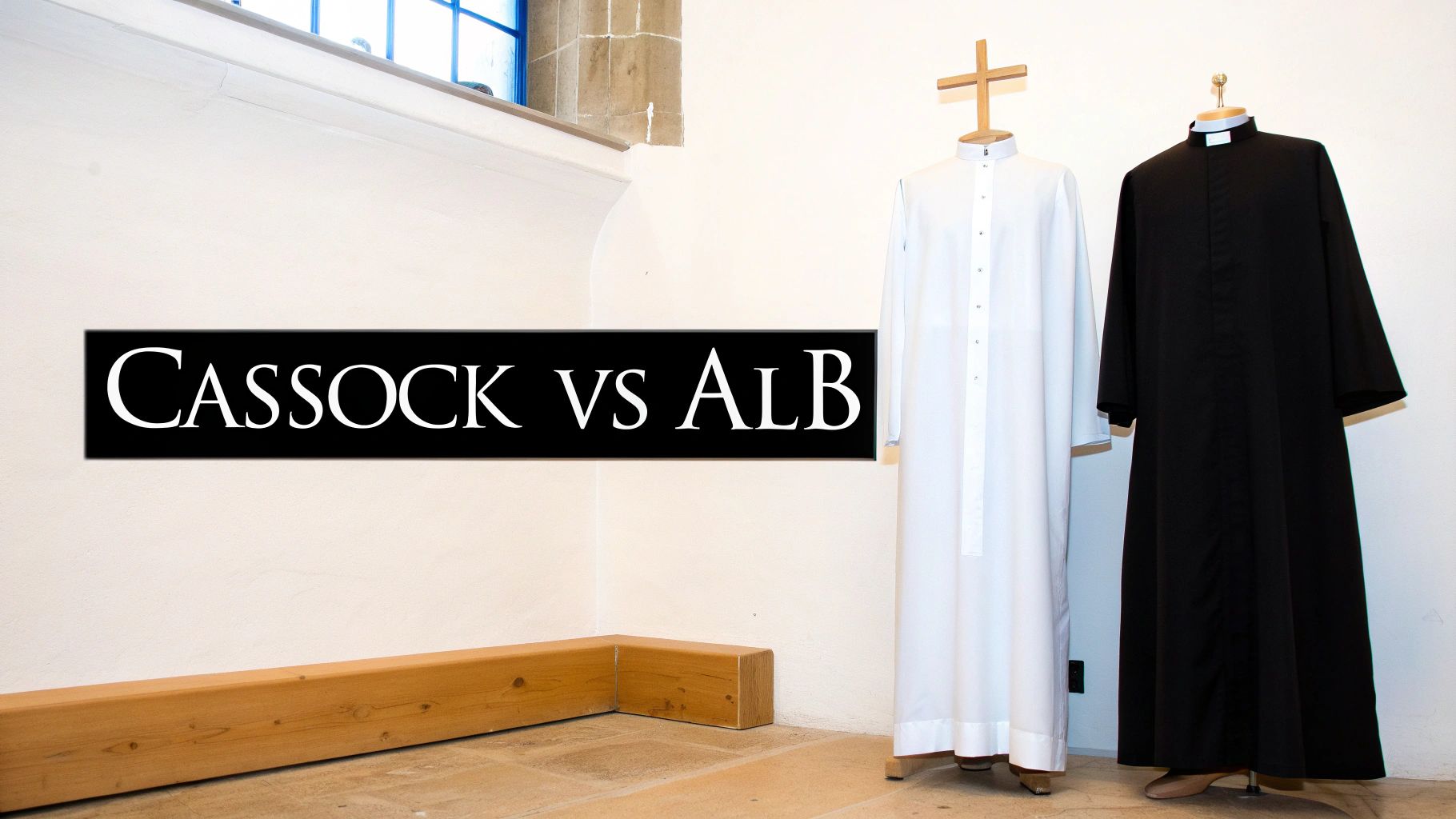
Sometimes the easiest way to grasp the difference is with an analogy. The cassock is much like a formal suit. It establishes a baseline of order, discipline, and reverence, preparing the wearer for a specific, sacred role within the liturgy. Its close, tailored fit and typically dark color create a unified look that helps minimize individual distraction, focusing attention on the choir's collective ministry.
The alb, however, is the sacred overgarment. Its name comes directly from albus, the Latin word for white, which ties it directly to the white garment given to the newly baptized. It's a powerful symbol of purity, new life in Christ, and the wearer's participation in the royal priesthood of all believers. Its looser, flowing design isn't about conforming to a role as much as it is about embodying a deep theological truth.
To make things even clearer, let's break down the key distinctions.
Cassock vs Alb At a Glance
This table offers a quick comparison of the two vestments, highlighting their fundamental differences in choir apparel.
| Attribute | Cassock | Alb |
|---|---|---|
| Symbolism | Discipline, order, reverence, clerical office. | Baptismal purity, new life in Christ. |
| Fit & Style | Tailored, close-fitting, often buttoned down the front. | Loose, flowing, simple tunic-style, often girdled. |
| Color | Typically black, but also red, purple, or white for clergy. | Always white or off-white. |
| Choir Usage | Worn as a base layer, usually under a surplice. | Worn as the primary vestment, often with a cincture. |
Seeing them side-by-side really clarifies how each garment serves a unique function within the worship setting.
The Role of Tradition in Your Choice
More often than not, your church’s own tradition will be the biggest guide in choosing between a cassock and an alb. For instance, many choirs in the Anglican, Catholic, and Lutheran traditions lean heavily toward the formal structure of a choir cassock paired with a white surplice over it. This combination creates a classic, orderly appearance with deep historical roots, visually communicating a sense of solemnity and dedication.
On the flip side, traditions that place a stronger emphasis on Eucharistic or baptismal theology often prefer the simple elegance of an alb. This choice beautifully underscores the idea that all participants in the service, choir members included, are actively fulfilling their baptismal calling.
As Psalm 29:2 instructs, we are to “Adore the Lord in holy attire.” This isn't about fashion, but about aligning our outward appearance with the sanctity of our role in worship. Our vestments are a visual expression of our reverence.
Making an Informed Decision
Ultimately, selecting the right vestments is about matching them to the theological and aesthetic vision of your worship service. It’s a choice that goes beyond just looks.
- For a traditional, formal aesthetic: The cassock provides a dignified and disciplined foundation that looks sharp and uniform.
- For a symbolic, sacrament-focused service: The alb offers a powerful visual connection to baptismal purity and the priesthood of all believers.
Understanding this fundamental difference empowers you to make a choice that truly enhances your choir's ministry. At ChoirBuy, we offer a wide selection of high-quality, customizable cassocks and albs designed to meet the specific needs of your tradition. Our goal is to simplify the process, ensuring your choir is outfitted beautifully and appropriately for worship.
The Rich History Woven into Your Choir's Robes
The vestments your choir wears are so much more than a uniform. They are threads of history, connecting your ministry today to a legacy of worship that stretches back centuries. When you understand the origins of the cassock and alb, they transform from simple garments into profound symbols, deepening the spiritual experience for your choir and the congregation alike.
Their story is a fascinating one, tracing a path from common street clothes to sacred attire.
Believe it or not, the earliest liturgical garments weren't special at all—they were just the everyday clothing of the Greco-Roman world. The cassock, for instance, grew out of the Roman tunica, a simple, long-sleeved garment worn by everyone. As secular fashions evolved, the Church held onto these older, more modest styles for its ministers, which began to set them apart for their sacred duties.
The Cassock: A Symbol of Order
It was really in the Middle Ages that the cassock as we recognize it came into its own. It became the standard daily, non-liturgical wear for clergy, almost like an original clerical uniform that identified their role in the community. Its adoption by choirs was a natural next step, visually uniting them with the clergy in service and creating a powerful look of discipline and reverence.
You can think of the cassock as a garment of preparation. When a choir member puts on a cassock, they are consciously stepping out of their individual, everyday identity and into a collective role—one dedicated to leading the congregation in worship. This visual unity helps focus everyone's attention not on the individual singers, but on the sacred music being offered to God.
A Modern Revival of Ancient Tradition
While deeply rooted in Catholic and Anglican history, the cassock found new life in other traditions during the 20th century. This revival was especially strong in Lutheran churches, where clergy and choirs started re-embracing historic vestments as a way to reconnect with the church's ancient heritage. This wasn't just about nostalgia; it was about reclaiming the deep symbolism these garments carry.
A really striking report from the United Lutheran Church in America shows just how dramatic this shift was. Between 1941 and 1958, the number of parish pastors regularly wearing a cassock, surplice, and stole shot up from just 216 to an incredible 2,710. That meant 70.3% of all pastors had returned to traditional vestments, a clear sign of a widespread movement.
"Worship the Lord in holy attire." - Psalm 96:9. This verse gets to the heart of it. What we wear in worship is an outward sign of our inward reverence, an act of setting ourselves apart for a holy purpose.
The Alb: A Garment of New Life
The alb has an even older and more profound history. Its name comes from the Latin word albus, which simply means "white." Its origins trace directly back to the pure white robe given to newly baptized Christians in the early Church. This wasn't just a piece of cloth; it was a powerful symbol of a new life in Christ—a visual reminder of being washed clean and clothed in purity.
This direct link to baptism is what makes the alb such a meaningful vestment for anyone leading worship. When choir members wear an alb, they are echoing their own baptism, reaffirming their identity as part of the body of Christ. It's a symbol that cuts across denominational lines, speaking to the universal Christian story of redemption and new beginnings.
For a deeper look into how different choir robes evolved, you might find our article on the history of choir robes interesting.
Ultimately, the deep history behind the cassock and alb gives them a significance that no modern uniform can replicate. They aren't just clothing; they are a tangible link to the countless generations of the faithful who have sung God's praises before us.
How to Layer Vestments for Modern Worship
Once you understand the history and meaning behind the cassock and the alb, the real art begins: knowing how to layer them for a look that's both polished and theologically rich. Let's move from the individual garments to how they're actually worn. In modern worship, you'll generally see two main pairings: the cassock with a surplice, and the alb with a stole. Each combination tells a different story and fits a different liturgical moment.
The right choice usually comes down to your church's tradition and the specific type of service you're holding. Think of it like a decision tree—it's a simple way to visualize which combination is right for your choir.
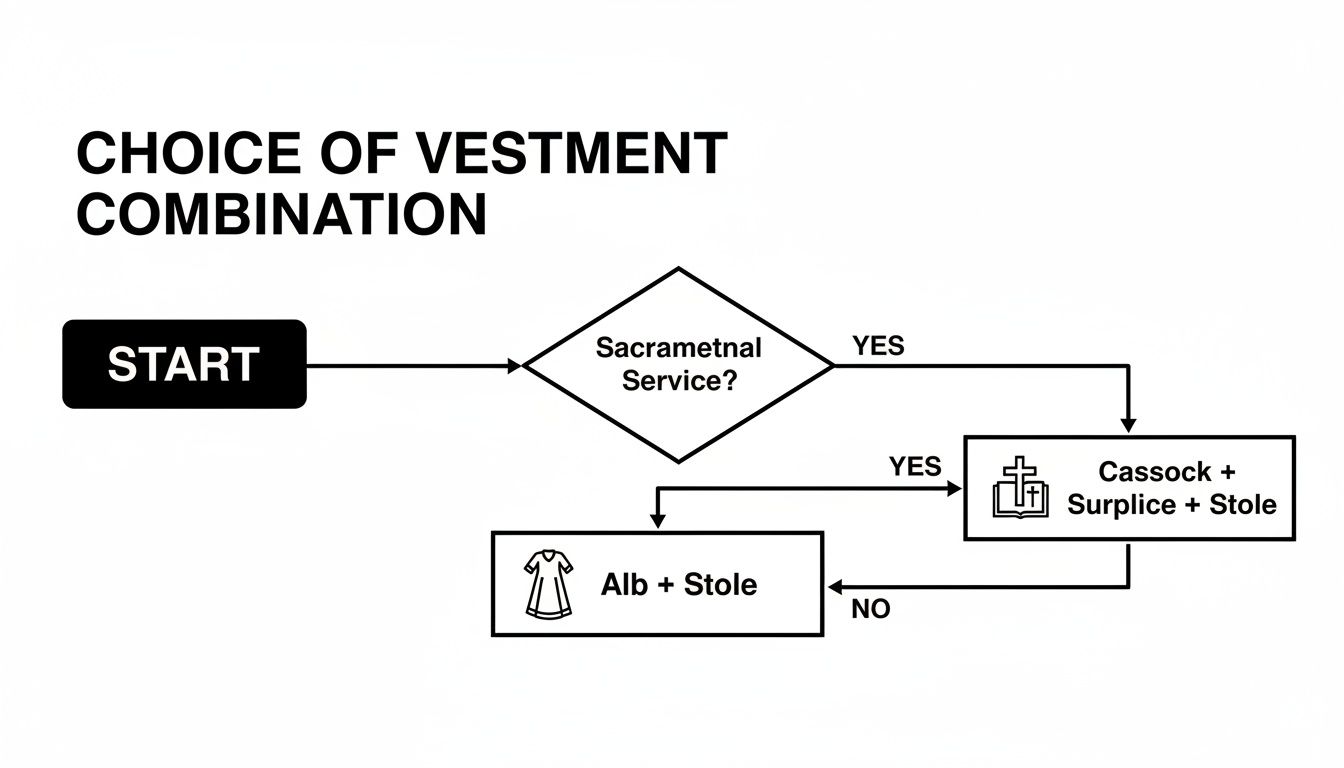
As you can see, the path starts by thinking about the formality and symbolic focus of the worship service.
The Cassock and Surplice: A Classic Choir Uniform
The pairing of a cassock and surplice is probably the most iconic choir uniform out there, especially in Anglican, Catholic, and traditional Lutheran churches. The dark cassock acts as a disciplined base layer, creating a unified and formal look that helps minimize distractions. Over it goes the surplice, a flowing white garment with wide sleeves that provides a beautiful visual contrast.
This is the go-to standard for choral offices like Morning Prayer or Evensong. It projects a sense of order, reverence, and dedication to the choir’s specific role in the ministry of worship. The surplice is a crucial part of this look, and you can dive deeper into its different styles in our guide on choir surplices. Some traditions even opt for a shorter version called a cotta, which many find more practical.
The Alb and Stole: A Sacramental Statement
In contrast, the alb and stole combination isn't so much a uniform as it is a direct statement about the sacraments. With the alb as the main garment, the symbolism of baptism—purity, new life, and our shared part in the priesthood of all believers—comes front and center. It's almost always the vestment of choice for services built around the Eucharist.
When a choir wears albs, they are visually connecting themselves to the sacred action happening at the altar. The alb is usually cinched with a cincture (a rope-like belt) and can be worn with a colored stole that matches the liturgical season, deepening that symbolic link. You'll see this pairing frequently in Roman Catholic parishes, and it's becoming more popular in other denominations that want to highlight baptismal theology in their worship.
The Cassock-Alb: A Modern Hybrid
For choirs looking for simplicity without giving up dignity, a third option has become a modern favorite. The cassock-alb, a clever 20th-century invention, blends the close fit of the cassock with the flowing lines of the alb into a single, practical garment. It streamlines vesting for both clergy and choir members, satisfying church law with minimal fuss.
This hybrid garment appeared several decades ago and took away the need for a separate amice, rolling medieval tradition and modern convenience into one piece. Today, it’s a staple in just about every church supply catalog, making it an incredibly popular and accessible choice for worship teams and vested choirs alike.
The choice of vestments is a form of non-verbal communication. It tells the congregation something about the nature of the service, the role of the choir, and the theological emphasis of the community.
Making the Right Choice for Your Service
So, how do you decide? The key is to pick the vestments that best match the theological tone and focus of the service.
Here’s a quick guide:
- For services like Evensong, Mattins, or formal concerts: The cassock and surplice offer a look of timeless order and professionalism.
- For the Holy Eucharist or services with baptism: The alb and stole provide a powerful visual connection to the sacraments being celebrated.
- For ministers, lay leaders, or choirs seeking versatility: The cassock-alb is a convenient and dignified all-in-one solution.
Ultimately, whether you choose the formal discipline of the cassock or the baptismal purity of the alb, your choir's attire becomes a meaningful part of the sacred drama of worship.
5. Choosing the Right Fabric and Style for Your Choir

When you're outfitting a choir, two decisions stand out above the rest: the fabric and the style of the vestments. Getting these choices right isn’t just about looking good—it's about practicality. The right materials and cuts for your cassock and alb will directly impact durability, maintenance, and, most importantly, how your choir members feel during long services.
Think of the fabric as the foundation of the garment. It determines the weight, how it breathes, and the way it hangs. A good choice means your choir will not only look unified but will also be comfortable enough to focus on what they do best: leading worship through music.
Understanding Your Fabric Options
The material you select needs to strike a balance between tradition, your local climate, and pure practicality. Every fabric brings something different to the table, and knowing those differences is the key to making a smart investment for your choir.
Here's a look at the most common choices we see:
- Polyester: This is the undisputed workhorse for choir vestments. It’s incredibly durable, resists wrinkles like a champ, and holds its color beautifully over time. If you need low-maintenance garments that can handle frequent use, polyester is an excellent choice.
- Cotton Blends: You get the best of both worlds here. By mixing cotton with a synthetic fiber like polyester, the fabric gains the natural softness and breathability of cotton while keeping the durability and easy-care nature of polyester. It’s a very popular, comfortable middle ground.
- Linen and Linen Blends: For that classic, traditional look, nothing beats linen. It has a distinctive, graceful drape and is exceptionally cool to wear, which is a huge plus in warmer climates or older churches without air conditioning. Pure linen can be prone to wrinkling, but linen blends give you a similar look with much easier maintenance.
The right vestment should feel like a natural extension of the wearer's ministry—unobtrusive, comfortable, and dignified. When choir members aren't distracted by their attire, they can better lead the congregation in worship.
Ultimately, choosing a fabric comes down to matching its qualities to your choir’s specific environment. Think about your climate, how long your services run, and how much time you can dedicate to garment care.
To make this decision a little easier, here's a simple guide to compare the most common options at a glance.
Fabric Comparison for Choir Vestments
| Fabric Type | Key Advantages | Best For | Care Instructions |
|---|---|---|---|
| Polyester | Extremely durable, wrinkle-resistant, colorfast, affordable | Frequent use, high-traffic choirs, budget-conscious groups | Machine washable, tumble dry low. Generally requires no ironing. |
| Cotton Blends | Soft, breathable, durable, and easier to care for than pure cotton | Choirs seeking comfort without high maintenance | Machine wash cold, gentle cycle. Tumble dry low or hang dry to prevent shrinking. |
| Linen Blends | Elegant drape, highly breathable, traditional appearance | Warmer climates, formal services, choirs wanting a classic look | Can often be machine washed on a delicate cycle, but hang drying is recommended to minimize wrinkles. |
No matter which fabric you lean towards, a well-informed choice will ensure your vestments serve your choir well for years to come.
Selecting the Right Garment Style
Once you've settled on a fabric, it's time to think about style. The specific cut of a cassock and alb is what truly defines your choir's visual identity. These stylistic differences are often rooted in denominational tradition, but they have practical aspects, too. For instance, the way a garment closes or the shape of its neckline affects both its look and how easy it is to put on.
Cassock Styles
- Roman Cassock: This is probably the style most people picture. It has a single-breasted design with a long row of buttons—traditionally 33—running down the front. The result is a clean, tailored, and streamlined silhouette.
- Anglican Cassock: This version is double-breasted. It wraps across the front and fastens at the shoulder and waist, usually with hidden buttons or ties. This creates a fuller, more flowing appearance without a visible line of buttons down the center.
Alb Styles
With albs, the main style variations are in the neckline, which can subtly change the whole feel of the vestment.
- Cowl Neck Alb: This style features a built-in hood, or "cowl," that can be worn up or draped over the shoulders. It’s a graceful look that also means you don't need a separate amice.
- Square Yoke Alb: With a clean, structured neckline, this alb offers a simpler, more modern appearance. It often closes with buttons or a zipper on the shoulder, making it very easy to get on and off.
- Pleated Alb: This style has pleats that fall from the yoke, giving it a more generous and flowing fit. It’s comfortable and has a very stately appearance. If you're outfitting younger members, you might find our guide on selecting an altar server alb useful for exploring different fits.
Choosing the right fabric and style is a practical decision that also honors your tradition. By carefully weighing these elements, you can ensure your choir is outfitted in vestments that are durable, comfortable, and perfectly suited for your worship setting.
A Practical Guide to Sizing and Customization
Outfitting an entire choir with the right cassock and alb can feel like a huge undertaking, but it doesn't have to be a headache. Getting a dignified, perfect fit for every single member is absolutely achievable if you have a clear game plan. Let's walk through the whole process, from taking accurate measurements to exploring custom touches that give your choir a unique identity.
The ultimate goal is simple: make sure every garment is comfortable so each singer can focus on their music and ministry without being distracted. A vestment that fits well just hangs better, looks more professional, and gives the entire group a real sense of confidence and unity.
Achieving the Perfect Fit for Every Member
The foundation of a sharp-looking choir is a set of perfectly sized vestments. If you just guess, you’ll end up with robes that are too short, too long, or uncomfortably tight. By gathering just a few key measurements, you can guarantee a comfortable, appropriate fit for everyone. If you're new to this, it can be helpful to review some general principles on understanding garment sizing to get a feel for how it all works.
To get started, you'll need three measurements for each choir member:
- Chest Measurement: Simply measure around the fullest part of the chest. Keep the tape measure snug, but not so tight that it constricts breathing. This is the single most important measurement to get right.
- Sleeve Length: Have the person relax their arm at their side. Measure from the center of the back of the neck, go across the shoulder, and then down to the wrist bone. This little step prevents sleeves from looking awkwardly short or getting in the way.
- Back Length: Measure from that noticeable bone at the base of the neck straight down the back to where you want the hem to fall. For cassocks, this is usually the ankle. For albs, it can vary a bit depending on your church's tradition.
With these numbers in hand, you can confidently use the size charts on our website. We're committed to inclusive sizing here at ChoirBuy, offering a broad range of standard and plus sizes to ensure a dignified fit for every body type.
Creating a Unique Identity Through Customization
Beyond just getting the right size, customization is where your choir’s unique character can really shine. Adding custom details can transform a standard set of vestments into something that is distinctly yours, reinforcing your choir's identity and its connection to your community.
This is your chance to tie the choir's appearance directly to your church’s liturgical colors or overall branding. A few thoughtful custom choices create a powerful, cohesive look that everyone will remember.
Custom Colors and Bespoke Tailoring
While black cassocks and white albs are the timeless standard, many choirs are now choosing colors that reflect their church’s identity or the specific liturgical season. We offer a wide palette of custom colors to bring your vision to life. And for those members who don't quite fit standard sizing, our bespoke tailoring service is the answer. We’ll create a garment that fits them perfectly, no matter what.
Embroidered Logos and Symbols
Adding an embroidered church logo, a cross, or another sacred symbol is a fantastic way to personalize your vestments. A beautifully embroidered detail on the chest or sleeve adds a touch of class and reinforces the choir's role as music ministers for your parish. It’s a small detail that makes a huge impact.
A choir's attire should reflect the dignity of their calling. Customization is not about vanity; it is about creating a visual representation of unity and purpose that enhances the worship experience for the entire congregation.
Here at ChoirBuy, we want to be your partner through this entire process. We work hard to simplify everything, from helping you with measurements to delivering your final customized vestments. We also offer great bulk discounts to make outfitting your whole choir affordable and have a dedicated team ready to answer your questions. For a closer look at what we offer, you can explore our detailed guide on the types of cassocks for sale and see how they can be tailored just for you.
Keeping Your Choir Vestments in Pristine Condition
When you invest in quality vestments, you're investing in your choir's ministry. With the right care, those cassocks and albs will serve you well for years, helping your choir present a polished and reverent appearance every single service. It all comes down to a consistent maintenance routine.
The first step is always to know your fabric. Before you even think about washing, check the manufacturer's label. Polyester and cotton blends have very different needs than delicate linen, and treating them the same is a recipe for disaster. While most modern vestments from suppliers like ChoirBuy are built to last, choosing the right cleaning method is non-negotiable.
Washing and Cleaning Instructions
For most polyester or cotton-blend garments, a machine wash is perfectly fine. Just be sure to use a gentle cycle with cold water—this protects the fabric's integrity and keeps the colors vibrant. I always recommend washing them separately or with like colors to prevent any unfortunate dye bleeding.
If you're dealing with more delicate materials like linen or wool, or if a vestment has intricate embroidery, dry cleaning is the safest path forward. Professional cleaning preserves the garment's original shape and texture, avoiding the shrinkage or damage that a home washing machine can sometimes cause.
“When the choir ascends to the loft or stands before the congregation, they are not performers, but ministers. Their voices lift the hearts of the faithful to God; their presence should reflect the dignity of their calling.”
Maintaining that dignity means ensuring your vestments are crisp and clean. For inevitable mishaps like candle wax stains, here's a tried-and-true trick: place the stained area between two paper towels and press with a warm iron. The wax melts and gets absorbed right into the paper. For other spots, a gentle stain remover applied before the wash usually does the job.
Ironing and Proper Storage
A crisp, wrinkle-free look is essential. For best results, iron your vestments while they are still slightly damp, making sure to use the correct heat setting for the fabric. A handheld steamer is also a fantastic tool; it can quickly release wrinkles with less direct heat, which is always gentler on the garment.
How you store your vestments is just as important as how you clean them.
- Use Quality Hangers: Don't skimp here. Broad, sturdy hangers are a must. They support the full weight of the garment and prevent the shoulders from getting stretched out and misshapen over time.
- Utilize Garment Bags: Store each cassock and alb in its own breathable garment bag. This simple step protects them from dust and sunlight, preventing fading and keeping them pristine for the next time they're needed.
Your Questions About Cassocks and Albs, Answered
Stepping into the world of liturgical garments can feel a little overwhelming, especially when you're trying to get it right for your entire choir. We get it. Let’s walk through some of the most common questions we hear from choir directors about the cassock and alb.
Can a Choir Wear Albs Instead of Cassocks and Surplices?
They certainly can. While the traditional combination of a cassock and surplice is a timeless classic, many choirs are now choosing the clean and simple elegance of the alb. This shift is especially common in church traditions that really emphasize baptismal theology.
An alb, usually gathered at the waist with a rope belt known as a cincture, creates a look that is uniform, dignified, and rich with meaning. It's a wonderful choice for services focused on the Eucharist, as it helps visually connect the choir to the sacred celebration at the altar.
What’s the Difference Between a Surplice and a Cotta?
Great question. Both are white outer garments worn over a cassock, so it's easy to get them mixed up. The main differences are in their length and cut—think of them as two different styles of the same essential piece.
- Surplice: This one is the longer and fuller of the two. It usually reaches down to the knee (or even a bit lower) and has wide, flowing sleeves. You'll see it most often in Anglican churches.
- Cotta: The cotta is a much shorter, hip-length garment. It has simpler, often squared sleeves and is the go-to choice in the Roman Catholic tradition, largely because its neater fit is less fussy.
How Do We Handle Sizing for a Large Choir?
Getting the right fit for a big group of people with different body types is a classic logistical puzzle, but it's one we can definitely help you solve. The best approach is to get organized from the start. We always recommend gathering three key measurements for every single member: chest, height, and sleeve length.
Once you have that data, you can compare it against our detailed size charts online. This takes all the guesswork out of the process. For anyone who doesn't quite fit into the standard sizes, we've got you covered with inclusive plus-size options and custom tailoring. Our team is here to help, and we also offer bulk discounts to make sure outfitting your whole group stays within budget.
"Bodily gestures, such as clothing, can express the dispositions of our hearts." - Catechism of the Catholic Church (CCC 1151). When a vestment fits properly, it allows a choir member to feel comfortable and focus entirely on their ministry, not on a distracting piece of clothing.
What Is a Cassock-Alb and When Is It Appropriate?
The cassock-alb is a smart, modern invention. It’s a hybrid garment that combines the tailored body of a cassock with the white color and symbolic simplicity of an alb into one single piece. It was designed for pure convenience, offering an all-in-one vestment that can be worn with just a stole.
This practical garment is a favorite among clergy and lay ministers who appreciate how easy it is to wear. While some purists in liturgy might lean toward the tradition of separate layers, the cassock-alb has earned its place as a respectable and dignified choice for all sorts of worship services.
At ChoirBuy, our whole focus is on helping you find the perfect vestments that honor your choir's tradition and meet your practical needs. Take a look at our wide selection of high-quality choir cassocks and albs, and let us help you achieve a polished and reverent look for your music ministry.