

More than just a uniform, the altar server cassock is a powerful symbol. It’s a traditional vestment that speaks to reverence, service, and a deep connection to the history of the liturgy. Paired with a choir surplice, these garments help create the solemn, unified atmosphere that defines our worship.
The Meaning and Tradition Behind Altar Server Vestments
When we outfit our servers in the proper liturgical attire, we're doing something rich with meaning. The altar servers cassocks, that familiar long, close-fitting robe, represents a turning away from worldly dress. It shows that the server is set apart for a special role in God's service, visually linking them to the clergy and to centuries of church tradition.
But this tradition goes much deeper than just appearances; it's a genuine tool for formation. When a young person puts on a cassock, they are also putting on a mantle of responsibility and discipline. This simple act helps them grasp the sacredness of the Mass and their own important part in it. The uniformity also quiets the noise of individuality, fostering a team spirit dedicated to facilitating beautiful worship.
Cultivating a Sense of Purpose
Providing well-made vestments shows everyone—especially the servers themselves—how much the parish values its liturgical ministries. That investment pays off in ways you can see. It helps servers:
- Embrace Their Role: The cassock is a tangible reminder of their duties and the solemnity of the liturgy.
- Foster Unity: When everyone is dressed alike, social distinctions fade away. What emerges is a strong sense of belonging and teamwork.
- Encourage Reverence: The simple act of vesting is a powerful transition, helping servers shift their focus from the everyday to the sacred space of the altar.
The tradition of vesting servers is deeply intertwined with the history of clerical and liturgical roles. Just as choir robes have their own unique history of bringing order and focus to worship, the cassock and surplice pairing for altar servers has evolved to serve a similar, powerful purpose at the altar.
Ultimately, choosing the right altar servers cassocks is an investment in the spiritual growth of your servers and the reverent atmosphere of your services. Sourcing high-quality, well-fitting vestments ensures this honored tradition is presented with the dignity it deserves. To get a better sense of how these traditions developed, you can explore the history of choir robes and see the fascinating parallels.
Choosing Between Roman and Anglican Cassock Styles
When you're outfitting your altar servers, one of the first decisions you'll make is choosing between the two primary cassock styles: Roman and Anglican. This isn't just a matter of looks; it's a choice that reflects your parish’s liturgical tradition and history. While both vestments are meant to cloak the server in a spirit of humility, their designs tell different stories.
The Classic Roman Single-Breasted Cassock
The Roman cassock is probably the style you see most often, especially in Roman Catholic parishes. It’s a classic, single-breasted garment with a clean, straight line of buttons running right down the front, from the collar to the hem. Simple, dignified, and unmistakable.
Many liturgical coordinators prefer this style for its straightforward design and ease of use. It’s a practical, traditional choice that fits seamlessly into most liturgical settings without any fuss.
The Distinctive Anglican Double-Breasted Cassock
The Anglican cassock, on the other hand, has a completely different look. Its defining feature is a double-breasted front that wraps across the server's body. It's typically secured at the shoulder and waist with hidden buttons, creating a smooth, uninterrupted front panel.
Don't let the name fool you; this style isn't exclusive to Anglican churches. Many Catholic and other parishes choose it for its formal, stately appearance. That flowing, wrap-around design can beautifully complement more traditional church architecture or a high-Mass ceremonial style.
To help you see the differences side-by-side, here’s a quick comparison.
Roman vs Anglican Cassock At a Glance
| Feature | Roman Cassock | Anglican Cassock |
|---|---|---|
| Closure | Single-breasted, with a central row of visible buttons. | Double-breasted, wraps across the body and fastens at the shoulder. |
| Front Appearance | A distinct line of buttons from neck to hem. | A seamless, smooth front panel with no visible buttons. |
| Overall Look | Simple, classic, and straightforward. | Formal, flowing, and stately. |
| Common Use | Very common in Roman Catholic parishes. | Used in Anglican, some Catholic, and other denominations. |
This table should make it easy to spot which style is which. Ultimately, both serve the same sacred purpose.
The choice between styles is more than just aesthetic; it’s about aligning with a deep historical current. The mandate for dignified, ankle-length garments for those serving at the altar has roots stretching back centuries, solidifying the cassock as a key symbol of liturgical service.
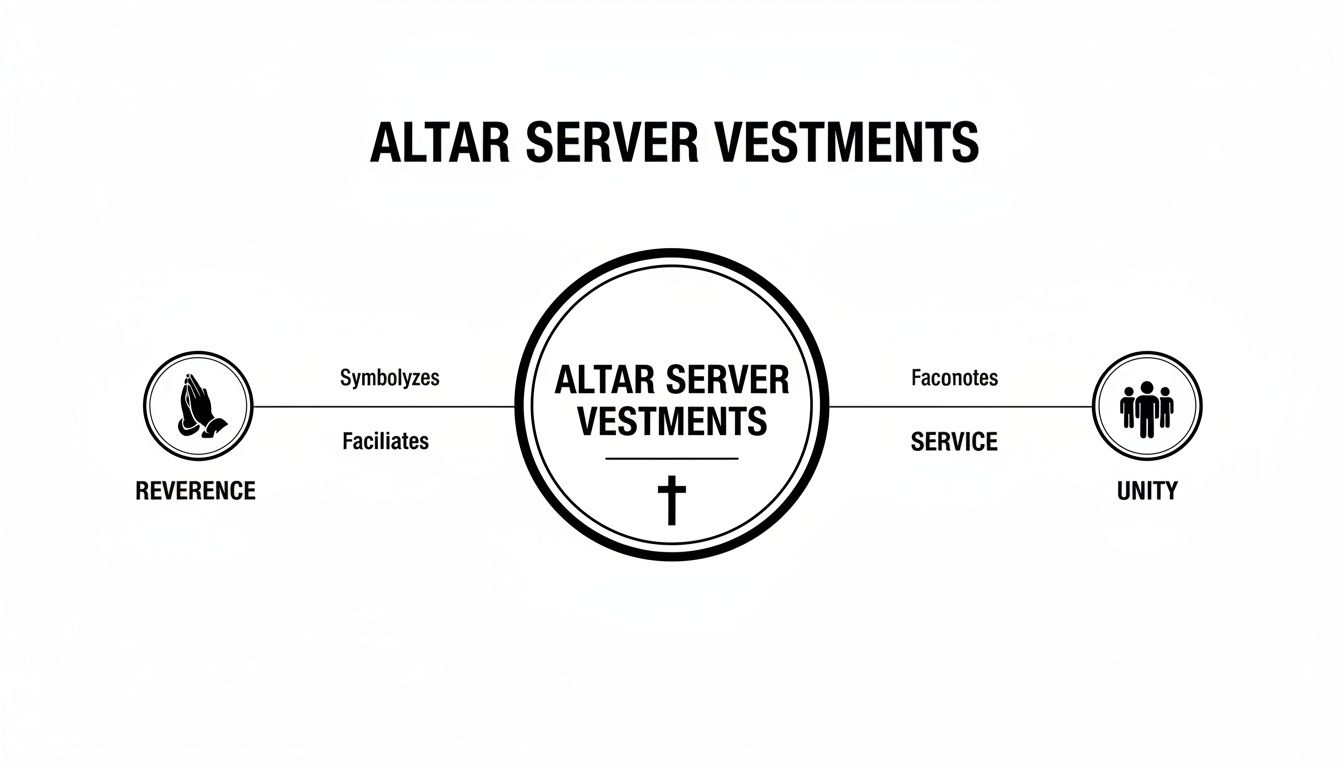
This diagram helps visualize how these vestments tie the server’s reverence and their role together to foster a sense of unity during the liturgy.
Whether you land on the buttoned Roman or the wrapped Anglican style, you're taking part in a long and meaningful tradition. While rules for clerical attire date back to the 6th century, the black cassock became the standard around the 16th century. Of course, many dioceses today allow different colors, especially for younger servers.
To learn more about how these vestments are used with other pieces, our guide on choir cassocks and surplices is a great next step.
Choosing the Best Fabric and Color for Your Cassocks
The style of a cassock tells a story of tradition, but the fabric and color are where practicality and symbolism really come together. The right material can make the difference between a server who is comfortable and focused during a long service and one who isn't. It also affects how long the vestments last and how easy they are to care for.
Likewise, color is far more than a simple style choice; it's a visual cue steeped in liturgical meaning.
Finding the Right Material
When you're outfitting a whole team of servers, you're usually trying to find that sweet spot between durability, appearance, and maintenance. We've found that most parishes today lean toward modern fabrics that deliver on all three fronts.
-
Polyester: There’s a good reason this is the go-to for many churches. Polyester is a true workhorse—it’s tough, resists wrinkles like a champ, and holds its color wash after wash. For a busy parish with active servers, it’s a smart and budget-friendly choice.
-
Poplin and Cotton Blends: If you’re in a warmer climate or just want something a bit more breathable, poplin is a fantastic option. Usually a blend of cotton and polyester, these fabrics feel softer and keep servers cooler while still looking crisp and dignified.
Understanding the Language of Color
Black is the classic, most common color for an altar server's cassock, symbolizing solemnity and a humble posture of service. But it's certainly not the only option. Liturgical tradition opens the door for other colors, often to mark special feast days or even to set apart servers with different roles. Our collection features a variety of church vestment colors, including traditional black, vibrant red, and pure white.
Color in the sanctuary is a silent language. It speaks of the season, the celebration, and the mood of the liturgy. Choosing between a black, red, or white cassock helps connect the server visually to the specific Mass, deepening the sense of reverence for everyone present.
Red cassocks, for instance, are often seen during services that honor martyrs, as well as on Palm Sunday and Pentecost. The color powerfully evokes the fire of the Holy Spirit and the blood of Christ. White might be used during the joyful seasons of Easter and Christmas, reflecting purity and new life.
Knowing these conventions ensures your servers are always vested appropriately for the occasion. Many of these principles overlap with choir vestments, and you can learn more in our guide on choir robe color meaning.
In the end, it’s about balancing the performance of the fabric with the rich traditions of the liturgy. That’s how you’ll find cassocks that not only serve your parish well but also honor its faith.
How to Measure for a Perfect Cassock Fit
Nothing looks sloppier—or is more distracting—than an ill-fitting cassock. A hem dragging on the floor isn't just untidy; it's a legitimate tripping hazard. On the other hand, a cassock that's too tight in the shoulders can make a server feel constricted and awkward while handling the chalice or paten.
Taking just a few minutes to get the measurements right is one of the most important steps you can take. It ensures your servers not only look sharp and unified but also feel comfortable enough to focus completely on their duties at the altar.

Key Measurement Points
To get the best fit for your altar servers cassocks, you really only need to focus on three core measurements. These are the building blocks that tailors and suppliers use to create a cassock that hangs beautifully and moves with the server.
-
Chest Measurement: Run a flexible tape measure around the broadest part of the server's chest, right under their arms. You want it to be snug, but they should still be able to take a deep breath comfortably. This measurement is key to ensuring the fabric doesn't pull across their back when they extend their arms.
-
Sleeve Length: Have the server stand naturally with their arm relaxed at their side. Start the tape at the very top of the shoulder (you can feel the bone there) and measure straight down to their wrist bone. A proper sleeve length gives the cassock a clean, finished appearance.
-
Back Length: This one is absolutely critical. Have the server put on the actual shoes they'll be wearing during Mass. Measure from the prominent bone at the base of the neck, straight down the spine, all the way to the top of their shoes. This single measurement prevents the dreaded tripping hazard and ensures a dignified look.
Here's a pro-tip I can't stress enough: Always measure while the server is wearing their service shoes. A 2-inch difference in heel height might not seem like much, but it can completely change where the hem falls, turning a perfect fit into a dangerous one.
To make this process even easier, here’s a quick-reference table.
Altar Server Measurement Guide
This simple guide will help you capture accurate measurements every time, laying the groundwork for a perfectly fitted cassock.
| Measurement Area | How to Measure | Pro Tip |
|---|---|---|
| Chest | Wrap a tape measure around the fullest part of the chest, under the arms. Keep it level and snug. | Ask the server to take a deep breath to ensure the measurement isn't too restrictive. |
| Sleeve | With the arm relaxed at the side, measure from the top shoulder bone down to the wrist bone. | Don't bend the elbow; a straight, relaxed arm gives the most accurate sleeve length. |
| Back Length | Measure from the large bone at the base of the neck down the spine to the top of the shoe. | Always have the server wear their actual service shoes for this measurement. It's non-negotiable. |
Once you have these numbers, ordering the right sizes becomes a breeze. For extra help, check out the comprehensive sizing chart and downloadable guide on our site, which also details our full range of inclusive plus-size options. A little care upfront makes all the difference in outfitting your servers with the dignity they deserve.
Completing the Look with Surplices and Accessories
Think of the altar server's cassock as the foundation of their vestment. It sets the tone with its color and style, grounding the server in a tradition of service. But to really finish the ensemble and create that polished, reverent appearance, you need the surplice.
This crisp, white garment worn over the cassock isn't just an afterthought; it's a vital counterpart that signifies purity and the server's baptismal grace. Our choir surplice collection offers a wide range of styles to perfectly complement your cassocks.
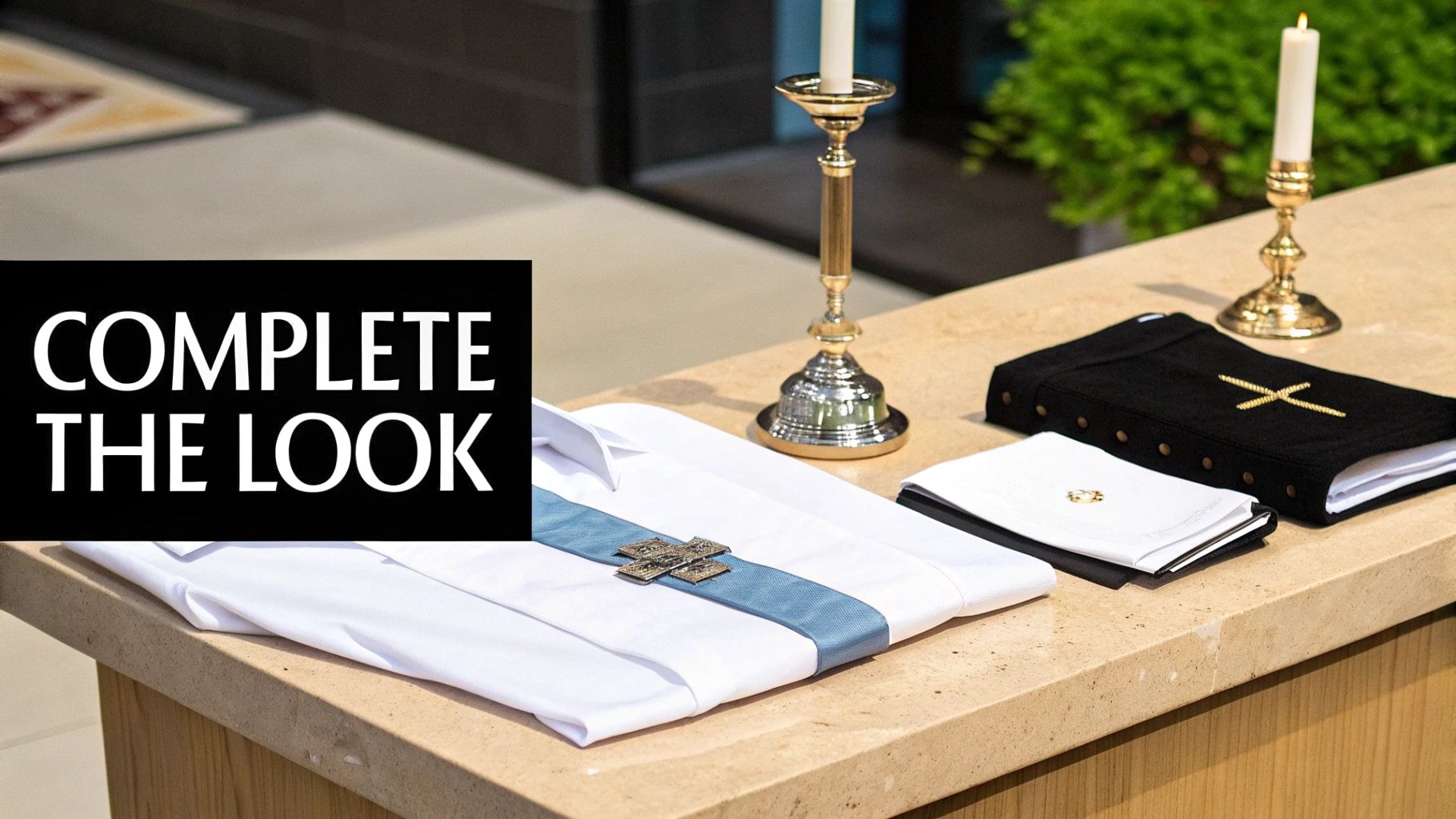
Pairing them correctly is a simple art. The surplice should always be shorter than the cassock, allowing a generous portion of the black or colored cassock to show at the hem and sleeves. This contrast is intentional, creating a balanced and dignified silhouette. An improperly sized surplice—either too long or too short—can really disrupt this visual harmony and just look untidy.
Choosing the Right Surplice Style
Not all surplices are created equal. The two most common styles you'll run into are differentiated by their neckline: the round yoke and the square yoke. The choice is largely a matter of your parish's preference and tradition.
- Round Yoke Surplice: This style has a simple, gathered round neckline. It offers a softer, more traditional look and is often favored for its classic simplicity.
- Square Yoke Surplice: As the name suggests, this style features a more structured, squared-off neckline, often with pleats falling neatly from the yoke. It provides a crisp, formal appearance that many parishes prefer for its clean lines.
When outfitting your servers, the goal is uniformity and dignity. The combination of cassock and surplice is more than just an outfit; it’s a uniform that fosters discipline, encourages reverence, and has a proven, profound influence on fostering vocations.
The importance of this uniform is well-documented. Data from U.S. parishes has shown that a return to traditional vestments for male-only server programs can lead to a participation surge of over 450%. One parish, for instance, saw its server numbers explode from 8 to 45.
This powerful connection is reinforced by surveys showing that around 75% of recently ordained priests had previously served at the altar. You can read the full research on how traditional altar server roles influence the priesthood.
Finishing Touches and Convenient Packages
To add a final layer of polish, a cincture—a rope-like belt, often in black or red—can be worn around the waist over the cassock. This accessory helps ensure a neat fit and adds another touch of traditional detail.
To make the whole outfitting process easier, we offer convenient cassock and surplice package deals. These bundles provide a one-stop solution, ensuring a perfect match in sizing and style while offering significant savings. This makes it much more manageable and affordable for liturgical coordinators to equip their entire team.
For a deeper dive into the symbolism and styles of this essential garment, check out our guide on choir surplices.
How to Properly Care for Your Liturgical Vestments
When you invest in quality altar server cassocks and surplices for your parish, you're not just buying a uniform. You're outfitting your servers in vestments that add to the dignity of the Mass. Taking good care of them is an act of stewardship that protects that investment and honors the liturgy.
Proper care really just comes down to a few simple habits, but they make a world of difference in how long your vestments last and how good they look.
First thing's first: always check the care label on the garment. Most cassocks these days are made from polyester or tough poplin blends, which are thankfully designed for easy laundering. For these common materials, a machine wash is usually the way to go.
Washing and Drying Instructions
Getting the washing and drying right is 90% of the battle. Follow these simple guidelines, and you’ll keep your vestments looking crisp and sharp for years to come.
- Go with Cold Water: Always use the cold water setting on a gentle cycle. Hot water is a fast track to shrinking or fading the fabric, so it's best to avoid it altogether.
- Use a Mild Detergent: Stick with a gentle detergent. Anything with harsh chemicals or bleach can damage the fibers and turn a brilliant white surplice yellow over time.
- Keep Colors Separate: This one's a classic for a reason. Wash your black or red cassocks by themselves, and keep the white surplices in their own load to prevent any unfortunate color bleeding.
- Low Heat is Your Friend: Tumble dry on a low heat setting. Better yet, if you have the space, hang them to air dry. High heat can lock in wrinkles and damage the fabric. A great pro-tip is to pull them from the dryer while they're still just a little damp—it makes ironing so much easier.
Proper care is an act of stewardship. Just as we care for the sacred vessels used in Mass, maintaining the vestments worn by our servers shows respect for their ministry and for the liturgy itself. A well-kept vestment reflects a well-kept sanctuary.
For that final, polished look, a quick pass with an iron does wonders. Use a low to medium heat setting that’s right for the fabric. To be safe, always iron the garment inside-out to protect the color and finish from direct heat. These small steps ensure your altar server cassocks remain a beautiful and fitting part of your worship.
Ordering Altar Server Cassocks for Your Entire Team
Outfitting an entire team of altar servers can feel like a monumental task, but it doesn't have to be a stressful one. The goal is to give your ministry a dignified, unified look without breaking the parish budget, and we've built our entire process around helping liturgical coordinators do just that.
When you're dealing with multiple servers—from the youngest new recruit to your most experienced leaders—consistency is key. We make it simple by offering significant bulk discounts that automatically kick in as you add clerical cassocks to your cart. This way, you can affordably equip everyone and maintain that sharp, uniform appearance in the sanctuary.
Making Your Purchase Simple and Straightforward
We know just how busy church life gets. That's why we've focused on making the ordering process as efficient as possible. You can easily find the styles, fabrics, and sizes you need, and our detailed sizing charts are there to help you get the right fit for every single server. We also offer some unique customization options if your parish wants a distinct look that reflects your specific traditions.
To make sure your ministry is always prepared, we provide:
- Fast Fulfillment: We work quickly to get your vestments processed and shipped out.
- Overnight Shipping: For those last-minute needs, like an unexpected ordination or a big feast day, we can get your order to you fast.
- Money-Back Guarantee: Your satisfaction is what matters most. If something isn't right, our return policy is straightforward.
This is the level of service and reliability that has earned us the trust of thousands of churches across the country, which you can see reflected in our verified customer reviews.
A polished and unified team of servers truly elevates the solemnity of the liturgy. Investing in quality vestments is an investment in the reverence of your worship and the formation of your servers.
It's also worth noting a significant trend we've seen. Many U.S. parishes that have shifted to male-only altar server programs have reported a remarkable 450% average increase in participation. For the person in charge of ordering, this surge means a much greater need for crisp black cassocks and white surplices to outfit these growing teams. Our wholesale options and bulk discounts are designed to make it financially manageable to equip everyone, especially ahead of major celebrations like Easter. You can read more about the growth of male altar server programs and what it means for parishes.
Ready to outfit your team with dignity and confidence? At ChoirBuy, we provide a full range of high-quality altar server vestments to meet your parish's needs. Browse our collection of altar servers cassocks today and see just how easy it is to achieve a reverent, unified look for your ministry.