

More than just a simple white robe, the alb is one of the most foundational garments in a cleric's wardrobe, rich with history and spiritual meaning. Think of it as the sacred canvas for the liturgy. Understanding its role is the first step in choosing a vestment that feels right, functions well, and honors the deep traditions of the Church. Our collection of albs for clergy offers a range of styles to meet these important needs.
The Enduring Symbolism of a Clergy Alb
With its clean, simple lines, the alb is a powerful symbol of core Christian beliefs. When a priest, deacon, or other minister puts on an alb, they're stepping into a role that connects them directly to the sacred rites they're about to perform. The clergy alb, in its simplicity, carries profound meaning.
For most, the alb immediately brings to mind purity and the washing away of sin. That stark white color isn't just a design choice; it's a visual cue for the new life found in Christ—a state of grace and redemption.
Baptismal Renewal and a Fresh Start
At its heart, the alb is a baptismal garment. It's designed to echo the white robe given to the newly baptized, symbolizing that they have "put on Christ." So, when a cleric wears an alb, they aren't just getting dressed for a service. They are visually reaffirming their own baptism and connecting with every single person in the congregation who shares in that same sacrament.
This simple act of vesting accomplishes a few important things:
- It Fosters Unity: The alb reminds everyone of their shared identity as baptized members of the Body of Christ.
- It Signifies a New Beginning: Each time it's worn, the garment is a quiet reminder of the forgiveness and renewal offered through faith.
- It Connects to Scripture: The imagery of being "clothed in righteousness" with white robes is a powerful theme woven throughout the Bible.
The alb is a profound equalizer in worship. It strips away worldly status and instead clothes the minister in the shared uniform of baptism, emphasizing their role as a servant leader within a community of believers.
A Garment Rooted in History
The significance of an alb is also deeply tied to its long and storied history. This isn't some modern invention; it's a direct link to an unbroken chain of tradition stretching all the way back to the early days of Christianity.
The alb's origins are actually quite humble, tracing back to the everyday tunic worn throughout the Roman Empire. Since the 4th century AD, this long white tunic has been a cornerstone of liturgical dress, evolving from common street clothes into essential sacred attire.
Its use really took off during the Carolingian Reforms under Charlemagne around 800 AD, when standardized vestments became the norm across the Frankish Empire, a move that profoundly shaped the Western Church. You can even explore the historical data on church growth and traditions to see how these moments influenced worship. This journey from a simple tunic to a sacred vestment shows just how enduring its place in the liturgy is, making the choice of an alb one that's steeped in reverence and history.
Choosing The Right Fabric For Comfort and Durability
Picking the right fabric for an alb is a lot like choosing the right wood for a finely crafted instrument. It needs to look beautiful, stand up to regular use, and feel right to the person using it. The material you choose for your albs for clergy will make a huge difference in everything from comfort during a long service to how much time you'll spend ironing. It's a real balancing act between tradition, modern convenience, and simple practicality. Our polyester albs for clergy are designed for this balance.
You'll quickly find the main choice is between classic, natural fibers and easy-care modern blends. Think of pure linen as the liturgical equivalent of an ancient, soaring cathedral—timeless, breathtaking, and deeply connected to history. A polyester blend, on the other hand, is more like the sound system inside that cathedral—incredibly practical and built to serve the needs of a busy, modern church.
Neither one is wrong; they just serve different priorities. Getting to know their strengths and weaknesses is the key to making a smart investment for your clergy.
Comparing Traditional and Modern Fabrics
For centuries, natural fibers like linen were the only option for liturgical garments, and for good reason. Linen is wonderfully breathable and has a crisp, dignified look that just feels right. It's cool and comfortable, which is a huge plus in warm climates or older sanctuaries without modern air conditioning.
The trade-off? Linen wrinkles if you just look at it the wrong way. Keeping it looking sharp requires some serious commitment with an iron, and that's a big deal for busy clergy or a church volunteer team already stretched thin.
This is where modern fabrics, usually polyester or poly-cotton blends, come in. These materials were designed from the ground up for durability and low maintenance. They resist wrinkles beautifully and often look great right off the hanger, which can save an incredible amount of time and effort.
The best fabric choice is one that fits the reality of your ministry. A pure linen alb feels incredibly authentic, but a poly-blend alb that stays crisp with almost no effort might be a bigger blessing to a pastor with a packed schedule.
These blends are also tough. They can handle the frequent washing that a well-worn vestment requires, making them a fantastic long-term value. The only potential downside is that some blends can feel a bit less breathable than natural fibers, so it's something to keep in mind for very warm environments.
To help you sort through the options, here’s a quick-glance guide comparing the most common fabrics.
Alb Fabric Comparison Guide
This table breaks down common fabrics for clergy albs, highlighting their key characteristics to help you find the perfect match for your needs.
| Fabric Type | Key Benefits | Considerations | Best For |
|---|---|---|---|
| 100% Linen | Exceptionally breathable, classic textured drape, historically authentic | Wrinkles very easily, requires careful ironing, higher cost | Warmer climates, ceremonial occasions, and those who prioritize tradition |
| Polyester/Cotton | Good balance of breathability and wrinkle resistance, soft feel, durable | Can still wrinkle more than 100% polyester, may pill over time | Everyday use, those wanting a natural fiber feel with less maintenance |
| 100% Polyester | Highly wrinkle-resistant, very durable, easy to launder, affordable | Less breathable than natural fibers, can feel synthetic | Busy clergy, frequent use, budget-conscious buyers, minimal maintenance needs |
| Tropical Wool | Excellent drape, naturally wrinkle-resistant, breathable in heat and cold | Higher price point, may require professional cleaning | Year-round comfort, investment pieces, those seeking a premium, natural option |
Ultimately, the goal is a garment that looks and feels right, allowing the focus to remain on the service, not on the vestments.
Key Factors In Your Fabric Decision
As you weigh your options, think about these four simple questions. The answers will point you directly to the best fabric for your situation.
- How important is breathability? If your clergy will be in a warm setting or wearing the alb for long periods, natural fibers like linen or a high-quality tropical wool are clear winners for comfort.
- Who is doing the laundry? Be honest about the time and resources you have for ironing. If "low-maintenance" is your mantra, a polyester blend is your best friend.
- How often will it be worn? An alb is an investment. For a garment that will see use several times a week, the sheer durability of a polyester blend offers incredible long-term value.
- What kind of look are you after? Linen has that classic, textured hang. Synthetics tend to have a smoother, more uniform flow. It's a matter of aesthetic preference.
This flowchart helps connect the alb's symbolic meaning—purity, renewal, and tradition—to its function in worship.
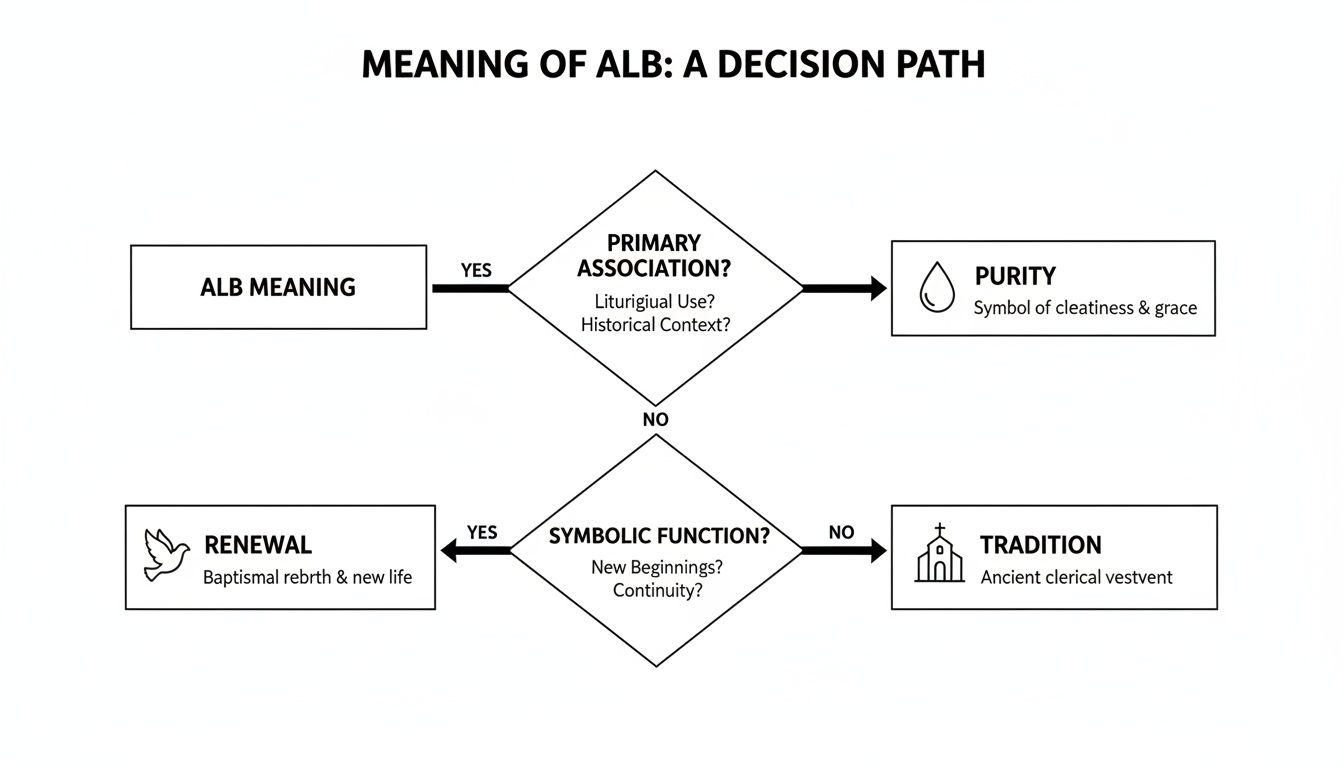
Whether you choose the natural purity of linen or the steadfastness of a modern blend, the fabric plays a role in upholding the garment's sacred purpose. The same principles of selecting appropriate attire apply to everyone involved in the service, which you can explore further in our guide to choosing the best church choir robes. In the end, the perfect fabric is the one that lets the wearer forget they're even wearing it and focus completely on their ministry.
Finding the Perfect Style of Clergy Alb
Think about the architecture of your church. Is it a soaring, traditional cathedral or a modern, intimate chapel? Just like the building itself, the style of an alb says something about your community’s liturgical tradition. Choosing the right style isn't just about what looks good; it's about finding a garment that feels right for your worship space and works for the person wearing it. The cut, the neckline, the way the fabric drapes—it all contributes to the bigger picture.
As you start looking at albs for clergy, you’ll quickly notice two main paths you can take: the Gothic alb and the Cassock alb. Each one has a completely different feel and is meant for a different purpose. Getting to know the difference is the first real step in picking the perfect vestment for your ministry.
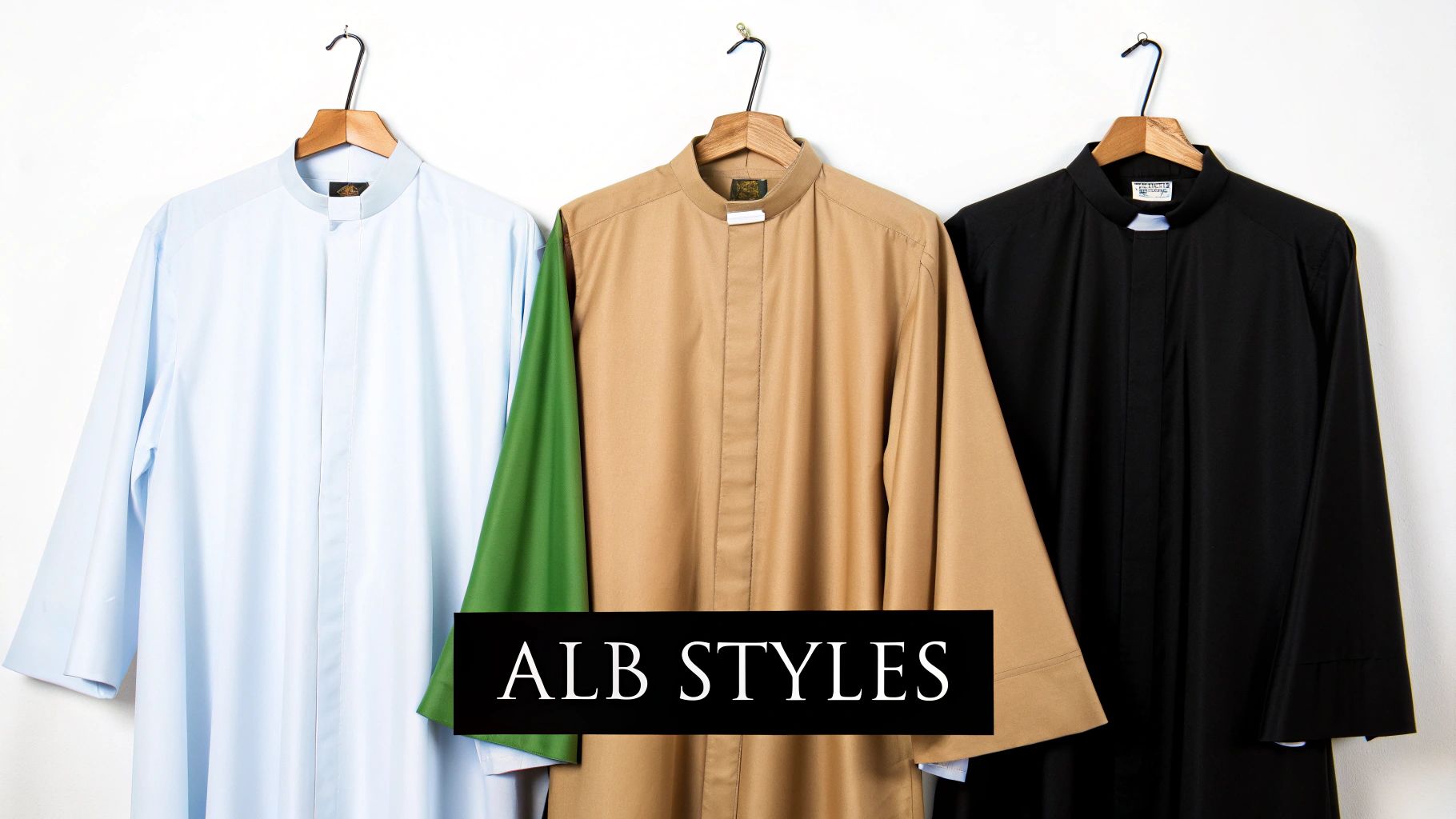
The Classic Gothic Alb: A Timeless Tradition
When most people imagine a traditional liturgical garment, the Gothic alb is probably what comes to mind. It's known for its full, flowing design with generous, wide sleeves and plenty of fabric that drapes elegantly from the shoulders all the way to the floor. There's a certain monastic, timeless quality to it that brings a sense of reverence to any service.
Because it's so roomy, the Gothic alb is designed to be a standalone vestment. You just wear it over your regular street clothes, no cassock needed. This makes it a really practical choice, especially if you're in a warmer climate or for clergy who just prefer to keep the vesting process simple.
What makes a Gothic alb stand out?
- Ample Fabric: This is what creates that dignified, flowing look that moves so gracefully.
- Wide Sleeves: They offer total freedom of movement, which is essential during the liturgy.
- Standalone Design: It simplifies getting vested since you don’t need a cassock underneath.
This style is a wonderful fit for denominations that lean into a more historic, traditional aesthetic and want their vestments to be both comfortable and solemn.
The Fitted Cassock Alb: A Modern and Neat Profile
On the other end of the spectrum is the Cassock alb, which offers a much more tailored and contemporary silhouette. Just as the name implies, it's specifically cut to be worn over a cassock. The fit is much closer to the body and the sleeves are narrower, which is key to avoiding that bulky, bunched-up look you’d get from layering a fuller garment.
The biggest plus of the Cassock alb is the clean, crisp profile it creates. When layered properly, it looks incredibly polished and orderly, an appearance favored in many liturgical traditions. You’ll often find them with details like pleats or front zippers to help them lay flat and hold their shape beautifully.
Choosing between a Gothic and a Cassock alb is a decision of function as much as form. The Gothic alb offers flowing simplicity, while the Cassock alb provides a structured foundation for a layered liturgical look.
Neckline Variations and Other Design Elements
Beyond the overall cut, the neckline of an alb can really change its look and how it's worn. There are a few common options that let you dial in the vestment to better match your church's customs or the wearer's personal comfort.
- Round Neck: This is the most classic and straightforward option. It gives a clean line that works perfectly well on its own or with an amice.
- Square Yoke: This style has a structured, squared-off panel that sits around the neck and shoulders. It adds a bit of architectural detail and can help the rest of the alb drape more evenly.
- Hooded Albs: You’ll often see these associated with specific monastic orders or used during certain liturgical seasons. A hooded alb has a very distinct, contemplative feel, and the hood can be worn up or down depending on the tradition.
In the end, the perfect style of alb is the one that feels authentic to your worship setting. It needs to be comfortable for the person wearing it while also visually supporting the sacredness of their role. Whether you go with the flowing elegance of a Gothic alb or the tailored precision of a Cassock alb, the right choice will only enhance the liturgy and honor its deep-rooted traditions.
How to Measure for a Perfect Fit
An alb that doesn't fit right is more than just a minor annoyance. It's a constant, nagging distraction that can pull focus from the service itself. If it’s too short, too long, or too tight across the shoulders, it gets in the way, looks undignified, and can make the wearer feel self-conscious.
Getting the measurements right the first time is the secret to avoiding the hassle of returns and ensuring your clergy feel comfortable and confident. It’s a straightforward process, but you have to be precise.
The Three Essential Measurements
Think of it like getting fitted for a suit; every measurement is crucial for that perfect, tailored feel. For a clergy alb, it really comes down to three key numbers. Grab a flexible measuring tape, and if you can, ask someone to help—it makes getting an accurate reading much easier.
-
Chest Size: This is what ensures the alb has enough room to move without feeling restrictive. You’ll want to wrap the measuring tape around the fullest part of the chest. Keep it level and snug, but not so tight that it digs in. A crucial detail: always take this measurement over whatever will be worn underneath, whether that’s a shirt or a full cassock.
-
Sleeve Length: This isn't like measuring for a dress shirt. For an alb, you measure from the center back of the neck. Find that prominent bone at the base of the neck, start the tape there, and run it across the top of the shoulder and down the arm right to the wrist bone. This method accounts for the full range of motion needed during a service, so the sleeves don’t ride up.
-
Total Garment Length: This measurement dictates where the hem of the alb will fall. For a dignified look, you're aiming for ankle length. While wearing the shoes you'd normally wear for a service, measure from that same spot at the base of the neck, straight down the back to where you want the hem to end—usually right around the ankle.
Pro Tip: Don't forget the shoes and undergarments! Measuring while wearing your service shoes and cassock accounts for the extra height and bulk. It’s a small step that prevents an alb from ending up too short or too tight.
Using Size Charts with Confidence
With these three numbers in hand, you’re ready to go. We have detailed sizing guides that match these measurements to the correct alb size, but you have to resist the urge to guess based on your typical street clothes size. Liturgical garments are simply cut differently.
Taking a few minutes to measure carefully makes all the difference. You'll be able to use our charts with complete certainty and find the perfect fit.
You can find all our detailed instructions and charts to match your measurements on our size and color charts page. A little preparation goes a long way in making sure your clergy receive a comfortable, well-fitting alb that truly dignifies their role.
Proper Care for Your Liturgical Vestments
An alb is more than just a piece of fabric; it's a significant vestment that plays a role in the sacredness of worship. Thinking of it as an investment for your church is a good start. Like any valuable garment, a little proper care goes a long way in keeping it looking its best and serving its purpose for years to come.
The first step? Always check the fabric. As we've covered, albs are made from everything from traditional linen to modern, easy-care polyester blends. Knowing what you're working with is the key to avoiding common mistakes like shrinkage or discoloration.

Washing and Laundering Instructions
Before you even think about turning on the machine, your first move should always be to check the manufacturer's care tag. Seriously, that little tag is your best friend and most reliable guide. If it's gone missing, don't worry—here are some solid general rules based on the fabric.
-
Polyester and Poly-Cotton Blends: These are the workhorses of the vestment world and thankfully, the easiest to care for. You can typically machine-wash them in cool or warm water on a gentle cycle. A mild liquid detergent works best; harsh powders can sometimes leave a residue that dulls the fabric.
-
100% Linen or Cotton: Natural fibers need a gentler touch. Stick to cold water and a delicate cycle to keep them from shrinking. It’s also smart to wash these separately, as they can attract lint from other fabrics.
-
Delicate Trims and Embroidery: If your alb has beautiful lace, embroidery, or other custom details, you’ll want to protect it. The safest bet is to hand wash it. If you must use a machine, turn the alb inside out and place it in a large mesh laundry bag on the most delicate setting available.
Here's a pro-tip for keeping white albs truly white: stay away from chlorine bleach. Over time, it can actually cause yellowing, especially on synthetic fabrics. Instead, reach for an oxygen-based brightener to tackle stains and keep the fabric looking brilliant.
Ironing and Storing Your Albs
Nothing looks quite as sharp as a crisp, well-pressed alb. It conveys a sense of reverence and preparation. The secret to easy ironing is to tackle it while the garment is still slightly damp—the wrinkles release with much less effort.
Make sure you use the right heat setting for your fabric. Linen and cotton can handle high heat, but you'll need a low-to-medium setting for polyester blends. Getting this wrong can scorch or even melt synthetic fibers in an instant. If you're nervous, using a thin pressing cloth between the iron and the alb is a great way to add an extra layer of protection.
Once it's clean and pressed, how you store the alb is just as crucial.
- Hang It Properly: Don’t just throw it on a thin wire hanger. Use a sturdy, wide hanger that can support the garment’s weight without stretching or putting creases in the shoulders.
- Use a Breathable Garment Bag: Those plastic bags from the dry cleaner are a no-go for long-term storage. They trap moisture, which can lead to mildew and yellowing. A fabric garment bag that allows air to circulate is what you need.
- Give It Space: Try not to cram the alb into an overstuffed closet. Letting it hang freely helps prevent new wrinkles from forming and keeps it fresh between services.
These same care principles apply to all liturgical garments, not just the priest's. You can find more specific advice for other vestments in our guide on the altar server alb. A few simple habits will ensure every vestment remains a beautiful and fitting symbol for worship.
How Albs Work with Other Vestments
Think of the alb as the foundational layer for liturgical vestments. It’s rarely worn on its own. It's like the primer on a canvas—it sets the stage for all the other colors and textures that complete the final picture. Understanding how albs for clergy coordinate with other garments is the secret to a cohesive and dignified liturgical presence.
This interplay isn't just about symbolism; it's also highly practical. Each piece needs to fit correctly with the others to create a unified whole. From the simple cincture that gathers the alb's fabric to the colorful stole signifying office, every element has a purpose. Getting this layering right is especially critical for anyone outfitting an entire liturgical team, where a polished, consistent appearance is key.
The Role of the Cincture and Stole
Once the alb is on, the cincture and stole are typically the next pieces to be added. Each one plays a distinct role in the final ensemble.
-
The Cincture: This is essentially a rope-like belt, usually white or matching the liturgical color of the day. It’s tied around the waist over the alb. Its main job is practical: it gathers the fullness of the fabric, keeping it from getting in the way and giving the alb a tidy, tailored look. It also helps secure the stole.
-
The Stole: A long, narrow band of cloth worn over the shoulders, the stole is one of the most visible symbols of ordained ministry. It's always worn over the alb and is often held in place at the waist by the cincture. How the stole is worn indicates the cleric's role—priests wear it around the neck with the ends hanging straight down, while deacons wear it over their left shoulder, draped across the body to the right hip.
A properly fitted alb provides the ideal foundation for the stole to drape correctly. If the alb is too bulky or ill-fitting, it can cause the stole to bunch or hang unevenly, detracting from the reverent appearance of the vestments.
Coordinating with Cassocks and Surplices
The relationship between the alb and the cassock is a crucial detail to consider, especially when deciding between different alb styles. A cassock is a close-fitting, ankle-length garment that clergy often wear as their daily attire. For liturgy, it serves as the base layer under other vestments.
This is precisely why the Cassock alb was created. Its more tailored cut is designed to fit smoothly over a cassock without adding extra bulk. If you try to pull a full, flowing Gothic alb over a cassock, you'll almost always end up with a lumpy, uncomfortable fit. To see how these garments compare side-by-side, you can read our detailed look at the cassock and alb.
The need for these coordinated garments is massive. In fact, clerical albs are a cornerstone of the religious apparel market. North America alone accounts for 70% of all wholesale exports from global suppliers. As the broader market for religious organizations is projected to reach $468.32 billion by 2029, the steady demand for foundational items like albs, cassocks, and surplices is a major part of that growth. It just goes to show how important getting the right combination of vestments is for churches everywhere.
Common Questions About Albs for Clergy
To help you feel completely confident in your choice, I've put together answers to some of the most common questions we get about albs for clergy. Think of this as a quick guide to clear up those last few details, so you can pick the perfect vestment for your ministry.
Making the right decision is so much easier when you have all the facts. Let's tackle some of the frequent queries we hear, from telling different vestments apart to keeping them in good shape.
Distinguishing Between Key Garments
One of the first things that trips people up is telling the different white liturgical garments apart. They can look similar from a distance, but each has its own distinct role and history.
-
What is the difference between an alb and a surplice? The real difference comes down to length and function. An alb is a full, ankle-length white robe that reminds us of our baptismal garment. A surplice, on the other hand, is a much shorter, wide-sleeved vestment that usually only comes down to the hips or knees. You'll often see it worn over a cassock by acolytes or choir members.
-
How do I choose between a Gothic and a Cassock alb? This is simple: it all depends on whether you'll be wearing a cassock underneath. If you want a full, traditional, and flowing vestment that stands on its own, the Gothic alb is what you're looking for. But if you need to wear it over a cassock, the Cassock alb is the way to go. Its tailored fit is designed to prevent bunching and gives you a much cleaner, more polished silhouette.
Practical Considerations for Use and Care
Beyond just styles, practical questions about who can wear an alb and how to properly care for it are just as important for anyone managing a church's vestments.
The goal of any vestment is to dignify the role of the minister without becoming a distraction. Proper fit and care are acts of stewardship that honor the sacredness of the liturgy.
-
Can albs be worn by lay ministers? Absolutely. In many traditions, it's quite common for lay ministers who have a role in the liturgy—like lectors, acolytes, and Eucharistic ministers—to wear albs. It's a simple, visual way to signify their official role and reinforces the shared baptismal identity we all have as participants in the service.
-
What is the best way to keep an alb white? The first rule is to always follow the care instructions for the specific fabric. But as a general rule, washing with a mild detergent in cool or warm water is your best bet. For tough stains or just to keep it looking bright, an oxygen-based, non-chlorine brightener works wonders. Storing it in a breathable garment bag away from direct sunlight is also key to preventing it from yellowing over time.
At ChoirBuy, we provide a wide selection of high-quality albs, cassocks, and other liturgical vestments to meet the needs of your clergy and lay ministers. Explore our collection of albs for priests and deacons to find the perfect style and fabric for your church at https://www.choirbuy.com.