

White clergy robes for women are so much more than fabric and thread. They're powerful, visible symbols of purity, holiness, and spiritual leadership. You'll see them most often during the high points of the church year—the celebratory seasons that call for expressions of joy and new beginnings.
The Deep Symbolism Behind White Clergy Attire
The practice of wearing white vestments is steeped in church history, a long-standing tradition that speaks to reverence, celebration, and the sacred role of the person wearing them. For a woman in ministry, putting on a white clergy robe is a deeply personal and public act. It's a way of connecting her modern calling to lead with centuries of faith.
This is why choosing the right robe feels like such a significant decision. It’s the garment worn for the most joyful and pivotal moments in the life of the church: Easter, Christmas, weddings, and baptisms. White is a color that, across cultures, signals new life, spiritual clarity, and purity, which perfectly underscores the sanctity of these events.
A Tradition Evolving with Female Leadership
As more women have answered the call to ministry, the robes themselves have had to evolve. For a long time, vestments were designed exclusively for men. When female ordination became more common, the need for well-designed white clergy robes for women became obvious.
White robes, symbolizing purity and joy, are a cornerstone of liturgical wardrobes, making up about 40% of all color-specific orders in the church apparel market. While the tradition of specific liturgical colors was more formally established after the Fourth Lateran Council in 1215, the real shift in women's attire came much later. In the early 20th century, the first ordained women often had to adapt men's vestments. By the 1970s—a time when female ordination saw a massive 300% surge in many Protestant denominations—designers finally began creating styles specifically for women.
Today’s designs manage to honor that deep tradition while offering a fit that is both dignified and practical for the modern clergywoman. The goal is to create a silhouette that projects authority and grace, empowering her to lead with both confidence and comfort. You can learn more about the significance of different robe colors in our detailed guide on the meaning of choir robe colors.
Enhancing the Sacred Atmosphere
A white robe is just one piece of the puzzle in creating a sacred space. Think about how other white elements can tie everything together. For instance, incorporating symbolic white floral decor for church stages can beautifully amplify the spiritual atmosphere during special services.
When the visual theme is cohesive, it strengthens the message of purity and celebration that the white robes represent. This creates a more immersive and meaningful worship experience for the entire congregation. It all starts with choosing the right robe.
Now that we understand the "why" behind the white robe, let's get into the practical side of things. How do you choose the one that's right for you or your ministry? This quick-reference table breaks down the most important factors to keep in mind.
Key Considerations for Your White Clergy Robe
| Factor | What to Look For | Why It Matters |
|---|---|---|
| Robe Style | Fluting, pleats, cuff details, neckline (e.g., V-neck, rounded) | The silhouette should reflect the formality of your services and your personal style. |
| Fabric & Weight | Breathable cotton, wrinkle-resistant polyester, matte vs. shiny finish | Comfort is key, especially during long services. The fabric's weight should suit your climate. |
| Sizing & Fit | Specific measurements (chest, height, sleeve), plus-size options, custom tailoring | A well-fitting robe looks professional and allows for freedom of movement without being distracting. |
| Seasonal Use | Lighter fabrics for Easter/summer, heavier options for Christmas/winter | You wouldn't wear a wool coat in July. Your robe should be just as practical for the season. |
| Customization | Embroidery (crosses, doves), piping in other liturgical colors | Personal touches make the robe uniquely yours and can align it with your church's specific traditions. |
| Care Needs | Machine washable, dry-clean only | Be realistic about the time and budget you have for upkeep to keep your robe looking pristine. |
This table is a great starting point, but let's dive deeper into each of these areas to give you a complete picture.
Finding Your Ideal Robe Style and Silhouette
Choosing a white clergy robe is a deeply personal decision, almost like a musician selecting their instrument. The right one doesn't just look appropriate; it feels like an extension of your ministry, enhancing your presence and allowing you to lead with comfort and confidence. This choice goes far beyond aesthetics—it’s about finding a design that honors your tradition while reflecting your personal sense of grace.
Many of the most beloved styles have rich historical roots, but they've been thoughtfully updated for the modern clergywoman. Each silhouette carries its own presence, from solemn dignity to warm, approachable elegance. Getting to know these differences is the first real step in finding the robe that feels made for you.
Comparing Classic and Modern Designs
When it comes to white clergy robes for women, you'll find a beautiful spectrum of styles. You can think of the classic Geneva gown as the trench coat of clergy wear—it's timeless, dignified, and universally respected. Its full, pleated design and dramatic flowing sleeves create a powerful silhouette that speaks to tradition and authority.
On the other end of the spectrum is the cassock-alb, which is more like a finely tailored suit. It offers a much closer, more structured fit that conveys a sense of precision and order. These styles often have a higher neckline and a defined waist, creating a sharp, professional look that’s both reverent and contemporary. For a beautiful middle ground, an A-line robe provides a gentle, flattering flow from the shoulders down, giving you graceful movement without being overwhelmed by fabric.
Your robe’s silhouette is more than just a matter of taste—it's a form of non-verbal communication. It should feel like a natural part of your leadership, allowing you to move, gesture, and minister without a second thought.
The Importance of Sleeves and Closures
The smaller details of a robe can completely change its feel and function. Take sleeves, for instance. Bell sleeves, which flare out from the elbow, add a touch of ceremony and grandeur. The way they move as you raise your hands in prayer or blessing makes them a wonderful choice for high holidays and special services.
For day-to-day ministry, however, cuffed sleeves offer a more practical, tidy look. They stay out of the way, preventing any interference at the communion table, pulpit, or altar, which is why they're a favorite for services with a lot of movement.
The closure also makes a big difference in both appearance and convenience. A traditional button-front provides that classic, secure fit, while a modern front-zip closure is all about ease and a clean, uninterrupted line. Our Modern Genesis Front-Zip Robe is a perfect example of effortless wear that still looks polished. In contrast, the detailed fluting on our Fluted Trinity Clergy Robe adds beautiful texture and visual interest, making it a truly distinctive choice. For more ideas, our guide to simple choir robe styles has some great insights that apply to clergy robes, too.
To help you sort through these options, this decision tree can guide you from your primary purpose to the perfect style.
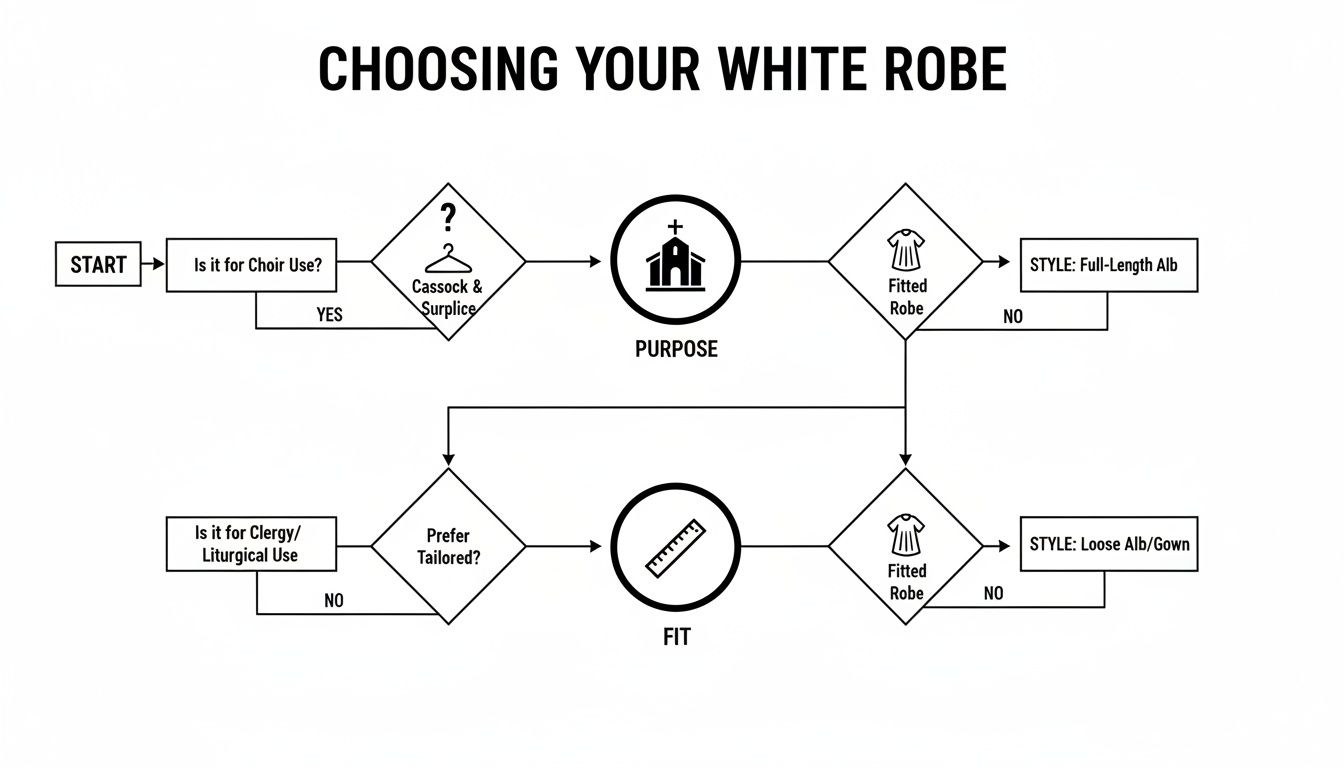
As the flowchart shows, starting with your main purpose—be it a formal ceremony or a regular Sunday service—is the best way to narrow down the right fit and style. At the end of the day, the best white clergy robes for women are the ones that make you feel authentic, comfortable, and ready to answer your calling.
2. Choosing The Best Fabric For Comfort And Occasion
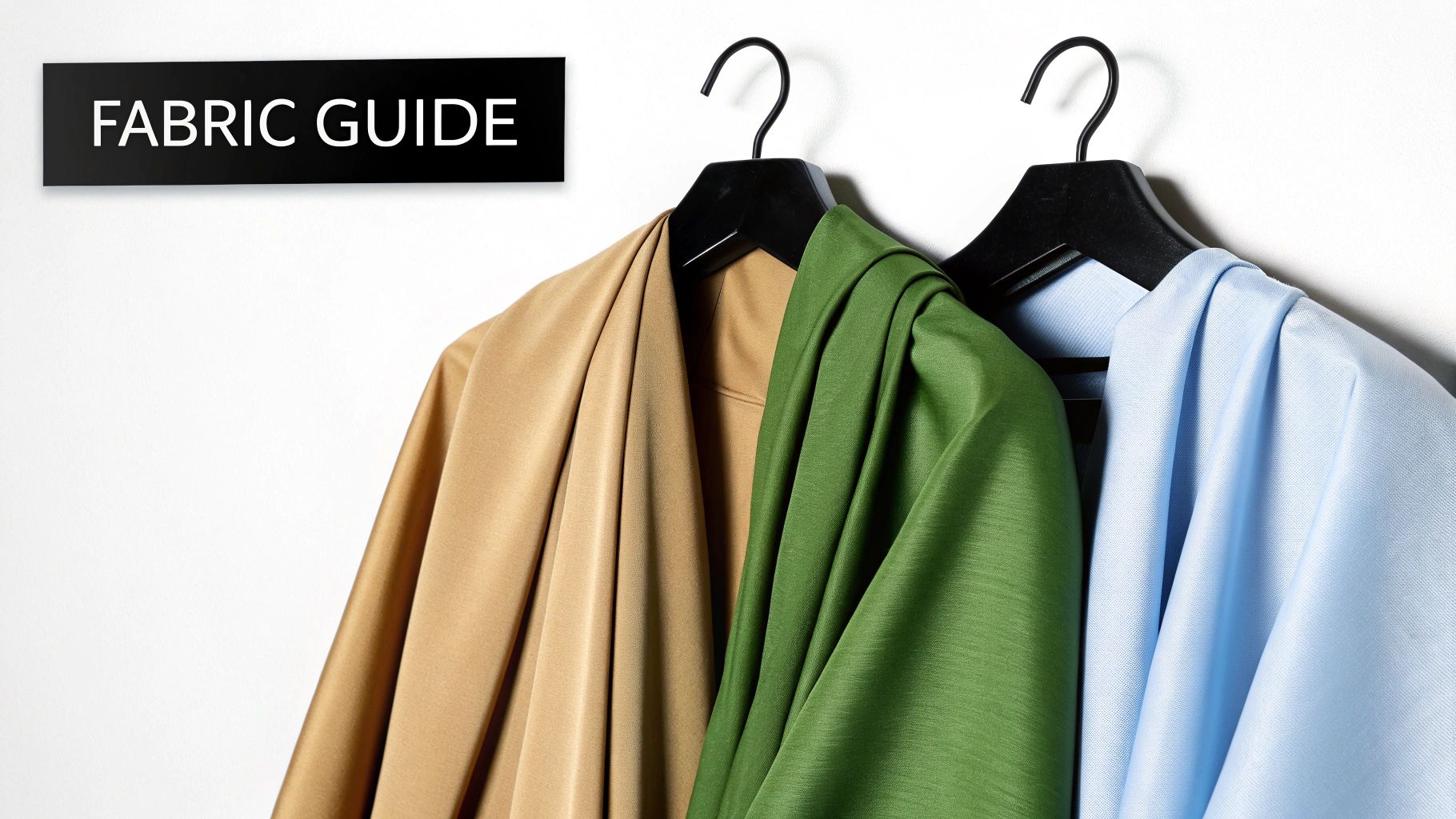
The material of a white clergy robe is truly its heart and soul. It dictates how the robe drapes, how it feels during a long service, and how well it stands up to the demands of ministry. Think of it like this: a lightweight, airy fabric is your best friend during a warm Easter service, while a heavier, more structured material can lend a real sense of gravitas in a grand cathedral.
Making the right choice comes down to understanding the environment you minister in, your personal comfort, and your budget. This isn't just an aesthetic decision; it's a practical one that directly impacts how you feel while leading worship. A scratchy, heavy robe is a constant distraction, but the right one feels like a natural extension of your presence, letting you focus on what matters most.
Matte Polyester: The Reliable Workhorse
For many clergywomen, matte polyester is the go-to fabric, and it's easy to see why. This material is incredibly durable and famously wrinkle-resistant, which is a lifesaver for anyone with a busy schedule of services, meetings, and hospital visits. You can pull it from a garment bag and it’s ready to go with little to no fuss.
Its opaque quality ensures complete modesty, and the matte finish prevents any distracting glare under bright sanctuary lights, giving it a dignified look. All these practical features make matte polyester a fantastic, low-maintenance, and budget-friendly choice, especially when outfitting an entire choir or ministry team.
A robe's fabric is its silent partner in ministry. The right material works with you, offering comfort and poise, so you can focus entirely on your congregation and your calling, not on what you're wearing.
It’s fascinating how the adoption of women's clergy robes has mirrored broader changes in society. The real shift began after the 1970s, as the number of women in ministry started to climb—jumping from under 5% to a projected 28% of US Protestant leaders by 2025. This historic growth fueled a 150% increase in global demand for robes specifically designed for women.
Today, white robes hold a commanding 42% market share for women's liturgical attire in North America and Europe. This is largely because they are used in about 70% of joyous ceremonies like weddings and baptisms. You can explore more on how societal shifts are reflected in women's clergy robes in this insightful article.
Breathable Blends And Luxurious Textiles
If you're ministering in a warmer climate or an older church without modern air conditioning, a cotton blend can be a game-changer. These fabrics breathe, allowing for much better air circulation that keeps you cooler and more comfortable through long services or passionate sermons. They might need a quick touch-up with an iron, but for many, the trade-off for comfort is well worth it.
For high holidays, ordinations, and other momentous occasions, you might consider more luxurious textiles like satin or brocade. These materials have a beautiful sheen and a heavier, more substantial drape that conveys a deep sense of reverence and celebration. For a closer look at these kinds of fabrics, check out this ultimate guide to satin dressing gowns.
To make your decision a little easier, I've put together a simple comparison table of the most common fabric choices. This should help you pinpoint the perfect material for your white clergy robes for women.
Comparing Common Robe Fabrics
This side-by-side comparison helps you select the right fabric based on climate, upkeep, and budget.
| Fabric Type | Best For | Care Instructions | Price Point |
|---|---|---|---|
| Matte Polyester | Frequent use, travel, and budget-conscious buyers. | Machine washable, wrinkle-resistant, easy to maintain. | $ |
| Cotton Blend | Warm climates and those prioritizing breathability and comfort. | May require ironing; follow specific blend care instructions. | $$ |
| Satin or Brocade | High holidays, special ceremonies, and formal occasions. | Often requires dry cleaning; handle with care. | $$$ |
Ultimately, choosing your robe’s fabric is about finding the right balance between practicality, comfort, and the nature of the occasion. By keeping these factors in mind, you can find a robe that not only looks beautiful but truly supports you in your ministry.
Finding Your Perfect, Flattering Fit
There's a reason a perfectly fitting robe feels so empowering. It’s not just about looking dignified; it’s about feeling completely unhindered so you can move, gesture, and lead with absolute freedom. When your robe fits as it should, you can forget it’s even there and focus entirely on your ministry. That's why we're so passionate about inclusive sizing—we want every woman in leadership to find a garment that feels like it was made just for her.
Getting that perfect fit all starts with good measurements. It’s a simple step that makes a world of difference, saving you from the frustration of a robe that’s too long, too short, or uncomfortably tight. A few minutes with a measuring tape is all it takes to order with total confidence.
Taking Your Key Measurements
To find the right size for your white clergy robe, you only need three key measurements. Grab a soft, flexible measuring tape, and if you can, ask a friend to help you out—it makes getting accurate numbers much easier.
- Height: Stand up straight with your back against a wall. Make sure you’re wearing the shoes you’d normally wear for a service, as this affects the robe's final length. Measure from the floor right to the top of your head.
- Chest: This is the most important measurement for a comfortable fit across your upper body. Wrap the measuring tape around the fullest part of your bust, keeping it level all the way around. It should be snug, but not so tight that it digs in. This ensures the robe closes smoothly without any pulling or gaping.
- Sleeve Length: Let your arm hang relaxed at your side. Start the tape at the center of the back of your neck, run it across the top of your shoulder, and measure all the way down to your wrist bone. This gets you a sleeve that isn't too short or dangling past your hands.
Once you have these three numbers, you're ready to go. To see exactly how your measurements line up with our sizes, take a look at our comprehensive sizing and color charts on the website.
A Thoughtful Approach to Plus Sizes
Inclusivity isn't just a buzzword for us; it’s at the core of how we design our robes. We firmly believe a flattering fit is for every body, which is why our plus-size white clergy robes for women are genuinely designed for a fuller figure—not just a smaller pattern that’s been enlarged. This is a critical difference.
Simply "scaling up" a standard size is a recipe for a bad fit. It often leads to overly wide shoulders, baggy sleeves, and a silhouette that just hangs without any shape. Our approach is different. We use specific patterns for our plus-size robes that add more room through the chest and waist while still creating a structured, graceful drape. The result is a robe that truly honors your form and feels amazing to wear.
"A well-fitting robe is an act of self-respect and respect for the office. It should never be a source of distraction but a garment that brings confidence and allows the spirit to move freely."
Practical Tips for Ordering the Right Size
Beyond the numbers on the tape measure, a little practical thinking will help you nail the perfect size. The best way to do this is to picture how you'll actually be wearing your robe during a service.
- Think About What's Underneath: Are you likely to wear a simple dress, a full suit, or other layers beneath your robe? The clothes you wear underneath can add a surprising amount of bulk. It's a great idea to take your chest measurement while wearing your typical service attire to get the most realistic number.
- Make Room for Movement: Your ministry isn't static. You'll be raising your arms, reaching for items, and moving around the chancel. A well-sized robe should never feel tight across your back or restrict your shoulders when you move.
- When in Doubt, Just Ask: If you find you're between two sizes or have a specific question about how a robe might fit you, please don't hesitate to reach out. Our customer service team is here to help you read the sizing chart and make the right choice.
By following these simple steps, you can feel confident that your new white clergy robe will offer a comfortable, flattering, and perfect fit right out of the box.
Personalizing Your Robe with Custom Details
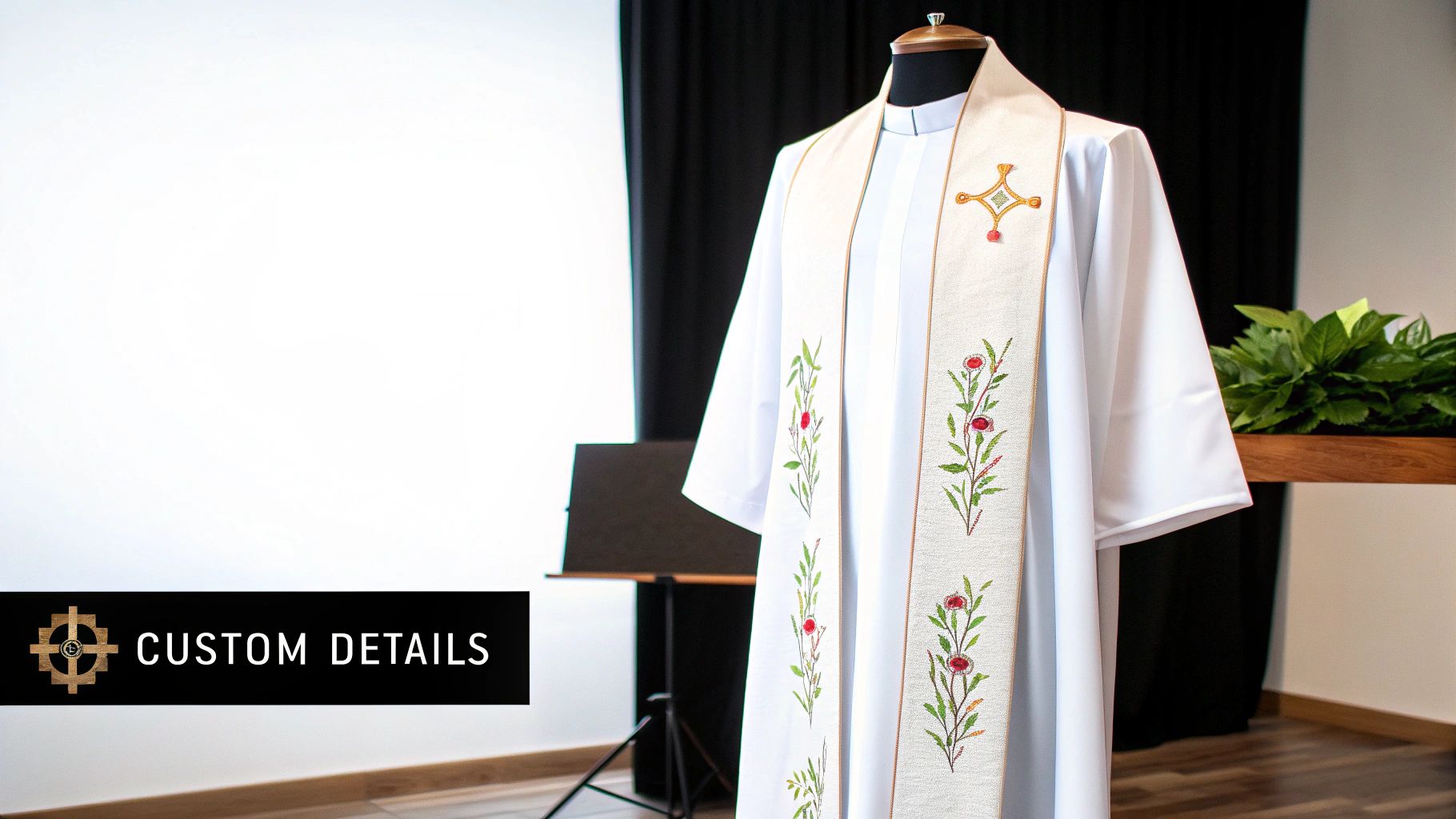
A standard white clergy robe is beautiful in its simplicity, but it’s the personal touches that make it truly yours. Customization is what turns a garment into a vestment—a piece that tells a story about your personal ministry and aligns with your church’s unique traditions. It’s how a robe becomes a genuine reflection of your calling.
For choir directors and purchasing managers, this is also a powerful tool for creating unity. A shared symbol or coordinated colors can transform a group of individuals into a polished, cohesive ensemble, elevating the entire worship experience. It sends a message of togetherness. You can explore the possibilities for your own team by looking into our customization services.
From Subtle Embroidery to Bold Statements
One of the most meaningful ways to personalize white clergy robes for women is through embroidery. This is your chance to weave symbols of deep significance right into the fabric.
Think of a simple, elegant cross on the chest or sleeve—a timeless choice. But you don't have to stop there. A dove can represent the Holy Spirit, a Chi-Rho is a classic symbol of Christ, or you could even add a custom logo for your church or choir.
Customization is the bridge between tradition and personal calling. It’s how a timeless garment is made deeply relevant to the individual woman and the specific community she serves.
Adding text is another fantastic option. Your initials, your church’s name, or a scripture verse that holds special meaning can make the robe undeniably yours. These aren't just decorative flourishes; they're visible, wearable reminders of your commitment.
Adapting Your Robe with Liturgical Accessories
Here's where a single white robe becomes incredibly versatile. With the right accessories, you can adapt your vestments for every season on the liturgical calendar, adding powerful splashes of color without needing a whole new wardrobe. It’s a smart and budget-friendly approach for any ministry.
Here’s a quick look at how accessories can transform your robe:
- Stoles: This is the most common way to signify the church season. A purple stole draped over your white robe immediately marks the reflective period of Advent or Lent. A fiery red one celebrates Pentecost, and green is the go-to for the long stretch of Ordinary Time.
- Cinctures: A cincture, which is basically a rope belt, can also introduce seasonal color. Tying a simple gold or red cincture at the waist adds a beautiful, festive touch for Christmas or other high holidays.
- Collars and Tippets: While typically seen in black or white, some traditions use colored tippets or collar accents to denote a specific role or special occasion.
By simply building a collection of these key pieces, one set of white robes can serve your ministry team all year long. It’s a savvy way to maximize your investment while honoring the rich symbolism of the church calendar. Take a look at our clergy stoles and accessories to see the range of options available.
Your Playbook for Placing Choir Robe Orders
Outfitting an entire choir or ministry team in beautiful, matching white clergy robes for women takes a bit of planning, but it doesn't have to be a headache. Think of this as your practical guide—a clear, step-by-step playbook for church administrators and choir directors to make sure everyone looks and feels their best for every service. When you get it right, bulk ordering is a straightforward and budget-friendly way to create that polished, unified presence.
From wrangling sizes for every single member to getting your hands on fabric samples, the whole process can feel like a lot to take on, especially when a big event is just around the corner. We've built our bulk ordering system at ChoirBuy to take the guesswork out of it, making the entire experience smooth and predictable from start to finish.
Getting Your Order Organized
The first step is usually the most critical: getting everyone on the same page. We always recommend creating a simple spreadsheet to track each member's name, height, chest measurement, and sleeve length. This single document becomes your command center, ensuring total accuracy and making the final order placement a simple copy-and-paste job.
Once you have your measurements down, the next thing to think about is the fabric. When you're ordering for a large group, getting a few fabric samples can make all the difference. It lets your team see and feel the material in person, so you can be confident the final robes will live up to everyone's expectations for both comfort and appearance.
"A unified choir is a powerful visual statement. Bulk ordering isn't just about logistics; it's about building a cohesive identity that enhances the collective voice of your ministry."
Making the Most of Your Budget with Bulk Discounts
One of the biggest perks of ordering for a whole group is the savings. Here at ChoirBuy, we offer package deals and significant bulk discounts that make outfitting your entire team much more affordable. This is a huge help when you're working with a tight church budget or planning for those big services, like Easter, that demand a pristine, coordinated look.
In the United States alone, over 300,000 church choirs and liturgical teams serve millions of congregants, and white robes are a cornerstone of worship. It’s no surprise that retailers see a massive 45% spike in annual sales during the Easter season. That jump is driven almost entirely by bulk orders for women's robes, with a huge demand for inclusive plus-size ranges. If you're curious about the history behind these garments, you can discover when women first began wearing clergy robes.
Hitting Your Deadlines with Peace of Mind
We know the church calendar is full of dates that absolutely cannot be missed. Whether you're getting ready for Christmas, a special concert, or the all-important Easter Sunday, having your robes on time is non-negotiable. That’s why we make fast fulfillment a top priority, helping you meet your deadlines without the stress.
To make sure everything goes off without a hitch, just follow this simple checklist:
- Gather Measurements Early: Start collecting sizes at least 6-8 weeks before your event.
- Confirm Your Budget: Get the green light for the total cost, including any potential shipping fees.
- Request Samples: If you're getting samples, give yourself an extra week or two for them to arrive and be reviewed.
- Place the Final Order: To be safe, submit your complete order 4-6 weeks before you need it.
We stand behind our commitment to a hassle-free experience with a money-back guarantee, giving you complete peace of mind. By making the complex process of bulk ordering simple and reliable, we free you up to focus on what truly matters: your ministry's mission.
Your Questions Answered
Choosing the right clergy robe is a significant decision, and it’s natural to have questions, especially when it comes to the practical side of things. I've been helping ministers and choir directors with this for years, so let's walk through some of the most common things people ask about selecting and caring for their white robes.
My aim here is to give you straightforward, real-world advice so you can order with total confidence, knowing your robe will serve you well for a long time.
How Do I Keep My White Robe From Looking Dingy?
This is probably the number one question I get. Keeping a white robe truly white seems daunting, but it's easier than you'd expect. For our most popular matte polyester robes, a simple machine wash on the gentle cycle with cold water does the trick. The key is to wash it alone—you don't want a stray red sock turning your vestments pink!
If you do get a stain (it happens!), treat it right away with a gentle stain remover before you wash it. A big tip: avoid chlorine bleach. It might seem like a good idea, but over time, it can actually cause the fabric to yellow. For more delicate fabrics like satin or brocade, your best bet is to trust them to a professional dry cleaner to keep them looking perfect.
What if I Don't Fit a Standard Size?
We can absolutely help with that. We've worked hard to create a sizing chart that fits a wide variety of people, but we know that one size—or even ten—doesn't fit all. A robe that fits well isn't just about comfort; it's about presenting a dignified, confident appearance in your role.
If you find that your measurements are between sizes or you have specific needs, like longer sleeves or a custom hem length, just get in touch with our team. We'll happily talk through custom sizing options to make sure we craft a robe that feels like it was made just for you.
What Is Your Return Policy for Group Orders?
We stand behind our robes with a money-back guarantee because we want you to be thrilled with your purchase, whether it's for one person or an entire choir.
For group orders, I always recommend taking two simple steps first: request fabric swatches and have everyone use our sizing charts. This prevents most issues right from the start. But if your order arrives and something isn't right with the fit or quality, please call us right away. We'll work with you to make it right. Your peace of mind is our top priority.
At ChoirBuy, we're committed to providing beautiful, well-made, and affordable robes that truly support the important work you do. Take a look at our full collection and find the perfect vestments for your ministry.
Browse Our Collection of White Clergy Robes for Women at ChoirBuy Today!