

Choosing a white choir robe is about so much more than just a uniform. It's about creating a symbol of unity and reverence for your ensemble, a decision that truly defines your choir's visual identity and elevates the entire worship experience. The classic, crisp elegance of a white robe is a timeless choice, and for good reason—it’s powerful.
Finding the Right White Choir Robe for Your Ensemble
When you set out to select the perfect white choir robe, you're setting the tone for every single performance. This is a garment that carries real visual weight, symbolizing purity, celebration, and spiritual focus. For choir directors and church leaders, this means finding that perfect balance between aesthetics, practicality, and tradition.
Think of it as an investment in your choir's collective presence. The right robe doesn't just make everyone look the same; it unifies them, minimizes distractions from street clothes, and lets the music truly take center stage.

Your journey starts with understanding the three pillars of a great robe: style, fabric, and fit. These elements all work together, and a decision in one area will almost always influence the others. Having a clear vision for the ideal white choir robe for church from the get-go will make the whole process smoother.
Key Considerations for Your Choir
Before you even start looking at catalogs, take a moment to think about your choir's specific needs. A few simple questions can bring a lot of clarity and make sure you end up with a garment that serves you well for years.
- What's the main occasion? Are these robes for weekly Sunday services, special holidays like Easter, or maybe even competitive performances? The context for your white church choir robes matters.
- Who are your singers? The age range and diversity of body types in your choir will steer you toward certain styles and sizing options, such as specific white choir robes for adults or children.
- What's your climate like? Lighter fabrics are a lifesaver in warm, humid churches, while heavier materials provide a more structured look and extra warmth in cooler settings.
- What's the budget? Be realistic from the start. Knowing your budget helps narrow the field of fabric and customization choices for your white choir robe purchase right away.
Answering these questions gives you a practical roadmap. For example, a youth choir that sings every week needs something durable and machine-washable, making a matte fabric a great choice. An adult choir that only wears robes for high holidays might opt for a more formal, luminous material for that extra touch of elegance.
A well-chosen white choir robe does more than unify a group of singers; it elevates the entire worship atmosphere. It visually communicates a sense of purpose and reverence, allowing the congregation to focus fully on the message delivered through song.
Understanding Basic Styles and Fabrics
The world of choir apparel has several distinct styles, each with its own history and feel. By far the most common choice is the traditional fluted white choir robe with its open sleeves. It’s known for that graceful drape and classic silhouette—a clean, uniform look that’s both timeless and incredibly versatile.
Another popular route is the two-piece combination of a cassock and surplice. The choir cassock is a long, close-fitting garment worn underneath, often in a contrasting color like black or red. Over it goes the choir surplice, a shorter, white, and often more decorative piece. This layered approach creates a formal, historically rich appearance that you'll often see in more liturgical traditions.
Of course, fabric choice is just as critical. It impacts not just the look but also the comfort, durability, and upkeep of the robes. We'll get into all of these options in more detail, giving you the foundation you need to make a confident, informed decision for your entire choir.
The Enduring Symbolism of White Choir Robes
When you choose a white choir robe, you're doing more than just picking a color. You're tapping into centuries of tradition and deep spiritual meaning. This simple garment is more than just fabric; it's a powerful symbol that turns a practical purchase into a meaningful investment for your entire choir. The story behind the white robe is truly woven into the history of worship itself.
To really get it, we have to go back to its roots. The white choir robe first appeared as a standard church vestment during the Medieval Period. Back then, churches all over Europe started using formal attire to set the choir apart during services. The go-to outfit was a surplice—a simple, white, loose-fitting blouse—worn right over a black cassock. This classic combination created a visual language of reverence that you can still see in many churches today.
Purity and New Beginnings
At its heart, the color white in Christian theology stands for purity, spiritual cleanliness, and innocence. When a choir puts on white robes, it’s a powerful visual metaphor for a state of grace and devotion. This isn’t just a happy accident; it's a deliberate choice that connects the singers to the core messages of their faith.
Think about the biggest moments in the church calendar. The white robe is almost always the uniform for services that celebrate renewal and triumph.
- Easter Sunday: On this day, white robes symbolize the resurrection. They represent Christ's victory over death and the promise of new life, and a sanctuary filled with a sea of white visually amplifies that joy.
- Baptisms: For both clergy and sometimes the person being baptized, white signifies the washing away of sin and the beginning of a brand-new spiritual life.
- Christmas Services: During this season, white reflects the purity of the Virgin Birth and the divine, holy nature of the celebration.
This deep connection makes the white choir robe an incredibly versatile and powerful choice. It naturally harmonizes with the most significant moments in the liturgical year, reinforcing the themes of the service just by its presence.
The symbolism of a white robe goes beyond the color. It’s like a blank canvas. By removing the distraction of individual street clothes, it allows the music and the message to take center stage, unifying the choir into a single, focused body of worship.
A Symbol of Divinity and Light
Beyond just purity, white is also tied to ideas of divinity, holiness, and divine light. In biblical accounts of angels and divine appearances, white is often used to create a sense of awe and sacredness. This association elevates the choir's role, visually framing them as messengers delivering a divine message through song.
Of course, there’s a practical side to this, too. A uniform, especially a white one, smooths over social and economic differences among the singers, creating a real sense of equality and unity. Each member becomes part of a cohesive group, focused on their collective purpose instead of their individual identity. This unity is a powerful statement on its own, reflecting the communal heart of worship.
For a deeper dive into what different colors signify, you can check out our guide on choir robe color meaning. Understanding these connections can help your choir align its visual presentation with its spiritual mission, making every performance that much more meaningful.
Finding the Perfect Look: A Guide to Robe Styles and Fabrics
Choosing the right white choir robe really comes down to two things: the style of the robe and the fabric it's made from. These two decisions go hand-in-hand, and they'll shape everything from how formal your choir looks to how comfortable your singers feel. Getting this right from the start means you’ll end up with beautiful robes that serve your ensemble well for years to come.
The world of choir robes has a surprising amount of variety. Each style has its own story and feel, so it's important to pick one that truly reflects your church's tradition and what your choir is all about. Once you know the key differences, you'll be able to choose with confidence.
Classic Styles for a Unified Look
The go-to choice for most choirs is the classic fluted robe. It’s a single-piece garment known for its full, flowing cut and elegant gathers (the "fluting") around the shoulders and yoke. This design creates a graceful drape that brings everyone together into one powerful, cohesive unit, putting the focus squarely on the music. Its timeless simplicity makes it a fantastic option for almost any group, from contemporary gospel choirs to more traditional church ensembles.
For a more formal, liturgical setting, many choirs prefer the two-piece cassock and surplice combination.
- The Choir Cassock: This is the long, ankle-length garment that fits closer to the body. While the robe itself is white, the cassock underneath is often a contrasting color like black, red, or purple to signify a specific liturgical season or role.
- The Choir Surplice: Worn right over the cassock, the surplice is a shorter, white garment, often with more ornate details and wide, flowing sleeves. This layered look is steeped in church history, making it a perfect fit for cathedrals and services with a more traditional structure.
Think of it this way: choosing between a fluted robe and a cassock/surplice set is like deciding between a grand piano and a pipe organ. Both create incredible music, but one offers streamlined elegance while the other evokes a sense of deep-rooted, traditional majesty.
A Closer Look at Fabric Choices
Once you've settled on a style, it's time to think about fabric. This decision is more than just about looks; it affects the robe's durability, how it drapes, and how you'll care for it. Consider your local climate, your budget, and how often the robes will be worn—that will point you toward the best material for your needs.
One of the first things to decide is the finish of the fabric. A durable, wrinkle-resistant matte polyester is the workhorse of choir robes. It’s perfect for choirs that are up front every single week. Its non-reflective surface provides a clean, understated look that stands up to frequent washing and wearing without a fuss.
On the other hand, a shiny polyester finish has a luminous, celebratory quality that catches the light beautifully. This makes it an amazing choice for those extra-special occasions like Christmas, Easter, or anniversary services where you want a more radiant, eye-catching appearance. While these are the most common choices, you can learn more about the evolution of modern choir robes to explore other possibilities.
This table breaks down the most common styles and fabrics to make your decision a little easier.
White Choir Robe Fabric and Style Comparison
| Style/Fabric | Key Features | Best For | Care Instructions |
|---|---|---|---|
| Fluted Robe | Single piece, flowing cut with shoulder fluting. | A unified, classic look suitable for most choirs. | Varies by fabric, often machine washable. |
| Cassock & Surplice | Two-piece set with a long cassock and shorter surplice. | Formal liturgical services and traditional choirs. | May require separate care for each piece. |
| Matte Polyester | Durable, non-reflective, and wrinkle-resistant. | Frequent use, weekly services, youth choirs. | Machine wash cold, tumble dry low. |
| Shiny Polyester | Luminous, light-catching finish. | Special occasions, holiday performances, festive services. | Gentle wash cycle or dry cleaning recommended. |
By carefully weighing these options, you can land on a white choir robe that not only creates stunning visual harmony but also keeps every singer comfortable and looking their best. This foundational choice is the first step toward a polished and reverent presentation.
How to Measure for a Flawless Fit
Nothing ruins a choir's polished, unified look faster than an ill-fitting robe. A garment that’s too long is a tripping hazard, while one that's too short just looks sloppy. It's distracting for everyone. But getting the sizing right doesn't have to be a headache. Think of it like being fitted for a suit—a few key measurements make all the difference.
Taking the time to measure correctly upfront saves you the hassle of returns and ensures your choir looks sharp from the very first performance. The process is surprisingly simple, and I'll walk you through it step-by-step.
This visual guide breaks down the selection journey, showing how getting the fit right is the final, crucial piece of the puzzle.
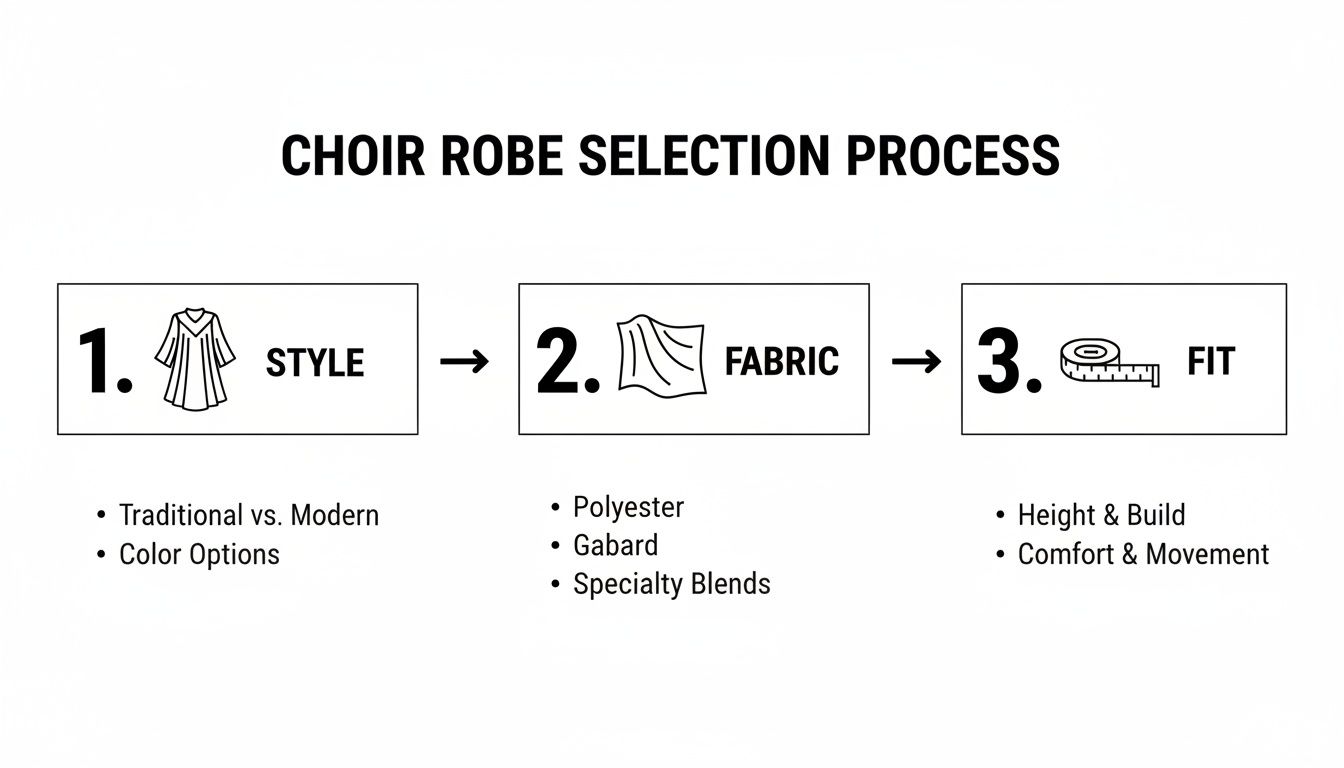
As you can see, once you've landed on the perfect style and fabric, nailing the fit is what brings it all together.
Taking Accurate Measurements
For a standard choir robe, you really only need two key measurements: height and chest. Get these right, and you've won 90% of the battle. Here's the best way to do it:
-
Height: Have the person stand tall and straight against a wall, looking straight ahead. Here’s the crucial part: make sure they’re wearing the actual shoes they’ll perform in. Use a measuring tape to get the distance from the top of their head straight down to the floor.
-
Chest: With their arms hanging naturally at their sides, wrap the tape measure around the fullest part of their chest. It should feel snug, but not tight—you should easily be able to slip a finger between the tape and their body.
A common mistake is measuring for height without shoes. It seems small, but it can throw off the entire look, leaving the robes hanging awkwardly high. Always measure with performance shoes on to get the hem to fall exactly where it should, usually around mid-calf or a few inches above the ankle.
Using Sizing Charts Correctly
With your measurements in hand, you’re ready to look at a sizing chart. These charts are designed to make ordering for a large group as straightforward as possible. For a deeper dive, you can explore the detailed guidance on our size and color charts.
Here’s a quick rundown of how they usually work:
- Adult Sizes: Most adult robes are sized directly by height. So, if someone is 5'8", you'd typically look for a size "58." The chest measurement then helps you decide if a standard cut will work or if you need a plus-size option for a more comfortable fit.
- Children’s Sizes: Kids' robes are also sized by height, but they’re cut with smaller proportions all around to properly fit a child’s frame.
- Plus Sizes: Many suppliers offer what they call "Full Fit" or plus-size robes. These are a lifesaver, providing an extra 5-7 inches of room through the chest and body without making the robe any longer. It's all about ensuring a comfortable, non-restrictive fit for every member.
Getting the fit right is a universal goal, and it's fascinating to see how it's adapted worldwide. The Nazareth Baptist Church in South Africa, for instance, has white cotton robes called umnazaretha that feature yokes similar to traditional Western styles. Their uniforms for men and women share a silhouette but use different lengths and details to distinguish between them—a perfect example of how fit can be tailored for cultural and practical significance. Mastering these simple measurement steps will give you the confidence to order the right size for every single person in your choir.
Personalizing Your Robes with Custom Details
A plain white choir robe is a beautiful symbol of unity, but think of it as a blank canvas. This is where you can really start to tell your choir's story. Custom details are what transform a standard robe into something that truly represents your ensemble’s identity, traditions, and purpose.
These thoughtful additions—even small ones—make a huge visual impact. They create a memorable, polished look that connects your choir to your church, your school, or even the seasons of the liturgical calendar. It’s about more than just decoration; it’s about reinforcing the message of your music with visual cues.

Adding Color with Stoles and Trim
One of the easiest and most flexible ways to customize a white choir robe is to add splashes of color with accessories. This approach allows your robes to adapt and change right along with your performance calendar.
- Choir Stoles: These are the long, scarf-like pieces of fabric that drape over the shoulders, and they're fantastic for introducing color. You can easily switch them out to match the liturgical season—think purple for Lent, red for Pentecost, or brilliant gold for Easter. It's an instant visual update.
- Contrasting Cuffs and Yokes: For a more permanent pop of color, consider adding a band of fabric to the sleeve cuffs or the yoke (the area around the shoulders). This is a perfect way to incorporate your church or school colors directly into the robe’s design, creating a consistent look year-round.
This method strikes a wonderful balance. You get to keep the pure, classic feel of the white robe while adding a meaningful layer of color that deepens the story you're telling.
By incorporating colors that align with liturgical seasons or institutional branding, you create an immediate visual connection for the congregation. This small detail can make the choir's role feel more integrated into the larger service or event.
The Professional Touch of Embroidery
For a truly distinguished look, nothing beats custom embroidery. Adding a logo, a specific symbol, or even names directly onto the fabric elevates the robe from a simple uniform to a bespoke garment. It sends a message of quality, commitment, and permanence.
Imagine a beautifully embroidered church crest on the chest or a subtle musical symbol on the sleeve. It's a mark of identity that really sets your choir apart. This wasn't always so easy to achieve. While robes were sold in the early 1900s, choices were mostly limited to black, white, and blue. As musical traditions evolved, so did the demand for variety. By the second half of the 20th century, the industry had exploded, and choirs could suddenly choose from over 100 different styles with a whole spectrum of colors and custom options. You can learn more about this history and how choirs today can personalize their apparel.
Examples of Customization in Action
Let's see how all these pieces can come together to create a look that's both unique and powerful.
- A Youth Choir: Picture a children's choir in simple white robes. Add a bright blue stole that matches the church's logo, and they instantly look vibrant and connected to their community. An embroidered dove on the sleeve could reinforce a message of peace and spirit.
- A Gospel Choir: For a high-energy gospel choir, a white choir robe with a bold, gold satin trim on the sleeves and hemline adds a celebratory flash that complements their powerful sound and movement.
- A Cathedral Choir: In a more traditional setting, a white surplice worn over a deep purple cassock during Advent is a classic use of liturgical color. To take it a step further, intricate gold embroidery of a Chi-Rho symbol would enhance its formal, reverent feel.
As you can see, personalization isn't just about looking good—it’s about aligning your choir's appearance with its unique mission and musical style.
Making Your Bulk Order and Logistics Work for You
Outfitting an entire choir is a big job, but it doesn't have to be a headache. When you’re ready to purchase a full set of white choir robes, a little bit of smart planning can make the entire process smooth and successful. The secret is to think ahead, lock in the best prices, and have a backup plan for those inevitable surprises.
Running point on a bulk order is mostly about getting your logistics in order. To make it easier on yourself, it helps to find and vet your sources ahead of time. It's a similar process to finding wholesale blank apparel suppliers for any big apparel project—you’re still checking for quality, making sure they have what you need, and getting a clear handle on how long things will take.
Maximizing Your Budget with Bulk Discounts
One of the best parts about ordering for your whole choir at once is the money you'll save. Almost every supplier out there will give you a much better price when you buy in bulk. Think of it as their way of saying "thank you" for making one large, organized purchase.
- Package Deals: Keep an eye out for bundles. These often package a white choir robe with matching stoles or even garment bags for a single, lower price.
- Tiered Pricing: This is pretty standard. The more robes you order, the less each one costs. A choir of 50 will definitely get a better per-robe price than a small group of 10.
- Seasonal Sales: Don't forget to look for sales events. You can often snag a great deal during the "off-season" when suppliers aren't as busy.
By buying together, you not only make your budget go further, but you also guarantee that every single robe is a perfect match in color and style. That visual unity is key, especially for growing choirs or those working with a tight budget.
Planning Around Key Performance Dates
Let's be realistic: Easter and Christmas are the Super Bowl for choir robe suppliers. If you wait too long, you’re asking for stress. To avoid the rush and any potential disappointment, you have to get your order in well ahead of major church holidays.
As a solid rule of thumb, place your order 8-10 weeks before you need the robes in hand. This gives you a comfortable cushion for production, any custom work like embroidery, and shipping—all without having to pay extra to rush it.
This timeline gives you breathing room. The robes will arrive, you'll have time to hand them out, and you can deal with any minor fixes that might pop up. A well-timed order means no last-minute panic, just a choir that looks sharp and ready for its most important performances. If you're considering a more personalized touch, learning about custom choir robes with a logo is a great next step, but remember that will add a bit more time to your schedule.
Handling Last-Minute and Expedited Needs
Even the best-laid plans can go sideways. A new singer joins the week before the big concert. A robe gets misplaced or damaged. It happens. When it does, you need a supplier who can move fast.
Many retailers keep a good stock of classic white choir robe styles on hand specifically for this reason. These can often be shipped out within 24-48 hours. You'll likely pay more for the rush shipping, but knowing that safety net is there is invaluable. It’s always a good idea to ask ahead of time which styles are available for quick dispatch, so you know your options before you're in a pinch.
Your Questions About White Choir Robes, Answered
When you're outfitting a choir, a few questions always seem to pop up. Let's walk through some of the most common ones so you can feel confident in your choices and keep your robes looking fantastic for years to come.
How Do I Properly Clean and Store White Choir Robes?
Keeping white robes pristine is easier than you might think. The key is consistent, gentle care. Luckily, most modern polyester robes are designed for easy maintenance.
- Washing: Stick to a gentle cycle with cold water. This is the best way to protect the fabric's feel and fit. And it probably goes without saying, but only wash them with other whites!
- Drying: For the best results, pull them out of the washer and hang them up to air dry right away. If you're in a hurry, you can tumble dry on the lowest heat setting, but air drying is your best defense against wrinkles.
- Storage: Always store your robes on hangers. Find a cool, dry closet away from direct sunlight, as prolonged sun exposure can cause that crisp white to yellow. For an extra layer of protection from dust, garment bags are a fantastic idea.
A little bit of care goes a long way in making sure your white robes continue to look pure and reverent, not tired and worn.
What Is the Difference Between a Surplice and a Cotta?
Great question. At a glance, they look similar—both are shorter white garments worn over a cassock—but they have some key differences rooted in tradition and style.
Think of a choir surplice as the more formal, flowing option. It’s longer, typically reaching down to the knees, and is known for its long, elegant, pointed sleeves. You'll often see these in Anglican and Catholic services.
A choir cotta, on the other hand, is a bit simpler and less formal. It's shorter, usually ending around the waist, and has plainer, squared-off sleeves. Because of their practical, understated look, cottas are a popular choice for altar servers or younger choir members. Ultimately, the right choice for your choir often depends on your church's specific traditions.
Can I Order a Sample Before Placing a Bulk Order?
Yes, and you absolutely should! I always recommend it. Getting a sample in your hands is the only way to truly judge the fabric's quality, see how the white looks in your sanctuary's lighting, and inspect the stitching up close.
This one simple step is the best insurance against disappointment. It ensures the robes you order for the entire choir are exactly what you envisioned. Reputable suppliers are almost always happy to send a sample because they want you to be confident in your decision.
"I think of the Church, of little boys with high voices wearing white choir robes and singing, 'Away in a Manger.'...If only all these things were solid inoculations against that terrible threat of hatred, violence, and despair." - Kristin Kobes Du Mez
This quote really captures the powerful, innocent symbolism of a white robe. It's a reminder of why taking the time to choose and care for them properly is so important for the image they help create.
Here at ChoirBuy, we offer a huge selection of high-quality choir apparel that can be customized to fit your ensemble's unique spirit. We're here to help you find the perfect robes and accessories.
Discover our full range of choir robes and apparel at ChoirBuy