

You've found a bulk listing that looks like the answer to your choir's wardrobe problem. The color is right, the robes appear clean in the photos, and the per-piece price seems far below a new order. Then the shipment arrives. Sizes are mixed, hems fall at different lengths, one garment smells of storage, and the “matching” blue turns out to include several shades.
That scenario is common with used choir robes for sale. Secondhand apparel can reduce the purchase price, but only if your team accounts for inspection, sorting, cleaning, repairs, storage, and unusable pieces before committing. A low listing price is not the same as a low operating cost.
Navigating the Secondhand Choir Apparel Market
Why bulk lots look cheaper than they are
Used choir robes usually enter the market because a church changes its uniform style, downsizes its ensemble, or liquidates inventory. That means sellers rarely have perfectly matched sets arranged for your choir. They have what remains in storage, often in mixed sizes, mixed lengths, and varying states of wear.
A historical church listing illustrates the pattern clearly. It offered 44 turquoise and teal robes at $10 per robe or $400 for the lot, along with 30 royal blue robes at $10 per robe or $275 for the lot. The listing included a detailed breakdown across multiple chest sizes, which shows how congregations have long used resale listings to recover value from institutional apparel rather than sell individual garments. See the historical church choir robe listing for the type of lot structure buyers should expect.
The purchase price is only the first line on your worksheet. Someone must sort every garment, record measurements, identify defects, separate fabric types, assess odor, and decide which pieces can be issued. A church volunteer may handle that work, but volunteer time still has a cost when the task displaces rehearsals, administration, or ministry preparation.
Procurement rule: Treat every used robe lot as unprocessed inventory, not as a ready-to-wear choir wardrobe.
The wider resale environment makes online sourcing easier, but it also increases the need for disciplined evaluation. Online resale grew 23% in 2024, and the U.S. secondhand apparel market was valued at $49 billion in 2024 and projected to reach $56 billion in 2025, according to ThredUp's resale market report. Used clothing is also tracked as a distinct category in official consumer expenditure analysis, where secondhand apparel represented 0.8% of apparel-expenditure data in the relevant household survey period, as documented by the Bureau of Labor Statistics.
The operational risks behind a matching color
A listing can show a consistent exterior color while hiding uneven fading, panel replacement, or fabric shading. Choir robes are seen together under stage and sanctuary lighting, so small differences become more obvious when singers stand in rows. A robe that looks acceptable on a hanger may make the ensemble look disorganized once it's worn beside garments from the same lot.
Size inconsistency creates a second problem. A mixed lot may contain adult robes, children's robes, unusually long garments, short garments, or specialty sleeves intended for organists. You'll need a practical allocation plan before purchase, especially if your choir includes adults and children who need a consistent visual line.
Use a guide to choosing the right place to buy choir robes to compare resale sourcing with direct purchasing. The right choice depends less on the advertised price than on how much labor and risk your ministry can absorb.
Executing a Flat-Lay Inspection and Sizing Audit
A bulk lot should never be approved because the garments look uniform in a seller's group photograph. Lay each robe flat, measure it against one standard sheet, and record the result before assigning it to a choir member. This is the fastest way to separate usable inventory from garments that will create fit complaints or an uneven appearance.
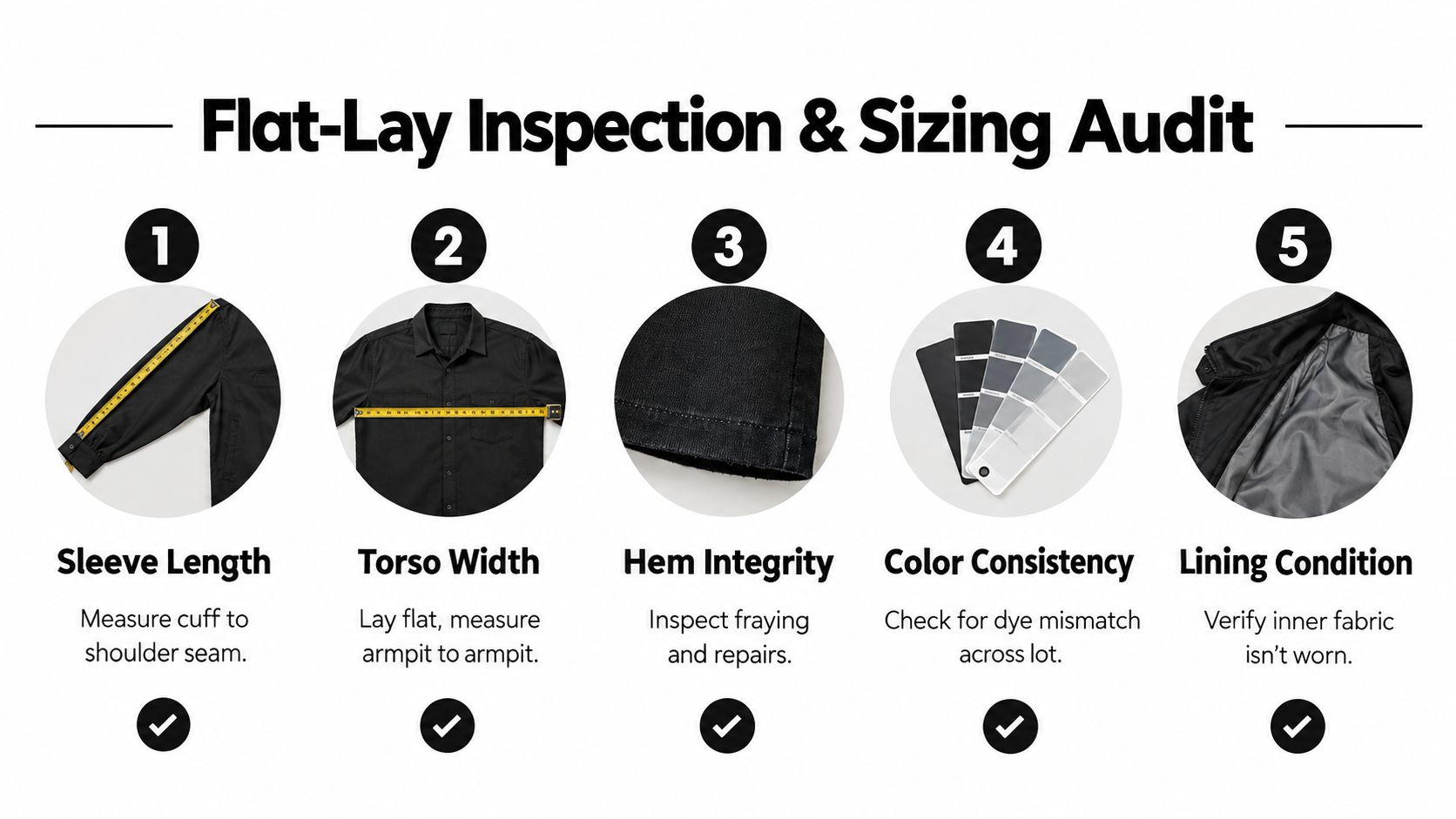
Build one measurement record for every size run
Start with a clean table or spreadsheet. Give each robe an identification number, then record the seller's stated size, measured dimensions, fabric, color, condition, and final disposition. Don't rely on the sewn-in size label. Older garments may have shrunk, stretched, been altered, or been labeled according to a sizing system that doesn't match your current choir members.
Measure these areas consistently:
- Shoulder width: Lay the robe naturally and measure from shoulder seam to shoulder seam. Record whether the seams sit correctly or have been pulled by wear.
- Sleeve length: Measure from the shoulder seam to the cuff. Uneven sleeve lengths become especially visible when singers hold music folders at chest height.
- Overall robe length: Measure from the shoulder's highest point to the hem. Compare this with the height and footwear expectations of the people who'll wear it.
- Torso width: Measure across the garment at a consistent point, such as armpit to armpit. Note whether the robe has enough ease for movement and layered clothing.
- Closure function: Open and close buttons, snaps, hooks, or zippers. A zipper should be tested 10 cycles during inspection, based on the practical workflow in garment inspection guidance.
The same guidance identifies stitching defects as about 35% of major findings and measurement deviations as about 25%, which explains why seam checks and flat-lay measurements deserve more attention than a quick visual review. Those figures apply to garment inspection broadly, but they're directly useful for secondhand choir apparel because seam wear and size drift often remain hidden until the robe is handled.
Screen the fabric and construction
Inspect the robe inside and out under strong, even light. Look for skipped stitches, loose hems, pulled seams, pilling, thinning lining, stains, damaged trim, and repairs that could fail under regular use. Check the collar and cuffs first because these areas receive repeated handling and often reveal cleaning or storage damage.
Color needs its own test. Compare robes against a reference garment or swatch rather than judging each piece separately. Put pieces from different parts of the lot side by side, including sleeves and panels, because fading may be uneven.
A robe belongs in the “repair” or “reject” group if its defect will become more visible, uncomfortable, or expensive after cleaning.
Ask sellers for flat photographs of representative pieces, not only the best-looking robe. Request images of the inside seams, hems, labels, closures, lining, and any embroidery. If the seller won't provide a meaningful size breakdown or condition evidence, price the lot as uncertain inventory or walk away.
For color and sizing references on a new or replacement order, use the choir robe size and color charts. They can also help your team create a consistent comparison sheet for evaluating secondhand garments.
Managing Sanitation and Fabric-Specific Care
A used choir robe doesn't become performance-ready because it looks clean. Unknown wear, storage conditions, odors, perspiration, and previous cleaning methods all affect whether a garment is suitable for shared use. Your team needs a care decision before purchase, not after the robes arrive.
Separate the lot by fiber content and construction first. Read the care label where possible. If the label is missing, inspect the hand-feel, sheen, pile, lining, embroidery, and trim before choosing a cleaning method.
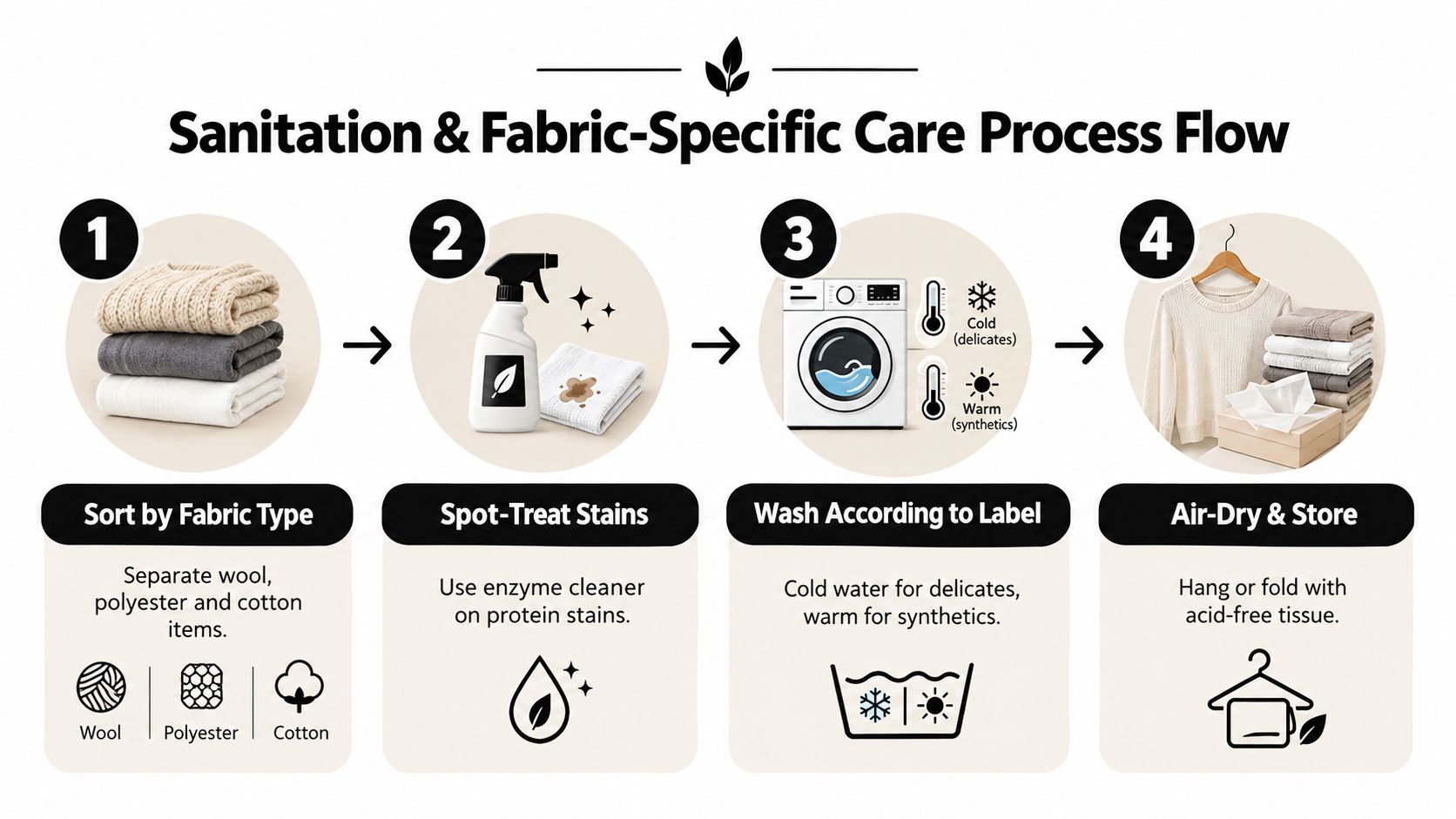
Match the process to the material
Polyester-blend robes are generally the most practical choice for recurring church or school use. They typically tolerate gentle machine washing and low-heat drying when the care label permits it. Turn garments inside out, use a gentle cycle, avoid aggressive heat, and keep robes away from rough items that can pull seams or snag trim.
Velvet, silk, satin, and embroidered garments require more caution. These materials can distort, lose their finish, or suffer damage to metallic threads when exposed to unsuitable water, heat, or agitation. Such pieces often require professional dry cleaning or steam-only treatment, as outlined in this material selection and care guidance for religious apparel.
Direct ironing is a poor default. Keep an iron away from metallic embroidery and delicate surface treatments, and use steaming only when the construction allows it. Test any stain treatment on an inconspicuous area before applying it across a whole lot.
For teams handling a large batch of washable garments, a practical laundry guide for bulk washing products can help with general laundry planning, but it shouldn't override the robe's care label or fiber-specific requirements.
Prevent storage damage after cleaning
Dry robes completely before storage. Hang them in a dry, dark, airy space using breathable cotton garment bags, or fold them carefully with suitable tissue where hanging could stretch the fabric. Long-term storage in sealed plastic can trap moisture and accelerate deterioration, especially when garments enter storage with residual dampness.
The most expensive mistakes are predictable:
- Water and heat mismatch: Hot water or high heat can shrink, distort, or fade a robe that needed gentle treatment.
- Pressure on decoration: Direct ironing can flatten velvet or damage metallic embroidery.
- Trapped moisture: Plastic storage can encourage stale odor and deterioration.
- Mixed-care batches: Washing specialty fabrics with durable synthetics can damage the delicate pieces.
Use religious fabric by the yard as a reference when you're assessing fabric construction or planning repairs and replacements. If a used garment needs professional cleaning before anyone wears it, add that cost to the acquisition price. A robe that requires specialized care may be sensible for occasional ceremonial use, but it's a poor bargain for weekly rotation if the cleaning process is expensive or difficult to repeat.
Comparing Used Lots to New Wholesale Alternatives
The decision shouldn't be “cheap used robe versus expensive new robe.” The useful comparison is unprocessed used inventory versus a predictable new wardrobe. A used lot may win when your choir can accept mixed sizing, your volunteers can inspect and clean every garment, and the ensemble doesn't need a fully uniform appearance. Otherwise, a new bulk order can be the more responsible use of ministry funds.
The new choir-robe category is increasingly accessible online. The broader choir-robe market was estimated at $0.4 billion in 2025 and projected to reach $0.53 billion by 2034, while e-commerce was projected to account for 42.3% of sales in 2026, according to choir-robe market analysis. Those projections don't guarantee a particular price or delivery outcome, but they show why buyers can compare direct online options rather than relying only on local resale listings.
| Feature | Used Bulk Lots | New Wholesale (ChoirBuy) |
|---|---|---|
| Size consistency | Mixed sizes, altered garments, and size drift are common risks | Ordered sizing can be standardized across the ensemble |
| Fabric condition | Wear, pilling, fading, odor, and weakened seams require screening | Fabric and construction are selected before delivery |
| Color matching | Pieces may vary because of age, washing, storage, or replacement panels | A coordinated color and fabric selection is easier to maintain |
| Sanitation | Cleaning history may be unknown and must be established | Care requirements are known before use |
| Labor | Sorting, measuring, cleaning, repair, and allocation fall on your team | Fewer receiving and preparation tasks |
| Customization | Limited to what the seller has available | New options can support coordinated robes, stoles, cassocks, surplices, or other choir apparel |
| Fulfillment | Depends on seller response, lot availability, and shipping condition | Online ordering can provide a more structured purchasing process |
| Best fit | Small budgets with capable volunteers and flexible requirements | Growing or formal ensembles needing a reliable unified appearance |
Set a clear pivot point
Choose used robes when the lot includes enough usable sizes for your actual singers, the seller provides credible condition information, and your team can complete inspection and cleaning before the next performance. Don't buy a large mixed lot just because the per-piece figure looks attractive.
Pivot to new wholesale choir apparel when you need inclusive sizing, consistent hems, reliable color matching, or a repeatable wardrobe for a growing ministry. New robes also make more sense when the used lot would require extensive repairs, professional cleaning, or weeks of volunteer sorting.
For a direct comparison of current purchasing options, review the choir robes for sale collection alongside the used listings you're considering. Compare the complete workflow, not just the sticker price. If your team can't state how many robes will be wearable, clean, correctly sized, and ready for the first service, the lot hasn't been properly priced.
Negotiating Purchases and Managing Logistics
Once a used lot passes the initial review, negotiate around condition and usable yield, not just the number of garments. Ask the seller to provide a size breakdown, measurements where available, fabric information, known repairs, cleaning history, storage conditions, and photos of representative pieces from across the lot.
A seller's best robe proves very little. Request random photos from different sizes and storage areas, including close-ups of cuffs, hems, closures, lining, collars, and embroidery. If the lot contains specialty pieces, such as organist sleeves or unusually long robes, have the seller identify them separately instead of including them in the standard count.
Put the agreement in writing
Before payment, confirm:
- Inventory description: Record the number of garments, stated sizes, colors, fabrics, and specialty designs.
- Condition standard: Define what counts as acceptable wear and what defects must be disclosed.
- Photo evidence: Keep the listing and seller messages showing the garments' stated condition.
- Missing or damaged pieces: Establish how the seller will handle discrepancies.
- Shipping responsibility: Confirm who bears the risk if cartons arrive wet, crushed, or opened.
- Return terms: Don't assume a private seller accepts returns. Ask directly before committing.
Bulk textiles can occupy more space and weigh more than expected. Ask how the robes will be packed and whether they'll arrive compressed, folded, or hanging. Keep cartons dry during receipt, and don't leave garments sealed in shipping packaging longer than necessary.
Inspect immediately upon arrival
Assign two people to receive the shipment. Photograph the unopened cartons, then photograph the contents before sorting. Check for transit damage, strong odor, dampness, insect evidence, stains, and color inconsistency. Separate questionable garments immediately so one odor or contamination issue doesn't spread through the usable inventory.
Create four groups: ready for cleaning, needs repair, specialty-care, and reject. Record the reason for every exclusion. That record protects your budget review and gives the ministry a realistic yield figure instead of an inflated garment count.
Allocation should follow your measurement sheet, not first-come, first-served distribution. Match robe length, shoulder width, sleeve length, and torso room to individual singers, then keep a small internal record of who received which garment. Store unassigned robes by size and fabric type so the next replacement request doesn't trigger another full-lot search.
Finalizing Your Choir Wardrobe Strategy
A choir wardrobe succeeds when singers can move comfortably, the rows look coordinated, and the ministry team can maintain the garments without constant emergency work. The right sourcing decision is therefore operational. It must account for fit, sanitation, appearance, repeat use, and the people available to manage the inventory.
Use this decision test before buying any used choir robes for sale:
- Can the lot cover your actual size range? Labels alone aren't enough. Require measurements and identify altered or specialty garments.
- Can your team verify the condition? If you can't inspect representative pieces before purchase, assume the lot carries high risk.
- Can you clean every fabric safely? Durable synthetic garments are easier to rotate than velvet, satin, silk, or heavily embroidered pieces.
- Can you absorb the labor? Sorting, measuring, laundering, repairs, and allocation need an owner and a deadline.
- Can the choir tolerate visual variation? If the answer is no, mixed shades and uneven hems should disqualify the lot.
- Will the robes serve beyond one event? A one-time performance may justify a different standard than a weekly worship wardrobe.
Buy secondhand when the inventory is measurable, the usable yield is clear, and the care plan fits your resources. Negotiate firmly, inspect on arrival, and reject garments that compromise hygiene, comfort, or the ensemble's appearance.
Choose new wholesale apparel when the ministry needs dependable sizing, coordinated colors, inclusive fit, customization, or a wardrobe that can be reordered without repeating the same investigation. A higher invoice can be the lower total cost when it removes avoidable sorting, sanitation, repair, and replacement work.
Set your next apparel budget around ready-to-issue garments, not the number of robes in a listing. That single change will keep attractive but risky lots from consuming funds that should support your choir.
ChoirBuy offers wholesale and custom choir robes, choir stoles, cassocks, surplices, cottas, and caps with multiple fabrics, colors, inclusive sizing, bulk options, and practical ordering support. If a used lot fails your inspection or care requirements, visit ChoirBuy to compare a coordinated new wardrobe for your church, school, or liturgical team.