

More than just a piece of fabric, a pastor's stole is a powerful symbol in Christian worship. It’s that long, scarf-like vestment worn over the shoulders, visually representing the yoke of service and the authority that comes with ordination. In a very real way, stoles for pastors are powerful visual communicators, with their colors and designs telling the story of the liturgical season or the specific focus of a worship service.
Choosing the Right Clergy Stole for Your Ministry
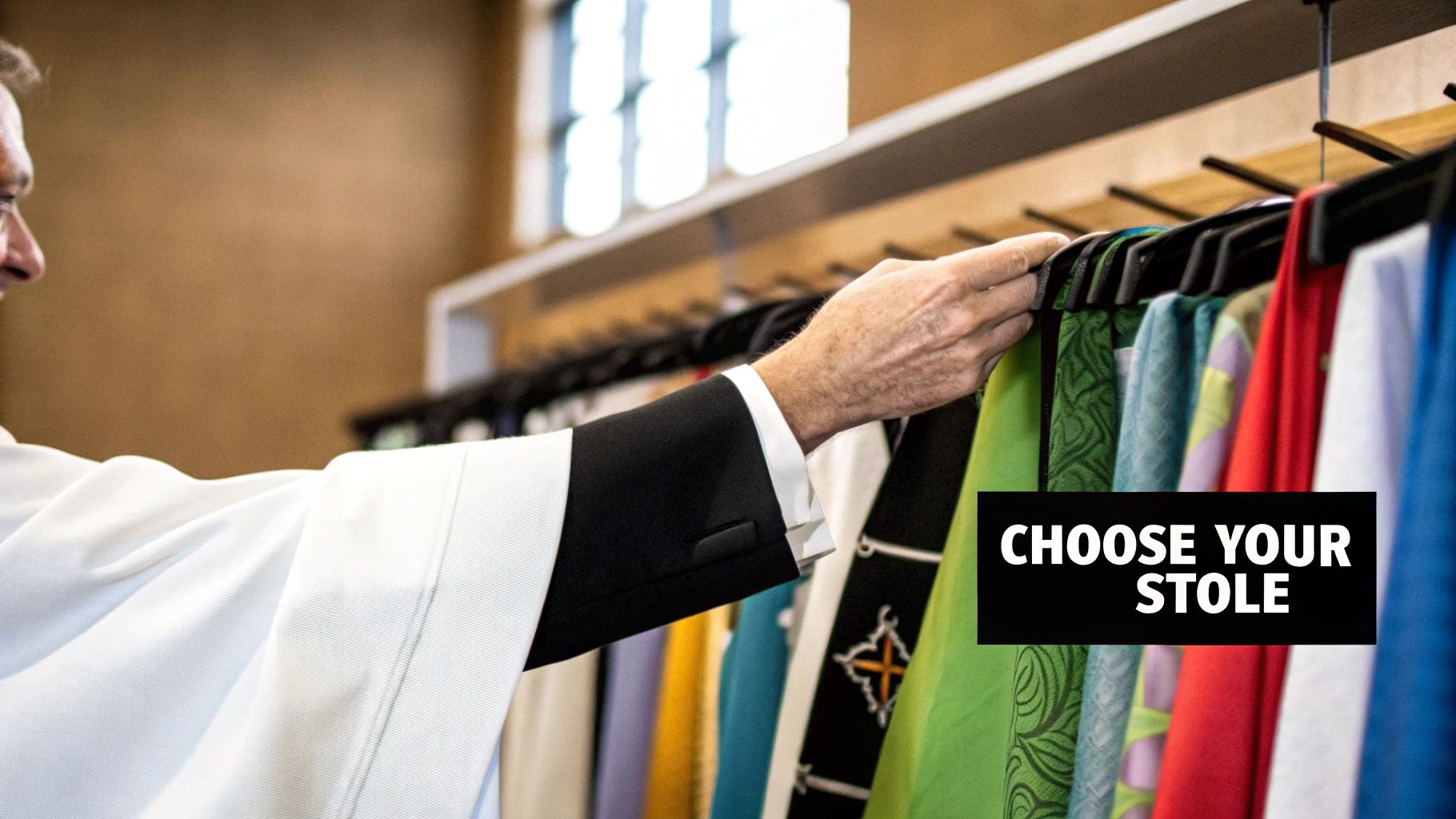
Welcome! If you're a pastor, worship leader, or part of a church committee, think of this guide as a friendly, knowledgeable companion. We're here to help you navigate the world of liturgical vestments with confidence, making the process of choosing the right clergy stole simple and clear.
A stole is one of the most fundamental parts of a minister's attire. It signifies the sacred duties and spiritual leadership entrusted to them. When a pastor puts on a stole, they are connecting to a tradition that stretches back centuries, a practice that resonates deeply across countless denominations.
The Stole as a Symbol of Office
In many traditions, wearing a stole isn't just an option; it's a core part of the pastoral role. For instance, a 2014 survey within the United Methodist Church highlighted that newly ordained elders are vested with a stole during their ordination, a powerful moment that physically ties the garment to their new office. Considering that roughly one-third of Christians worldwide belong to liturgical traditions where stoles are the norm, it's safe to say hundreds of millions of people see their pastors wear them every Sunday. You can learn more about these fascinating ecclesiastical statistics and what they mean for the modern church.
A pastor's stole is a visual sermon. Before a word is spoken, the color, fabric, and symbols on the stole begin to tell the story of the day's worship, setting a tone of reverence and expectation for the congregation.
This guide will walk you through every important decision point. Our aim is to give you the insight needed to pick a stole that not only serves its liturgical purpose but also feels like a true reflection of your personal calling and ministry.
What This Guide Will Cover
We'll break down all the essential aspects of choosing the right stoles for pastors, making sure you find the perfect fit for your specific needs. Here’s a look at what we’ll cover:
- Decoding Liturgical Colors: We’ll unpack the rich symbolism behind each color and explain how it corresponds to the seasons of the church calendar.
- Fabric and Style Choices: You'll learn how to compare different materials and cuts to find that ideal blend of comfort, durability, and visual appeal in our clergy stoles.
- Custom Embroidery: We’ll show you how to personalize a stole with meaningful symbols that express your church’s unique identity and theological heart.
- Practical Considerations: From getting the sizing just right to proper care, ordering timelines, and bulk pricing, we'll cover all the details for a hassle-free experience.
Ultimately, our goal is to help you confidently select a stole from ChoirBuy that beautifully honors your church's traditions, elevates your worship services, and becomes a cherished part of your ministry for years to come.
Decoding the Meaning of Liturgical Colors
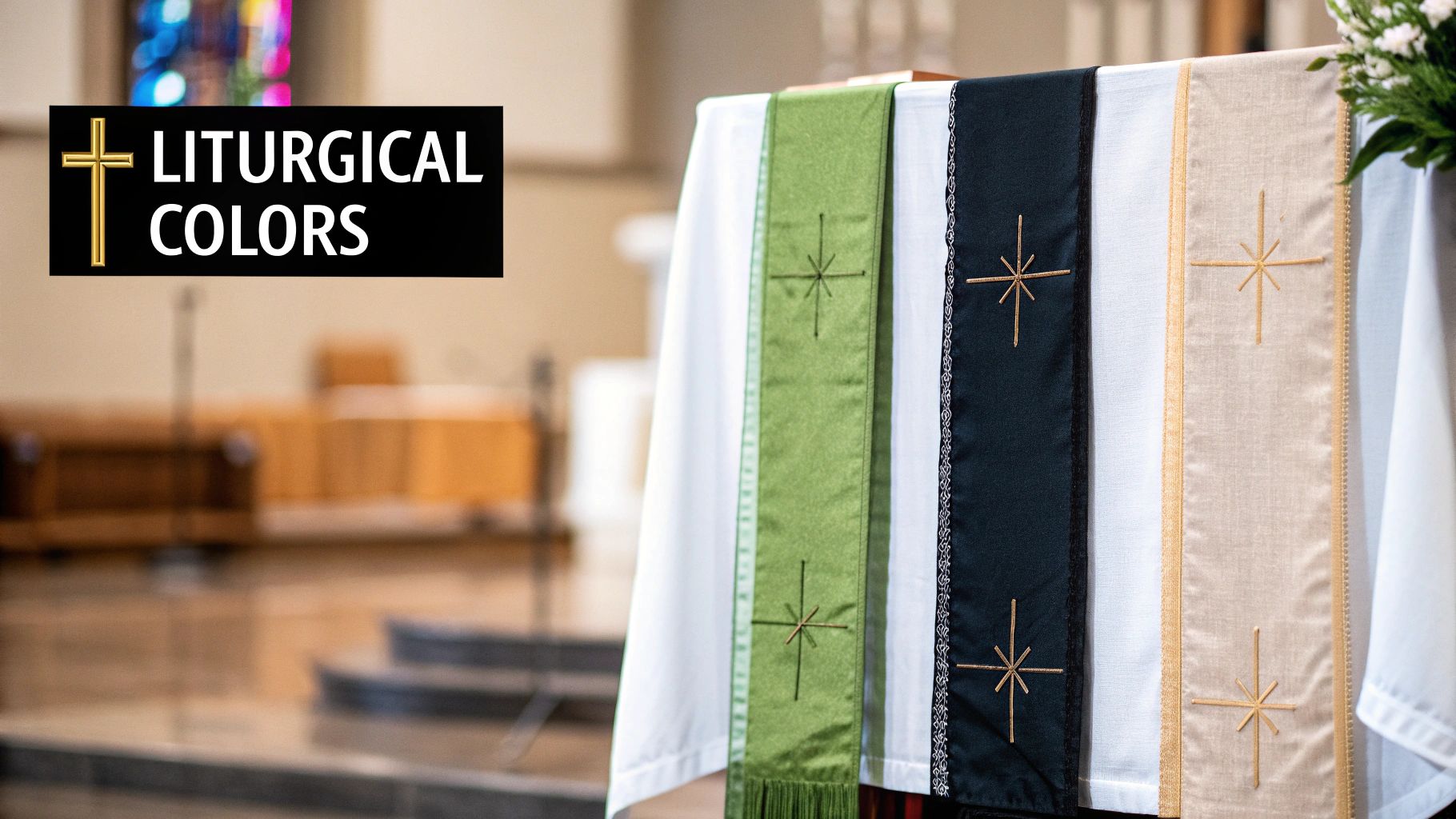
Choosing a stole's color is far more than a style decision; it's a practice steeped in centuries of Christian tradition. Each hue is a visual sermon, connecting the congregation to the rhythm and story of the church year. Think of the liturgical calendar as a sacred map, and the colors are the signposts guiding us through seasons of fasting, feasting, and faith.
This system turns a simple garment into a profound ministry tool. When you align your stoles for pastors with the season, you're visually reinforcing the day's scripture and spiritual focus. It's a quiet but powerful way to communicate the heart of the Gospel before a single word is even spoken.
The Colors of Celebration and Purity
White and Gold are the colors of pure joy, reserved for the highest and most sacred moments in the church calendar. They speak of light, purity, innocence, and the ultimate victory of Christ.
- When to Use Them: You’ll see these gleaming stoles during the high seasons of Christmas and Easter. They are also the go-to for weddings, baptisms, funerals, and feast days celebrating saints who weren't martyred.
- Theological Meaning: These brilliant colors represent the glory of God and the triumph of the resurrection. A pastor in a white or gold stole on Easter morning is a walking proclamation of life's victory over death.
Using these colors immediately sets a tone of profound reverence and celebration, marking these days as truly special and set apart.
The Colors of Reflection and Preparation
Purple is the color of solemnity and preparation. It calls the community to a season of introspection, repentance, and waiting.
The liturgical colors are not merely decorative; they are a form of visual theology. Each color on a pastor's stole helps to weave the narrative of salvation, guiding the congregation through seasons of fasting and feasting, sorrow and celebration.
Purple stoles are the standard for both Advent and Lent. In Advent, the color signifies a royal, solemn anticipation of the coming King. During Lent, it deepens into a symbol of penance and preparation as we journey toward the cross. For many clergy, these are essential stoles for pastors in their collection.
While the symbolism is powerful for stoles, you can also create a cohesive visual theme for your entire worship team by exploring the broader meaning of choir robe colors.
The Colors of Life and Mission
Green and Red are vibrant, active colors that speak to the ongoing life and mission of the church in the world. They represent growth, new life, and the fire of the Holy Spirit.
- Green for Ordinary Time: The longest season of the church year, Ordinary Time, is marked by green. This color symbolizes hope, life, and the steady growth of the church after the major feasts of Easter and Pentecost. It represents the day-in, day-out journey of our faith.
- Red for the Holy Spirit and Martyrs: Red is a potent color with two distinct, powerful meanings. We wear it on Pentecost Sunday to signify the tongues of fire of the Holy Spirit. It is also the color for services honoring Christian martyrs, a stark reminder of the blood they shed for their faith.
Other Significant Liturgical Colors
Beyond the core colors, a few others hold special places in certain traditions on specific Sundays.
- Rose: This color makes a brief appearance just twice a year—on Gaudete Sunday (the third Sunday of Advent) and Laare Sunday (the fourth Sunday of Lent). Rose signifies a moment of quiet joy and anticipation in the middle of a more solemn season.
- Blue: Some traditions, especially in Lutheran and Methodist circles, use blue for Advent instead of purple. It symbolizes hope and is closely associated with the anticipation of the Virgin Mary.
- Black: Traditionally reserved for Ash Wednesday and funerals, black signifies mourning, mortality, and deep repentance.
Understanding this rich visual language helps you choose a stole that not only looks dignified but also deepens the worship experience for your entire congregation.
A Guide to Liturgical Stole Colors
To make things easier, here’s a quick-reference chart connecting the colors to their meaning and use throughout the church year.
| Color | Primary Meaning | Liturgical Season or Occasion | ChoirBuy Product Example |
|---|---|---|---|
| White/Gold | Purity, Light, Joy, Victory | Christmas, Easter, Weddings, Funerals, Baptisms, Feasts of Saints | White Clergy Stole with Gold Embroidery |
| Purple | Repentance, Preparation, Royalty | Advent, Lent | Purple Clergy Stole with Cross Embroidery |
| Green | Hope, Life, Growth, Mission | Ordinary Time (Season after Epiphany and Season after Pentecost) | Green Clergy Stole with Dove Embroidery |
| Red | Holy Spirit, Martyrdom, Sacrifice | Pentecost, Feasts of Martyrs, Palm Sunday | Red Clergy Stole with Descending Dove |
| Rose | Anticipation, Joy | Gaudete Sunday (Advent 3), Laetare Sunday (Lent 4) | Rose Clergy Stole |
| Blue | Hope, Expectation | Advent (in some traditions) | Blue Clergy Stole |
| Black | Mourning, Death, Repentance | Ash Wednesday, Funerals | Black Reversible Clergy Stole |
This chart can serve as a helpful guide when planning your worship services and ensuring your vestments align with the timeless story of the church.
Finding the Perfect Stole Style and Fabric
Once you've landed on the right color for the liturgical season, the next step is choosing the cut and fabric. This is where the practical side of things really comes into play. The physical shape and material of a stole define its character, how it feels during a long service, and how it drapes. It's all about finding that sweet spot where tradition, personal comfort, and visual dignity meet.
Just like a suit can be tailored for different occasions, stoles for pastors come in various cuts. Each one serves a specific liturgical purpose and is designed to work with other vestments. Getting to know these differences is the key to picking a stole that hangs correctly and feels like a natural part of your clerical attire.
Comparing Traditional Stole Styles
The most fundamental difference in stole cuts comes down to the office of the person wearing it—specifically, whether it's for a priest or a deacon.
- Priest or Pastor Stole: This is the style most people picture. It's designed to be worn around the back of the neck, with the two panels hanging straight down the front. It's a beautiful symbol of the yoke of pastoral ministry and is typically worn over an alb or a cassock and surplice.
- Deacon Stole: The deacon stole has a unique look. It's worn over the left shoulder and drapes diagonally across the body, where it's fastened at the right hip. This distinct style represents the Deacon's role as a servant, always ready for action and service to the church and its people.
These are the time-honored forms, but you'll also find modern variations that offer different aesthetic touches.
Exploring Different Cuts and Designs
Beyond the priest/deacon distinction, the actual shape of the stole's panels can completely change its look. The three main cuts you'll see are straight, tapered, and flared. Each one offers a different silhouette.
You can think of a stole's fabric as its voice. A quiet, matte polyester speaks of steadfast daily service. A luminous satin or a rich brocade sings of high celebration and glorious occasions. The material truly sets the tone.
Straight Cut: This is the most classic and straightforward design. The stole’s width stays the same from the neck all the way down to the ends. It gives you a clean, traditional, and understated look.
Tapered Cut: A tapered stole starts narrower at the neck and gets wider toward the ends. This design is great for reducing bulk around your neck, helping the stole lie flatter and feel more comfortable, which makes a big difference during lengthy services.
Flared Cut: This style is similar to the tapered cut but has a much more dramatic widening at the bottom. That extra space makes the flared design a perfect canvas for larger, more elaborate embroidery or symbols. It’s an excellent choice for highly decorative or custom stoles for pastors.
Selecting the Ideal Fabric for Your Ministry
Choosing a fabric is where practicality meets personality. Your local climate, how often you'll wear the stole, and your budget will all guide this decision. Here at ChoirBuy, we offer a few go-to materials, each with its own strengths.
- Satin: With its beautiful sheen and smooth feel, satin is perfect for high holy days and big celebrations like Easter and Christmas. The way it catches the light adds a sense of festivity and grandeur to the moment. A white clergy stole with gold embroidery made from satin, for instance, is absolutely stunning for those occasions.
- Brocade: This is a richly decorative, woven fabric, often with intricate patterns like flowers or religious symbols woven right in. Brocade has a sense of weight, history, and elegance, making it a wonderful choice for stoles that you hope will become cherished heirlooms.
- Polyester: Think of polyester as the workhorse fabric. It’s valued for being durable, wrinkle-resistant, and incredibly easy to care for. It's a fantastic, budget-friendly option for stoles that will get frequent use during Ordinary Time or for daily services, giving you a dignified look without the fuss.
By balancing these elements—the symbolic cut, the functional design, and the tangible feel of the fabric—you can choose a stole that not only serves its liturgical purpose but also brings you comfort and confidence in your ministry.
How to Measure for a Perfect Stole Fit
Nothing is more distracting during a service than an ill-fitting stole. If it's too short, it looks awkward. Too long, and you risk tripping over it. The goal is a stole that feels like a natural extension of your vestments—something that moves with you and lends a sense of dignity without ever calling attention to itself.
Getting that perfect fit isn't complicated, but it does require a moment of your time to get it right. Taking a quick, accurate measurement is the single best thing you can do to ensure the stole you order hangs beautifully and complements your clerical attire.
Starting Your Measurement
The most important measurement for any pastor's stole is its total length. This determines where the ends of the stole will fall, which is a key part of its visual and symbolic role. To find your ideal length, you just need a flexible measuring tape. It also helps to have a friend or a mirror handy.
Here’s the simple, three-step process:
- Find Your Starting Point: Stand up straight and feel for the prominent bone at the back of your neck. This is your C7 vertebra, and it's the perfect spot to anchor your measurement.
- Drape the Tape: Let the measuring tape hang over your neck from that point, just as a stole would, with both ends falling evenly down your front.
- Find Your Length: Look in a mirror and adjust the tape until the ends hang at a length you find appropriate. This is your number!
That one measurement is the foundation for a great fit. It ensures the stole hangs symmetrically and looks proportional to your height.
Fine-Tuning the Stole Length
So, what’s the "right" length? While there isn't one strict rule, tradition gives us some excellent guidelines. Generally, you want the stole to end somewhere between your knee and your ankle. The final choice often comes down to the other vestments you’ll be wearing, like an alb or cassock.
A well-measured stole is an act of stewardship. It shows care for the tools of ministry and respect for the visual traditions of worship, ensuring that nothing distracts from the sacred moments of the service.
If you’re a visual person, it can be helpful to see some standard measurements. We've put together a resource to help you picture how different lengths look. You can explore our comprehensive ChoirBuy size and color charts to see how standard lengths correspond to different heights.
The infographic below puts this all into perspective, showing that getting the fit right is the final, critical piece of the puzzle after you've chosen your style and fabric.

As you can see, a thoughtful selection process always ends with ensuring a perfect fit.
Common Sizing Mistakes to Avoid
A few common missteps can result in a stole that just doesn't feel right. If you keep these in mind, you'll get a perfect fit on the very first try.
- Measuring Too Short: A stole that ends above the knee can look unbalanced and throw off the dignified, vertical lines of your vestments.
- Measuring Too Long: On the other hand, a stole that’s excessively long can become a legitimate tripping hazard or get caught on chancel furniture.
- Forgetting Your Robes: This is a big one. Always take your measurement while wearing the robe or alb you’ll have on underneath. The added bulk can absolutely change how the stole hangs.
By following these simple steps, you can confidently order a stole that not only looks flawless but feels comfortable, allowing you to keep the focus exactly where it belongs: on worship.
Making It Your Own: Personalizing Stoles with Custom Symbols
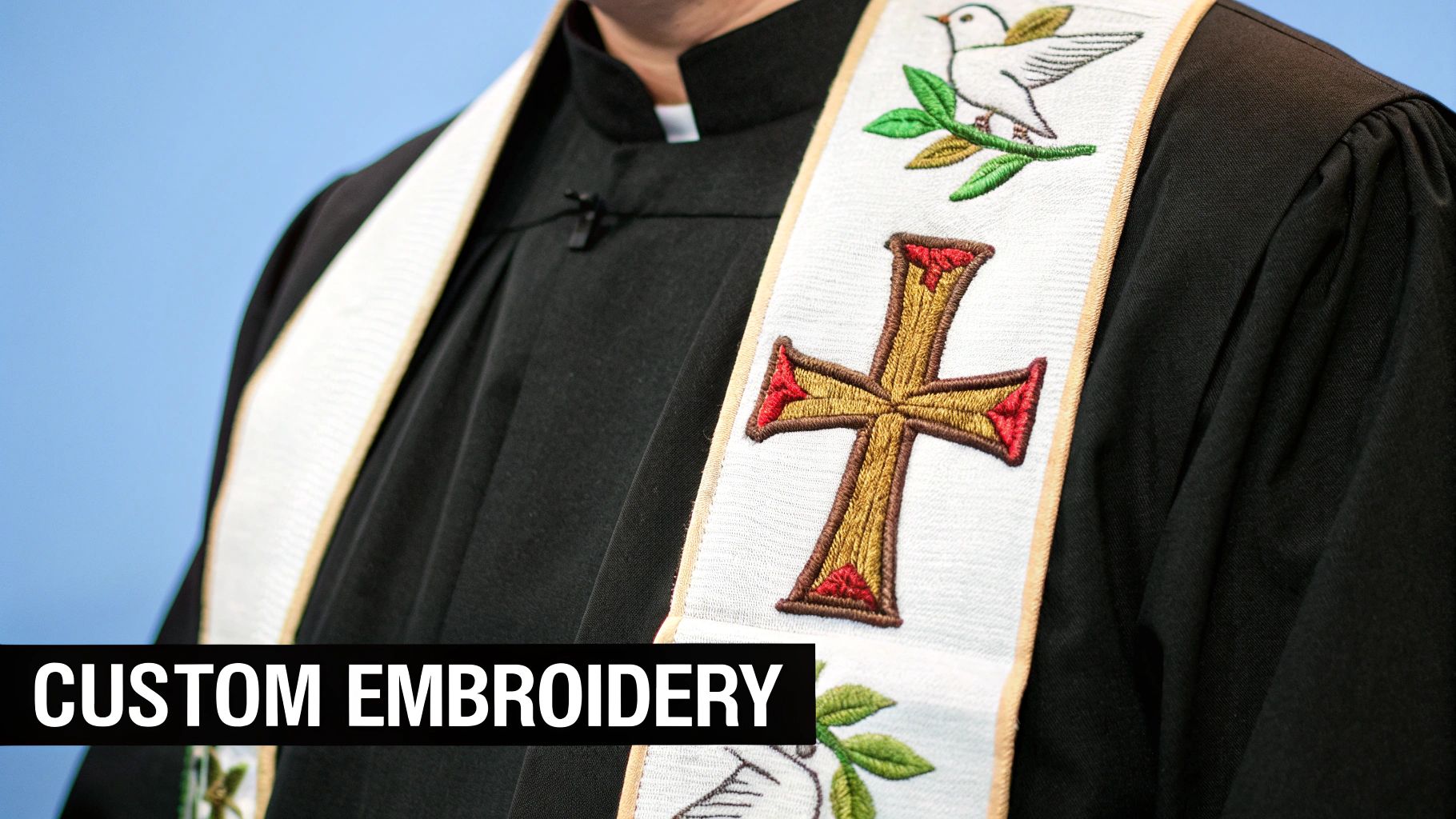
This is where a stole truly comes to life. Custom embroidery can transform a beautiful vestment into a deeply personal testament of faith. It's your chance to tell a story, turning fabric and thread into a powerful visual sermon that speaks volumes before you even say a word.
Personalizing stoles for pastors creates pieces that aren't just worn, but cherished. They become a reflection of a unique ministry journey, your church’s identity, or a specific theological message you want to emphasize. It’s an opportunity to connect with the ancient, visual language of our faith.
Timeless Symbols and Their Meanings
For millennia, certain symbols have been a cornerstone of Christian art, carrying profound theological weight. Adding one to your stole instantly connects your ministry to this rich history, making your vestment a part of the church's timeless story. Each symbol is a compact lesson in faith, immediately recognizable to your congregation.
A thoughtfully chosen symbol is more than just decoration; it's a teaching tool. It reinforces the theme of a sermon or deepens the meaning of a liturgical season, making the stole an active participant in the act of worship.
Here are a few of the most powerful and enduring symbols you might consider for your custom embroidered stole:
- The Cross: The ultimate symbol of our faith, representing Christ's sacrifice, redemption, and the victory of life over death. It's a constant, powerful reminder of the Gospel's core message.
- The Dove: A universal sign of the Holy Spirit, the Dove signifies peace, purity, and God's presence. It’s especially fitting for Pentecost, baptisms, or confirmations.
- The Chi-Rho: This ancient symbol is formed by the first two Greek letters of "Christ" (Χ and Ρ). It’s a powerful declaration of His identity and lordship, making it a wonderful choice for the Christmas and Epiphany seasons.
- Alpha and Omega: As the first and last letters of the Greek alphabet, they represent God's eternal nature—the beginning and the end. They are a perfect fit for Easter, celebrating Christ's eternal reign.
A custom stole is a legacy piece. The symbols and text embroidered upon it tell the story of a specific time, place, and calling, creating a tangible link between the pastor who wears it and the community they serve.
For those looking to create a truly unique design, new tools can help bring a vision to life. An AI Bible Art Generator, for instance, can be a great way to brainstorm and visualize fresh artistic interpretations of scriptural themes that you might want to incorporate.
Common Embroidery Symbols and Their Meanings
Choosing the right symbol can feel overwhelming, but understanding their roots makes the process much more meaningful. This table breaks down some popular options and the stories they tell.
| Symbol | Visual Description | Theological Meaning | When to Use It |
|---|---|---|---|
| Dove | A white dove, often shown descending or with an olive branch. | The Holy Spirit, peace, purity, new beginnings. | Pentecost, Baptisms, Confirmations, Weddings. |
| Cross | Ranges from a simple Latin cross to more ornate Celtic or Jerusalem styles. | Christ's sacrifice, redemption, salvation, the core of the Gospel. | Good Friday, Easter, Lent, or general use. |
| Chi-Rho | The Greek letters Chi (X) and Rho (P) superimposed. | An early Christogram representing Jesus Christ. | Christmas, Epiphany, or seasons celebrating Christ's identity. |
| Alpha & Omega | The Greek letters Α and Ω. | God's eternal nature as the beginning and the end. | Easter season, funerals, or themes of eternity. |
| Lamb of God | A lamb, often holding a banner (the "Banner of Victory"). | Jesus as the sacrificial lamb, innocence, and ultimate victory over sin. | Easter, Lent, Communion services. |
| Fish (Ichthys) | A simple two-arched line forming a fish symbol. | An early secret symbol for Christians, representing Jesus Christ. | General use, or for services focused on evangelism. |
| Chalice & Host | A cup (chalice) with a communion wafer (host) above it. | The Eucharist, communion, Christ's sacrifice and presence. | Communion Sundays, Maundy Thursday. |
By weaving these historic symbols into your stole, you're not just wearing a vestment; you're carrying a piece of Christian history and theology with you into the pulpit.
Beyond Symbols: Adding Custom Text
Personalization doesn't stop with images. Adding names, dates, or a favorite scripture verse can make a stole deeply significant, turning it into a treasured keepsake commemorating a milestone in your ministry.
A few ideas include:
- Ordination Dates: Embroidering the date you were ordained is a beautiful way to honor the start of your pastoral journey.
- Church Names or Initials: A stole customized for a specific congregation can powerfully reinforce your connection to the community you serve.
- Meaningful Scripture: A short, impactful verse that has shaped your calling can serve as a constant source of encouragement every time you put it on.
Designing Your Unique Stole
Creating a custom stole is a wonderful process of reflection. Think about the messages you want to convey and the special occasions where it will be worn. The goal is a vestment that is not only beautiful but theologically rich and personally meaningful.
We make this process simple and inspiring. Whether you feel drawn to a classic symbol or want to add a personal date, you can explore all the possibilities with our easy-to-use custom stole designer. A thoughtfully designed stole becomes far more than just clergy wear—it becomes a cherished instrument of your ministry.
Caring for Your Stoles and Ordering from ChoirBuy
Your liturgical stoles are so much more than fabric and thread; they're a real investment in the visual and spiritual life of your ministry. When you protect that investment with proper care, you ensure they remain beautiful for years of service. With a little practical advice, you can easily maintain the dignity of your stoles for pastors through countless baptisms, sermons, and celebrations to come.
Proper care really just starts with knowing your fabric. Delicate materials like satin need a gentle touch, while a sturdy polyester can handle more. Following a few simple guidelines will go a long way in keeping your stoles' colors vibrant and their embroidery sharp.
Best Practices for Stole Care and Storage
Keeping your stoles looking their best is pretty straightforward. The secret is just consistent, gentle handling after each time you wear them. These simple steps, from cleaning to storing, will protect the material, prevent damage, and keep your vestments ready for worship.
- Cleaning: Most of our polyester stoles can be machine washed on a gentle cycle with cold water. For anything made of satin, brocade, or with heavy embroidery, hand-washing or professional dry cleaning is strongly recommended. This protects those delicate threads and the fabric's natural sheen. Always stick with a mild detergent and never use bleach.
- Pressing: To get wrinkles out, use an iron on a low to medium setting. It’s always a good idea to press the stole on the reverse side. For an extra layer of protection, lay a pressing cloth (a clean cotton towel works great) between the iron and the stole. This simple trick prevents scorching and keeps the fabric from getting shiny.
- Storage: The absolute best way to store a stole is to hang it. A wide, padded hanger is perfect because it supports the weight and prevents that annoying crease you can get at the neckline. If you have to fold it, try rolling it gently with the embroidered side facing out and store it in a breathable garment bag, away from direct sunlight that can fade the colors over time.
Think of caring for a stole as an act of stewardship. Just as a pastor prepares their heart for a service, preparing their vestments ensures that every visual element of worship is offered with intention and respect.
This simple routine prevents the buildup of dust and oils and makes sure your stoles for pastors always look their best.
The ChoirBuy Ordering Process
When you're ready to add a new stole to your collection, we’ve made our ordering process as clear and simple as possible. We want you to feel confident from the moment you choose a style to the day it arrives at your door.
Our production times are set up to meet your needs. In-stock stoles usually ship out quickly, so you can get a standard vestment without a long wait. For anything personalized, however, planning ahead is key. Custom embroidered stoles require an average of 4-5 weeks for production, as our artisans pour a great deal of care into crafting each unique design.
For churches looking to outfit an entire clergy team or plan for the whole liturgical year, we offer some very attractive bulk pricing. Ordering multiple stoles at once doesn't just create a cohesive look for your team; it also brings significant savings. This is a fantastic option for dioceses, large parishes, or even church plants just starting their vestment collection.
To get started, you can easily find and submit your details through our dedicated ChoirBuy order forms. Our team is here and ready to help you put together a seamless bulk order that fits your ministry’s specific needs and budget.
Common Questions About Clergy Stoles
We talk to pastors and ministry leaders every day, and over the years, we've noticed a few questions come up again and again. To help you feel completely confident in your choice, we’ve put together some straightforward answers to the most common queries we get about our stoles for pastors.
Key Differences in Stole Styles
One of the first things people often ask is, "What's the real difference between a priest's stole and a deacon's stole?" It's a great question, and the answer lies in how they're worn, which visually represents their distinct roles in the church.
A priest or pastor stole is worn around the neck, hanging straight down in the front. This style is meant to symbolize the "yoke of Christ." A deacon stole, on the other hand, is designed to be worn over the left shoulder and then draped diagonally across the body, where it's fastened at the right hip. This frees up the right arm, symbolizing the deacon's role as a servant, always ready to get to work.
Customization and Turnaround Times
"Can you create a custom stole for me?" Yes, absolutely! We love working on special requests. If you're looking for a specific liturgical color or a unique design that you don't see on our website, just reach out to our team. We're here to help bring your vision for a custom clergy stole to life.
Naturally, the next question is about how long it takes. A custom embroidered stole is a true work of art, and that kind of detailed work takes time. You can generally expect a turnaround time of approximately 4 to 5 weeks from the moment you confirm your order to when it arrives at your door. We always recommend planning ahead, especially if it’s for an ordination, a holiday, or another special event.
Traveling with Your Clergy Stoles
We also hear from a lot of pastors who travel for conferences, guest speaking, or mission work. They all want to know the best way to pack a stole without it ending up a wrinkled mess. The best trick I've learned is to use a dedicated vestment or garment bag.
A well-cared-for stole is a sign of respect for the office it represents. Simple travel and storage habits can preserve its beauty and dignity for years of ministry.
When packing, lay the stole flat inside the bag. If you need to save space, you can also gently roll it, starting from the ends and rolling toward the center yoke. This simple technique helps prevent hard creases and protects any delicate embroidery. As soon as you arrive, hang it up to let any minor wrinkles fall out on their own.
At ChoirBuy, we consider it a privilege to provide pastors and clergy with high-quality vestments that honor their sacred calling. Explore our full collection of clergy stoles today and find the perfect addition for your ministry.