

A children's choir director doesn't need another robe box full of surprises two days before a performance. Too many groups discover the same mess at the same time, robes hanging too long, sleeves swallowing little hands, fabric that feels hot under stage lights, or a trim color that looks right on paper and wrong in the sanctuary. Kids choir robes need a different buying mindset, because children grow unevenly, they move more, and the robes get washed harder than adult formalwear.
If you're outfitting a mixed-age group, start by treating this as a fit and fabric decision, not a costume order. The logic behind choir dress has deep roots, from early liturgical garments to the standardized robe tradition that still shapes modern choir wear today, which is why simple, coordinated silhouettes still make sense for children's ensembles (historic robe tradition overview, U.S. choir robe history and canon background). And if you want to add decorative detailing later, a resource like the embroidered cape stitching guide is useful for understanding how clean finishing work changes the final look without changing the whole garment.
Why Outfitting a Kids Choir Is Its Own Decision
The worst robe order usually happens when a director treats children like small adults. That's how you end up with hems that snag on risers, sleeves that get rolled three times, and robes that look tidy on a hanger but sloppy the moment the kids sit down, stand up, and move again. Children's choir wardrobes take more abuse, from snack time to folding chairs to repeated laundering between services, so the purchase has to survive real use, not just the photo on the spec sheet.
The three mistakes that cause most problems
First, don't order by age. Age bands are blunt tools, and they ignore the growth spurts that make one fourth grader look like two different sizes in the same season. Second, don't buy robes as if they're one-off pageant outfits. Choir robes need washability, repeat wear, and easy replacement planning. Third, don't ignore child safety and cleaning requirements, because children's apparel has different compliance pressures than adult choir wear.
Practical rule: if the robe can't be washed, inspected, and redistributed quickly, it's a poor choice for a children's ensemble.
That's why I tell directors to think in terms of the choir year, not just opening night. A program that spans school transitions needs a different sizing buffer than a single holiday concert. ChoirBuy carries dedicated children's lines alongside adult collections, so you can keep an intergenerational look without forcing kids into adult patterns or guessing their size from an adult chart. For a closer look at options that support children's use, the product and category pages on ChoirBuy are the right place to start, especially when you're comparing coordinated looks across age groups.
The smart path is simple. Measure first. Choose child-safe, easy-care fabric. Match the robe to the choir's season, venue, and movement needs. Then lock down the color, the trim, and the ordering window before anyone starts asking where their robe went.
Measuring Children the Right Way Before You Order
Children's robe sizing goes wrong when adults eyeball it from across the room. A child can be tall but narrow, broad-shouldered but short in the torso, or likely to grow two inches between rehearsal and performance. Measure the body you have now, then build in a little room for the season ahead, not a lot of guesswork.
Start with height, then measure the robe, not the child's clothes
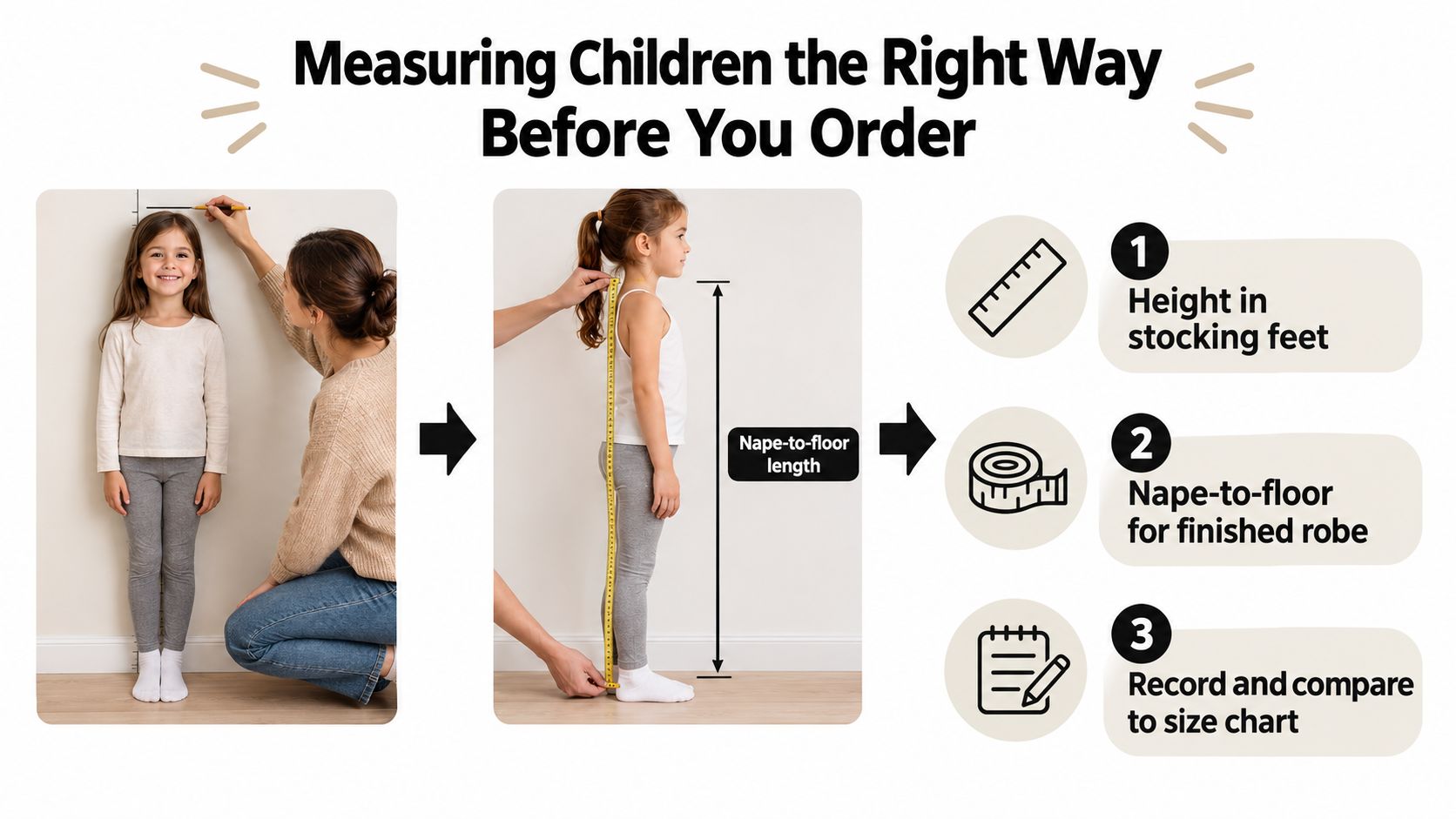
Have the child stand in stocking feet against a wall, with heels down, shoulders back, and chin level. Measure height first, then record nape-to-floor length, which is the best starting point for finished robe length. After that, measure sleeve length from the shoulder bone to the wrist with the arm relaxed, and measure shoulder width across the back. Keep clothing simple, a lightweight T-shirt and leggings only, because bulky layers distort the numbers.
The two-person method works best. One adult holds the tape at the nape while another reads the floor point, because kids fidget and reach and lean at exactly the wrong moment. Slouching shortens the back measurement, and raised arms shorten the sleeve. If you don't control posture, your chart is already off before you place the order.
Use growth allowance, not wishful thinking
For a current-season fit, I'd add 1 to 2 inches to the nape-to-floor number so the robe doesn't skim the floor the first time a child climbs stairs. If you're ordering for a choir year that spans more than one school year, size up one full size. Don't jump two sizes, because that usually creates sleeves that swallow small singers and hems that drag in procession.
A shared roster solves most of the follow-up chaos. Write down height, nape-to-floor, sleeve, and shoulder width for every singer, then match each child to a robe length and size before you order. If your team is comparing charts and product pages, the effective product sizing tips resource is a useful reminder that the chart has to match real bodies, not age labels. Use the measurements you recorded, not the size the parent thinks the child “usually wears.”
Record the same way every time. Consistent measurement beats perfect guessing.
Picking Fabrics and Cuts That Hold Up to Kids
For children, the fabric decision is mostly a durability decision. Kids lean, kneel, spin, and shove sleeves into lunch tables and car seats. A robe that looks elegant but can't handle repeated cleaning is a weak choice, no matter how formal it appears on delivery day.
Polyester wins for practical reasons
Lightweight polyester is the cleanest answer for most children's choirs. It's washable, wrinkle-resistant, dries quickly between services, and keeps its shape better after repeated laundering. Polyester blends add a softer drape, which can photograph well under stage lighting and still stay easier to care for than traditional ceremonial cloth. Traditional wool or wool-blend robes look formal, but they usually demand more care, feel heavier, and can run hot on younger singers.
Children's apparel safety matters here too. Under U.S. CPSIA expectations, you want to confirm lead limits and phthalate limits for materials, trims, and dyes before you buy. That's not a nice-to-have checkbox, it's part of responsible procurement for kids' garments. If the robe includes trims or decorative elements, inspect those details as carefully as the main fabric.
| Fabric Comparison for Kids Choir Robes | Washability | Drape & Comfort | Best For |
|---|---|---|---|
| Polyester | Easy to wash, simple to maintain | Crisp, light, reliable for movement | Active children's choirs that need repeat use |
| Polyester blends | Easy to care for, less fussy than wool | Softer drape, slightly richer hand feel | Groups that want a more formal look without heavy maintenance |
| Wool or wool blends | Usually needs more care | Warm, formal, and heavier | Traditional ceremonies and older singers, not rough-and-tumble groups |
Choose a cut that gives room to move
I'd favor A-line or semi-fitted silhouettes over stiff, adult-style cassock cuts for most kids. Those shapes allow winter layering without turning the robe into a tent, and they let children move naturally in spring concerts and processions. The right robe is the one parents can machine-wash and directors can re-press with a handheld steamer, then hand back out without a cleaning drama.
If you're sorting through fabric and shape options on ChoirBuy, keep the product pages open and compare the kid-focused lines against the adult robes only for visual coordination, not for sizing. The robe has to work for the child first. The visual unity comes second.
Translating Measurements Into the Right Robe Size
Sizing charts only help when you translate measurements cleanly. I don't trust a single number by itself, and I definitely don't trust age brackets. Height, chest, and finished length have to work together, or the robe will look fine on the page and wrong in motion.
Read the chart by body shape, not by guess
One solid way to think about children's robe sizing is to anchor the order to height and chest together, then confirm the finished length and sleeve length. A chart from ChoirBuy's size and color resources can be checked on the size and color charts page before you place a bulk order. That's the page I'd keep open while building your roster.
| Kids Choir Robe Size Chart | Height (in) | Chest (in) | Robe Size | Finished Length (in) | Sleeve Length (in) |
|---|---|---|---|---|---|
| Child S | shorter child range | smaller chest range | JS01 | shorter finished length | shorter sleeve length |
| Child M | mid child range | mid chest range | JS02 | mid finished length | mid sleeve length |
| Child L | taller child range | larger chest range | JL01 | longer finished length | longer sleeve length |
| Youth | upper child to youth range | broader chest range | JL03 | longest finished length | longest sleeve length |
That table is the ordering logic I use when the chart is simple and the roster is mixed. If height and chest fall in different rows, choose the larger size. Do not try to split the difference, and don't jump two sizes unless the child's proportions make the smaller option clearly unsafe or too short. Finished length should land at the top of the shoe, plus or minus one inch, so the hem doesn't trip singers in a procession.
Use the choir's movement, not just the measurement, as the final test
A child who has to climb steps, turn corners, or carry a music folder needs a robe that clears the floor cleanly. If the hem looks theatrical but catches underfoot, the size is wrong. A robe that is slightly generous in chest and sleeve is usually better than one that fits the body tightly and blocks movement.
The direct takeaway is simple. Match each singer to the smallest robe that still respects length, shoulder room, and sleeve control. A neat robe line matters, but so does safe walking.
Colors, Trims, and Customization for a Unified Look
Color solves more than aesthetics. It helps the whole choir look intentional, especially when the children range from tiny first-timers to older singers who already know how to stand like professionals. For kid groups, I keep the palette straightforward and the finishing details disciplined.
Start with colors that hold up in real worship and school settings
The core kid-friendly colors I'd prioritize are royal blue, burgundy, black, white, and purple. Royal blue reads energetic and clean. Burgundy feels traditional. Black is formal and steady. White is bright and ceremonial. Purple works well for reflective seasons and special services. If you're matching a church calendar or school identity, color should serve the room the choir sings in, not a catalog mood board.
Keep trim choices simple, then add detail only where it earns its place
A plain self-fabric edge keeps the look quiet and economical. A contrasting satin band on the yoke and cuffs adds more visual structure. Piped edges sit between the two and give the robe a more professional finish without overwhelming the child's frame. If you're trying to control cost, trim is where you should stay restrained.
For embroidery, place a school or church logo on the left chest, a choir name on the stole back, or a small cross for chapel choirs. Don't crowd the front panel with too much text. If you want a practical reference for logo-based customization, the custom choir robes with logo page is the kind of detail sheet directors should review before approving artwork.
A robe gets the group to the stage. A stole or overlay makes it flexible for different services.
Stoles and overlays make more sense than changing robe color for the whole choir. Add the accessory later if the budget is tight or the calendar changes often. That gives you a single robe foundation and multiple service looks, which is the smarter long-term play for children's ensembles.
Ordering Timeline, Bulk Pricing, and Shipping
Children's robe orders go sideways when directors wait until they know the concert date by heart but not the production window. Work backward from performance day and give yourself room to correct bad assumptions. If a child grows, if a size lands wrong, or if an embroidered detail needs approval, you want time to fix it.
Count backward and leave one swap window
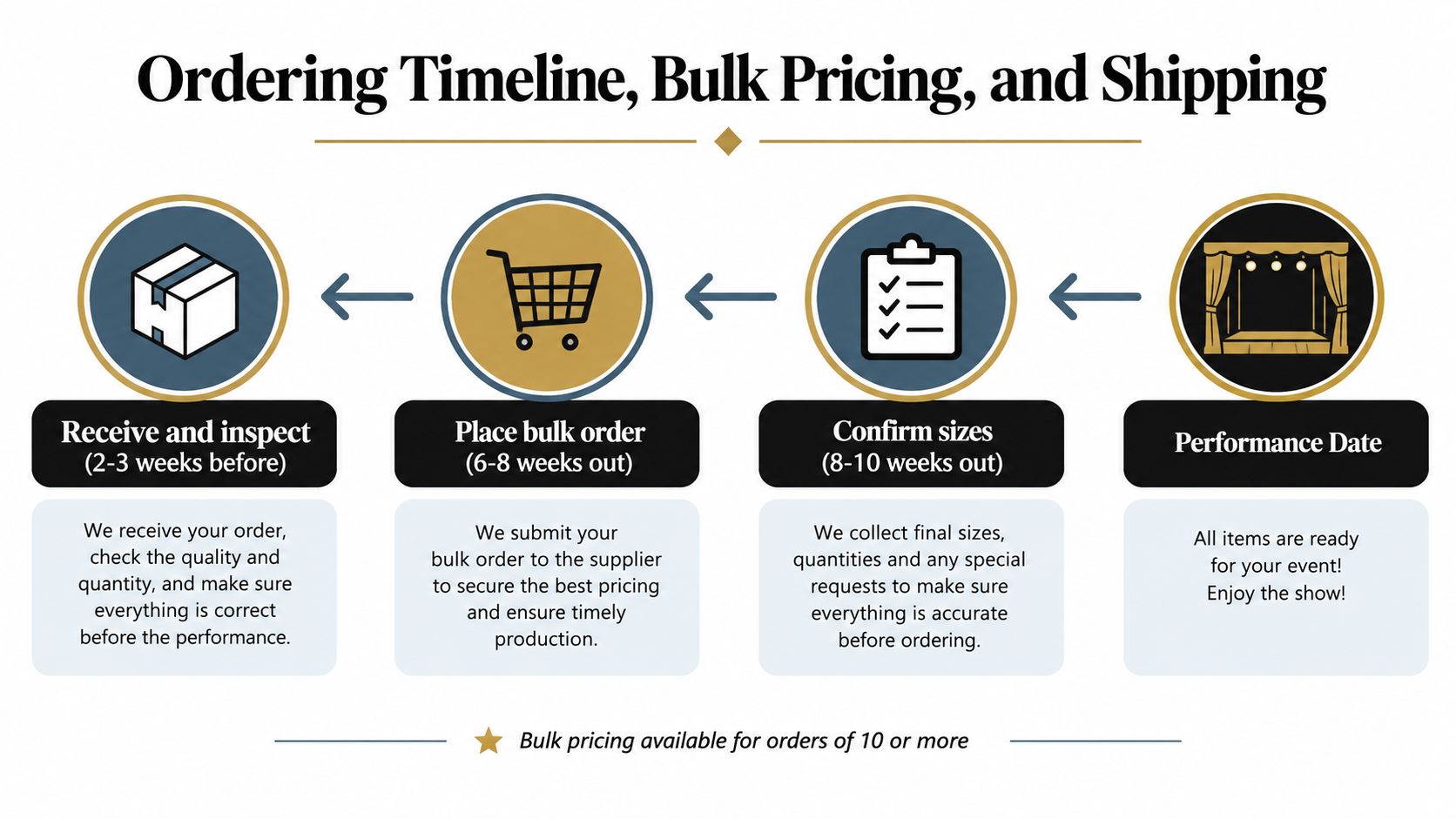
Confirm sizes 8 to 10 weeks out. Place the bulk order 6 to 8 weeks out. Receive and inspect the robes 2 to 3 weeks before the first use so you still have time for one swap if a measurement was off. That timeline is the difference between calm distribution day and a frantic pile of returns in the church office.
Bulk ordering should follow size confidence, not optimism
Bulk pricing tiers usually reward bigger counts, and children's robes fit those tiers the same way adult robes do. For ChoirBuy, the practical approach is to treat the first unit orders as fit checks, then move to the full roster once the samples and measurements line up. If you're watching sales timing, the ChoirBuy sale page is the place to check when you're trying to stretch a tight budget without changing the garment plan.
A few clean ordering habits save headaches:
- Sample first: Order one robe per size before the full run if the choir is brand-new or the roster is mixed.
- Check embroidery early: Add logo approval into the timing, because decoration needs lead time.
- Inspect on arrival: Look for sleeve balance, hem length, and trim consistency before storage.
Standard shipping can work if you've planned ahead, but late orders need more aggressive handling. Rush production is useful only when the choir can accept the tradeoff of a tighter window, especially if embroidery is involved. I'd rather have a plain robe on time than a personalized robe that misses the event.
Care, Sample Policies, and Kids Choir Robes FAQs
Good care keeps robe replacement costs down and keeps children from looking rumpled halfway through the service. Washing routines should be boring. That's a compliment. Simple care is what preserves a uniform look across a kids' ensemble.
Wash, dry, and store them like performance gear
Wash cold, around 30°C, and keep the cycle gentle. Hang dry whenever possible, because high heat is hard on child-sized garments and decorative trims. If you must tumble-dry, keep the heat low. For stains, pre-treat juice, lipstick, or candle wax with a mild detergent before washing so the mark doesn't set.
Store robes on wide hangers so the shoulder seams stay straight. If budgets allow, rotate two robes per child, because that extends the life of the wardrobe and gives you a backup when one robe gets damaged or misplaced. A sample policy helps too. Order one or two sizes across the age range two to three months before the bulk order, photograph them on real singers, and confirm color and trim before committing to the full roster.
The product samples page is the right place to start if you want to compare fit and finish before buying in volume.
The questions directors ask most
A mixed-age choir can still look unified if the sizes are mapped well and the robe line is consistent. A kindergartner and a sixth grader don't need the same exact cut, they need the same design language. If a robe is lost or a new child joins mid-season, keep one replacement size in reserve when you can. Stoles can often be reused across age groups as long as the width and length still sit correctly on the body.
Fit problems get worse when the first robe order becomes the only robe plan.
For support, replacement options, and product-level help, keep ChoirBuy's service pages close at hand and use them when you're finalizing the roster or filling a gap. That way the choir stays dressed consistently instead of improvising at the last minute.
If you're ready to outfit a children's ensemble without guessing on fit, fabric, or timing, visit ChoirBuy and compare the kids' robe options, size charts, samples, and matching accessories before you place the order. You'll save yourself the last-minute scramble and give the singers a robe that looks right, moves well, and holds up through the season.