

You've got singers waiting in the nave, a concert on the calendar, and one member just told you the old robe won't close anymore. That's when choir robes for sale near me stops being a search phrase and turns into a procurement problem. At that point, speed matters, but so does fit, because a rushed order that misses the body line will cost you in exchanges, uneven hems, and a stressed-out rehearsal week.
Why Local Sourcing Matters for Choir Procurement

A concert date is fixed, the robe order is not, and one singer needs a swap before Sunday. Local sourcing solves that kind of problem fast. You can get hands on the fabric, check the drape under sanctuary lighting, and avoid discovering too late that a bulk order misses the fit across your choir. A woman examining a blue choir robe on a clothing rack in a retail shop.
When the drive is the smarter move
Choose a nearby vendor when your roster includes mixed ages, uncertain sizes, or singers who need robes in time for a specific service. A local visit lets you inspect color, fabric weight, and hem length before you commit money to a full group order. That matters because apparel fit issues lead to returns in up to 52% of cases, according to the Bold Metrics fit strategy report.
Bulk buying raises the stakes. One wrong size choice can affect the whole section, especially when you need multiple exchanges and cannot wait on another shipping cycle. A vendor close enough to handle fittings and replacements quickly is the safer choice, even if the sticker price is not the lowest.
Use a simple rule. If a second round of shipping would cause a problem, buy local or work only with a supplier that can behave like a local one.
Local sourcing also changes how you evaluate vendors before you place the order. The shops that show up in the right places usually earn that attention by being easy to reach and easy to trust, which is why how map pack visibility drives revenue matters to buyers who need a fast, reliable robe source.
Finding and Vetting Reliable Local Vendors
A nearby seller isn't automatically a dependable one. I'd rather have a vendor three towns over with real stock, clear policies, and responsive staff than a showroom five minutes away that can't tell me whether they have my sizes. Start with proof, not promises.
Check stock, not just storefronts
Call first and ask whether the robes are physically on hand, not just listed. Then ask what sizes are immediately available, whether they can split an order across multiple sizes, and whether they'll put that in writing. If a seller hesitates on those points, keep moving.
Next, look at the return and exchange terms before you commit. Choir purchases are usually bulk-based and time-sensitive, so vague policies are a liability. A vendor with a clear process for exchanges is safer than one offering a low sticker price but no practical backup.
Read the reviews like a buyer, not a fan
You want patterns, not praise. Look for reviews that mention sizing accuracy, delivery reliability, and how the seller handled mistakes. One polished five-star page means less than several comments showing that the team answered questions quickly and resolved issues without drama.
If you want a benchmark for how a focused supplier presents its robe catalog and buying guidance, the page on the best place to buy choir robes is worth a look because it shows how a robe seller can organize product information for faster decisions. For a broader sourcing comparison, Mirthuni apparel sourcing service is another reference point for how apparel buyers evaluate fit, process, and fulfillment support.
Ask one blunt question before you order, “If three people need exchanges next week, how fast can you fix it?”
That one question tells you more than a polished brochure ever will. If the answer sounds vague, the vendor isn't ready for choir procurement.
Comparing Fabric and Fit Options for Your Ensemble
The robe has to do two things at once, look unified from the loft and let singers breathe, move, and sit without fuss. That's why I put fabric and sizing at the center of the buying decision. If either one is wrong, the whole purchase feels cheap, even if the price looked good.
Fabric choices that actually work in rehearsal and service
Polyester robes are the benchmark for high-use ensembles due to being wrinkle-resistant, color-stable, and machine-washable on gentle cycles (ChoirBuy choir robes and stoles guide). That's why they're the safe default for churches and schools that need robes to survive repeated wear. Cotton blends can feel softer, but they usually ask more of the buyer on care and consistency.
Specialty fabrics have their place, especially when comfort or a more refined stage look matters. If your singers perform in warm sanctuaries, lightweight materials help. If your group sings often and stores robes between services, durability should win the argument.
| Choir Robe Fabric Comparison | Durability | Care Requirements | Comfort Level |
|---|---|---|---|
| Polyester | High | Simple, cold gentle wash, low-heat dry or hang dry | Reliable for repeated use |
| Cotton blend | Moderate | More careful laundering, more likely to wrinkle | Softer feel, less structured |
| Specialty fabric | Varies | Depends on trim, finish, and construction | Can be excellent, but choose by use case |
A useful rule is this, if the robe is going to be worn often, choose the fabric that forgives mistakes. That usually means polyester.
Fit comes from two numbers, and one of them matters more
For robe procurement, height measured in performance shoes is the anchor measurement. It keeps the hem line even across the ensemble and prevents one singer from dragging fabric while another looks shortened. Chest circumference is the second control point, because it keeps the garment from gaping or pinching at the shoulders.
If someone lands between sizes, choose the larger size. That's the safer call for singing, moving, and sitting through a long service. The same approach appears in robe sizing guidance that centers on height and chest as the core fit variables, with the larger size recommended when measurements fall between options (ChoirBuy size guidance).
Bottom line: buy for movement first, polish second. A robe that's easy to wear will always look better than one that's technically fitted but restrictive.
If you want a practical reference for robe materials and related goods, religious fabric by the yard is useful because it shows how fabric selection connects to the final garment, not just the sales page. And if you're comparing wardrobe basics for your singers outside robe season, Faith-inspired casual tee for women is an example of how material, cut, and comfort all still matter in faith-based apparel.
Customization and Bulk Pricing Strategies
A rushed robe order gets expensive fast if you treat customization like an afterthought. Local vendors help you sort out logos, colors, and trim while there is still time to correct mistakes, which matters when the choir needs a unified look and the budget has to stay controlled.
Use customization to solve a real problem
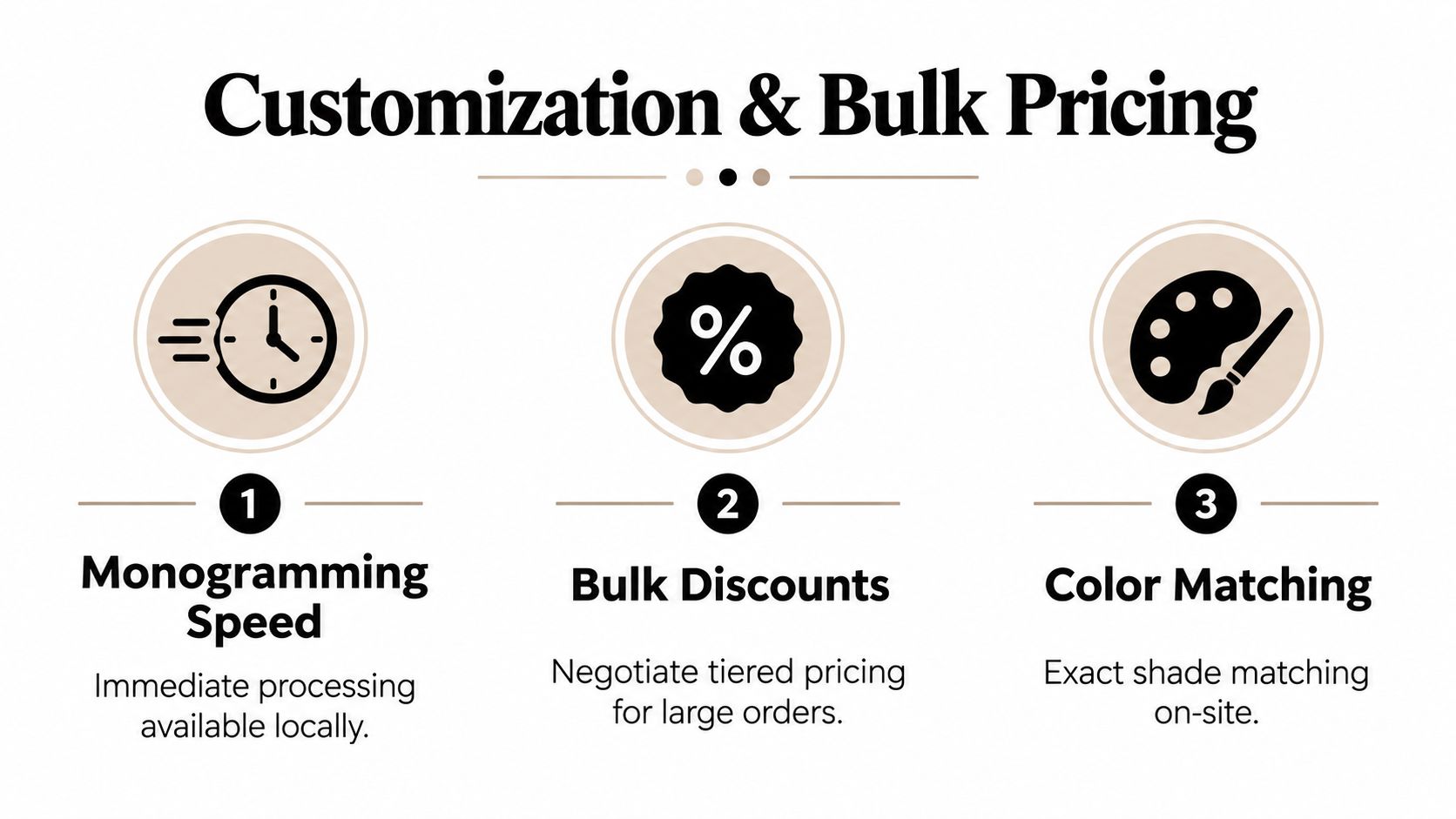
Monogramming, color matching, and trim choices should serve a clear purpose. If the choir needs section visibility, seasonal distinction, or a cleaner institutional identity, small custom changes can do the job without turning the robe into a redesign project. Keep the details consistent across the full order so the ensemble still reads as one unit.
Bulk pricing works best when you stop treating each robe as a separate purchase. Get a quote for the full count, then ask what happens if you add a few extras in the most common sizes. Vendors usually price around order volume, so negotiate from the total need, not one robe at a time.
The custom robe page at custom choir robes with logo is a practical example of how embroidered identity can be handled without making the robe feel like a novelty item. For a broader look at custom programs, ChoirBuy's custom choir robes show how a supplier can structure wholesale and custom work around the same order.
Smart bulk buying saves more than money
Bulk pricing is not only about a lower unit cost. It also reduces the chance that half the choir receives one dye lot and the rest gets another. That mistake shows up immediately when the robes are hanging together in the sacristy.
Ask about minimum order quantities before you commit. One independent supplier example shows an initial order minimum of 25 robes, repeat orders with a 10-piece minimum, and size bands tied to height ranges such as 4'10"–5'2", 5'2"–5'6", 5'6"–5'10", and 5'10"–6'2" (Concert Attire robes page). That kind of structure tells you whether a vendor is set up for institutional buying.
If you need a quick reference for what customization can include, the options shown in this graphic illustration detailing customization options including monogramming speed, bulk discounts, and professional color matching services are the right categories to ask about before you place the order.
Managing Fittings, Returns, and Last-Minute Needs
The most expensive robe order is the one that forces rushed exchanges after you have already promised a service date. Choir buying gives you little room for error because the whole group has to look right at once. One bad size in the front row will pull attention from the service.
Run fittings like a small production schedule
Do not fit the whole choir in one chaotic session if you can avoid it. Split the process by section or age group, and keep the measurement method the same every time. Start with height in performance shoes, then chest, then record each result against the vendor's chart.
Keep one person in charge of the master list. That person should track name, size, and any special note, such as a singer who needs a longer hem or extra room through the chest. In a mixed choir, that record matters more than the robe style, because bad data creates a chain of avoidable problems.
Build in a return buffer before the deadline
A local return policy only helps if you use it early. Treat the first try-on as a test run, not a ceremonial handoff. If anything feels off, fix it immediately while the exchange window still works in your favor.
Fit problems are common across apparel, and the research brief noted that size variation and mismatch remain core drivers of returns, with fit-related returns reaching up to 52% in some cases as cited earlier. That is why local availability matters so much. If you can swap a robe quickly, you protect the performance instead of rebuilding the order.
For sizing reference, use the vendor's own size and color charts after you have chosen a supplier. A chart from a different seller will not help if the cut is different.
Do not wait for concert week to discover the tall tenor needs a longer robe. Solve that problem the same day the measurements are taken.
Choosing the Right Partner for Your Choir
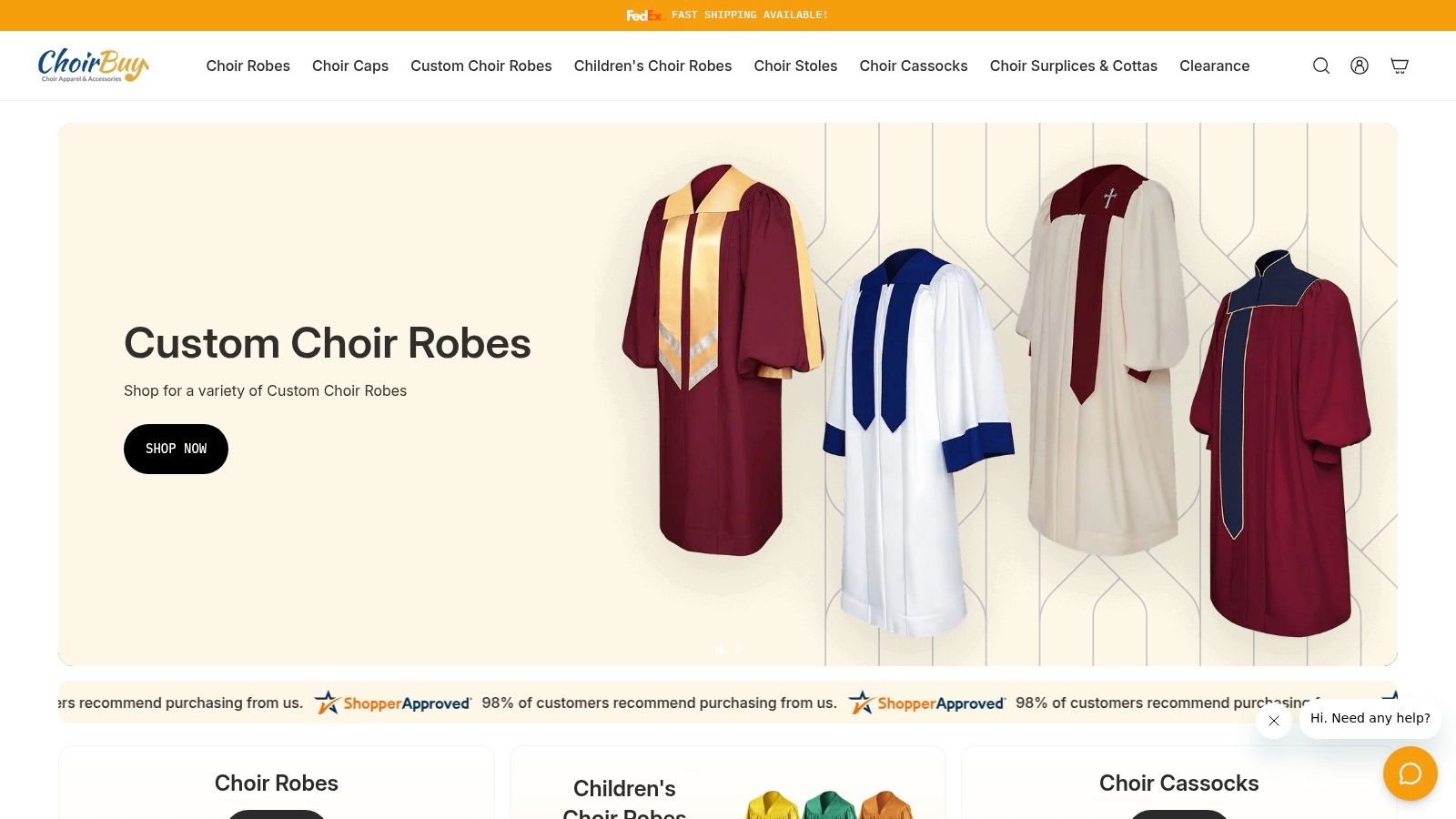
The right supplier handles three things at once, sizing without drama, fast turnaround when the calendar tightens, and a consistent look across the group. Anything less gives the director extra problems. For local buyers who still want convenient ordering, ChoirBuy is a practical option for wholesale and custom choir robes, with a setup built for choral apparel.
What to look for before you sign off
Choose the vendor that gives you clear sizing tools, a straightforward exchange path, and a catalog that covers robes, stoles, cassocks, and related pieces without forcing you to patch together orders from five places. If they cannot explain fulfillment plainly, they are not ready for a choir with a deadline.
I also favor the seller who treats measurement as part of the purchase, not an afterthought. A supplier that builds that structure in from the start usually saves you from the most expensive choir-apparel mistake, a group that looks close but never quite matches on the platform.
If you are outfitting a choir and need robes you can order with confidence, start with ChoirBuy. They carry wholesale and custom choir robes, plus the sizing and color tools that make rushed group buying far less painful. For church choirs, school ensembles, and last-minute replacements, that practical support keeps the schedule intact.