

You're probably staring at a robe order because something just changed, a singer joined late, a row of hems no longer matches, or the whole ensemble is about to stand under bright lights with one section looking sharper than the rest. That's the moment most directors realize choir robes for sale aren't a casual purchase. They're a public-facing decision about tradition, consistency, and how much friction you want to remove from every service that follows.
Why Buying Choir Robes Is a Bigger Decision Than It Looks
The first bad robe order usually starts with a simple problem. A director notices that one robe is faded, another is too short after a growth spurt, and a few more don't match because the choir expanded faster than the wardrobe did. What looked like a quick replacement suddenly becomes a group identity problem.
Choir robes are not costume purchases. They carry liturgical memory, school identity, and ensemble discipline. Britannica notes that choir attire traces back to medieval Christianity, where the cassock-and-surplice combination became standard for clergy and choir use, and by the 14th century the surplice had taken on its choral and processional role. That history matters commercially because buyers don't usually want novelty, they want continuity.
The right order is usually a bulk order, not a one-off fix. One parish merger, one graduating class, or one new season can force a wave replacement instead of a single garment swap. That's why it's smart to think about the robe page as an institutional purchase, not a fashion rack. If you're comparing options, start with the place to buy choir robes that organizes the category by use case and resist the urge to sort only by color.
Practical rule: If the choir needs the robes for a recurring ministry, buy for the next three seasons, not just the next performance.
A robe decision also shapes how people read the ensemble before a note is sung. Consistent silhouettes signal order. Consistent colors signal unity. Inconsistent sizing signals budget stress, even when the music is strong. Directors who get this right once usually stop treating robe replacement as a yearly headache and start treating it as part of the choir's operating system.
The Main Types of Choir Robes Explained
Choir shoppers use one phrase, but they're really talking about different garments with different jobs. That's where a lot of bad orders start. If you know the style first, you stop comparing the wrong products and save yourself from returns, awkward fit issues, and a room full of singers asking why they look dressed for a different tradition.
Start with the setting
A cassock is the long, close-fitting garment most often paired with a surplice in liturgical settings. A surplice is the lighter over-garment worn over the cassock, and the combination fits church and processional use well. A cotta is shorter and simpler, often used where a lighter, more informal liturgical layer makes sense. A full-length gown is the broader choir standard, especially in schools, civic ensembles, and concert settings where a uniform visual line matters more than clerical symbolism.
| Robe Type | Typical Wearer | Best Setting |
|---|---|---|
| Cassock | Clergy, liturgical teams, choir assistants | Formal church services, processions |
| Surplice | Choir members, acolytes, liturgical ministers | Over a cassock in church use |
| Cotta | Smaller church choirs, youth ministries | Simpler liturgical appearances |
| Full-length gown | School choirs, adult ensembles, community choirs | Concerts, ceremonies, matched group presentation |
If your choir spans several functions, don't force one garment to do every job. A cathedral choir and a school choir don't need the same visual language. For a closer look at the cassock-and-surplice pairing, this guide to choir cassocks and surplices is the right place to separate formal liturgical wear from broader choral gowns.
A plain rule works here. Choose cassocks and surplices for liturgical structure, cottas for lighter church use, and full-length gowns when uniform performance presence is the priority. That decision narrows the product search fast and keeps committees from debating trim before they've agreed on the garment family.
Choosing the Right Fabric for Wear and Care
Fabric choice looks like a style decision, but it's really a maintenance decision wearing a nicer outfit. The robe that looks richest on the hanger may be the one that asks the most from your volunteers after every service. The robe that's easiest to wash may not drape the way your committee imagined. That trade-off is where smart buying happens.
What each fabric gives you
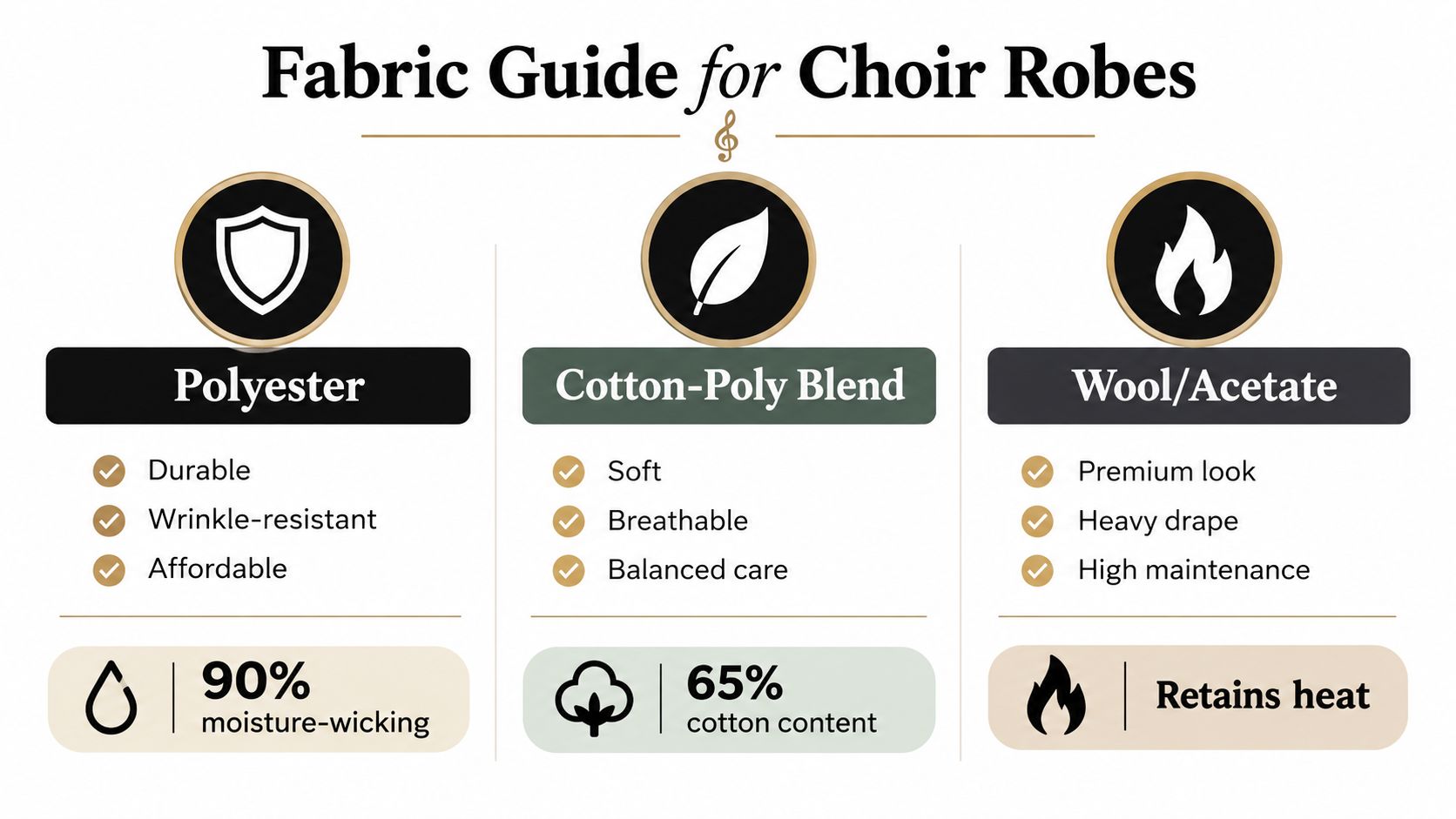
Polyester is the default for a reason. It usually wrinkles less, cleans more easily, and survives repeat use better than fussy alternatives. That's why most directors reach for it first, especially when they need a robe that can handle rehearsals, travel, and back-to-back services. Research on garment care also points to lower shrinkage risk with polyester, with reported guidance at ≤ 1% versus wool at up to ≤ 5% in each direction when handling fabric shrinkage carefully as noted in textile research.
Cotton-poly blends sit in the middle. They give you a softer hand and a more relaxed drape without pushing maintenance all the way into delicate territory. If your choir values comfort under stage lights and doesn't want a robe that feels stiff, a blend can make sense.
Wool, acetate, and decorative-trim fabrics belong in more formal or carefully managed settings. If the robe has velvet, cordage, ribbon, or lined construction, dry cleaning is the safest default because those parts are more sensitive to heat, agitation, and color transfer according to care guidance for choir apparel. For plain polyester or many cotton-poly robes, machine washing can be practical when the label allows it.
Bottom line: If the choir meets often and performs often, buy for easy care first. If the robe is ceremonial and infrequent, buy for presentation second.
For fabric sourcing and related material options, this fabric-by-the-yard resource for religious apparel is useful when you're matching a robe to existing vestments or planning coordinated garments.
Getting the Right Fit Across Every Body in the Choir
Fit is where good intentions fall apart. The choir order sounds organized on paper, then the boxes arrive and the hem lengths don't line up, the sleeves pull on some singers, and the plus-size robes look like afterthoughts. That's not a style problem. It's a measurement problem.
Measure the body, not the wardrobe label
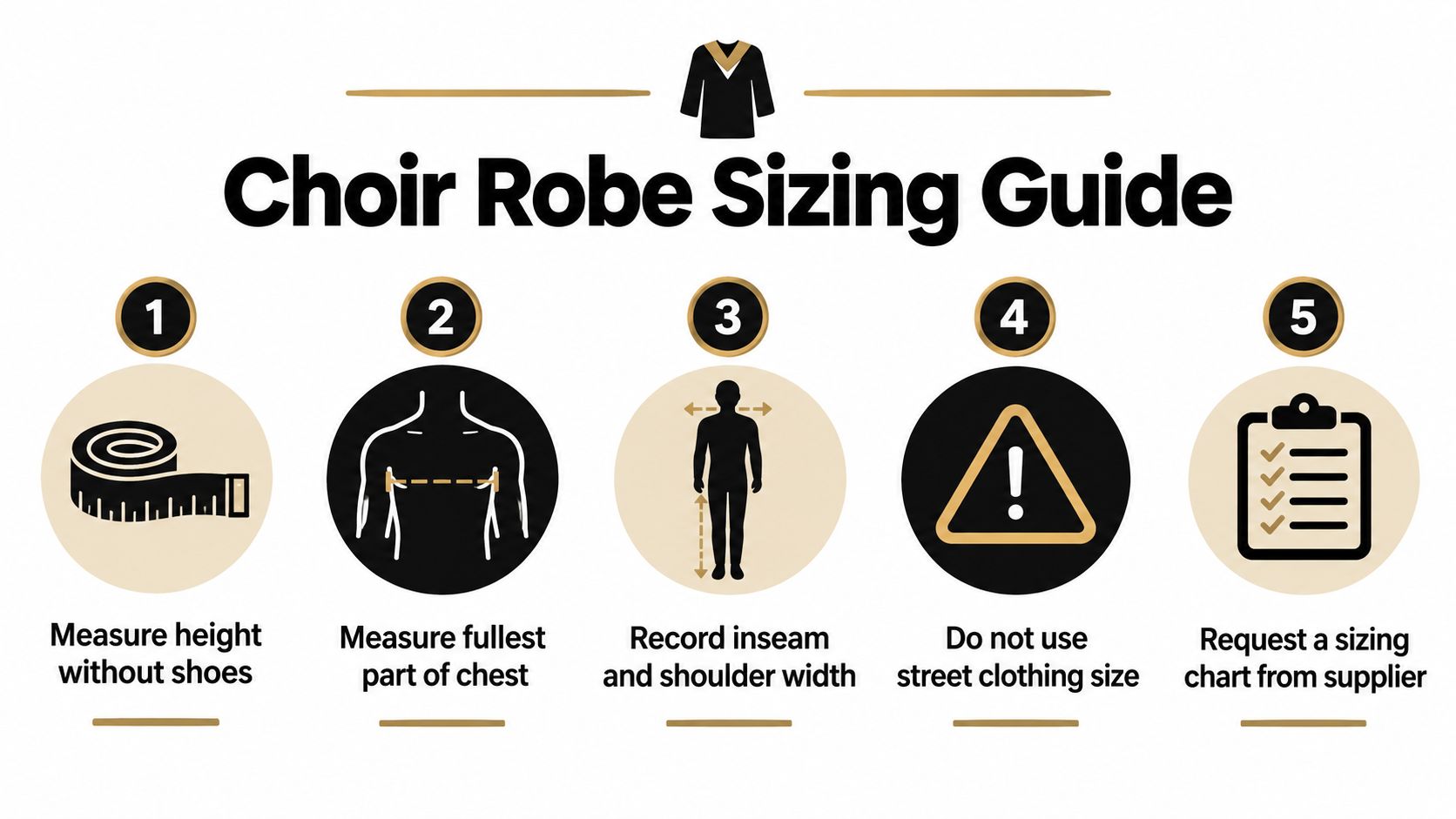
Use the manufacturer's chart, not street clothing size. That's the rule. Reliable fit guidance usually uses height, chest, and sometimes waist or other body measurements to keep robes comfortable for group performance as shown in choir attire guidance. A robe that fits the chest but misses the height still looks wrong on risers.
Start with height, measured without shoes if the supplier chart calls for it. Then measure the fullest part of the chest. If the chart asks for shoulder width or inseam, record those too and keep the notes with the order. Don't let volunteers guess. Guessing is how a mixed-age ensemble ends up with three different visual lines in the same photograph.
Handle mixed ages and plus sizes on purpose
Children and plus-size adults are where bad fit planning shows first. Kids grow between seasons, so a robe that's barely long enough today may be useless by the next concert cycle. Plus-size singers need full comfort across the torso and shoulders, not just “technically available” sizing. Some suppliers now advertise custom measurements, extended sizes, and full-fit options, which tells you the market still struggles with consistency across body types as seen in publicly visible size guidance.
Use this simple workflow:
- Take measurements in one sitting. Don't split the choir across different dates or helpers.
- Check each singer against the chart. Don't convert from street size.
- Flag outliers early. Tall youth, broad-shouldered adults, and anyone between sizes need attention before the order is placed.
- Keep a master sheet. You'll need it for replacements later.
For reference sheets and chart coordination, ChoirBuy's size and color charts are the kind of tool directors should keep open while collecting measurements.
Customization Options That Define Your Choir's Look
Two choirs can wear the same robe cut and still look like different organizations. That's because identity lives in the details. Color, trim, stoles, embroidery, and piping all change how the robe reads from the pews, the risers, and the camera aisle.
What each custom choice actually changes
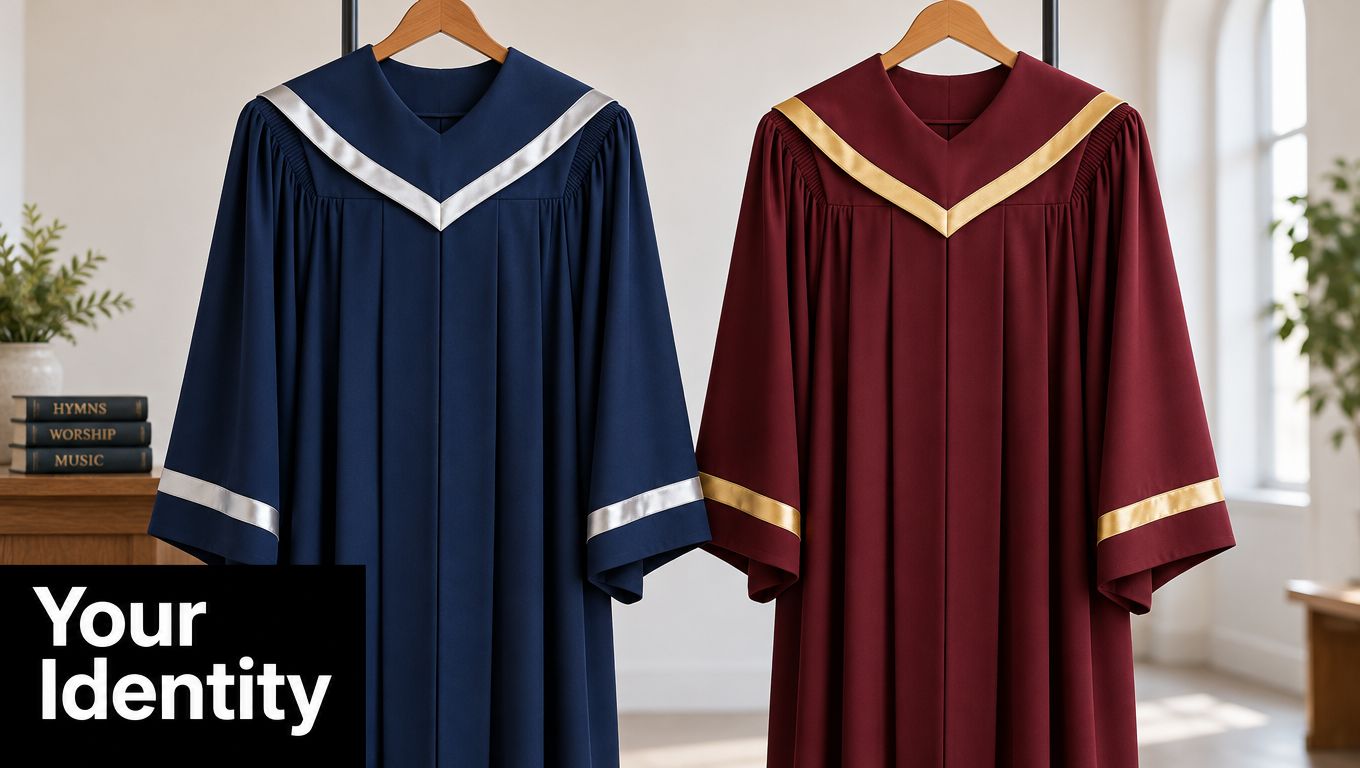
Color is the first signal. It should match the church, school, or program identity before it tries to be trendy. A choir that already has a strong brand usually needs no more than a consistent base color and maybe one accent tone. If the ministry already uses a clear palette, keep the robe aligned with that instead of creating a new visual language.
Trims and piping change structure without overwhelming the garment. A narrow contrasting edge can sharpen the silhouette and make the robe feel more intentional. Velvet trim reads formal and should be used when the setting justifies the extra weight and maintenance. Stoles add symbolic or sectional distinction, which works well when the ensemble needs seasonal variation or role-based identification.
Embroidery is the most permanent customization choice. It's the option that turns a uniform garment into a named piece of choir identity, but it also asks for clear artwork, approval steps, and more careful ordering. If the committee can't agree on the design, don't rush this part.
If you're coordinating a choir with broader team branding, this guide on planning custom apparel for groups is a useful parallel because it shows how to keep a shared look consistent across multiple sizes and roles.
Use this rule: If the choir needs visual unity fast, choose color first. If it needs identity and formality, add trim or a stole. If it needs a lasting signature, add embroidery.
For a supplier's product range, ChoirBuy's robes collection and customization options should be reviewed alongside your committee notes, especially if you're matching robes to an existing church palette or school crest.
Pricing, Bulk Discounts, and How to Order Samples First
Budget conversations go better when they're concrete. Choir robes are usually bought in groups, and group buying changes the math. A single robe price is only part of the total cost, because the order lives or dies on the final quote, the shipping line, and whether the fit has to be corrected later.
Buy like a bulk customer, not a retail shopper
The choir robe market is a niche but measurable global apparel segment, with estimates placing it at about USD 0.4 billion in 2025, projected to reach USD 0.53 billion by 2034 at a 3.2% CAGR according to market projections. That supports the way most directors already shop, through bulk orders and dependable replenishment instead of one-off fashion buys.
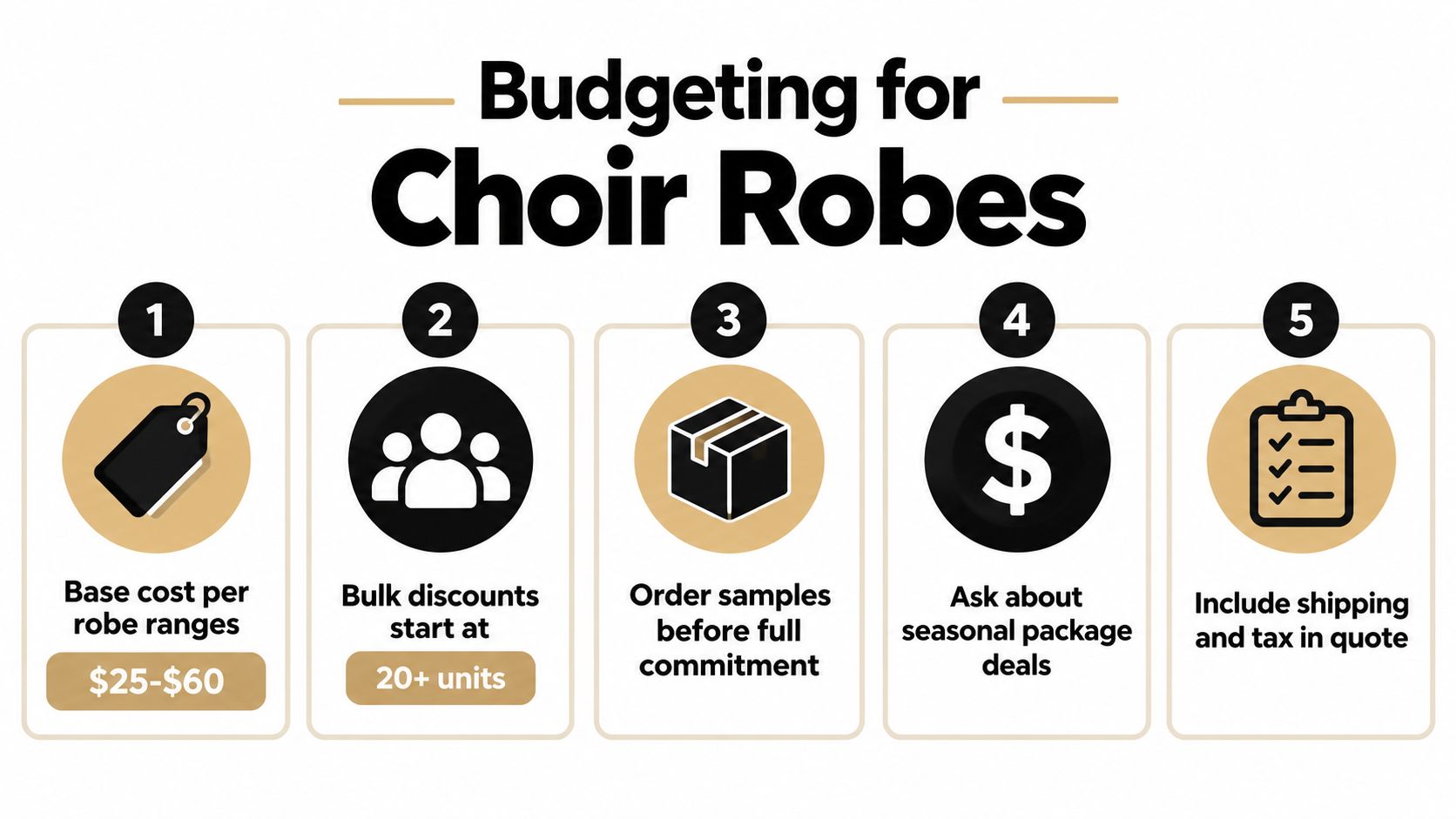
Don't wait to ask about package pricing. Ask early, especially if the order includes adults, youth, or clergy in the same shipment. Bulk discounts and ensemble packages are where directors recover some budget room, and sample ordering is the cheapest way to avoid a costly mistake.
Use this order logic:
- Get the full headcount. Missing one singer changes the quote and sometimes the shipping tier.
- Ask for samples or swatches. Fabric hand and color accuracy matter more than a screen image.
- Compare package pricing. Separate retail single-unit thinking from ensemble pricing.
- Include shipping and tax in the total. The robe price alone isn't the budget.
- Reserve a small cushion. Replace a misfit or order a backup without reopening the whole request.
Sample first, order second. That's how a director protects both the budget and the uniform look.
If you're working through a supplier quote, ChoirBuy's robe collection, size charts, and ordering flow make it easy to compare sample-based decisions with final bulk pricing without guessing at the total.
Lead Times, Shipping, and Guarantees You Should Confirm
A robe that arrives late is a bad robe, no matter how good it looks on paper. Easter, Christmas, graduation, and anniversary services don't move because a supplier is running behind. The director has to pin down timing before the order goes in, not after.
Start with the lead time in writing. If a robe is in stock, ask when it ships, not when the page says it's “available.” If it's custom, get the production window, proof approval step, and ship date spelled out. Rush options matter, but they're only useful if the supplier can confirm capacity.
Ask the questions that protect the date
You need answers to these points before paying:
- What date will the order leave the warehouse?
- What shipping methods are available if the calendar changes?
- What happens if a size is wrong or a robe arrives damaged?
- Is there a return policy for unused stock items?
- Who answers service questions when the order is in progress?
Money-back guarantees and return policies are not small print. They're timing tools. A director with a clear cancellation or exchange path can make the order with more confidence, especially when the event date is fixed and the choir can't improvise an alternate uniform.
Customer service availability matters more than a polished catalog. If a sizing chart is unclear or a color choice needs confirmation, you want a supplier who responds fast and in plain language. That's how you keep a robe order from turning into a rehearsal distraction.
My rule for seasonal orders: If the performance date is immovable, the order needs an even less flexible shipping plan.
The right supplier should be able to tell you what's in stock, what needs production, and what happens if you need a correction. Get that before you commit.
A Care Routine That Works
The longest-lived robe is usually the one maintained with discipline, not guesswork. Most damage comes from repeated shortcuts, hot water, hard spinning, poor storage, and folding damp trim into a plastic bag after rehearsal. Consistent care matters even more in mixed choirs, because one sloppy cleaning cycle can make a whole order look uneven.
Match the care routine to the fabric. Most polyester choir robes and cotton-poly blends are machine washable, while acetate robes should always be dry-cleaned as noted in material guidance. Trim-heavy robes should go to a cleaner that handles liturgical garments, since ordinary dry cleaners may press velvet flat as recommended in manufacturer-linked guidance.
Wash choir robes in cold water on a gentle cycle, turn them inside out to protect embroidery and color, then hang them to air dry or use very low heat if the label allows it according to apparel care instructions. That routine protects the garment's shape and cuts down on finish wear. Skip tumble drying unless the label clearly allows it and the robe has no delicate trim.
Storage is just as important. Hang robes in a cool, dry space with enough room for the sleeves to fall naturally. Don't cram them into a closet where hems crease and shoulders flatten. If a robe comes back damp from an event, dry it fully before it goes back on the rack. Mildew is harder to remove than almost any common stain.
Treat stains early, and keep the approach mild. Heavy scrubbing does more damage than the stain itself. If a robe combines embroidery, mixed materials, or special lining, follow the care label or the supplier's instructions instead of guessing with household products.
The decision checklist is simple:
- Choose the robe style that fits the tradition.
- Choose the fabric that matches your cleaning plan.
- Measure every singer against the manufacturer chart.
- Lock the custom details before the quote is finalized.
- Confirm pricing, samples, and shipping against the event date.
- Set the care routine before the first wear, not after the first stain.
Good robes do more than outfit a choir. They keep rehearsals, services, and photos from turning into cleanup problems for years after the order is placed. If you want a single source for robes, sizing tools, and ordering support, visit ChoirBuy and compare the styles, fabrics, and fit options against your next service date before the committee starts debating from scratch.