

It might seem like a small detail, but a choir's music folder is so much more than just a place to keep sheet music. For any music director, choosing the right folder is a real investment in your group's functionality and visual uniformity. It has a direct, tangible impact on a choir's confidence and how they present themselves on stage. This guide will walk you through everything you need to know to make the best choice for your ensemble's choral sheet music folders.
Why Choir Music Folders Matter

Think of your choir's concert attire like a perfectly tailored suit. The robes create that foundational look, but it's the accessories—the stoles, the shoes, and absolutely the folders—that pull it all together. A jumble of mismatched, tattered, or flimsy folders is an immediate visual distraction. It can unintentionally suggest a lack of unity or preparation.
On the flip side, a set of high-quality, uniform choir music folders instantly elevates your ensemble's entire appearance. This polished look sends a powerful message to the audience before a single note is even sung. It communicates discipline, cohesion, and a real commitment to excellence. For the singers, holding a sturdy, professional folder builds confidence and reinforces that they are part of a single, unified group, which almost always translates into a more focused and powerful performance.
Improving Focus and Performance Quality
Beyond just looking good, the practical benefits of a great folder are huge. A well-designed folder is an ergonomic tool that helps singers maintain good posture—something we all know is critical for proper breath support and vocal production. A poorly made or overly heavy folder can cause fatigue and strain, especially during long concerts where singers might be standing for an hour or more.
A quality folder also solves several common performance headaches:
- Reduced Noise: Sturdy materials cut down on that distracting rustle of turning pages, keeping the music itself as the central focus.
- Secure Pages: Deep pockets and strong bindings stop loose sheets from falling out, which can be a nightmare for a singer's concentration.
- Enhanced Comfort: Little things like hand straps can make a big difference. They reduce grip fatigue, letting singers focus on the conductor and the music instead of wrestling with their score.
The right folder acts as a silent partner on stage. It secures the music, supports the singer, and sharpens the ensemble’s visual identity, freeing performers to deliver their best.
In the end, choosing the right choir music folder isn't just another administrative task. It's a strategic decision that supports every single aspect of a performance. Let's dive into the key factors you should consider, from materials and sizing to customization and bulk ordering, to help you find the perfect folders for your ensemble.
Exploring Choir Music Folder Features
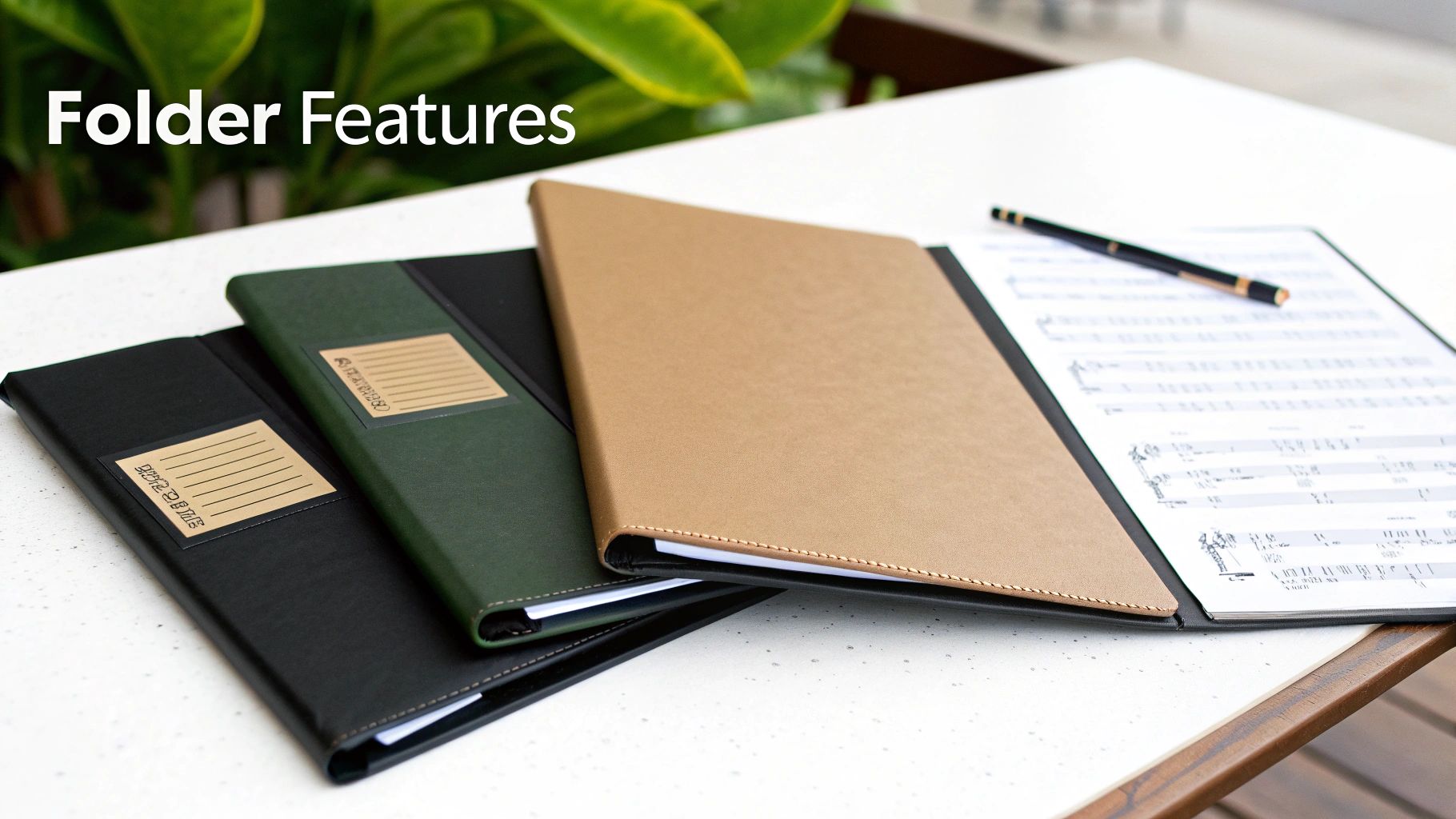
When you start looking at choir folders, it's a lot like shopping for any other essential piece of equipment. The materials, the construction, the little details—they all matter. A great folder isn't just about holding paper; it's about making a singer's job easier, both in rehearsal and on stage. The first thing you’ll notice is what it’s made of, and that choice sets the tone for everything else.
Think of the material as the folder's "uniform." It dictates durability, how much it weighs, and the overall impression it gives. Your main choices will almost always boil down to vinyl, leatherette, and pressboard.
Decoding Folder Materials
Durable Vinyl is the undisputed workhorse of the bunch. It’s tough, easy to wipe clean, and can handle being dropped, stuffed in bags, and passed around for years. For school choirs, children's groups, or any ensemble where folders will see heavy use, vinyl is a smart, budget-friendly pick. It just keeps on going.
Elegant Leatherette is for when you want to step things up a notch. It gives you the rich look of real leather without the hefty price tag or the upkeep. Leatherette folders lend a polished, professional air to your ensemble, making them a fantastic choice for concert choirs or worship groups aiming for a refined presentation.
Flexible Pressboard is your simple, no-frills option. It's lightweight and very affordable, making it perfect for temporary events like music festivals, workshops, or summer camps. It won't stand up to a decade of rehearsals, but for short-term needs, it gets the job done perfectly.
If you want a deeper dive into materials and construction, you can find helpful information in guides that cover different types of file folders, which can offer a broader perspective.
Inside the Folder: Pockets and Sleeves
Once you've settled on a material, what's inside is what really counts. The design of the pockets and how music is held will make or break the folder's usefulness.
- Pocket Depth: A shallow pocket is fine for a single piece of music, but what about a 20-page score? You need deep pockets to securely hold a full concert program without papers threatening to slide out mid-performance.
- Gusseted Pockets: A gusset is that little accordion-like fold on the side of a pocket that lets it expand. This is a game-changer for holding thick music books or hefty scores without putting stress on the folder's spine.
- Elastic Strings or Rings: Many folders use elastic cords to neatly hold octavos in place, making it easy to flip from one piece to the next. Others are built like a binder with 3 rings, which is ideal if you prefer to use hole-punched sheet music.
A folder's interior is its engine. Features like deep, gusseted pockets and secure bindings are what make it a high-performance tool, not just a simple container.
Essential Bells and Whistles
Sometimes, it’s the small things that make the biggest difference. A few thoughtful additions can elevate a good folder to a great one.
Here are a few practical add-ons to look for:
- Pencil Loop: A dedicated spot for a pencil is a director's best friend. No more fumbling around for something to write with when you need to mark a dynamic change.
- Business Card Slot: This simple clear pocket is perfect for a name card. It's a lifesaver for telling folders apart and makes it incredibly easy to return a lost one to its owner.
- Hand Straps: Don't underestimate the power of a strap on the back or bottom of the folder! During a long concert, it dramatically reduces hand and arm fatigue. Your singers will thank you for it.
Choosing the Right Closure
Last but not least, think about how the folder closes. This determines how secure your music will be when it's being transported or stored.
- Elastic Bands: Quick and easy. An elastic band is great for rehearsals when you're constantly taking music in and out.
- Button Snaps: A button snap provides a bit more security, keeping the folder closed so nothing can fall out accidentally.
- Zippers: For maximum security, nothing beats a zipper. A zippered folder fully encloses your music, protecting it from spills, rain, and wear and tear. It's the best option for touring choirs or for archiving music safely.
Choosing the Right Folder Size and Capacity
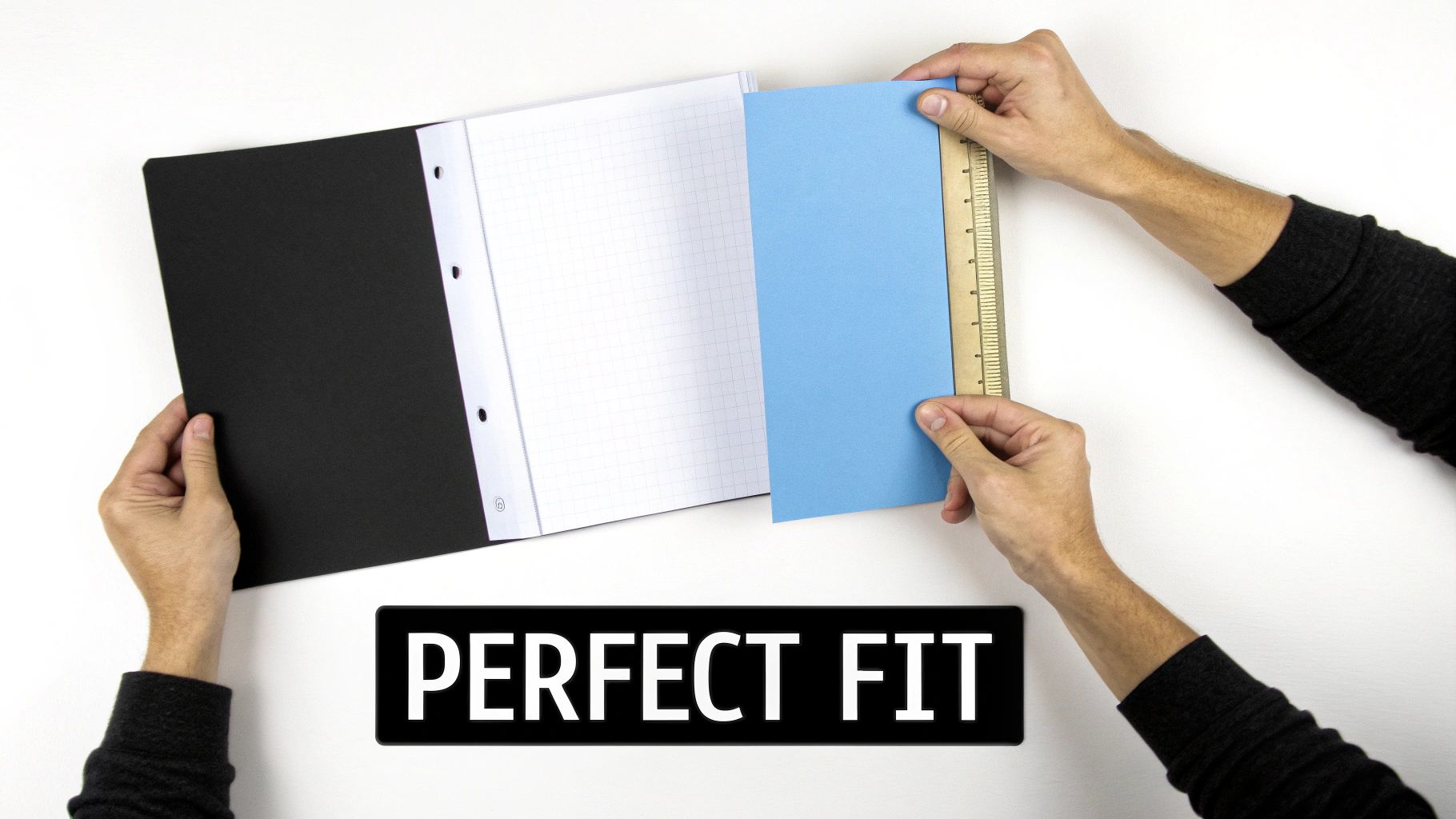
Think of picking the right choir music folder like choosing the right frame for a painting. If the frame is too small, the edges get creased and damaged. If it’s too big, the art looks lost and sloppy. The same logic applies here—a perfectly sized folder protects your sheet music, looks professional, and keeps your singers comfortable.
First things first, you have to know your music. Most choral music is printed in one of two standard sizes.
- Octavo: This is the format you’ll see most often, measuring around 6.75 x 10.5 inches. It has that classic tall, narrow look.
- Standard Letter: This is your everyday 8.5 x 11 inches paper, which is common for photocopied scores, custom arrangements, or weekly announcements.
A folder that’s too small is a recipe for disaster, leading to bent corners and torn pages. On the flip side, an oversized folder lets smaller octavos slide around, making page turns a clumsy nightmare. The goal is a snug fit with just enough of a margin to protect the edges without dwarfing the music itself. Our collection of durable choir folders includes various dimensions to accommodate both octavo and letter-sized scores.
Matching Capacity To Your Repertoire
Beyond the basic height and width, you need to think about how much music the folder can actually hold. This is the difference between a slim portfolio and a three-ring binder. A folder’s capacity is all about its pocket depth and spine width, which determines how many pages it can comfortably handle.
Let's walk through a real-world example. Imagine your choir is prepping for a big holiday concert. You've got Handel's Messiah—a hefty score—plus a handful of shorter anthems. A standard, flat folder might barely contain the Messiah, leaving zero room for anything else. This is where capacity becomes a make-or-break feature.
To avoid this headache, look for folders with deeper, gusseted pockets that can expand. These are designed to hold a thick score plus another 15-20 pages of music without straining the spine or letting pages bulge out. Taking a moment to forecast your needs for the whole season will keep you from choosing a folder that becomes useless by concert time.
The Importance Of Ergonomics and Comfort
A folder stuffed with music can get surprisingly heavy. When singers are standing for an hour or more during a concert, the weight and design of their choir music folders can make a huge difference. An awkward or heavy folder leads to fatigue, poor posture, and even distraction from the music.
An ergonomic folder should feel like an extension of the singer, not a burden. Features that reduce physical strain aren't just nice-to-haves; they are essential for helping singers maintain focus and deliver their best performance.
Keep these ergonomic factors in mind as you browse:
- Weight: Lighter materials like vinyl or pressboard are fantastic choices, especially for youth choirs or ensembles with long performances.
- Hand Straps: A strap on the back or bottom of the folder is a complete game-changer. It lets singers hold the folder securely with an open palm instead of a tight, cramping grip, which dramatically reduces hand and forearm fatigue.
- Balance: A well-designed folder distributes its weight evenly, making it far easier to hold steady at the right height for long stretches.
Ultimately, picking the right size and capacity isn't just about protecting paper; it’s about protecting the performance. By matching folder dimensions to your music, thinking ahead about capacity, and prioritizing ergonomics, you give your singers a tool that supports them comfortably and professionally through every single note.
Choir Folder Feature Comparison
To help you zero in on what truly matters for your group, this table breaks down common folder features by how important they are to different types of ensembles.
| Feature | Youth Choir Priority | Church Choir Priority | Professional Ensemble Priority |
|---|---|---|---|
| Durability | High - Folders need to withstand drops, spills, and heavy use. | Medium - Need to last multiple seasons but with more careful handling. | High - Must maintain a pristine, professional appearance for years. |
| Ergonomics | High - Lighter weight and easy-to-hold straps are key for smaller hands. | High - Comfort is crucial for all ages, especially during longer services. | Medium - Singers are experienced but still appreciate fatigue-reducing designs. |
| Capacity | Low to Medium - Repertoire is often smaller, requiring less page capacity. | Medium to High - Folders must hold seasonal music, anthems, and service orders. | High - Repertoire is extensive and varied, demanding maximum capacity. |
| Customization | High - School logos and names build team spirit and identity. | Medium - Church or choir logos add a polished, unified look. | High - Branding is essential for professional image and recognition. |
| Cost | High - Budgets are often tight, so value is a primary concern. | Medium - Balancing cost with quality and longevity is important. | Low - Performance and durability are prioritized over a slightly higher cost. |
This comparison highlights that while every choir needs a functional folder, the "perfect" choice really depends on who is holding it. A youth choir's top priority might be a lightweight, nearly indestructible folder, while a professional group will focus more on capacity and a polished, branded appearance.
Customizing Choir Music Folders for Your Ensemble
A standard folder holds music, but a customized one tells a story. It elevates a simple accessory into a powerful symbol of your group’s identity, reinforcing that sense of unity and pride every time a singer steps on stage. Customization turns a functional piece of equipment into a signature part of your choir’s wardrobe, creating a polished, professional look that audiences remember.
The process itself is surprisingly straightforward, with a few elegant options to perfectly match your group’s unique style. Each method offers a different feel, so you can choose the finish that truly represents your choir.
Exploring Customization Techniques
Think of customizing a folder like choosing the finish on a beautiful instrument—the right detail makes all the difference. There are four main ways to brand choir folders, and each one creates a distinct aesthetic.
-
Foil Stamping: Imagine the classic, gilded lettering on a formal invitation or a vintage book. Foil stamping uses heat and pressure to apply a thin layer of metallic or colored foil right onto the folder's surface. The result is a design that literally shines. It’s perfect for adding that touch of class with logos, school crests, or choir names.
-
Screen Printing: If you’re going for a bold, vibrant look, screen printing is your best bet. The process works like creating a highly detailed stencil to apply ink directly to the folder. This allows for incredibly precise color matching, making it ideal for intricate logos or multi-colored designs that really need to pop.
-
Debossing: For a more subtle, timeless effect, debossing is an excellent choice. This technique presses a design into the folder’s material, creating a clean, indented impression. Think of a high-end leather portfolio; it adds texture and a professional, understated look without needing any color.
-
Embroidery: This is like a tailored monogram on a blazer. Embroidery stitches your design directly onto the folder. While it’s less common on hard materials, it’s a premium option for certain leatherette or fabric-covered folders. It offers a rich, textured appearance that speaks to tradition and quality.
Customization is so much more than just sticking a logo on something. It's about weaving your ensemble’s identity into every detail of your performance. A well-designed folder visually harmonizes with your robes and stoles, completing the picture of a unified, polished group.
Actionable Tips for a Perfect Design
To make sure your custom folders look exactly how you picture them, a little prep work goes a long way. The key is to provide a clear, high-quality design file and think strategically about how it will look on the final product. For a truly cohesive look, it helps to align your folder design with other branded items. You can find some great ideas in our guide on creating custom choir robes with a logo, as many of the same design principles carry over.
Here are a few steps to guide you through the process:
- Use the Right File Format: Always send your logo or artwork in a vector format. That means files ending in .AI, .EPS, or .SVG. Unlike a JPEG, vector files can be scaled to any size without getting blurry or pixelated, ensuring your imprint is perfectly crisp.
- Match Colors Carefully: If your choir has specific brand colors, provide the Pantone Matching System (PMS) codes. This is the universal language for color and ensures the printer can match the ink or foil to your robes and stoles with complete accuracy.
- Approve a Proof: This is non-negotiable. Always ask for a digital proof before the full order goes into production. This mock-up shows you exactly how the final design will look, giving you a chance to catch any mistakes in spelling, placement, or size.
- Consider Durability: Foil stamping and debossing are physically pressed into the folder, making them extremely durable. Screen-printed designs are also quite long-lasting, but you'll want to ensure your supplier uses high-quality inks that won't chip or fade over time.
By investing in customization, you’re not just buying choir music folders; you’re creating keepsakes that your singers will value for years to come.
4. Strategic Purchasing Tips for Choir Music Folders
Buying choir music folders isn’t just another line item on a budget; it's a strategic investment in your ensemble's professionalism and long-term success. For any music director juggling the financial realities of a school or church, getting this right requires some careful planning. It's all about thinking ahead.
This means looking beyond the immediate concert season. A classic mistake is ordering just enough folders for your current roster, leaving you in a lurch when new members join mid-year. A good rule of thumb is to forecast your needs for the next 12-18 months, then add a buffer of 10-15% to cover growth and replace the occasional lost folder. A little foresight now prevents those expensive, last-minute rush orders later.
The Power of Bulk Ordering
One of the best ways to make your budget work harder is to order in bulk. Think of it like a trip to Costco—buying in larger quantities almost always brings down the per-item cost. When it comes to choir supplies, ordering 50 or more folders at once can slash the price per folder by as much as 30%.
This strategy is especially smart when you consider the wide price range of folders out there. Options run from $7 to $30 per unit, depending on materials and custom touches.
- Budget-friendly vinyl folders usually land between $7 and $12.
- Mid-range options with better durability sit in the $13 to $20 sweet spot.
- Premium, feature-rich folders can climb past $21.
For most choirs, snagging a bulk discount on a solid mid-range folder hits that perfect balance of quality and cost-effectiveness.
This flowchart can help you visualize how different customization choices lead to different aesthetic outcomes, whether you're aiming for elegance, a bold statement, or subtle professionalism.
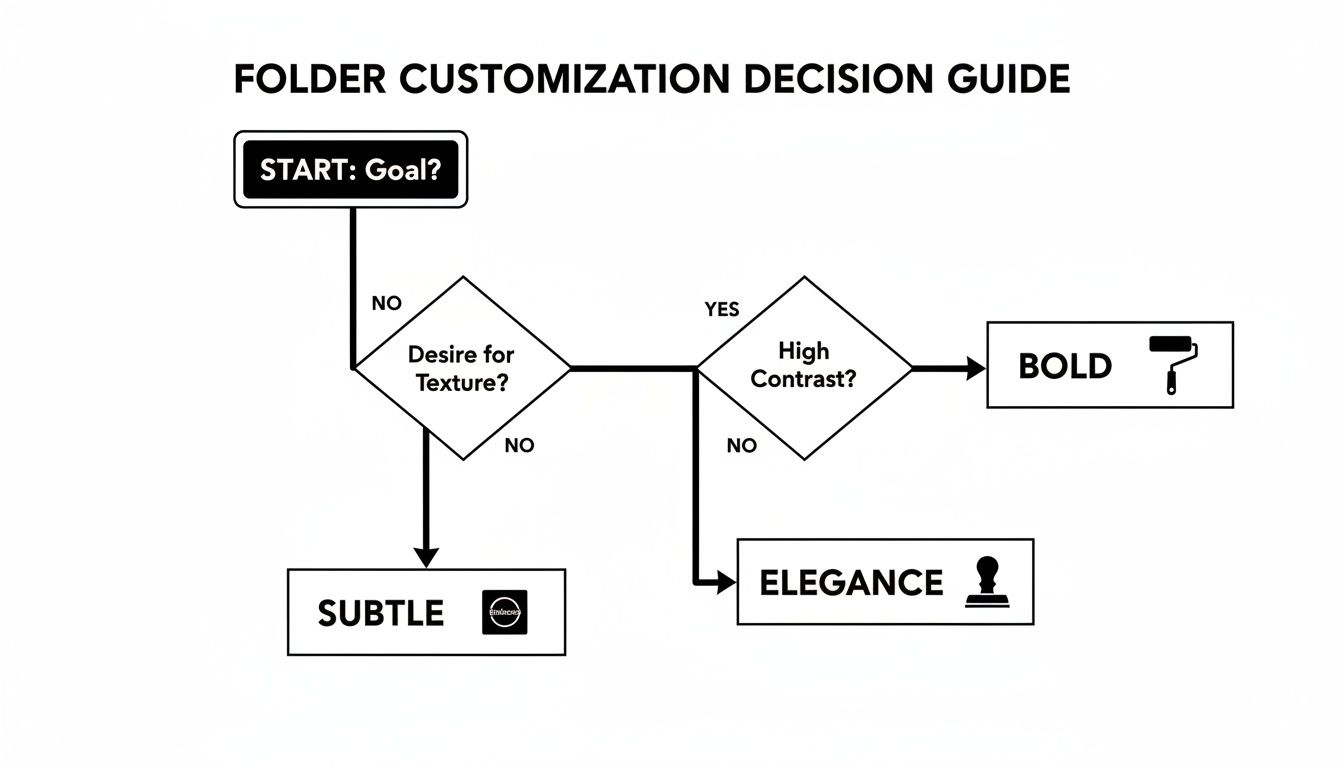
As you can see, the look you’re going for—be it refined or vibrant—really points you toward the right customization technique for your ensemble's new folders.
Calculating the True Cost
When you're comparing prices, it’s easy to get fixated on the sticker price. But you have to look at the landed cost—the total expense to get the folders delivered to your door. This includes the product itself, shipping fees, and any taxes. A supplier with a lower per-folder price might lose their edge once you factor in their higher shipping charges.
Treating your folder purchase as a long-term investment shifts the focus from finding the cheapest option to finding the best value. A slightly more expensive but durable folder that lasts for ten years is a far better use of funds than a cheap one that needs replacing every two seasons.
This is where a quick checklist becomes your best friend. Before you click "order," run through these points:
- Forecasted Quantity: How many folders do you need right now, plus that buffer for growth?
- Customization Details: Is your logo finalized? Are your color choices locked in?
- Delivery Timeline: When do you absolutely need these folders for your next performance?
- Full Budget: What's your all-in, landed cost per folder?
Thinking through these questions helps you make a purchase that not only supports your choir's performance but also shows you're a responsible steward of your budget. If you're looking for broader inspiration on design and durability, even browsing high-quality office supplies like various file folders can spark some great practical ideas.
Enhancing Your Ensemble's Stage Presence
When your choir walks on stage, every little detail matters. From the texture of the folder to the placement of the logo, each choice contributes to the powerful first impression you make. The right choir music folders are so much more than accessories—they're a key part of your presentation. They quietly signal to the audience that every element has been thoughtfully considered, reinforcing the unity and professionalism of your entire group.
The Power of a Unified Look
Think about it for a moment. Picture a choir using a random assortment of mismatched, beat-up folders. The visual clutter is distracting, and you might see singers fumbling with loose pages. It just doesn't look sharp.
Now, imagine another choir. Every singer holds a crisp, identical folder, elegantly stamped with the group’s crest. Their posture is uniform, page turns are silent, and the visual harmony on stage is undeniable. This choir doesn’t just sound cohesive; they look it.
Your choir's folders are the final piece of their uniform. They complete the picture of discipline and artistic excellence, acting as a tangible symbol of the group's collective pride and commitment.
We've walked through all the key factors in choosing the perfect folders, from durable materials to smart, ergonomic designs. Every decision you make helps build a confident stage presence, freeing your singers to focus on what they do best—performing. When the equipment is no longer a distraction, the result is a polished, professional presentation that truly captivates the audience.
From Decision to Performance
Choosing the right choir music folders is a crucial step in crafting your ensemble's professional image, but it's just one piece of the puzzle. To see how it all fits together, take a look at our complete guide to selecting uniforms for choirs.
Here at ChoirBuy, we know that outfitting a choir involves a lot of moving parts. We're here to make the process as smooth as possible, offering high-quality robes, stoles, and folders that create a stunningly unified appearance. Let us help you ensure your choir looks every bit as exceptional as it sounds.
Your Questions Answered: Choir Music Folder FAQs
Even the most organized music director usually has a few lingering questions before clicking "purchase" on a new set of choir music folders. That’s completely normal. Getting the details right beforehand is the key to a smooth process, from the initial order all the way to your first performance with them.
Here, we'll walk through some of the most common questions we hear from choir leaders just like you. Our aim is to give you clear, practical answers so you can finalize your decision with total confidence.
How Should We Clean and Maintain Our Folders?
You’ve invested in them, so you’ll want them to last. The good news is, care is pretty simple. For most materials like vinyl and leatherette, a quick wipe-down with a soft, damp cloth is all it takes to handle dust and fingerprints. Just be sure to steer clear of harsh chemical cleaners or abrasive scrubbers, which can easily damage the finish and any custom imprinting.
If you run into a more stubborn mark, a little mild soap and water usually does the trick. It’s always smart to test it on a small, hidden spot first, just in case. And a final pro-tip: make sure the folders are completely dry before you stack them away to prevent any chance of mildew.
Is There a Minimum Order Quantity for Custom Folders?
When you get into customization, you'll almost always run into a minimum order quantity, or MOQ. For options like foil stamping or screen printing your choir’s logo, suppliers need a minimum order to make the setup process worthwhile. This number can vary, but it's typically somewhere between 25 to 50 folders.
Think of the MOQ as the point where customization becomes affordable for everyone. It’s sometimes possible to order fewer, but you’ll likely face a setup fee that makes the cost of each folder much higher.
If you’re directing a smaller group, don’t hesitate to ask about small-batch options or what those setup fees look like. Sometimes, planning ahead and ordering a few extras for the future can help you hit that minimum and lock in the best price.
What Is the Typical Turnaround Time for an Order?
This really comes down to two things: whether the folders are standard stock items or custom, and how fast you need them shipped. Plain, in-stock folders can be out the door in just 1-2 business days.
Custom choir music folders, on the other hand, need a bit more time. Once you sign off on the final design proof, you should plan on an extra 2 to 4 weeks for production. That window gives the team time to create the printing plates and carefully apply your logo. Always build this production time into your schedule, especially if you have a big concert on the calendar. For more specifics, you can always check out our full Frequently Asked Questions page.
What Should a Singer Do If a Page Tears During a Performance?
A ripped page mid-song is the stuff of nightmares, but a little prep can turn a potential disaster into a non-issue. The absolute easiest fix is to keep a roll of clear, acid-free tape handy. A small, discreet piece can mend a tear in seconds without causing further damage to the music.
Another great strategy, especially for fragile or valuable scores, is to use sheet protectors. The only downside is they can sometimes create a glare under bright stage lights. It also helps to simply remind your singers to be gentle, turning pages from a corner instead of grabbing from the middle. A little prevention is always the best cure for performance-day surprises.
At ChoirBuy, we are committed to providing ensembles with high-quality folders, robes, and stoles that create a polished and professional look. Explore our collection to find the perfect accessories to complement your choir's sound. https://www.choirbuy.com