

Picking the right cassocks for your altar servers is a big decision. It’s about more than just a uniform; it’s a delicate balance of tradition, practicality, and reverence that sets the tone for your parish's worship. The best choice comes down to the style, fabric, color, and fit—all of which ensure your servers feel comfortable and dignified as they carry out their important duties. Finding the right cassocks for altar servers is a key step in preparing a reverent liturgy.
Choosing The Right Altar Server Cassock
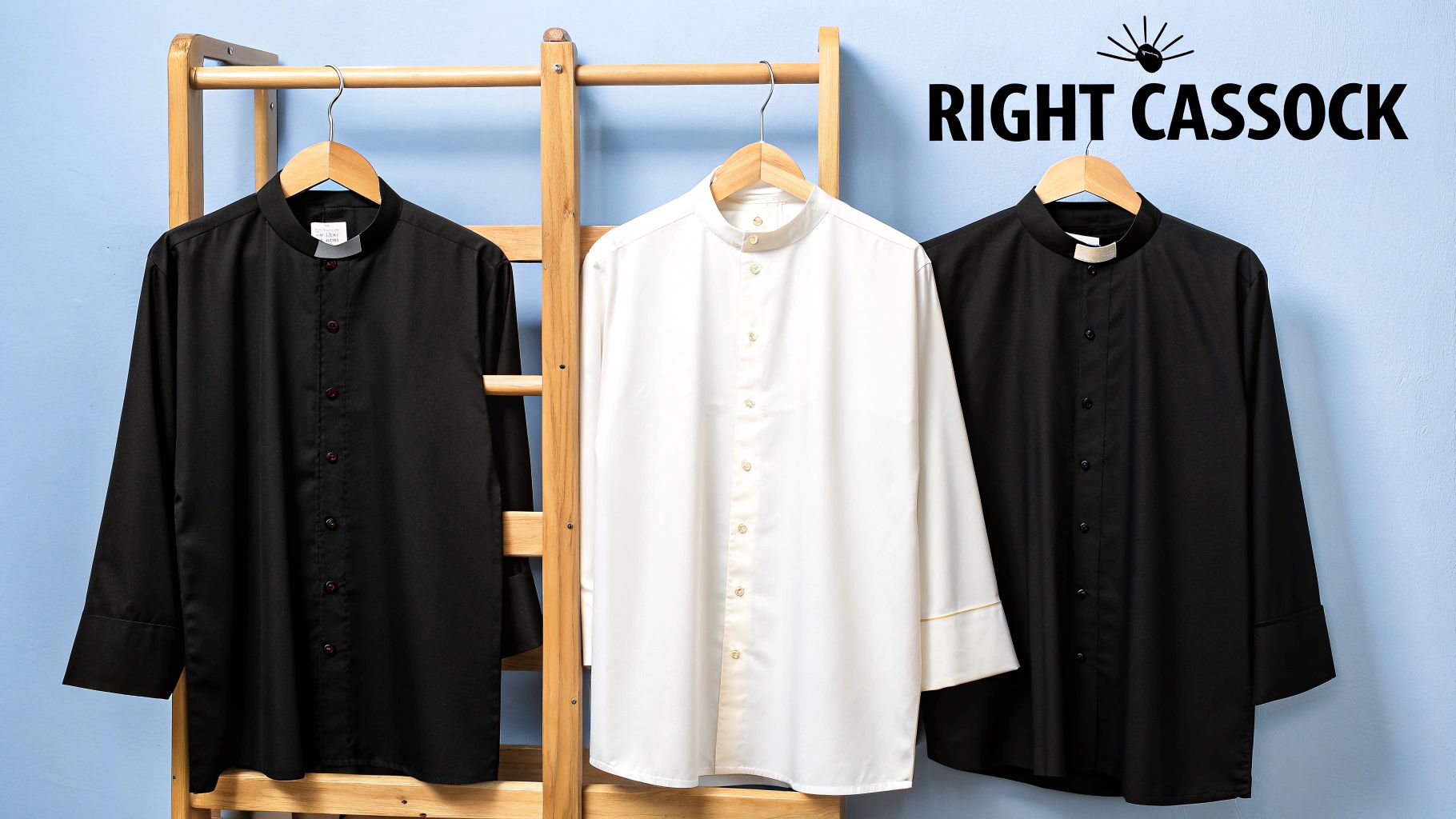
Choosing the perfect altar server cassock is about upholding tradition and creating a focused, solemn atmosphere during services. A well-chosen vestment helps everyone—servers and congregation alike—shift their attention from individual outfits to the sacredness of the Mass. It visually unifies the servers into a single, cohesive ministry.
Think of it like outfitting a team for a very special purpose. The right garment doesn't just look the part; it helps instill a sense of discipline and purpose in the server. Making a thoughtful choice here means you're honoring your parish's customs while also meeting the very real-world needs for comfort and durability.
Balancing Tradition With Practical Needs
The main goal is finding cassocks that are both dignified and functional. This means striking a careful balance between appearance, longevity, and your budget. To get started, let’s break down the essential elements that will determine the right cassock for your parish.
- Style and Tradition: Does your parish lean toward the classic, button-front Roman style, or the more formal, wrap-style Anglican look? This choice often comes down to your community's specific heritage and liturgical customs.
- Fabric and Durability: Will these cassocks be worn every week by active, growing kids? If so, a tough, easy-care fabric like polyester is a smart move. For parishes in warmer climates, a breathable cotton blend can make a world of difference in comfort.
- Color and Liturgical Use: Black is the timeless, traditional choice, but don't overlook other colors. Red, white, or purple cassocks carry deep symbolic meaning and are often used during specific liturgical seasons to enrich the worship experience.
- Fit and Comfort: A proper fit is non-negotiable for both reverence and safety. Cassocks that are too long are a serious tripping hazard, while a sloppy, uncomfortable fit can be a constant distraction for the server.
To help you navigate these choices, we've put together a quick comparison table. Think of it as a cheat sheet to help you see the options at a glance and decide what's most important for your church.
Quick Selection Guide for Altar Server Cassocks
Use this table to quickly compare key features and understand their liturgical importance when making your selection.
| Feature | Common Options | What It Means for Your Parish | ChoirBuy Recommendation |
|---|---|---|---|
| Style | Single-Breasted (Roman), Double-Breasted (Anglican) | Reflects your parish's specific tradition and desired level of formality. | The Single-Breasted style is the most common and versatile choice for most Roman Catholic and many other denominations. |
| Fabric | Polyester, Cotton/Poly Blend, Tropical Wool | Balances durability, comfort, and maintenance. Polyester is easy to care for, while blends offer more breathability. | For most parishes with young servers, a durable polyester or high-quality poly blend offers the best value and longevity. |
| Color | Black, Red, White, Purple | Aligns with liturgical seasons and church traditions. Black is standard, while red is often for feasts of martyrs or Pentecost. | Start with a set of black cassocks for year-round use, and consider adding red as a second option if your budget allows. |
| Sizing & Fit | Standard Sizing, Custom Measurements | Ensures safety (no tripping) and a dignified appearance. Proper fit minimizes distractions for the server. | Always measure your servers. A well-fitting standard size is usually sufficient, but custom may be needed for unique builds. |
This table should give you a solid foundation for making an informed decision. The right cassock truly empowers the server and enhances the beauty of the liturgy for everyone.
At ChoirBuy, we've helped countless parishes find the perfect vestments, and we’re here to be a trusted partner in this process. We offer a wide selection of high-quality, accessible cassocks for altar servers. For an even deeper look at what's available, our guide on cassocks for sale offers more valuable insights. This overview sets the stage for a more detailed exploration of each feature, helping you choose with confidence.
Exploring Different Cassock Styles and Their Traditions
When you’re outfitting your altar servers, one of the first things you'll decide is the style of the cassock. It might seem like a small detail, but it’s a big part of your parish’s visual identity. Why do some cassocks have a neat line of buttons down the front, while others wrap across the chest? These differences aren't just for looks; they’re tied to rich liturgical history and tradition.
The two main designs—single-breasted and double-breasted—each tell a different story. Picking the right one helps create a cohesive and reverent atmosphere, signaling a connection to a particular stream of Christian heritage. The style you choose speaks volumes about reverence, order, and your parish's continuity with the past.
The Classic Single-Breasted Roman Cassock
The single-breasted cassock is what most people picture. Often called the Roman cassock, it's the classic, tailored coat of the liturgical world. Its design is clean and simple, with a single column of buttons running straight down the center, from collar to hem.
This style has deep roots in Roman Catholic tradition and is loved for its dignified simplicity. It’s also incredibly practical, especially if you have younger altar servers. The straightforward button front makes it easy for kids and teens to get ready on their own, ensuring everyone is vested properly and without a fuss before Mass begins.
The Roman cassock's simple design fosters a sense of uniformity and discipline. By stripping away ornate details, it keeps the focus where it belongs: on the server's sacred role and the liturgy itself.
The clean, unbroken lines of this garment create a solemn and orderly look during processions. It’s a beautiful reminder that in worship, reverence and simplicity often go hand-in-hand. This timeless cassock is a powerful symbol of connection to the heart of the Church, making it a favorite for parishes all over the world.
The Stately Double-Breasted Anglican Cassock
On the other hand, the double-breasted cassock offers a different kind of formality. This style, often linked to the Anglican tradition, features a front panel that overlaps, wrapping across the chest to fasten at the shoulder and waist. The closures are typically hidden, creating a stately, flowing silhouette.
This design gives a fuller fit, which can be more forgiving for different body types and allows for a better range of motion. That makes it a comfortable and practical choice, especially for older servers or those with more active roles during complex services.
- Appearance: Creates an elegant, formal drape that adds a touch of distinction.
- Fit: The overlapping panel provides more room and flexibility across the chest and shoulders.
- Tradition: While widely known as the Anglican style, it has been adopted by many denominations looking for a more formal aesthetic.
Ultimately, the choice comes down to your parish’s heritage and what feels right for your community. And of course, the cassock is just one part of the equation. For a full picture of how these vestments come together, take a look at our detailed guide to choir cassocks and surplices. Whether you lean toward the clean lines of the Roman style or the formal drape of the Anglican, both serve the same crucial purpose: setting the server apart for their sacred duties and contributing to a beautiful, reverent worship experience.
Selecting the Best Fabric and Liturgical Color
When it comes to choosing cassocks for altar servers, you’re making two important decisions at once: one about practicality and one about symbolism. Think of it like picking a team’s everyday uniform and their formal dress colors simultaneously. The fabric dictates how comfortable the servers are and how well the garments hold up week after week, while the color connects them visually to the very rhythm of the Church year.
Getting this right means your servers will look sharp and feel comfortable, but more importantly, they become an integral part of the liturgy's visual story. From a tough-as-nails polyester that can handle the energy of young servers to the brilliant red worn on Pentecost, every choice matters. Let's break down the options so you can select vestments that are both functional and faithful.
Choosing a Practical and Comfortable Fabric
The fabric is the heart of the cassock. It affects everything—how it hangs, how it feels during a long Mass, and how much time you'll spend on upkeep. For a busy parish with active, growing servers, this is a decision you don't want to overlook.
You wouldn't outfit a sports team in delicate silks for daily practice, and the same logic applies here. You need a material that’s resilient, breathable, and stays looking dignified service after service with minimal fuss.
Here are the most popular fabric choices you'll encounter:
- Durable Polyester: This is the undisputed workhorse for liturgical vestments. Why? It's incredibly durable, fights off wrinkles like a champ, and holds its color wash after wash. For most parishes, this makes it the perfect, budget-friendly choice for reliable, low-maintenance cassocks for altar servers.
- Breathable Cotton Blends: If you’re in a warmer climate or have an older church without modern air conditioning, a cotton/poly blend is a fantastic solution. It gives you the best of both worlds: the natural softness and breathability of cotton paired with the strength and easy-care nature of polyester. It's a simple way to keep your servers cool and focused.
Ultimately, the best fabric is the one that fits your parish’s reality, balancing your budget, climate, and the time you have for laundry and care.
Decoding the Language of Liturgical Colors
In the Church, color isn't just decoration; it's a silent language that speaks volumes. It sets the tone for worship and tells the story of the liturgical season at a glance. While the classic black cassock is the traditional, go-to choice for Ordinary Time, other colors play a powerful and symbolic role throughout the year.
The use of liturgical colors is a form of visual prayer. It unites the servers with the priest and the entire celebration, deepening the spiritual atmosphere for everyone in the congregation.
Matching your server cassocks to the liturgical calendar truly enriches the worship experience. It’s a simple yet profound way to catechize and mark the passing of sacred time.
Here’s a quick guide to the primary liturgical colors and what they represent:
- Black: As the most traditional color, black signifies solemnity, humility, and reverence. It's the standard for Ordinary Time and is also used for funerals and All Souls' Day. It visually reminds the server to step back from their own personality and focus entirely on their sacred duties.
- Red: A bold and dynamic color, red brings to mind the fire of the Holy Spirit and the blood of the martyrs. You’ll see red cassocks for altar servers on major feasts like Pentecost, Good Friday, Palm Sunday, and the feast days of apostles and martyrs. It’s a powerful visual statement of the Church's passionate faith.
- White: Symbolizing joy, purity, and the glory of the Resurrection, white is reserved for the most celebratory times of the year. It's the color for the Christmas and Easter seasons, as well as feasts of Our Lord, the Blessed Virgin Mary, and saints who were not martyrs.
- Purple (Violet): This color reflects a spirit of penance, preparation, and solemn anticipation. Purple is used during the reflective seasons of Advent and Lent, calling everyone in the church to a period of spiritual readiness and conversion.
Knowing the deep symbolism behind each color is the key to outfitting your servers in a way that adds meaning to the Mass. To dive deeper into this topic, you can learn more about choir robe color meaning in our detailed guide, since many of the same principles apply. At ChoirBuy, we carry a full spectrum of liturgical colors to help your parish fully and beautifully express the life of the Church year.
How to Measure for a Perfect Cassock Fit
A poorly fitting cassock isn't just a matter of looking sloppy—it’s a genuine safety hazard. When a hem is too long, it’s an accident waiting to happen on the altar steps. If the chest is too tight, it restricts movement and makes a server feel self-conscious. Getting the fit right is fundamental for both the dignity of the Mass and the server's ability to do their job with focus and grace.
I know that ordering cassocks for altar servers, especially for a whole group of growing kids, can feel like a guessing game. But with a straightforward measuring process, you can get a sharp, professional fit for everyone, from your youngest server to the most seasoned adult. The goal is a uniform, reverent look for your entire team.
The Three Essential Measurements
You really only need three key measurements to get the right size. Taking a few moments to do this properly will save you from the most common sizing mistakes and ensure a comfortable, appropriate fit.
- Back Length (Neck to Desired Hem): This is the big one. Have the server stand up straight and look ahead. Place a flexible tape measure at that prominent bone at the base of their neck, then measure straight down their back to where you want the cassock to end—typically, right at the top of their shoes.
- Chest Size: Wrap the tape measure around the fullest part of the server's chest, which is usually right under the armpits. It should be snug but not tight. A good trick is to make sure you can slide one finger between the tape and their chest. This guarantees they can breathe and move without feeling constricted.
- Sleeve Length: Ask the server to stand with their arm relaxed at their side, bent just slightly at the elbow. Start the tape at the center of the back of their neck, run it over the top of the shoulder, and then down the arm to the wrist bone. This simple step prevents those awkwardly short or dangerously long sleeves.
Once you have these three numbers, you’re all set. Just compare your measurements to the sizing charts on ChoirBuy to find the perfect match for every server.
This flowchart breaks down the whole selection process, from picking the right material to understanding what the colors mean.
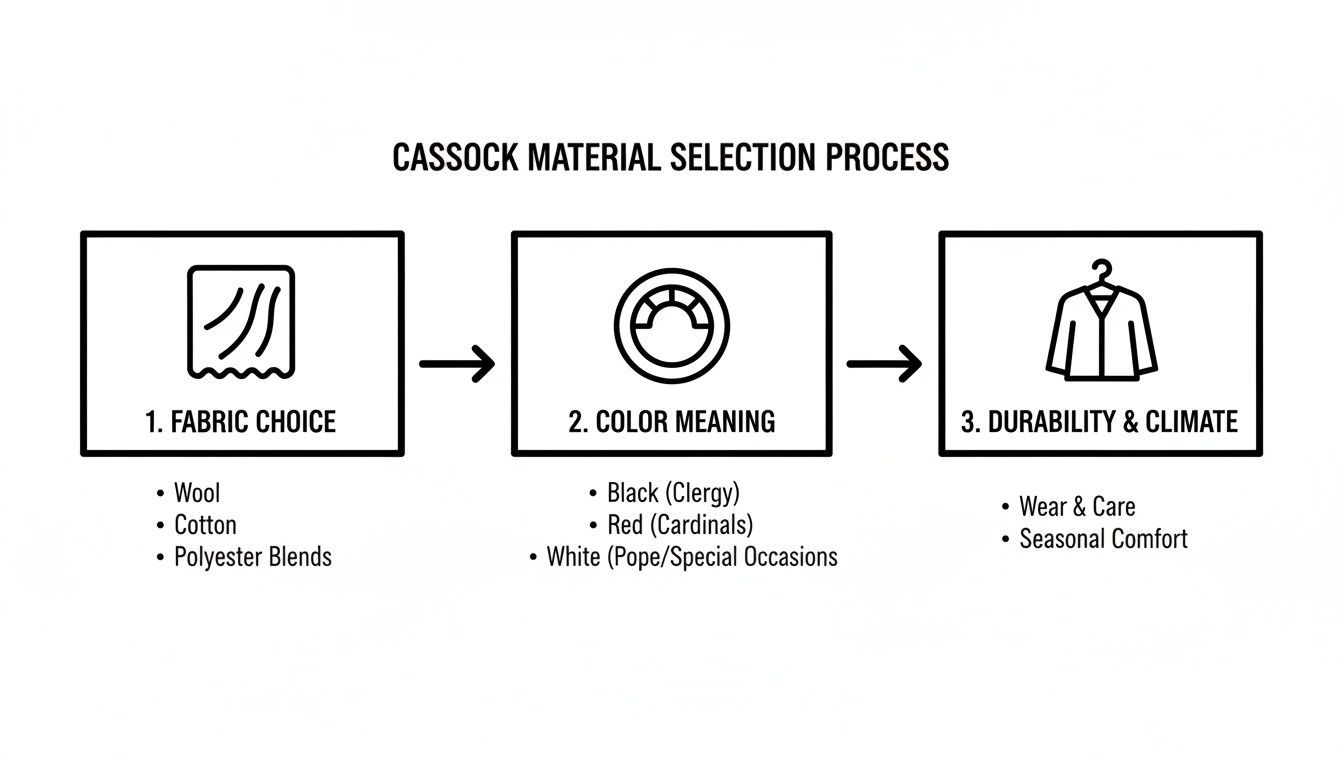
It really shows how the practical decisions, like fabric, and the symbolic ones, like color, come together to create the right vestment.
Insider Tips for Sizing Growing Servers
Beyond the basic numbers, a few practical tricks of the trade can help you handle the unique challenge of outfitting kids and teenagers. Remember, a well-fitting cassock should always look dignified and allow for easy movement.
A good rule of thumb is that the final hem should fall neatly at the top of the server’s shoes. This creates a clean, uniform line across the entire group and really enhances the visual reverence of the liturgy.
Accommodating growth is always top of mind. In 2022, U.S. Catholic churches purchased roughly 150,000 cassocks, which was a 12% increase from 2019, pointing to a real renewal in many parishes. The sizing data from those orders is telling: 45% were for youth sizes 7-12 (back lengths 24-36 inches), designed for servers between 4'2" and 5'0". This just highlights how important it is to have good sizing options for younger servers.
Here’s what I’ve learned over the years:
- Plan for Growth Spurts: It’s almost always a good idea to order one size up for younger servers. Adding an extra inch or two to the back and sleeve length can extend the cassock's life by a whole season, saving the parish money in the long run.
- Check the Shoulder Fit: The seam of the cassock should sit right on the edge of the server’s shoulder. If it’s drooping down their arm, it’s too big. If it’s pulling toward their neck, it’s too small.
- Prioritize Back Length: If a server's measurements put them between two sizes, always go with the correct back length. It’s far easier to make a minor alteration to a sleeve than it is to fix a hem that’s a tripping hazard or looks comically short.
Making sure you have a perfect fit is key for both comfort and appearance. You can find more detailed instructions on how to take accurate body measurements for clothes that can simplify this even further. At ChoirBuy, our goal is to take the guesswork out of it so you can outfit every server in a cassock that looks and feels just right.
Extending the Life of Your Vestments with Proper Care
When a parish invests in quality cassocks for altar servers, it’s a real commitment. These aren't just uniforms; they're sacred vestments that add to the dignity of the Mass. Taking proper care of them is crucial, and a little bit of regular effort goes a long way. It not only keeps your servers looking neat and respectful but also protects the parish's investment for years to come.

Before you do anything else, always check the care label on the cassock. I can't stress this enough. That little tag is your roadmap, as care instructions can vary wildly depending on the fabric. Thankfully, most modern cassocks are made from durable polyester or poly-cotton blends designed for easy maintenance.
Washing and Stain Removal
For the majority of polyester and blended cassocks, a simple machine wash on a gentle cycle with cold water and a mild detergent is all you need. To be safe, always wash them with similar colors to prevent any unfortunate bleeding.
Here’s a simple pro-tip: turn the cassocks inside out before washing. This small step helps protect the buttons and the fabric’s outer finish from getting scuffed up in the machine. It’s also absolutely critical to stay away from harsh chemicals like bleach, which will destroy the fibers and fade the color in no time.
Of course, spills happen. Whether it's a drip of candle wax or a drop of communion wine, the trick is to act fast before the stain has a chance to set.
- Candle Wax: This one is easier than it looks. Just place the stained area between two paper towels. Press a warm iron (on a low setting!) over the spot, and the paper will pull the melted wax right out of the fabric.
- Wine or Juice: Blot the stain immediately with a clean cloth. Whatever you do, don't rub it! Rubbing just grinds the stain deeper into the weave. Once you've blotted up as much as you can, treat the spot with a gentle stain remover and get it into the wash as soon as possible.
Drying, Ironing, and Storage
How you dry and store your cassocks is just as important as how you wash them. You can tumble dry most on a low heat setting, but the best method is to hang them up to air dry. It's gentler on the fabric and is your best defense against wrinkles.
If the cassock does need ironing, be sure to use a low or medium heat setting that’s appropriate for the fabric type.
A great tip for getting a crisp, professional look is to iron the cassock while it’s still slightly damp. The steam helps the wrinkles release much more easily, leaving the garment perfectly smooth and ready for the altar.
Between services, never fold the cassocks or leave them in a pile. Get them onto sturdy, broad-shouldered hangers right away to help them keep their shape and prevent creases from setting in. For long-term storage, like between liturgical seasons, placing them in breathable garment bags is the way to go. This will protect them from dust, light, and moisture.
Following these simple care steps will ensure your cassocks for altar servers remain in beautiful condition, reflecting the reverence and dignity of the liturgy for a long time.
Your Parish Checklist for Bulk Cassock Orders
Outfitting a whole team of altar servers is a big job, but a truly rewarding one. When you're planning a large vestment purchase, a little coordination goes a long way to make sure every server is dressed properly and reverently for their role. Think of this checklist as your roadmap—it breaks down all the key decisions to guide you from the first conversation to the final delivery.
Using a checklist like this helps you sidestep common mistakes, like guessing sizes or missing the deadline for a big holiday like Easter or Christmas. It smooths out the whole process, helping your parish make a smart, lasting investment in high-quality cassocks for altar servers. With this tool, you can manage every detail with confidence.
Initial Planning and Consultation
Before you even pull out the measuring tape, the first step is to get on the same page with your parish leadership. This foundational stage makes sure everyone agrees on the style, budget, and practical needs of the ministry.
- Confirm Liturgical Style with Clergy: Sit down with your priest or liturgical director. You'll want to confirm the preferred style (like a single-breasted Roman cassock) and which liturgical colors you'll need. Will one set of black cassocks work year-round, or will you need additional sets in red, white, or purple for specific seasons?
- Establish a Clear Budget: Figure out the total budget for the purchase. Don't forget to account for more than just the cassocks themselves—you might need surplices, and there will be shipping costs. It’s also a good idea to factor in a few extra garments for new servers who join later.
- Appoint an Ordering Coordinator: Designate one person to be the main point of contact for the entire process. This person will be in charge of gathering measurements, talking with the vendor, and placing the final order.
Measurement and Sizing Collection
Getting the measurements right is absolutely the most critical part of a successful bulk order. A systematic approach is the only way to guarantee a comfortable and dignified fit for everyone, from the youngest child to the tallest teen.
- Host a Sizing Day: The most effective way to get this done is to schedule a specific time after Mass for all servers to come and be measured. It’s so much easier than trying to chase down parents and measurements one by one.
- Use a Standardized Chart: Create a simple spreadsheet. All you need are columns for each server's name, back length, chest measurement, and sleeve length. This keeps all your data organized in one spot.
- Order a Few Extra Sizes: It’s always smart to order 2-3 extra cassocks in the most common youth sizes. This sets you up for new members who might join mid-year and, of course, for those inevitable growth spurts.
A well-organized bulk order not only saves you a headache but also often unlocks significant savings. At ChoirBuy, we offer attractive bulk discounts that make it more affordable to provide a uniform, reverent appearance for your entire team.
Finalizing Your Order Details
Once you have your measurements and your budget is set, it’s time to nail down the final details of your order. This is where you can add those special touches that reflect your parish's identity and help your investment last for years to come.
Historically, the need for bulk vestment orders grew right alongside the parishes themselves. After the 1917 Code of Canon Law formalized liturgical roles, the use of cassocks for altar servers became standard practice. By 1950, over 80% of U.S. Catholic dioceses required uniformed servers. As parishes boomed after the war, bulk purchases of 20-50 cassocks at a time became common to outfit growing server programs.
- Consider Customization: Have you thought about adding an embroidered parish crest or symbol to the garments? Customization adds a unique, distinguished touch that really strengthens the sense of belonging among the servers. To see what's possible, check out our guide on how to order custom choir robes with a logo—many of the same ideas apply.
- Verify Lead Times: Always, always confirm the production and shipping timeline with your supplier. This is especially important if you need the cassocks in hand for a specific liturgical celebration.
- Confirm Care Instructions: Make sure you know exactly how to wash and care for the fabric you've chosen. Following the instructions will extend the life of your new vestments for years. Partnering with a reliable supplier like ChoirBuy ensures you not only get durable products but also the dedicated customer service to support your parish's ministry.
A Few Common Questions About Altar Server Cassocks
Choosing the right vestments for your altar servers can bring up a few questions, especially when you're outfitting a whole team. It’s a big decision, and you want to get it right. To help you feel completely confident in your choices, here are some straightforward answers to the questions we hear most often.
What’s the Difference Between a Cassock and an Alb?
It's easy to get these two mixed up. The cassock is the colored, ankle-length robe that servers wear as their primary vestment. Over the top, they typically wear a shorter, white garment called a surplice. This cassock-and-surplice combination is the traditional look for most servers.
The alb, on the other hand, is a simple white tunic that’s sometimes worn by itself instead of the cassock and surplice. Think of the cassock as the base layer that provides the liturgical color, with the surplice adding that classic, formal touch.
How Often Should We Replace Our Altar Server Cassocks?
A well-made polyester cassock is surprisingly durable. With proper care, you can expect it to last for several years, even with servers wearing it every single week. You’ll know it’s time for a replacement when you start to see obvious signs of wear and tear—things like faded color, frayed hems, or stubborn stains that just won't come out in the wash.
We always suggest doing a quick inventory of your parish's vestments once a year. This is the perfect time to phase out any cassocks that have been outgrown and make sure you have enough fresh, dignified options ready for new servers.
Can We Order Custom Cassocks for Our Parish?
Absolutely. We understand that every parish has its own unique traditions. If you need a specific liturgical color that isn't in our standard collection, have a server who needs custom sizing, or even want to add an embroidered parish crest, we can make it happen. Just get in touch with our customer service team to walk through the details, check on lead times, and get a quote for your custom project.
What's the Best Way to Size a Large Group of Children?
When you're sizing a whole group of kids, the best method is the old-fashioned one: measure each child individually. It takes a little more time upfront, but it pays off.
If a child's measurements fall between two sizes, we always recommend ordering one size up. Kids grow fast, and that little bit of extra room can easily extend how long they can use the vestment.
To make things even easier and take all the guesswork out of it, you might want to look into our sampling program. You can order a few key sizes to have the kids try on in person before you place your full order. It’s the surest way to get a comfortable, proper fit for everyone.
At ChoirBuy, we're dedicated to providing high-quality, durable, and reverent vestments that truly support your parish's ministry. Take a look at our full collection of cassocks, surplices, and accessories to find exactly what your church needs. Shop for your altar server vestments today.